

A Default Is Not Permission to Bypass Due Process
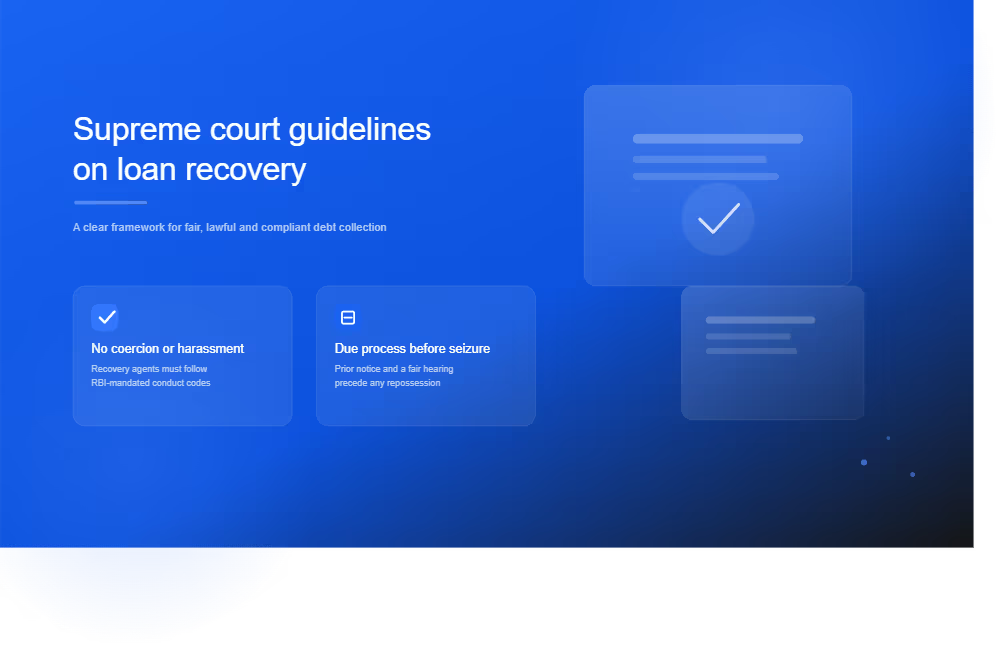
When repayment stops, lenders face real financial and prudential pressure. Yet an overdue account does not create a shortcut around the law. The borrower may dispute the amount, seek restructuring, challenge a notice or simply need clarity about what happens next. If a lender responds with coercion instead of process, it can convert a recoverable account into a legal and reputational problem. The supreme court guidelines on loan recovery make this control important in daily operations.
The Supreme Court’s intervention in recovery-agent cases is best understood against that background. In Manager, ICICI Bank Ltd. v. Prakash Kaur, the Court strongly criticized strong-arm recovery practices and stressed the rule of law. The case remains a foundational warning against using agents to intimidate borrowers or seize assets outside lawful procedure. Teams applying the supreme court guidelines on loan recovery should document this step.
Rights and remedies must travel together
Borrowers have protections, but they also have responsibilities under valid loan agreements. Lenders can issue notices, invoke contractual remedies, approach tribunals and enforce security where law permits. The central distinction is between lawful escalation and coercive self-help. In this context, the supreme court guidelines on loan recovery require consistent execution. This requirement also shapes how institutions operationalize Supreme Court guidelines on loan recovery agents.
Keep escalation lawful and explainable.
What Supreme Court Rulings Define Borrower Rights?
There is no universal Supreme Court checklist for every product and fact pattern. Different rulings address recovery agents, secured assets, auctions, possession and access to statutory forums. Together, they establish several durable principles. This is a measurable control under the supreme court guidelines on loan recovery.
The exact right or deadline depends on the loan, security, notice and statute involved. That is why a borrower's communication should state the actual action being taken and the relevant response route rather than rely on broad claims such as “immediate seizure” or “no further remedy.” The supreme court guidelines on loan recovery turn this principle into an operational priority.
Design each escalation around evidence.
Borrower Rights During Recovery Communication
Borrowers in India have the legal right to be treated with dignity and protected from harassment during loan recovery communications under Reserve Bank of India (RBI) guidelines.
1. The right to dignity and privacy
Supreme Court guidelines on loan recovery harassment are often searched by borrowers who have received threats or faced public embarrassment. Recovery teams should never use social exposure as leverage. Contacting unrelated third parties, visiting a workplace to shame someone or using abusive language is inconsistent with the lawful, dignified process the courts and RBI expect. A defensible workflow under the supreme court guidelines on loan recovery should preserve this evidence. A reliable approach to Supreme Court guidelines on loan recovery agents should make this control observable.
2. The right to know who is contacting them
Borrowers should be able to verify the lender, authorised agency, outstanding amount and purpose of contact. Anonymous or misleading outreach weakens trust and complicates fraud prevention. This helps institutions apply the supreme court guidelines on loan recovery across channels and partners. For teams interpreting Supreme Court guidelines on loan recovery process, this is a practical implementation point.
3. The right to receive legally meaningful notices
Where SARFAESI or another statute applies, notices are not interchangeable with ordinary reminders. Templates, service methods, response windows and records should be reviewed by legal teams and tied to the correct account stage. This practical safeguard reflects the supreme court guidelines on loan recovery.
4. The right to use the appropriate remedy
A lender should not obstruct a borrower from raising a dispute, making a representation or approaching the competent tribunal or court. At the same time, filing a grievance does not automatically suspend every lawful recovery step; the legal effect depends on the proceeding and any order granted. The supreme court guidelines on loan recovery make this control important in daily operations.
Respect rights across every channel.
This blog is just the start.
Unlock the power of Callveriq’s AI with a live demo.

How Lenders Should Structure Escalation
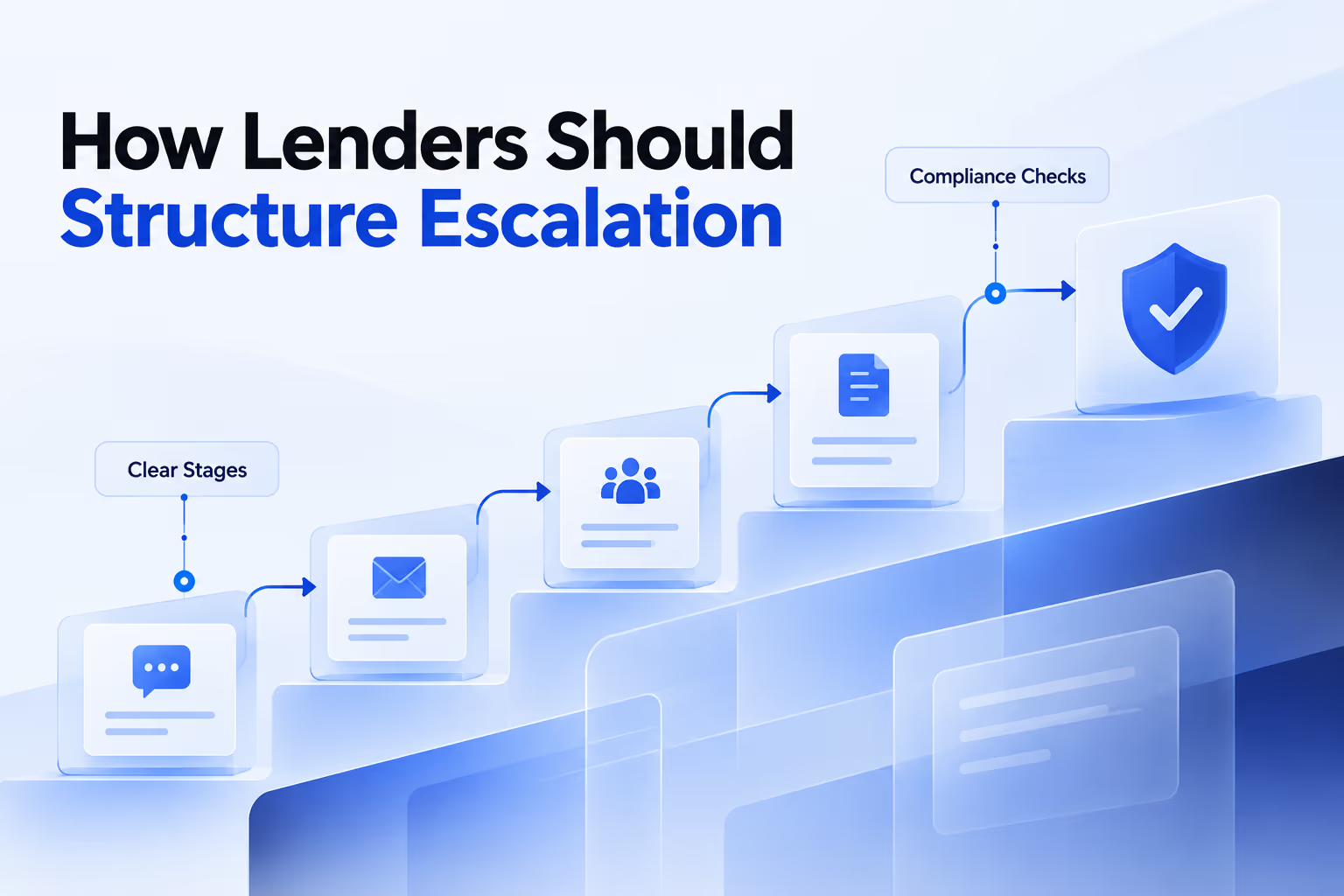
A defensible escalation model begins with verification. Confirm the balance, security details, borrower identity, prior payments, dispute status and all communications already sent. Next, choose the remedy that applies to that product and stage. Finally, ensure that every outward message describes the next step accurately and offers the correct response channel. Teams applying the supreme court guidelines on loan recovery should document this step. This requirement also shapes how institutions operationalize Supreme Court guidelines on loan recovery process.
The Supreme Court guidelines on loan recovery process are therefore best operationalized as a decision trail: what authority supports this step, what notice was given, what the borrower said and who approved the escalation. The same trail should cover internal teams, law firms, service providers and recovery agencies. In this context, the supreme court guidelines on loan recovery require consistent execution.
Create clearer escalation paths with Callveriq.
Using AI Without Automating Legal Overreach
AI can help summarize the account, detect dispute language, select an approved script and route a vulnerable borrower to a specialist. It should not invent legal consequences, decide that a statutory condition has been met or continue pressure when the record is uncertain. Those are controlled decisions that require verified data and, often, human approval. This is a measurable control under the supreme court guidelines on loan recovery.
McKinsey’s 2025 and 2026 banking reviews describe the accelerating role of AI in customer journeys. Salesforce’s 2025 research also shows that trust in AI within financial services is conditional rather than complete. KPMG’s 2025 India CX work reinforces the importance of transparent processes and dependable support, while Gartner’s 2025 customer-service research shows how quickly service leaders are investing in AI. Lenders should respond with transparent identification, constrained actions, monitored outputs and accessible human escalation. The supreme court guidelines on loan recovery turn this principle into an operational priority.
Callveriq can help institutions maintain context across borrower conversations, monitor language and apply defined communication workflows. Used responsibly, this can reduce the gap between the policy written by legal teams and the conversation delivered by an agent or automated channel. A defensible workflow under the supreme court guidelines on loan recovery should preserve this evidence. For teams interpreting Supreme Court guidelines on loan recovery harassment, this is a practical implementation point.
Keep AI inside approved boundaries.
How SARFAESI Changes the Recovery Conversation
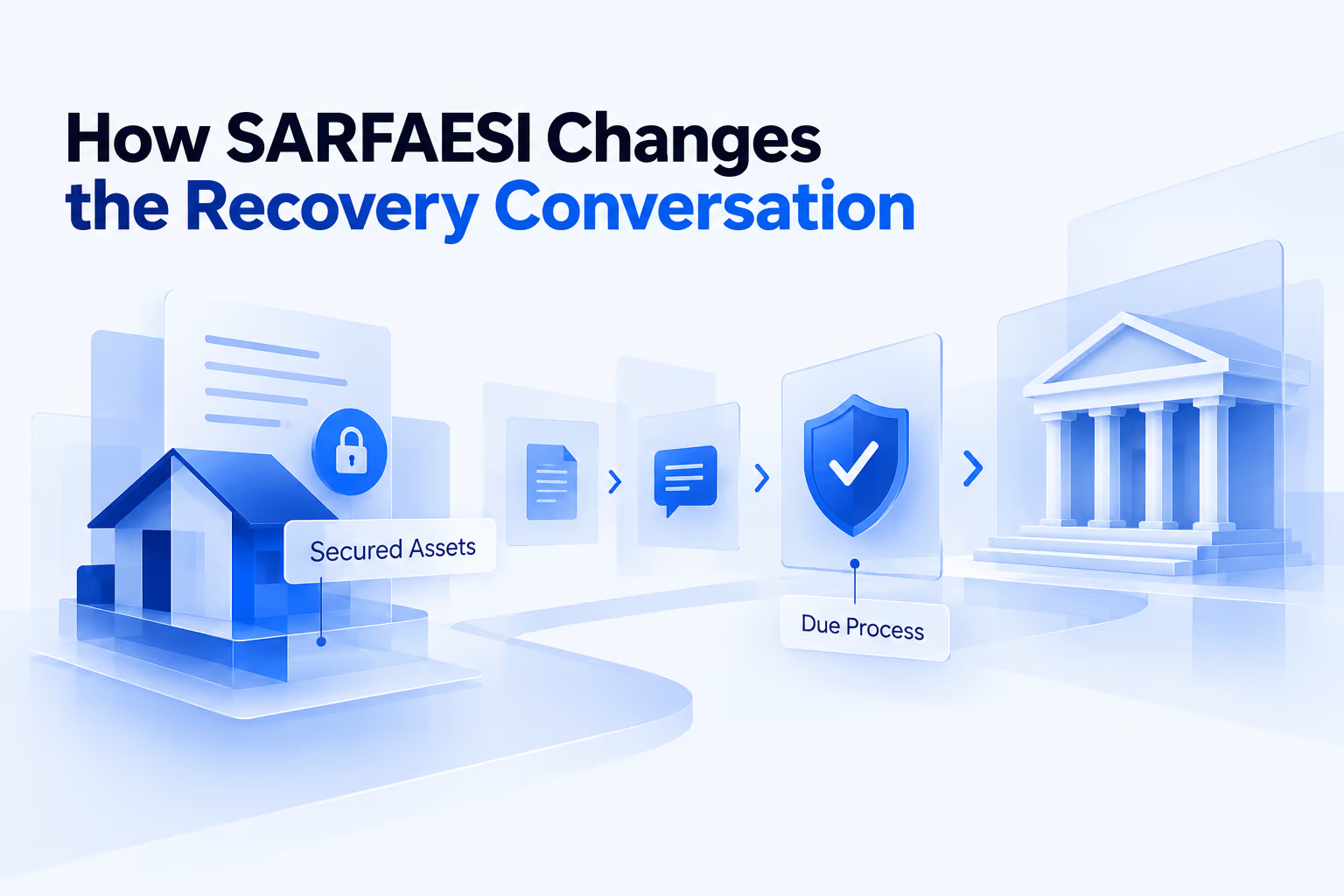
The Securitisation and Reconstruction of Financial Assets and Enforcement of Security Interest Act, 2002 creates a structured route for qualifying secured creditors. It is not a universal procedure for every loan. Whether it applies depends on the lender, facility, security, default and statutory conditions. This helps institutions apply the supreme court guidelines on loan recovery across channels and partners.
1. Early reminders are not statutory notices
Servicing messages may encourage payment or explain consequences, but a statutory notice has a defined legal function. Lenders should avoid making an ordinary reminder look like a completed enforcement step. Borrowers should read the heading, issuing entity, legal provision and response period carefully. This practical safeguard reflects the supreme court guidelines on loan recovery.
2. Possession and sale are staged actions
A borrower may encounter demand, consideration of representations, possession-related steps and an auction process. Rights and deadlines can shift as the process advances. The linked Supreme Court judgment on SARFAESI procedure illustrates why lenders must act strictly within the statute and rules rather than relying on broad contractual language alone. The supreme court guidelines on loan recovery make this control important in daily operations. This requirement also shapes how institutions operationalize Supreme Court guidelines on loan recovery harassment.
3. The forum matters
A grievance desk, ombudsman, Debt Recovery Tribunal, High Court and civil court do not perform the same role. Communication should not direct every objection to one generic inbox. It should identify the internal response route while preserving accurate information about statutory remedies. Teams applying the supreme court guidelines on loan recovery should document this step.
Explain enforcement stages before they escalate.
What a Borrower Should Document
A clear record helps both sides resolve disputes. Borrowers should retain the loan agreement, Key Fact Statement where applicable, repayment schedule, payment receipts, notices, emails, messages and the names or identifiers of people who made contact. Dates and exact wording matter more than general recollections. In this context, the supreme court guidelines on loan recovery require consistent execution.
Documentation is not only defensive. It can reveal a simple operational error before it grows into litigation. Lenders benefit from maintaining the same complete timeline internally and giving complaint teams access to it. This is a measurable control under the supreme court guidelines on loan recovery.
Preserve context across every escalation.
Common Recovery Disputes and the Lawful Response
Recovery disputes usually arise when a creditor, debt collection agency, or liquidator attempts to recover funds, assets, or property, and the debtor or affected party challenges the legal right to do so. In the legal and financial sectors, responding to these disputes requires strict adherence to statutory frameworks to avoid liability, penalties, or loss of claims.
Below is a breakdown of common recovery disputes and the required lawful responses.
“The bank took my vehicle without warning”
Repossession disputes turn on the agreement, notices, conduct and applicable law. The central judicial concern is that lenders cannot use private force as a substitute for legal process. The institution should preserve authorization, notice, inventory, possession and handover records. The borrower should seek the specific document said to authorize the action rather than rely only on a verbal explanation. The supreme court guidelines on loan recovery turn this principle into an operational priority. For teams interpreting Supreme Court guidelines on loan recovery by banks, this is a practical implementation point.
“The notice amount is incorrect”
A disputed figure should be traceable to principal, interest, fees, penal charges and credited payments. The recovery team should not improvise a reconciliation during a pressured call. It should route the issue to an accountable function and give the borrower a reference number and expected response timeline. A defensible workflow under the supreme court guidelines on loan recovery should preserve this evidence.
“The agent threatened arrest”
Loan default by itself should not be described as automatic criminal liability. Criminal consequences require a separate legal basis and process. Scripts that use arrest, police action or public exposure as generic pressure are dangerous because they can misstate the law and undermine voluntary resolution. This helps institutions apply the supreme court guidelines on loan recovery across channels and partners.
“I filed a complaint, so recovery must stop”
A complaint is important but does not necessarily suspend every step. The effect depends on the policy, issue, statute and any direction or order from a competent authority. The lender should investigate without retaliation and should clearly communicate whether outreach is paused, narrowed or continuing. This practical safeguard reflects the supreme court guidelines on loan recovery. This requirement also shapes how institutions operationalize Supreme Court guidelines on loan recovery by banks.
“The lender refused my settlement offer”
A borrower can propose settlement, but acceptance is not automatic unless a binding arrangement already exists. The lender should avoid ambiguous language that could be mistaken for approval. Any accepted settlement should specify amount, deadline, payment route and the effect on the remaining balance and credit reporting. The supreme court guidelines on loan recovery make this control important in daily operations.
“An auction is scheduled while I am trying to pay”
Auction and redemption questions are highly stage-specific. A borrower should act quickly, obtain the notices and seek legal advice. The lender should communicate dates and statutory consequences precisely, since a vague assurance from an agent can conflict with a formal enforcement timetable. Teams applying the supreme court guidelines on loan recovery should document this step.
These examples show why the phrase “borrower rights” cannot be reduced to a promise that recovery will stop. The more accurate protection is access to lawful, reviewable and clearly communicated process. In this context, the supreme court guidelines on loan recovery require consistent execution. A reliable approach to Supreme Court guidelines on loan recovery by banks should make this control observable.
Resolve disputes with clearer communication.
Supreme Court recovery: Balancing Borrower Rights With Lawful Recovery
The Supreme Court’s recovery jurisprudence does not excuse default, and it does not prevent lenders from enforcing valid rights. It draws a firm line around the method. Recovery must move through contract, statute, notice and review not intimidation or improvised force. Banks and NBFCs that make each escalation proportionate, traceable and accurate can protect borrower dignity while preserving the effectiveness of lawful enforcement. That balance is not only a legal principle; it is a practical design requirement for every recovery journey. This is a measurable control under the supreme court guidelines on loan recovery.
Make lawful escalation easier to prove.
FAQs
1. Can a borrower record a recovery call?
Recording rules can depend on circumstances and applicable law. Borrowers should seek legal advice before publishing or relying on a recording. The supreme court guidelines on loan recovery turn this principle into an operational priority.
2. Does the death of a borrower automatically cancel a loan?
Not necessarily. Liability may depend on the contract, insurance, estate, security and the legal position of co-borrowers or guarantors. A defensible workflow under the supreme court guidelines on loan recovery should preserve this evidence.
3. Can a lender refuse a partial payment?
Acceptance depends on the agreement and lender policy. A borrower should obtain written clarity on how any partial payment will be applied. This helps institutions apply the supreme court guidelines on loan recovery across channels and partners.
4. Can criminal proceedings be used for every loan default?
No. A simple repayment default is generally distinct from alleged criminal conduct, which requires its own legal ingredients and process. This practical safeguard reflects the supreme court guidelines on loan recovery.
5. Does filing a complaint stop an auction automatically?
No. A stay or suspension depends on the relevant law, forum and order. Urgent legal advice may be necessary. The supreme court guidelines on loan recovery make this control important in daily operations.