

A branch manager opens the morning repayment list. The microfinance system clearly shows which groups have meetings scheduled, which instalments are due, and which accounts require follow-up.
The data is available. The difficulty begins when the team has to act on it. Loan officers call borrowers individually, send messages from separate devices, make field visits, and record outcomes later. Some customers are unavailable. Others ask for another call in the evening. A group leader responds on WhatsApp, but the update never reaches the collection system.
This gap separates loan management from borrower engagement. The software knows what should happen, but employees still have to initiate, track, and complete every conversation.
Salesforce’s 2025 financial-services research found that 65% of customers expect AI to accelerate financial transactions. Although microfinance depends heavily on trust and community relationships, borrowers increasingly expect the same speed and convenience they experience in other financial services.
Extend microfinance software through Callveriq.
What Is Microfinance Software?
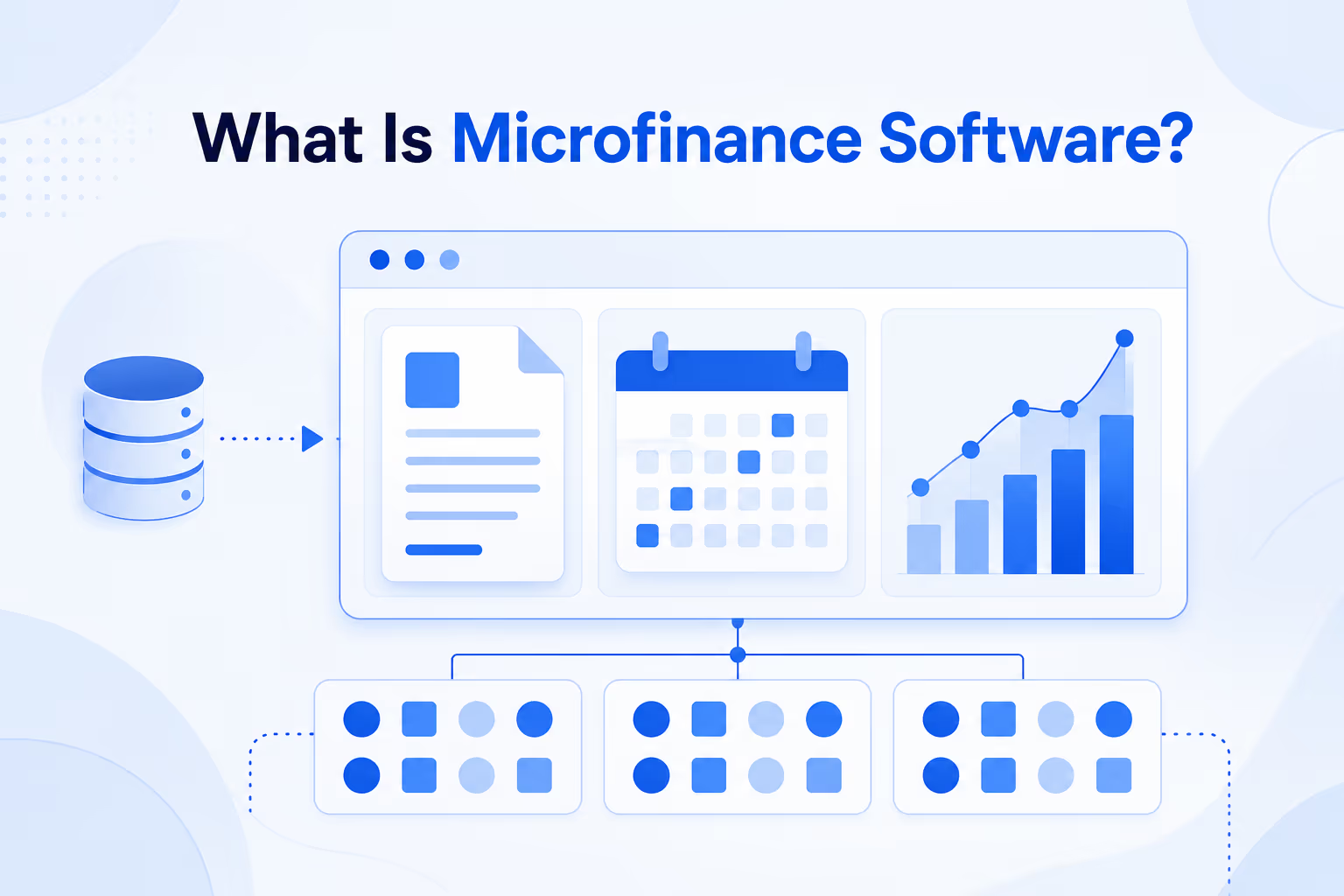
Microfinance software is a specialized platform that helps microfinance institutions manage borrowers, loan products, group structures, repayments, accounting, and portfolio performance. A typical platform may manage:
- Customer onboarding and KYC
- Individual and group loans
- Loan origination
- Repayment schedules
- Interest calculations
- Field collections
- Delinquency tracking
- General ledger and accounting
- Regulatory reporting
- Portfolio-at-risk metrics
- Branch and employee performance
Microfinance software for MFIs acts as the system of record. It tells the institution who borrowed, how much is due, when repayment is expected, and whether an account is current or overdue.
However, storing a due date is different from persuading a borrower to make a payment. The latter requires timely and contextual communication.
Strengthen microfinance software with Callveriq.
How MFIs Manage Group-Loan Follow-Up Manually
Group-lending models rely on recurring communication between borrowers, group leaders, loan officers, and branch teams. This model creates social accountability, but it also produces a large communication workload.
A loan officer may need to:
- Remind a group about its upcoming meeting
- Confirm attendance with the group leader
- Notify members about repayment amounts
- Follow up after a missed meeting
- Understand the reason for non-payment
- Record a promise-to-pay date
- Reschedule a field visit
- Escalate hardship or disputes
When these activities happen through individual calls and personal messaging accounts, the MFI loses consistency and visibility.
Common Manual Follow-Up Gaps
Borrowers may receive calls at inconvenient times. Preferred languages may not always be available. A commitment shared with one employee may not be visible to another. Field employees may also spend valuable hours calling customers who could have responded to an automated reminder.
This creates three costs simultaneously: employee time, delayed collections, and incomplete borrower data.
An AI-powered microfinance software workflow should not remove the relationship between loan officers and borrowers. It should automate the repetitive coordination around that relationship.
This blog is just the start.
Unlock the power of Callveriq’s AI with a live demo.

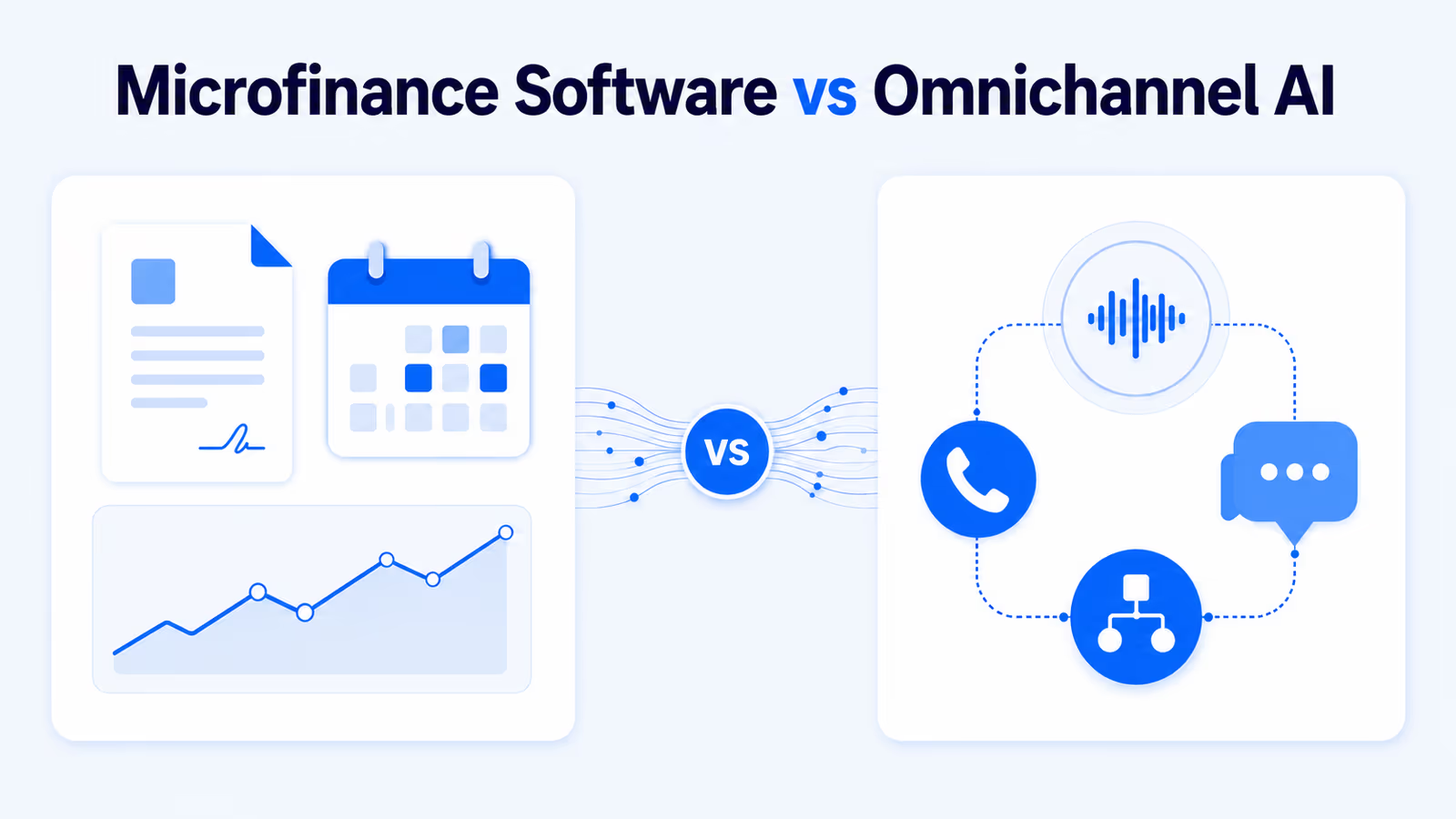
Microfinance Software vs Omnichannel AI
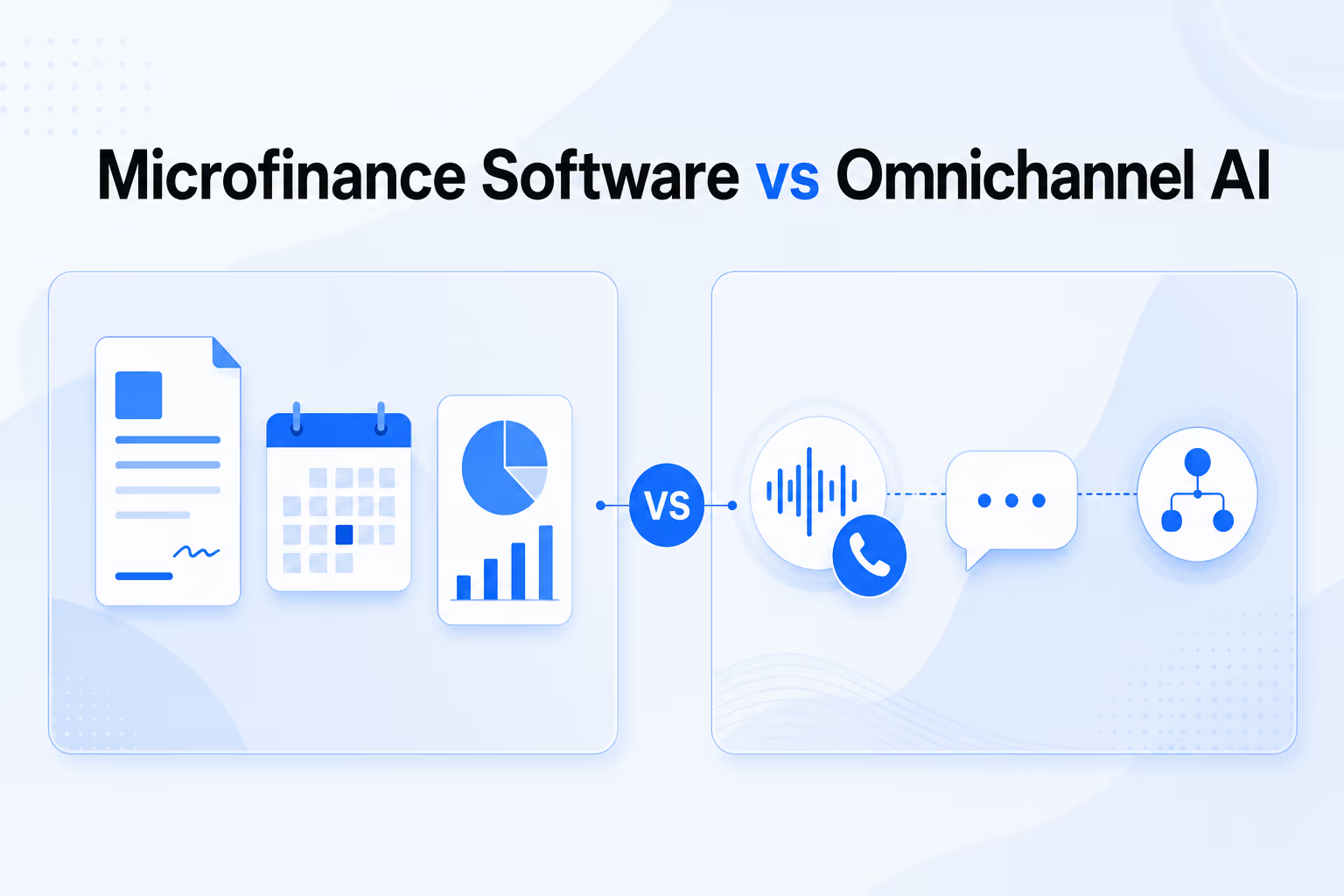
Microfinance software and omnichannel AI solve different parts of the operating model. One manages the financial account. The other manages communication around the account.
The two should not be treated as alternatives. An omnichannel engagement layer becomes more useful when integrated with the MFI’s existing borrower and loan data.
KPMG’s 2025 banking analysis describes the need for connected, context-aware AI agents rather than isolated digital tools. The same principle applies to microfinance: automation must be integrated with trusted operational data and appropriate controls.
Connect microfinance software with Callveriq.
How Omnichannel AI Improves Microfinance Collections
Collections are rarely improved by sending more reminders alone. The communication must arrive at the right time, use the right channel, and respond appropriately to the borrower’s situation.
1. It Automates Pre-Due Reminders
AI can initiate reminders before the repayment date using voice or messaging. Early communication helps distinguish borrowers who are prepared to pay from those who may need assistance.
2. It Understands Borrower Responses
A borrower may say that payment will be made after receiving wages, that the group meeting has moved, or that the repayment amount is unclear. Conversational AI can classify these responses and trigger the appropriate next step.
3. It Records Promises to Pay
Instead of leaving commitments inside call notes, the AI can capture the promised date and schedule a follow-up. This creates a more consistent process for microfinance software for collections.
4. It Coordinates Channels
If a borrower does not answer a call, the system can send an approved WhatsApp or SMS message. If the borrower responds digitally, another unnecessary call can be avoided.
5. It Prioritizes Human Intervention
Routine reminders can be automated, while disputes, financial hardship, fraud concerns, and sensitive collection cases are escalated to trained employees.
6. It Improves Management Visibility
Every automated interaction can produce a structured outcome: contacted, no response, promise to pay, dispute, callback requested, wrong number, or human assistance required.
McKinsey argues that financial institutions often restrict AI to isolated use cases and consequently underestimate its ability to reshape customer engagement and operations. For MFIs, the larger opportunity lies in connecting reminders, conversations, follow-ups, and system updates.
Improve microfinance software through Callveriq.
Where Human Loan Officers Still Matter
Microfinance is built on relationships, local context, and borrower trust. AI should therefore have clearly defined boundaries.
Human intervention remains important when:
- A borrower reports financial hardship
- A customer disputes the outstanding amount
- Group dynamics affect repayment
- Restructuring or policy exceptions are requested
- A vulnerable borrower needs assistance
- The conversation carries legal or reputational risk
- Field verification is necessary
Gartner found that 95% of customer-service leaders planned to retain human agents while defining AI’s role. Its recommendation was effectively digital-first, but not digital-only.
For MFIs, that principle is particularly important. AI should reduce repetitive work without weakening the human support on which responsible lending depends.
Balance microfinance software with Callveriq.
Where Callveriq Fits Into MFI Engagement
Callveriq provides an AI-led engagement layer that can work alongside existing microfinance systems. Voice AI can conduct borrower calls, while WhatsApp and other channels continue the follow-up according to customer responses.
A connected workflow could:
- Receive the repayment schedule from the MFI’s system.
- Contact the borrower before the due date.
- Communicate in the configured language.
- Understand payment intent or callback requests.
- Send a confirmation through WhatsApp.
- Record the interaction outcome.
- Schedule the next action.
- Escalate selected cases to a loan officer.
This allows the MFI to expand borrower reach without asking field and branch teams to manually manage every routine touchpoint.
Add Callveriq to microfinance software.
Connect Loan Records With Borrower Conversations
Microfinance software is essential for managing loan portfolios, group structures, instalments, accounting, and regulatory data. But collection performance depends on what happens after a due record appears on the screen.
Omnichannel AI helps convert that record into coordinated action. It can initiate reminders, understand borrower intent, move between channels, document commitments, and identify where a human employee is genuinely needed.
The most effective model preserves the expertise and trust of loan officers while removing avoidable communication work. Microfinance institutions do not need to replace their core platform. They need to extend it with a borrower-engagement layer that can act consistently, contextually, and at scale.
Reimagine microfinance software with Callveriq. Book your demo.
FAQs
1. Can omnichannel AI support joint-liability group loans?
Yes. Workflows can be configured around group structures, meeting dates, repayment schedules, and group-leader communication.
2. Does AI collection require changes to the core lending system?
Not necessarily. AI can be integrated with existing systems through supported APIs, data transfers, or workflow connectors.
3. Can borrowers select their preferred communication language?
Yes. Language can be selected using profile data, campaign rules, or the borrower’s response during the interaction.
4. How can MFIs prevent excessive automated reminders?
Institutions should define contact-frequency limits, channel rules, consent requirements, quiet hours, and stop conditions.
5. What should an MFI measure during an AI pilot?
Measure connectivity, promise-to-pay rates, payment completion, cost per successful interaction, escalation rates, and borrower complaints.