

Almost every text you get about a delivery, every one-time passcode, every "your driver is arriving" alert, there's a good chance CPaaS is quietly powering it. It's one of the most widely used technologies most people have never heard of.
But there's a common mix-up worth clearing up early. Because CPaaS touches voice, chat, and messaging, it often gets lumped in with newer tools like AI sales agents that also work across those channels. They sound similar. They are not the same thing, and confusing them leads teams to buy the wrong tool for the job.
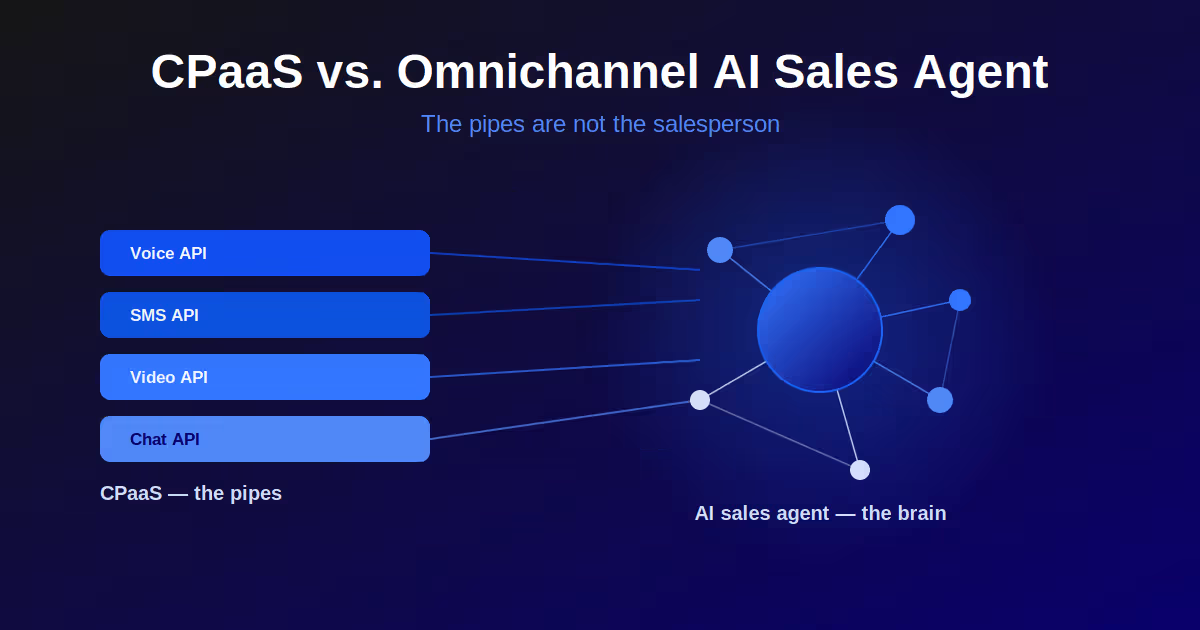
Here's the simplest way to hold the difference: CPaaS is a box of building blocks, and an omnichannel AI sales agent is a finished machine. One is infrastructure you assemble; the other is an outcome you deploy. This post unpacks what CPaaS actually is, then shows exactly where it ends and where an intelligent, conversation-driving AI agent begins.
See An AI Sales Agent
What exactly is CPaaS?
CPaaS stands for Communications Platform as a Service. Strip away the jargon and it's a cloud service that hands developers ready-made communication features they can drop into their own software, without building phone or messaging infrastructure from scratch.
The Core Definition
CPaaS is an API-first platform. Instead of buying a finished app, developers get programmable building blocks ,a voice API, an SMS API, a video API ,and wire them into their existing products. Think of it as renting the communication rails rather than laying your own track.
The defining traits are consistent across providers:
- API-driven ,everything is accessed through code, not a dashboard.
- Cloud-based ,no hardware, no telecom contracts to manage.
- Pay-as-you-go ,you're billed for what you use (messages, minutes).
- Developer-first ,it assumes you have engineers to build with it.
Key Building Blocks (APIs)
Most CPaaS platforms expose the same core capabilities as separate APIs you combine as needed:
- Voice ,place and receive calls inside your app.
- SMS / messaging ,send alerts, OTPs, and notifications.
- Video ,embed live video calling.
- Chat ,add in-app or web messaging.
The point is modularity: you take only the pieces you need and assemble the experience yourself.
CPaaS Vs SaaS, UCaaS And CCaaS
CPaaS is easy to confuse with its "as-a-service" cousins, but each solves a different problem. SaaS gives you a finished application. UCaaS bundles internal team communication (calls, chat, video) into a ready-to-use tool. CCaaS delivers a full cloud contact center for customer-facing support ,a model Callveriq breaks down in its guide to contact center as a service. CPaaS sits underneath them all: the programmable layer others are often built on.
Explore Beyond Communication APIs
What Can CPaaS Actually Do?
Because CPaaS is so flexible, it powers an enormous range of everyday experiences. But that same flexibility comes with a catch worth understanding before you buy.
Common Real-World Use Cases
If you've interacted with a modern app, you've likely used CPaaS without knowing it:
- Two-factor authentication ,the login code texted to your phone.
- Appointment reminders ,automated SMS from a clinic or salon.
- Delivery notifications ,real-time updates from a courier.
- In-app calling ,the "call driver" button in a ride app.
Why Developers Love It
The appeal is control and speed. Developers can add sophisticated communication features in days instead of months, scale them globally without new hardware, and pay only for usage. For teams building a custom product, that flexibility is hard to beat ,it's the same modular philosophy that makes cloud platforms so easy to integrate and scale.
Where CPaaS Stops Short
Here's the crucial limit. CPaaS delivers the channels ,but it has no intelligence of its own. It can send a message or connect a call, but it won't decide what to say, understand a customer's intent, or move a deal forward. It's a set of pipes, not a brain. The moment you need the communication to actually think and sell, CPaaS alone isn't enough ,and that's exactly the gap an AI sales agent fills.
See What CPaaS Can't Do
This blog is just the start.
Unlock the power of Callveriq’s AI with a live demo.

What's An Omnichannel AI Agent?
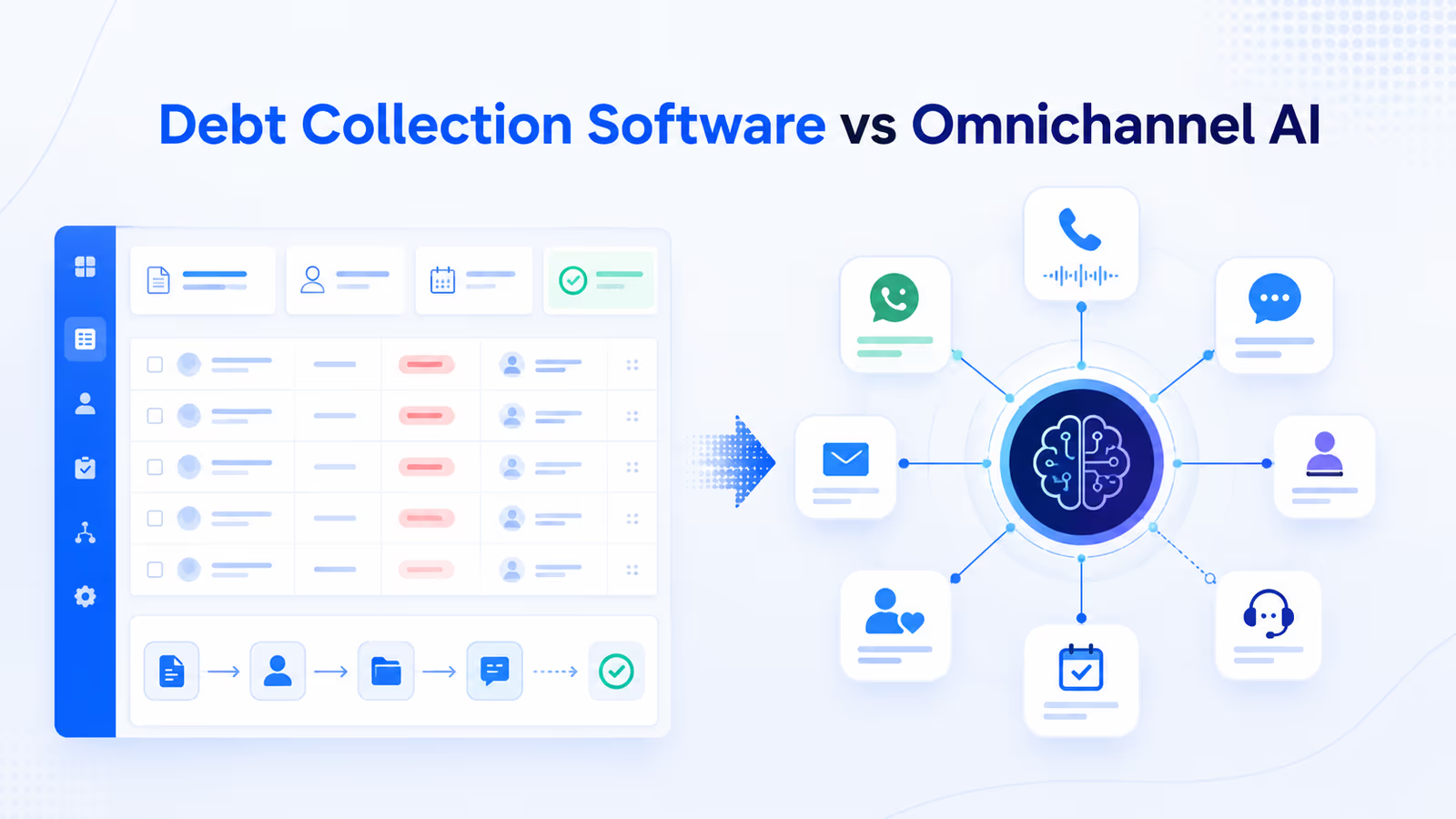
If CPaaS is the raw communication layer, an omnichannel AI sales agent is a fully-formed worker built to have conversations and drive revenue. It's not infrastructure ,it's an outcome.
Beyond Pipes To Conversations
An omnichannel AI sales agent uses natural language and large language models to actually converse ,understanding what a customer means, responding intelligently, and pursuing a goal like booking a demo or closing a sale. Callveriq notes these agents go far beyond scripted bots, functioning as intelligent, decision-making assistants powered by LLMs and live data, as it details in its breakdown of the best AI agents. Where CPaaS moves messages, the AI agent holds a dialogue.
Selling Across Every Channel
"Omnichannel" means the agent works consistently across voice, chat, and messaging ,with shared context following the customer between them. Callveriq's AI Phone Calls run autonomous inbound and outbound conversations across sales, support, and collections, qualifying leads and answering questions in natural language across touchpoints. It doesn't just reach the customer everywhere; it remembers them everywhere.
One Brain, Many Touchpoints
The real leap is intelligence applied to selling. Callveriq reports that AI sales agents can drive meaningful gains ,like up to 21% more revenue and conversions ,by qualifying leads, personalizing pitches, and never dropping context. That's something a communication API, on its own, simply cannot do.
Meet Your Omnichannel AI Agent
How Do The Two Differ?
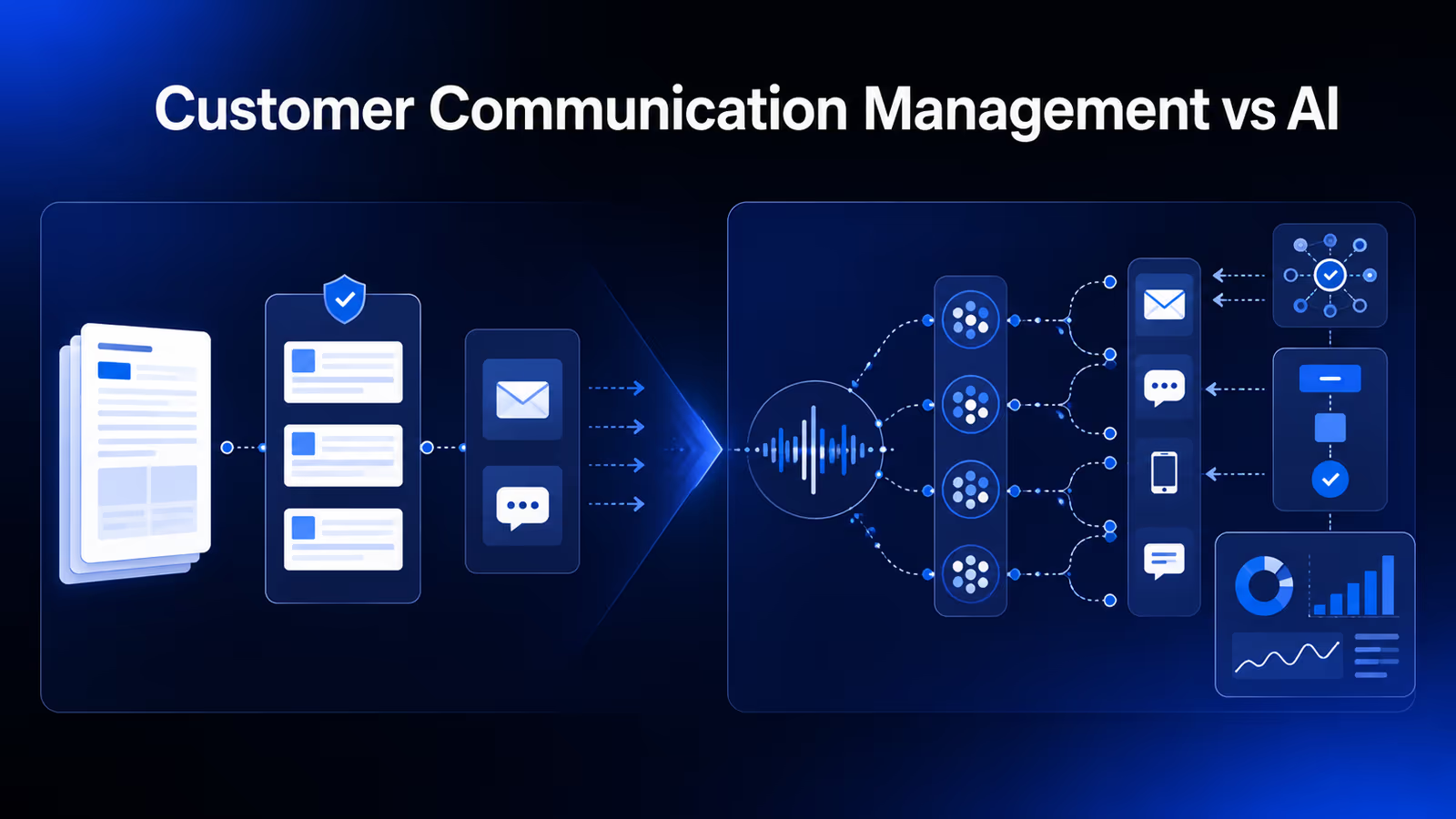
Once you see CPaaS as infrastructure and the AI sales agent as a finished worker, the differences fall into place. They're not competitors ,they operate at completely different layers of the stack.
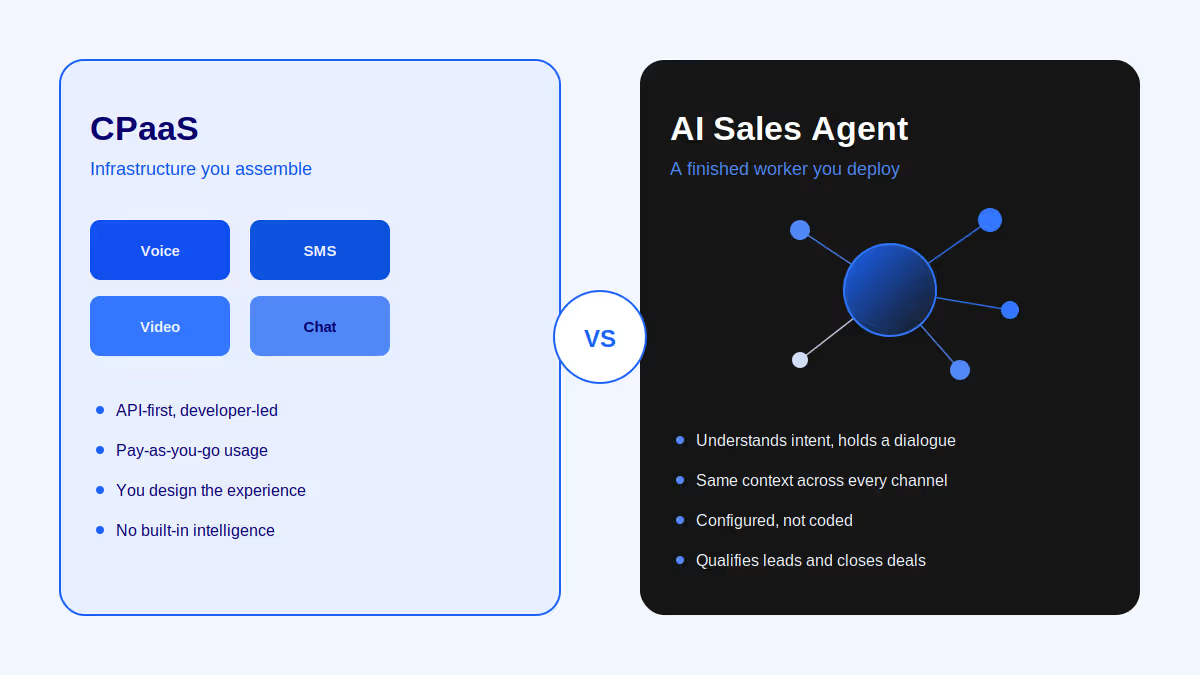
Toolkit Vs Finished Worker
The cleanest way to hold the distinction:
- CPaaS = the ingredients and the kitchen. Raw capability, endlessly flexible.
- AI sales agent = the chef who cooks the meal. A finished outcome, ready to work.
You can build almost anything with CPaaS, but you have to build it. An AI sales agent arrives already knowing how to sell.
Build-It-Yourself Vs Ready-To-Sell
This shapes who each tool is for:
- CPaaS demands engineers, roadmaps, and ongoing maintenance to turn APIs into an experience.
- An AI sales agent is deployed and configured ,tone, goals, scripts ,without writing communication infrastructure from scratch.
Which Problem Each Solves
CPaaS answers "how do I add communication channels to my product?" An omnichannel AI sales agent answers "how do I have more, better sales conversations without hiring more reps?" Callveriq frames this shift toward intelligent, conversation-led automation in its look at the leading conversational AI companies. Same channels, very different jobs.
Skip The Build ,Start Selling
Which One Do You Need?
There's no universally "better" option ,only the right fit for what you're trying to accomplish. A few simple signals point the way.
Choose CPaaS If...
CPaaS is the right call when you're building communication into your own software and have the team to do it:
- You have developers ready to build and maintain integrations.
- You need granular control over a custom communication flow.
- Communication is a feature of your product, not a sales function.
Choose An AI Sales Agent If...
An omnichannel AI sales agent fits when the goal is outcomes, not infrastructure:
- You want to qualify leads and sell across channels, fast.
- You'd rather deploy than build and maintain.
- You need intelligent conversations at scale ,the model Callveriq describes for AI-driven sales teams.
Or Use Them Together
They're not mutually exclusive. Many intelligent agents are built on top of CPaaS-style rails ,the APIs carry the message, and the AI decides what the message should be. For most sales and support teams, though, the practical question isn't which layer to license; it's whether you want to build the plumbing or just turn on the tap.
Find Your Right Fit
The Bottom Line On CPaaS
CPaaS is one of the quiet engines of the modern internet ,a flexible, developer-first way to add voice, messaging, and video to any application. If you're building a product and need communication rails, it's hard to beat. But it's infrastructure, and infrastructure doesn't sell for you.
An omnichannel AI sales agent lives one layer up: it takes those channels and adds the intelligence to actually converse, qualify, and convert. So the real question isn't "CPaaS or AI agent?" They're different tools for different jobs. It's "do I want to build the communication, or deploy something that already knows how to sell across every channel?" For most teams chasing revenue rather than roadmaps, that answer writes itself.
FAQs
1. What is CPaaS in simple terms?
CPaaS (Communications Platform as a Service) is a cloud service that gives developers APIs to add voice, SMS, chat, and video into their own apps ,without building telecom infrastructure themselves.
2. Is CPaaS the same as an AI sales agent?
No. CPaaS is the raw communication layer (the pipes). An omnichannel AI sales agent is a finished, intelligent tool that holds conversations and drives sales using those channels.
3. What's the difference between CPaaS and CCaaS?
CPaaS provides programmable APIs developers build with. CCaaS is a ready-to-use cloud contact center for customer support. CPaaS is often the layer CCaaS is built on.
4. Do I need developers to use CPaaS?
Yes ,CPaaS is API-first and assumes engineering resources to integrate and maintain it. An AI sales agent, by contrast, is deployed and configured rather than coded.
5. Can CPaaS and an AI sales agent work together?
Yes. Many AI agents run on CPaaS-style rails ,the APIs deliver the message across channels, while the AI decides what to say and how to move the conversation forward.