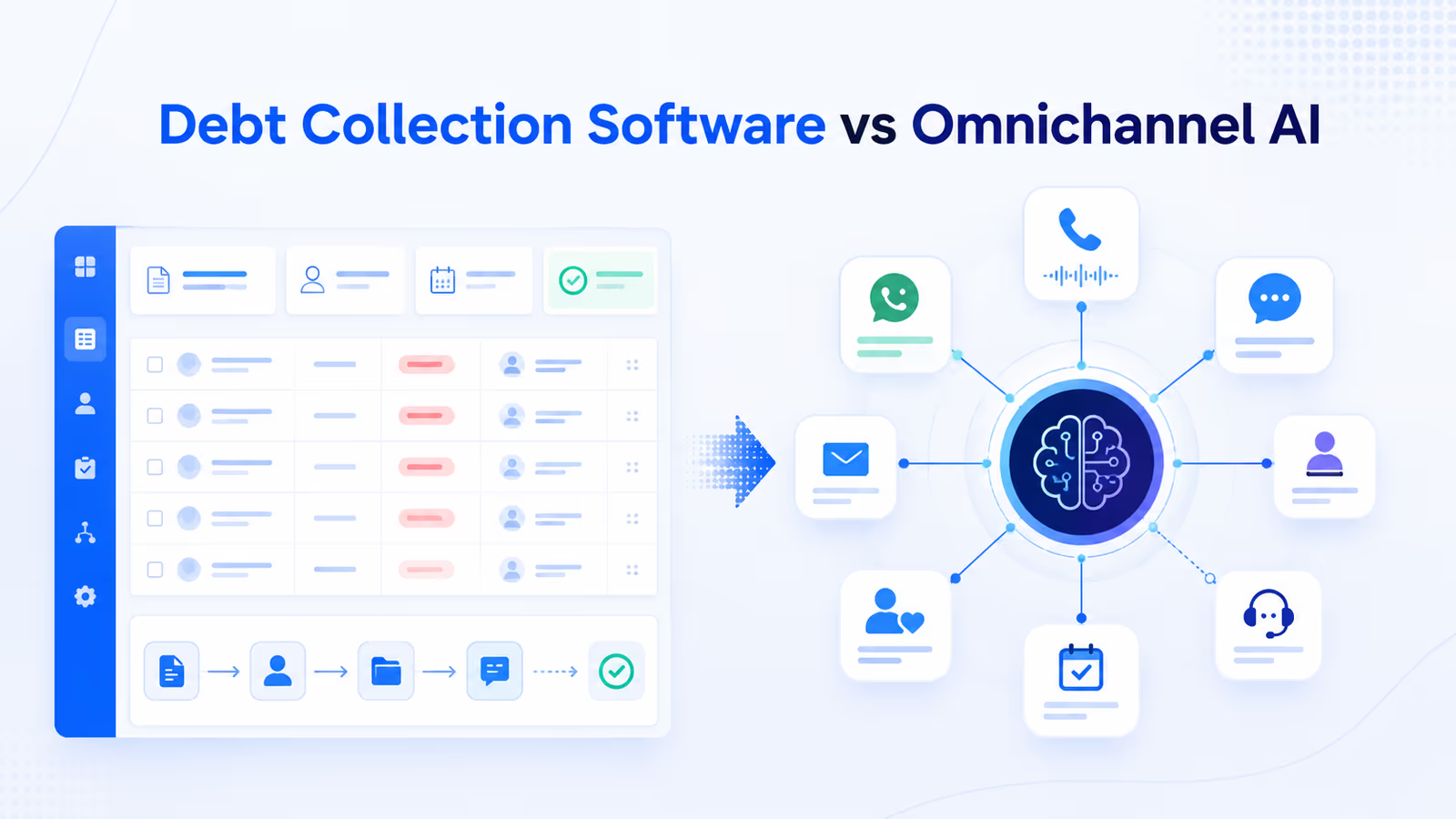


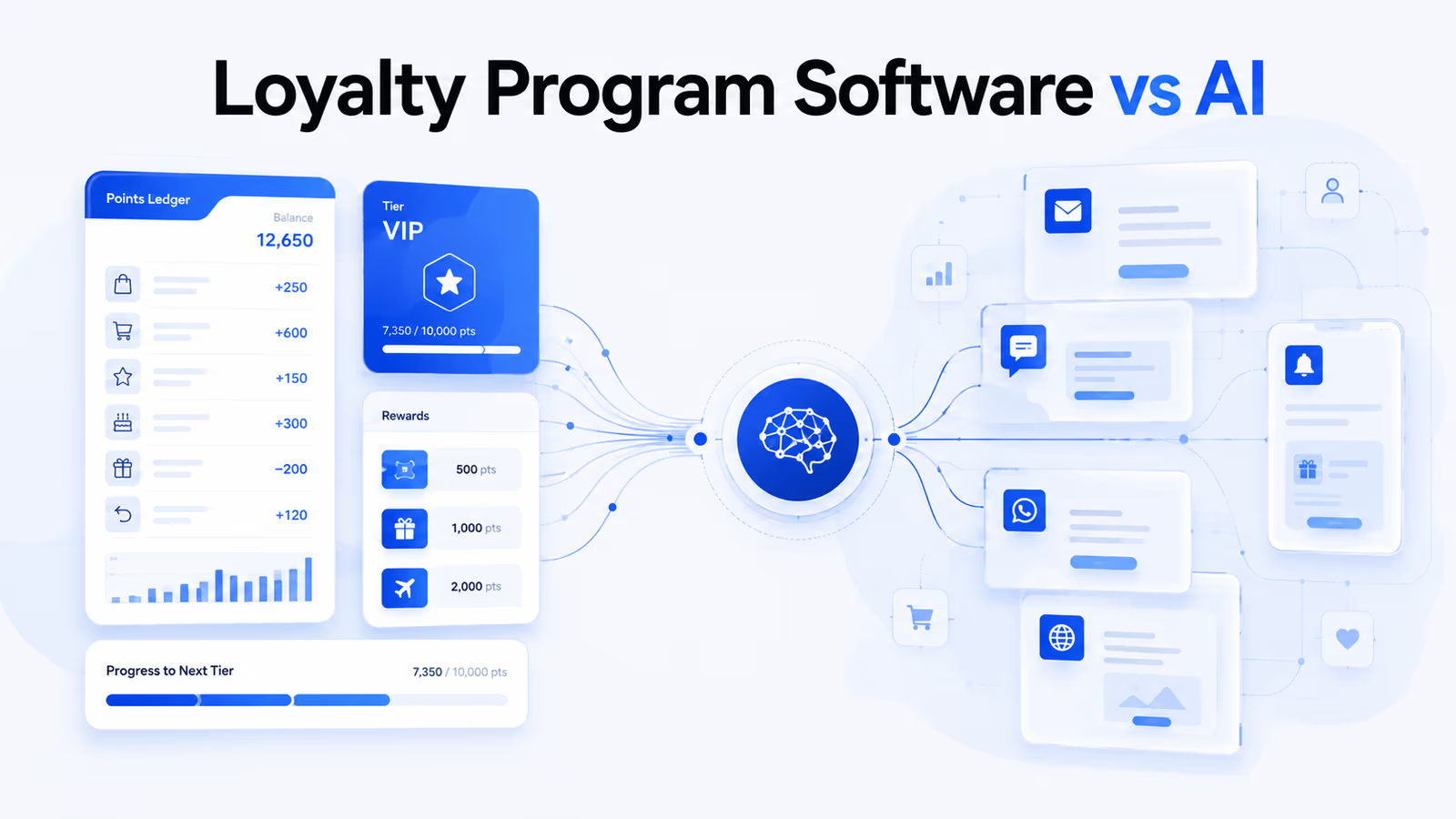
Omnichannel AI adds an action layer to loyalty data. It can identify purchase intent, contact customers through suitable channels, recommend relevant rewards, recover abandoned journeys and answer questions in real time. Loyalty software supplies the rules and customer history; omnichannel AI turns those inputs into personalised retention conversations. Together, they help brands move beyond passive points accumulation toward measurable repeat purchases.
A customer buys skincare products from a D2C brand, earns 350 loyalty points and receives a standard confirmation email. Six weeks later, the product is likely running low. The customer has not returned, even though the account contains enough points for a reward.
The brand’s loyalty program software did its job. It recorded the transaction, updated the points balance and placed the customer in the correct membership tier. But no meaningful conversation occurred when the next purchase became relevant.
Points create potential value. They do not automatically create urgency, relevance or action.
This is why retention teams increasingly need to look beyond reward administration. Salesforce reported in 2025 that 70% of surveyed consumers would use AI agents to optimise loyalty points. McKinsey’s 2025 next-best-experience framework similarly describes how data and AI can select the most relevant interaction for a customer at a particular moment. For D2C brands, the opportunity is to connect loyalty data with proactive, contextual engagement across connected customer journeys.
Extend loyalty program software impact.
What Is Loyalty Program Software?
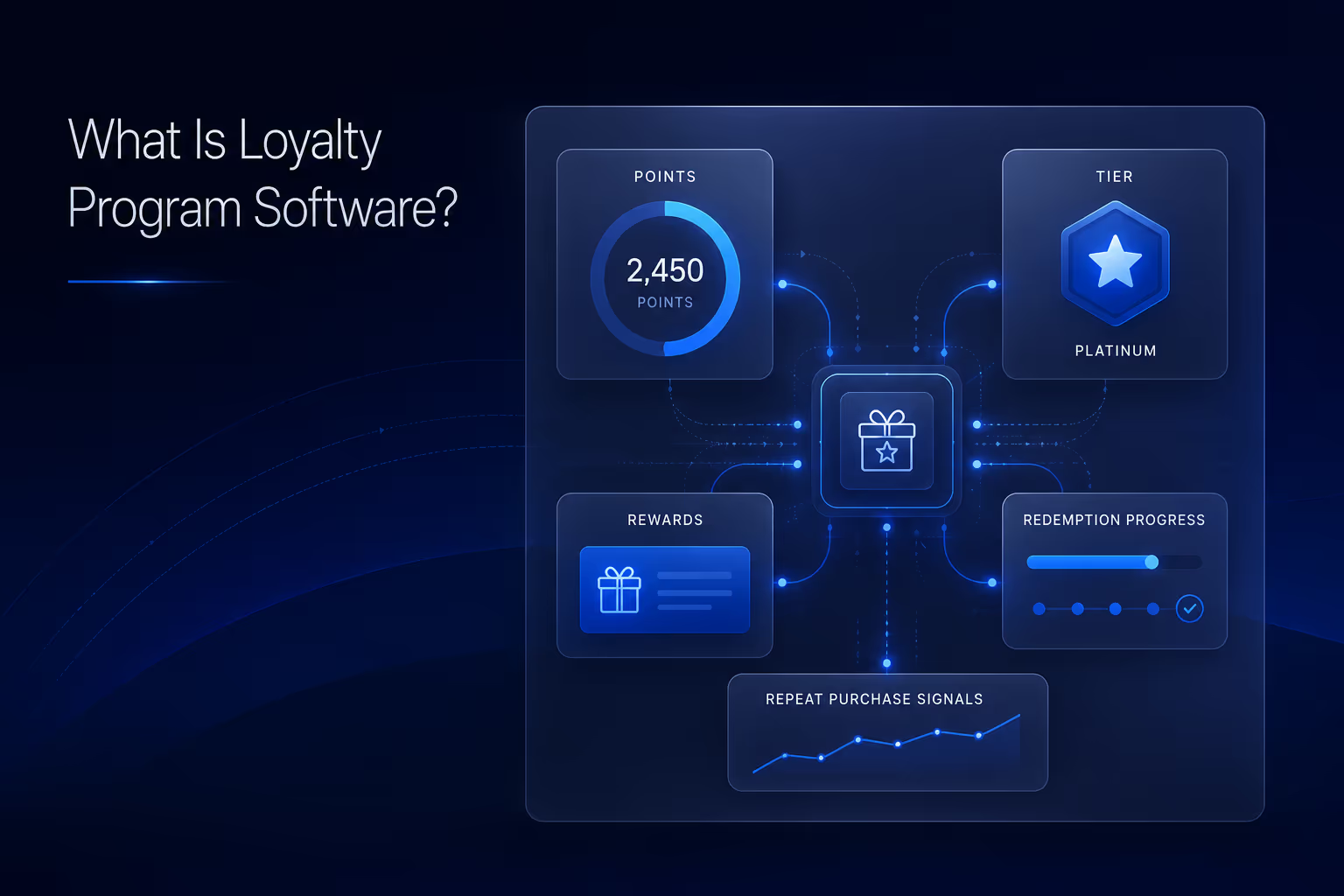
Loyalty program software helps brands create, operate and measure structured customer-reward programmes. It connects purchases and other eligible activities with points, benefits, tiers or incentives. A customer may earn rewards for:
- Completing a purchase
- Reaching a spending threshold
- Referring another customer
- Submitting a review
- Joining a membership tier
- Completing a profile
- Participating in a campaign
- Redeeming a personalised offer
The software applies predefined rules and maintains a ledger of customer activity.
Loyalty program software for D2C brands is particularly useful because digital-first companies can connect transaction data with customer identities across their stores and applications. However, a well-maintained points ledger answers “What has the customer earned?” It does not necessarily answer “What should the brand say next?”
Modernize your loyalty program software journeys.
Why Don’t Loyalty Points Alone Drive Repeat Purchases?
Loyalty points are only valuable when customers understand them, remember them and find the associated reward relevant.
1. Customers Forget Their Balances
A points balance may remain hidden inside an account or application. If the customer does not revisit the store, the reward cannot influence the next decision.
Periodic balance emails help, but they often arrive without a connection to current intent, product usage or purchase timing.
2. Rewards May Lack Immediate Relevance
A customer may technically qualify for a discount but have no reason to buy the promoted product. Generic incentives can increase discount exposure without meaningfully improving retention.
KPMG’s 2025 connected-commerce research highlights loyalty and personalisation as important levers for customer retention and sales. The implication is that loyalty mechanics need to connect with individual context rather than operate as a standalone discount system.
3. Points Do Not Resolve Purchase Friction
Even an interested customer may have questions:
- Can points be combined with another offer?
- When will the reward expire?
- Is the preferred product in stock?
- Which product suits the customer’s previous purchase?
- Can the delivery date be changed?
- Why did a redemption fail?
If the answer is hard to obtain, the reward loses momentum.
4. The Programme Waits for Customers to Return
Traditional loyalty journeys are often reactive. The brand records activity and sends scheduled campaigns, but the customer must reopen the website or app.
That limits loyalty program software for repeat purchases. Repeat buying depends not only on reward availability, but also on timely outreach, product relevance and low-friction assistance.
Advance loyalty program software retention.
This blog is just the start.
Unlock the power of Callveriq’s AI with a live demo.

How Does AI Turn Loyalty Data Into Proactive Outreach?
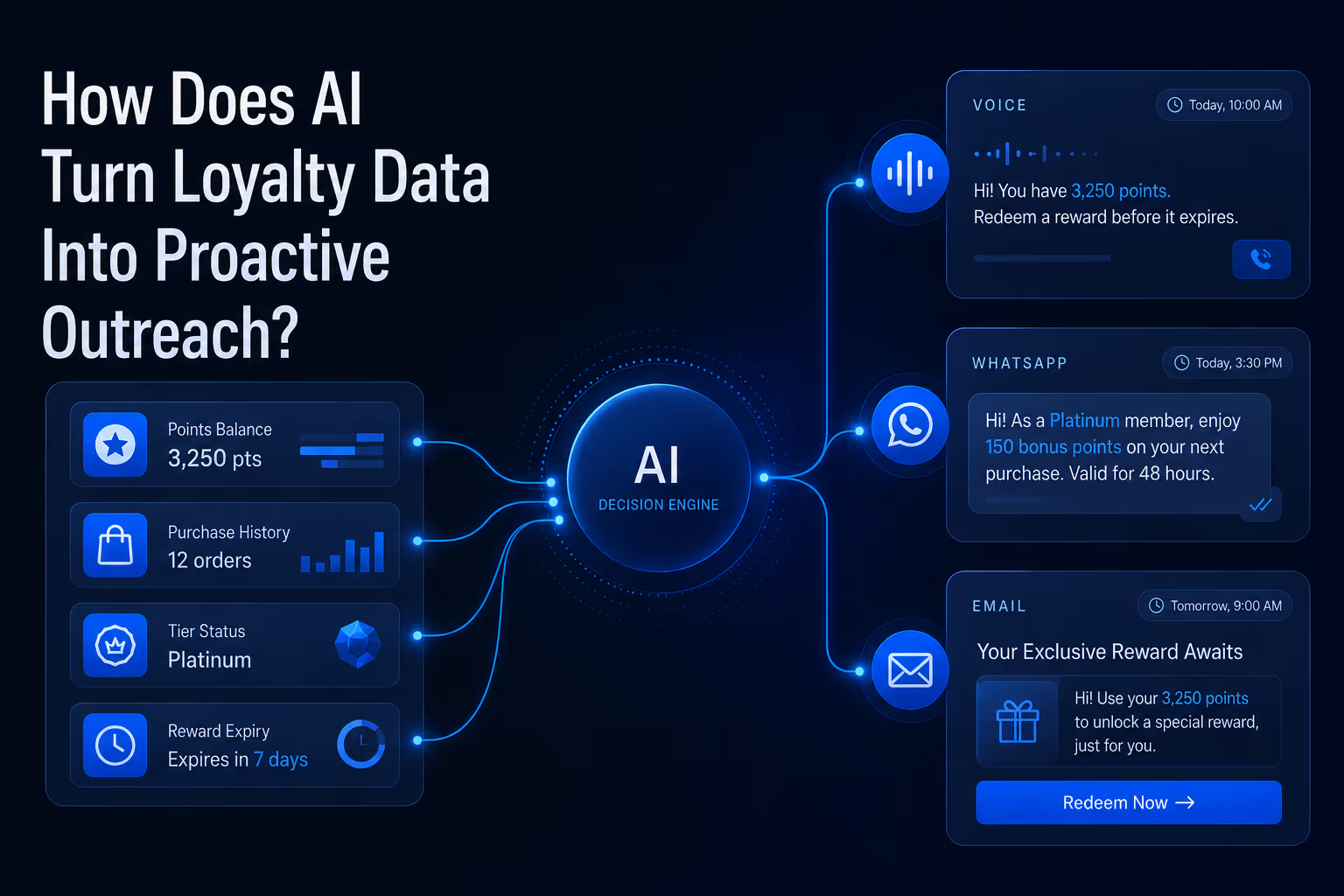
AI can analyse approved loyalty, transaction and interaction data to determine who should be contacted, why the outreach matters and which action should follow.
Identifying the Next Relevant Moment
Different customers require different retention triggers. An AI workflow might respond to:
- Points approaching expiry
- A replenishment window
- An abandoned cart
- A new tier qualification
- A preferred product returning to stock
- A subscription payment failure
- A long gap since the previous purchase
- Repeated product-page visits
This moves the brand from batch campaigns to event-based engagement.
Personalising the Conversation
McKinsey’s next-best-experience research explains how predictive models, recommendation engines and generative AI can work together to decide what a customer needs in a particular moment.
For a D2C brand, that could mean reminding a customer about expiring points while recommending a product related to the previous purchase, not sending the same coupon to the entire database.
Continuing Across Channels
A customer may ignore email but respond on WhatsApp. Another may prefer a voice conversation for a failed payment or complicated redemption.
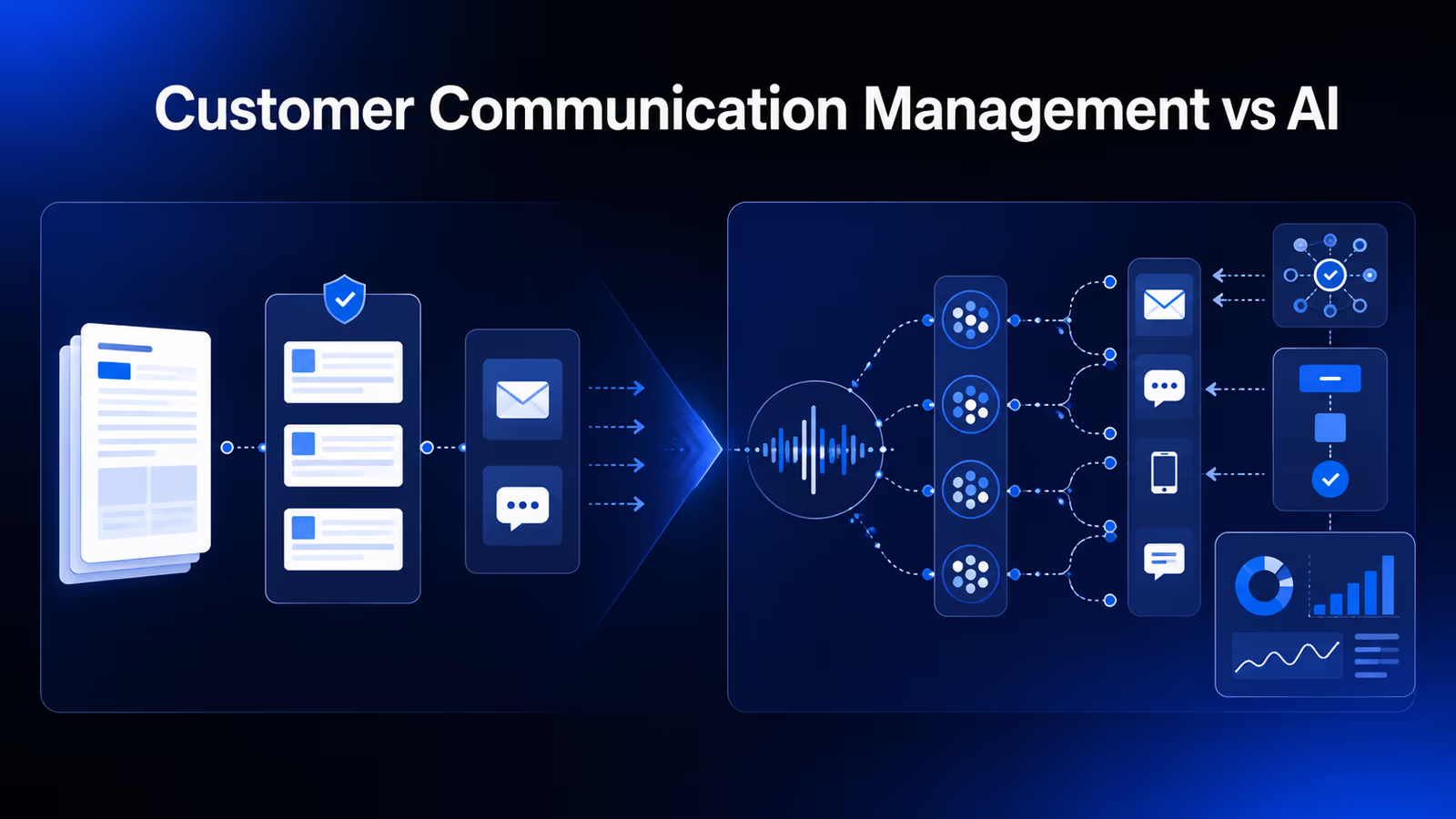
An omnichannel AI agent can maintain context across approved channels instead of treating each interaction as a separate campaign. An omnichannel AI agent can maintain context across approved channels instead of treating each interaction as a separate campaign. It can answer questions, capture intent and transfer the conversation when human support is needed.
Writing Outcomes Back to the System
AI engagement should not create another isolated data source. Outcomes such as interested, purchased, unavailable, opted out or needs assistance should return to the appropriate customer record.
That feedback improves future segmentation and makes loyalty program software with omnichannel AI progressively more useful.
Connect loyalty program software conversations.
Loyalty Software vs an Omnichannel AI Agent
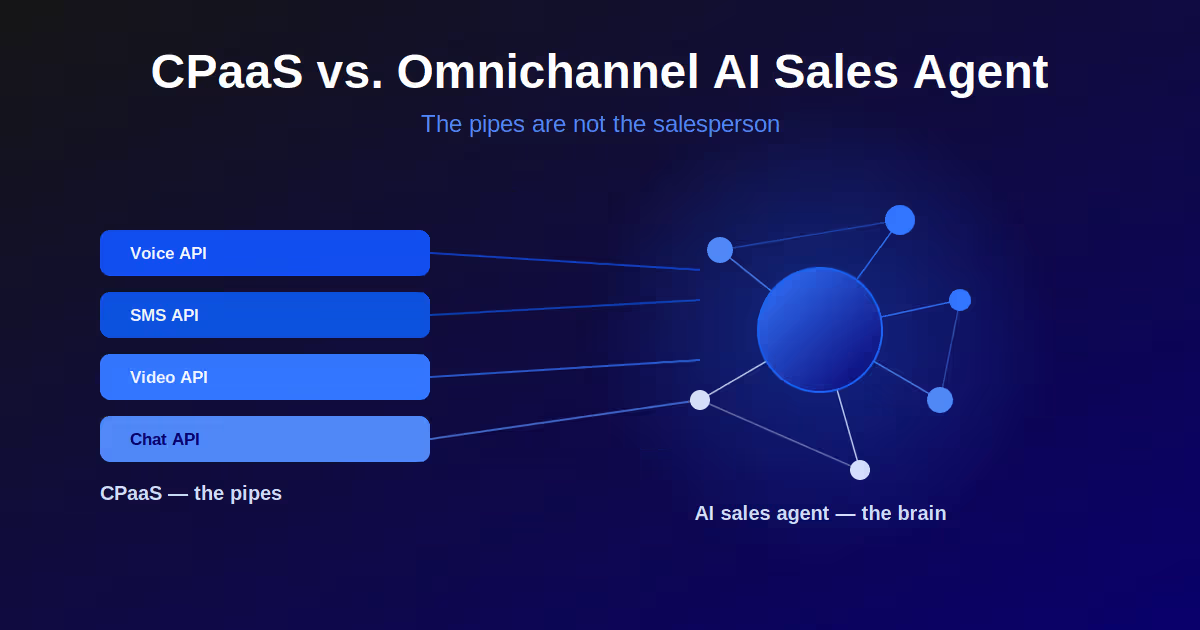
The two systems participate in the same retention journey but perform different jobs.
A brand should not expect an AI agent to become the financial ledger for loyalty points. Nor should it expect the loyalty platform alone to conduct nuanced, multi-turn conversations.
The most effective architecture gives each system a clear responsibility. Loyalty software determines what a customer is entitled to. AI determines how to help the customer use that entitlement appropriately.
Amplify loyalty program software value.
Where Callveriq Fits Into D2C Retention
Callveriq can help D2C brands convert customer and loyalty events into proactive conversations across voice and digital channels.
Relevant workflows may include:
- Expiring-points reminders
- Abandoned-cart recovery
- Replenishment outreach
- Membership-tier education
- Failed-payment recovery
- Reward-redemption assistance
- Lapsed-customer reactivation
- Post-purchase feedback
- Human escalation for high-value customers
Callveriq can use approved data from connected systems to personalise communication and record outcomes. The existing loyalty platform continues to calculate balances, tiers and reward eligibility.
This distinction matters because AI outreach should never invent discounts, alter balances independently or make unapproved commitments. It should operate within the rules supplied by the brand.
A D2C company can begin with one high-intent cohort, such as customers whose points will expire within 14 days and compare purchases, redemptions, opt-outs and cost per recovered customer against its existing campaign.
Scale loyalty program software engagement.
How D2C Brands Should Measure the Combined Model
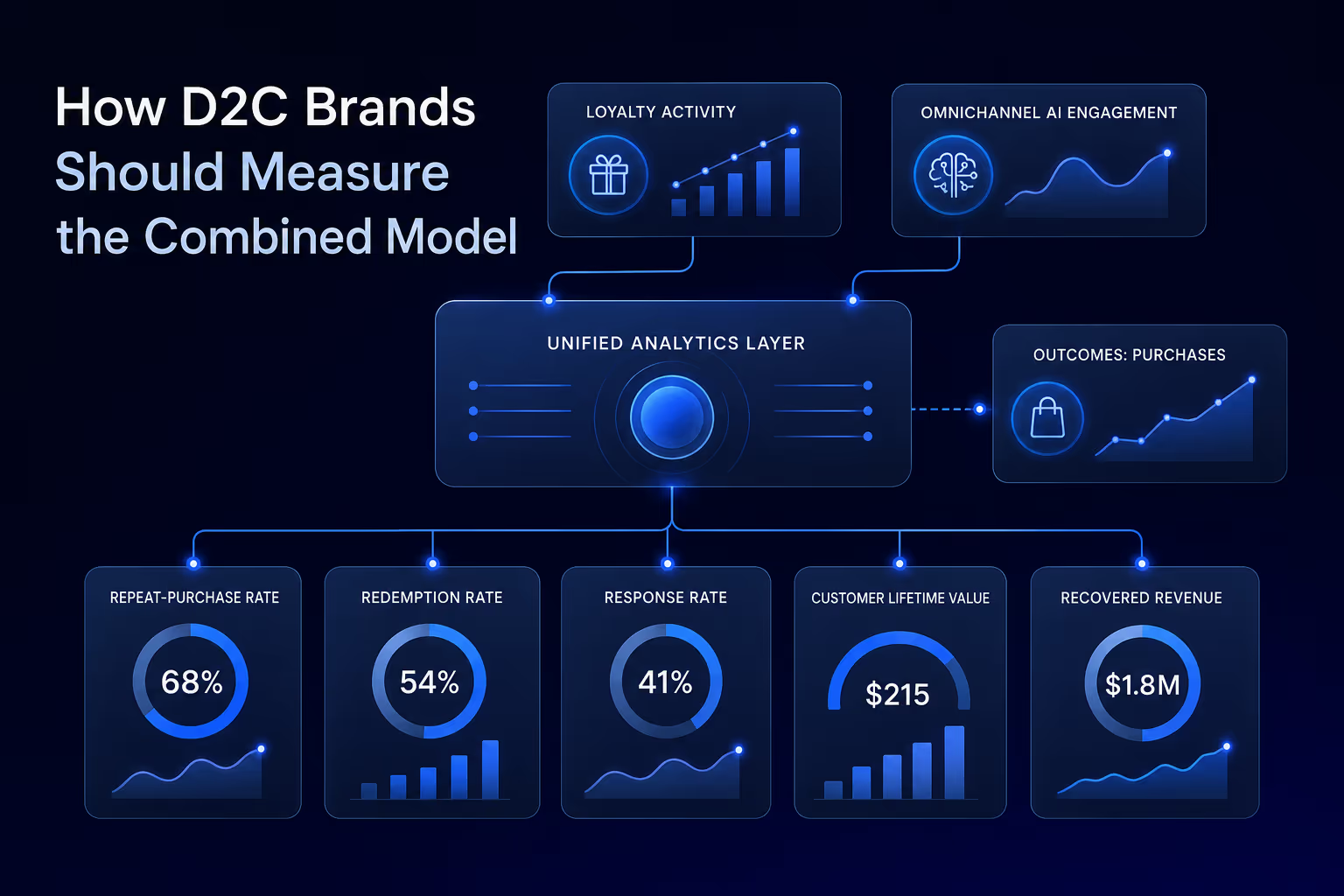
Programme enrolment and points issuance provide an incomplete picture of commercial value. Brands should connect loyalty activity with customer behaviour and engagement outcomes.
The aim is not to maximise messaging volume. Excessive outreach can damage trust and increase unsubscribes.
Salesforce’s 2025 retail research found that 75% of surveyed retailers believed AI agents would be essential for competitiveness, while shoppers expressed interest in using agents to manage loyalty points. Gartner’s 2025 analysis also points toward simpler conversational journeys as consumers become less tolerant of fragmented service channels.
Brands should use these capabilities selectively, with frequency limits, consent controls and clear human escalation.
Measure loyalty program software revenue.
What Is It in for You
Loyalty program software establishes the economic structure of a rewards programme. It decides how customers earn points, which benefits they can access and how redemptions are processed. Yet points held silently inside an account cannot generate retention by themselves.
Omnichannel AI makes loyalty data operational. It helps brands identify relevant moments, initiate conversations, resolve routine friction and guide customers toward an appropriate next action. The result is not merely a more automated loyalty programme, but a more responsive customer journey.
For D2C brands, the practical strategy is to retain loyalty software as the rules engine and add AI as the engagement engine. When both systems share context and respect customer preferences, rewards become timely reasons to return rather than balances customers eventually forget.
Transform loyalty program software retention. Book your Callveriq demo.
FAQs
1. Should every loyalty member receive AI outreach?
No. Brands should prioritise relevant triggers and respect consent, preferences, frequency limits and previous responses.
2. Can omnichannel AI create customer discounts?
It should only apply offers and rules explicitly approved by the brand and supplied by connected systems.
3. Which loyalty cohort is best for an initial AI pilot?
Customers with expiring points, abandoned carts or predictable replenishment needs are useful starting cohorts.
4. How can brands prevent excessive loyalty messaging?
Use channel preferences, suppression rules, frequency caps and opt-out handling across every connected workflow.
5. Does AI retention work for low-frequency products?
Yes, but triggers should reflect the category’s natural buying cycle rather than push unnecessary purchases.