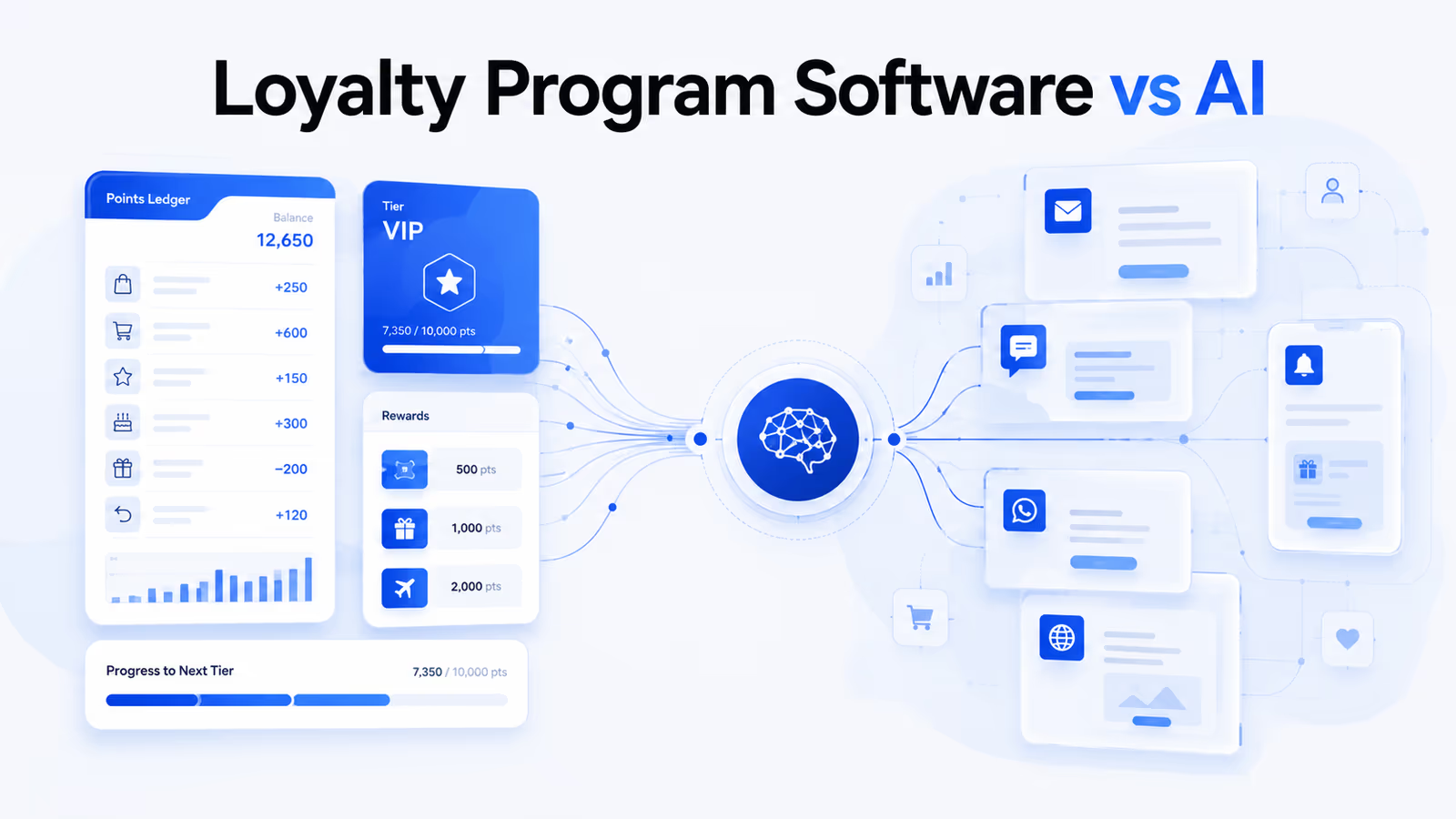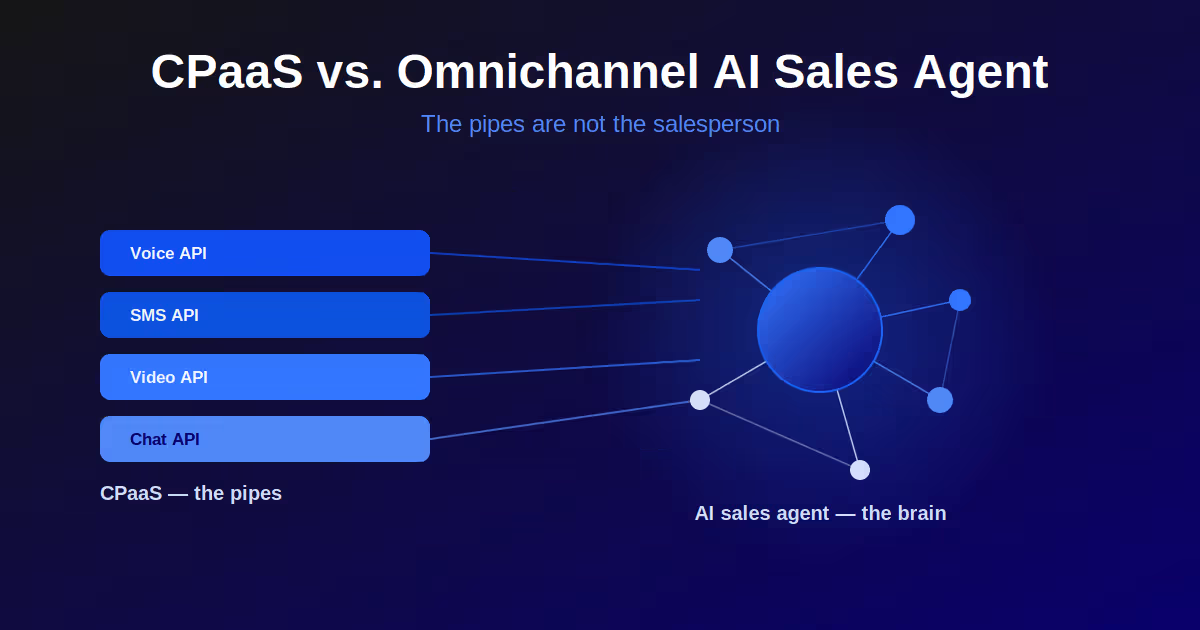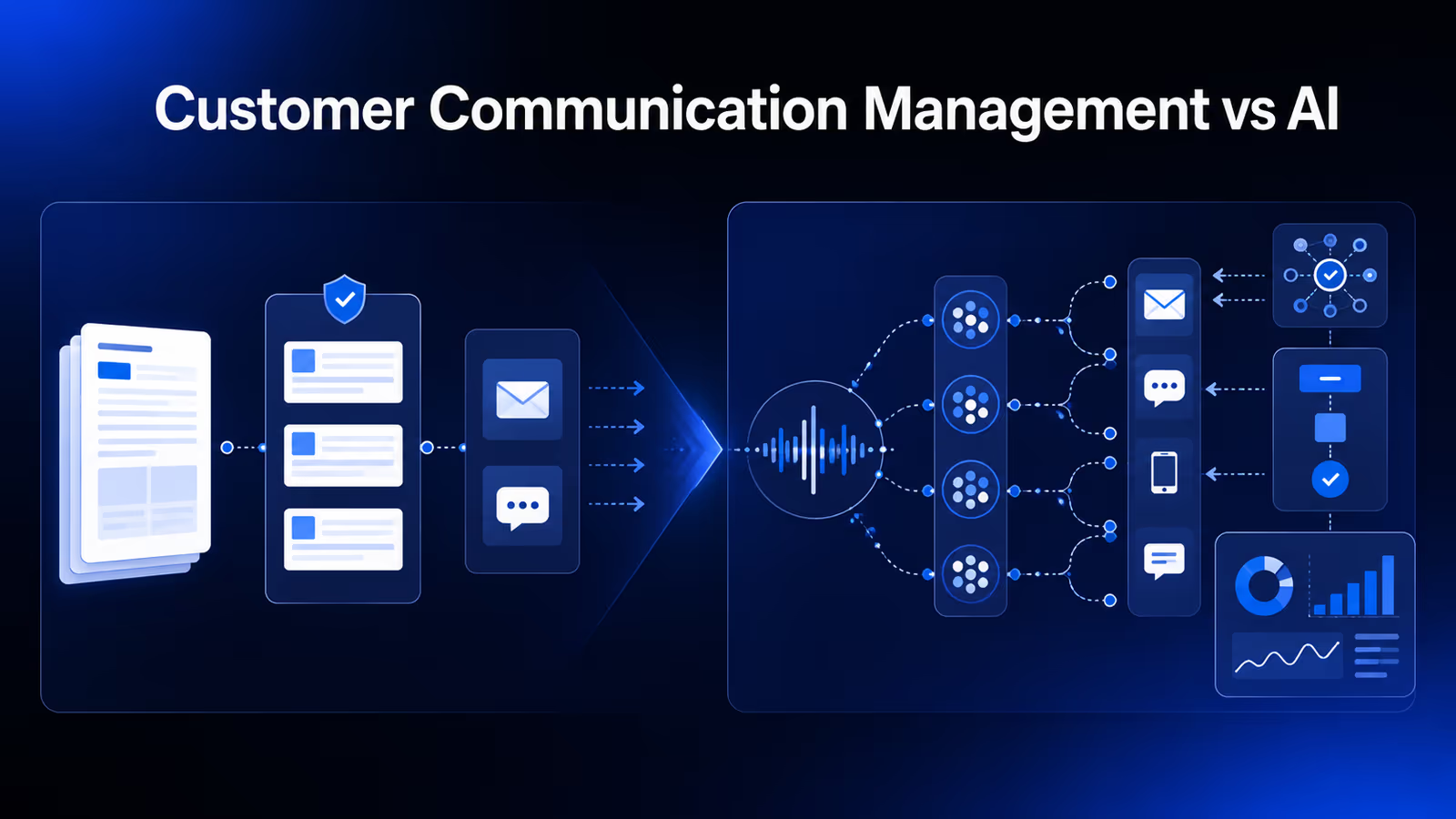


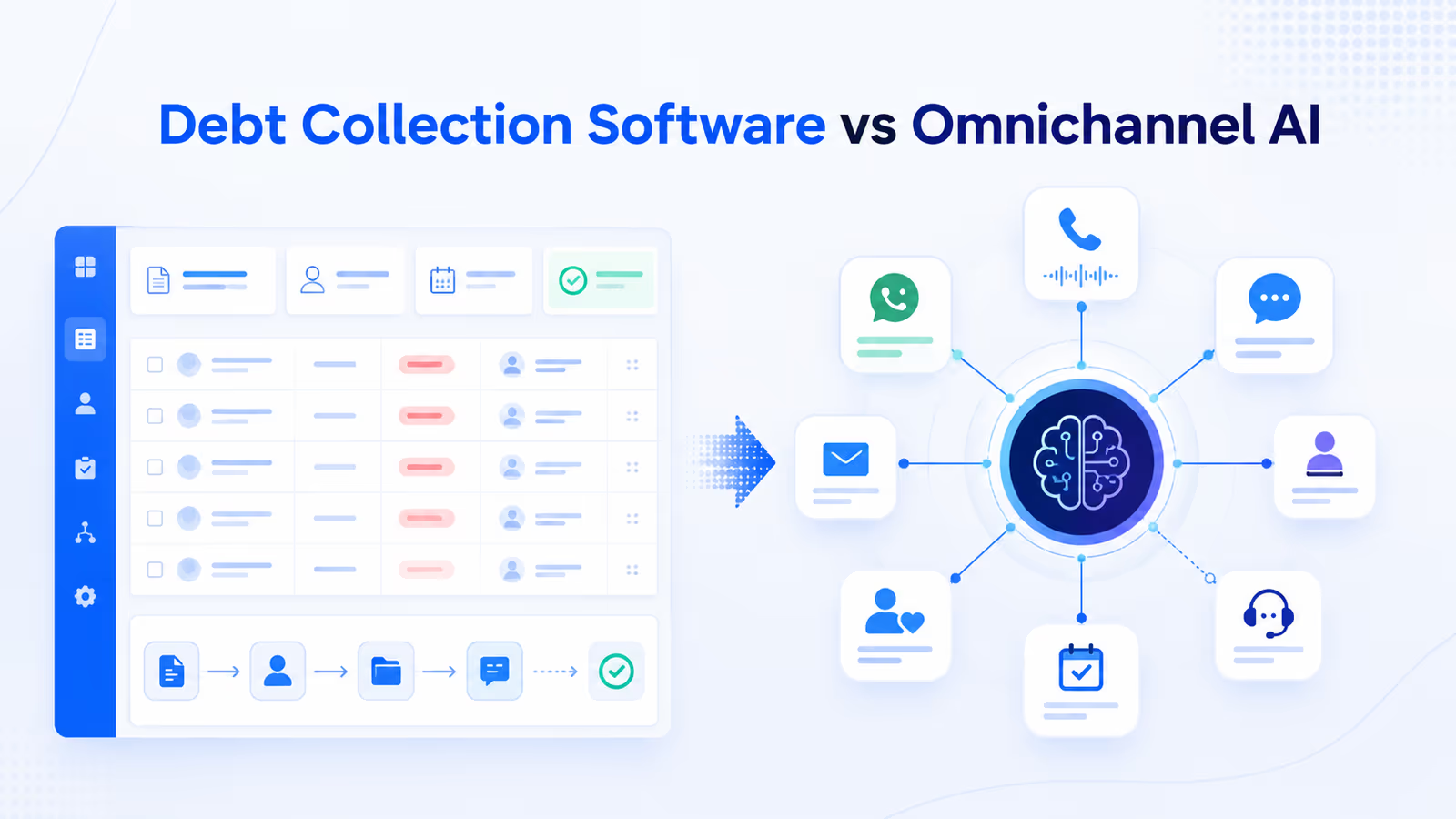
The choice is rarely software or AI in isolation. Collection software remains the system of record and control; omnichannel AI can become the system of engagement. Lenders seeking better recovery rates should evaluate how effectively the combined stack converts account data into timely, respectful, compliant borrower conversations. Recovery performance should be measured through right-party contacts, kept promises, roll-rate movement, resolution time, complaints, and cost per rupee recovered.
Why Collection Workflows Break Despite Better Software
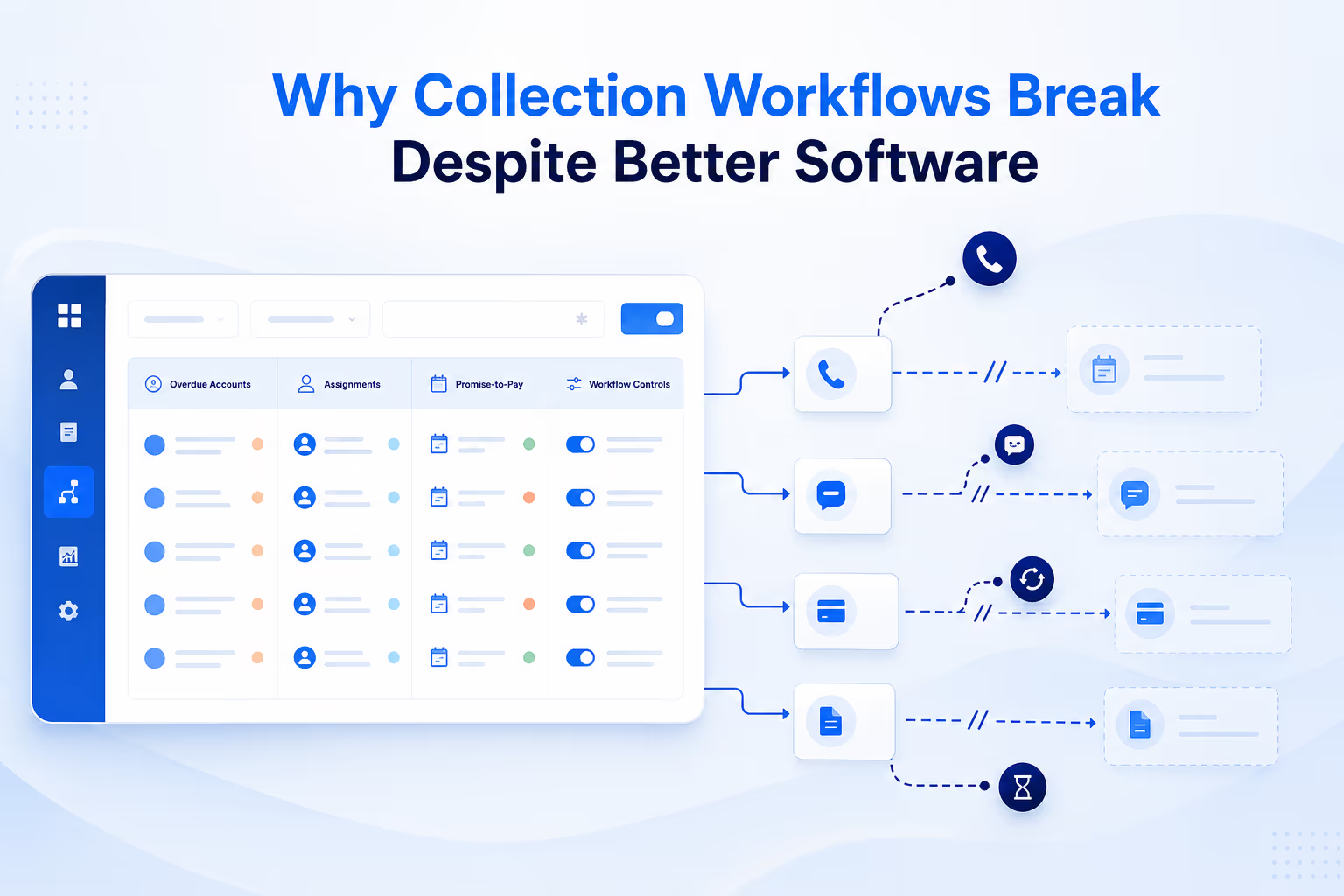
A lender may have a centralized view of every delinquent account. The system shows days past due, outstanding amount, risk segment, assigned agent, previous attempts, and promise-to-pay status.
Yet borrowers still miss reminders. Agents repeatedly call unreachable numbers. One channel records a promise that another channel does not recognize. A borrower who requested a callback receives a generic SMS instead. High-risk cases consume attention while potentially recoverable early-stage accounts wait in a queue.
This is not always a failure of debt collection software. The platform may be doing exactly what it was purchased to do: organizing cases, controlling workflows, and recording outcomes. The gap appears between knowing what should happen and conducting the conversation required to make it happen.
That is why lenders are now comparing collection platforms with omnichannel AI. The first manages recovery operations. The second can turn account signals into coordinated engagement across voice, messaging, email, and human-assisted workflows.
KPMG’s 2025 banking transformation research notes that banks are using automation and AI to streamline operations and improve service delivery while facing rising regulatory demands. It also cautions that many transformation programs struggle to achieve their objectives. Technology selection must therefore begin with the workflow and outcome not the AI label.
Advance debt collection software using Callveriq.
What Features Should Lenders Look for in Debt Collection Software?
Effective debt collection software for lenders must provide more than a list of overdue accounts. It should help the institution decide which account requires action, assign responsibility, track every interaction, and prove that approved processes were followed.
Essential Portfolio and Workflow Features
Lenders should look for:
- Delinquency segmentation by product, risk, amount, geography, and days past due
- Configurable collection strategies for different buckets
- Case assignment and workload management
- Promise-to-pay recording and monitoring
- Payment status and reconciliation
- Dispute and hardship workflow management
- Field and contact-center coordination
- Agency allocation and performance tracking
- Customer communication history
- Role-based access controls
- Dashboards and recovery analytics
Integration and Data Requirements
The platform should connect with the loan management system, CRM, payment infrastructure, telephony, messaging providers, and reporting stack. Without these connections, agents may work with stale balances or incomplete interaction histories.
Real-time or near-real-time updates are particularly important after payment. Continuing to contact someone who has already paid creates avoidable complaints and reputational risk.
Compliance and Control Features
The system should support:
- Configurable contact windows
- Consent, opt-out, and suppression controls
- Approved script and template management
- Recovery-agent authorization records
- Complete interaction logs
- Call recording and retention policies
- Maker-checker approvals
- Complaint escalation
- Audit trails
- Data-security and retention controls
The best platform is not necessarily the one with the longest feature list. It is the one that maps closely to the lender’s portfolio, channels, regulatory obligations, and operating model.
Strengthen debt collection software through Callveriq.
This blog is just the start.
Unlock the power of Callveriq’s AI with a live demo.

How Does Debt Collection Software Compare to Omnichannel AI for Recovery?
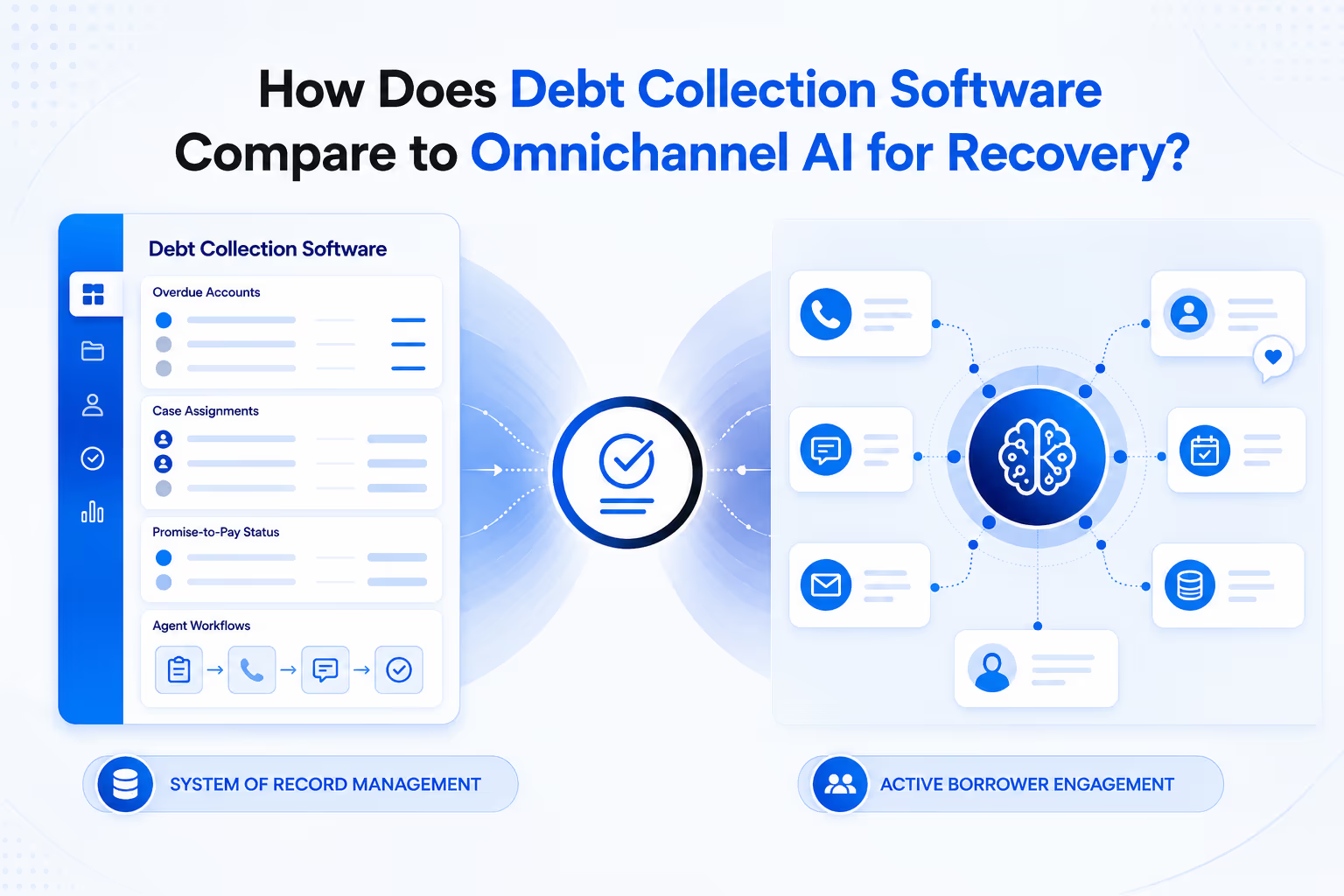
Traditional collection platforms primarily coordinate work. Omnichannel AI actively participates in borrower engagement.
For example, collection software may identify an account that is three days overdue and assign it to a reminder campaign. Omnichannel AI can use that trigger to place a voice call, understand the response, send an approved payment link, schedule a callback, and escalate the case if the borrower disputes the amount.
An AI debt collection software proposition should therefore be examined carefully. Adding a chatbot or automated dialer does not automatically create omnichannel intelligence. The platform must preserve context across interactions, identify customer intent, select the next appropriate action, and write the outcome back to the lender’s core systems.
Salesforce’s financial-services research shows that customers expect relevant, connected engagement, but trust must be earned. For collections, that means the AI should identify the lender, explain the purpose of contact clearly, remain within an approved scope, and provide access to human support.
Connect debt collection software through Callveriq.
What Compliance Considerations Matter When Choosing Collections Technology in India?
Compliance cannot be treated as a script added shortly before deployment. It must influence campaign logic, data access, contact policies, escalation design, monitoring, and vendor governance.
The exact obligations vary by entity type, lending arrangement, channel, and applicable regulation. Lenders should obtain advice from their legal and compliance teams before deployment.
Borrower Communication and Recovery-Agent Conduct
The RBI’s Digital Lending Directions, 2025 require a regulated entity to communicate the particulars of an authorized recovery agent to the borrower through email or SMS before that agent contacts the borrower for recovery.
RBI guidance also makes regulated entities responsible for the conduct of outsourced service providers and recovery agents. Outsourcing the interaction does not outsource accountability.
The technology should therefore help lenders enforce:
- Authorized contact identities
- Approved calling hours
- Respectful and non-coercive communication
- Restrictions on disclosure to third parties
- Complaint and grievance processes
- Accurate communication of dues
- Controlled escalation to recovery personnel
- Traceable records of each interaction
Data Protection and Access Control
Collection systems handle sensitive financial and personal data. Lenders should evaluate data minimization, encryption, access control, retention, vendor access, incident management, data-location requirements, and deletion workflows.
AI introduces additional questions: What information is sent to the model? Is customer data used to train shared models? How are prompts and outputs logged? Can unauthorized or inaccurate statements be blocked? How are model changes validated?
Governance for AI-Driven Outreach
An AI system must operate within defined boundaries. Approved information sources, prohibited statements, escalation triggers, contact limits, and exception handling should be documented and tested.
Gartner warned in 2026 that autonomous actions can occur faster than human oversight and recommends safeguards such as continuous monitoring, enforced guardrails, rollback mechanisms, circuit breakers, and clear ownership. These principles are highly relevant to automated financial outreach.
Govern debt collection software with Callveriq.
Which Delivers Better Recovery Rates: Collection Software or AI-Driven Outreach?
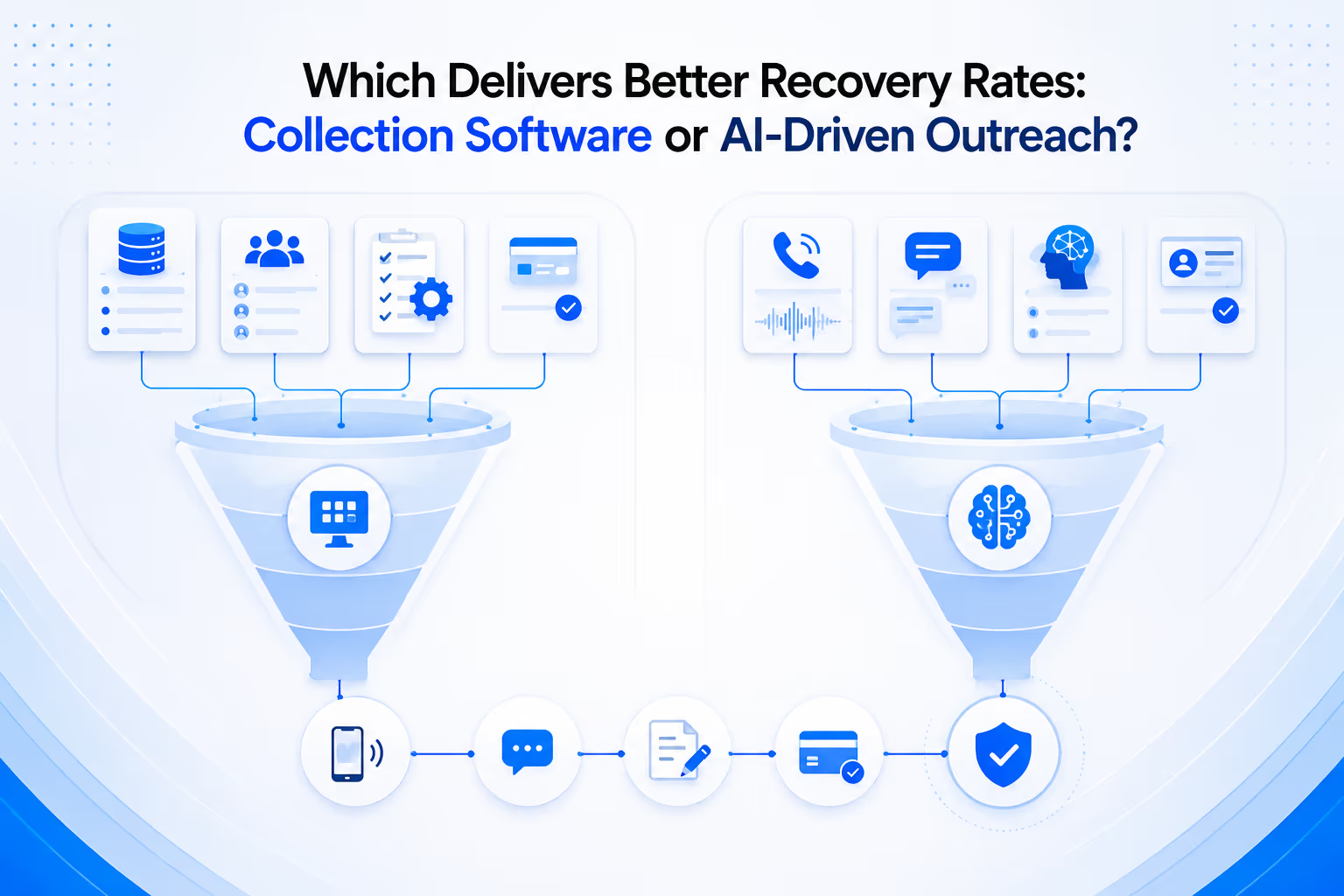
Neither technology delivers better recovery rates by default because they solve different parts of the problem. Collection software improves operational control. It helps lenders segment cases, assign actions, monitor agents, and track commitments. AI-driven outreach improves engagement capacity. It can contact more borrowers, respond immediately, personalize routine conversations, and maintain follow-up continuity.
The combined model has the strongest potential when clean portfolio data informs coordinated engagement.
How to measure the complete recovery funnel
McKinsey has reported that advanced generative-AI capabilities in customer assistance and collections can potentially reduce operating expenses by up to 40% and improve recoveries by about 10%. These figures are experience-based potential, not guaranteed vendor benchmarks; results depend on portfolio conditions, implementation quality, controls, and adoption.
Lenders should test performance through a controlled pilot. Comparable account cohorts should be assigned to the existing workflow and the AI-supported workflow. Both groups should use consistent balance ranges, delinquency stages, languages, regions, and observation periods. The evaluation should examine incremental collections net of technology, telecom, implementation, human review, and compliance costs.
Measure debt collection software with Callveriq.
When Should Lenders Combine Collection Software and Omnichannel AI?
The decision should not be framed as replacing the collection system. Most lenders still need a dependable system of record, allocation engine, and compliance layer. Omnichannel AI is most useful as an engagement and orchestration layer connected to that foundation.
A combined architecture can work as follows:
- Collection software identifies the account and treatment strategy.
- Omnichannel AI selects an approved channel and time.
- An AI voice agent conducts the initial conversation.
- The borrower’s intent is recorded.
- An approved message or payment link is sent when required.
- The outcome returns to the collection platform.
- Complex or sensitive cases move to a human agent.
- Future contact reflects the previous interaction.
Where Automation Fits Best
Strong early use cases include:
- Pre-due payment reminders
- Early-bucket collections
- Payment-link delivery
- Promise-to-pay capture and reminders
- Failed-payment follow-ups
- Callback scheduling
- Language-based routing
- Account-status confirmation
- Low-risk re-engagement
Human specialists should remain closely involved in disputes, hardship, restructuring, vulnerable-customer cases, legal escalation, fraud concerns, and sensitive complaints.
This hybrid approach is supported by Gartner’s finding that 95% of surveyed customer-service leaders intended to retain human agents. The strategic question is therefore not whether humans or AI should handle everything, but which interactions each can handle most effectively.
Scale debt collection software through Callveriq.
How Callveriq Adds an Intelligent Engagement Layer to Collections
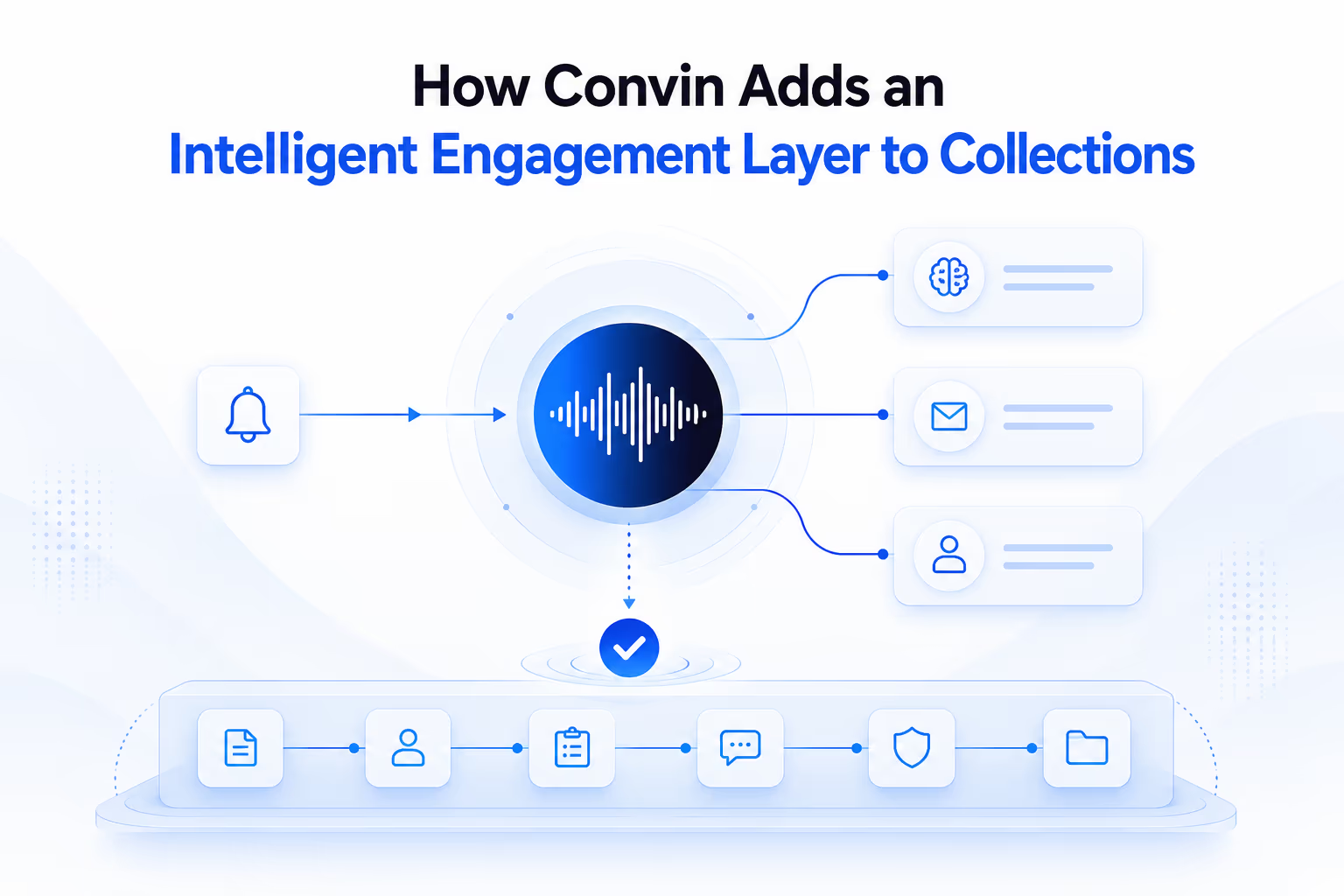
Callveriq helps lenders turn collection strategies into coordinated borrower conversations across voice and approved digital channels.
Its AI voice agents can be configured to conduct routine collection interactions, understand borrower responses, capture promises to pay, address approved questions, and escalate exceptions. The interaction can continue through messaging when a borrower requests a payment link, written confirmation, or reminder.
Callveriq can complement existing debt collection software comparison requirements by focusing on the layer that traditional platforms often leave dependent on manual work: conducting and coordinating borrower engagement.
A Callveriq-led pilot should begin with a defined segment, such as pre-due or early-bucket accounts. The lender can establish approved scripts, knowledge sources, contact policies, escalation rules, and success metrics before gradually expanding the scope.
The pilot should answer four commercial questions:
- Does AI increase meaningful borrower conversations?
- Does it improve kept promises and cure rates?
- Does it lower cost per successful recovery?
- Can it do so without increasing complaints or compliance exceptions?
Callveriq’s value is not merely making more calls. It lies in creating consistent interactions, preserving context, automating appropriate next steps, and directing human attention toward cases where judgment matters most.
Activate debt collection software with Callveriq.
Build a Recovery System That Can Act
Debt collection software remains essential for portfolio visibility, case allocation, payment tracking, compliance controls, and reporting. However, operational visibility alone does not ensure that the right borrower receives the right interaction through the right channel at the right time.
Omnichannel AI closes part of that execution gap. It can translate account signals into conversations, capture intent, coordinate follow-ups, and escalate cases without forcing every routine interaction into an agent queue.
For most established lenders, the strongest choice is not one technology over the other. It is a well-integrated architecture in which collection software controls the recovery process, omnichannel AI scales appropriate engagement, and human specialists manage complexity and risk.
Callveriq helps lenders create that engagement layer while preserving the systems and controls already central to collection operations. The result should be judged not by outreach volume, but by compliant resolutions, kept commitments, improved recoveries, and sustainable collection economics.
Modernize debt collection software with Callveriq.
FAQs
1. Can omnichannel AI work with a lender’s existing collection platform?
Yes, if the existing system supports suitable APIs, events, or data-exchange processes. The integration should synchronize balances, payment status, contact history, promises, outcomes, and suppression rules.
2. Which collection stage should lenders automate first?
Pre-due and early-bucket interactions are often suitable starting points because the conversations are more standardized and lower in complexity. The final choice should reflect portfolio risk and compliance approval.
3. How should lenders prevent duplicate borrower communication?
Every channel should read from a shared interaction history or orchestration layer. Recent payments, promises, callbacks, disputes, opt-outs, and agent contacts should suppress or modify future automated outreach.
4. Can omnichannel AI negotiate settlements with borrowers?
It can present pre-approved options within clearly defined rules. Material negotiations, hardship decisions, exceptions, disputes, and non-standard settlements should generally be escalated to authorized human personnel.
5. What should be included in an AI collections audit trail?
The record should include the customer contacted, time, channel, purpose, content or recording, data used, detected intent, action taken, system updates, escalation, consent or suppression status, and relevant model or workflow version.