

A customer discovers your brand through a Google ad, asks a question on WhatsApp, browses your website, receives a follow-up email, and later calls your support team to complete the purchase. From the customer's perspective, it's one continuous conversation. They expect your business to remember who they are, what they asked, and where they left off.
Unfortunately, most businesses don't.
Instead, every interaction starts from scratch. Sales can't see support conversations. Agents ask customers to repeat information. Marketing continues sending promotional emails after a complaint has been raised. The result is a fragmented experience that frustrates customers and creates operational inefficiencies.
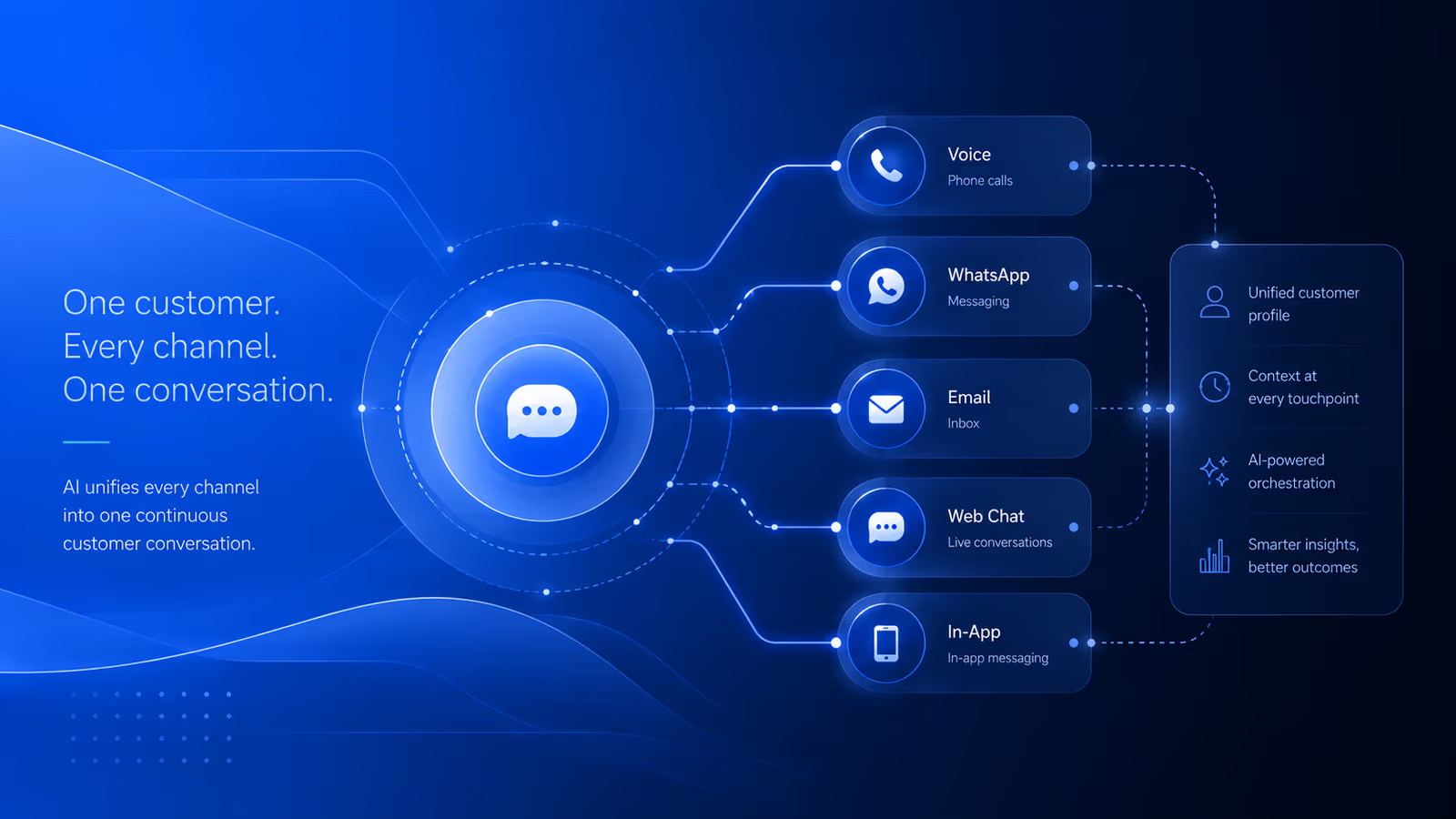
This is where omnichannel communication changes the game. Rather than treating every channel as an isolated touchpoint, omnichannel communication connects every interaction into one continuous customer journey. When powered by AI, it ensures conversations remain contextual, personalized, and uninterrupted, whether they happen over voice, WhatsApp, email, or an in-app chat.
Businesses that invest in AI omnichannel communication don't just improve customer experience. They also reduce operational costs, improve agent productivity, and create faster paths to resolution.
What Is Omnichannel Communication?
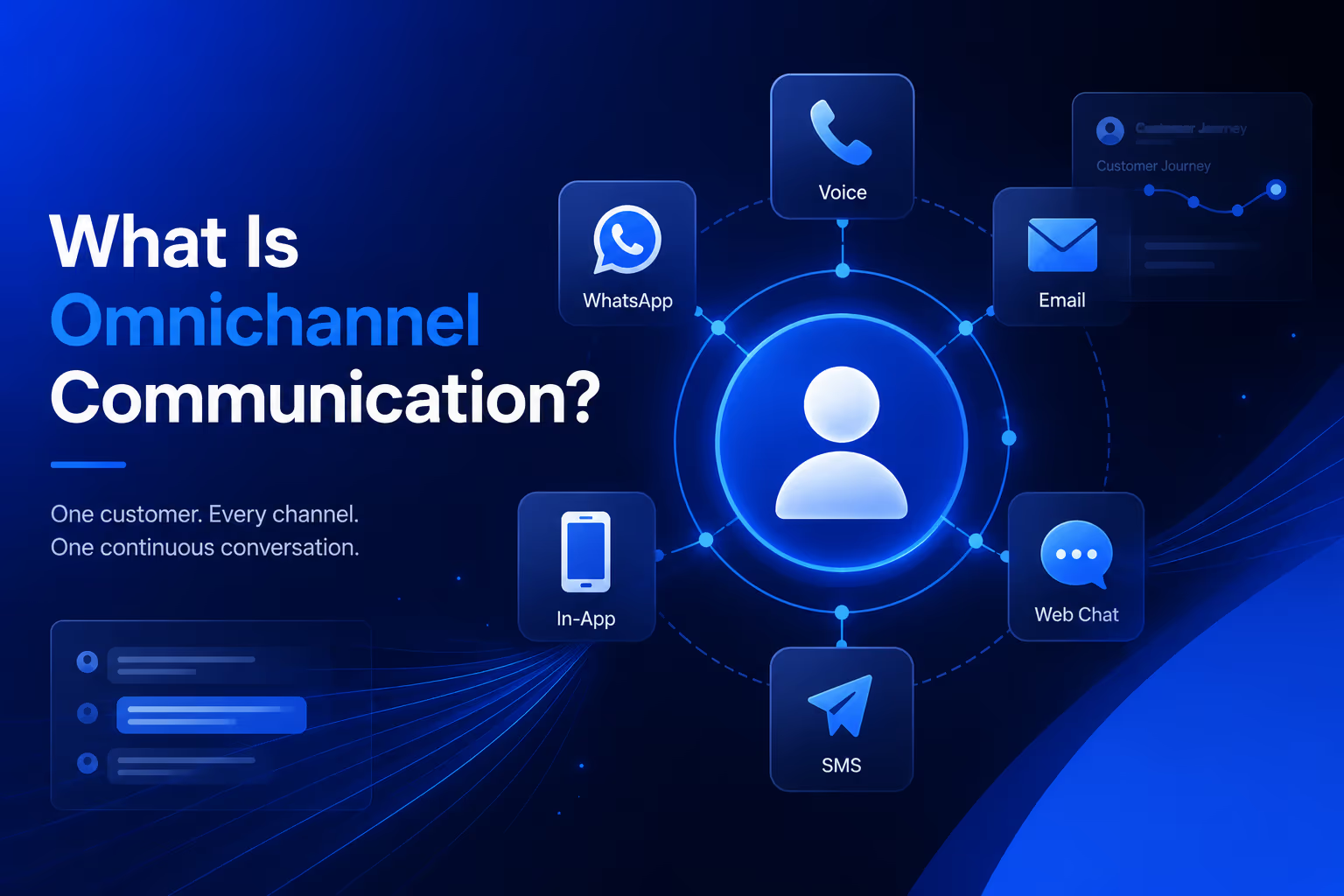
Omnichannel communication is a customer engagement strategy that connects every interaction across communication channels into a single, continuous conversation. Instead of managing voice calls, emails, WhatsApp messages, and in-app chats independently, businesses share customer context, conversation history, and intent across every channel.
The goal of omnichannel communication is simple: customers should never have to repeat themselves, regardless of how or where they reach your business.
Omnichannel Communication vs. Multichannel Communication
Many organizations already communicate through multiple channels. However, simply adding more channels does not create omnichannel communication.
For example, a customer who begins a loan application on your website should be able to continue the conversation on WhatsApp and complete verification over a phone call without restarting the process. That level of continuity defines effective omnichannel communication.
Simplify omnichannel communication with Callveriq.
Why Fragmented Customer Communication Is Costing More Than You Think
Disconnected communication doesn't just affect customer satisfaction. It directly impacts revenue, efficiency, and team productivity.
When channels operate in silos, businesses struggle to maintain consistency throughout the customer journey. Customers repeat the same information, agents spend more time searching for context, and follow-ups become inconsistent.
Common challenges include:
As customer expectations continue to rise, disconnected systems make it harder to deliver personalized experiences at scale. This is why more organizations are investing in AI omnichannel communication, where customer context follows every interaction instead of staying locked inside individual channels.
The challenge is becoming even more complex as customer journeys extend beyond owned channels. Gartner's 2025 Customer Service Survey found that 51% of customer service journeys now begin on third-party platforms, such as search engines, review sites, AI assistants, and social platforms. Businesses can no longer afford disconnected communication systems when customers are entering the journey from so many different places
Eliminate silos with omnichannel communication
This blog is just the start.
Unlock the power of Callveriq’s AI with a live demo.

How AI Enables Omnichannel Communication Across Voice, WhatsApp, Email, and In-App
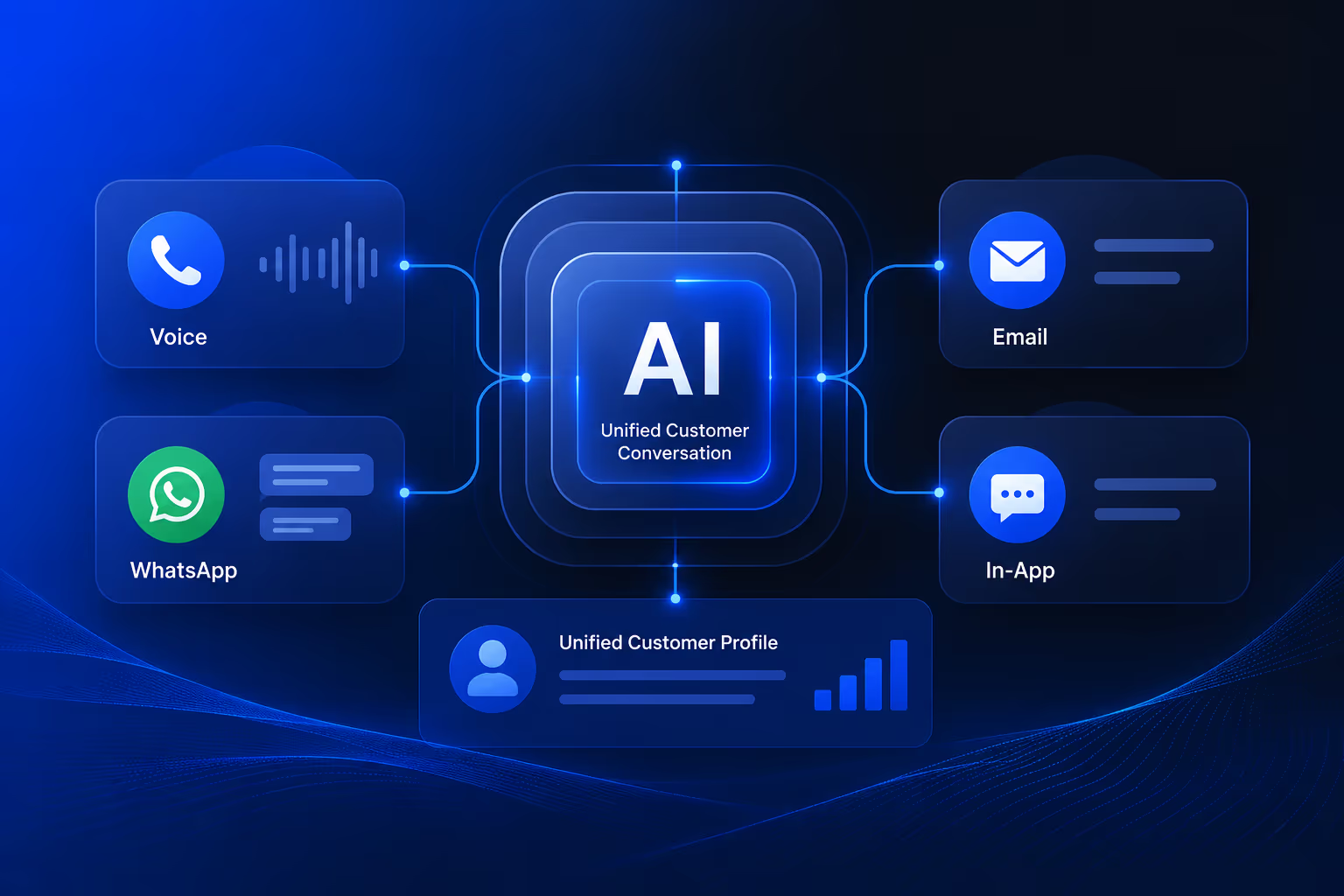
Technology is what transforms omnichannel communication from a strategy into a scalable reality. AI acts as the intelligence layer that connects conversations, understands customer intent, and keeps every interaction synchronized.
1. Unified Customer Context
Every interaction contributes to a shared customer profile. Whether a customer speaks to a voice agent, replies on WhatsApp, or sends an email, AI updates the same conversation history in real time.
This ensures omnichannel communication remains continuous instead of fragmented.
2. AI Understands Intent, Not Just Messages
Traditional automation responds to keywords. AI understands intent.
If a customer asks about delivery on WhatsApp and later calls support, the system already recognizes the purpose of the conversation. Agents receive complete context before answering, leading to faster and more relevant responses.
3. Intelligent Channel Switching
Not every issue should stay on the same channel. AI can determine when to continue over chat, escalate to a voice call, or send an email summary after resolution.
Rather than managing channels independently, AI omnichannel communication orchestrates every interaction into one connected customer journey.
Leading organizations are already moving beyond predefined customer journeys. McKinsey's 2026 report, Rewiring Customer Experience for the Agentic Era, explains that businesses are shifting toward AI-powered, real-time orchestration, where every interaction is dynamically coordinated based on customer intent instead of following fixed workflows. This is exactly what modern AI omnichannel communication aims to achieve. AI agents.
Unify omnichannel communication with Callveriq.
What Technology Does a B2C Business Need to Achieve Omnichannel Communication at Scale?
Many businesses believe adding more communication channels automatically creates omnichannel communication. In reality, the opposite often happens. Every new channel introduces another source of customer data, another dashboard for agents, and another opportunity for conversations to become disconnected.
To achieve omnichannel communication at scale, businesses need a technology stack that connects channels rather than managing them independently.
The orchestration layer is what makes the biggest difference. Instead of treating every interaction as a new ticket, AI ensures every conversation builds on the previous one. This is the foundation of effective AI omnichannel communication.
Platforms like Callveriq combine these capabilities into a single ecosystem, enabling businesses to automate, analyze, and optimize every customer interaction without switching between multiple tools.
Upgrade omnichannel communication with Callveriq.
Signs Your Business Is Ready for Omnichannel Communication
Not every organization starts with a mature customer engagement strategy. However, certain challenges clearly indicate it's time to invest in omnichannel communication.
If your teams experience any of the following, disconnected communication is likely impacting customer experience:
You're Ready for Omnichannel Communication If..
- Customers contact you through three or more channels
- Agents switch between multiple dashboards
- Customers frequently repeat information
- Sales and support teams don't share context
- Customer history is spread across different systems
- Follow-ups are inconsistent across channels
- Leadership lacks a unified view of customer conversations
These problems rarely disappear by adding another communication tool. Instead, businesses need omnichannel communication that creates a single source of truth for every customer interaction.
Build connected customer journeys with Callveriq
Choosing the Right Omnichannel Communication Platform
When evaluating an omnichannel communication platform, it's important to look beyond the number of supported channels and assess how effectively the platform connects customer interactions. Key capabilities to consider include:
- AI capabilities: Supports intent detection, automation, and conversation memory to deliver personalized experiences.
- Comprehensive channel coverage: Connects voice, WhatsApp, email, SMS, web chat, and in-app messaging through a unified interface.
- CRM integration: Synchronizes customer data and conversation history in real time across systems.
- Intelligent automation: Enables automated workflows, smart routing, and seamless channel switching.
- Unified analytics: Provides a consolidated view of customer interactions and performance across every channel.
- Scalability and security: Handles enterprise-scale conversation volumes while ensuring compliance and secure customer data management.
A strong AI omnichannel communication platform doesn't just help businesses communicate on multiple channels. It ensures every interaction is connected, contextual, and part of one continuous customer journey.
This is where businesses should prioritize orchestration over simply counting the number of supported channels.
Deliver intelligent omnichannel communication today.
The Future of Omnichannel Communication Is AI-Driven
Customer expectations are changing faster than ever. People no longer distinguish between voice, messaging, email, or mobile apps. They simply expect businesses to remember previous interactions and respond with the right context.
This shift makes omnichannel communication more than a customer experience initiative. It has become a business necessity.
AI is making this possible through capabilities such as persistent customer memory, intelligent routing, proactive engagement, predictive analytics, and autonomous follow-ups. As these technologies continue to evolve, AI omnichannel communication will become the standard for delivering personalized customer experiences at scale.
Businesses that invest today will be better positioned to reduce operational costs, improve customer satisfaction, and build stronger long-term relationships.
Deliver seamless omnichannel communication with Callveriq.
FAQs
Q1. What are the biggest challenges in implementing omnichannel communication?
The main challenges are integrating multiple systems, unifying customer data, and maintaining context across channels. AI helps overcome these issues by connecting every interaction.
Q2. Can small and mid-sized businesses benefit from omnichannel communication?
Yes. It helps businesses improve customer experience, automate workflows, and manage conversations across channels without increasing operational complexity.
Q3. How do you measure the success of an omnichannel communication strategy?
Track metrics like CSAT, First Contact Resolution (FCR), Average Handle Time (AHT), response time, customer retention, and conversion rates.
Q4. Is omnichannel communication secure for handling customer data?
Yes, if the platform offers encryption, secure APIs, role-based access, and complies with standards like GDPR, SOC 2, or ISO 27001.
Q5. How does omnichannel communication improve customer retention?
By delivering consistent, personalized interactions across channels, it reduces customer effort and builds long-term loyalty.