

A bank sends a personalized payment notice by email. The document contains the correct balance, due date, and payment instructions. Delivery is recorded successfully.
The next morning, the customer calls the contact centre because the notice did not explain why the amount changed. The agent cannot see whether the customer opened the email, replied on WhatsApp, or visited the payment page. The customer repeats the issue while the agent searches across multiple systems.
From the institution’s perspective, the communication was completed. From the customer’s perspective, the conversation had barely started.
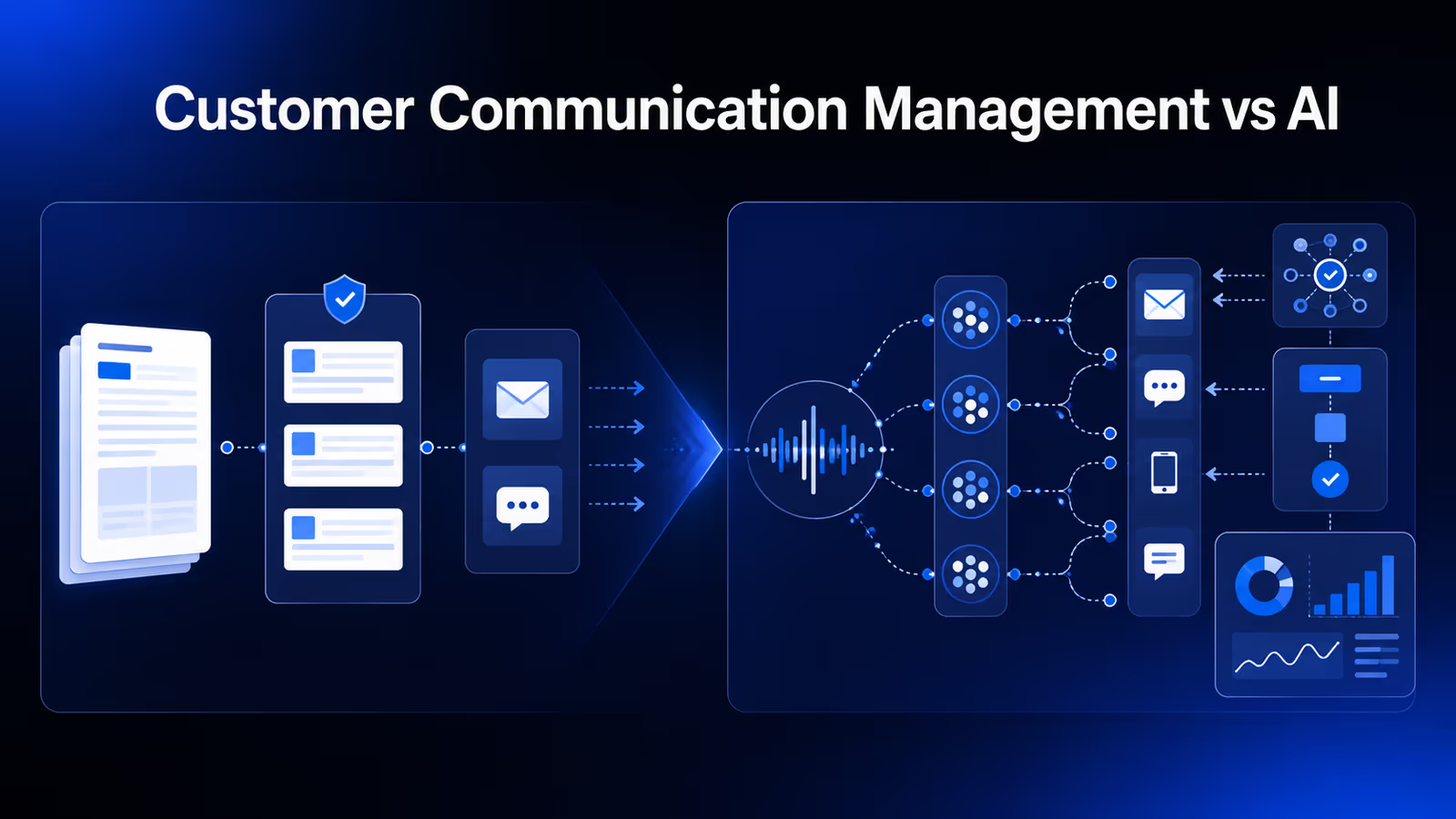
This is where traditional customer communication management reaches its boundary. It is strong at composing, governing, and distributing information. It is not always designed to understand what the customer says next.
KPMG’s India CX Report 2025 notes that banks are using generative AI to restore a more human quality to digital support while continuing to prioritize customer protection.
Extend customer communication management
What Is Customer Communication Management Software?
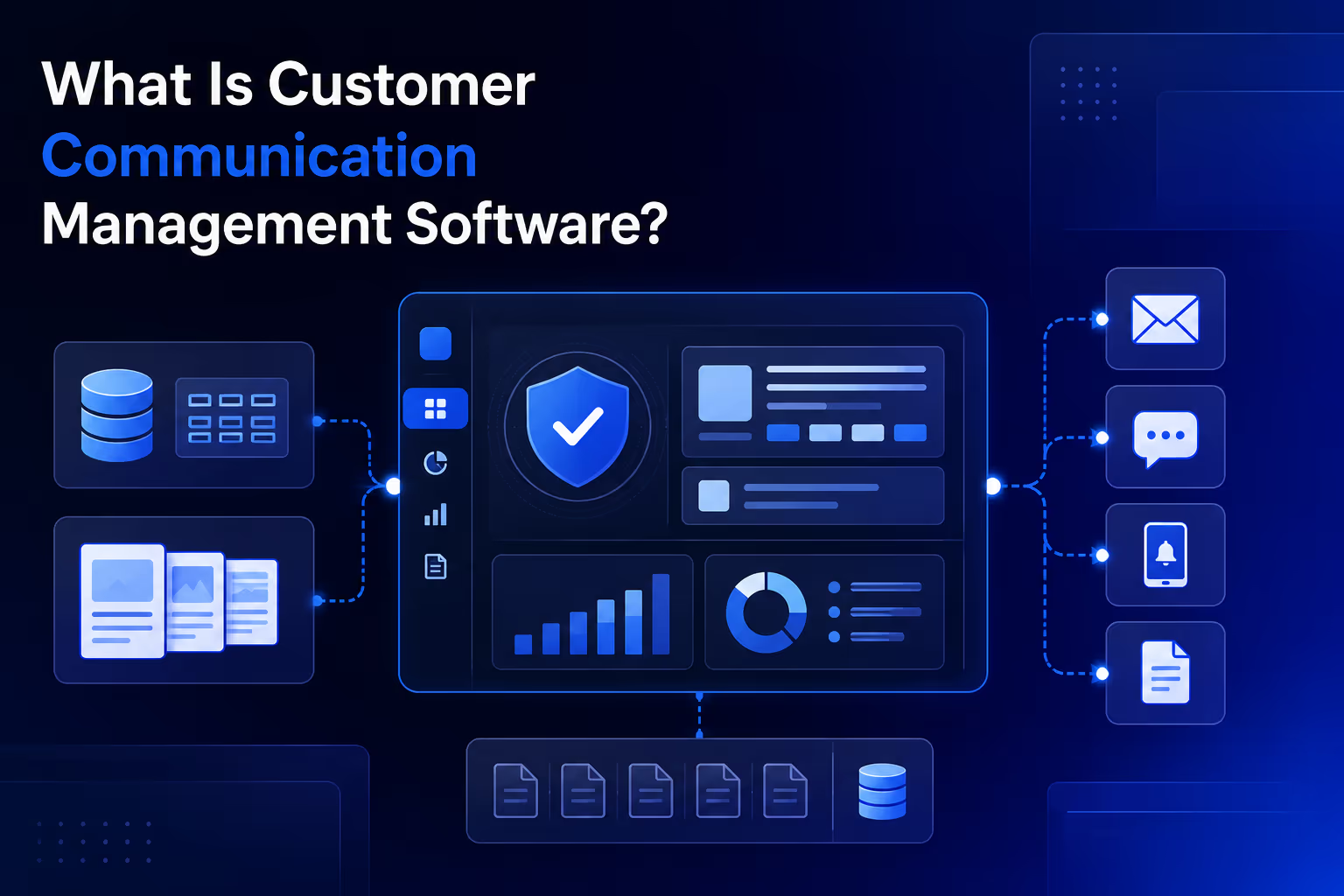
Customer communication management, commonly called CCM, refers to the systems and processes used to create, personalize, approve, distribute, and archive customer-facing communications.
In BFSI, CCM software commonly supports:
- Account statements
- Loan documents
- Insurance policy communications
- Payment notices
- Renewal reminders
- Regulatory disclosures
- Transaction confirmations
- Service notifications
- Welcome communications
- Personalized offers
Customer communication management software draws information from internal systems and places it into approved templates. It can apply branding, language, product, regulatory, and delivery rules before sending the communication through email, SMS, print, portal, or another channel.
Its core strengths are document generation, consistency, compliance, and controlled distribution.
Strengthen customer communication management with Callveriq.
How Is CCM Different From CRM in BFSI?
CCM and CRM are sometimes confused because both use customer information. Their roles are different. A CRM maintains customer profiles, sales activity, service history, opportunities, and employee tasks. CCM uses approved data to produce customer-facing communications.
The CRM may know that a customer has an overdue payment. The CCM platform can generate the approved notice. Neither system necessarily conducts a responsive conversation about the payment.
That missing engagement layer is where AI becomes relevant.
Connect customer communication management
This blog is just the start.
Unlock the power of Callveriq’s AI with a live demo.

Where Traditional CCM Falls Short
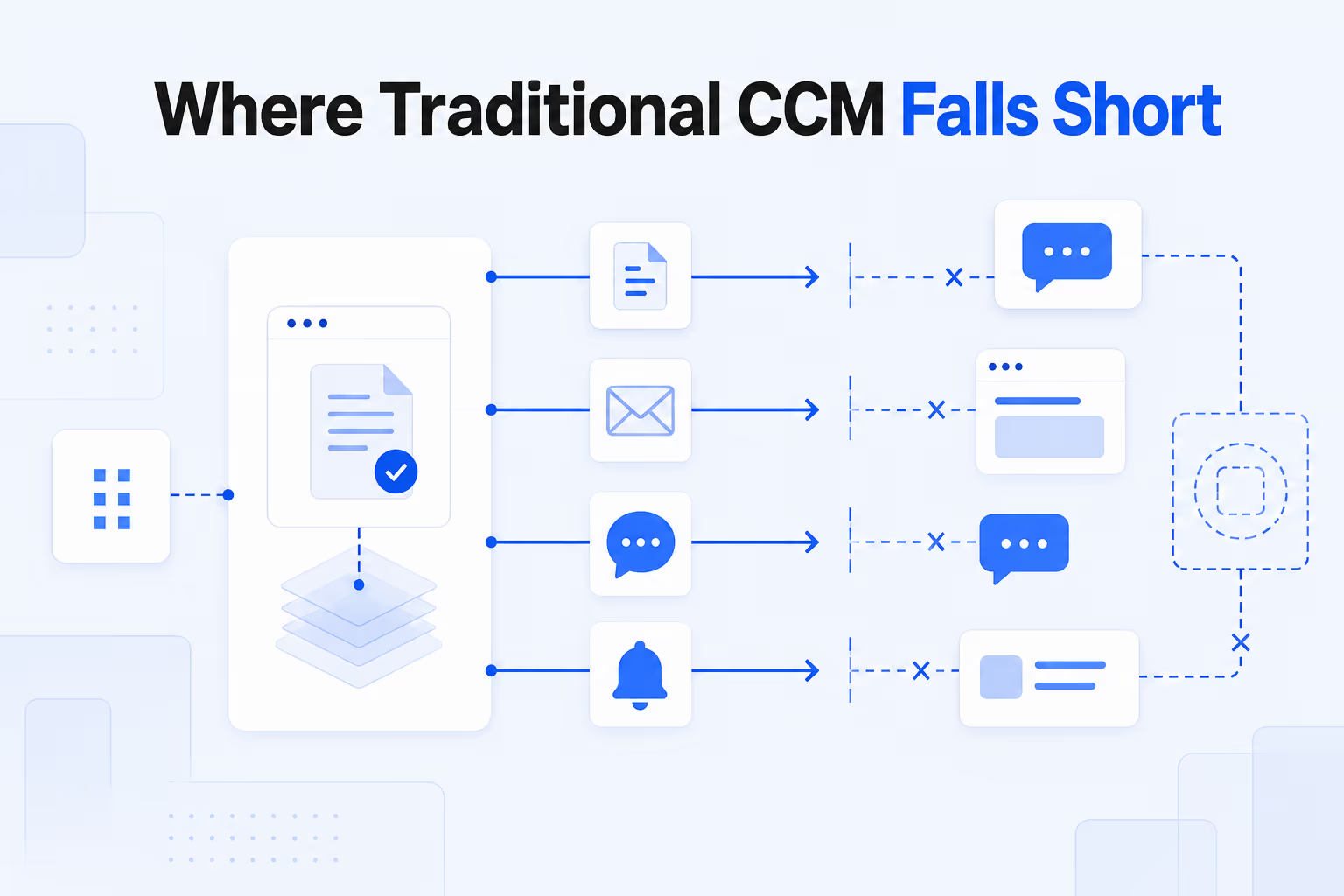
Traditional CCM was largely designed around an outbound question: how can an organization send the right communication to the right customer through the right channel? Modern engagement adds another question: what should happen when the customer responds?
1. Communication Is Often One-Way
A notice can inform a borrower that payment is overdue. It cannot always ask why payment was missed, understand the answer, record a promise to pay, and schedule the next interaction.
2. Channel Context Can Be Fragmented
The customer may receive an email, reply on WhatsApp, call the contact centre, and later interact with a web widget. If these actions are not connected, every channel behaves like a separate conversation.
3. Delivery Is Mistaken for Engagement
Sent, delivered, opened, and clicked are useful metrics. They do not reveal whether the customer understood the communication or completed the intended action.
3. Personalization Remains Template Based
Traditional CCM can personalize names, amounts, dates, products, and offers. However, a template cannot always adapt naturally to an unexpected question.
4. The Next Action Requires Manual Work
If a customer replies with a dispute or callback request, an employee may need to interpret the message, update another system, and assign a follow-up task.
Salesforce’s 2025 State of Service research predicted that AI would handle half of customer-service cases by 2027, compared with 30% at the time of the study. This reflects a movement from communication automation toward issue resolution.
Advance customer communication management.
How Omnichannel AI Extends CCM
Omnichannel AI does not need to replace CCM. It can use CCM-generated content as the controlled starting point and add a conversational layer around it.
1. It Makes Notifications Interactive
A payment reminder can become a voice or messaging conversation in which the customer confirms payment, asks a question, or requests more time.
2. It Maintains Context Across Channels
If a customer asks for details during a call, the AI can send the approved document through WhatsApp. A later response can continue from the earlier context rather than restarting the journey.
3. It Understands Intent
AI can distinguish between a routine confirmation, a complaint, a dispute, a cancellation request, and a need for human assistance.
4. It Triggers the Next Action
The system can schedule another call, send a payment link, update the CRM, create a service case, or transfer the interaction to an employee.
5. It Measures Outcomes Beyond Delivery
BFSI teams can evaluate whether the customer completed a payment, renewed a policy, submitted a document, accepted an offer, or required escalation.
McKinsey’s 2026 Global Banking Annual Review reports that leading banks are improving engagement by 20 to 30 percentage points through stronger customer-value management. This requires decisioning, data, and engagement capabilities to operate together rather than as isolated tools.
Evolve your customer communication management
Where Human Control and Governance Remain Essential
Two-way AI introduces responsibilities that do not exist in simple document delivery. BFSI institutions must govern what the AI can say, access, change, and approve. A deployment should define:
- Approved sources of information
- Customer authentication requirements
- Consent and channel rules
- Restricted topics
- Human handoff conditions
- Data retention policies
- Language and script controls
- Audit and quality-review processes
- Procedures for disputes and vulnerable customers
AI should not improvise on interest rates, settlement terms, policy coverage, legal notices, or regulated disclosures. It should use approved information and escalate when the request exceeds its authority.
Gartner predicts agentic AI could autonomously resolve 80% of common customer-service issues by 2029, but this projection applies to common issues, not every interaction. The strongest approach combines automation with visible limits and dependable human access.
Govern customer communication management.
Where Callveriq Fits Into the CCM Ecosystem
Callveriq can sit alongside CCM, CRM, telephony, and messaging infrastructure to manage the conversational portion of the customer journey.
For example, a CCM system may generate an insurance renewal notice. Callveriq’s AI voice agent can call the policyholder, explain the approved renewal information, understand whether the customer is interested, answer supported questions, send a payment link, and escalate an objection to a human advisor.
The workflow can include:
- Outbound and inbound AI voice conversations
- WhatsApp and messaging follow-ups
- Multilingual engagement
- Intent and sentiment capture
- CRM updates
- Human transfers
- Automated quality evaluation
- Journey-level reporting
This allows traditional customer communication management to remain the governed content layer while Callveriq manages two-way action and response.
Activate your customer communication management
Move From Sending Communications to Managing Outcomes
Customer communication management remains critical for producing consistent, personalized, and compliant BFSI communications. CRM remains critical for maintaining customer and commercial records. The problem begins when organizations expect either system to independently manage a continuous conversation.
Omnichannel AI closes that gap by understanding customer responses, carrying context across channels, triggering next steps, and involving employees when judgment is required.
The evolution is not from CCM to AI. It is from CCM alone to CCM connected with an intelligent engagement layer. That combination allows BFSI organizations to protect communication governance while making every notice, reminder, and offer easier for the customer to act upon.
Transform customer communication management. Book your Callveriq demo.
FAQs
1. Can an omnichannel AI platform use existing CCM templates?
Yes. Approved templates and content can be used as controlled inputs for AI-led communications and follow-ups.
2. Does CCM manage customer consent?
Some platforms store communication preferences, but consent may also be maintained in CRM, core systems, or a dedicated preference-management platform.
3. Can AI summarize conversations for CRM records?
Yes. AI can create structured summaries, capture intent, and write approved outcomes into an integrated CRM.
4. Which BFSI communications should remain document based?
Contracts, regulated disclosures, formal statements, policy documents, and legal notices should remain in approved document formats even when AI explains them.
5. How should organizations evaluate omnichannel engagement?
Track resolution, customer effort, response rates, completed actions, handoffs, complaints, compliance exceptions, and cost per resolved interaction.