

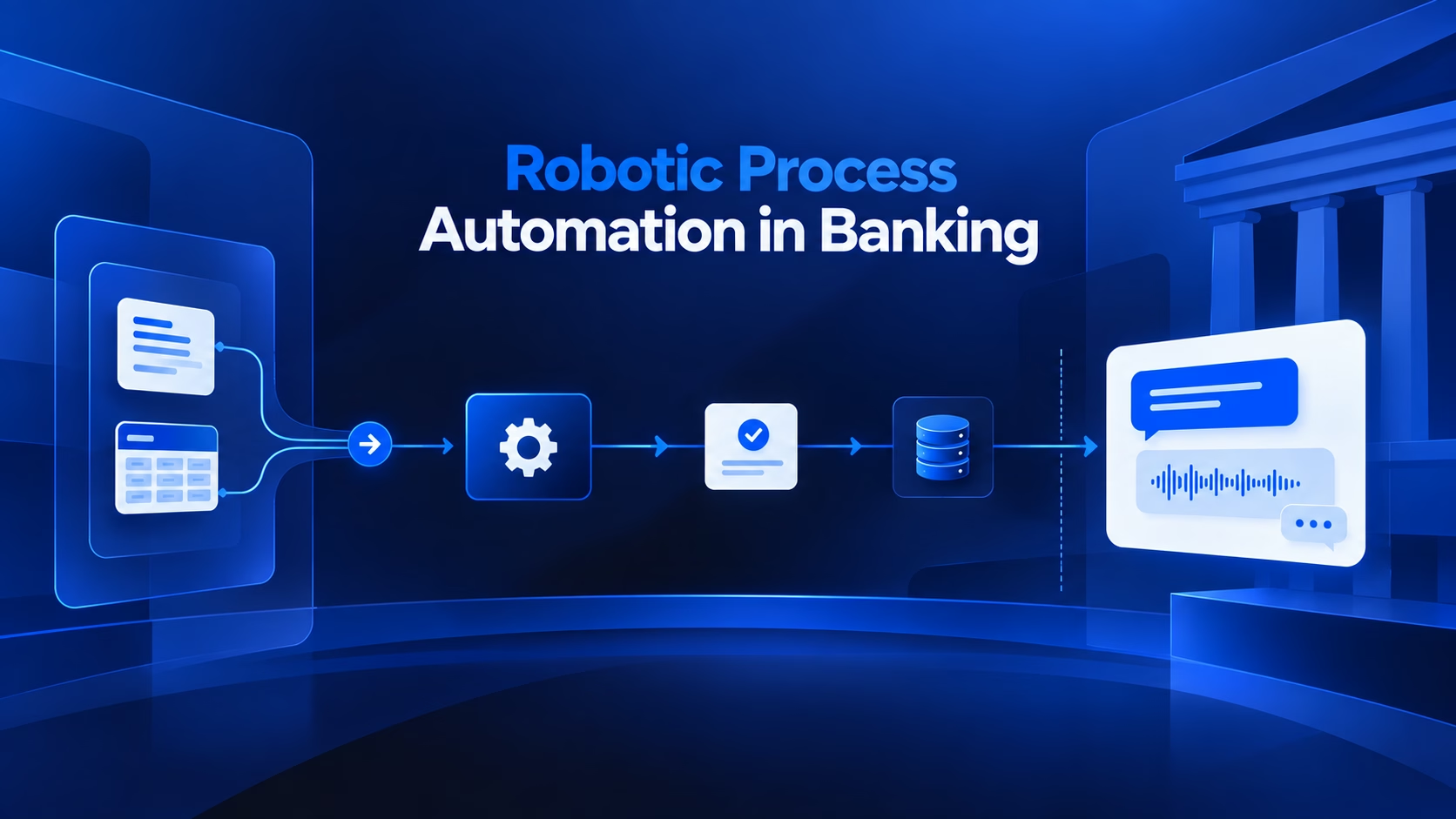
A bank uses robotic process automation in banking to read an application, validate mandatory fields, update a core platform, and create a document-deficiency task.
The bot completes every step correctly.The customer receives a generic message requesting “pending documents.” It does not identify the unreadable address proof. The customer calls support and submits another file. A second reminder arrives because the communication platform has not received the updated application status.
Robotic process automation in banking worked exactly as configured. The customer journey did not. This distinction matters when a bank evaluates automation. Robotic process automation in banking can execute a task without completing the customer outcome.
The workflow may still fail because:
- The customer does not understand the request
- The message does not identify the missing action
- A response arrives in unstructured language
- Channel tools do not share context
- RPA executes using stale information
- The exception enters an unattended queue
- Human agents receive incomplete context
- Communication continues after resolution
KPMG’s 2025 analysis of AI in banking notes that banks use AI in back-office functions such as data entry, fraud detection, compliance monitoring, and forecasting. It also emphasizes that stronger value requires end-to-end process redesign.
The same principle applies to robotic process automation in banking. Automating one step does not automatically repair the complete journey.
Repair automated journeys with Callveriq.
What Robotic Process Automation in Banking Automates Well
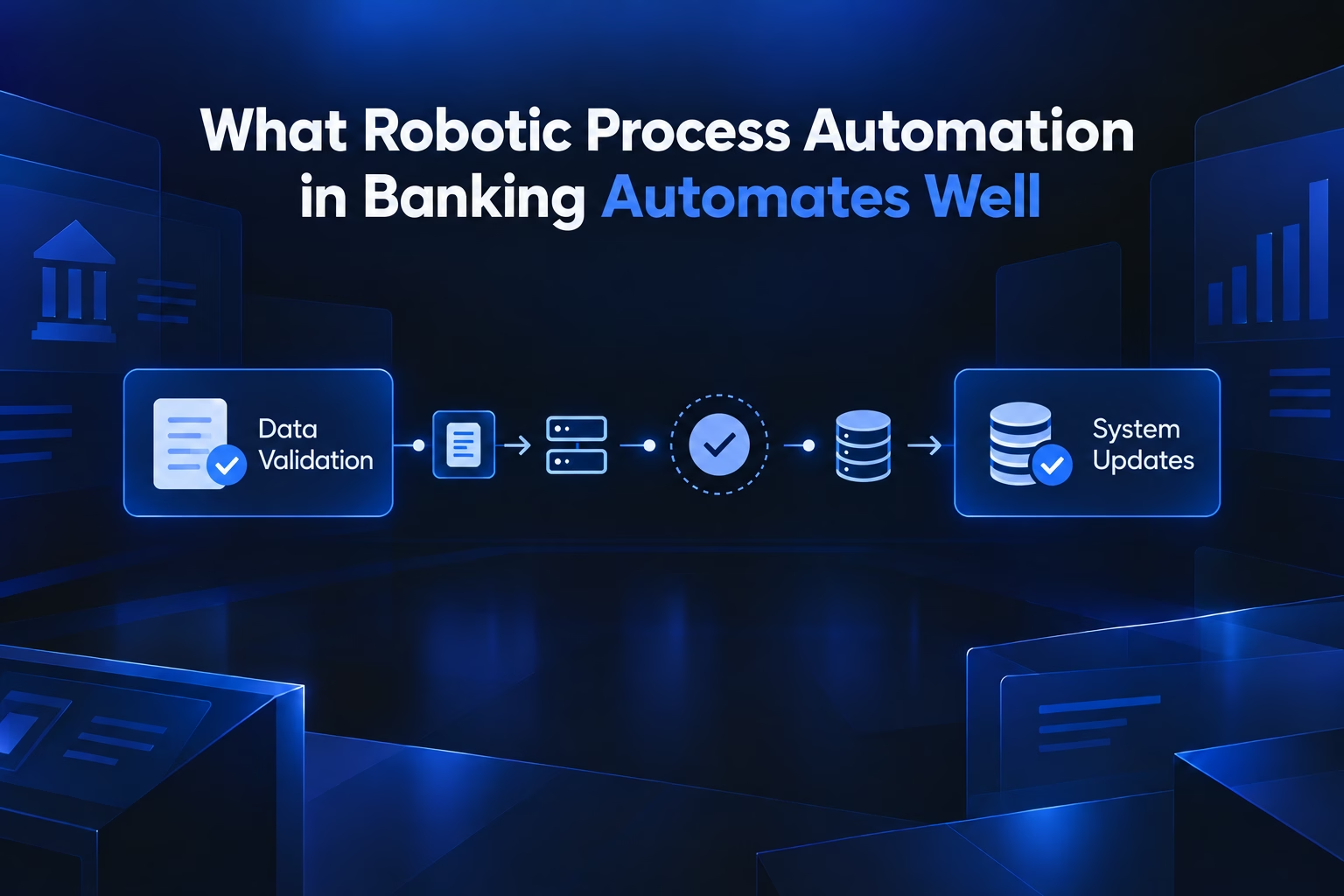
Robotic process automation in banking performs best when tasks are repetitive, rule-based, high-volume, and supported by predictable inputs. A software bot can sign into applications, read fields, compare values, execute rules, and record the result.
1. Data Entry and Migration
Robotic process automation in banking can move information between legacy systems, spreadsheets, portals, CRM platforms, and operational applications.
2. Field Validation
Robotic process automation in banking can check whether mandatory information is present and whether a value follows a defined format.
3. Reconciliation
Robotic process automation in banking can compare transactions, identify mismatches, update records, and route exceptions.
4. Reporting
Robotic process automation in banking can collect data from multiple systems and prepare recurring operational reports.
5. Workflow Updates
Robotic process automation in banking can update case status, create tasks, assign queues, and trigger approved notices.
6. Compliance Checks
Robotic process automation in banking can compare records against defined lists and apply documented rules.
| Banking process | Suitable RPA activity |
|---|---|
| KYC processing | Field validation and system updates |
| Loan applications | Data movement and document checks |
| Payments | Reconciliation and exception creation |
| Reporting | Data extraction and scheduled reports |
| Service requests | Case creation and status updates |
| Collections | Account preparation and outcome posting |
| Compliance | Rule-based screening and evidence capture |
| Account maintenance | Repetitive updates across systems |
Robotic process automation in banking can often work across existing interfaces without replacing the underlying applications. This makes RPA useful for connecting legacy systems.
The same advantage creates risk. A changed screen, revised field, unavailable application, or unexpected response can stop the bot.
Banks need:
- Bot monitoring
- Exception queues
- Credential management
- Workflow versioning
- Duplicate-action prevention
- Safe retries
- Human ownership
- Recovery procedures
Automate governed tasks using Callveriq.
Where RPA Stops and Conversational AI Begins
Robotic Process Automation (RPA) and Conversational AI are complementary automation technologies that handle completely different types of tasks. RPA acts as the "hands" of an enterprise, executing repetitive, structured tasks, while Conversational AI acts as the "mouth and ears," understanding and processing human language.
1. Natural Language Is Not a Fixed Field
A customer may say:
- “I will upload it tonight.”
- “I sent this yesterday.”
- “Why do you need it again?”
- “Please call me after work.”
- “I cannot make the payment.”
- “I want to speak in Hindi.”
Robotic process automation in banking can store a selected disposition after another system identifies it. It does not inherently understand the complete meaning of the statement.
Conversational AI can interpret the response, ask an approved follow-up question, structure the intent, and trigger robotic process automation in banking.
2. The Next Action Depends on Intent
A borrower may request a payment link, promise payment on Friday, dispute the balance, or report hardship.
Robotic process automation in banking can execute the correct branch once the intent is known. Conversational AI is better suited to identifying the intent during dialogue.
3. Customers Ask Follow-Up Questions
Robotic process automation in banking can retrieve fields or send templates. It is not designed to manage flexible, multi-turn explanations.
Conversational AI can answer approved questions using the relevant account and journey context. It can escalate questions that exceed the permitted scope.
4. Conversations Carry Emotional Signals
Customer language may reveal frustration, distress, vulnerability, or urgency. Robotic process automation in banking generally depends on another system to recognize those signals.
Conversational AI can identify configured signals and route the interaction to an appropriate employee.
5. Journeys Continue Across Channels
A voice conversation may lead to a WhatsApp document request and a human review. Robotic process automation in banking can move information between those steps.
An omnichannel engagement layer preserves what the customer said and ensures future communication reflects it.
Gartner’s 2025 customer-service AI forecast predicts that agentic AI could autonomously resolve 80% of common service issues by 2029. Robotic process automation in banking will remain important because those conversations still require systems to execute approved back-office actions.
Add conversational intelligence with Callveriq.
This blog is just the start.
Unlock the power of Callveriq’s AI with a live demo.

RPA and Conversational AI Compared
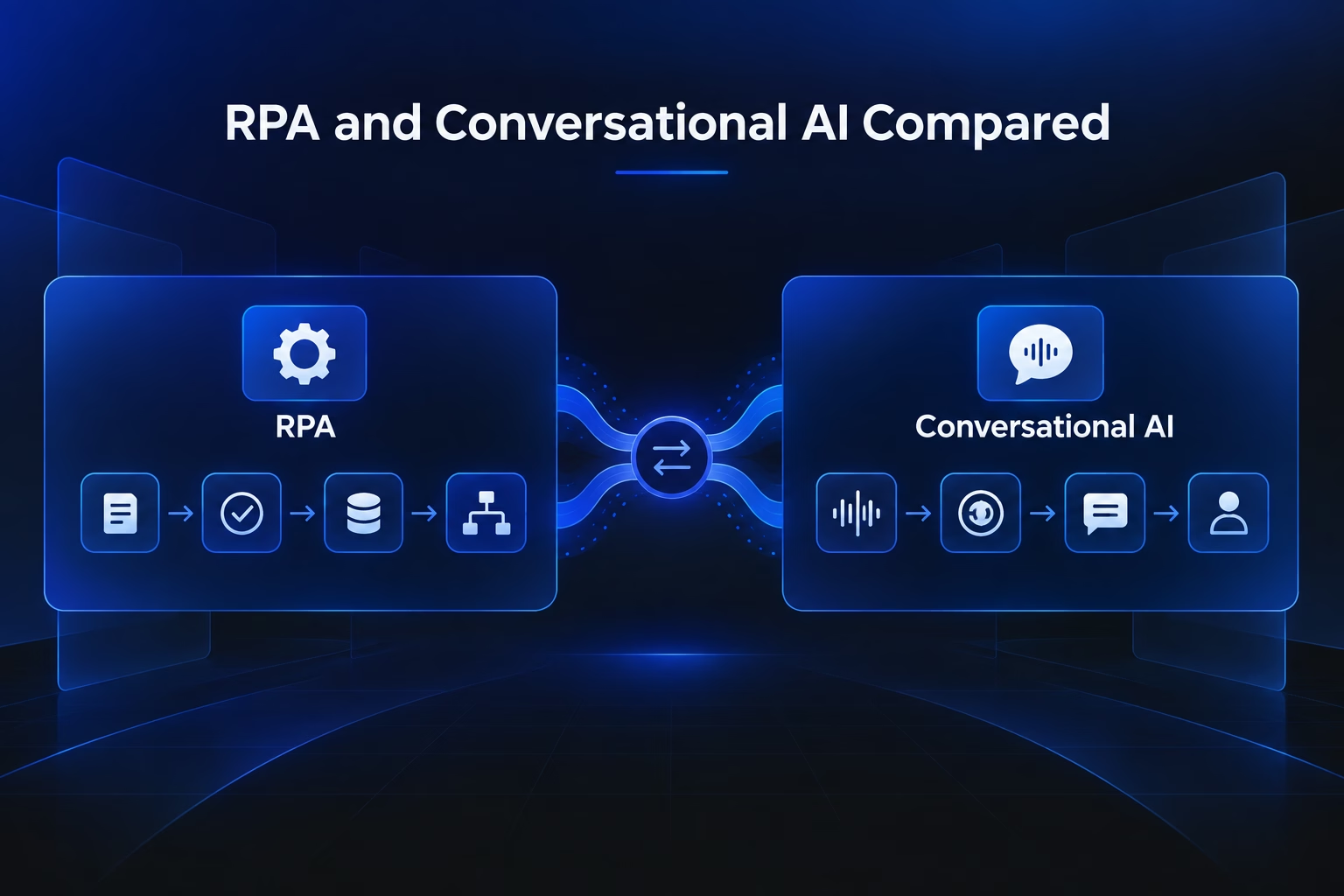
Robotic process automation in banking and conversational AI solve different parts of a workflow.
| Capability | Robotic process automation in banking | Conversational AI |
|---|---|---|
| Structured data movement | Strong | Uses integrations or tools |
| Rule-based validation | Strong | Can invoke approved checks |
| Legacy-system interaction | Common use | Usually indirect |
| Free-form language understanding | Limited | Core capability |
| Multi-turn dialogue | Not a primary function | Core capability |
| Intent detection | Requires another component | Can classify configured intents |
| Sentiment signals | Requires another component | Can detect configured signals |
| Approved explanation | Template-driven | Contextual within guardrails |
| Back-office execution | Core capability | Triggers RPA, APIs, or workflows |
| Human escalation | Queue or rule based | Uses conversation context |
| Best role | Deterministic execution | Adaptive customer interaction |
Robotic process automation in banking is the execution layer for deterministic work. Conversational AI is the interaction layer for variable customer input.
Neither platform should be expected to manage the entire architecture independently. Banks may still need APIs, workflow engines, decision models, CRM platforms, core systems, and accountable employees.
McKinsey’s Global Banking Annual Review 2026 emphasizes the combination of customer data, decisioning, engagement technology, and operating processes. That combination explains why robotic process automation in banking alone rarely produces a complete customer-engagement system.
Combine RPA and conversations with Callveriq.
Banking Workflows That Need Both Technologies
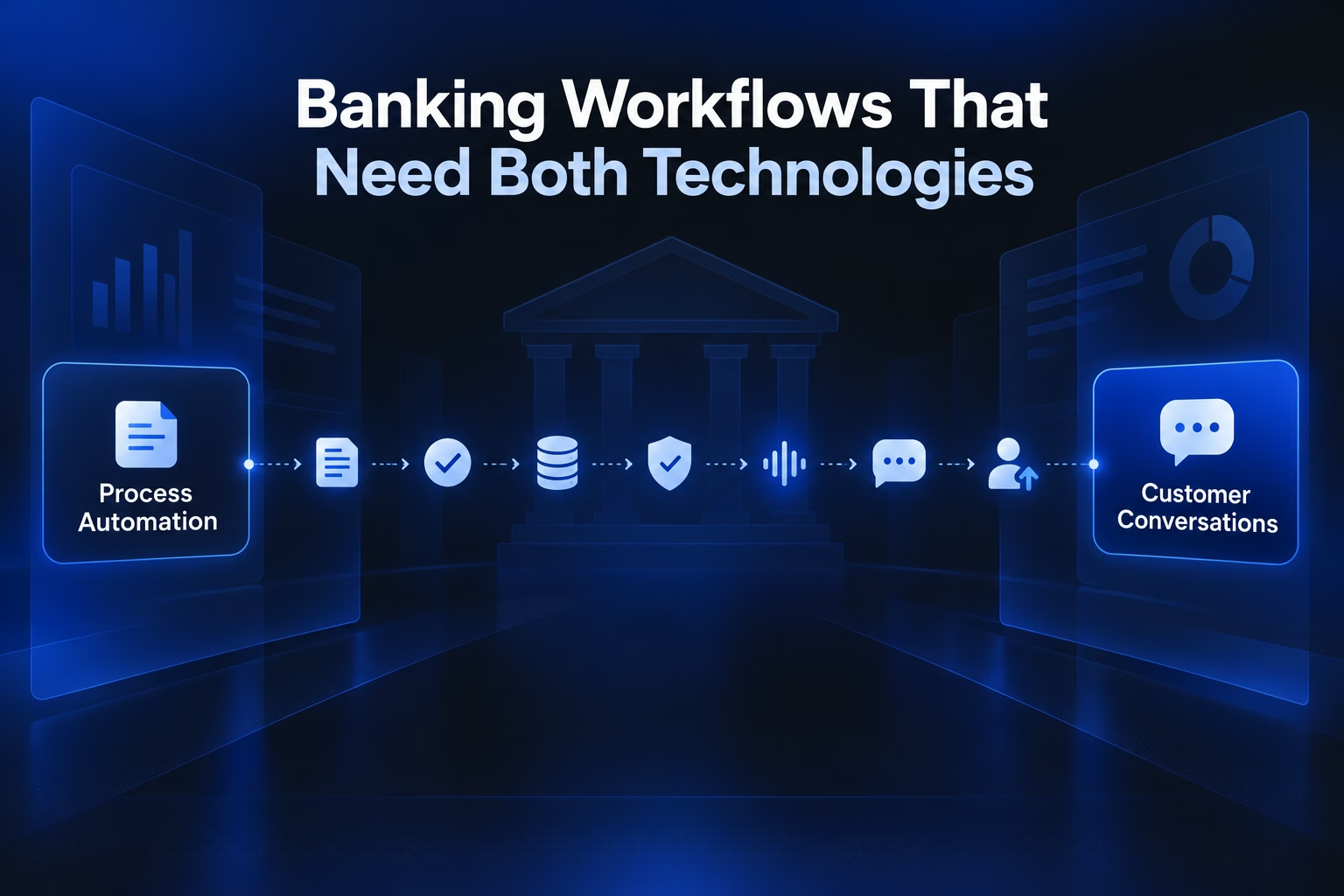
1. KYC Completion
Robotic process automation in banking can check submitted fields, update status, and create a missing-document task.
Conversational AI can explain the requirement, capture the customer’s response, send a secure submission route, and escalate exceptions.
2. Loan Applications
Robotic process automation in banking can move application data, apply validation rules, and update processing stages.
Conversational AI can qualify interest, answer approved questions, explain pending requirements, and schedule employee assistance.
3. Collections
Robotic process automation in banking can prepare account lists, reconcile payments, post outcomes, and update cases.
Conversational AI can conduct reminders, capture promises, send payment links, identify disputes, and escalate hardship statements.
4. Service Requests
Robotic process automation in banking can create tickets, retrieve status, and route tasks.
Conversational AI can understand the request, collect missing information, and provide contextual updates.
5. Fraud Verification
Robotic process automation in banking can update a fraud case and execute approved restrictions.
Conversational AI can conduct controlled verification and escalate uncertainty without making unsupported conclusions.
6. Renewals
Robotic process automation in banking can identify due records and update completion.
Conversational AI can explain renewal requirements, capture intent, and coordinate follow-up.
| Workflow | Role of RPA | Role of conversational AI |
|---|---|---|
| KYC | Checks fields and updates status | Explains missing information |
| Loan application | Moves data and validates rules | Answers questions and qualifies intent |
| Collections | Reconciles payments and updates cases | Conducts conversations |
| Service requests | Creates and routes tickets | Understands the request |
| Fraud verification | Executes approved system actions | Conducts controlled verification |
| Renewals | Identifies due accounts | Coordinates follow-up |
| Complaints | Tracks ownership and deadlines | Captures issues and provides updates |
Salesforce’s 2025 research on financial-services loyalty highlights customer expectations for connected digital engagement while noting continuing concerns around trust.
Banks combining conversational AI with robotic process automation in banking need clear identification, accurate information, transparent escalation, and access to human support.
Orchestrate banking journeys through Callveriq.
How Callveriq Extends Banking RPA
Callveriq provides the customer-conversation layer that robotic process automation in banking does not natively supply. Its AI agents can:
- Conduct approved inbound and outbound conversations
- Understand configured customer intents
- Capture structured dispositions
- Answer supported questions
- Continue interactions across approved channels
- Trigger RPA or API actions
- Transfer complex cases to people
- Return outcomes to banking systems
Consider a KYC reminder. Robotic process automation in banking identifies a missing document and updates the application status.
Callveriq contacts the customer, explains the approved requirement, answers supported questions, sends the submission route, and records the response. Robotic process automation in banking then checks whether the document arrived and updates the workflow.
In collections, robotic process automation in banking can prepare the campaign list, update cases, and reconcile payments. Callveriq can speak with borrowers, capture promise dates, send approved links, and escalate disputes.
For lead follow-up, robotic process automation in banking can create and assign opportunities. Callveriq can contact the lead, understand interest, and schedule the appropriate next action.
KPMG’s describes AI-enabled improvements across banking processes, including onboarding and compliance.
The practical requirement is to assign each technology the right responsibility. Robotic process automation in banking executes defined processes. Callveriq manages approved conversations and intent.
Extend RPA workflows using Callveriq.
How Banks Should Evaluate the Combined Model
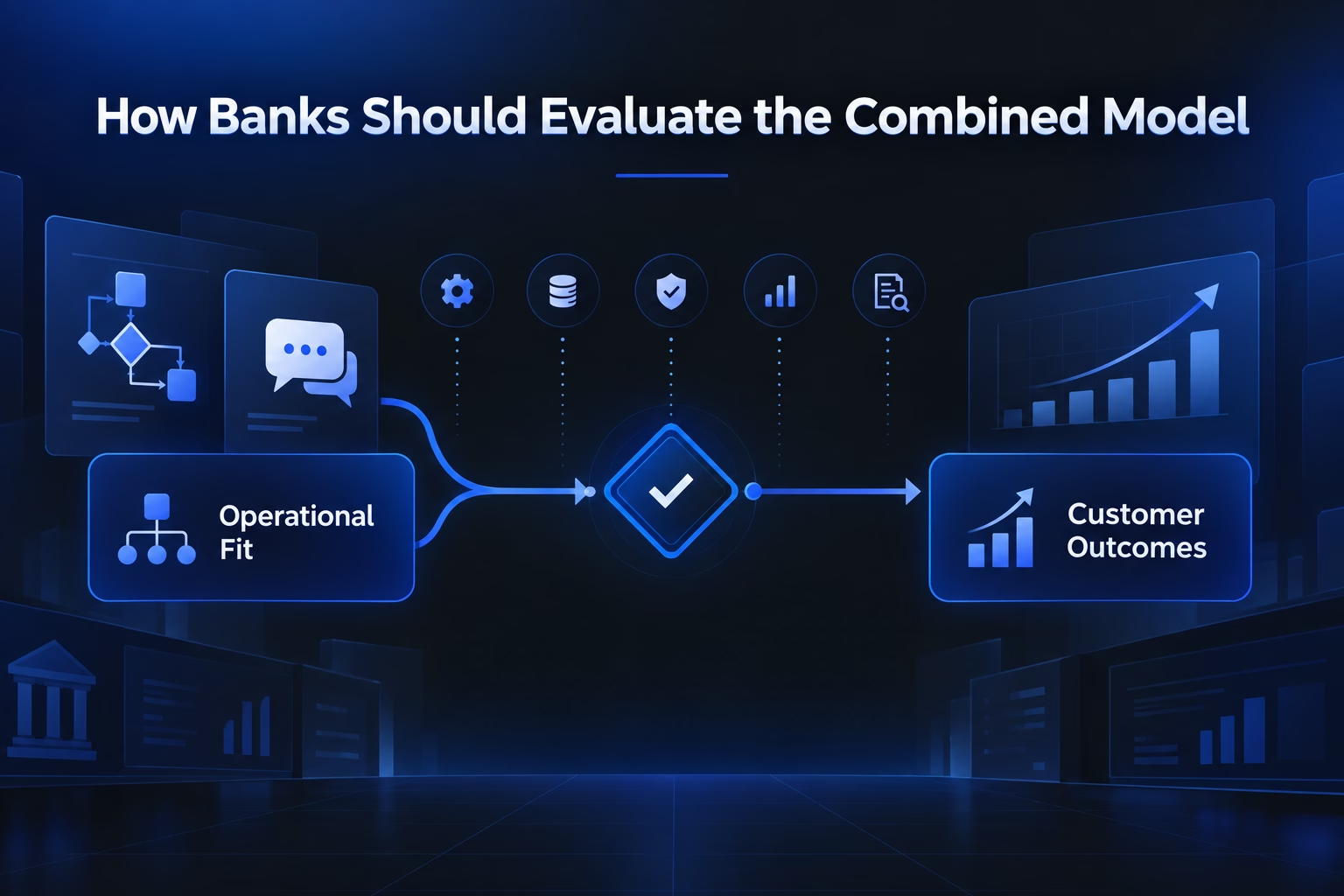
A bank should test robotic process automation in banking and conversational AI through a controlled pilot.
1. Process Suitability
The bank should determine whether the process has:
- Stable rules
- Sufficient volume
- Predictable applications
- Structured inputs
- Clear ownership
- Defined exceptions
- Measurable outcomes
A process with changing rules, poor data, or heavy judgment may not be a strong candidate for unattended robotic process automation in banking.
2. Reliability
The evaluation should test:
- Source-system outages
- Screen or field changes
- Duplicate submissions
- Retry behavior
- Partial completion
- Queue failures
- Incorrect customer information
- Manual intervention
- Recovery after interruption
3. Conversation Quality
The bank should test expected intents, follow-up questions, language requirements, code-switching, objections, emotional signals, and escalation rules.
4. Governance
Robotic process automation in banking should provide:
- Secured credentials
- Role-based access
- Complete logs
- Rule versions
- Change approvals
- Error visibility
- Rollback
- Human overrides
5. Cross-System Auditability
RPA and conversational AI should share a journey identifier. The audit record should connect customer input, system action, workflow version, employee intervention, and final outcome.
Gartner’s 2025 warning on agentic AI projects predicts that more than 40% of agentic AI projects will be cancelled by the end of 2027 due to rising costs, unclear business value, or inadequate risk controls.
Banks should therefore test the combined workflow instead of relying on broad automation claims.
Evaluate banking automation with Callveriq.
Metrics for an RPA and Conversational AI Pilot
Robotic process automation in banking should be measured through operational reliability. The conversation layer should be measured through customer and business outcomes.
| Measurement area | Recommended metric |
|---|---|
| RPA reliability | Successful transaction rate |
| Exception management | Exception and recovery rate |
| Manual effort | Manual rework per transaction |
| Processing | End-to-end completion time |
| Data quality | Incorrect-update rate |
| Customer engagement | Meaningful conversation rate |
| Resolution | Completed-action rate |
| Automation | Automated-resolution rate |
| Escalation | Escalation accuracy |
| Experience | Complaint and opt-out rate |
| Economics | Cost per successful outcome |
| Auditability | Complete journey-record rate |
The business case should include:
- RPA licenses
- Conversational AI usage
- Implementation
- Integration
- Process redesign
- Infrastructure
- Telephony
- Messaging
- Monitoring
- Security review
- Maintenance
- Employee oversight
- Exception handling
Robotic process automation in banking can appear inexpensive when the business case excludes bot failure, interface changes, and manual exception work.
Procurement teams should test robotic process automation in banking for unattended execution, robotic process automation in banking for employee support, robotic process automation in banking for reconciliation, robotic process automation in banking for exception recovery, and robotic process automation in banking for audit readiness.
They should also compare robotic process automation in banking with APIs, robotic process automation in banking with native workflow engines, and robotic process automation in banking with conversational AI.
Prove automation value with Callveriq.
Connect Automation With Conversation
Robotic process automation in banking remains a strong choice for repetitive work across structured systems. It can move data, apply explicit rules, update statuses, reconcile records, and manage routine queues with consistency. It should not be expected to understand every customer response or manage an evolving conversation independently.
Conversational AI fills that gap by interpreting language, preserving context, explaining approved information, and identifying the next action. Robotic process automation in banking then executes the deterministic system steps behind that action.
Callveriq connects customer dialogue with robotic process automation in banking, APIs, workflows, and human teams. The combined architecture gives structured execution to RPA, variable conversation to AI, and sensitive judgment to accountable employees.
The goal is not to replace robotic process automation in banking. It is to ensure that a successful automated task also produces a complete and coherent customer outcome.
Choose connected automation with Callveriq. Book your Callveriq demo.
FAQs
1. Can RPA operate without replacing core banking systems?
Often yes. Robotic process automation in banking can work across existing interfaces, although APIs may be more maintainable where available.
2. Does conversational AI replace banking RPA?
No. Conversational AI manages dialogue, while robotic process automation in banking executes structured system actions.
3. How long should an RPA pilot run?
It should cover normal volumes, exceptions, system failures, operational handoffs, and enough cycles to estimate maintenance requirements.
4. Which processes should avoid unattended RPA?
Processes with unstable rules, poor data, high judgment, or significant customer harm from an incorrect action require stronger human control.
5. Can RPA and conversational AI share an audit trail?
Yes. Integrations should preserve common journey identifiers, timestamps, versions, customer inputs, system actions, outcomes, and employee overrides.