

When Recovery Pressure Becomes a Communication Risk
A missed instalment begins as an account event, but it quickly becomes a communication journey. The borrower may receive an automated reminder, a call from an internal team, a message from a service provider and, later, contact from a field recovery agent. If those systems do not share context, the borrower can receive repeated demands after promising payment, contradictory outstanding amounts or an escalation that ignores an active dispute.
That fragmentation creates more than poor experience. A single late-night call, threat, disclosure to a relative or unverified payment instruction can turn a routine collection case into a grievance, reputational event or supervisory concern. KPMG’s India CX research highlights transparency and dependable support as important differentiators in financial services. The lesson for collections teams is simple: operational discipline is part of customer protection, even when an account is overdue.
Outsourcing does not outsource accountability. The RBI guidelines for loan recovery agents place responsibility on the regulated entity to select, train and monitor agents and to address misconduct. A borrower generally experiences the bank or NBFC brand regardless of which agency, dialler or messaging platform initiated the contact.
Build organizational trust into every reminder.
What RBI Rules Govern Loan-Recovery Outreach?
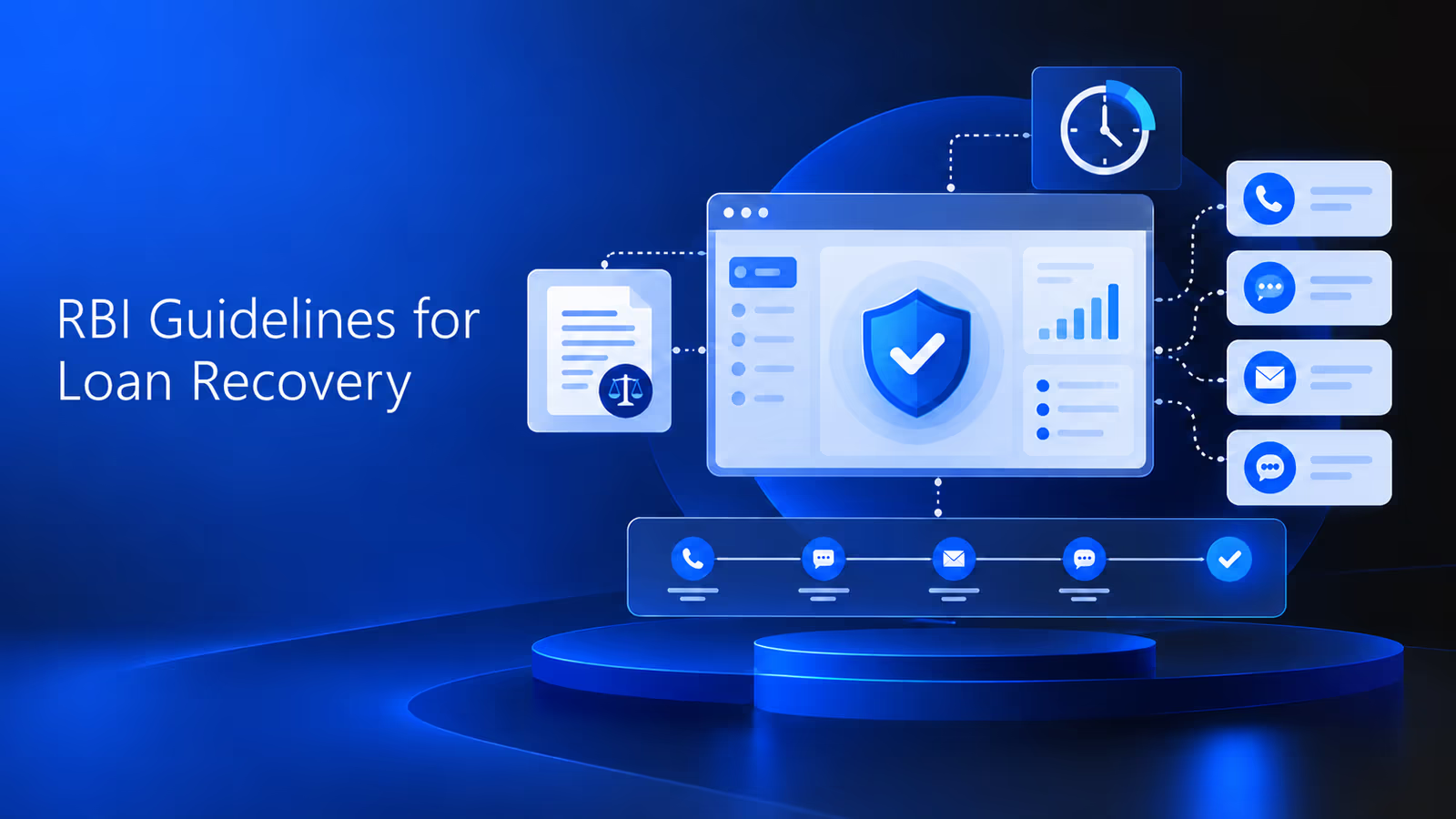
RBI requirements come from multiple directions and circulars rather than one short checklist. Read together, they establish a conduct baseline: recovery must follow lawful means; communication cannot intimidate or humiliate; privacy must be respected; agents must be identifiable and authorised; and lenders must maintain oversight and grievance mechanisms.
These controls should apply across voice calls, SMS, WhatsApp, email and field visits. A compliant call policy is incomplete if an automated campaign can still send a threatening message or if a field agent cannot see that the borrower has already raised a complaint.
Operationalize compliant outreach with Callveriq.
This blog is just the start.
Unlock the power of Callveriq’s AI with a live demo.

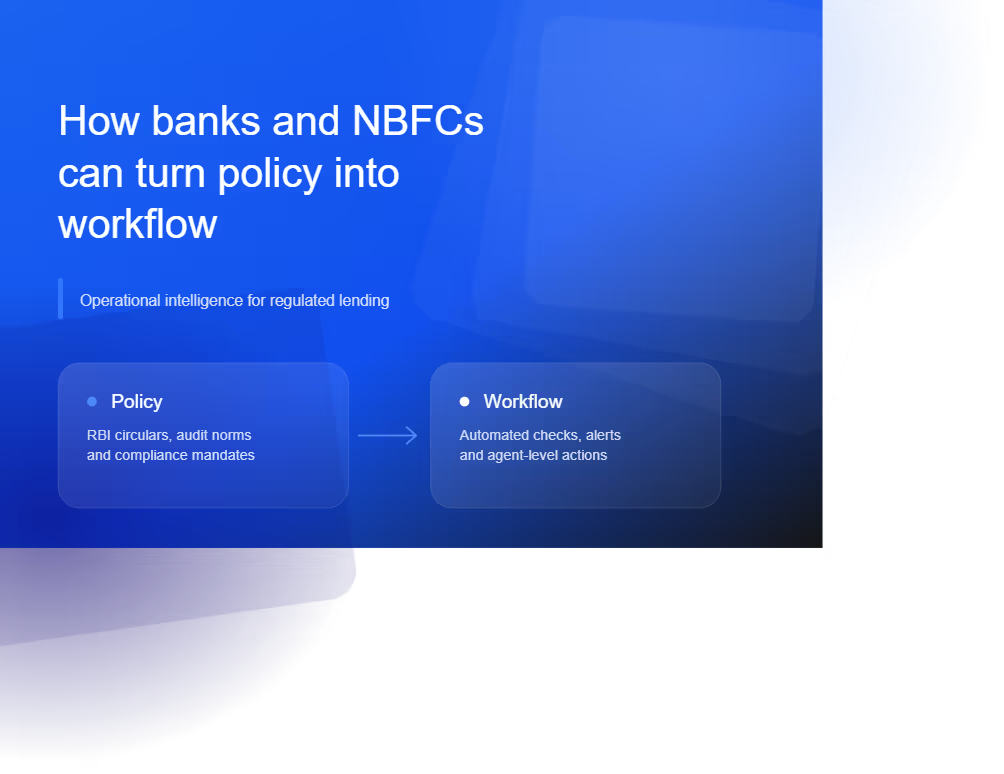
How Banks and NBFCs Can Turn Policy Into Workflow
1. Create one borrower-contact ledger
Every attempt should write to a shared timeline containing channel, timestamp, agent, purpose, outcome and next permitted action. This prevents duplicate outreach and gives supervisors a reliable view of the RBI guidelines for loan recovery process.
2. Use account-aware communication rules
A reminder for a newly overdue account should not sound like a pre-litigation notice. Segment by delinquency stage, dispute status, vulnerability indicators, prior commitments and applicable legal process. Scripts should use verified balances and avoid consequences that the lender is not presently entitled or prepared to pursue.
3. Build hard controls around outreach
Contact-hour restrictions, frequency caps, do-not-contact instructions and escalation permissions should be enforced by the system, not left to memory. Supervisors should receive alerts for prohibited phrases, repeated attempts, complaints or calls that continue after a settlement or payment promise.
4. Audit outcomes, not only activity
A high contact rate does not prove a healthy recovery program. Review complaint incidence, right-party contact, promise-to-pay quality, dispute resolution time, repeat-call frequency and policy exceptions. RBI guidelines for loan recovery by banks and RBI guidelines for loan recovery by NBFCs both demand accountable conduct, even when operating models differ.
Make your recovery workflows easier to audit.
Where Responsible Automation Can Help
Automation is useful when it reduces inconsistency. It can select an approved message, respect the contact window, switch languages, stop outreach after a payment event and route a distressed or disputing borrower to a trained human. It becomes risky when it optimizes solely for attempts or collections without considering consent, privacy, tone and context.
Salesforce’s 2025 financial-services research found a wide gap between general trust in AI agents and complete trust. Gartner’s 2025 service research likewise shows strong executive pressure to deploy AI, while McKinsey’s 2026 banking review describes AI as a fast-moving force reshaping banking. For lenders, that combination argues for controlled assistance rather than unchecked autonomy: approved knowledge, explicit action limits, complete logs and human escalation for sensitive conversations.
Callveriq can support this operating model by helping teams orchestrate borrower communications across channels, monitor conversations and preserve interaction context. The goal is not to replace policy judgment. It is to help policy travel consistently through everyday outreach.
See compliant engagement in action.
What Borrowers Commonly Misunderstand About Recovery
Borrowers often assume that every reminder is a legal notice or that every missed payment immediately permits asset seizure. Neither assumption is safe. A reminder, demand notice, recall notice and statutory enforcement notice serve different purposes. The communication should name the document, explain why it has been issued and avoid blending several stages into one alarming message.
1. A payment delay and a dispute are different events
If the borrower challenges the balance, alleges a payment was not credited or reports identity theft, the case needs investigation. Continuing the same frequency and tone while a credible dispute is open can magnify harm. A mature workflow marks the dispute, routes evidence to the right team and tells the borrower what will happen next.
2. A recovery agent is not an independent authority
An agent acts within authority granted by the lender and applicable law. The borrower can ask for identity and authorization details and can verify them with the institution. The lender should make that verification easy through official channels.
3. Silence does not improve the borrower’s options
Avoiding legitimate communication can allow charges or enforcement stages to progress. Educational outreach should therefore explain available routes, payment, clarification, hardship assistance, settlement where offered or a formal grievance without promising an outcome that policy does not guarantee.
Help borrowers understand every next step.
A Recovery Outreach Checklist for BFSI Teams
Before a campaign launches, teams should test both the policy and the borrower experience. The following questions help convert high-level rules into controls that can be observed every day.
This checklist should be repeated when a vendor, script, model, product or regulation changes. Governance is not a one-time certification; it is the ability to demonstrate that the live system still behaves as intended.
Turn policy into repeatable controls.
How the Rules Apply in Common Recovery Scenarios
1. A borrower misses one EMI
The first response should usually be informative and proportionate. Confirm that the instalment is actually unpaid, account for processing delays and tell the borrower the amount, due date and official payment route. A first reminder should not imitate a legal notice or imply that field action is immediate. If the borrower explains a temporary difficulty, the agent can describe available service options without promising a waiver or restructuring that has not been approved.
2. The borrower has already promised to pay
A promise-to-pay date should become a system event. Until that date, unnecessary repeat calls can feel like harassment and waste operational capacity. The workflow should record the promised amount, date, channel and any condition discussed. If the promise breaks, the next message should acknowledge the history rather than restarting the conversation as if no contact occurred.
3. The borrower disputes the outstanding amount
Collection pressure should not substitute for reconciliation. The agent needs a route to flag disputed interest, fees, payments or identity. The institution should state what evidence it needs, who will investigate and when the borrower can expect a response. Separating “amount disputed” from “refusal to pay” improves both fairness and recovery accuracy.
4. The borrower cannot be reached directly
Teams may seek updated contact information within lawful and contractual limits, but they should not reveal the debt to neighbours, colleagues or unrelated relatives. Messages left with another person should avoid account details. The objective is to establish right-party contact, not to create social pressure.
5. A field visit becomes necessary
The visitor should carry verifiable identification and authorization, arrive within permitted times and follow an approved purpose. The visit record should capture time, place, people present, information shared and outcome. Agents should never enter property without permission, seize an asset without lawful authority or use crowding, threats or embarrassment as leverage.
6. The borrower reports vulnerability
Illness, bereavement, job loss, disability or severe distress may require a different conversation. A vulnerability flag should trigger slower pacing, clearer explanations and human review. It does not automatically change the legal debt, but it can change how the institution communicates and which assistance or escalation route is appropriate.
Across these scenarios, the principle is consistent: the next contact should reflect what is known about the account and the person. That is how RBI conducts expectations to become a borrower experience rather than a policy document.
Apply policy to real borrower situations.
RBI loan recovery: Building a Compliant Loan-Recovery Outreach System
Loan recovery is a legitimate part of lending, but the method matters. The strongest interpretation of the RBI framework is operational: know who contacted the borrower, when, through which channel, with what message and under whose authority. Banks and NBFCs that connect policy, systems, vendors and supervision can pursue recoveries without allowing urgency to become harassment. That protects borrowers, gives agents clearer boundaries and gives the institution evidence that its standards are working where they matter most in the conversation itself.
Strengthen every compliant borrower interaction.
FAQs
1. Can a borrower request communication in a preferred language?
A borrower may request it, although availability depends on the lender. Clear, understandable communication supports fair treatment.
2. Can a recovery agent collect cash at the doorstep?
Only through an authorised process with proper identification and a valid receipt. Borrowers should verify the payment channel with the lender.
3. What should a borrower do if an agent uses an unknown number?
Ask for identification and independently verify the agency through the lender’s official customer-service channel before sharing information or paying.
4. Do recovery rules apply when a loan is sold to another entity?
Applicable obligations depend on the assignee and transaction, but lawful conduct, notices, privacy and grievance requirements remain important.
5. Can lenders contact a guarantor about an overdue loan?
A lender may contact a guarantor within the contract and law, but communication must remain accurate, proportionate and non-harassing.