

The Digital Loan Journey Has Too Many Voices
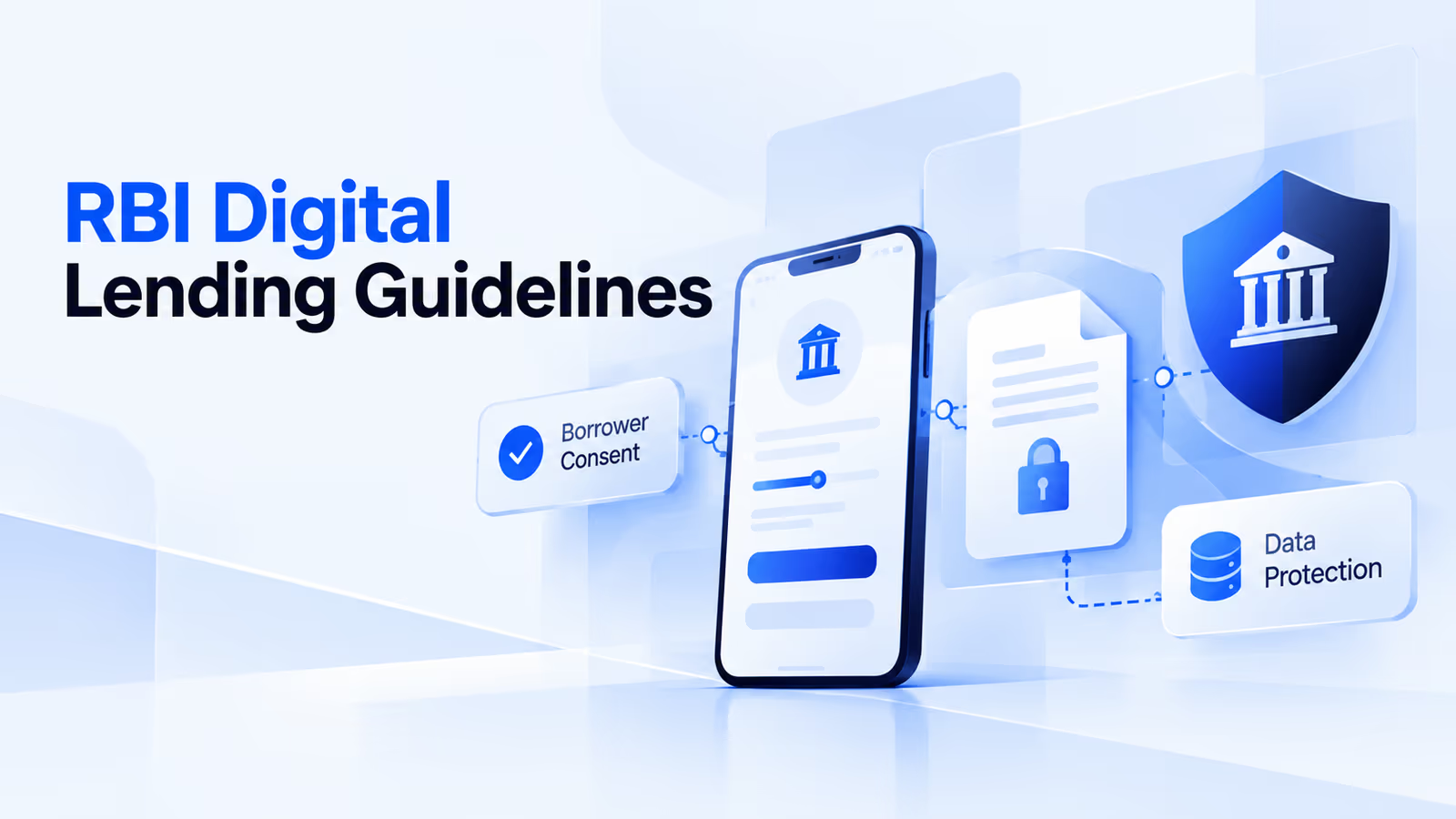
A borrower may discover a loan inside one app, receive an offer from another brand, sign documents issued by a regulated entity and later receive servicing messages from a third party. When those voices are not coordinated, the borrower may not know who the lender is, why a fee appears, where repayment should go or whether a recovery message is genuine. The rbi digital lending guidelines make this control important in daily operations.
That confusion is precisely why communication cannot be treated as the last step of compliance. KPMG’s 2025 India CX work emphasizes transparency and quality of support across financial services. Salesforce’s 2025 financial-services research shows that consumers see value in AI but do not extend complete trust automatically. Clear attribution, consistent explanations and accessible human help therefore matter throughout the journey. Teams applying the rbi digital lending guidelines should document this step.
A disclosure delivered is not always understood
A technically complete document can still fail the borrower if it arrives too late, uses inconsistent numbers or is buried inside an interface. Digital lending communication must make the lender, cost, obligation and next action visible at the moment a decision is made. In this context, the rbi digital lending guidelines require consistent execution. This requirement also shapes how institutions operationalize RBI digital lending guidelines for banks.
Turn disclosures into usable guidance.
What Do RBI Digital-Lending Guidelines Require?
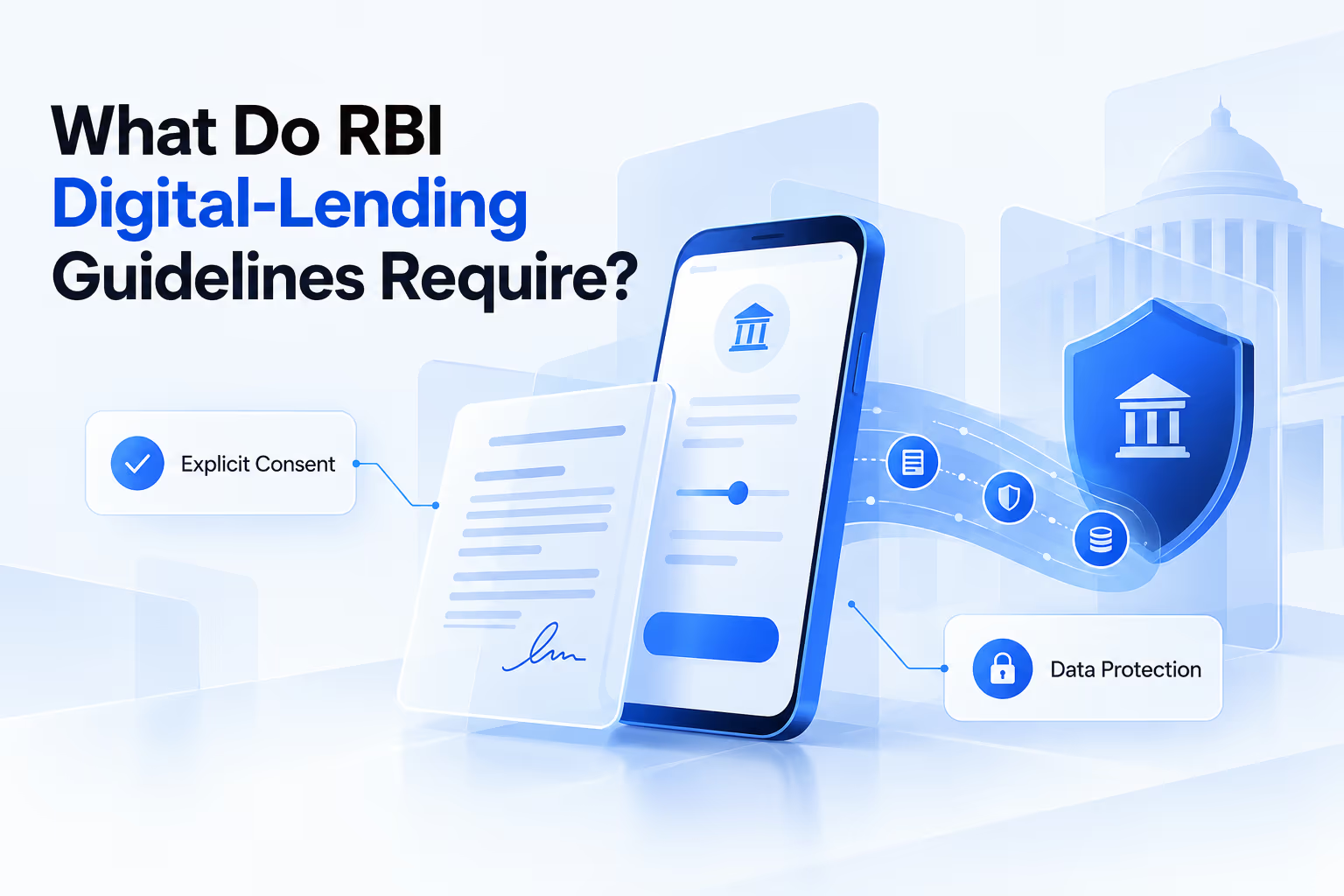
The Reserve Bank of India (Digital Lending) Directions, 2025 bring earlier requirements into a consolidated framework. They apply to regulated entities and shape how those entities oversee Lending Service Providers and Digital Lending Apps. This is a measurable control under the rbi digital lending guidelines.
The RBI digital lending guidelines for banks and RBI digital lending guidelines for NBFCs may operate within different institutional structures, but both require the regulated entity to control the borrower experience delivered through partners. The rbi digital lending guidelines turn this principle into an operational priority.
Operationalize every mandated borrower touchpoint.
How Borrower Communication Must Change
Borrower communication must shift from reactive, static, and document-centric notices to proactive, personalized, and multi-channel digital engagement.
1. Name the regulated lender early
Do not let the app or marketplace brand overshadow the entity actually extending credit. Offers, KFS delivery, sanction messages, repayments and grievances should use consistent lender identification. A defensible workflow under the rbi digital lending guidelines should preserve this evidence.
2. Explain cost as one connected story
The APR, fees, repayment schedule and penal charges should reconcile across the comparison screen, KFS, agreement and servicing messages. A mismatch between an attractive front-end number and the executed loan terms can undermine informed choice. This helps institutions apply the rbi digital lending guidelines across channels and partners. For teams interpreting RBI digital lending guidelines for NBFCs, this is a practical implementation point.
3. Make consent specific and reversible
Permission requests should state what data is needed and why. Avoid broad access unrelated to underwriting or servicing. The borrower should be able to understand consent controls without navigating a maze of generic privacy text. This practical safeguard reflects the rbi digital lending guidelines.
4. Treat complaints as part of the product
The RBI digital lending guidelines for borrowers are meaningful only if people can find the responsible institution. Put grievance details inside the app, loan documents and service messages, and retain the complaint history when a partner changes. The rbi digital lending guidelines make this control important in daily operations.
5. Connect recovery to the original loan record
RBI digital lending guidelines for loan recovery require more than a compliant recovery script. The team needs the correct lender identity, authorised agent details, outstanding amount, prior commitments, disputes and complaint status before contact begins. Teams applying the rbi digital lending guidelines should document this step. This requirement also shapes how institutions operationalize RBI digital lending guidelines for NBFCs.
Create one consistent borrower journey.
This blog is just the start.
Unlock the power of Callveriq’s AI with a live demo.

A Practical Communication-Control Model
Start with a message inventory covering acquisition ads, app screens, consent prompts, KFS delivery, sanction, disbursal, repayment, delinquency and complaints. Assign an owner and source of truth to every monetary figure and legal statement. Then map which party regulated entity, LSP or another provider sends each communication. In this context, the rbi digital lending guidelines require consistent execution.
This approach turns compliance into observable behaviour. It also makes audits more useful because reviewers can trace what the borrower saw, heard and agreed to at each stage. This is a measurable control under the rbi digital lending guidelines.
Make compliance visible in conversations.
Where AI Fits and Where It Should Stop
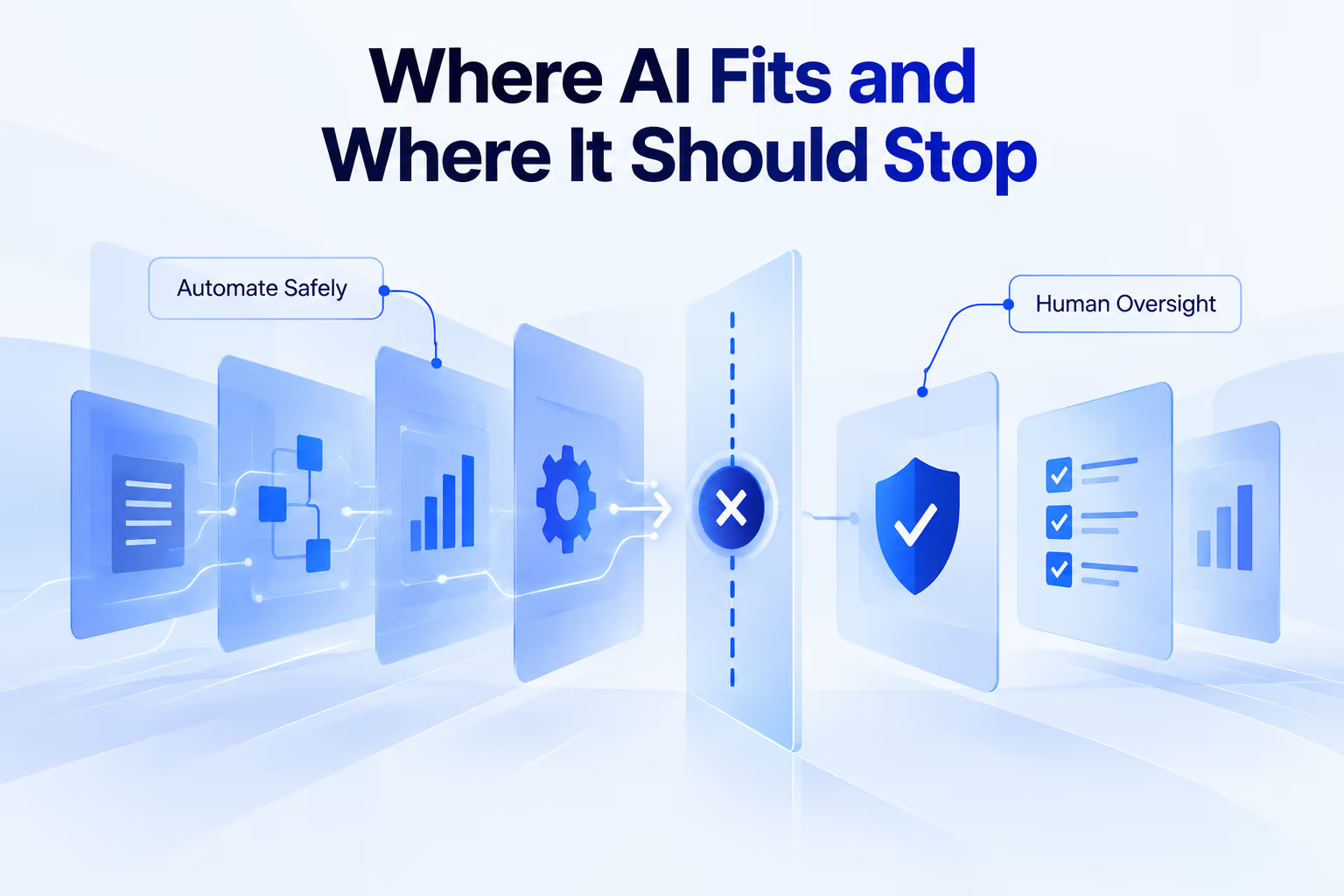
AI can translate explanations, summarize documents, answer routine questions and choose a relevant approved message. It can also detect confusion, distress or a dispute and escalate to a human. These uses improve accessibility when grounded in verified product data. The rbi digital lending guidelines turn this principle into an operational priority.
AI should not fabricate rates, modify the KFS, infer consent, conceal the regulated lender or threaten an unavailable legal action. Gartner’s 2025 customer-service research points to rising investment and pressure to deploy AI, while McKinsey’s 2026 banking review describes a sector moving quickly toward AI-enabled customer ownership. Speed must be paired with clear controls. A defensible workflow under the rbi digital lending guidelines should preserve this evidence. For teams interpreting RBI digital lending guidelines for borrowers, this is a practical implementation point.
Callveriq can help banks and NBFCs coordinate omnichannel borrower engagement, retain conversation context and monitor whether approved communication standards are followed. The useful outcome is consistency: one accountable journey across voice, messaging and human teams. This helps institutions apply the rbi digital lending guidelines across channels and partners.
Use Callveriq’s AI agents with clear guardrails.
How the Rules Affect Each Digital-Lending Participant
A digital loan can involve several organizations, but the borrower should not have to decode the operating model to understand accountability. The regulated entity remains responsible for the lending relationship and for oversight of the service providers it appoints. This practical safeguard reflects the rbi digital lending guidelines.
When roles change, the borrower must not be left with a broken journey. The institution should update partner listings, app disclosures, support routing and recovery authorization records without losing prior conversation or complaint context. The rbi digital lending guidelines make this control important in daily operations. This requirement also shapes how institutions operationalize RBI digital lending guidelines for borrowers.
Clarify every participant’s borrower responsibility.
A Stage-by-Stage Borrower Communication Blueprint
Here is your structured blueprint for restructuring borrower communication to remain compliant with the RBI Digital Lending Guidelines.
1. Discovery and comparison
State that the offer is credit, identify the regulated entity and avoid interface patterns that hide cost or steer the user through confusion. Where multiple offers are presented, comparison logic should be consistent and disclosed. Teams applying the rbi digital lending guidelines should document this step.
2. Application and consent
Ask only for information that is needed for a defined purpose. Explain permissions in context, capture the borrower’s action and provide a workable route to manage consent where required. In this context, the rbi digital lending guidelines require consistent execution.
3. Offer and execution
Present the KFS before the contract is executed, reconcile every charge with the loan documents and make the cooling-off option visible. Delivery should be provable and the documents should remain accessible after the app session ends. This is a measurable control under the rbi digital lending guidelines.
3. Servicing and repayment
Use the regulated entity’s verified payment path, confirm transactions and explain changes or failures promptly. If an LSP assists, its message should not make the borrower believe it owns the debt unless that is legally accurate. The rbi digital lending guidelines turn this principle into an operational priority. For teams interpreting RBI digital lending guidelines for loan recovery, this is a practical implementation point.
4. Delinquency and grievance
Shift tone and frequency according to the actual account stage. Provide authorized recovery details before contact where required, connect the agent to prior complaints and make escalation to the lender easy. A defensible workflow under the rbi digital lending guidelines should preserve this evidence.
This blueprint makes the Reserve Bank of India (Digital Lending) Directions, 2025 visible as a journey rather than a folder of policies. It also gives product, legal, operations and customer-service teams a common map for testing changes. This helps institutions apply the rbi digital lending guidelines across channels and partners.
Build one transparent digital journey with Callveriq.
Digital-Lending Questions Borrowers Ask Before They Trust an Offer

When navigating a landscape of digital loan offers, modern borrowers implicitly or explicitly demand clarity across key emotional and financial friction points before they extend their trust to a lender.The primary barrier to conversion is the question of who is actually backing the loan and what the true, aggregate cost of borrowing will be.
- Who is actually lending the money?
The app that markets or services the loan may not be the regulated entity extending it. The borrower should see the lender’s legal name before accepting the offer and should be able to verify the associated app or service provider through official information. This practical safeguard reflects the rbi digital lending guidelines. This requirement also shapes how institutions operationalize RBI digital lending guidelines for loan recovery.
- What will this loan cost in total?
A monthly rate or “low fee” does not give the complete picture. The KFS and offer communication should present APR, charges and the repayment schedule in a way that can be compared. If any number changes before execution, the borrower should receive the updated terms before being bound. The rbi digital lending guidelines make this control important in daily operations.
- Why does the app need access to my data?
Every permission should have a lending-related purpose. Borrowers should be wary of broad contact, media or device access that is not clearly justified. Institutions should design consent screens so that refusal, withdrawal and consequences are understandable rather than hidden behind generic language. Teams applying the rbi digital lending guidelines should document this step.
- Where will the money come from and where do I repay?
The regulated framework generally expects direct flows between the borrower and regulated entity, subject to specified exceptions. Communication should identify the genuine beneficiary and warn against transfers to personal accounts, unofficial links or callers who cannot be verified. In this context, the rbi digital lending guidelines require consistent execution.
- Can I change my mind after accepting?
The cooling-off period provides a defined opportunity to exit a digital loan by paying the principal and proportionate APR without penalty, subject to the Directions and disclosed processing-fee treatment. The lender should show the deadline and process instead of expecting the borrower to discover it inside the agreement. This is a measurable control under the rbi digital lending guidelines.
- Who helps if the app stops responding?
The borrower needs access to the regulated entity’s grievance officer, not only a chatbot or marketplace help desk. Messages and documents should carry durable contact information and explain the next escalation route if the complaint is not resolved. The rbi digital lending guidelines turn this principle into an operational priority.
- Will the loan appear on my credit report?
Digital delivery does not make a loan invisible. Applicable loans and repayment performance may be reported to credit information companies. The RBI Credit Information Reporting Directions, 2025 require regular reporting and establish customer-service mechanisms around credit information. Borrowers should therefore understand that missed payments can have consequences beyond the app. A defensible workflow under the rbi digital lending guidelines should preserve this evidence.
Answering these questions early supports informed borrowing and reduces downstream complaints. It also gives banks and NBFCs a practical test: if the borrower cannot identify the lender, cost, data purpose, payment route and support owner, the journey is not yet clear enough. This helps institutions apply the rbi digital lending guidelines across channels and partners.
Answer trust questions before acceptance.
RBI digital lending: Making Digital Lending Communication Clear and Accountable
The biggest change required by the RBI digital lending framework is not another layer of fine print. It is a connected communication system in which the borrower can identify the lender, compare the real cost, receive the right documents, control data permissions, repay through the correct channel and raise a complaint without confusion. Banks and NBFCs that align their apps, partners, policies and conversations will be better placed to make digital credit both scalable and trustworthy. Compliance becomes strongest when every message makes the borrower’s next decision clearer. This practical safeguard reflects the rbi digital lending guidelines.
Build clearer digital lending journeys. Book your Callveriq demo.
FAQs
1. Do the Directions apply to loans sourced through social media?
They can apply when a regulated entity originates a digital loan through an LSP or DLA, regardless of where the lead was first generated. The rbi digital lending guidelines make this control important in daily operations.
2. Can a borrower use multiple digital lending apps simultaneously?
Yes, subject to each lender’s eligibility and underwriting. Borrowers should compare total obligations and avoid unaffordable borrowing. Teams applying the rbi digital lending guidelines should document this step.
3. Must a digital lender offer customer support by phone?
The framework requires accessible grievance arrangements, but the exact support channels depend on the regulated entity and applicable requirements. In this context, the rbi digital lending guidelines require consistent execution.
4. Can a lending app change its name after a loan is issued?
Brand changes may occur, but the regulated lender and contractual obligations should remain clearly identifiable to the borrower. This is a measurable control under the rbi digital lending guidelines.
5. Are buy-now-pay-later products always digital loans?
Classification depends on the structure and entities involved. Consumers should review the KFS, lender identity and credit-reporting implications. The rbi digital lending guidelines turn this principle into an operational priority.