

The buying story begins after retailers have accepted that spreadsheets and disconnected campaign tools cannot support a unified customer journey. It exposes the gap between what retail CRM software records and what frontline engagement requires.
The article then provides a practical evaluation scorecard, architecture questions, implementation tests, ROI measures and a vendor-demo script. It ends by clarifying where Callveriq fits so an active buyer can compare a CRM-only purchase with a CRM-plus-omnichannel-AI model.
Use Callveriq to test the engagement layer.
What Retail CRM Software Should Track
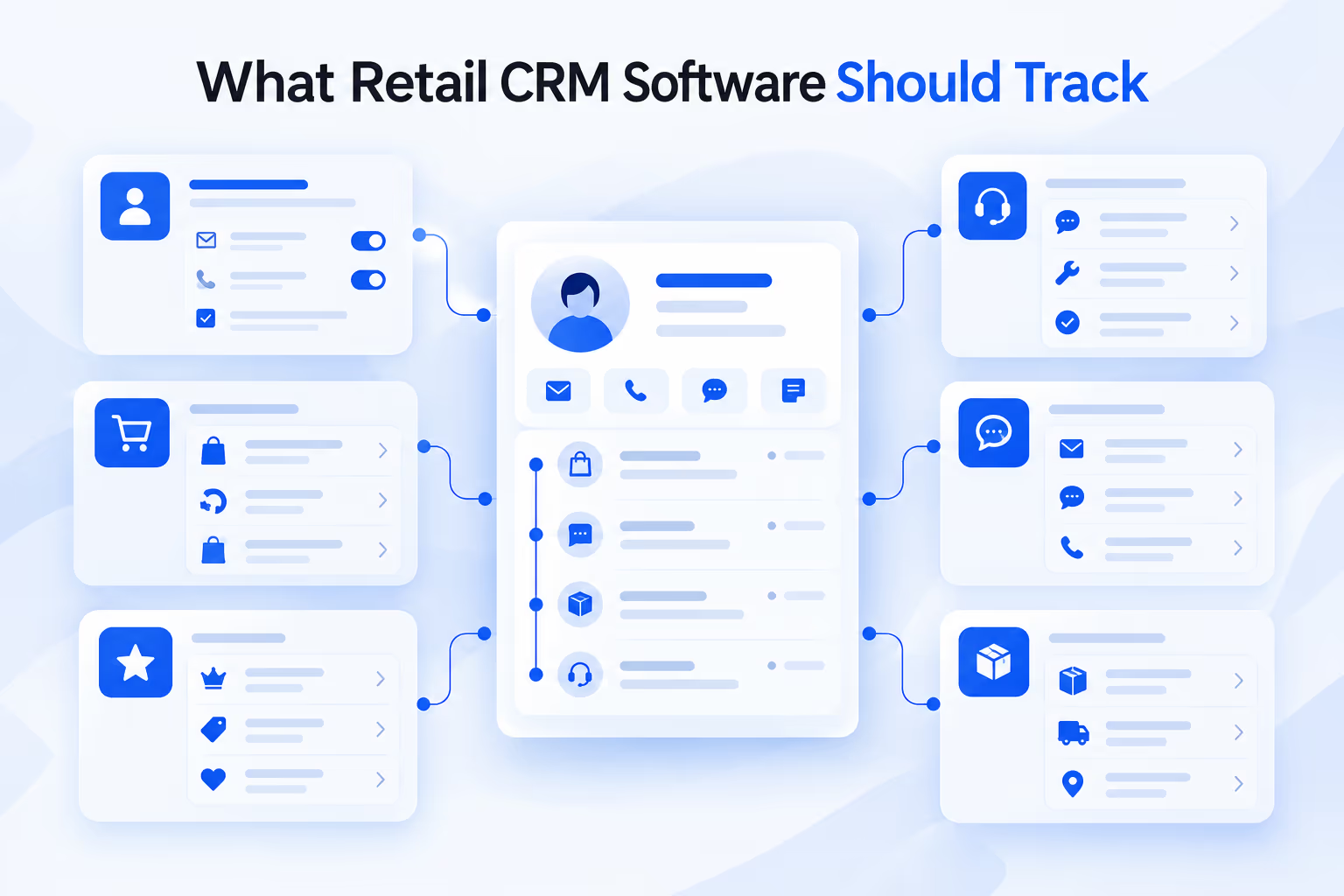
At minimum, retail CRM software should maintain identity, contact permissions, purchases, returns, loyalty status, preferences, service interactions and campaign responses. For omnichannel retail, those fields must be time-stamped, sourced and accessible to authorised workflows. Retail CRM software that stores a “single customer view” without explaining record freshness, match confidence or source priority may create false certainty.
Retail CRM software features should also reflect the commercial model. A fashion retailer needs size, fit and return context. A consumer-durables retailer needs warranty, installation and service data. A grocery or beauty retailer needs replenishment cadence and category preferences. Retail CRM software in India must additionally accommodate WhatsApp-led journeys, multilingual engagement, store-assisted selling, cash-on-delivery patterns and regional fulfilment differences.
KPMG’s 2025 India CX work shows how convenience and seamless discovery influence retail experience, while its intelligent retail blueprint connects customer data with personalised loyalty across store and ecommerce channels. These are not reasons to collect unlimited data. They are reasons to ensure retail CRM software captures the minimum context required to make the next interaction useful.
Connect CRM context to Callveriq conversations.
Where Retail CRM Software Stops Short
Retail CRM software is typically strongest at records, workflows, segmentation and reporting. It may trigger a campaign or create a task, but it does not always conduct a natural, context-aware conversation. That distinction matters when a shopper asks a follow-up question, changes language, moves from chat to voice or needs an exception. Retail CRM software can know the customer and still fail to engage the customer in the moment.
The gap becomes visible in abandoned carts, replenishment, appointment booking, delivery clarification, loyalty recovery and service-to-sales journeys. A rule in retail CRM software may identify eligibility, yet a separate tool sends the message, another handles replies and an agent manually updates the record. Each handoff loses context and slows response. AI-powered retail CRM software may reduce some friction, but buyers must verify whether “AI” means drafting, prediction, autonomous execution or a partner integration.
Gartner’s 2025 forecast says agentic AI could autonomously resolve a large share of common customer-service issues by 2029, while another 2025 Gartner release points to broad agent-assist adoption. The buying implication is not to automate everything. It is to select retail CRM software and engagement systems with explicit autonomy levels, escalation rules and auditability.
See where Callveriq closes the action gap.
This blog is just the start.
Unlock the power of Callveriq’s AI with a live demo.

The Retail CRM Software Buying Scorecard
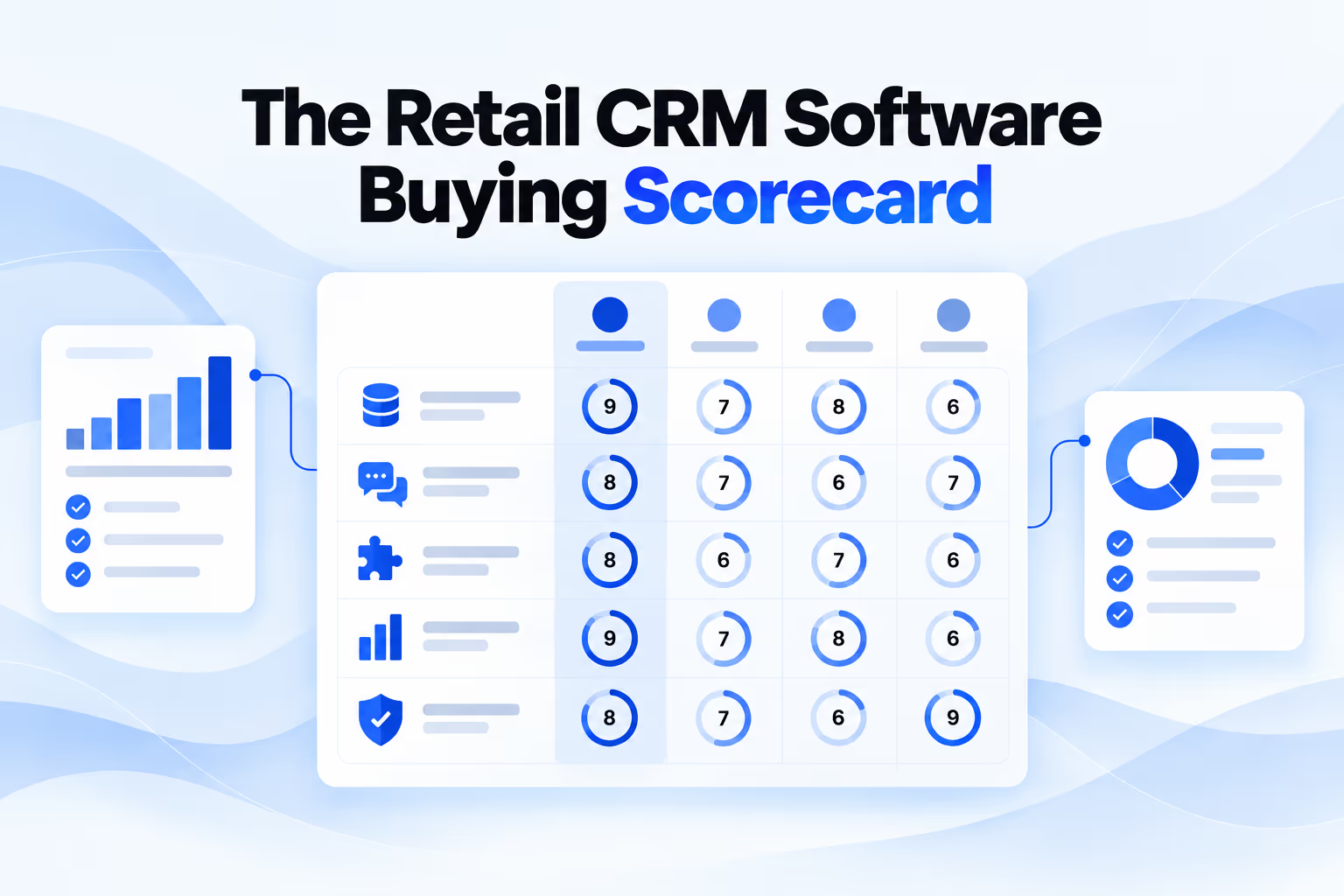
BOFU evaluation should move beyond feature availability to operational proof. Ask every retail CRM software vendor to run the same scenarios with the same data and success criteria. Score native capability, configuration effort, partner dependency, implementation risk and ongoing cost separately. A check mark can hide months of integration work.
Weight the scorecard according to the use case. If the main problem is data quality, retail CRM software fundamentals deserve the highest weight. If the CRM is sound but response is slow, omnichannel execution and conversational continuity matter more. If multiple brands or business units share the platform, retail CRM software must support separation, permissions and reusable governance without duplicating every workflow.
Bring your scorecard to a Callveriq demo.
How Omnichannel AI Should Work With Retail CRM Software
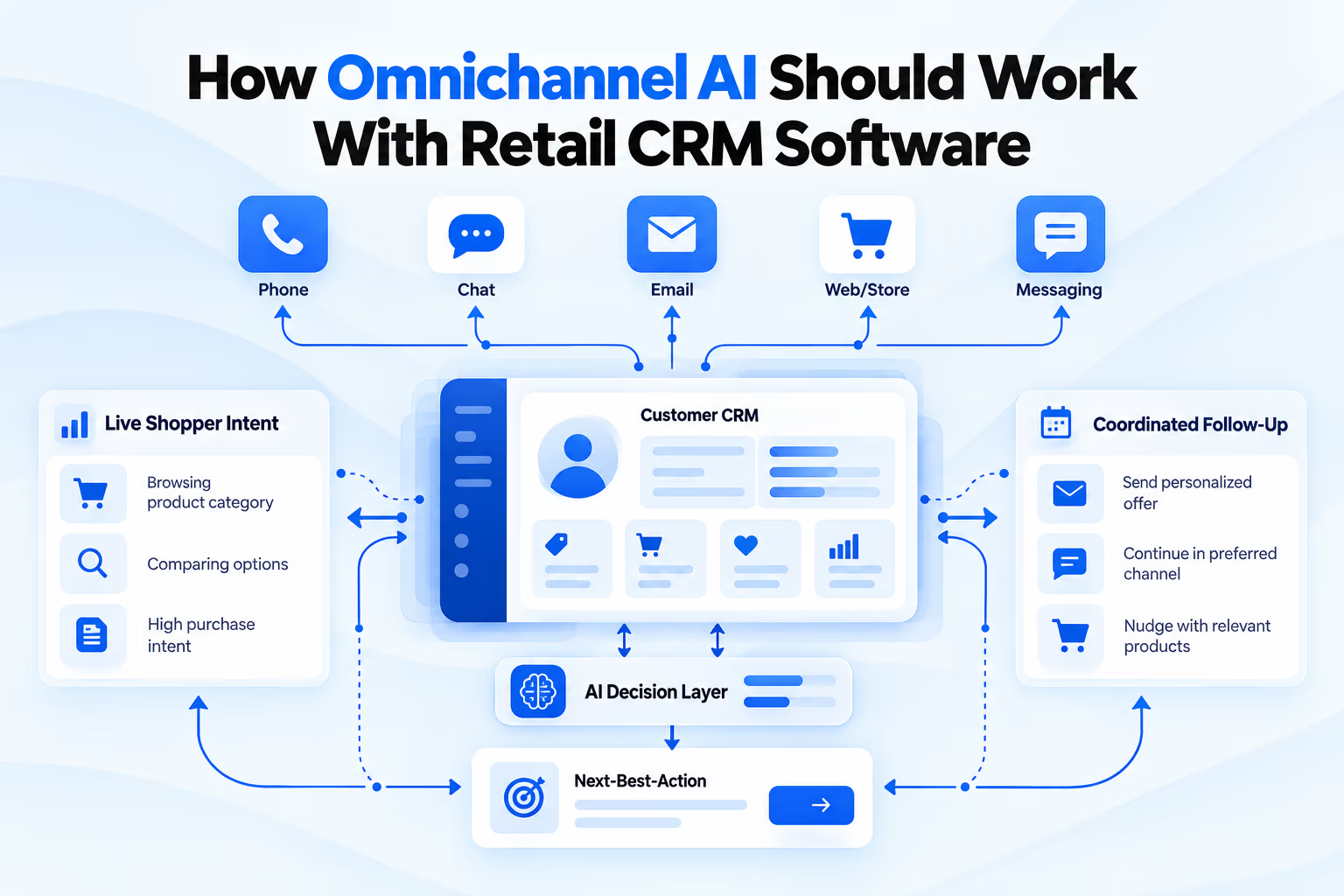
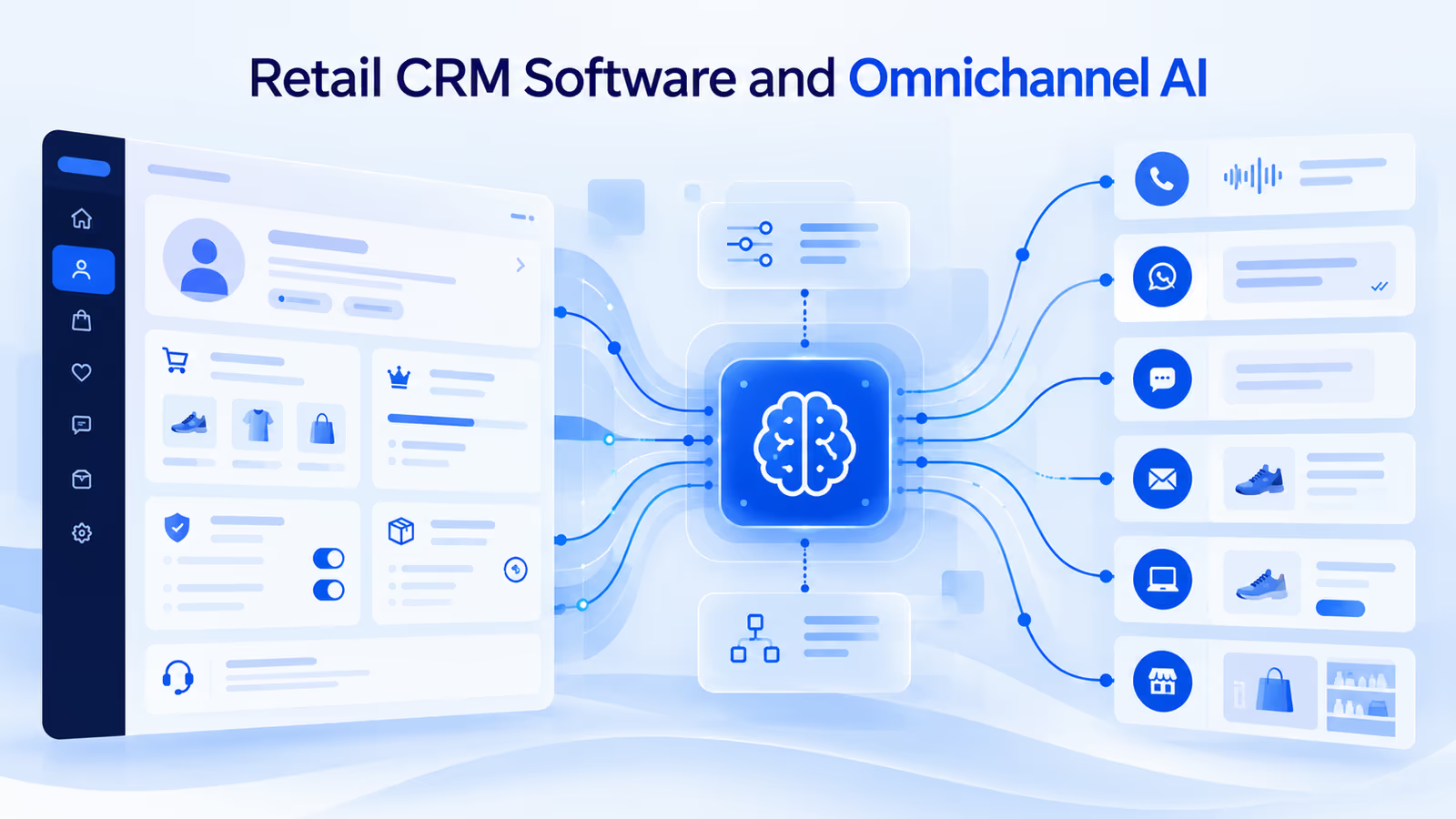
The cleanest architecture gives each system a defined role. Retail CRM software owns the customer profile, permissions and relationship history. Commerce, POS, loyalty and service systems own their operational records. The omnichannel AI layer listens for eligible events, retrieves approved context, conducts the interaction, escalates when required and writes the outcome back. This prevents the conversational layer from becoming an ungoverned shadow CRM.
Context retrieval and minimum necessary data
An AI interaction should retrieve only the context needed for the task. Retail CRM software should expose controlled fields through APIs or middleware rather than send the entire customer profile. This improves security, response quality and explainability. It also makes retail CRM software governance easier because data use maps to a defined purpose.
Conversation continuity across channels
Omnichannel retail CRM software should allow a shopper to start on WhatsApp, continue by voice and receive a summary by email without repeating the problem. The engagement layer needs a conversation ID, recent turns, task state and escalation status. Retail CRM software should receive a concise outcome, not an uncontrolled transcript dump, unless policy requires the full record.
Human escalation and operational handoff
The system must recognise low confidence, customer frustration, policy exceptions and high-value cases. Retail CRM software should create or update the correct case, opportunity or task with context and ownership. AI-powered retail CRM software is only useful if humans can see what happened and take over without reconstructing the journey.
Connect Callveriq without replacing your CRM.
The Vendor Demonstration Buyers Should Demand
Do not accept a generic retail demo. Provide a controlled dataset and ask vendors to show one end-to-end journey. A useful test is a shopper who browses a high-consideration product, asks about availability on WhatsApp, requests a callback, changes language, completes the purchase in store and later raises a delivery question. Retail CRM software should maintain the customer record while the engagement layer preserves conversational continuity.
During the demonstration, introduce failure. Remove an inventory field, revoke channel consent, duplicate the profile and interrupt an API. Observe whether retail CRM software queues the update, exposes the error and prevents an inappropriate message. Security and reliability are not separate from customer experience; they determine whether the promised experience survives real operations.
Require the vendor to show configuration, not only the finished journey. Economic buyers need total cost. Engineers need interfaces and logs. Project managers need dependencies and test cases. Department heads need roles, dashboards and exception handling. The best retail CRM software decision makes these trade-offs visible before contracting.
Run a real-world Callveriq proof of value.
Implementation and Migration Risks
Retail CRM software projects often fail because teams migrate dirty data, automate unclear processes or expand scope before proving one journey. Start with data ownership, identity rules and consent remediation. Then integrate the smallest set of systems needed for the chosen use case. Retail CRM software should not become the place where every legacy field is preserved without purpose.
Create acceptance tests for duplicate handling, delayed events, opt-outs, channel outages, language switching, human takeover and writeback. Document which system wins when values conflict. Retail CRM software in India must also be tested against real peak periods, local channel constraints and store operations. A technically correct workflow that overwhelms store teams is not production-ready.
Plan adoption by role. Marketing needs audience and journey controls. Service teams need case context. Store staff need concise tasks. Engineers need monitoring. Leaders need outcome dashboards. Retail CRM software should reduce operational ambiguity; if each team still maintains a private spreadsheet, the implementation has not achieved its purpose.
De-risk rollout with one Callveriq journey.
How to Build the Retail CRM Software Business Case
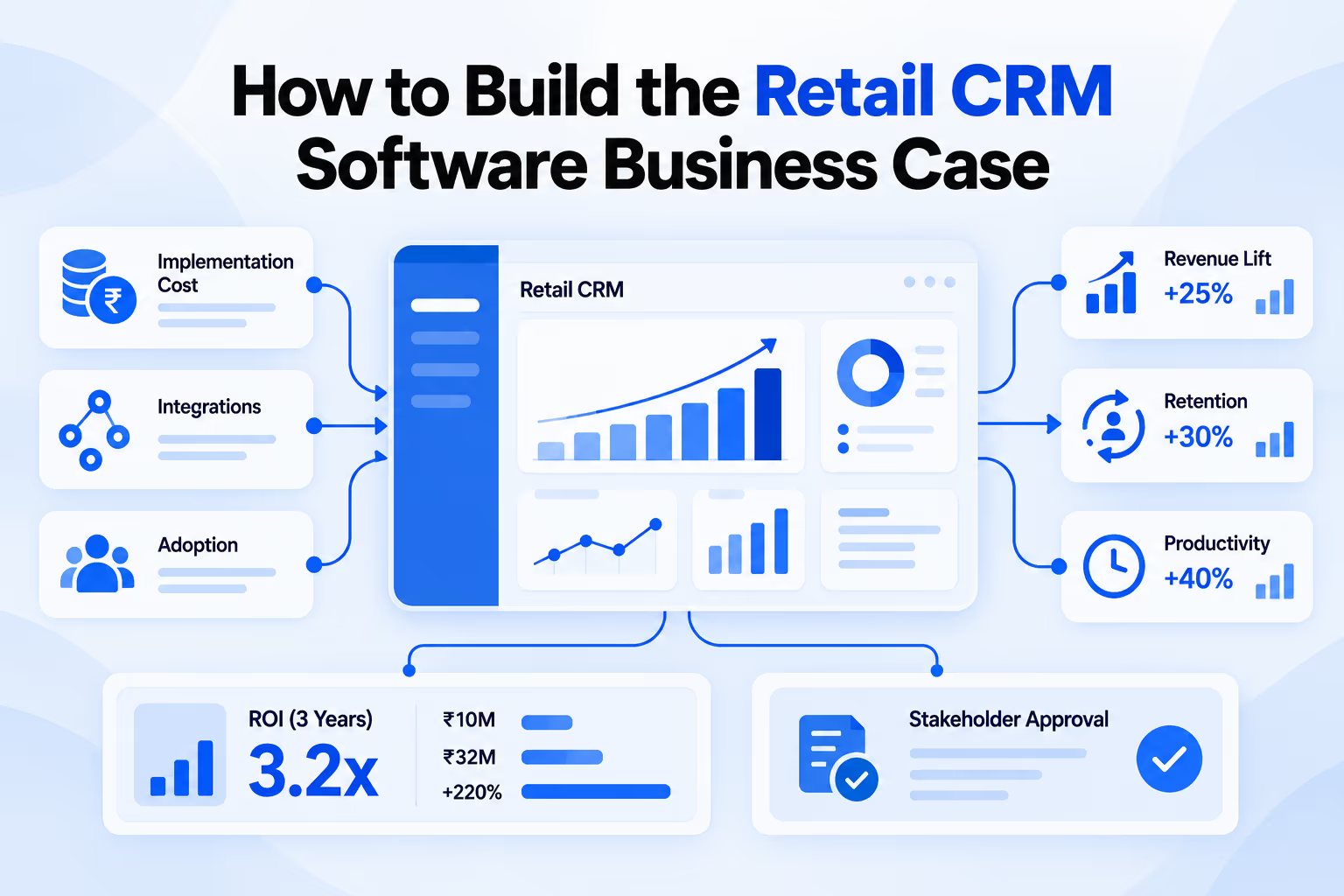
The business case should separate platform value from engagement value. Retail CRM software can reduce data duplication, manual work and reporting effort. Omnichannel AI can improve response speed, conversion, recovery, service containment and agent productivity. Combining every benefit into one headline number makes the case fragile.
Salesforce’s 2025 connected-shopper findings and McKinsey’s 2025 personalization analysis both reinforce that AI and relevance are changing shopping behaviour. Those trends strengthen the strategic case, but retail CRM software still needs a company-specific financial model. Use conservative assumptions, include integration and change-management costs, and define the evidence required before scaling.
Model Callveriq value on one measurable workflow.
Why Callveriq Complements Retail CRM Software
Callveriq complements retail CRM software by turning approved data and live shopper signals into conversations across voice, WhatsApp, SMS, email and web. It can capture intent, maintain context, support multilingual journeys, escalate to people and return structured outcomes. Retail CRM software continues to own the relationship record; Callveriq helps act on it.
This model is relevant when retailers already have retail CRM software but struggle with slow follow-up, disconnected channels or manual updates. It is also relevant during a new CRM purchase because buyers can avoid overloading the CRM with every conversational requirement. A modular architecture lets retail CRM software and omnichannel AI evolve without forcing a full replacement whenever one capability changes.
The final buying test is simple: can the combined stack recognise the shopper, respect consent, understand the current need, respond on the right channel, escalate safely and record the outcome? If retail CRM software plus Callveriq can prove that flow under real conditions, the retailer has a credible foundation for omnichannel engagement.
See Callveriq work with your retail CRM.
Choose a System That Can Record and Act
The right retail CRM software gives a retailer trustworthy customer context, controlled workflows and measurable relationship history. It should not be judged by the number of fields or campaign templates alone. Buyers should test how quickly the system turns live events into useful, compliant action and how clearly it shows failures. When retail CRM software is paired with an omnichannel conversational layer such as Callveriq, retailers can preserve a strong system of record while adding the real-time engagement needed to convert, serve and retain shoppers across channels.
Make your CRM actionable with Callveriq.
Frequently Asked Questions
1. Should a retailer buy a suite or best-of-breed CRM?
Choose based on integration capability, governance maturity and priority journeys. A suite reduces vendor count; best-of-breed can provide deeper capabilities but needs stronger architecture ownership.
2. How much historical data should be migrated?
Migrate data that supports service, compliance, analytics or active customer value. Archive the rest under a documented retention policy rather than moving everything by default.
3. Can store associates use the same customer profile?
Yes, with role-based access, clear consent rules and interfaces designed for fast store workflows rather than back-office administration.
4. How should retailers compare AI pricing?
Normalize licence, usage, channel, model, integration, support and human-review costs against a common journey volume and outcome.
5. What contract protections matter most?
Define data ownership, portability, security obligations, service levels, model and subprocessors disclosure, exit support and limits on secondary data use.