

What Is A Virtual Number?
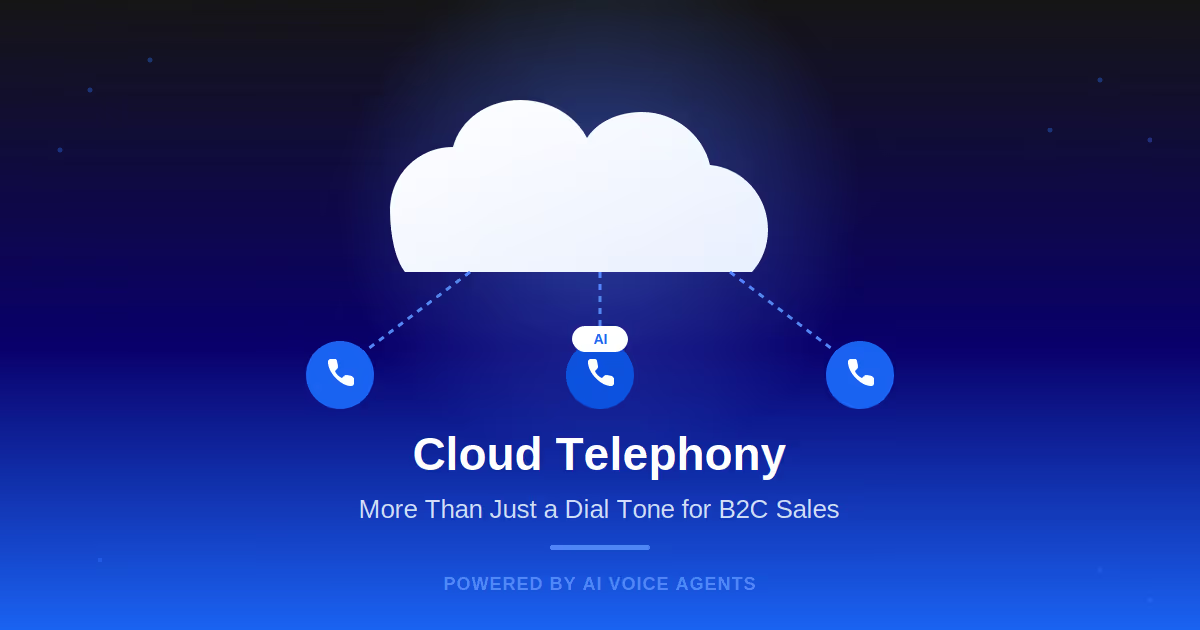
A virtual phone number is a telephone number that isn't tied to a physical phone line or a specific handset. It lives in the cloud and routes calls (and often texts) through software rather than copper wiring. You can get a local number, a toll-free number, or even a number in another country, and calls to it can be forwarded to any device, a cell phone, a laptop app, a call center platform, or, increasingly, an AI voice agent.
Under the hood, virtual numbers run on VoIP (Voice over Internet Protocol) infrastructure. When someone dials the number, the call is converted into digital data, sent over the internet, and delivered to wherever you've configured it to go. That's what makes virtual numbers so flexible: the same number can ring a receptionist during business hours, forward to a mobile phone after hours, and hand off to an AI agent when no one is available, all without the caller ever knowing the difference.
For businesses, this typically means:
- A professional presence without a physical office line. You can have a local number in every city you serve, even if your team works remotely.
- Call routing rules based on time of day, caller location, or department.
- Recording, transcription, and analytics on every call, since it's all handled digitally.
- Easy integration with software like your CRM, help desk, or, increasingly, an AI voice agent that can actually hold a conversation.
That last point is where virtual numbers have evolved the most. A decade ago, "virtual number" mostly meant call forwarding. Today, it's the entry point into an automated, intelligent front line for your business, a shift explored in more depth in Callveriq's guide to AI agent architecture.
See how virtual numbers work
How Does Lead Qualification Work?
This is where AI voice agents come in. Instead of a virtual number simply ringing through to a person (or a voicemail box), it connects the caller to an AI agent trained to have a real conversation, the same way a human sales development rep would on a discovery call.
Here's what that looks like in practice:
- The AI agent answers immediately, every time, regardless of hour or call volume. No hold music, no "please leave a message."
- It asks qualifying questions tailored to your business, budget range, timeline, service needed, company size, location, using natural conversational flow rather than a rigid phone-tree menu.
- It captures and structures the data in real time: name, contact details, intent, urgency, and any custom fields your sales team cares about.
- It scores and routes the lead, sending high-intent callers straight to a live rep (with a warm handoff and call summary) while lower-priority inquiries go into a nurture sequence or a callback queue.
- It logs everything to your CRM automatically, so there's no manual data entry and no lead falls through the cracks between the call ending and someone following up.
The practical effect is that a virtual number stops being just a communication tool and becomes a qualification layer sitting in front of your sales team. Instead of your reps spending time filtering unqualified calls, they only pick up the phone (or follow up) once a lead has already answered the questions that matter. Callveriq's breakdown of how AI call answering helps businesses never miss a lead covers this qualification layer in more detail.
See lead qualification in action
This blog is just the start.
Unlock the power of Callveriq’s AI with a live demo.

AI Agent Or Routing Menu?
Traditional call routing, the classic "Press 1 for Sales, Press 2 for Support" menu, is still just traffic direction. It moves a caller from point A to point B based on a button press. It doesn't ask questions, it doesn't adapt, and it definitely doesn't understand what the caller actually needs. If someone presses the wrong option, or their need doesn't fit neatly into a menu category, they're stuck navigating blind or waiting on hold.
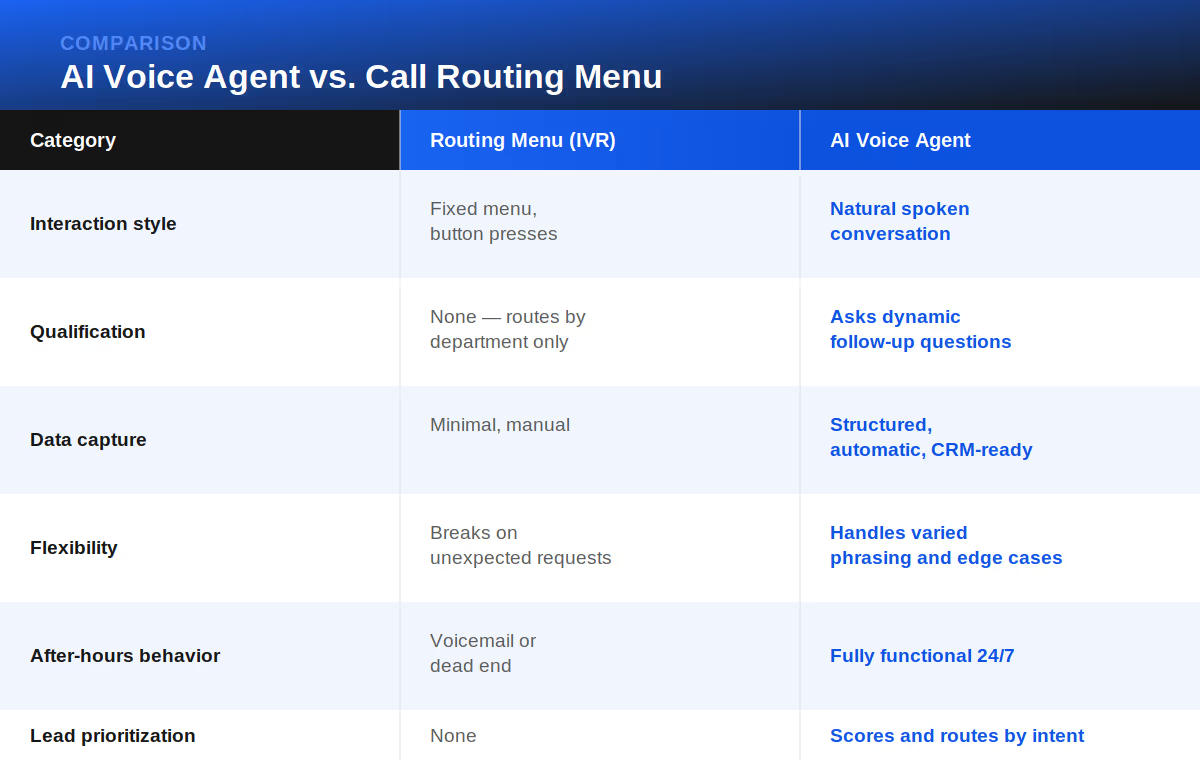
The core distinction is that a routing menu is a decision tree, while an AI agent is a conversation. A menu can tell a caller apart based on which button they pressed. An AI agent can tell a caller apart based on what they actually say, their urgency, their specific problem, whether they're a good fit at all, and then act on that understanding immediately, rather than just forwarding the call further down the line. Callveriq's overview of voice chatbot use cases across industries shows how this conversational approach plays out in practice, and its piece on human-like AI in voicebots digs into why natural-sounding conversation matters for caller trust.
For businesses that get a meaningful volume of inbound calls, that difference shows up directly in conversion rates: fewer abandoned calls, faster time-to-qualification, and sales reps who spend their time talking to people worth talking to.
Compare AI agents vs IVR
Which Businesses Benefit Most?
While almost any business fields at least some inbound calls, a few types see outsized returns from combining a virtual number with an AI voice agent:
- Service-based businesses with high call volume, home services (HVAC, plumbing, roofing), legal intake, medical and dental practices, and real estate teams, where every call is a potential customer and missed calls translate directly into lost revenue.
- Sales-driven companies with distributed or remote teams, where a central virtual number needs to intelligently route leads to the right rep no matter where that rep is physically located.
- Businesses with unpredictable or after-hours call patterns, such as emergency repair services or e-commerce support lines, where a human answering every call around the clock isn't realistic but losing after-hours leads isn't acceptable either.
- Marketing-heavy businesses running multiple campaigns, who use unique virtual numbers per campaign or channel to track which ads and listings actually generate qualified calls, then let the AI agent handle first-touch qualification for all of them consistently.
- Growing teams that can't yet justify a full-time inbound SDR, where an AI agent effectively acts as an always-on first line of qualification until call volume justifies additional headcount.
The common thread is simple: any business where phone calls are a meaningful source of revenue, but staffing every call with a human isn't cost-effective or consistent, is a strong candidate. A virtual number with an AI voice agent doesn't replace your sales team, it makes sure your sales team only spends time on the calls that are actually worth their time. Callveriq's article on conversational AI voicebots and call center efficiency has more real-world examples of this across industries like real estate, healthcare, and home services.
How Do You Get Started?
Setting up a virtual number with an AI voice agent doesn't require ripping out your existing phone system. Most businesses can get running in a few steps:
- Pick a number, local, toll-free, or one per marketing campaign.
- Define your qualifying questions, what does your team actually need to know before following up?
- Set your routing logic, who gets warm-transferred, who goes to a callback queue, what counts as after-hours.
- Connect your CRM, so every call automatically becomes a structured lead record.
- Test with real call scenarios before pointing your live marketing numbers at it.
Most platforms let you launch with a single number and expand once you see how it performs against your current answering process.
Start setting up your number
Bottom Line
A virtual phone number used to be about flexibility, one number, forwarded anywhere. Paired with an AI voice agent, it becomes something far more valuable: a qualification engine that greets every caller instantly, asks the right questions, and hands your team structured, sales-ready leads instead of a name and a callback request. Whether calls come in during business hours or at 2 a.m., nothing slips through, and no rep wastes time on someone who was never going to convert. For businesses where the phone still drives real revenue, that shift, from a passive line to an active first responder, is quickly becoming table stakes rather than a nice-to-have.
FAQs
1. Is a virtual phone number the same as a VoIP number?
Largely, yes, virtual numbers run on VoIP infrastructure, converting calls into digital data so they can be routed anywhere over the internet rather than a fixed line.
2. Do I need new hardware to set up a virtual business number?
No. Virtual numbers work through apps, softphones, or AI voice platforms, so there's no physical phone system to install.
3. Can an AI voice agent handle calls in multiple languages?
Yes, most modern AI voice agents support multiple languages and can detect and respond in the caller's language automatically.
4. Will callers know they're speaking to an AI agent?
Depends on the setup, but well-built voice agents sound natural and conversational, and many businesses disclose it upfront for transparency.
5. Does adding an AI agent replace my need for a live sales team?
No, it filters and qualifies calls so your team spends time only on high-intent leads, rather than replacing human follow-up entirely.