

What Is Cloud Telephony?
Cloud telephony is a phone system that operates over the internet using VoIP (Voice over Internet Protocol) technology, rather than traditional copper phone lines. Instead of routing calls through physical switchboards and hardware, calls are converted into digital data and managed entirely through software — which is what makes cloud telephony so flexible compared to legacy business phone systems. Callveriq's overview of cloud-based platforms and telephony integration covers how modern platforms connect with existing telephony rather than replacing it outright, which is usually the more practical path for growing teams.
In practice, cloud telephony gives businesses:
- Virtual numbers that aren't tied to a physical location or device, so a team can operate from anywhere.
- Call routing and IVR menus that direct calls based on time of day, department, or caller input.
- Call recording and analytics, since every call is already handled digitally and can be logged automatically.
- Scalability, letting a business add lines or numbers instantly without installing new hardware.
- Integrations with CRMs and other business tools, syncing call data into existing workflows.
For a B2C sales team, this typically replaces a legacy PBX system or a patchwork of personal cell phones with a single, centralized calling infrastructure — one that's far easier to scale, monitor, and report on.
Cloud telephony is infrastructure. It moves your phone system into the cloud — but it doesn't, by itself, change what happens on the call.
Explore cloud telephony basics
Telephony Or AI Voice Agent?
Cloud telephony and an AI voice agent solve different problems, even though they often sit on the same stack. Cloud telephony is the pipe the call travels through. An AI voice agent is what happens once the call connects.
Here's the practical distinction: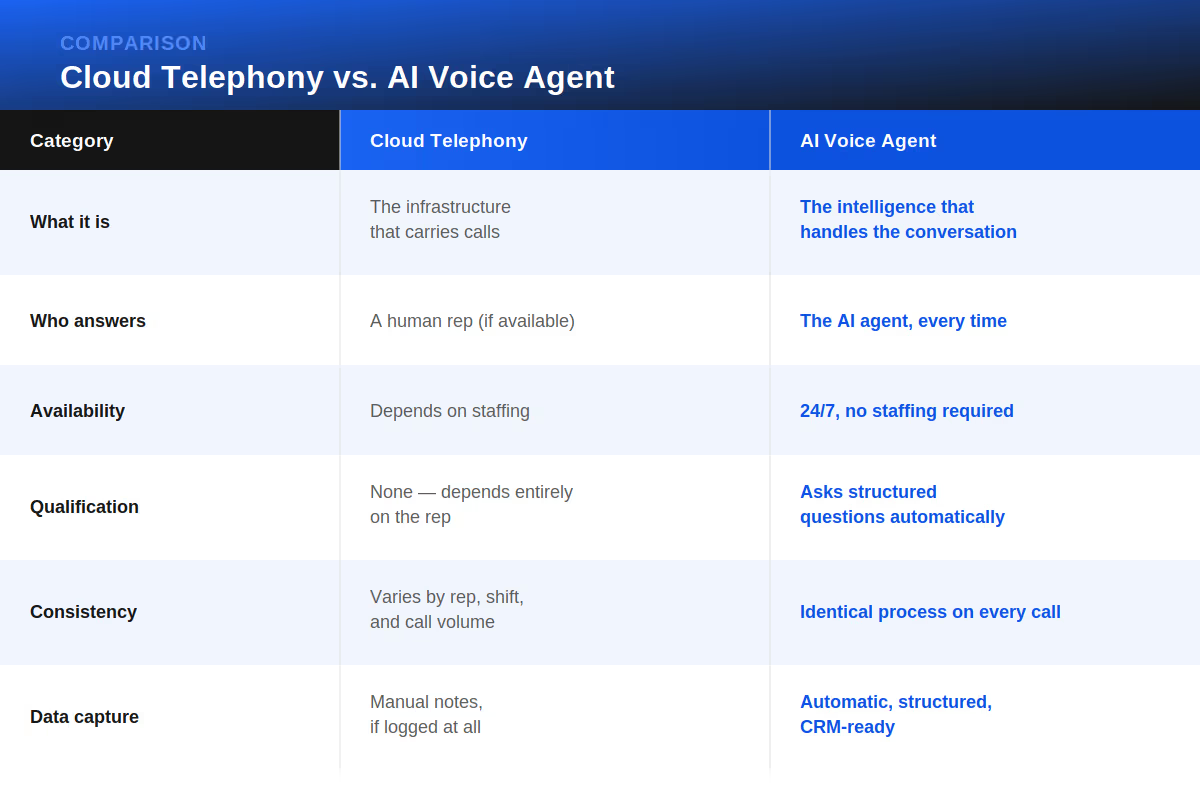
Cloud telephony answers "how does the call get to us?" An AI voice agent answers "what happens once it arrives?" Callveriq's guide to building a conversational voice AI platform walks through how an AI layer actually handles the conversation itself, which is the piece pure telephony infrastructure was never designed to do.
A business can have excellent cloud telephony — clean routing, great call quality, solid uptime, and still lose leads simply because no one was available to answer, or because whoever did answer skipped half the qualifying questions. That gap between "the call connected" and "the call was actually worked" is where most B2C teams bleed revenue without realizing it.
Compare telephony vs AI agents
This blog is just the start.
Unlock the power of Callveriq’s AI with a live demo.

Why Isn't Telephony Enough?
Cloud telephony fixes the plumbing. It doesn't fix what happens — or doesn't happen — on the other end of the line. For B2C sales teams specifically, a handful of gaps show up again and again once the infrastructure itself stops being the bottleneck:
- Calls still go unanswered. Moving to the cloud doesn't add more reps to your team. Outside business hours, during peak volume, or when reps are already on other calls, inbound leads still hit voicemail.
- Qualification depends on whoever picks up. Cloud telephony can route a call to the right department, but it can't make sure every rep asks the same qualifying questions in the same way.
- Data entry is still manual. Call recordings and analytics tell you if a call happened — they don't automatically turn that call into a structured, CRM-ready lead record unless someone takes the time to log it.
- Response speed still depends on staffing. A missed call at 9 p.m. still waits until the next business day for a callback, even on the most modern phone system.
- Scaling call volume means scaling headcount. More leads calling in usually means more reps needed to handle them, since the infrastructure itself doesn't do any of the actual conversation work.
None of these are infrastructure problems — they're conversation and process problems. That's exactly the gap an AI layer is built to close, handling the parts of the call that a phone system was never designed to handle on its own.
See where telephony falls short
How Does AI Sit On Top?
AI doesn't replace cloud telephony — it sits on top of it, using the same infrastructure to actually run the conversation instead of just connecting the call. In practice, this layering usually looks like:
- The call still routes through your existing cloud telephony setup — same virtual numbers, same routing rules, same infrastructure your team already has.
- An AI voice agent answers instead of waiting for a human, engaging the caller immediately regardless of time of day or current call volume.
- The agent asks qualifying questions using natural conversation, gathering the same information a trained rep would ask for.
- It scores and routes the lead, sending high-intent callers to a live rep with full context, while lower-priority calls go into a nurture flow.
- Everything gets logged automatically, turning the call into a structured CRM record without anyone typing notes afterward.
Callveriq's rundown of enterprise-grade AI phone call features shows what this looks like at scale, including running thousands of parallel calls and handing off to a human agent when a conversation needs one.
The result is that your existing telephony investment doesn't get replaced — it gets a lot more useful, without needing new hardware, new numbers, or a rip-and-replace of the system your team already relies on.
See AI layered on your stack
Bottom Line
Cloud telephony solved a real problem: it took the phone system out of a physical box and made it flexible, scalable, and easier to manage. But for B2C sales teams, infrastructure was never the whole problem — the real cost has always been in what happens (or doesn't happen) once the call connects. An AI voice agent sitting on top of that infrastructure is what actually closes the gap: answering instantly, qualifying consistently, and logging everything automatically, on every call, regardless of staffing. Cloud telephony gets the call to you. AI is what makes sure that call turns into revenue.
Get started with Callveriq’s solution today
FAQs
1. Do I need to replace my phone system to add an AI voice agent?
No — AI voice agents typically layer on top of your existing cloud telephony setup rather than replacing it.
2. Is cloud telephony more expensive than a traditional phone system?
Usually less, since it removes the need for physical hardware and scales without new equipment costs.
3. Can cloud telephony work with a remote or distributed sales team?
Yes — that's one of its core advantages, since calls route through the cloud rather than a fixed physical line.
4. Does an AI voice agent work with any cloud telephony provider?
Most modern AI voice agents are built to integrate with common cloud telephony and CRM platforms, though compatibility varies by provider.
5. Will AI replace my sales reps entirely?
No — it handles instant answering and qualification so reps can focus on high-intent conversations instead of every inbound call.