

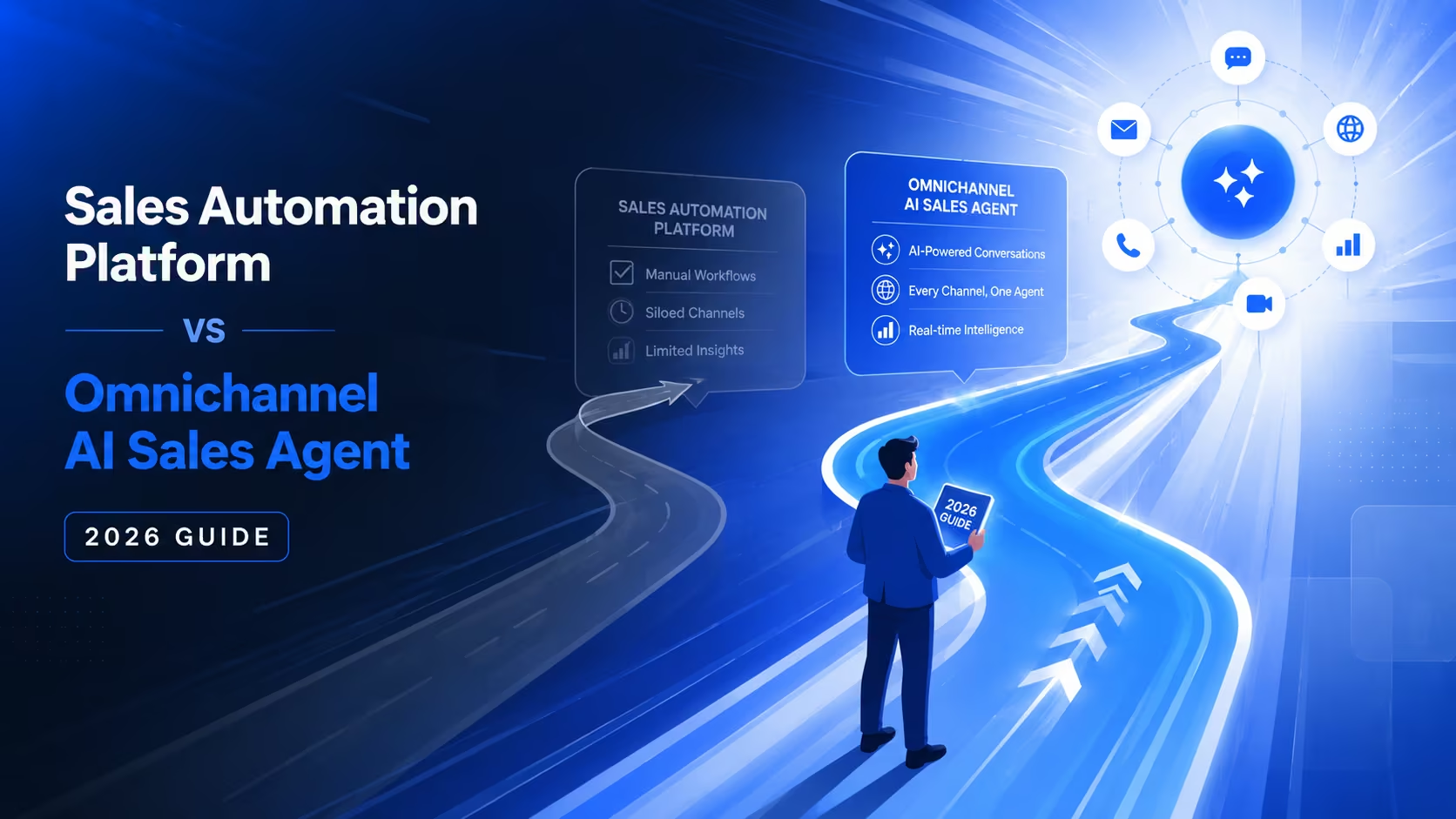
For years, the sales automation platform has been the backbone of modern sales operations. It automates repetitive tasks such as lead routing, email sequences, CRM updates, follow-up reminders, and reporting, allowing sales teams to work more efficiently and manage larger pipelines.
However, efficiency alone is no longer enough. Buyers today expect immediate responses, personalized interactions, and seamless conversations across voice, WhatsApp, email, SMS, and chat. They don't follow a predefined sales sequence, and they certainly don't wait for the next automated email before making a buying decision.
This shift has introduced a new category of sales technology: the omnichannel AI sales agent. Unlike traditional automation tools that execute predefined workflows, AI sales agents engage prospects in real time, understand intent, answer questions, qualify leads, and guide buyers toward the next step without relying entirely on human intervention.
For revenue leaders, this creates an important question. Should you continue investing in workflow automation, or is it time to adopt AI that actively contributes to revenue generation?
This guide compares the two approaches to help you determine which solution best aligns with your business goals, customer expectations, and long-term growth strategy.
See how Callveriq helps modern sales teams sell smarter.
Sales Automation Platform vs Omnichannel AI Sales Agent: Understanding the Shift in Modern Sales
Enterprise sales have undergone a fundamental transformation over the past few years. Customers no longer follow predictable buying journeys. A prospect might ignore an outbound call, revisit your website later, ask questions on WhatsApp, receive a follow-up email, and finally schedule a demo after speaking to a voice assistant.
While buyer journeys have become increasingly dynamic, many sales organizations still rely on technology designed for linear workflows.
Traditional sales automation platforms were built to improve operational efficiency. They automate repetitive tasks, eliminate manual work, and ensure sales processes remain consistent across teams. These capabilities continue to provide value, especially for organizations managing large volumes of leads and standardized sales processes.
However, today's revenue teams face challenges that automation alone cannot solve:
- Buyers expect instant responses across multiple channels.
- Sales representatives spend significant time qualifying leads instead of selling.
- Customer conversations become fragmented across different platforms.
- High-intent prospects often go cold because follow-ups aren't personalized or timely.
This is why enterprise organizations are increasingly evaluating AI-driven sales solutions. According to McKinsey's State of AI 2025, organizations are shifting AI investments toward initiatives that directly improve business growth and customer engagement rather than simply increasing productivity.
Instead of asking, "How can we automate more tasks?" revenue leaders are now asking, "How can AI help us generate more revenue?"
See how Callveriq transforms sales engagement.
What Is a Sales Automation Platform?
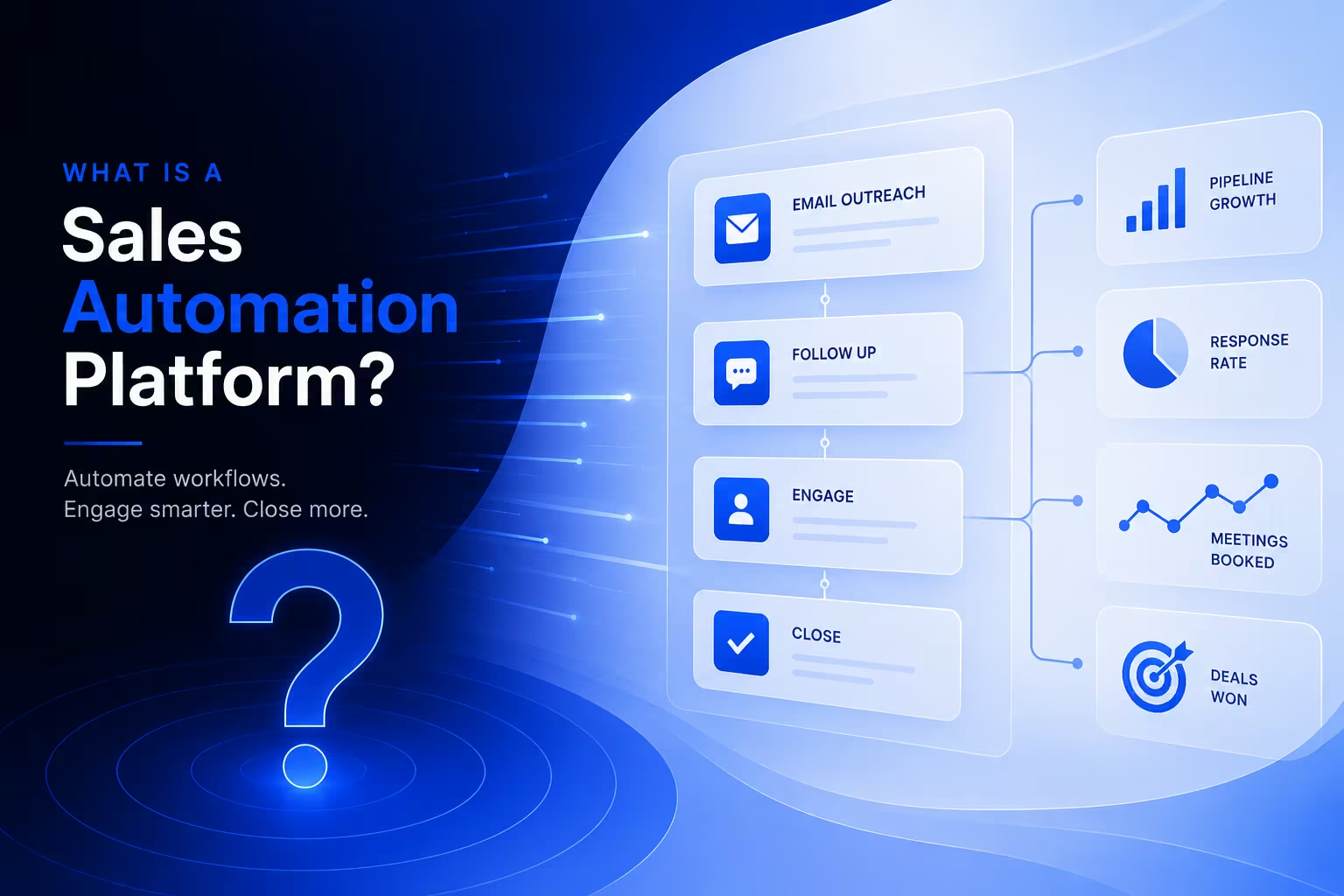
A sales automation platform is designed to eliminate repetitive manual work throughout the sales process. Rather than requiring representatives to perform administrative tasks repeatedly, the platform automatically executes predefined workflows based on rules and triggers.
For example, when a new lead enters the CRM, the platform can automatically assign the lead to the appropriate sales representative, send a welcome email, schedule follow-up reminders, update opportunity stages, and notify managers without any manual intervention.
These capabilities help sales teams operate more efficiently while maintaining consistency across large sales organizations.
Common capabilities include:
- Lead routing
- Email automation
- CRM synchronization
- Sales sequences
- Auto dialers
- Task reminders
- Pipeline reporting
- Workflow automation
For businesses managing predictable sales processes, automation significantly reduces operational overhead and improves productivity.
However, these platforms primarily execute predefined instructions. They do not understand customer intent, adapt conversations based on context, or independently guide buyers toward conversion.
| Sales Automation Helps With | But Cannot do |
|---|---|
| Automate repetitive tasks | Understand buyer intent |
| Route leads | Hold meaningful conversations |
| Trigger follow-ups | Handle objections |
| Update CRM | Adapt messaging dynamically |
| Standardize workflows | Qualify leads conversationally |
This limitation becomes increasingly apparent as customer journeys become more conversational and span multiple communication channels.
Go beyond sales automation with Callveriq.
What Is an Omnichannel AI Sales Agent?
An omnichannel AI sales agent represents the next evolution of enterprise sales technology. Instead of simply automating workflows, it actively participates in the sales process by engaging with prospects, understanding intent, and taking action in real time.
Unlike traditional automation software, AI sales agents are designed to communicate naturally across multiple customer channels while maintaining context throughout the buyer journey.
For example, imagine a prospective customer misses an outbound sales call. Instead of scheduling another call several hours later, the AI agent immediately sends a personalized WhatsApp message, answers product-related questions, shares relevant resources, qualifies the prospect based on their responses, and books a meeting with a sales representative if purchase intent is detected.
Throughout this interaction, every conversation is automatically recorded in the CRM, allowing human sales representatives to continue the discussion with complete context.
An omnichannel AI sales agent typically supports:
- Voice conversations
- SMS
- Website chat
- Lead qualification
- Appointment booking
- Intelligent follow-ups
- CRM synchronization
- Human handoffs when necessary
Rather than replacing sales teams, AI agents eliminate repetitive customer interactions so representatives can focus on high-value conversations and closing opportunities.
See how Callveriq transforms customer engagement.
This blog is just the start.
Unlock the power of Callveriq’s AI with a live demo.

Sales Automation Platform vs Omnichannel AI Sales Agent: Key Differences
Although both technologies improve sales operations, they solve fundamentally different business problems.
A sales automation platform focuses on automating internal workflows. An omnichannel AI sales agent focuses on improving customer engagement and conversion.
| Capability | Sales Automation Platform | Omnichannel AI Sales Agent |
|---|---|---|
| Primary goal | Workflow automation | Revenue generation |
| Customer interaction | Limited | Continuous conversations |
| Decision making | Rule based | AI driven |
| Lead qualification | Static | Dynamic |
| Voice support | Basic | Conversational |
| Omnichannel engagement | Workflow dependent | Native |
| Personalization | Segment based | Individual level |
| Objection handling | No | Yes |
| CRM updates | Automated | Context aware |
| Appointment booking | Assisted | Autonomous |
The biggest difference lies in how each solution approaches customer engagement.
A sales automation platform asks: "What task should happen next?"
An omnichannel AI sales agent asks: "What interaction increases the likelihood of converting this customer?"
That distinction fundamentally changes how sales organizations operate.
Compare Callveriq with traditional sales automation solutions.
What Is the Difference Between a Sales Automation Platform and an Omnichannel AI Sales Agent?
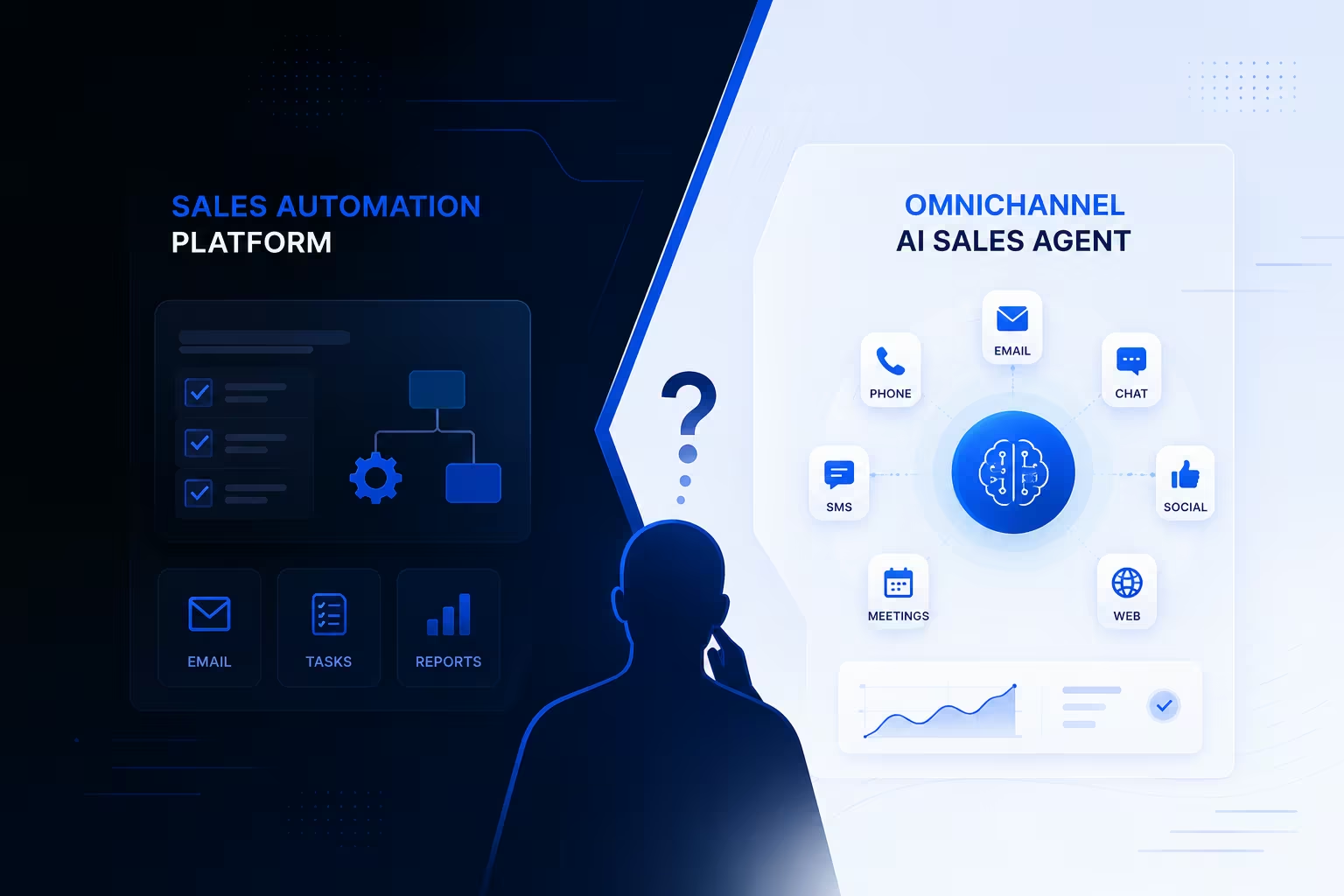
At first glance, both technologies appear to automate sales activities. In reality, they operate using completely different principles.
A sales automation platform follows predefined workflows. Every action is triggered by a rule established by the business. If a customer opens an email, a follow-up sequence begins. If a lead reaches a particular score, it is assigned to a sales representative.
An omnichannel AI sales agent, on the other hand, evaluates customer behavior in real time before deciding what action to take next.
Instead of following a fixed script, it considers factors such as:
- Previous conversations
- Purchase intent
- Customer objections
- Preferred communication channels
- Historical engagement
- Business rules
This enables the AI agent to adapt to every interaction rather than repeating predefined sequences.
According to Gartner's research on Agentic AI, autonomous AI systems are increasingly being designed to execute business processes with minimal human intervention while making contextual decisions based on evolving customer interactions.
This capability is particularly valuable for organizations managing high volumes of customer conversations across multiple channels.
See how Callveriq delivers adaptive, AI-powered selling.
When Should a B2C Business Choose an Omnichannel AI Sales Agent?
Not every organization needs an AI sales agent immediately. Businesses with relatively simple sales processes, limited lead volumes, or highly transactional customer journeys may continue to benefit from traditional automation platforms.
However, AI agents become increasingly valuable when customer engagement becomes more complex.
Common indicators include:
- Slow response times
Customers expect immediate answers. Delays often result in lost opportunities.
- High inbound lead volume
Manual qualification becomes difficult as lead volumes increase.
- Multiple communication channels
Customers interact across voice, WhatsApp, SMS, email, and chat.
- Large inside sales teams
Representatives spend significant time qualifying leads instead of closing deals.
- High lead leakage
Potential customers disengage because follow-ups aren't personalized or timely.
Businesses in banking, insurance, healthcare, retail, automotive, travel, and education often experience these challenges due to their high customer interaction volumes.
When these pain points become common, an omnichannel AI sales agent can significantly improve operational efficiency while increasing conversion rates.
Find the right sales solution with Callveriq.
How Does an Omnichannel AI Sales Agent Improve on Fixed Sales Sequences and Auto-Dialers?
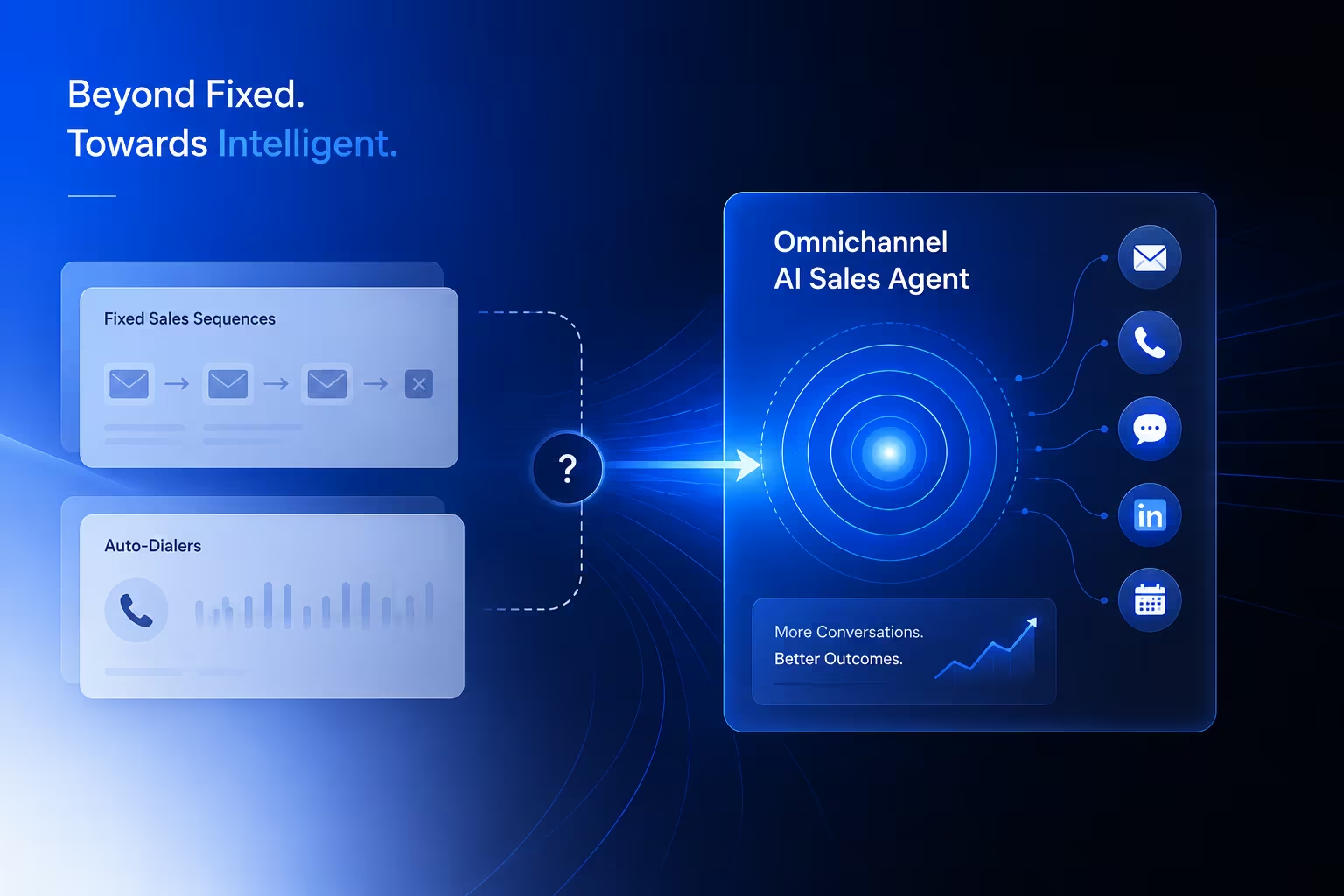
Traditional sales sequences operate on predetermined schedules.
If a prospect doesn't answer a call, another call is scheduled. If an email isn't opened, another email follows. Every customer receives essentially the same journey regardless of individual behavior.
AI sales agents replace this static approach with dynamic engagement.
Imagine a prospect ignores a phone call but immediately opens a follow-up WhatsApp message. Instead of continuing the call sequence, the AI agent starts a conversation on WhatsApp, answers product questions, identifies buying intent, and books a meeting while updating the CRM automatically.
The sales representative only joins when the opportunity is qualified.
This adaptive approach reduces unnecessary manual effort while improving customer experience.
Salesforce's latest State of Sales research also highlights growing customer expectations for personalized, AI-assisted engagement throughout the buying journey, making conversational AI increasingly important for modern revenue teams.
Replace static sales sequences with Callveriq AI.
What Should Revenue Leaders Evaluate When Comparing Sales Automation Platforms and AI Agents?
Choosing between these technologies should never be based solely on feature comparisons. Revenue leaders should evaluate how each solution contributes to measurable business outcomes.
Questions worth asking include:
- Will this improve conversion rates?
- Can it engage customers across every communication channel?
- Does it qualify leads automatically?
- How well does it integrate with existing CRM systems?
- Can it scale without increasing headcount?
- Is enterprise security and compliance built in?
- Does it provide conversation intelligence, not just workflow analytics?
- How quickly can the organization realize ROI?
Technology purchases increasingly require executive sponsorship, making measurable business impact more important than individual product features.
Explore how Callveriq meets these criteria.
Why Enterprises Are Moving Beyond Sales Automation Platforms
Sales automation platforms remain an essential part of modern revenue operations, but their role is evolving. They continue to automate repetitive internal processes, yet customer-facing engagement increasingly demands technologies that can think, respond, and adapt in real time.
This shift explains why enterprises are investing in AI sales agents. Instead of measuring success by the number of automated workflows, organizations are focusing on metrics that directly influence revenue, such as response times, lead qualification accuracy, customer engagement, and conversion rates.
Recent research from McKinsey, Gartner, and KPMG also emphasizes that enterprise AI investments are moving beyond experimentation toward measurable business outcomes, provided organizations implement AI responsibly with appropriate governance and oversight.
Rather than replacing existing sales automation platforms, AI sales agents complement them by becoming the intelligent, conversational layer that sits between customers and sales teams.
For enterprises looking to scale personalized engagement without proportionally increasing headcount, this combination represents the next stage of sales transformation.
See how Callveriq goes beyond sales automation.
What This Means for Your Business
Choosing between a sales automation platform and an omnichannel AI sales agent is not about deciding whether automation still has value. It is about identifying which technology addresses the challenges your business faces today. Traditional automation remains highly effective for streamlining workflows, improving operational efficiency, and maintaining process consistency. However, as customer journeys become increasingly conversational and span multiple channels, businesses need technology that can do more than execute predefined tasks. An omnichannel AI sales agent understands customer intent, engages prospects in real time, adapts every interaction, and helps move buyers closer to conversion without waiting for manual intervention. For revenue leaders focused on sustainable growth, the most valuable investment is no longer the platform that automates the most tasks, but the one that creates the most meaningful customer conversations and measurable business outcomes. Callveriq enables enterprises to make that transition with AI-powered sales agents designed to engage, qualify, and convert customers at scale.
See how Callveriq turns conversations into conversions. Book your demo.
FAQs
1. Can an AI sales agent work alongside an existing sales automation platform?
Yes. AI sales agents complement sales automation platforms rather than replace them. Automation manages workflows, while AI handles customer conversations, lead qualification, and personalized engagement across channels.
2. Does an omnichannel AI sales agent require customers to use a single communication channel?
No. Omnichannel AI sales agents maintain conversation context across voice, WhatsApp, email, SMS, and chat, allowing customers to switch channels without losing continuity.
3. How does an AI sales agent improve sales team productivity?
AI sales agents take over repetitive interactions such as answering common questions, qualifying leads, and scheduling meetings. This allows sales representatives to focus on high-intent prospects and closing deals.
4. What factors should businesses consider before adopting an AI sales agent?
Businesses should evaluate lead volume, response time expectations, communication channels, CRM integration, scalability, security, and the potential impact on conversion rates and operational efficiency.
5. Which industries benefit the most from omnichannel AI sales agents?
Industries with high inquiry volumes and fast response requirements, such as banking, insurance, healthcare, retail, automotive, travel, and education, often see the greatest value from AI-driven sales engagement.