

An order comes in at 11:30 p.m. A customer chooses cash on delivery, enters an address, and closes the app. By morning, the brand has packed the product and handed it to a courier. Four days later, the delivery agent reaches the customer, only to hear, “I don’t want it anymore.”
The product travels all the way back. The brand has now paid to acquire the customer, process the order, ship it forward, attempt delivery, and bring it back. Yet the order generated zero revenue.
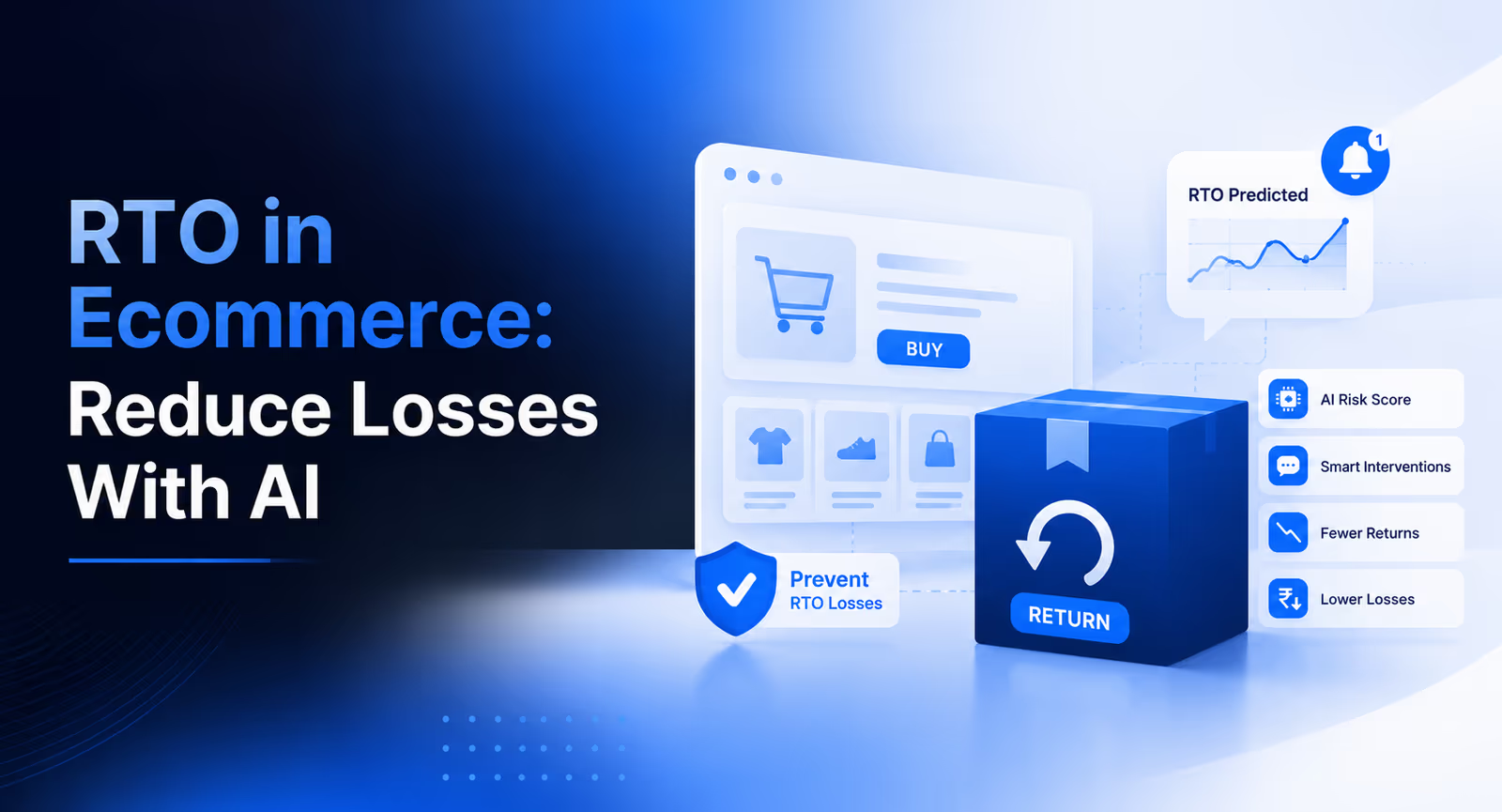
That is the problem of RTO in ecommerce. For D2C brands operating at scale, these failed deliveries are not simply a logistics inconvenience. They can quietly turn apparently healthy order growth into shrinking contribution margins.
Understanding RTO in Ecommerce is therefore essential for brands trying to protect margins as order volumes grow. The good news is that many RTOs begin with signals that appear well before the delivery attempt.
What Does it Mean by RTO in Ecommerce?
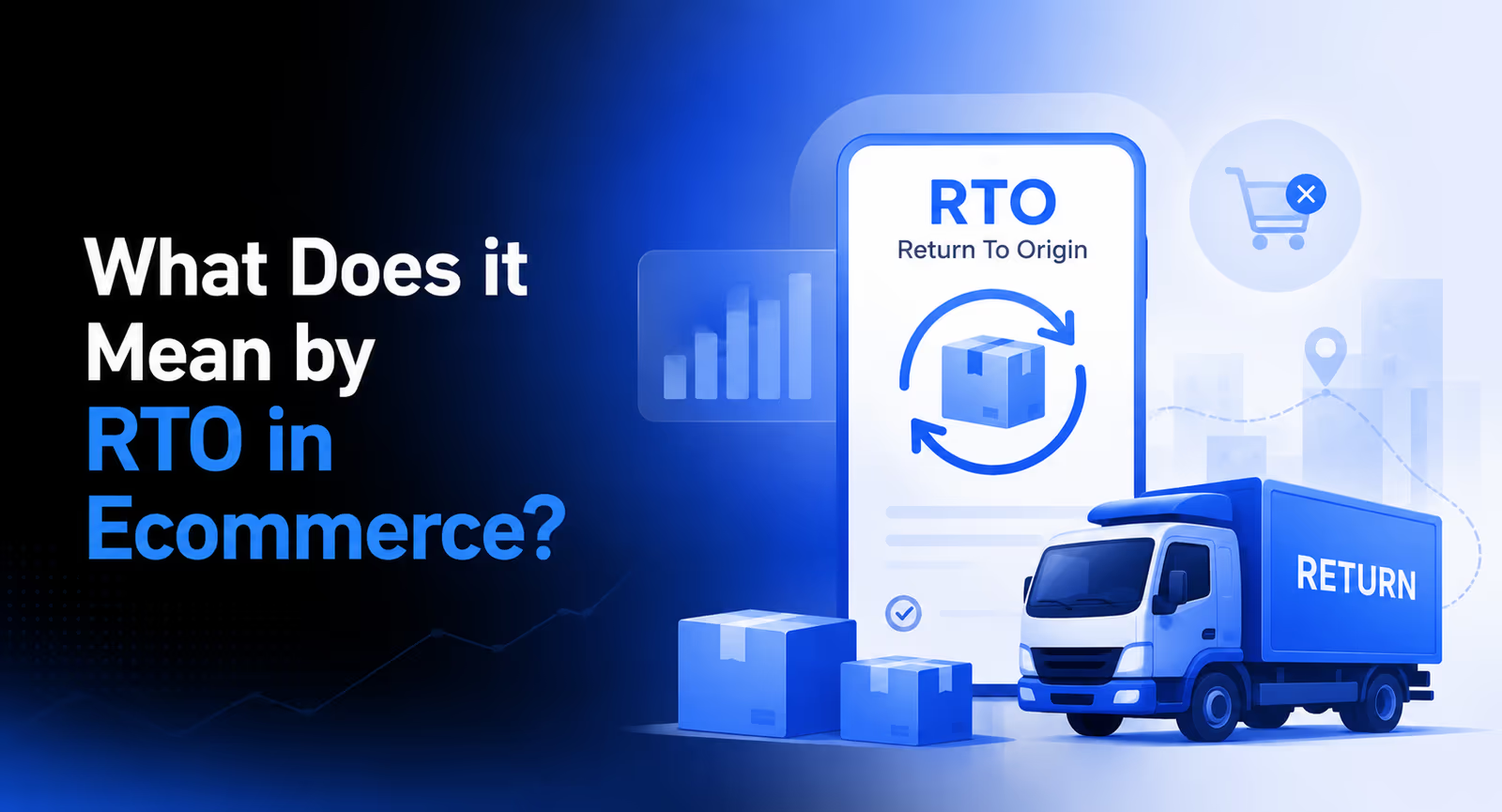
RTO stands for Return to Origin. In the context of RTO in ecommerce, it occurs when an order has already been shipped but cannot be successfully delivered to the customer, causing the courier to send it back to the seller.
This is different from a normal product return. In a customer return, the shopper receives the product and later decides to send it back. With RTO, the order never completes successful delivery in the first place.
Amazon Shipping lists incorrect addresses, customer unavailability, COD refusal, and weak follow-up after failed delivery attempts among the common reasons for RTO.
The typical journey looks like this:
Order placed → Product packed → Product shipped → Delivery attempted → Delivery fails → Reattempts fail → Order returns to seller
For the brand, this means paying for a transaction that never became revenue.
This distinction matters because the opportunity to prevent each problem appears at a different stage of the customer journey.
See how Callveriq verified RTO in ecommerce
Why Does RTO in ecommerce Happen?
There is rarely one universal reason for RTO in ecommerce. Some orders fail because of genuine delivery problems. Others fail because the customer's intent changed between clicking "Place Order" and answering the door.
- Cash on Delivery Creates Less Commitment
COD remains important for ecommerce accessibility, but it also allows a customer to order without making an upfront financial commitment.
That difference is visible in industry data. Shipway's FY25 analysis, cited by Amazon Shipping, found approximately 26% RTO among COD/non-prepaid orders compared with under 2% for prepaid orders.
Unicommerce's 2026 India D2C analysis also shows how dramatically the gap can increase during high-volume periods. Its dataset of more than 410 million shipments across 6,000+ D2C brands reported COD return rates reaching 58% during the festive quarter, versus under 15% for prepaid orders.
- Customer Intent Changes
A shopper may have:
- placed an impulse order
- purchased the same product elsewhere
- forgotten about the order
- changed their mind
- misunderstood the price or quantity
- assumed cancellation was possible at delivery
If the brand learns this only when the courier reaches the doorstep, most fulfilment costs have already been incurred.
- Incorrect or Incomplete Addresses
Missing house numbers, wrong pin codes, unclear landmarks, or outdated phone numbers can prevent successful delivery.
These issues are especially expensive because the customer's purchase intent may still be genuine. The order fails because the information required to complete delivery was never corrected.
- Slow Delivery Can Increase RTO Risk
Time matters after checkout.
Shipway's FY25 logistics analysis found that orders attempted within one to two days recorded lower RTO than orders whose first delivery attempt happened after five days.
The longer the gap between purchase and delivery, the more opportunity there is for customer intent, availability, or circumstances to change.
- Customers Are Unavailable
Sometimes the customer still wants the product but cannot receive it when the courier arrives.
Without timely communication, alternate delivery scheduling, or a successful reattempt, an otherwise valid order can become an RTO.
A practical RTO in ecommerce reduction strategy therefore needs to look beyond courier performance. It must identify problems earlier in the order lifecycle.
Explore Callveriq for smarter confirmations.
This blog is just the start.
Unlock the power of Callveriq’s AI with a live demo.

How Much Does RTO Cost D2C Brands in India?
The visible cost of RTO in ecommerce is shipping. The actual cost is broader.
When an order returns, the business may absorb forward freight, reverse freight, packaging, warehouse handling, payment or platform costs, inventory blockage, customer acquisition costs, and sometimes product damage.
Amazon Shipping cites an industry estimate of roughly ₹180 to ₹240 in logistics costs alone per RTO, including forward and reverse movement and handling.
Consider a simplified example. Suppose a D2C brand processes 10,000 orders per month. If 60% are COD and 26% of those COD orders become RTOs, approximately 1,560 shipments would return.
This example is illustrative and actual economics vary significantly by product weight, courier, zone, payment mix, category, and fulfilment model. The ₹180–₹240 estimate and 26% COD RTO benchmark are based on the industry figures summarized by Amazon Shipping.
And that calculation still excludes the original cost of acquiring those customers. The issue becomes increasingly important as India's D2C ecosystem expands. McKinsey estimates that India's D2C channel currently represents roughly $10 billion to $12 billion in ecommerce sales and could reach $60 billion by 2030.
As order volumes grow, even small improvements in delivery completion can have a meaningful impact on unit economics.
Understand RTO in ecommerce costs with Callveriq.
What's the Difference Between RTO and Cart Abandonment?
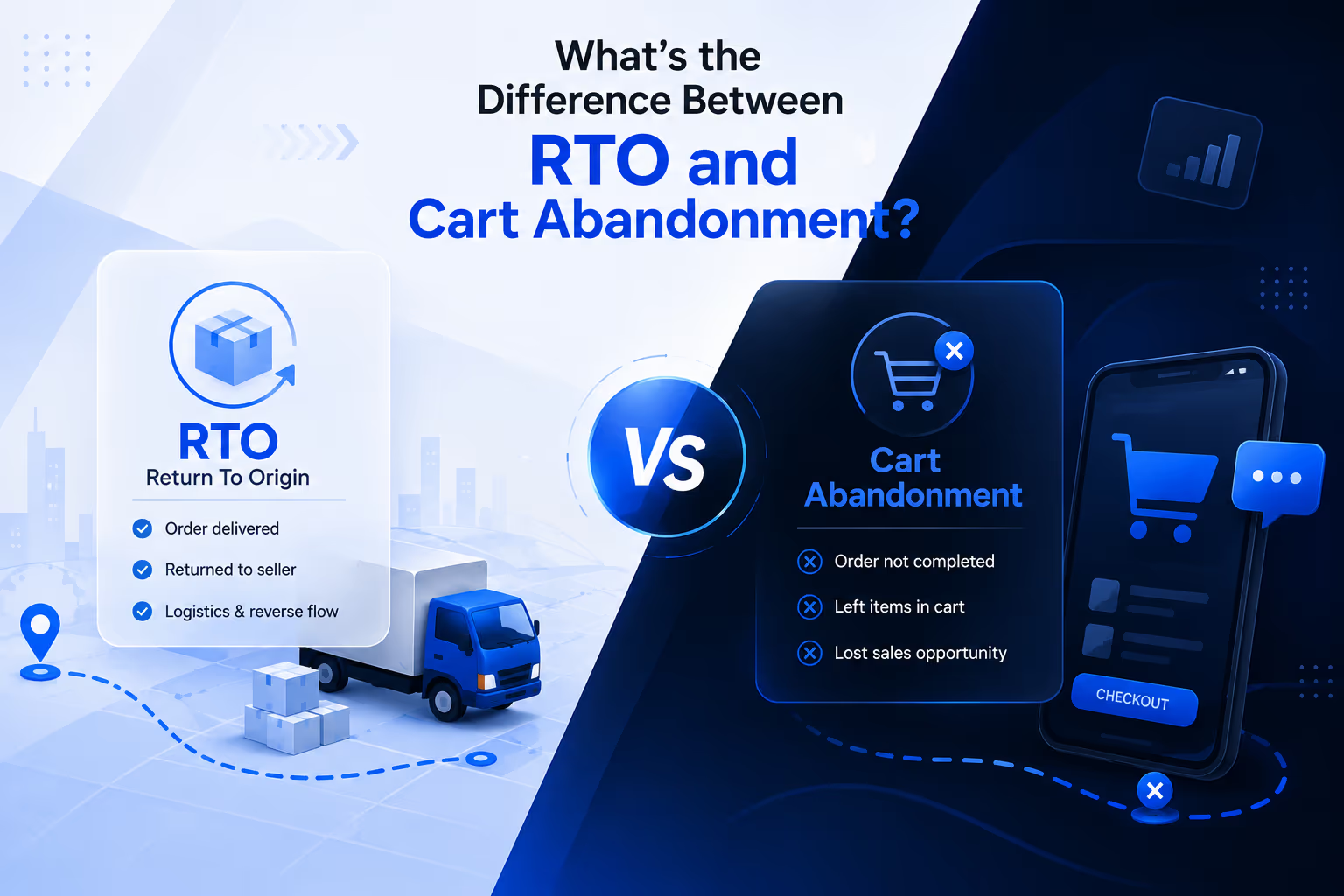
Both represent lost ecommerce revenue, but they happen at opposite ends of the buying journey. Cart abandonment occurs before an order is placed. RTO happens after fulfilment has already begun.
Cart abandonment is primarily a conversion problem. The shopper shows interest but does not complete checkout. RTO is a fulfilment and customer-intent problem. The shopper completes checkout, but the transaction fails before successful delivery.
There is another distinction worth making: RTO is not the same as a product return.
Salesforce's analysis of the 2025 global holiday shopping season found that more than $181 billion of online purchases made between November 1 and December 31 had been returned, representing around 14% of purchases. Those figures relate to broader retail returns rather than RTO specifically.
For ecommerce teams, combining these metrics into one generic "returns" number can hide where the actual leakage is occurring.
Compare customer journeys using Callveriq.
How Do Order-Confirmation Calls Reduce Return-to-Origin Rates?
Most businesses communicate heavily before the purchase and again once delivery has already failed. The window between those two stages often receives far less attention.
That is where order confirmation can help. Instead of immediately treating every submitted order as equally ready for fulfilment, a brand can verify whether the customer still intends to receive it.
- A Confirmation Call Can Verify Intent
A simple conversation can establish: “Did you place this order?”, “Would you still like us to ship it?”
For prepaid orders, the answer may rarely be an issue. For high-risk or COD orders, confirmation can identify cancellations before forward logistics begins. The objective is not to persuade an unwilling customer to accept an order. It is to avoid shipping inventory when the customer already knows they no longer want it.
- It Can Correct Delivery Information
An order-confirmation interaction can also verify:
- delivery address
- pin code or landmark
- quantity
- order value
- preferred delivery timing
- customer availability
A small correction made before dispatch is cheaper than discovering the problem after multiple delivery attempts.
- AI Makes Confirmation Possible at Scale
Manually calling every ecommerce customer is rarely economical once a brand reaches thousands of daily orders. AI voice systems change the equation because routine conversations can be handled automatically, with exceptions routed to humans or operational workflows.
A typical process could look like:
Order received → Risk rules applied → AI confirmation call → Customer response captured → Order confirmed, corrected, cancelled, or escalated → Fulfilment begins
Managing RTO in ecommerce with AI therefore does not necessarily mean applying AI to the entire logistics operation. A narrow use case such as pre-dispatch verification can address one specific point of preventable leakage.
Broader retail research shows why businesses are exploring these kinds of automated customer interactions. Gartner's 2026 survey of 321 customer service leaders found that 91% were facing executive pressure to implement AI, while customer satisfaction, operational efficiency, and self-service success ranked among their main priorities.
This Gartner research is not an RTO study, but it reflects the larger movement toward automating routine customer interactions while keeping human involvement for situations requiring judgment.
See Callveriq automate order confirmations.
Why Order Confirmation Alone Cannot Solve RTO
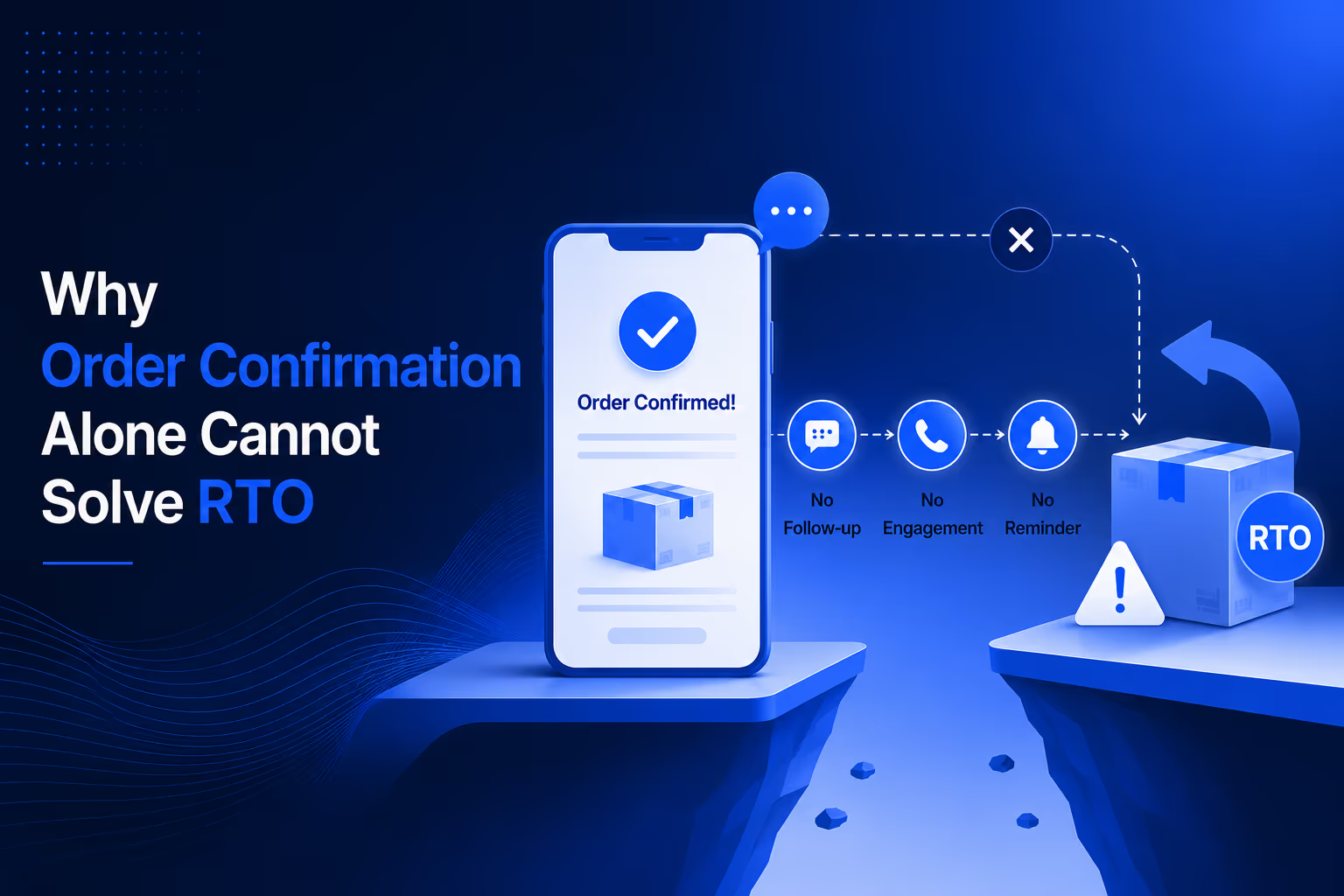
There is no single RTO in ecommerce solution that eliminates every failed delivery. If the courier arrives late, the address is outside a serviceable area, or repeated delivery attempts are poorly managed, order verification alone will not fix the problem.
The strongest approach works across multiple stages.
Unicommerce's 2026 D2C analysis provides a useful example of this systems approach. It describes brands reducing RTO from 39% to 21% by combining prepaid incentives, pin-code-level courier routing, and address verification rather than relying on one intervention alone.
The lesson is simple: brands trying to reduce RTO in ecommerce should find the point where each preventable failure originates rather than treating every returned shipment as a logistics problem.
Why AI Is Moving Deeper Into Ecommerce Operations
AI in ecommerce initially became visible through recommendations, chatbots, search, and personalization. Its next phase is increasingly operational.
McKinsey's 2025 report on agentic commerce describes a shift toward AI systems capable of managing multistep, intent-driven customer journeys rather than isolated interactions.
For an ecommerce brand, order confirmation is a relatively simple example of that principle. A customer response does not merely create another conversation. It can trigger an operational decision. A confirmed customer allows fulfilment to continue. An incorrect address can trigger an update. A cancellation can stop dispatch. A delivery preference can become structured information for the next step.
KPMG's Global Tech Report 2026: Consumer & Retail similarly shows AI moving from experimentation toward operations. The research found active deployment of AI use cases among consumer and retail respondents rising from 29% a year earlier to 42%, with 74% expecting to deploy AI at scale within the following 12 months.
For RTO specifically, the useful question is not whether a brand is "using AI." It is whether automation is being applied early enough to prevent avoidable operational cost.
Explore practical AI workflows with Callveriq.
What Should Ecommerce Brands Measure to Reduce RTO?
A single overall RTO percentage tells a brand that something is wrong. It rarely tells the team what is wrong. RTO should be segmented.
Brands can compare RTO rates across prepaid and COD orders, first-time and repeat customers, pin codes, courier partners, product categories, order values, acquisition channels, delivery times, and days between order and first delivery attempt.
Once order confirmation is introduced, another layer becomes possible. Teams can compare:
Measurement matters even when deploying new technology. KPMG's 2026 consumer and retail research found that only 48% of respondents tracked technology initiative performance against business plans, compared with a 65% cross-industry average.
An AI confirmation program therefore should not be judged by calls made. It should be judged by outcomes such as avoided dispatches, increased successful delivery rates, RTO reduction, and the net logistics savings generated after automation costs.
Track RTO conversations through Callveriq.
RTO Is a Customer-Intent Problem Before It Becomes a Logistics Problem
RTO is easy to notice when the package comes back to the warehouse. By then, however, most of the cost has already been incurred. The more useful question is what happened before dispatch.
Did the customer genuinely intend to receive the product? Was the address correct? Did the customer understand the price? Would they be available for delivery? Had their intent changed before the courier even collected the package?
For Indian D2C brands, where COD remains a major part of ecommerce behaviour and RTO can vary dramatically between payment methods, answering these questions earlier can be valuable.
AI order-confirmation calls are not a complete cure for RTO. They are one way to move the conversation upstream, from recovering failed deliveries to identifying preventable failures before they become shipments.
And as ecommerce scales, preventing one unnecessary journey is likely to become far more valuable than managing it after the product is already on its way back.
Reduce avoidable RTO using Callveriq. Book your Callveriq demo.
FAQs
1. Can RTO be reduced without removing COD?
Yes. Brands can retain COD while using verification, prepaid nudges, address checks, and smarter delivery workflows.
2. Which ecommerce orders are most likely to become RTO?
High-risk orders often include COD purchases, first-time buyers, incomplete addresses, and delayed deliveries.
3. When should an order-confirmation call be made?
Ideally, it should happen soon after order placement and before the product is dispatched.
4. Can WhatsApp help reduce RTO rates?
Yes. WhatsApp can support order confirmation, address verification, delivery reminders, and rescheduling.
5. Should brands call every customer before dispatch?
Not always. Risk-based workflows can prioritize orders more likely to result in RTO.