

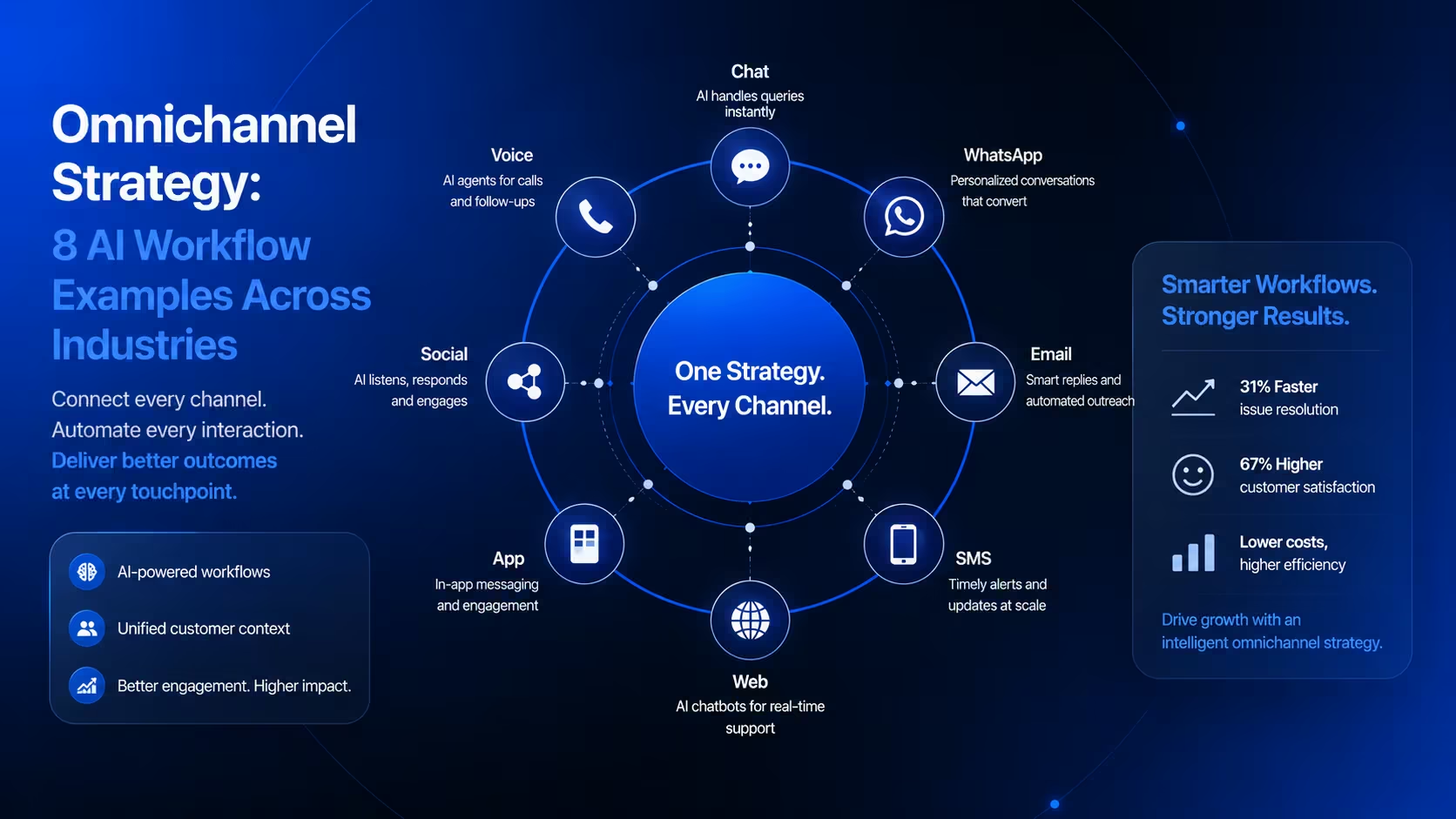
The customer starts a conversation on your website during lunch, asks a follow-up question on WhatsApp while commuting, and finally calls your contact center before making a purchase. From the customer's perspective, it's one continuous conversation. For many businesses, however, these interactions are handled by disconnected systems that fail to share context. This disconnect creates unnecessary friction. Customers repeat the same information across channels, agents spend valuable time searching for context, and marketing, sales, and support teams operate with different versions of the customer journey. The result is slower response times, inconsistent experiences, and lost revenue opportunities. An effective omnichannel strategy bridges these gaps by connecting every customer touchpoint into a unified journey. Instead of treating channels as independent communication streams, businesses orchestrate interactions across voice, WhatsApp, email, SMS, websites, and mobile apps using AI-powered workflows. Every interaction informs the next, ensuring customers receive timely, relevant, and personalized engagement regardless of where the conversation begins.
This shift is becoming a business necessity rather than a competitive advantage. According to Salesforce's State of the Connected Customer research, customers increasingly expect companies to maintain context across every interaction, while McKinsey reports that organizations investing in AI-powered customer engagement continue to see improvements in operational efficiency and customer satisfaction.
The next phase of customer engagement isn't about adding more channels. It's about making every channel work together through intelligent automation. That's where omnichannel AI, AI workflow automation, and a connected omnichannel customer journey come together to transform how businesses acquire, serve, and retain customers.
What Is an Omnichannel AI Workflow?
Most organizations already use multiple customer communication channels. The challenge isn't the lack of channels. It's the lack of coordination between them.
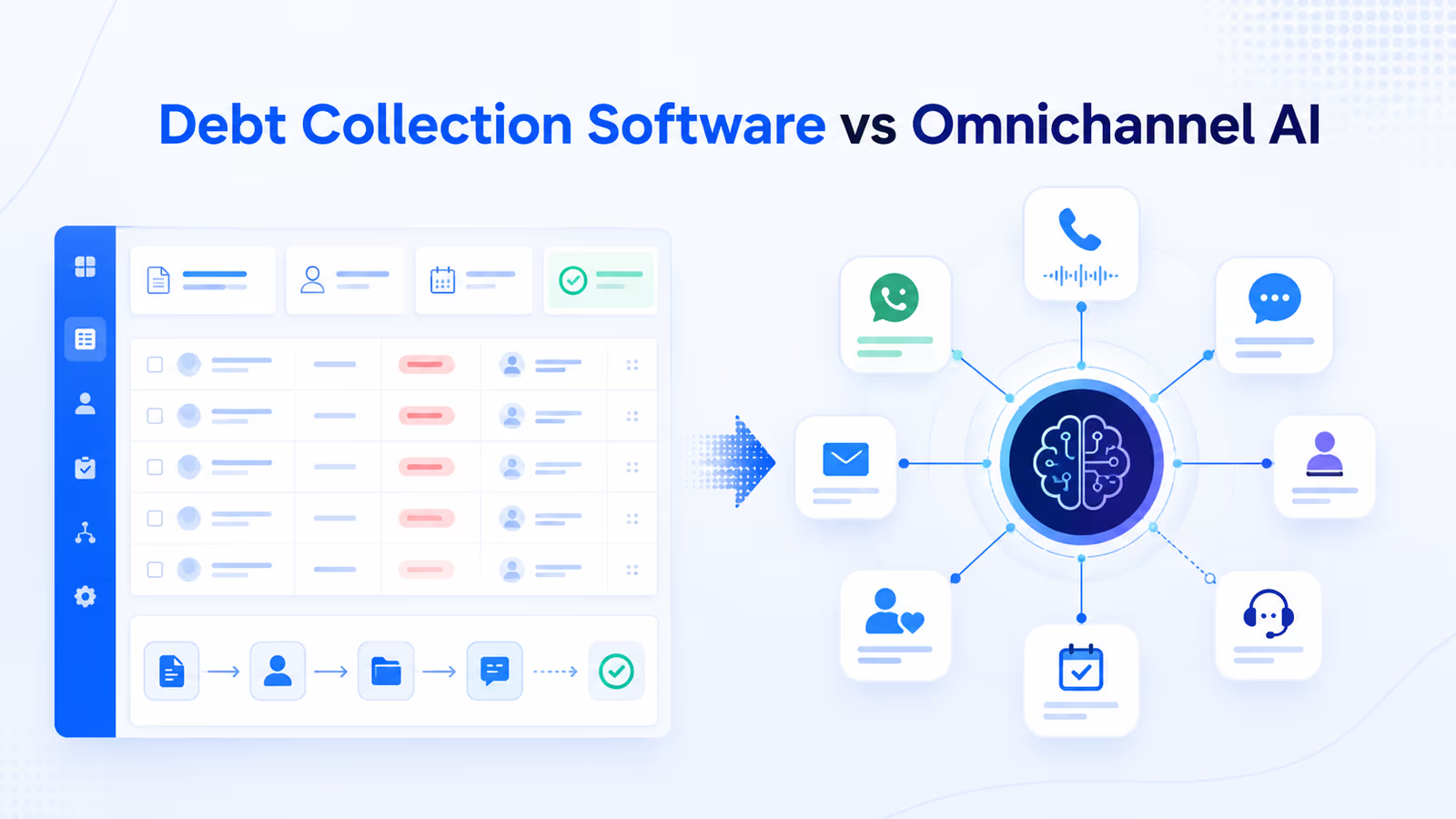
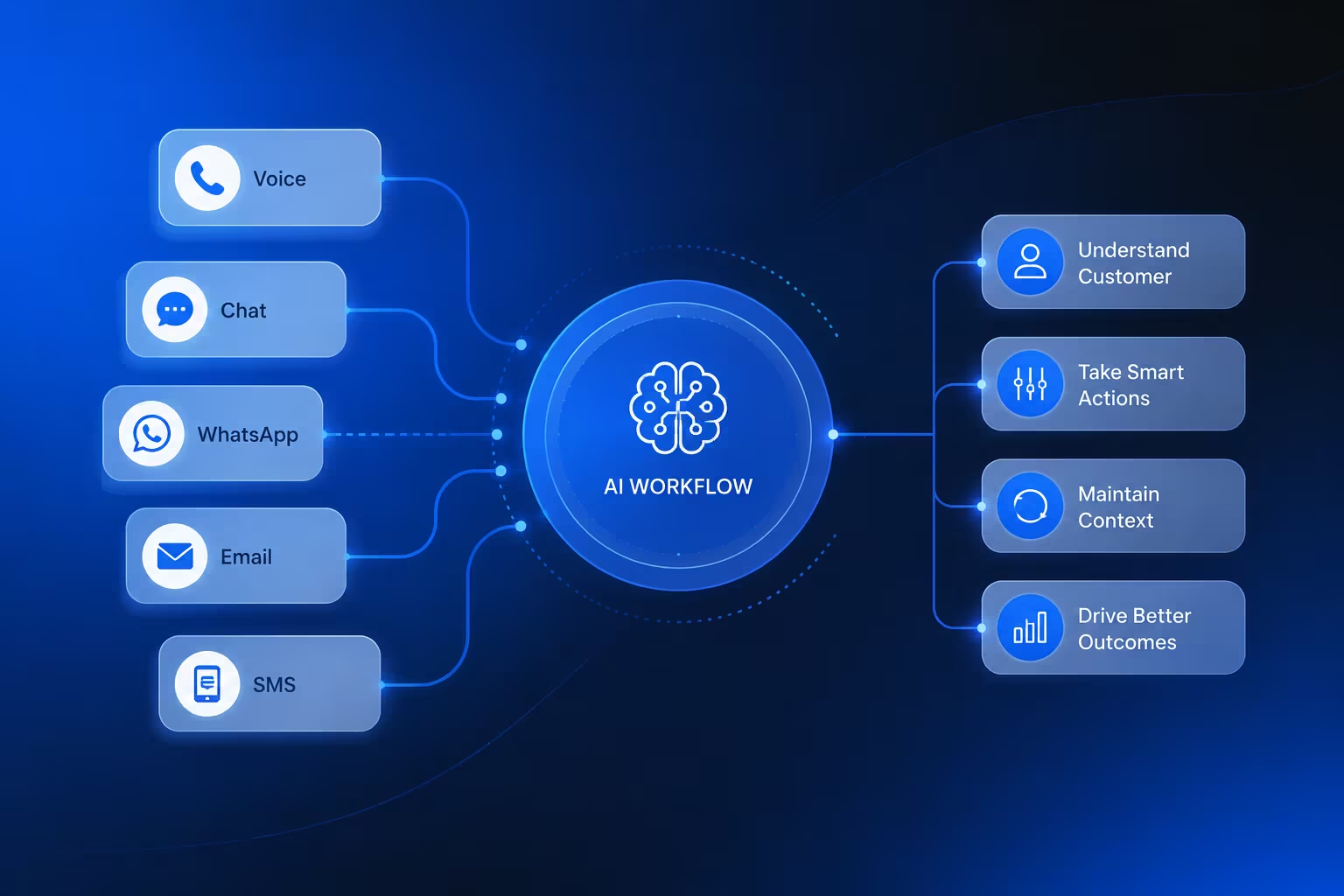
An omnichannel AI workflow is a predefined sequence of automated actions that connects customer interactions across multiple channels while preserving conversation context. Rather than triggering isolated campaigns, AI continuously analyzes customer intent, updates CRM records, recommends the next best action, and automatically engages customers through the most effective channel.
Think of it as an intelligent orchestration layer sitting between your customer engagement platforms and business systems.
For example, a customer who abandons an insurance renewal form online doesn't simply receive a reminder email. An AI workflow can identify the incomplete application, trigger an outbound AI phone call, answer common policy questions, send premium details on WhatsApp, schedule a callback with a licensed advisor if required, and automatically update the CRM after every interaction. Every touchpoint contributes to one continuous journey instead of multiple disconnected conversations.
Core Components of an Omnichannel AI Workflow
| Component | Role in the Workflow |
|---|---|
| Customer Trigger | Starts the workflow through a website visit, missed payment, inquiry, abandoned cart, or support request. |
| AI Decision Engine | Identifies intent, predicts customer needs, and determines the next best action. |
| Channel Orchestration | Selects the most effective communication channel, such as voice, WhatsApp, SMS, email, or chatbot. |
| CRM Synchronization | Updates customer records in real time after every interaction. |
| Human Handoff | Transfers conversations to live agents with complete context when required. |
| Continuous Optimization | Uses conversation analytics to improve future workflow performance. |
Instead of relying on manual follow-ups or disconnected automation tools, businesses can create journeys where every interaction builds on the last. This approach not only reduces operational effort but also delivers faster resolutions and more consistent customer experiences.
See how Callveriq powers AI omnichannel workflows.
How Omnichannel AI Workflow Automation Works
The number of channels a business supports doesn't determine the success of an omnichannel strategy. It's determined by how seamlessly those channels work together. Customers don't think in terms of email, WhatsApp, or phone calls—they expect businesses to remember their history and respond with context, regardless of where the conversation continues.
This is where AI workflow automation changes the equation. Instead of relying on agents to manually decide the next step after every interaction, AI continuously evaluates customer behavior, business rules, historical conversations, and CRM data to orchestrate the next best action in real time.
Imagine a customer browsing a loan product late at night. They leave the application midway without submitting it. Rather than ending the interaction there, an AI workflow can automatically recognize the abandoned journey, initiate a personalized outbound call the next morning, answer common eligibility questions, share required documents on WhatsApp, notify a relationship manager if the customer shows buying intent, and update the CRM throughout the process. What would normally require multiple teams and several manual interventions becomes a single, connected workflow.
Unlike traditional automation, which operates on fixed rules, omnichannel AI adapts based on customer responses. If a customer ignores an email but frequently engages on WhatsApp, the workflow can switch channels automatically. If they ask complex questions during an AI phone conversation, the system can transfer them to a human agent along with the full conversation history, eliminating the need for customers to repeat themselves.
A Typical Omnichannel AI Workflow
| Step | AI Action | Customer Experience |
|---|---|---|
| Customer initiates interaction | Captures intent from website, app, WhatsApp, phone, or email | Begins the journey on their preferred channel |
| AI enriches customer profile | Retrieves CRM history, previous conversations, and preferences | Receives personalized responses instead of generic messaging |
| Decision engine evaluates intent | Predicts the next best action based on customer behavior | Gets faster, more relevant recommendations |
| Channel orchestration | Selects the most effective channel for follow-up | Experiences a continuous conversation across channels |
| Human handoff (if required) | Transfers complete context to a live agent | Doesn't have to repeat information |
| Analytics and optimization | Measures outcomes and improves future workflows | Benefits from increasingly accurate and efficient interactions |
Why Businesses Are Moving Beyond Rule-Based Automation
Traditional automation follows a predefined path: If X happens, do Y. While effective for simple tasks, it struggles when customer journeys become dynamic.
AI-driven workflows, on the other hand, continuously learn from customer interactions and make contextual decisions. They can:
- Prioritize high-intent leads for immediate outreach.
- Personalize conversations using previous interactions.
- Switch communication channels based on customer engagement.
- Trigger follow-ups automatically after missed calls or incomplete transactions.
- Identify when human intervention is needed without disrupting the customer journey.
For industries like insurance, BFSI, retail, and healthcare—where customers often move between digital and voice channels before making a decision—this adaptability significantly improves both operational efficiency and customer experience.
Organizations adopting omnichannel AI are no longer automating isolated tasks. They're orchestrating complete customer journeys where every interaction informs the next, creating a connected experience that feels effortless for customers and scalable for businesses.
See how Callveriq connects every customer channel.
This blog is just the start.
Unlock the power of Callveriq’s AI with a live demo.

8 Real Omnichannel AI Workflow Examples Across Industries
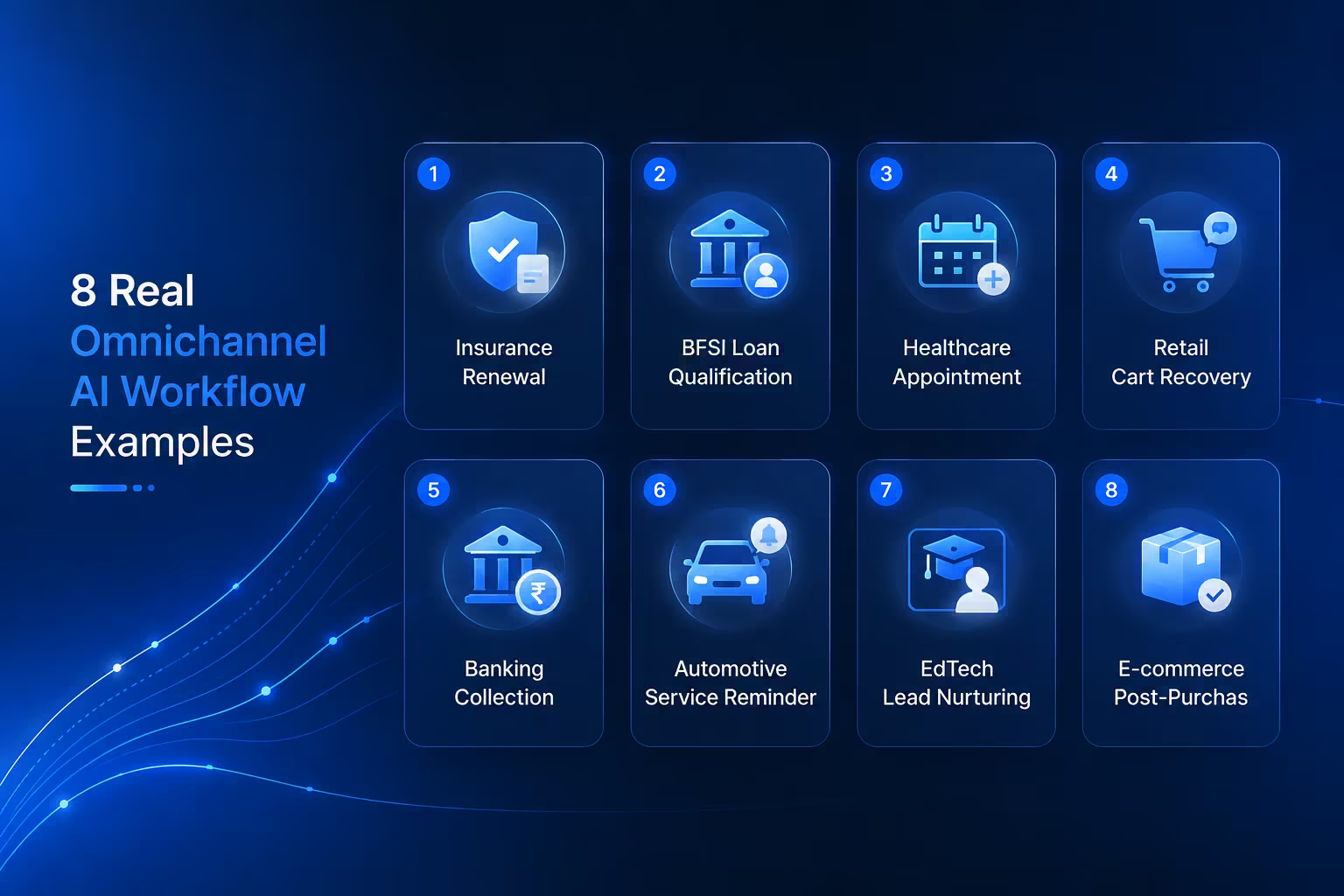
Every industry has unique customer journeys, but the goal of an effective omnichannel strategy remains the same: connect every interaction into one continuous experience. The following examples show how businesses use AI workflow automation to automate routine tasks, reduce manual effort, and deliver timely engagement across voice, WhatsApp, email, and other customer channels.
Explore Callveriq's intelligent workflows.
1. Insurance Renewal Workflow
Trigger- Policy expires in 30 days
AI Workflow- AI phone call → Renewal FAQs → WhatsApp payment link → Human advisor (if needed) → CRM update
Business Outcome- Higher renewal rates and fewer manual follow-ups
Why it works
Instead of relying on agents to manually track renewals, AI proactively reaches out to policyholders, answers common questions, shares payment links, and escalates only complex conversations. Customers complete renewals without repeating information across channels.
2. BFSI Loan Qualification Workflow
Trigger- Customer submits loan inquiry
AI Workflow- AI qualification call → Document checklist via WhatsApp → Relationship manager handoff → CRM update
Business Outcome- Faster qualification and lower application drop-offs
Why it works
Loan journeys often span several days and multiple touchpoints. AI keeps applicants engaged by answering eligibility questions, sending reminders, and ensuring agents receive a complete conversation history before taking over.
3. Retail Cart Recovery Workflow
Trigger- Cart abandonment
AI Workflow- WhatsApp reminder → AI outbound call → Personalized offer → Checkout link → Loyalty enrollment
Business Outcome- Higher cart recovery and repeat purchases
Why it works
Rather than sending generic reminders, AI personalizes every interaction based on customer behavior. If shoppers don't respond on one channel, the workflow intelligently switches to another while maintaining context.
4. Healthcare Appointment Workflow
Trigger- Appointment booked
AI Workflow- Confirmation → Reminder → AI rescheduling → Post-visit instructions → Feedback survey
Business Outcome- Lower no-show rates and better patient engagement
Why it works
Patients receive timely reminders, digital prescriptions, and follow-up care instructions through their preferred channel, while hospital staff spend less time on administrative coordination.
5. Banking Collections Workflow
Trigger- EMI overdue
AI Workflow- AI reminder call → Payment options via WhatsApp → Promise-to-pay capture → Agent escalation → CRM update
Business Outcome- Improved collections and reduced manual outreach
Why it works
Instead of blanket reminder campaigns, AI personalizes collection conversations based on payment history and customer responses, improving recovery rates while maintaining compliance.
6. Automotive Service Reminder Workflow
Trigger- Vehicle service due
AI Workflow- AI call → Service slot booking → WhatsApp confirmation → Reschedule if needed
Business Outcome- Increased workshop utilization and customer retention
Why it works
Customers receive proactive reminders and can confirm or reschedule appointments without speaking to an agent, reducing missed service opportunities.
7. EdTech Lead Nurturing Workflow
Trigger- Course inquiry
AI Workflow- AI qualification → Demo scheduling → WhatsApp brochure → Counselor handoff
Business Outcome- Faster admissions and improved lead conversion
Why it works
AI qualifies prospective students, answers course-related questions, and routes high-intent candidates to counselors, allowing admissions teams to focus on serious applicants.
8. E-commerce Post-Purchase Workflow
Trigger- Order delivered
AI Workflow- Delivery confirmation → Feedback request → Cross-sell recommendations → Loyalty campaign
Business Outcome- Higher repeat purchases and stronger customer loyalty
Why it works
The customer journey doesn't end after delivery. AI keeps customers engaged with personalized recommendations, support, and loyalty offers based on previous purchases.
What Are the Most Common Omnichannel AI Workflows Deployed by B2C Businesses in India?
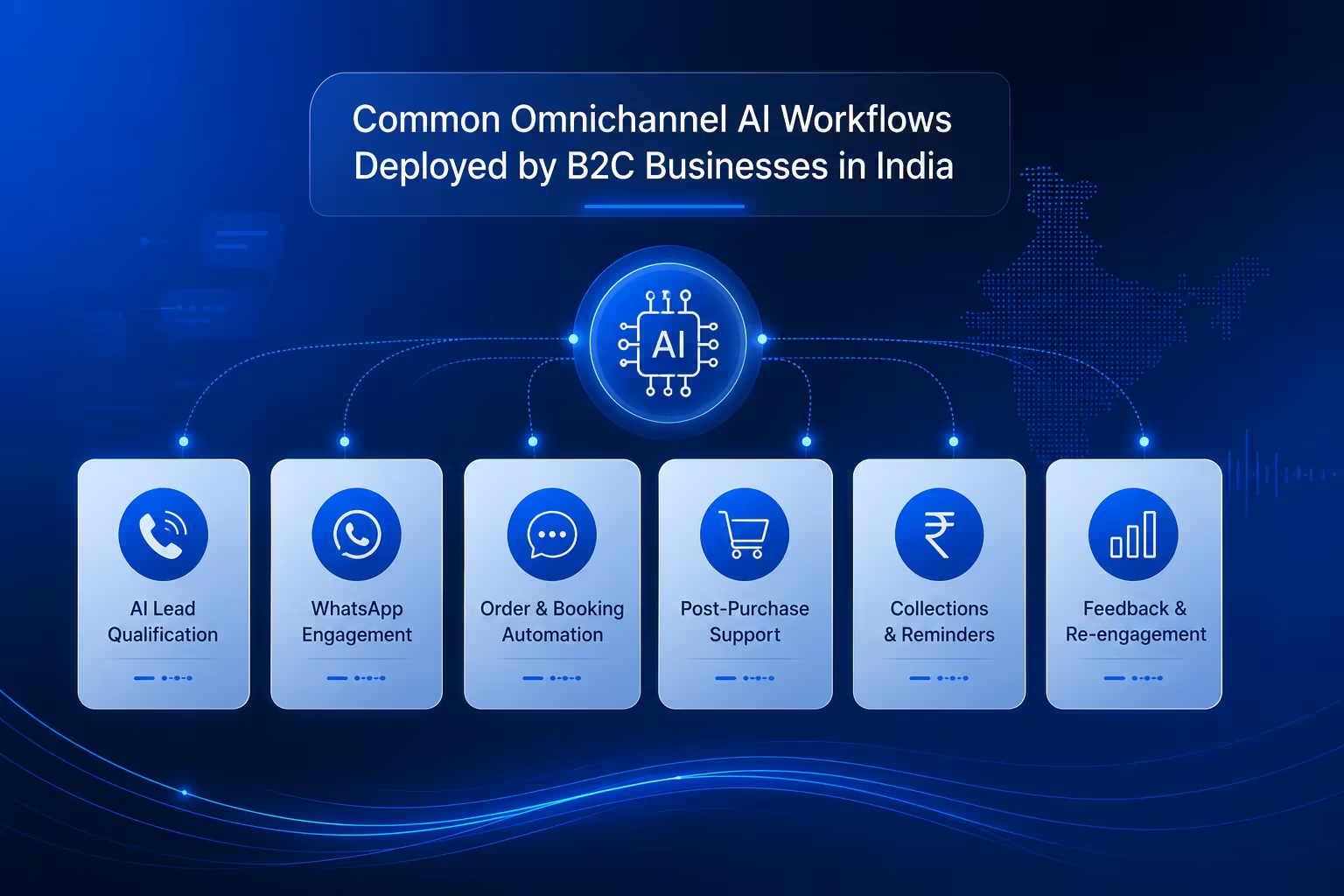
Indian B2C businesses are moving beyond isolated automation to connected omnichannel customer journeys. Instead of managing each channel separately, they use AI workflow automation to coordinate conversations across voice, WhatsApp, email, and CRM systems, ensuring customers receive timely, contextual engagement.
Some of the most common workflows include:
| Business Function | Typical Workflow | Channels Involved |
|---|---|---|
| Lead qualification | Website inquiry → AI phone call → WhatsApp brochure → CRM assignment | Website, Voice, WhatsApp, CRM |
| Appointment scheduling | Booking → Confirmation → Reminder → Rescheduling | Voice, WhatsApp, SMS |
| Payment reminders | Due date alert → AI call → Payment link → Confirmation | Voice, WhatsApp, SMS |
| Customer support | Chatbot resolves query → Human escalation with context | Chat, Voice, CRM |
| Sales follow-up | Demo request → AI qualification → Agent callback | Website, Voice, Email |
| Feedback collection | Purchase completed → Survey → Review request | WhatsApp, Email, SMS |
| Cross-sell campaigns | Order delivered → Personalized recommendation → Promotional offer | WhatsApp, Email |
| Customer retention | Inactive customer detected → Personalized offer → AI follow-up | Voice, WhatsApp, CRM |
Across industries, successful workflows share four characteristics:
- They maintain customer context across every interaction.
- AI automates routine conversations and follow-ups.
- Complex queries are seamlessly handed over to human agents.
- Conversation insights continuously improve workflow performance.
Platforms like Callveriq bring these capabilities together by combining AI phone calls, WhatsApp automation, conversation intelligence, agent coaching, and CRM integrations into a single platform, helping businesses execute a scalable omnichannel strategy.
See Callveriq's omnichannel workflows
How to Build an Omnichannel AI Workflow That Scales
Building an effective omnichannel strategy doesn't require automating every customer interaction from day one. The best approach is to start with one high-impact journey, refine it using real customer conversations, and gradually expand automation across the customer lifecycle.
A few best practices to keep in mind include:
- Start with a high-impact use case, such as lead qualification, insurance renewals, payment reminders, or appointment scheduling, where repetitive follow-ups consume significant agent time.
- Connect your customer ecosystem by integrating your CRM, telephony, WhatsApp, email, and other communication channels to maintain a single source of customer context.
- Automate repetitive tasks like reminders, FAQs, scheduling, and follow-ups, while defining clear rules for when conversations should be escalated to a human agent.
- Enable seamless agent handoffs by providing the complete conversation history and customer details, so customers never have to repeat themselves.
- Continuously optimize workflows using conversation analytics to identify bottlenecks, improve AI responses, and refine customer journeys over time.
See how Callveriq automates omnichannel AI workflows
What This Means For Your Business
An effective omnichannel strategy is about creating connected customer journeys, not simply adding more communication channels. With omnichannel AI and AI workflow automation, businesses can automate routine tasks, deliver personalized experiences, and ensure every interaction builds on the last.
Whether it's insurance renewals, loan applications, retail purchases, or healthcare appointments, intelligent workflows help teams respond faster, improve operational efficiency, and create better customer experiences. Platforms like Callveriq make it easier to orchestrate these workflows across voice, WhatsApp, CRM, and other channels, turning disconnected interactions into measurable business outcomes.
Book your demo to see Callveriq's omnichannel AI workflows in action
FAQs
Q1. How do you measure the success of an omnichannel AI strategy?
Measure KPIs like conversion rate, CSAT, response time, workflow completion, and ROI. These metrics show how well AI improves customer journeys.
Q2. Can small and mid-sized businesses implement an omnichannel AI strategy?
Yes. Start with one high-impact workflow and expand gradually as your business grows and integrates more channels.
Q3. What are the biggest challenges when implementing omnichannel AI workflows?
Common challenges include disconnected data, poor integrations, and inconsistent customer context. A unified AI platform helps solve these issues.
Q4. How does AI decide which communication channel to use next?
AI analyzes customer behavior, preferences, and past engagement to choose the channel most likely to receive a response.
Q5. Is an omnichannel AI strategy suitable for regulated industries?
Yes. AI workflows can follow compliance rules, maintain audit trails, and securely hand off conversations when needed.