

A D2C skincare brand in 2026 notices something unsettling. Customers discover products on Instagram, read reviews on marketplaces, ask questions on WhatsApp, abandon carts on mobile, and eventually purchase on desktop after a Google search. Nothing follows a straight line anymore. Marketing dashboards still show conversions, but they no longer explain the journey behind them.
The team assumes performance marketing is the issue. But the real problem is deeper: fragmented touchpoints are breaking the continuity of the customer experience. A campaign might be strong, yet the customer still feels like they are interacting with five different brands instead of one.
This is where a modern omnichannel retail strategy becomes essential. Not as a buzzword, but as the backbone of consistent, connected customer journeys. For most D2C brands, the shift is no longer optional; it is the only way to stay relevant in a landscape where attention is distributed and loyalty is fragile.
Unify every touchpoint into one connected journey with Callveriq.
What Does a Working Omnichannel Retail Strategy Look Like for a D2C Brand in 2026?
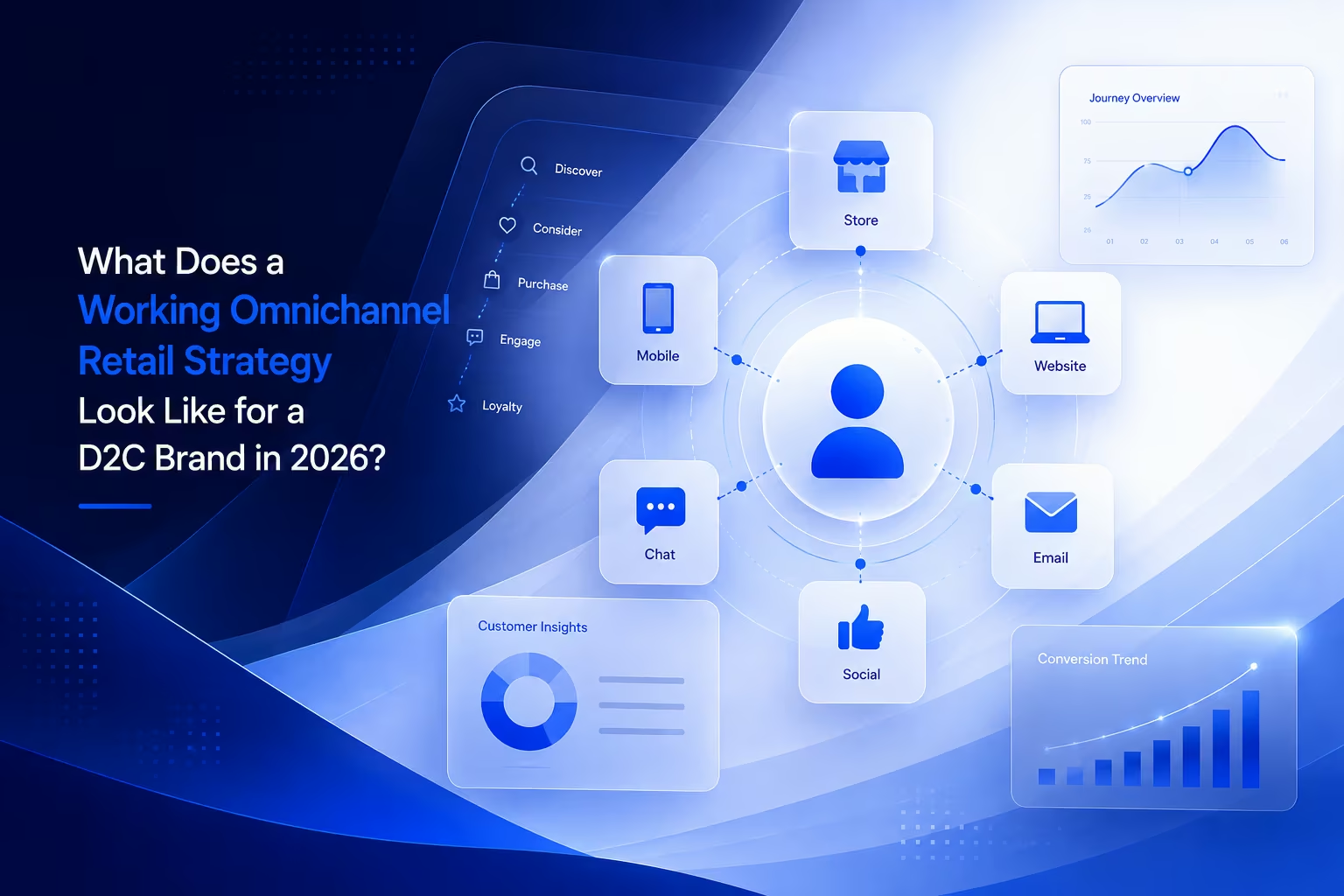
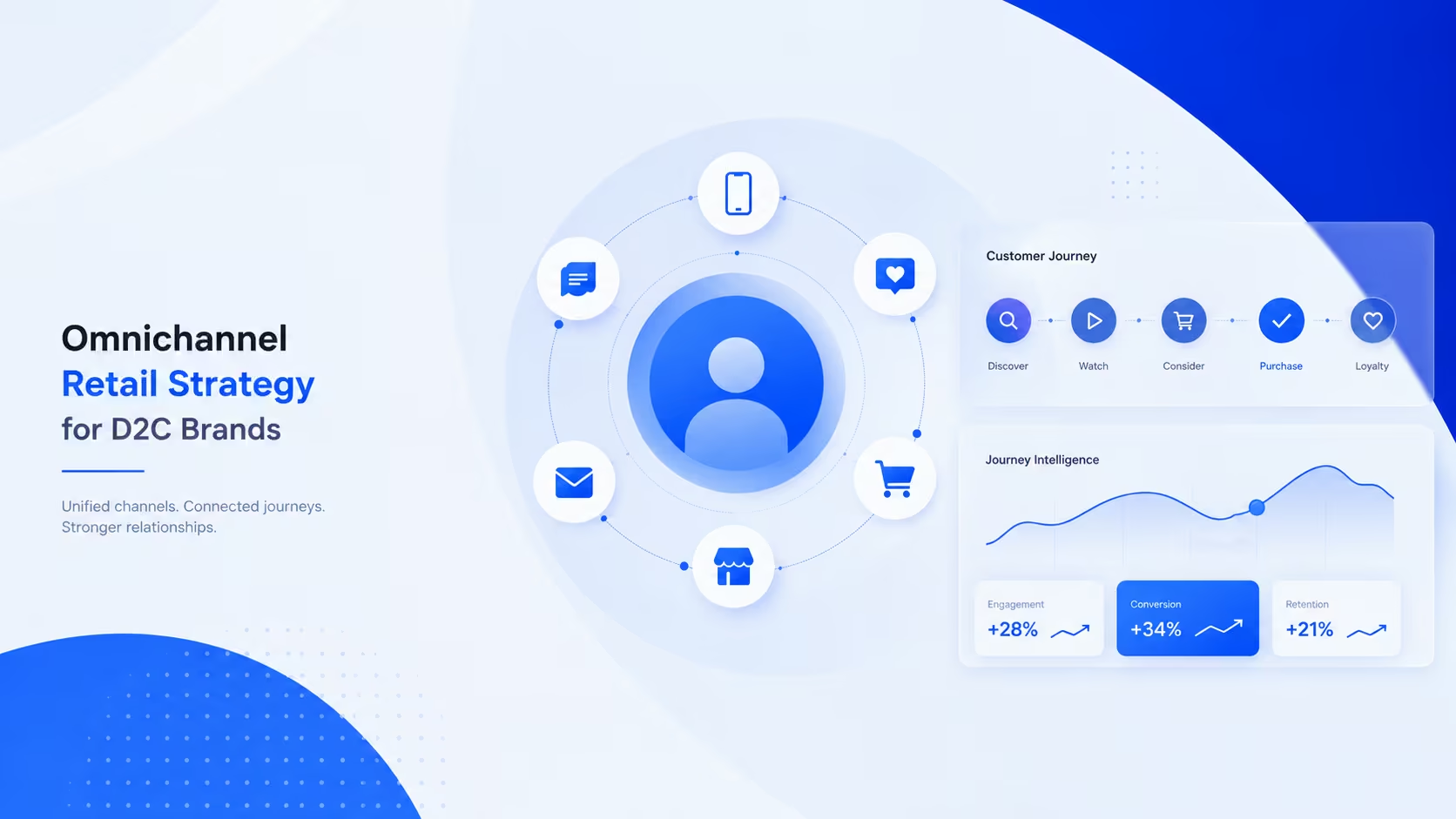
A functional D2C omnichannel strategy in 2026 is not about being present everywhere. It is about ensuring continuity everywhere. Every interaction, whether it starts on an ad, chatbot, marketplace, or email, must carry forward context.
At its core, a strong system connects three layers:
- Discovery channels (social, influencer, paid ads)
- Engagement channels (WhatsApp, email, live chat, website)
- Conversion and retention channels (D2C store, marketplaces, loyalty apps)
The key difference in 2026 is not channel expansion, but unified intelligence. Brands that succeed are those that merge behavioral signals across channels to create one continuous customer profile.
Research from Salesforce’s State of the Connected Customer (latest editions) highlights that customers expect companies to understand their needs without repeating information across touchpoints. McKinsey’s retail studies also reinforce that companies with connected journeys outperform peers in revenue growth by focusing on journey orchestration rather than isolated campaigns.
Mini Snapshot: Fragmented vs Connected D2C Experience
| Stage | Fragmented Strategy | Omnichannel Retail Strategy |
|---|---|---|
| Discovery | Ads without continuity | Personalized cross-channel discovery |
| Engagement | Channel-specific replies | Unified conversation history |
| Conversion | Isolated checkout | Context-aware conversion flow |
| Retention | Generic email loops | Behavior-driven lifecycle engagement |
Callveriq unifies journeys into one intelligent layer.
Which Channels Should a Retail Brand Prioritise in its Omnichannel Stack?
Not every channel deserves equal attention. The effectiveness of omnichannel marketing for retail strategy depends on selecting channels based on customer behavior, not brand preference.
In 2026, high-performing D2C brands typically prioritize:
- WhatsApp for real-time conversational engagement
- Instagram and short-form video platforms for discovery
- Email for lifecycle nurturing and retention
- Website and app for conversion and personalization
- Marketplaces for reach and trust validation
The mistake many brands make is over-investing in discovery channels while under-investing in continuity channels like WhatsApp or CRM-driven journeys. Gartner research on customer experience consistently shows that post-click engagement often determines conversion quality more than acquisition channels themselves.
Channel Role Mapping in a Modern D2C Stack
| Channel | Primary Role | Strategic Value |
|---|---|---|
| Discovery | Awareness and inspiration | |
| Engagement | High-intent conversion support | |
| Retention | Lifecycle nurturing | |
| Website/App | Conversion | Controlled buying environment |
| Marketplaces | Validation | Trust building |
Callveriq orchestrates omnichannel engagement with context intact.
This blog is just the start.
Unlock the power of Callveriq’s AI with a live demo.
How AI Enables Personalization at Scale in a D2C Omnichannel Strategy
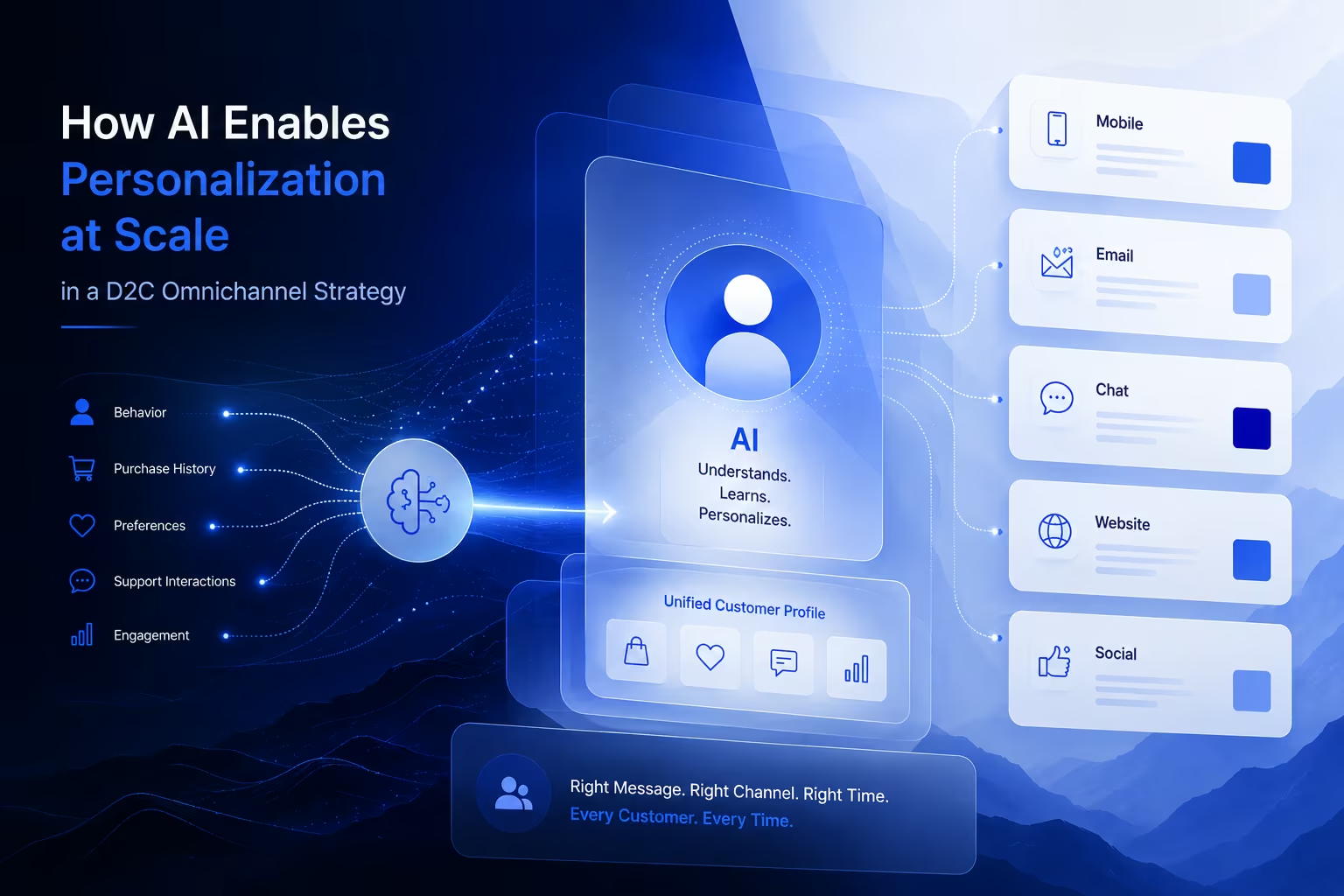
AI is the layer that turns an omnichannel retail strategy from operational to intelligent. Without AI, omnichannel is just coordination. With AI, it becomes prediction and personalization at scale.
In modern D2C omnichannel strategy models, AI does three critical things:
- Unifies fragmented customer data into a single behavioral profile
- Predicts intent based on cross-channel interactions
- Dynamically adjusts messaging across touchpoints in real time
For example, a customer who browses running shoes on a website, asks about sizing on WhatsApp, and ignores email reminders is not treated as three separate signals. AI connects them into one intent trajectory.
KPMG’s 2025 retail insights emphasize that AI-driven personalization is now a primary driver of customer loyalty, especially in digital-first brands. Similarly, Gartner highlights that real-time decisioning systems are becoming essential for scaling personalization without increasing operational overhead.
AI-Driven Customer Journey Flow
Discovery Signal → Behavioral Tracking → Intent Prediction → Personalized Messaging → Conversion Optimization → Retention Loop
Callveriq enables personalization across every touchpoint.
Metrics A Retail Brand Should Track To Measure Omnichannel Strategy Success
Traditional metrics like ROAS or conversion rate are no longer sufficient for evaluating omnichannel marketing for retail performance. They measure outcomes, not journey quality.
A strong measurement framework includes:
- Customer journey completion rate
- Cross-channel engagement consistency
- Time-to-conversion across channels
- Repeat interaction rate before purchase
- Customer lifetime value influenced by channel mix
These metrics help identify whether the omnichannel retail strategy is actually reducing friction or simply adding more touchpoints.
Key Omnichannel Performance Metrics
Salesforce research consistently shows that customers who engage across multiple connected channels tend to have higher lifetime value compared to single-channel users. McKinsey also reinforces that journey-based measurement frameworks outperform siloed KPI tracking in driving revenue efficiency.
Discover how Callveriq can shift metrics to journey intelligence.
How AI Reshapes Omnichannel Marketing For Retail Execution
The shift is no longer about adding more tools, but about connecting intelligence across them. AI enables retail teams to stop reacting to customer behavior and start anticipating it.
In a modern system, AI supports:
- Real-time segmentation instead of static audiences
- Predictive lifecycle triggers instead of scheduled campaigns
- Unified reporting instead of channel-wise dashboards
This is where AI customer journey retail systems become critical. They ensure that marketing, sales, and support are not separate functions but synchronized layers of the same experience.
Brands that adopt this approach early are already seeing higher conversion efficiency, lower acquisition costs, and stronger retention loops because every interaction becomes context-aware.
What This Means For Your D2C Brand?
The evolution of retail is not defined by the number of channels a brand uses, but by how seamlessly those channels work together. A modern omnichannel retail strategy is fundamentally about continuity, where every interaction builds on the last instead of resetting it. D2C brands that succeed in 2026 will be the ones that stop treating channels as separate performance silos and start treating them as parts of a unified customer journey.
As customer expectations continue to rise, the gap between disconnected engagement and intelligent orchestration will define market leaders. The brands that invest in AI-driven, connected experiences today are not just improving conversions; they are building long-term customer relationships that compound over time.
FAQs
1. How is omnichannel retail different from multichannel retail?
Omnichannel connects all customer interactions into one continuous journey, while multichannel often operates in silos.
2. Can small D2C brands implement an omnichannel strategy?
Yes. Modern tools make omnichannel experiences accessible without enterprise-level resources.
3. What is the biggest challenge in omnichannel retail?
Disconnected customer data across channels often creates inconsistent experiences.
4. Does omnichannel retail improve customer retention?
Yes. Consistent and personalized experiences increase customer loyalty and repeat purchases.
5. What technology powers modern omnichannel retail?
AI, customer data platforms, automation tools, and conversation intelligence solutions.