

A customer calls your support team to ask about a delayed order.
The agent promises an update and logs a note in the CRM. A day later, the customer sends a WhatsApp message asking for the same update. The WhatsApp team cannot see the previous call. Two days later, the customer opens a chat on the website and explains the issue for the third time.
By now, the delay is no longer the problem. The experience is.
This is where many businesses struggle. They invest in multiple customer channels, but customers still feel disconnected. Calls, chats, emails, WhatsApp conversations, and CRM records exist in separate systems, creating friction at every step.
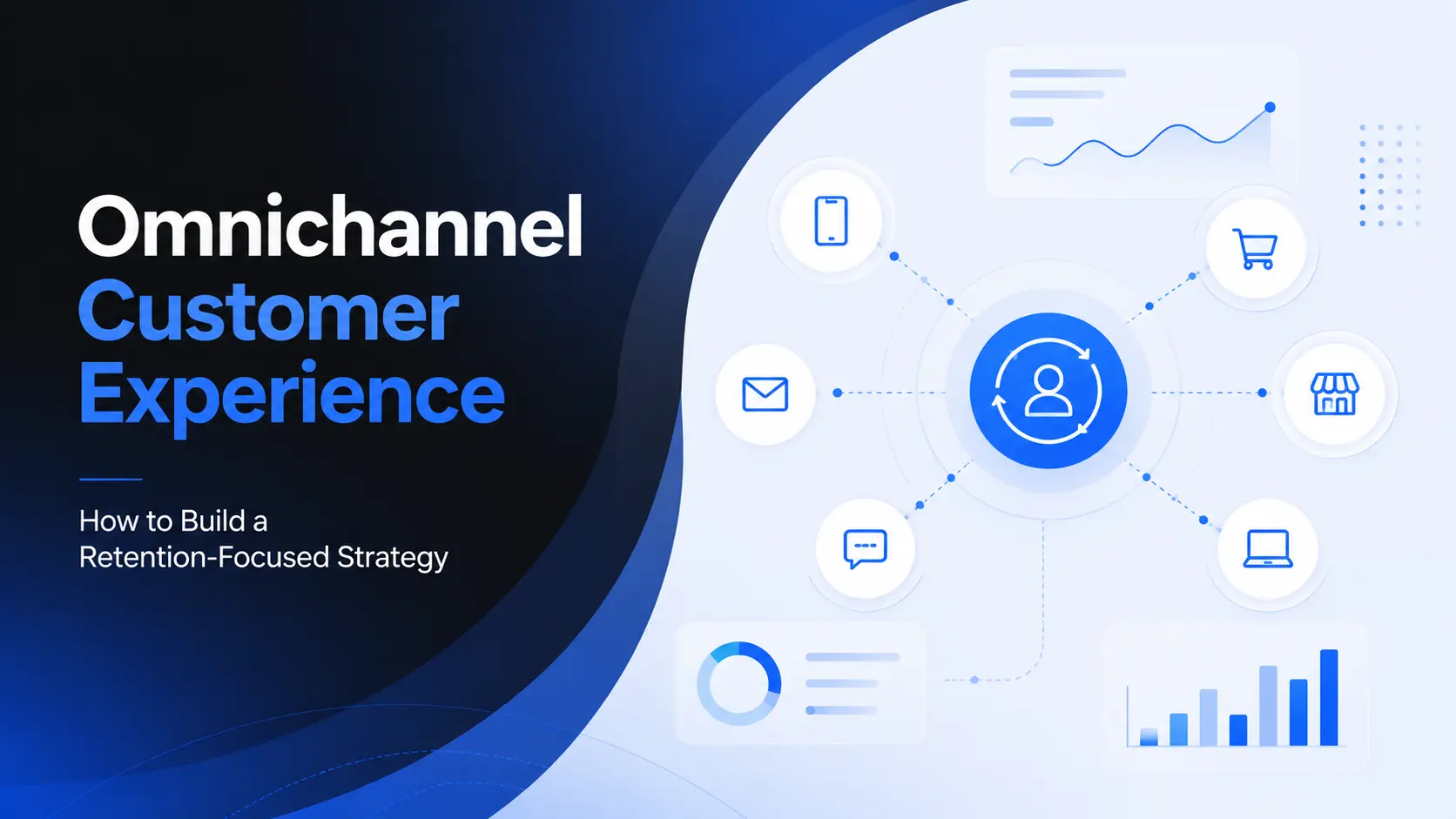
An effective omnichannel customer experience eliminates these disconnects. It ensures customers can move between channels without losing context, repeating information, or restarting conversations. More importantly, it creates the consistency and convenience that directly influence retention.
For organizations evaluating customer experience platforms, contact center technologies, and AI-powered engagement solutions, the question is no longer whether omnichannel matters. The question is how to build an omnichannel customer experience that actually keeps customers coming back.
Unify every customer conversation with Callveriq. Book your demo.
What Is an Omnichannel Customer Experience and How Is It Different From a Good Multichannel One?
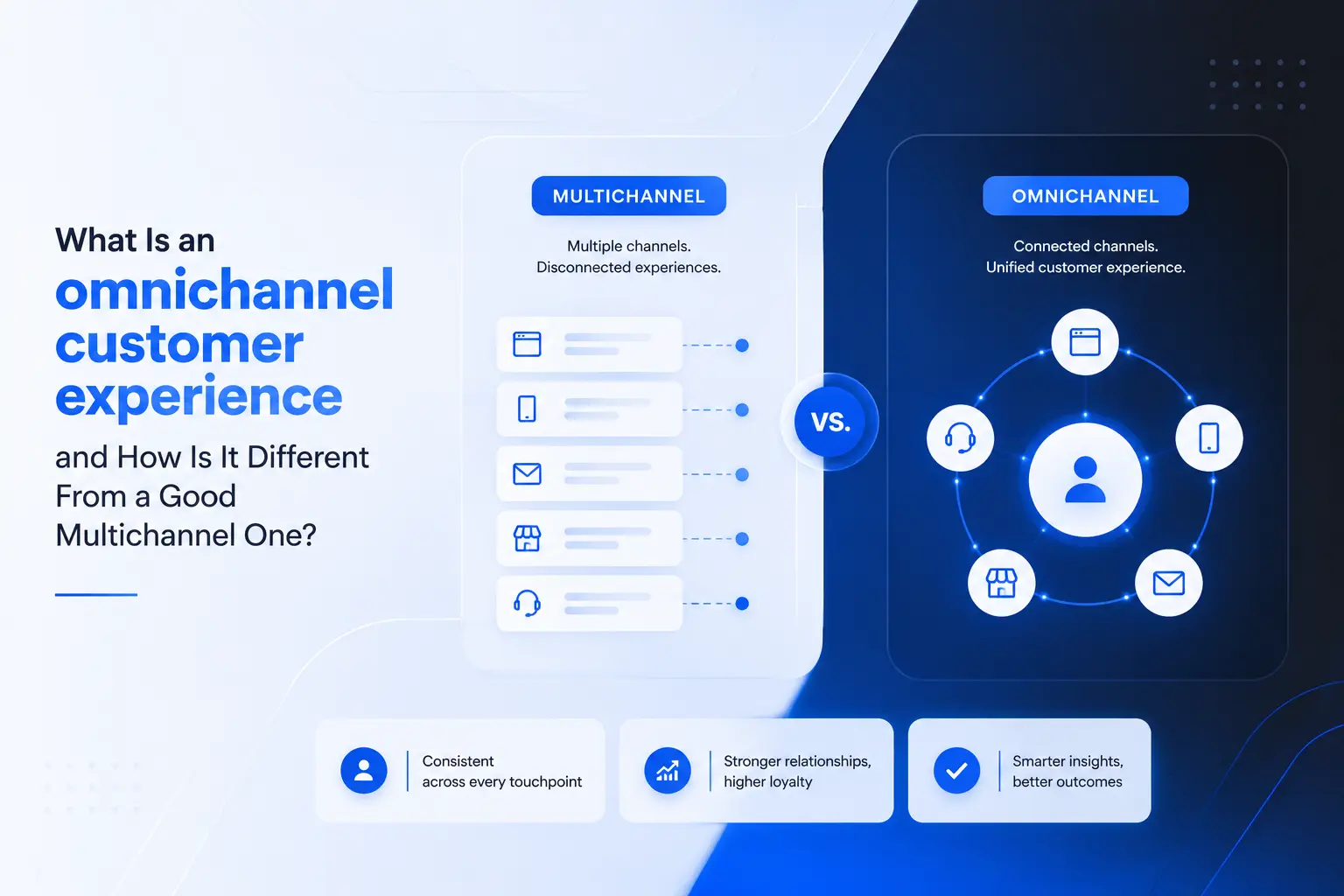
Many organizations assume that having multiple communication channels automatically creates a connected experience.
It does not. A multichannel strategy gives customers several ways to interact with a business. An omnichannel strategy connects those interactions into a single, continuous journey.
| Multichannel Experience | Omnichannel Experience |
|---|---|
| Multiple channels available | Multiple channels connected |
| Channel data stored separately | Customer context shared everywhere |
| Customers repeat information | Conversations continue seamlessly |
| Teams work independently | Teams operate from a unified view |
| Focus on channel availability | Focus on customer continuity |
While both approaches give customers multiple ways to engage, only an omnichannel customer experience ensures that every interaction builds on the last one. Instead of treating channels as separate touchpoints, it creates a connected ecosystem where customer history, preferences, and context follow the customer throughout their journey.
The distinction becomes obvious when a customer switches channels.
In a multichannel environment, every interaction feels like a new conversation. In an omnichannel environment, the customer journey continues naturally, regardless of whether the customer moves from voice to WhatsApp, from email to chat, or from chatbot to live agent.
Organizations that deliver strong omnichannel customer engagement focus less on managing channels and more on managing customer context.
See how unified customer conversations improve retention outcomes.
What Are the Most Common Gaps That Break the Omnichannel Customer Experience?
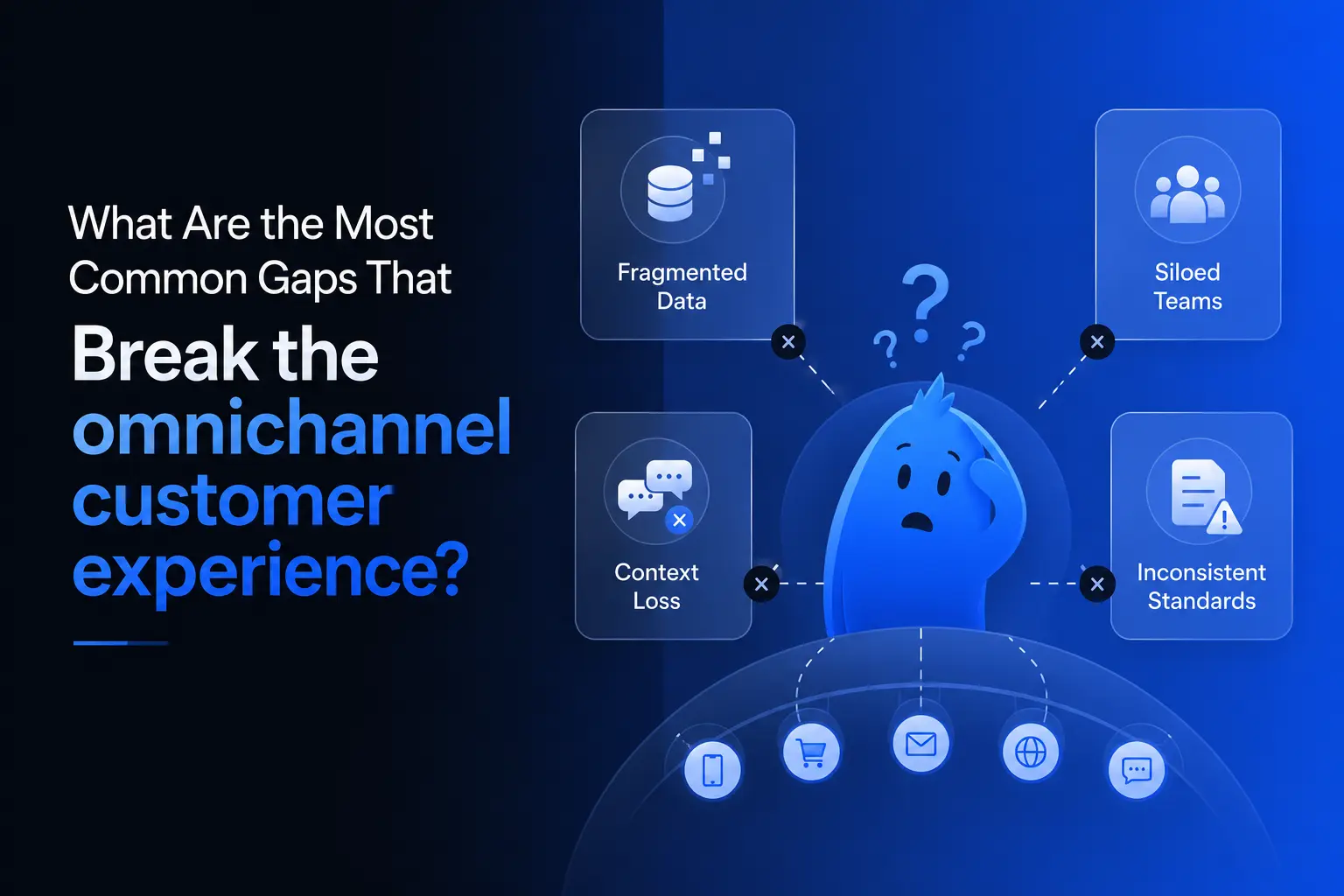
Most organizations do not fail because they lack channels.
They fail because they lack coordination. The biggest obstacles to a successful omnichannel customer journey are often operational rather than technological.
- Fragmented Customer Data
Customer information sits across CRM systems, telephony platforms, WhatsApp inboxes, ticketing tools, and chat applications. Without a centralized view, agents cannot understand previous interactions or customer intent.
- Channel-Specific Teams
Many businesses assign separate teams to phone, chat, email, and messaging channels. While this improves specialization, it often creates inconsistent experiences and duplicated effort.
- Context Loss During Handoffs
When customers move from self-service to live support or from one channel to another, important context frequently disappears. This forces customers to repeat details, increasing frustration.
- Inconsistent Service Standards
Different channels often operate with different response times, policies, and communication styles. Customers experience the organization as fragmented rather than unified.
Recent KPMG research shows that customers increasingly expect personalized and seamless interactions across every channel and every moment of engagement. Organizations that fail to integrate experiences risk widening the loyalty gap.
| Experience Gap | Customer Impact | Business Impact |
|---|---|---|
| Data silos | Repetition | Lower satisfaction |
| Context loss | Frustration | Higher churn |
| Slow handoffs | Delays | Lower productivity |
| Inconsistent responses | Reduced trust | Brand damage |
| Poor visibility | Effort increases | Missed opportunities |
Fixing these issues requires more than adding new channels. It requires connecting them.
Create connected experiences with Callveriq.
This blog is just the start.
Unlock the power of Callveriq’s AI with a live demo.

How Does AI Enable a Seamless Omnichannel CX Across Voice, WhatsApp, and Chat?
Traditional omnichannel strategies relied heavily on integrations.
Modern omnichannel customer service increasingly relies on AI to maintain continuity at scale.
Instead of simply routing conversations, AI can understand context, summarize interactions, identify intent, and carry information across channels automatically.
Imagine a customer who:
- Calls a support line
- Receives a follow-up on WhatsApp
- Returns later through web chat
An AI-enabled system can retain conversation history, summarize previous interactions, identify unresolved issues, and provide agents with the complete context instantly.
This creates a more natural experience for both customers and agents.
AI-Powered Capabilities That Matter Most
AI plays a critical role in creating a seamless omnichannel customer experience because it helps businesses maintain context, improve responsiveness, and reduce customer effort across every touchpoint. Rather than treating each interaction as a separate event, AI connects conversations and enables more personalized engagement throughout the customer journey.
Some of the most impactful AI capabilities include:
- Real-time conversation summaries: Automatically capture key discussion points so agents can quickly understand previous interactions without reviewing lengthy transcripts.
- Intent detection: Identify the reason behind a customer's inquiry and route conversations to the right team or workflow faster.
- Cross-channel context retention: Preserve customer history and conversation context as customers move between voice, WhatsApp, chat, email, or other channels.
- Automated follow-ups: Trigger timely updates, reminders, and next-step communications without requiring manual intervention.
- Sentiment analysis: Detect customer frustration, satisfaction, or urgency in real time, allowing teams to take proactive action before issues escalate.
- Agent assistance: Provide agents with relevant information, recommended responses, and next-best actions during live conversations.
Together, these capabilities enable stronger omnichannel customer engagement by ensuring every interaction feels connected, personalized, and consistent, regardless of the channel customers choose to use.
McKinsey's 2025 research describes this shift as moving toward a "next best experience" model, where AI helps coordinate customer touchpoints and deliver the right interaction at the right moment.
Salesforce's 2025 customer research similarly highlights AI-powered personalization, predictive engagement, and connected customer data as key drivers of modern customer experiences.
The result is stronger omnichannel customer engagement, reduced effort for customers, and improved operational efficiency for support teams.
Maintain context across channels with Callveriq.
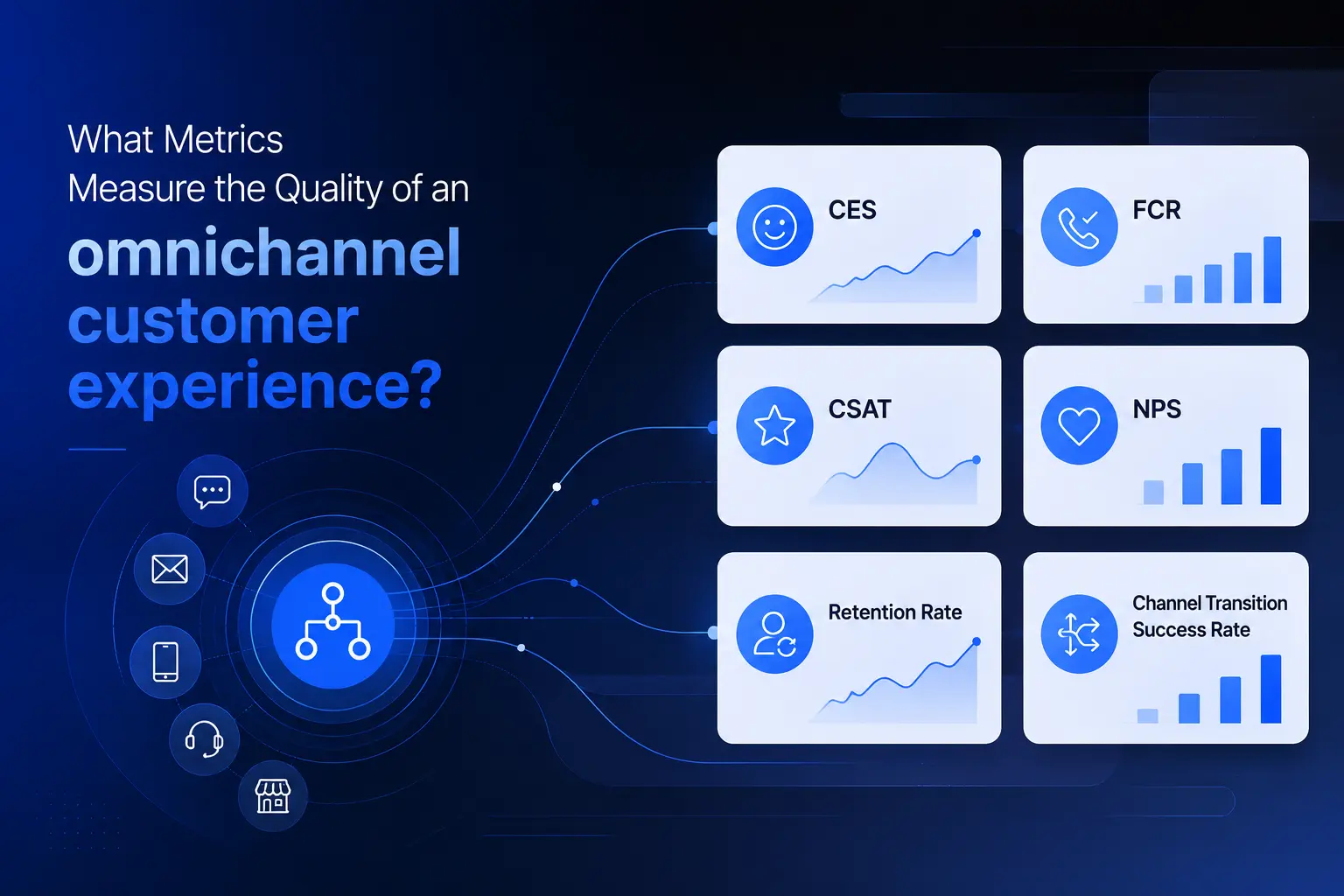
What Metrics Measure the Quality of an Omnichannel Customer Experience?
What This Means For Your Business
Customers rarely think about channels. They think about outcomes.
They expect every interaction to feel like part of the same conversation, whether they reach out through voice, WhatsApp, chat, email, or self-service. When businesses fail to preserve context, customers experience friction. When they successfully connect every touchpoint, customers experience convenience, trust, and consistency.
Building an omnichannel customer experience is no longer about adding more communication channels. It is about creating a unified customer journey that follows customers wherever they choose to engage. As AI becomes increasingly capable of maintaining context, predicting intent, and orchestrating interactions across channels, organizations have an opportunity to move beyond fragmented customer service and toward truly connected experiences.
For teams looking to improve retention, reduce customer effort, and strengthen engagement, the next competitive advantage will come from a journey that feels seamless end to end, one where voice, WhatsApp, chat, and customer intelligence work from a single view, not separate silos.
Book your demo call with Callveriq to create connected customer experiences.
FAQs
1. How long does it take to implement an omnichannel customer experience strategy?
The timeline varies based on existing systems and data complexity, but most organizations begin seeing measurable improvements within a few months of implementation.
2. Can small and mid-sized businesses benefit from an omnichannel approach?
Yes. Even with a limited number of channels, connecting customer data and conversations can improve customer satisfaction, efficiency, and retention.
3. What role does customer data play in omnichannel experiences?
Customer data provides the context needed to personalize interactions, maintain conversation history, and deliver consistent experiences across channels.
4. How can businesses reduce customer repetition across channels?
By integrating communication channels, centralizing customer information, and using AI to carry conversation context between interactions.
5. What is the biggest mistake companies make when building omnichannel experiences?
Many organizations focus on adding more channels instead of connecting existing ones, resulting in fragmented customer journeys and inconsistent experiences.