

A customer starts a loan application on a bank's website during lunch. Later, they continue the process on the mobile app while commuting. That evening, they send a WhatsApp message asking about required documents. The next day, they call customer support for an update.
Instead of a smooth journey, they are forced to repeat information at every step. The call center cannot see the WhatsApp conversation. The branch lacks visibility into the digital application. The customer becomes frustrated, abandons the process, and begins evaluating other providers.
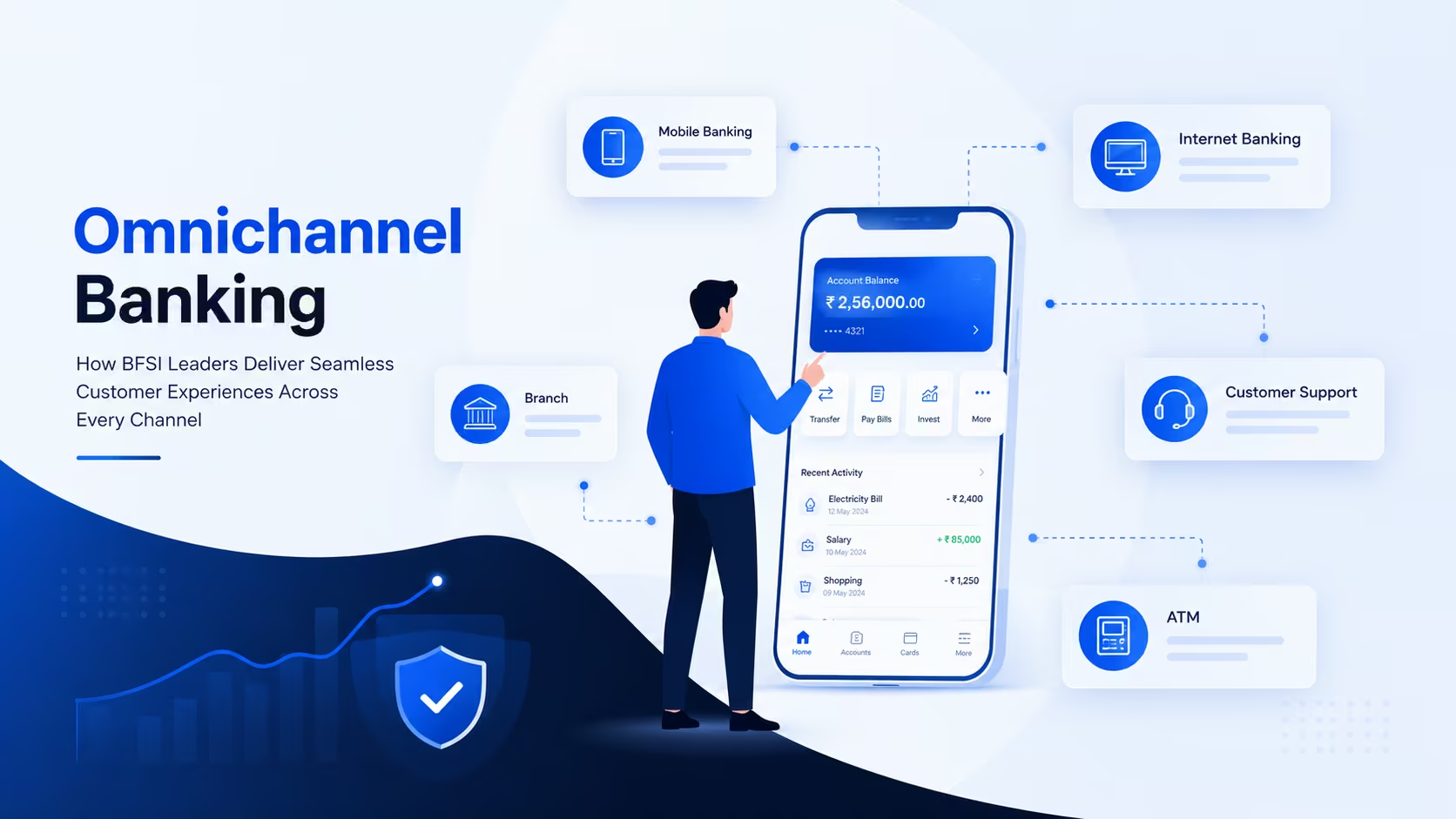
This is the challenge many financial institutions face today. Customers expect continuity across every interaction, whether they engage through a branch, mobile app, WhatsApp, website, contact center, or other digital banking channels. They no longer view these interactions as separate experiences. They expect one continuous journey. Delivering that continuity is the foundation of omnichannel banking.
For BFSI leaders, the goal is no longer adding more channels. The focus is creating connected customer journeys that reduce friction, improve engagement, and increase operational efficiency across the entire lifecycle.
See how Callveriq connects banking conversations across every channel.
What Does Omnichannel Banking Mean for Customers?
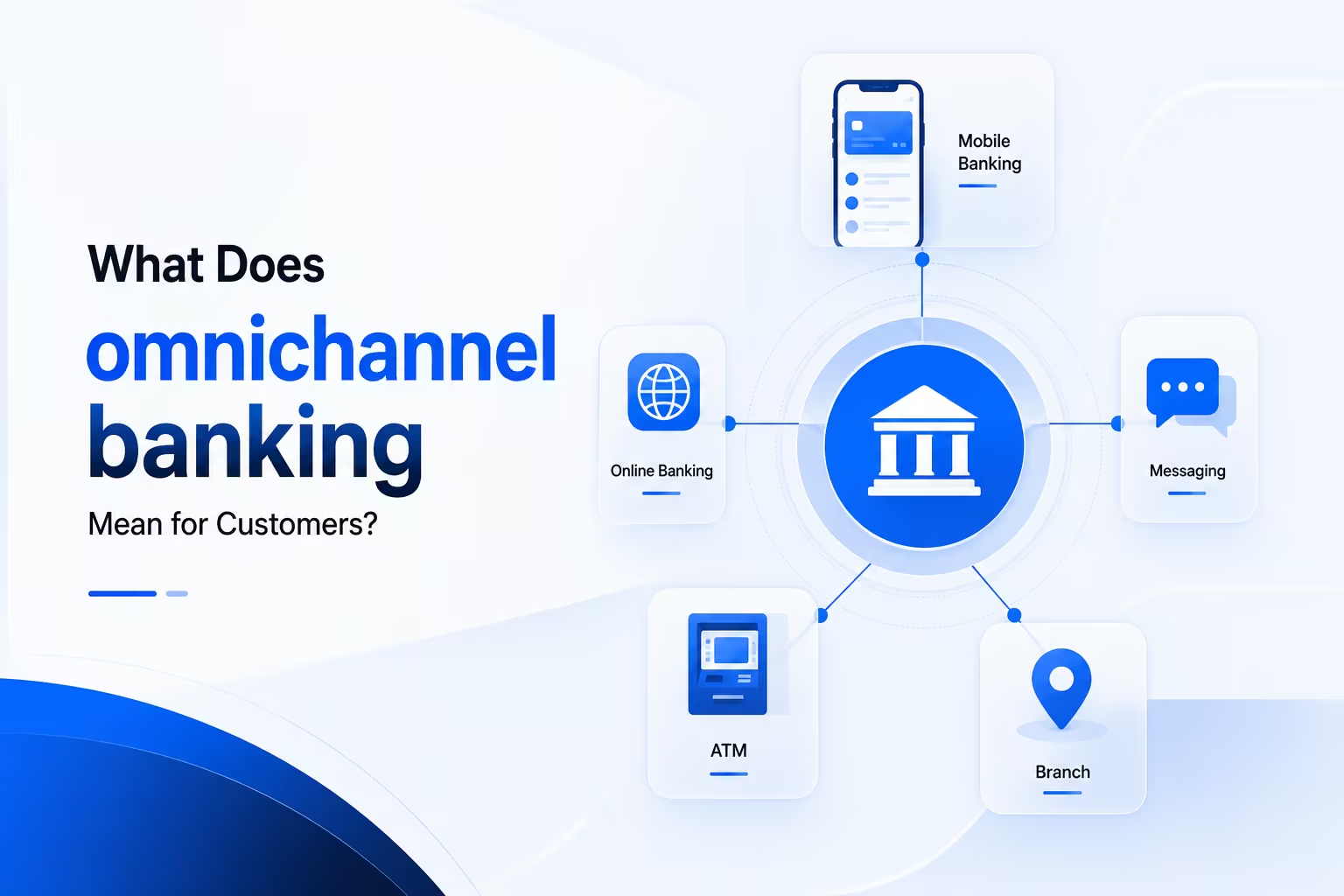
For customers, omnichannel banking is not about having access to multiple channels. It is about receiving one consistent experience regardless of where the interaction starts or ends.
The growing adoption of digital banking channels has significantly changed customer expectations. Customers may research products online, submit applications through mobile apps, receive updates on WhatsApp, and seek support through a call center. They expect each interaction to build on the last rather than start from scratch.
A customer should be able to begin a conversation on one channel and continue it on another without losing context.
Traditional Banking vs Omnichannel Banking Experience
| Traditional Banking | Omnichannel Banking Experience |
|---|---|
| Customer data stored separately | Unified customer profile across channels |
| Repeated information required | Context travels with the customer |
| Different experiences across channels | Consistent experience everywhere |
| Limited visibility for agents | Complete customer history available |
| Slow issue resolution | Faster and personalized support |
A strong omnichannel banking experience allows institutions to create continuity across:
- Branch interactions
- Mobile applications
- Internet banking portals
- WhatsApp conversations
- Contact center calls
- Email communications
- Video banking sessions
Customers increasingly expect banks to operate this way because their experiences with ecommerce, telecom, and digital-first brands have already set higher standards.
Discover customer journeys that matter most with Callveriq.
How Indian Banks and NBFCs Use Omnichannel AI to Unify Customer Engagement
Banks and NBFCs are investing heavily in AI-powered engagement platforms to eliminate channel silos.
Modern AI systems can capture interactions from multiple digital banking channels, analyze customer intent, and provide agents with complete context before every conversation.
Building a Unified Customer View
AI helps institutions combine data and conversations across digital banking channels and traditional touchpoints, including:
- Core banking systems
- CRM platforms
- Loan management systems
- Contact centers
- Mobile banking apps
- WhatsApp Business accounts
- Email and SMS platforms
This creates a single customer timeline that reflects every interaction.
How Omnichannel AI Supports Banking Teams
| Customer Interaction | AI Capability | Business Outcome |
|---|---|---|
| WhatsApp inquiry | Intent detection | Faster responses |
| Loan application | Journey tracking | Reduced drop-offs |
| Collection calls | Risk prioritization | Higher recovery rates |
| Service requests | Context sharing | Better resolution rates |
| Branch visits | Customer history visibility | Personalized engagement |
McKinsey's recent banking experience research highlights that leading banks increasingly use AI to personalize engagement while maintaining consistency across customer touchpoints.
For BFSI organizations, AI is becoming the operational layer that connects fragmented customer journeys into a single experience.
Unify banking conversations with AI powered customer intelligence.
This blog is just the start.
Unlock the power of Callveriq’s AI with a live demo.

What Should BFSI Leaders Look for in an Omnichannel Banking Platform?
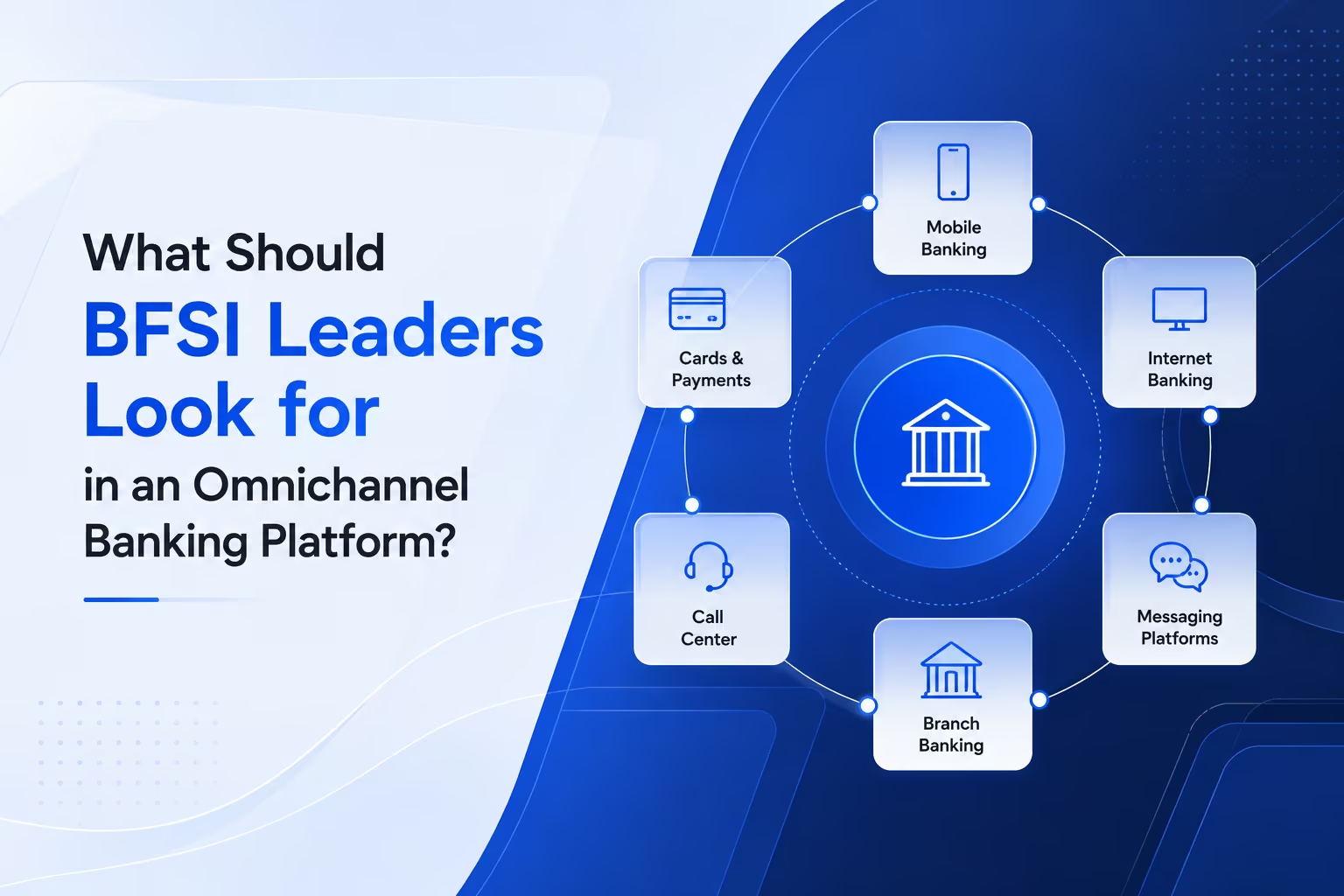
As customer expectations rise, selecting the right platform becomes as important as defining the strategy itself. The challenge is that many solutions offer multiple channels without truly connecting customer journeys.
When evaluating an omnichannel banking platform, BFSI leaders should focus on four capabilities
1. Unified Customer Intelligence
The platform should create a single customer view by connecting interactions across branches, contact centers, WhatsApp, mobile apps, email, and other digital banking channels. It should also provide AI-powered insights that help teams understand customer intent, personalize engagement, and recommend next-best actions throughout the journey.
2. Enterprise-Ready Integration and Compliance
The solution should integrate seamlessly with existing systems such as the Core Banking System (CBS), CRM, Loan Management System (LMS), and contact center platforms. At the same time, it should support compliance requirements through consent management, audit trails, interaction recording, data governance, and reporting capabilities.
This keeps the section concise while still covering:
- Unified customer view
- AI-powered engagement
- Open integrations
- Compliance controls
- Analytics and reporting
without feeling like a checklist.
Evaluate omnichannel readiness with Callveriq's banking AI platform.
The Technology Behind Omnichannel Banking
Many omnichannel initiatives fail because institutions underestimate the complexity of connecting existing banking systems.
A customer journey may span multiple platforms before completion.
Systems That Typically Need Integration
For example, a customer applying for a loan through a mobile app may trigger interactions across the LMS, CRM, WhatsApp platform, and contact center before approval.
If these systems operate independently, customer context gets lost. Omnichannel banking succeeds when institutions create a unified engagement layer above existing infrastructure rather than attempting to replace every system.
Top Omnichannel Banking Use Cases for Collections, Renewals, and Onboarding
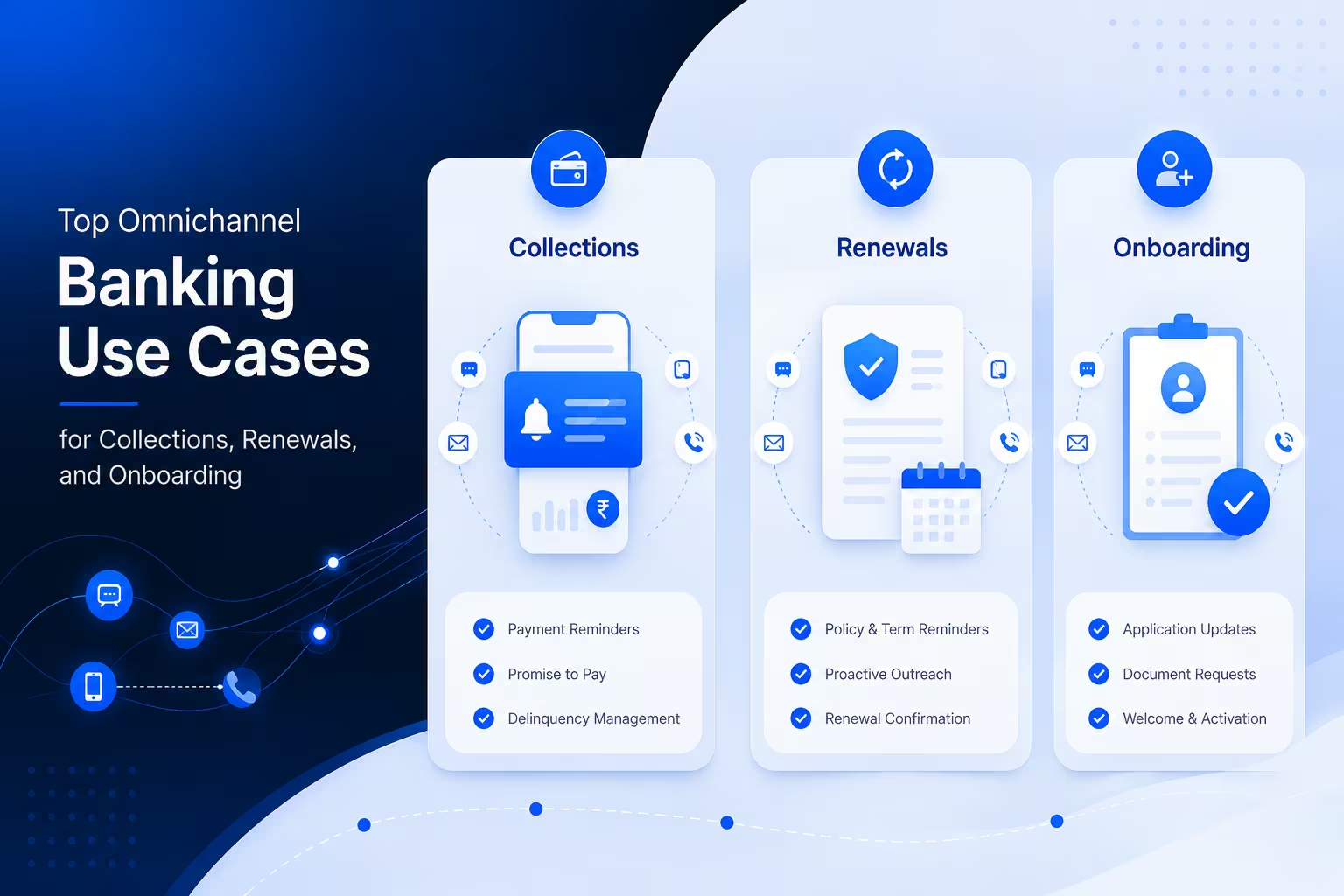
While omnichannel strategies support the entire customer lifecycle, three areas typically generate the fastest business impact.
Many of these journeys span multiple digital banking channels. A customer may begin on a website, continue through a mobile app, receive reminders on WhatsApp, and complete the process after speaking with an agent. Omnichannel banking ensures these transitions happen seamlessly.
1. Customer Onboarding
Customer onboarding often involves multiple channels and stakeholders.
A customer may:
- Discover a product online
- Upload documents through an app
- Speak with an agent
- Visit a branch for verification
Without a connected workflow, drop-off rates increase significantly.
An effective omnichannel banking experience ensures every interaction contributes to the same onboarding journey.
2. Collections
Collections teams often struggle with disconnected communication channels.
Customers may:
- Ignore calls
- Respond through WhatsApp
- Request callbacks via SMS
- Complete payments through digital portals
Omnichannel engagement helps institutions identify preferred channels and maintain continuity throughout the collection cycle.
Omnichannel Collections Workflow
A connected collections strategy allows banks and NBFCs to engage customers through the right channel at the right time while maintaining complete interaction history.
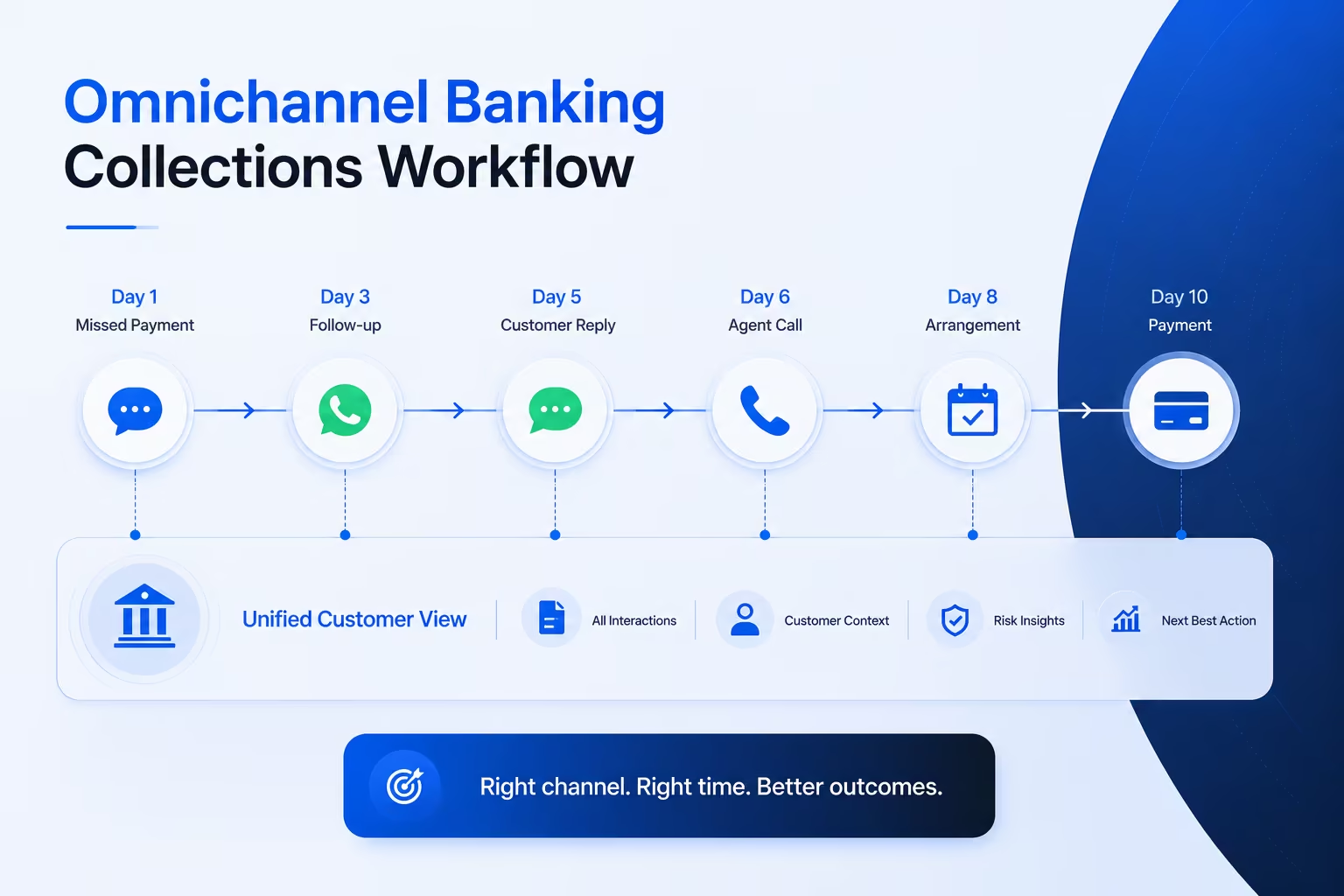
This workflow ensures customers do not receive repetitive messages across channels while giving collection teams a unified view of every interaction. The result is a more effective recovery process and a better banking customer experience.
A connected collections strategy allows banks and NBFCs to engage customers through the right channel at the right time while maintaining complete interaction history
Renewals and Cross-Sell Opportunities
Renewal journeys become more effective when institutions understand customer engagement history.
AI can identify:
- Policy renewal opportunities
- Loan refinancing needs
- Deposit maturity events
- Credit card upgrade eligibility
This allows banks to proactively engage customers through their preferred channels.
KPMG's latest banking transformation insights emphasize that customer retention and lifecycle engagement increasingly depend on connected channel experiences rather than isolated touchpoints.
Improve onboarding, collections, and renewals with Callveriq AI.
Compliance Requirements Shaping Omnichannel Banking Strategies in India
Financial institutions cannot build customer engagement strategies without considering regulatory requirements.
Compliance remains a core component of every omnichannel initiative.
Key Considerations for Indian BFSI Organizations
- Data Privacy and Customer Consent
Banks must ensure customer communications comply with applicable privacy regulations and consent requirements.
- Audit Trails
Every customer interaction across channels must be traceable and accessible for compliance reviews.
- Call Recording and Monitoring
Voice interactions often require recording, storage, and quality monitoring processes.
- Risk and Fraud Monitoring
AI systems must help identify suspicious behavior across channels while maintaining customer trust.
Compliance Driven Omnichannel Framework
| Compliance Requirement | Omnichannel Impact |
|---|---|
| Customer consent management | Unified communication preferences |
| Interaction recording | Complete conversation history |
| Audit readiness | End-to-end visibility |
| Data governance | Consistent customer records |
| Fraud prevention | Cross-channel monitoring |
Gartner's recent customer service research notes that organizations increasingly evaluate omnichannel initiatives through both customer experience outcomes and governance requirements.
The most successful BFSI organizations treat compliance as an enabler of trust rather than a barrier to innovation.
Build compliant omnichannel banking operations with Callveriq insights.
Real-World Omnichannel Banking Outcomes
While implementation approaches vary, organizations that successfully connect customer journeys often see measurable improvements across onboarding, servicing, and collections.
Example 1: Loan Onboarding
A mid-sized NBFC identified significant application drop-offs between digital application submission and document verification.
By connecting mobile, WhatsApp, and agent-assisted journeys, the institution improved application completion rates and reduced customer follow-ups.
Example 2: Collections Optimization
A retail lending provider unified customer interactions across SMS, WhatsApp, and contact center operations.
Instead of treating every missed payment identically, the organization used customer engagement history to personalize outreach and improve recovery performance.
Example 3: Customer Service
A private sector bank integrated customer conversations across digital banking channels and contact center operations.
Agents gained visibility into previous interactions, reducing customer repetition and accelerating issue resolution.
The common pattern across these examples is not the channel itself. It is the ability to preserve customer context throughout the journey.
What This Means for Banking Leaders
The biggest challenge in banking is no longer acquiring customers. It is maintaining continuity across every interaction after acquisition.
A customer does not think in channels. They do not distinguish between a branch visit, a WhatsApp message, a mobile app session, or a conversation with an agent. To them, it is one relationship with one bank.
Yet inside many institutions, those interactions still live in separate systems, handled by separate teams, measured through separate metrics. The gap between how customers experience banking and how banks operate is where friction, churn, compliance risk, and lost revenue emerge.
The banks that will lead the next decade are not necessarily the ones with the most channels. They will be the ones that make those channels work as one. The question is no longer whether customers want connected experiences. The question is whether your organization can deliver them consistently at scale.
Ready to transform omnichannel banking? Book your demo with Callveriq today.
FAQs
1. How can banks measure the success of an omnichannel banking strategy?
Success can be measured through CSAT, retention rates, digital adoption, and faster issue resolution.
2. Can smaller NBFCs benefit from omnichannel banking?
Yes. Omnichannel banking helps NBFCs improve customer engagement and operational efficiency.
3. What is the biggest obstacle to delivering a seamless omnichannel banking experience?
Disconnected systems and siloed customer data are the most common challenges.
4. How does omnichannel banking improve customer retention?
It reduces customer effort by providing consistent and personalized experiences across channels.
5. How long does it take to implement an omnichannel banking strategy?
Timelines vary, but many institutions start with onboarding or collections before scaling further.