

Marketing says WhatsApp is driving conversions. Sales believes phone calls influence most purchases.
The product team points to in-app engagement.
Meanwhile, leadership only cares about one question: Which customer interactions actually generate revenue?
The challenge is that today's customer journeys rarely happen on a single channel. A prospect might click an ad, browse your website, ask questions on WhatsApp, speak with an agent, and complete a purchase through your mobile app. When each team measures performance independently, it becomes nearly impossible to understand what truly drives customer decisions.
This is why omnichannel analytics has become a priority for customer-centric businesses. Instead of viewing channels in isolation, it connects interactions across the entire journey, helping teams measure performance, attribute revenue accurately, and identify opportunities to improve customer experiences. As customer engagement becomes increasingly fragmented, businesses need a clearer way to understand what works, what doesn't, and where customers drop off before converting.
Turn interactions into insights with Callveriq.
What Is Omnichannel Analytics?
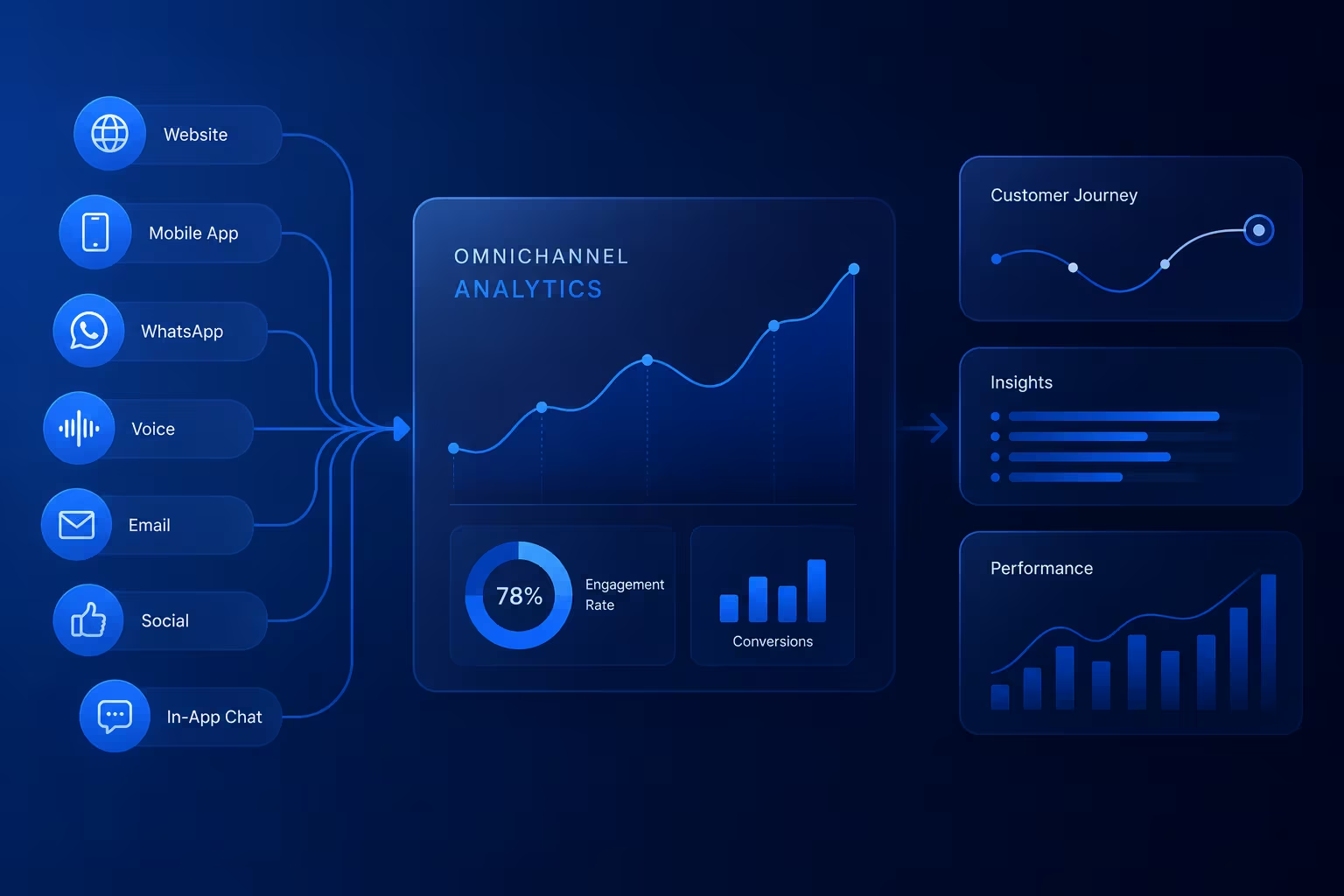
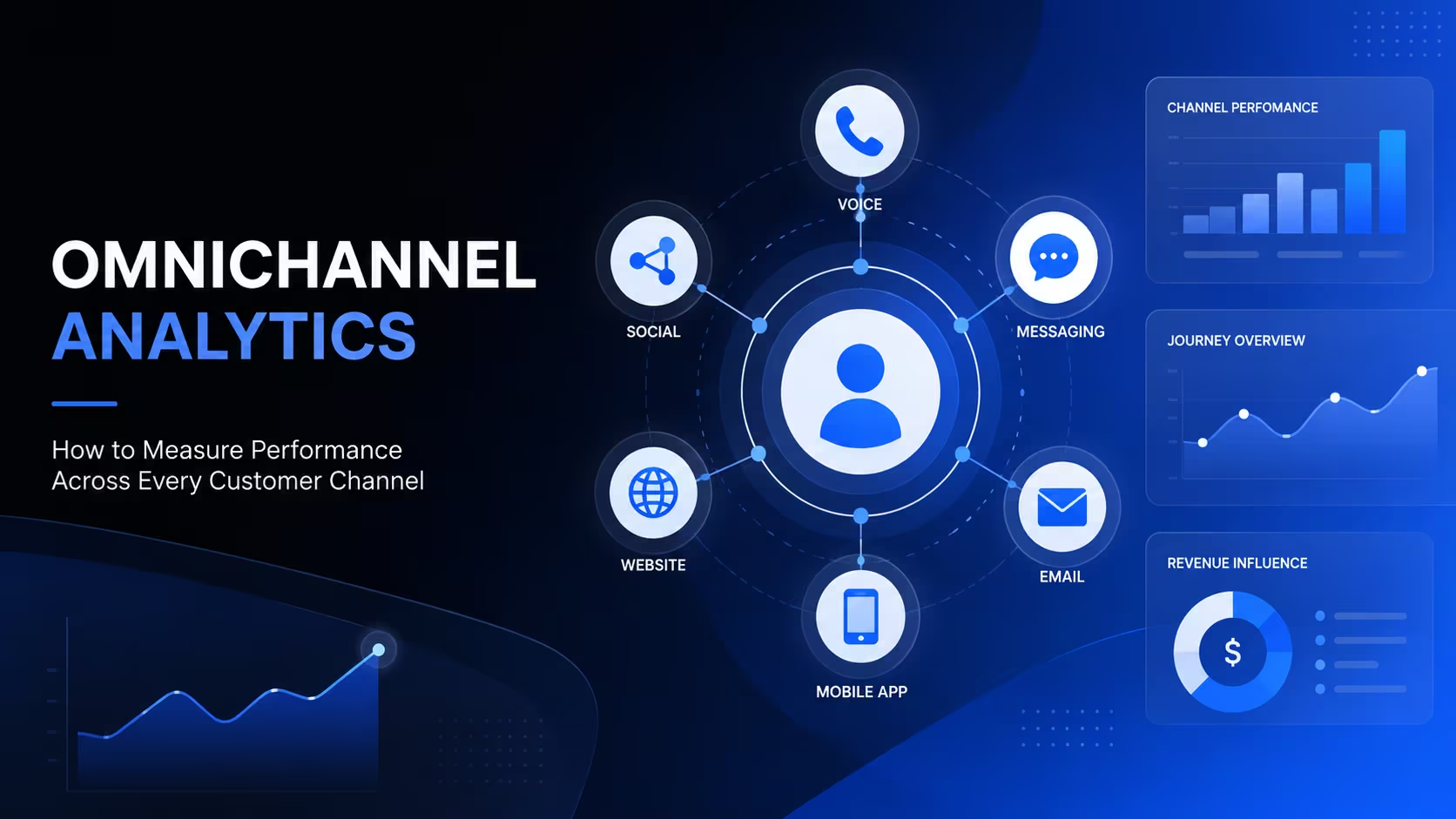
Omnichannel analytics is the practice of collecting, connecting, and analyzing customer interactions across every communication channel to understand complete customer behavior.
Unlike traditional reporting, it focuses on the customer rather than the channel.
Core Components of Omnichannel Analytics
| Component | Purpose |
|---|---|
| Identity Resolution | Connect interactions to a single customer |
| Journey Tracking | Visualize end-to-end experiences |
| Cross-Channel Attribution | Measure channel contribution |
| Behavioral Analysis | Understand customer actions |
| Revenue Mapping | Connect engagement to business outcomes |
| Predictive Intelligence | Forecast future behavior |
A modern omnichannel analytics platform combines data from CRM systems, contact centers, messaging channels, mobile applications, and marketing tools into a single source of truth.
This unified approach helps teams move beyond reporting toward optimization.
Turn customer interactions into smarter decisions.
Why Traditional Channel Reporting No Longer Works
Customers no longer interact with brands through a single touchpoint.
A typical customer journey may include:
- Social media engagement
- Website visits
- Voice conversations
- WhatsApp interactions
- Mobile app activity
- Email communication
- In-store purchases
Yet many businesses continue to evaluate each channel separately.
This creates several challenges:
| Challenge | Impact |
|---|---|
| Data silos | Customer history becomes fragmented |
| Incomplete attribution | Revenue gets assigned incorrectly |
| Channel bias | Teams overvalue their own channels |
| Delayed decision-making | Optimization opportunities are missed |
| Poor customer visibility | Journey friction remains hidden |
According to Gartner, organizations increasingly struggle to analyze customer journeys due to growing channel complexity and disconnected datasets, making customer journey analytics a strategic requirement rather than a reporting exercise.
Connect every touchpoint into one customer view.
This blog is just the start.
Unlock the power of Callveriq’s AI with a live demo.

What Metrics Should a B2C Business Track to Measure Omnichannel Performance?
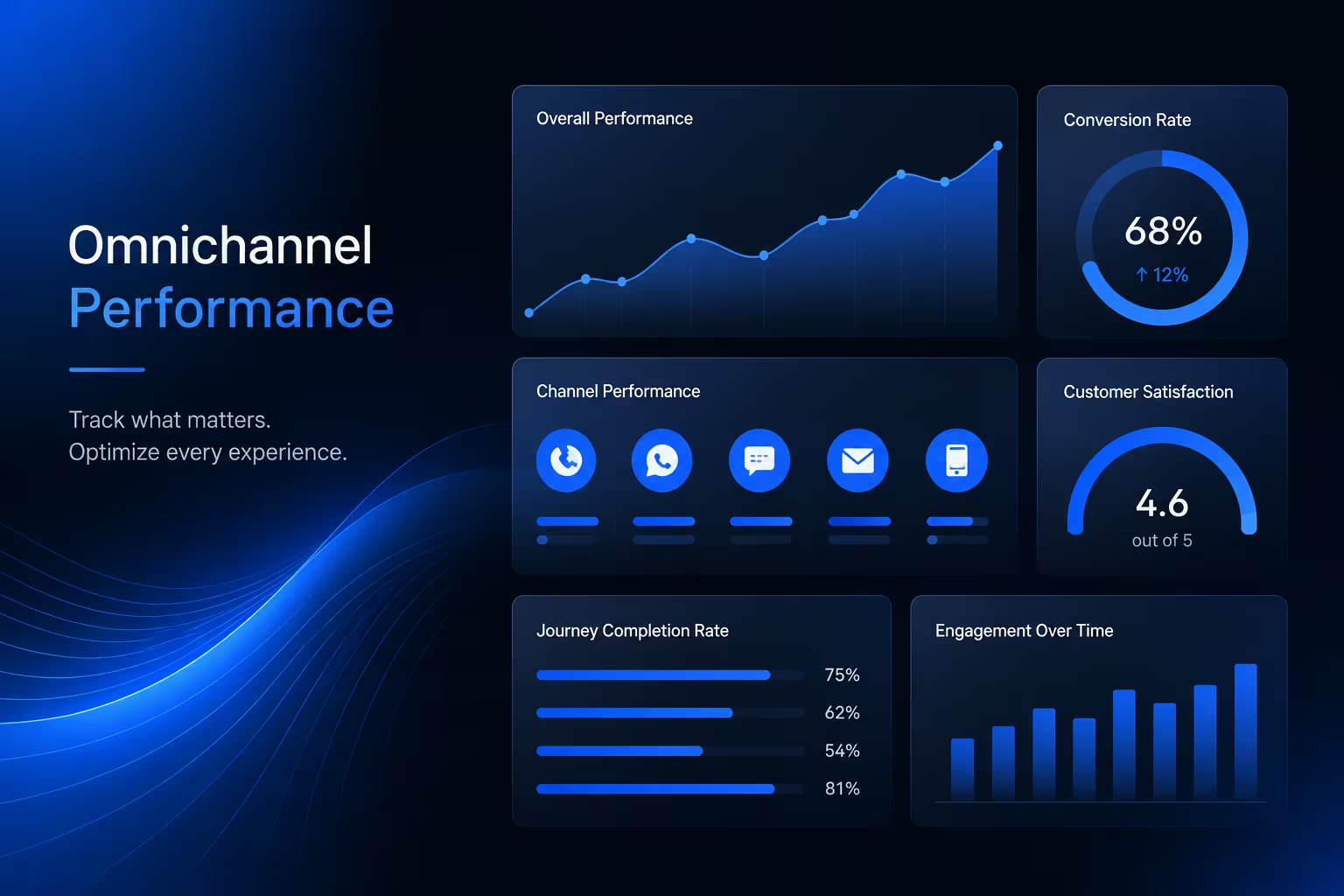
Tracking every available metric often creates more confusion than clarity.
Instead, businesses should focus on metrics that connect customer engagement to business outcomes.
Customer Engagement Metrics
Customer engagement metrics help businesses understand how customers interact across different touchpoints and whether those interactions are creating a seamless experience. Instead of measuring channel activity in isolation, these metrics reveal how effectively customers move through their journey.
Key engagement metrics include:
- Cross-channel engagement rate: Measures how often customers interact with your brand across multiple channels such as voice, WhatsApp, email, and mobile apps.
- Repeat interaction rate: Indicates whether customers continue engaging with your brand over time, signaling sustained interest.
- Session continuity: Tracks how smoothly customers transition between channels without having to repeat information or restart their journey.
- Customer effort score (CES): Evaluates how easy or difficult it is for customers to accomplish their goals during interactions.
- Response time: Measures how quickly customers receive assistance, which directly impacts satisfaction and conversion rates.
Conversion Metrics
Conversion metrics help determine which customer journeys and interactions contribute most to revenue. They provide visibility into the effectiveness of your omnichannel strategy and help optimize investments across channels.
Important conversion metrics include:
- Conversion rate by journey: Measures the percentage of customers who complete a desired action after following a specific customer path.
- Assisted conversions: Identifies channels that influence purchases even if they are not the final touchpoint before conversion.
- Cart recovery rate: Evaluates the success of re-engagement efforts aimed at recovering abandoned carts.
- Lead-to-sale conversion rate: Tracks how effectively prospects move through the sales funnel to become paying customers.
- Revenue per customer journey: Connects engagement activities directly to business outcomes by measuring the revenue generated from specific journeys.
Retention Metrics
Acquiring customers is only part of the equation. Retention metrics help businesses understand whether their omnichannel experiences are creating long-term customer relationships and sustainable growth.
Key retention metrics include:
- Customer lifetime value (CLV): Measures the total revenue a customer is expected to generate throughout their relationship with the business.
- Retention rate: Indicates how successfully the company keeps customers engaged and active over time.
- Churn probability: Uses historical behavior patterns to predict which customers are most likely to disengage or leave.
- Repeat purchase rate: Tracks how frequently customers return to make additional purchases.
- Net Promoter Score (NPS): Measures customer loyalty and willingness to recommend the brand to others.
Together, these engagement, conversion, and retention metrics provide a comprehensive view of omnichannel performance, helping businesses identify friction points, optimize customer journeys, and improve overall revenue outcomes.
How to Attribute Revenue Across Multiple Channels
One of the biggest challenges in omnichannel measurement is attribution.
Customers rarely convert after a single interaction.
Omnichannel Customer Journey Workflow
A typical modern customer journey is not linear, but it can be mapped as a connected workflow across channels:
Step 1: Product Discovery → Instagram
The customer first discovers the product through social media content, ads, or influencer posts on Instagram. This stage builds awareness and initial interest.
Step 2: Research → Website
After discovery, the customer visits the website to explore product details, pricing, reviews, and comparisons. This is where intent starts forming.
Step 3: Question Resolution → WhatsApp
The customer reaches out on WhatsApp to clarify doubts, check availability, or understand offers. This step often determines whether the journey moves forward or drops off.
Step 4: Follow-up → Voice Call
A sales or support agent follows up via voice call to address objections, provide reassurance, or guide the customer toward a decision.
Step 5: Purchase → Mobile App
The customer completes the purchase through the mobile app, often influenced by reminders, offers, or simplified checkout experiences.
End-to-End Flow Representation
Instagram → Website → WhatsApp → Voice Call → Mobile App
This workflow shows how each channel plays a distinct role in influencing the final conversion, highlighting why cross channel analytics and unified tracking are essential for understanding true performance.
Which channel deserves credit? The answer is not straightforward.
Common Attribution Models
| Model | Best For |
|---|---|
| First touch | Awareness campaigns |
| Last touch | Direct conversion analysis |
| Linear attribution | Equal channel contribution |
| Time decay | Long buying journeys |
| Data-driven attribution | AI-powered optimization |
Modern cross channel analytics solutions increasingly rely on data-driven attribution because customer journeys have become too complex for simplistic models.
Instead of assigning all credit to one interaction, advanced systems calculate contribution across every touchpoint.
This produces more accurate budgeting decisions and campaign optimization.
Measure the channels that influence conversions most.
What Does Omnichannel Analytics Look Like Across Voice, WhatsApp, and In-App Channels?
Omnichannel Customer Lifecycle Workflow
This journey can be better understood as a lifecycle workflow, where each stage reflects a shift in intent, engagement depth, and conversion readiness across channels.
Stage 1: Awareness → Website (9:00 AM)
The lifecycle begins when the customer visits the website and views a product. At this stage, the intent is still exploratory, and the business is focused on capturing interest signals and identifying high-potential visitors.
Stage 2: Consideration → WhatsApp (9:15 AM)
The customer moves into active evaluation by initiating a WhatsApp inquiry. This signals growing intent and a need for real-time clarification, pricing details, or product validation.
Stage 3: Evaluation → Voice Call (10:00 AM)
The interaction deepens through a voice conversation where pricing, objections, and final concerns are addressed. This stage is critical for influencing decision-making and removing friction.
Stage 4: Nurturing → App Notification (11:00 AM)
A targeted discount or reminder is delivered via app notification. This reinforces intent and nudges the customer closer to conversion by leveraging timely personalization.
Stage 5: Conversion → Mobile App (12:00 PM)
The customer completes the purchase through the mobile app, marking the successful transition from engagement to revenue generation.
Lifecycle Flow Representation
Website (Awareness) → WhatsApp (Consideration) → Voice Call (Evaluation) → App Notification (Nurturing) → Mobile App (Conversion)
This lifecycle view highlights how customers progressively move across channels, reinforcing why customer journey analytics and cross channel analytics are essential for understanding true conversion drivers rather than isolated touchpoints.
Without integration:
- Marketing sees website activity
- Support sees calls
- Product teams see app engagement
- Messaging teams see WhatsApp conversations
With an omnichannel analytics platform:
- One customer profile
- One timeline
- One attribution model
- One performance dashboard
This unified visibility helps teams understand where customers experience friction, hesitation, or momentum.
See the complete customer journey in one place.
How AI Uses Omnichannel Analytics to Optimize Outreach in Real Time
Analytics alone explains what happened. AI helps determine what should happen next.
Modern AI systems continuously analyze customer behavior signals across channels and adapt engagement strategies in real time.
How AI-Powered Optimization Works
This creates dynamic customer journeys instead of static campaigns.
For example:
A customer ignores email communication. AI identifies stronger engagement on WhatsApp.
Future outreach automatically shifts toward WhatsApp instead of continuing ineffective email sequences.
This is where customer journey analytics evolves from reporting into decision-making. Rather than simply measuring outcomes, AI actively improves them.
Transform analytics into automated customer engagement decisions.
Building an Effective Omnichannel Analytics Framework
Successful implementations typically follow four stages.
Stage 1: Unify Customer Data
Connect:
- CRM
- Contact center
- SMS
- Mobile applications
- Website analytics
Stage 2: Create Customer Identity Resolution
Ensure every interaction maps to a single customer profile.
Stage 3: Establish Shared Metrics
Align marketing, sales, support, and product teams around common KPIs.
Stage 4: Introduce AI Optimization
Enable real-time decision-making based on customer signals.
Organizations following this framework gain visibility into the complete customer journey while reducing operational silos.
Build customer intelligence across every channel.
Common Omnichannel Analytics Mistakes
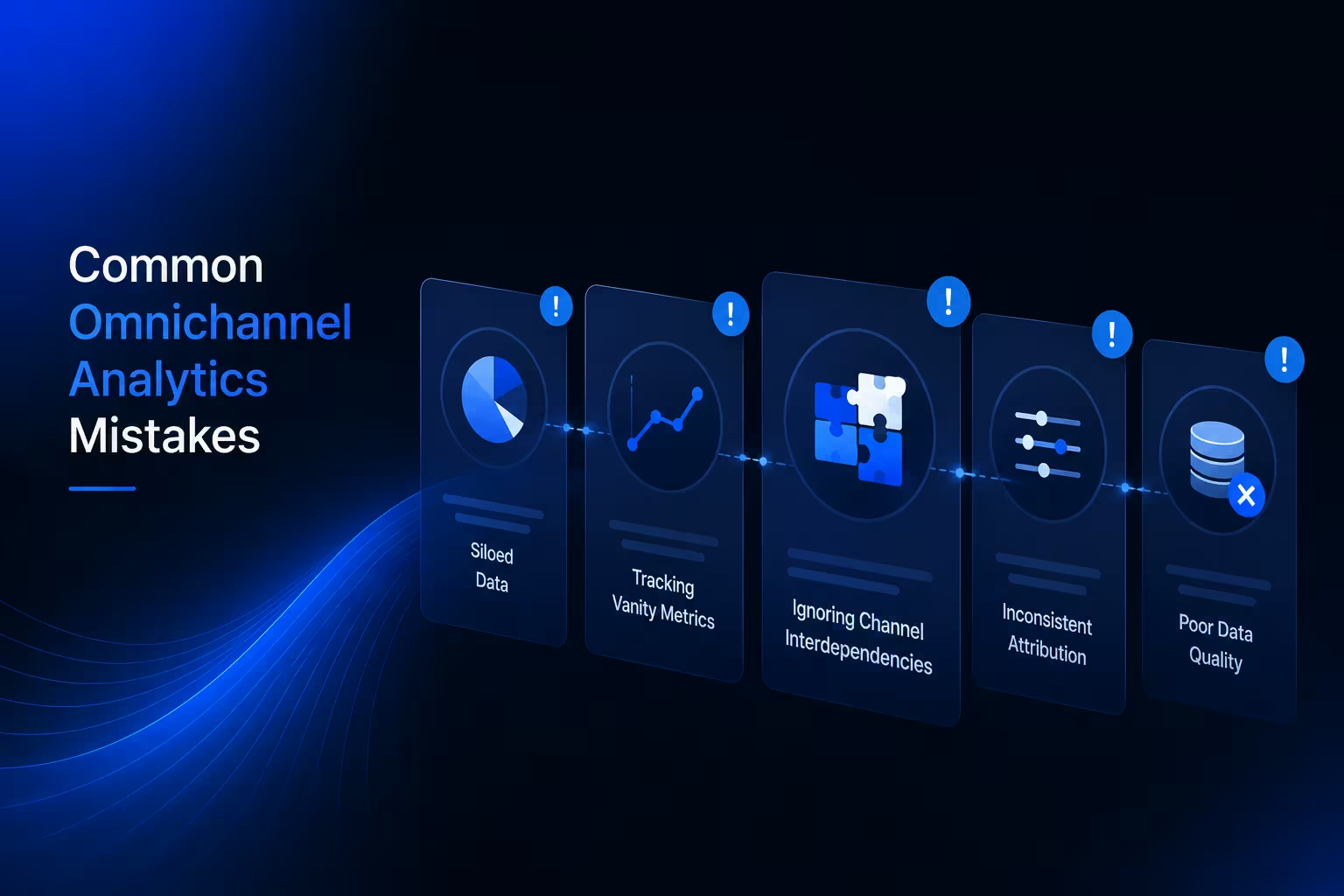
1. Measuring Channels Instead of Customers
Customer behavior spans multiple channels. Reporting should do the same.
2. Over-Reliance on Last-Touch Attribution
Revenue is rarely driven by a single interaction.
3. Ignoring Conversational Data
Voice calls, WhatsApp messages, and chat conversations often contain the strongest buying signals.
4. Lack of Real-Time Insights
Delayed reporting limits optimization opportunities.
5. Treating Analytics as a Reporting Function
Analytics should influence actions, not simply generate dashboards.
Move beyond reporting and start optimizing customer journeys.
What This Means For Business
Customers do not think in channels. They think in experiences.
The challenge for modern businesses is not collecting more data. It is connecting customer interactions across every touchpoint into a single, measurable journey. Omnichannel analytics makes that possible by unifying engagement data, revealing channel influence, improving attribution accuracy, and enabling AI-driven optimization at scale.
As customer journeys continue to span voice, WhatsApp, mobile apps, websites, and emerging digital channels, businesses that rely on isolated reporting will struggle to understand what truly drives growth. Those that invest in customer journey analytics and cross channel analytics will gain a clearer understanding of customer behavior, allocate resources more effectively, and create experiences that convert more consistently.
The next competitive advantage will not come from being present on more channels. It will come from understanding how every channel works together to influence customer decisions and using that intelligence to act faster than competitors.
FAQs
1. How long does it take to implement an omnichannel analytics strategy?
Most businesses can start seeing insights within a few weeks, though larger deployments may take longer.
2. Can small and mid-sized businesses benefit from omnichannel analytics?
Yes. It helps businesses understand customer behavior, improve engagement, and increase conversions across channels.
3. What are the biggest challenges when implementing omnichannel analytics?
The most common challenges include disconnected data sources, inconsistent customer records, and difficulty connecting channel activity to business outcomes.
4. How does omnichannel analytics support customer experience improvement?
It helps identify customer drop-off points, channel friction, and engagement patterns, allowing teams to create smoother and more personalized experiences.
5. What capabilities should businesses look for in an omnichannel analytics platform?
Look for unified customer profiles, journey tracking, real-time reporting, attribution capabilities, AI-driven insights, and seamless channel integrations.