

Your marketing team launches WhatsApp campaigns. Email automation is running. SMS reminders go out on schedule. Voice calls recover abandoned leads. Push notifications promote flash sales. On paper, everything looks like a mature multi channel marketing strategy.
Yet customers still receive duplicate offers, repeat the same information across channels, and disappear midway through their buying journey.
The problem isn't that brands lack channels. They lack coordination.
This isn't just a B2C marketing challenge. According to Salesforce's State of Marketing (10th Edition), most marketers say customers expect personalized, connected experiences, yet only a small percentage believe they're effectively using customer data to deliver them. The gap isn't channel availability. It's the ability to connect every interaction into one continuous customer journey.
Today's B2C buyers move between websites, apps, calls, messaging platforms, and social media without thinking about channels. They expect businesses to remember every interaction and continue the conversation naturally. When every channel operates independently, customer experiences become fragmented, marketing budgets become harder to justify, and conversions plateau.
This is why leading B2C brands are shifting the conversation from adding more channels to connecting them with AI. The real competitive advantage isn't channel count. It's the intelligence that orchestrates every customer interaction.
Connect every customer journey with Callveriq.
What Is Multi Channel Marketing?
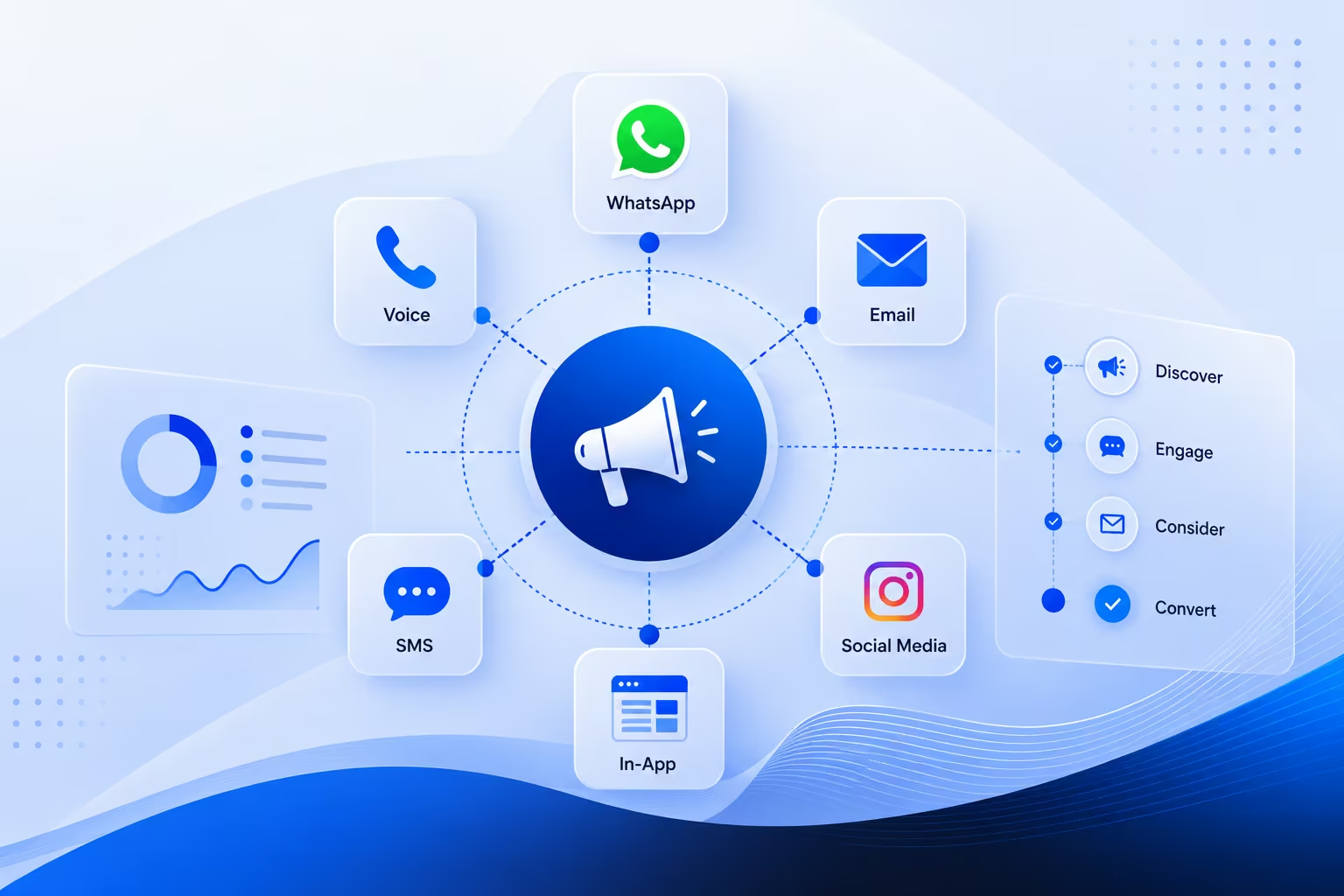
Multi channel marketing is the practice of engaging customers through multiple communication channels such as email, SMS, WhatsApp, phone calls, websites, mobile apps, and social media.
Each channel serves a purpose, allowing brands to reach customers wherever they prefer to interact.
For example, an insurance company may:
- Run Facebook ads for lead generation
- Send WhatsApp reminders
- Email policy documents
- Use outbound calls for follow-ups
- Send SMS payment reminders
On paper, this looks comprehensive.
The challenge is that these channels often operate independently. Marketing automation platforms, CRMs, contact centers, and messaging tools rarely share context in real time.
As a result:
- Customers receive repeated messages
- Agents lack conversation history
- Marketing campaigns overlap
- Follow-ups become inconsistent
Multi channel marketing expands reach. It doesn't automatically create connected customer experiences.
Turn disconnected channels into one journey.
Why More Marketing Channels Don't Make You Omnichannel
Many businesses assume that using five or six communication channels automatically means they have an omnichannel strategy.
That's one of the biggest misconceptions in customer engagement. The difference isn't the number of channels. It's whether those channels work together.
Consider a customer who:
- Clicks a Meta advertisement
- Starts chatting on WhatsApp
- Requests a callback
- Speaks with a sales representative
- Returns through the website the next day
In a traditional cross-channel marketing setup, every interaction may belong to a different system.
The website doesn't know what happened during the call. The call center cannot see the WhatsApp conversation. Marketing continues sending promotional messages even after the customer has purchased. From the customer's perspective, the business appears disorganized.
Gartner emphasizes that an omnichannel strategy is defined by connected customer journeys rather than the number of customer touchpoints. Businesses create better customer experiences when every interaction shares context and supports the next best action instead of operating in isolation.
True omnichannel experiences remember previous conversations, customer intent, buying stage, and preferred communication channels before deciding what happens next.
That's where intelligence matters more than channel count.
Deliver connected conversations with Callveriq.
This blog is just the start.
Unlock the power of Callveriq’s AI with a live demo.

Multichannel vs Omnichannel: What's the Real Difference?
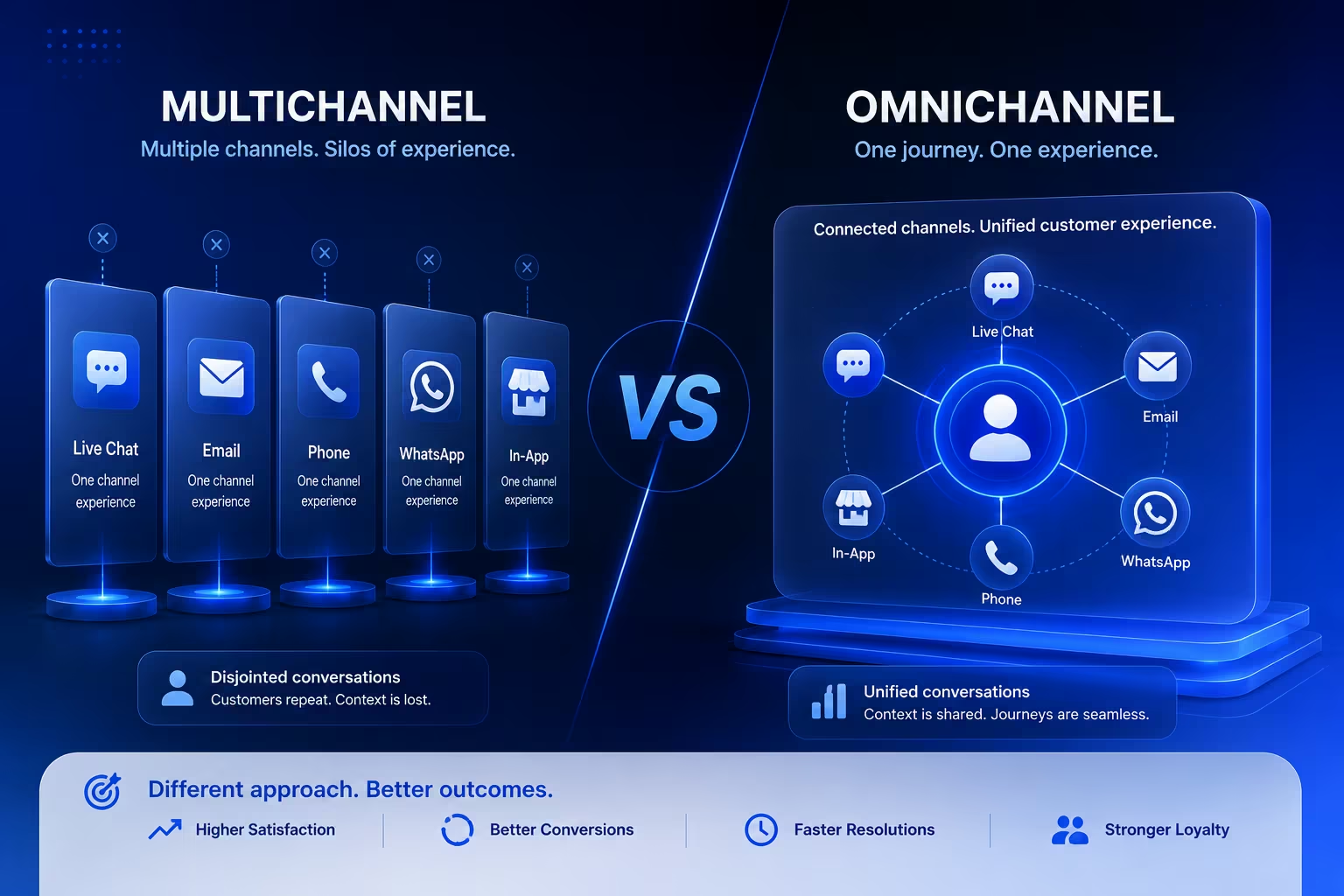
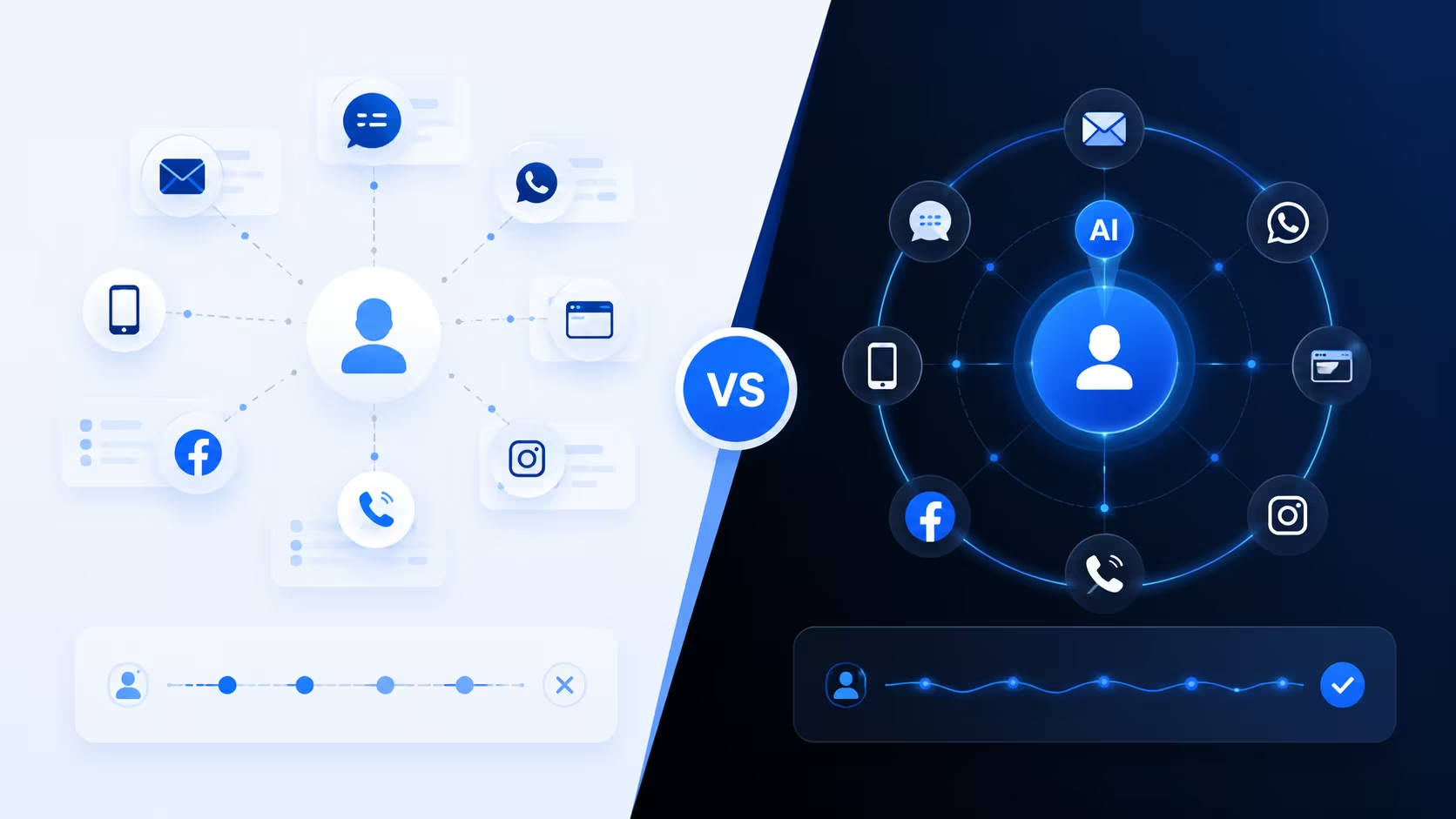
Although the terms are often used interchangeably, multichannel vs omnichannel represents two very different approaches.
| Multi Channel Marketing | Omnichannel Marketing with AI |
|---|---|
| Multiple independent channels | Connected customer journey |
| Every channel has separate campaigns | Every interaction shares context |
| Customers repeat information | AI remembers previous conversations |
| Static workflows | Dynamic next-best actions |
| Success measured per channel | Success measured across the entire journey |
| Manual follow-ups | AI-driven customer journey orchestration |
Gartner's 2025 guidance for CMOs highlights that leading marketing organizations are moving away from managing individual channels and toward orchestrating customer journeys across marketing, sales, and service. This shift enables businesses to optimize customer outcomes instead of individual channel metrics.
Traditional omnichannel marketing focuses on creating consistent experiences across touchpoints.
Modern omnichannel AI goes much further. Instead of simply synchronizing channels, AI continuously analyzes customer behavior, predicts intent, determines the next best action, and automatically executes follow-ups across voice, chat, messaging, and digital channels.
The conversation becomes continuous rather than channel-specific.
Go beyond traditional omnichannel marketing.
How Omnichannel AI Improves B2C Customer Engagement
Customers don't think in channels. They think in conversations. That shift changes everything.
AI Understands Customer Intent Across Every Interaction
A customer who ignores three emails but responds instantly on WhatsApp is revealing a preference.
Instead of forcing email follow-ups, AI customer engagement systems automatically prioritize the channel with the highest likelihood of conversion.
The experience feels personalized instead of repetitive.
Every Conversation Builds Context
Rather than treating every interaction as a fresh start, AI connects:
- Previous calls
- WhatsApp conversations
- Website behavior
- CRM updates
- Purchase history
- Agent notes
This shared context enables smarter conversations regardless of where customers return.
AI Selects the Best Next Action
Instead of relying on fixed marketing sequences, AI evaluates:
- Customer intent
- Buying stage
- Recent activity
- Preferred channel
- Engagement history
Then it determines whether the customer should receive:
- A phone call
- A WhatsApp message
- A payment reminder
- A product recommendation
- No communication at all
This is where customer journey orchestration becomes significantly more effective than rule-based automation.
See AI recommend every next action.
Where Traditional Marketing Automation Starts Falling Short
Most AI marketing automation discussions still focus on scheduling campaigns faster.
Automation is valuable, but automation without intelligence creates new problems.
Common examples include:
Customers Receive Duplicate Messages
Marketing systems continue nurturing customers after they've already converted.
Every Customer Follows the Same Workflow
Traditional workflows assume every buyer behaves similarly.
Real customers don't.
Channel Performance Is Measured Independently
Teams optimize email open rates, WhatsApp responses, and call pickup rates separately.
What matters is whether the combined journey increases conversions.
Human Teams Become the Integration Layer
Marketing, sales, and support teams manually coordinate information across multiple tools.
This slows response times and introduces errors.
AI eliminates much of this coordination by making customer context immediately available across channels.
The shift toward intelligent orchestration is accelerating. Gartner predicts that marketing leaders expect AI-driven automation of marketing work to more than double over the next few years, reflecting a broader move away from static workflows toward adaptive, AI-powered decision-making.
Automate customer engagement with context.
How Callveriq Helps B2C Brands Move Beyond Multi Channel Marketing
Growing businesses don't need more communication channels. They need every customer interaction to work together.
Callveriq combines voice AI, WhatsApp automation, conversation intelligence, CRM integrations, and real-time customer insights into one connected engagement platform.
Instead of measuring isolated campaigns, businesses can understand the complete customer journey from the first interaction to conversion.
Callveriq's omnichannel AI helps businesses:
- Understand customer intent across conversations
- Trigger intelligent follow-ups automatically
- Route customers to the best communication channel
- Deliver personalized conversations at scale
- Improve conversions without increasing operational complexity
The result isn't simply better automation. It's a customer experience that feels consistent, contextual, and genuinely connected.
While many platforms help brands communicate across channels, Callveriq focuses on making every interaction context-aware. By combining conversation intelligence, AI agents, CRM data, and omnichannel orchestration, businesses can act on customer intent rather than simply managing another communication channel.
Transform fragmented marketing with AI.
What This Means For You
The future of customer engagement will not be won by the brands with the highest number of marketing channels. It will belong to the businesses that make every interaction feel like part of a single conversation. Multi channel marketing remains essential because customers expect brands to be available wherever they are. But availability alone is no longer enough. Without shared context, intelligent decision-making, and connected customer journeys, additional channels only create more complexity. Omnichannel AI closes that gap by understanding customer intent, orchestrating the next best action, and ensuring every touchpoint builds on the last. For B2C brands focused on sustainable growth, the question is no longer how many channels to add, but how intelligently those channels work together. Callveriq helps businesses make that transition by turning disconnected conversations into seamless, AI-driven customer experiences that convert more customers and build stronger relationships.
Book your demo to power customer journeys with AI.
FAQs
Q: Is multi channel marketing suitable for small businesses?
Yes. Even small businesses can benefit from multiple channels, provided they choose the platforms their customers use most and maintain consistent messaging.
Q: Can omnichannel AI work without replacing my existing CRM?
Yes. Most omnichannel AI platforms integrate with existing CRMs to enrich customer data rather than replace existing systems.
Q: Which industries benefit the most from omnichannel AI?
Retail, banking, insurance, healthcare, real estate, education, and e-commerce see significant benefits because they manage high-volume customer interactions.
Q: How long does it take to implement an omnichannel AI platform?
Implementation timelines vary, but modern AI platforms can often integrate with existing systems in weeks rather than months, depending on complexity.
Q: How do you measure the success of omnichannel AI?
Beyond channel metrics, businesses should track customer journey completion rates, conversion rates, response times, retention, customer satisfaction, and overall revenue impact.