

Most teams already run "automation", a welcome email here, a retargeting ad there, a drip sequence that fires after signup. But that's not the same as omnichannel automation, and the difference is exactly where most B2C businesses are leaving money on the table in 2026.
Omnichannel automation means AI manages the customer engagement lifecycle as one continuous system, not a string of disconnected triggers. It knows what a customer did on chat before deciding what to send on email. It listens to a call and updates the CRM without anyone touching a keyboard. It's the shift from automating tasks to automating outcomes. This guide breaks down exactly what omnichannel automation covers, how it differs from the drip tools most teams already use, what it can run without a human in the loop, and the real ROI gap between doing this right and sticking with single-channel automation.
What Omnichannel Automation Covers
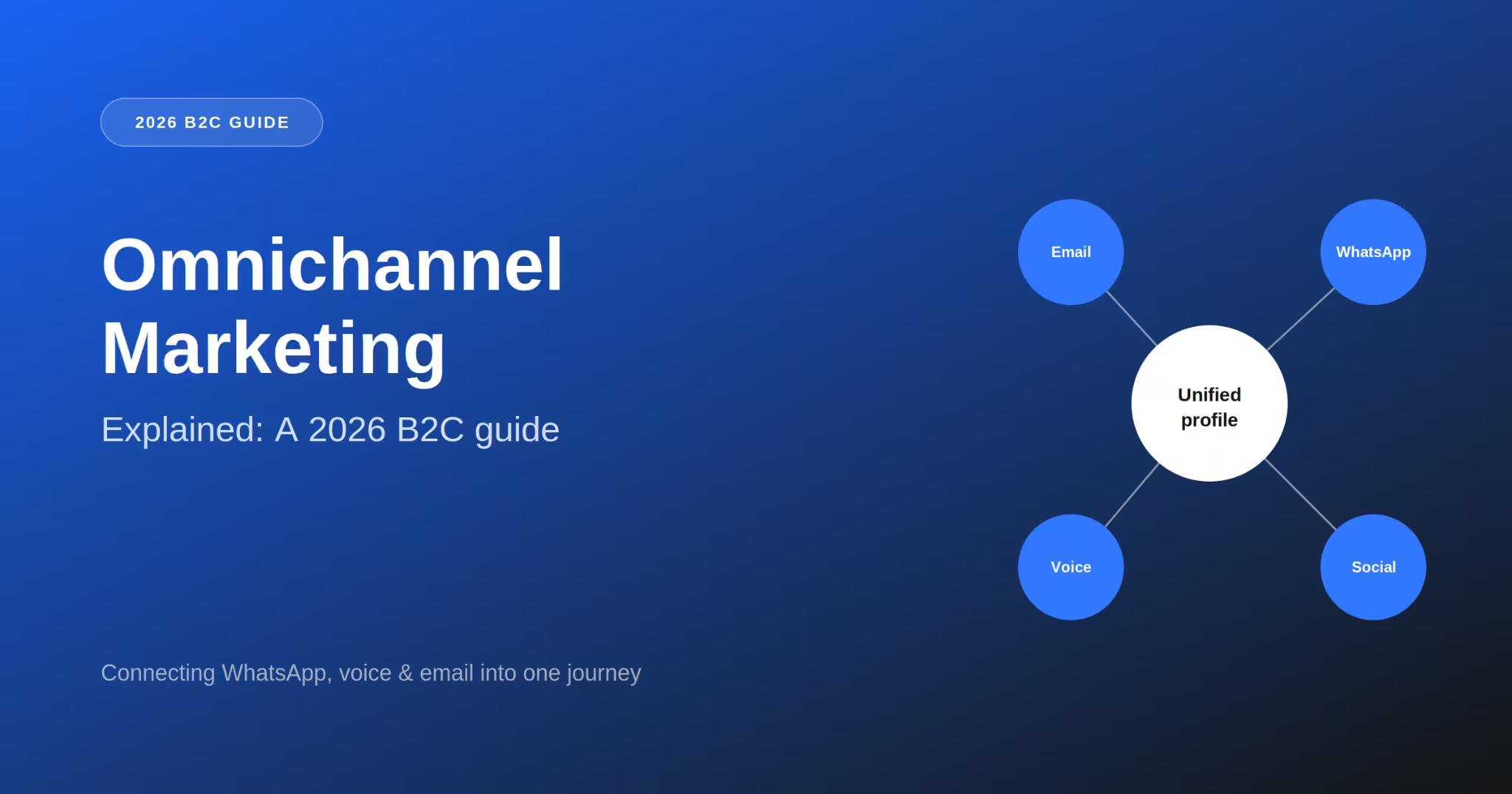
Omnichannel automation covers two things at once: the channels customers move through, and the workflows that operate behind those channels. Most businesses only automate one of these, which is why their "omnichannel" setup still feels disjointed to the customer.
The Channel Layer
This is the part most people picture first, automation that works across every touchpoint a customer might use.
- Voice calls (inbound and outbound)
- Live chat and chatbots on web and app
- WhatsApp, SMS, and messaging apps
- Social media DMs and comments
The Workflow Layer
This is the part that actually makes it omnichannel rather than just "present on many channels." The workflow layer is the logic connecting all of the above:
- Lead routing and qualification rules that apply no matter which channel a lead came in through
- Follow-up sequences that adjust based on what happened on a different channel
- CRM updates that happen automatically after any interaction, on any channel
- Escalation paths that hand a conversation to a human agent with full context already attached
According to Callveriq's guide on omnichannel customer engagement, this kind of unified approach is what allows businesses to address customer inquiries promptly and provide real-time updates on demand, something that's only possible when the workflow layer, not just the channel layer, is automated.
Why Most "Omnichannel" Setups Are Actually Just Channel Automation
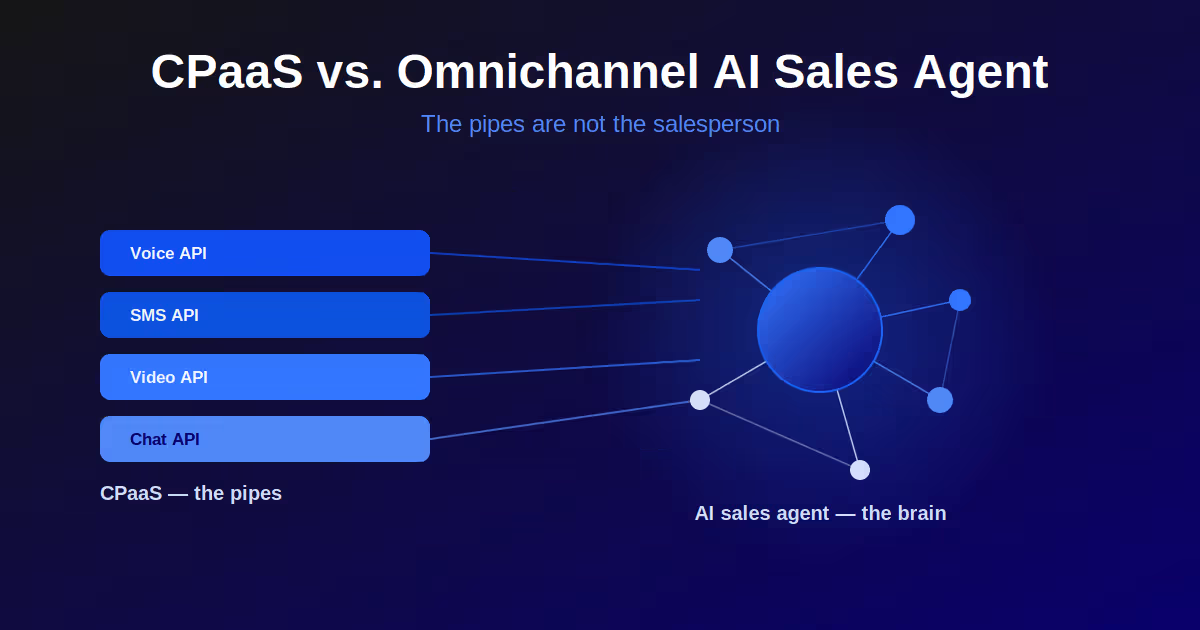
A business can have AI chatbots, voicebots, and email automation running simultaneously and still not be doing omnichannel automation if none of those systems share data or trigger each other. The test is simple: if a customer abandons a cart on the app, does that automatically pause a promotional call script, or does the call center dial them anyway, unaware? If it's the latter, you've automated channels, not the lifecycle.
See the full automation stack
AI vs. Traditional Drip Tools
Drip campaigns were the first wave of marketing automation, and they're still useful, but they operate on a fundamentally different logic than AI-powered omnichannel automation, and that difference shows up directly in results.
How Traditional Drip Tools Work
Drip tools run on pre-set sequences and fixed timing. A customer signs up, and Day 1 gets an email, Day 3 gets another, Day 7 gets a discount code, regardless of what that customer actually does in between.
- Sequences are written in advance and rarely change per customer
- Triggers are usually simple: signup, purchase, or time elapsed
- The system can't "listen", it can only schedule
- Branching logic, where it exists, is limited to a handful of pre-built if/then paths
How AI-Powered Omnichannel Automation Works Differently
AI-driven systems respond to what's actually happening in real time, not to a calendar.
- Context-aware sequencing: if a customer asks a question on chat that a drip email was about to answer, the AI cancels or rewrites that email instead of sending something redundant
- Conversation intelligence: AI listens to calls and chats to understand sentiment and intent, not just clicks and opens
- Dynamic branching: the next action is decided based on the actual conversation, not a pre-built decision tree
- Cross-channel memory: the system remembers what was said on a call when it later sends a chat message, something static drip tools structurally cannot do
As Callveriq's research into conversational AI for customer service notes, this kind of AI fundamentally changes how businesses interact with customers because it provides a continuous conversation thread that integrates email, social media, and phone calls, rather than treating each as a separate, scheduled campaign.
A Simple Way to Tell Them Apart
If you can predict exactly what a customer will receive next just by knowing the date they signed up, you're looking at a drip tool. If you'd need to know what the customer just said or did to predict their next message, you're looking at AI-powered omnichannel automation.
Move past static drip sequences
This blog is just the start.
Unlock the power of Callveriq’s AI with a live demo.

What Can AI Handle Alone?
This is the question CX and sales leaders care about most directly: what can actually run without a human touching it? The honest answer is that AI handles the routine, high-volume parts of the lifecycle end-to-end, and escalates the rest.
Workflows AI Can Fully Own
- Lead qualification and routing, scoring inbound leads from chat, calls, or forms and routing them to the right team automatically
- Appointment scheduling and reminders, confirming, rescheduling, and sending reminders across SMS, email, or WhatsApp without a rep involved
- Routine support queries, order status, refund policy, account questions, handled fully by AI chat or voice
- Post-purchase follow-ups, review requests, onboarding nudges, and renewal reminders timed to actual usage behavior, not a fixed calendar
- CRM and record updates, logging call outcomes, updating fields, and tagging conversations automatically after every interaction
Callveriq's AI Phone Calls are a clear example of this in practice, automating inbound and outbound interactions while reducing manual effort significantly, since the AI handles the full call lifecycle from greeting to CRM update without an agent on the line.
Where AI Should Hand Off to a Human
Not everything belongs in full automation, and a well-designed system knows where to draw that line:
- High-value negotiations or complex complaints with emotional stakes
- Ambiguous requests the AI can't confidently classify
- Situations involving legal, medical, or financial judgment calls
- Any customer explicitly asking for a human agent
The goal isn't to remove humans from the lifecycle, it's to make sure they only step in where their judgment actually adds value, while AI absorbs everything repeatable. Callveriq's omnichannel digital worker research frames this well: AI digital workers handle routine tasks across channels precisely so that human agents can focus on the conversations that need them most.
Automate the routine, not the judgment
ROI vs. Single-Channel Tools
The ROI conversation is where omnichannel automation earns its budget, and the data gap between it and single-channel marketing automation isn't marginal, it's structural.
The Retention and Revenue Gap
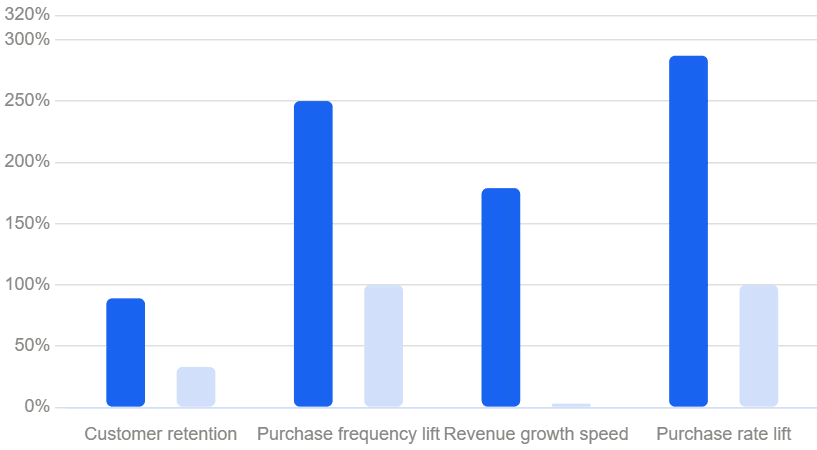
Organizations with strong omnichannel customer engagement strategies achieve 89% customer retention compared to 33% for weak single-channel approaches. That's not a small edge, it compounds every renewal cycle. On the revenue side, companies with effective omnichannel strategies see roughly 179% faster revenue growth, and retailers with strong omnichannel engagement report close to a 9.5% year-over-year increase in annual revenue, compared to 3.4% for weaker single-channel strategies.
Why the Gap Exists
- Single-channel automation measures in isolation, which means brands measuring only one channel risk underreporting their true ROI by roughly half, since cross-channel influence never gets credited
- Siloed data actively costs money, disconnected customer data can reduce marketing ROI by 20 to 30%, simply because messages overlap, contradict, or repeat across channels that don't talk to each other
- Unified data compounds returns, companies with unified customer data see roughly a 2.5x increase in marketing ROI from omnichannel efforts compared to fragmented setups
- Purchase behavior responds to integration, not volume, customers engaging across three or more channels show purchase frequency increasing by 250% compared to single-channel customers, which is a behavioral shift, not just a measurement artifact
What This Means for Budget Conversations
If a CX or sales leader is comparing the cost of an AI-powered omnichannel platform against a cheaper single-channel automation tool, the honest framing isn't "which costs less to license", it's "which one is actually being measured correctly." A single-channel tool that looks cheap on paper is often hiding the revenue it never gets credit for, because that revenue showed up on a channel the tool wasn't tracking. Callveriq's omnichannel analytics exists specifically to close that measurement gap, giving businesses a single view of metrics across every touchpoint instead of fragmented, channel-by-channel reporting.
Calculate your real ROI gap
Key Takeaways
Omnichannel automation isn't a bigger version of the drip campaigns most teams already run, it's a different model entirely, built on AI that reacts to real customer behavior across every channel instead of following a fixed schedule on one. The businesses pulling ahead in 2026 aren't the ones with the most channels; they're the ones where every channel feeds the same intelligent system, so AI can own the routine work end-to-end and hand humans only the conversations that truly need them. For CX and sales leaders evaluating their stack, the real question isn't whether to automate, it's whether that automation actually connects, or just adds another silo with a fancier name.
Get started with Callveriq’s solution today
FAQs
1. Is omnichannel automation the same as having a chatbot on every channel? No. A chatbot on five channels that doesn't share data between them is channel automation, not omnichannel automation. The defining feature is that workflows and data connect across channels, not just that bots exist on each one.
2. Can small or mid-sized B2C businesses realistically implement omnichannel automation? Yes. It doesn't require automating every channel at once, most businesses start by connecting two or three high-volume channels, like chat and voice, before scaling the rest of the lifecycle.
3. Does omnichannel automation replace the need for a CRM? No, it relies on one. The CRM (or CDP) remains the single source of truth that the automation layer reads from and writes to across every channel.
4. How quickly can a business expect to see ROI from switching to omnichannel automation? Timelines vary by business size and existing data maturity, but companies using connected customer data platforms often see measurable ROI within the first 12 months, since unified data alone removes a significant amount of wasted or duplicated spend.
5. How does Callveriq help businesses build omnichannel automation? Callveriq's AI Agent Platform automates conversations across voice, chat, and social while updating CRM records and routing escalations in real time, so the entire engagement lifecycle runs as one connected system rather than separate tools per channel. You can see the full breakdown in Callveriq's guide to omnichannel conversational AI.