

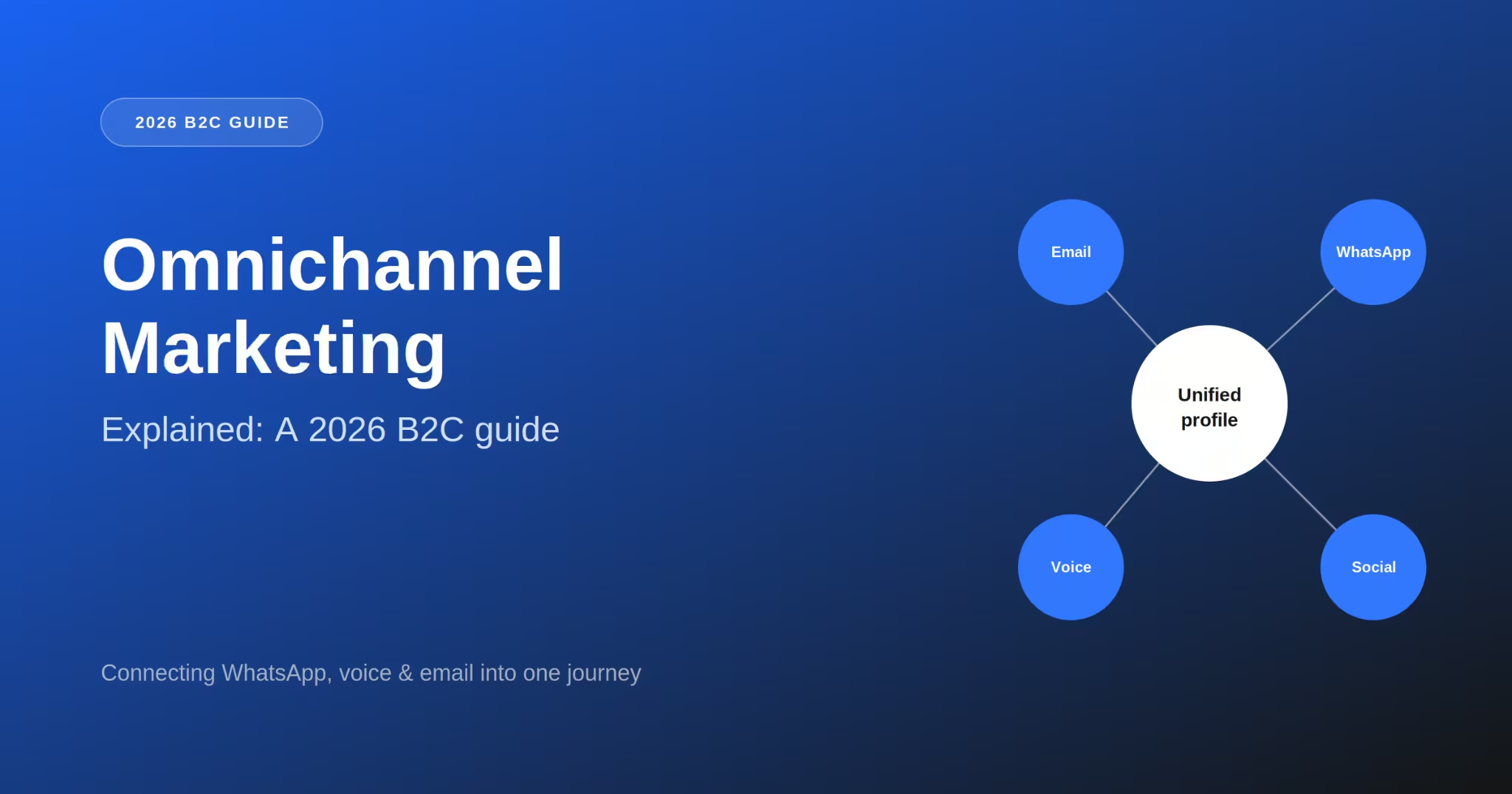
Your customer browses a product on your app during lunch, gets a WhatsApp reminder in the evening, and finally converts after a voice assistant answers her one lingering question. That's not three separate marketing efforts ,that's one brand showing up consistently, wherever she happens to be.
This is the promise of omnichannel marketing, and in 2026, it's no longer a "nice to have." With AI now capable of unifying customer data and automating personalized outreach in real time, omnichannel marketing has shifted from an aspirational buzzword to a practical, buildable strategy ,even for lean B2C teams. This guide walks through what omnichannel marketing actually means, how it's different from multichannel marketing, what it looks like in practice, and how AI is making it easier than ever to execute.
Start Building Your Omnichannel Strategy
What Is Omnichannel Marketing?
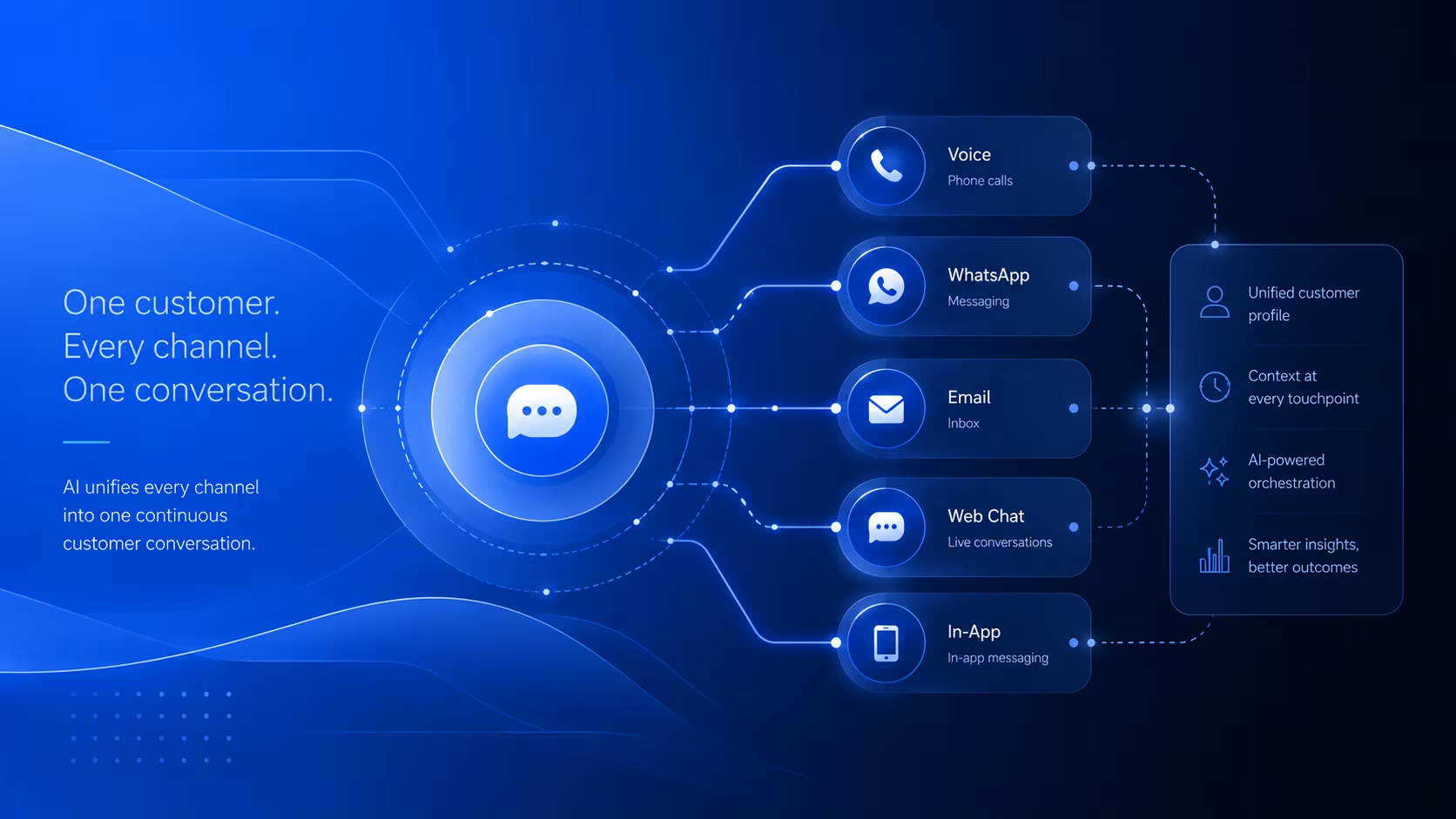
Omnichannel marketing is a strategy where every channel, email, WhatsApp, social, voice, in-store, and web, shares the same customer data and works together as one connected experience, rather than operating independently.
The Core Definition Explained
At its heart, omnichannel marketing means a customer can start an interaction on one channel and continue it on another without losing context. If someone adds an item to their cart on your app, then contacts support on WhatsApp, the support agent (or AI assistant) already knows what's in that cart, what they were browsing, and whether they've reached out before.
Think of it less as "marketing on many channels" and more as one ongoing relationship that happens to surface across different screens. The channel is just the delivery mechanism, the context, tone, and intent behind the message stay constant.
Omnichannel vs. Multichannel Marketing
This is where most brands get confused, so it's worth being precise:
- Multichannel marketing means being present on many channels, email, SMS, social, paid ads, but each one typically runs its own campaigns, its own data, and its own content calendar.
- Omnichannel marketing takes those same channels and connects them through a single customer profile, so messaging stays consistent, sequenced, and contextual no matter where the customer engages.
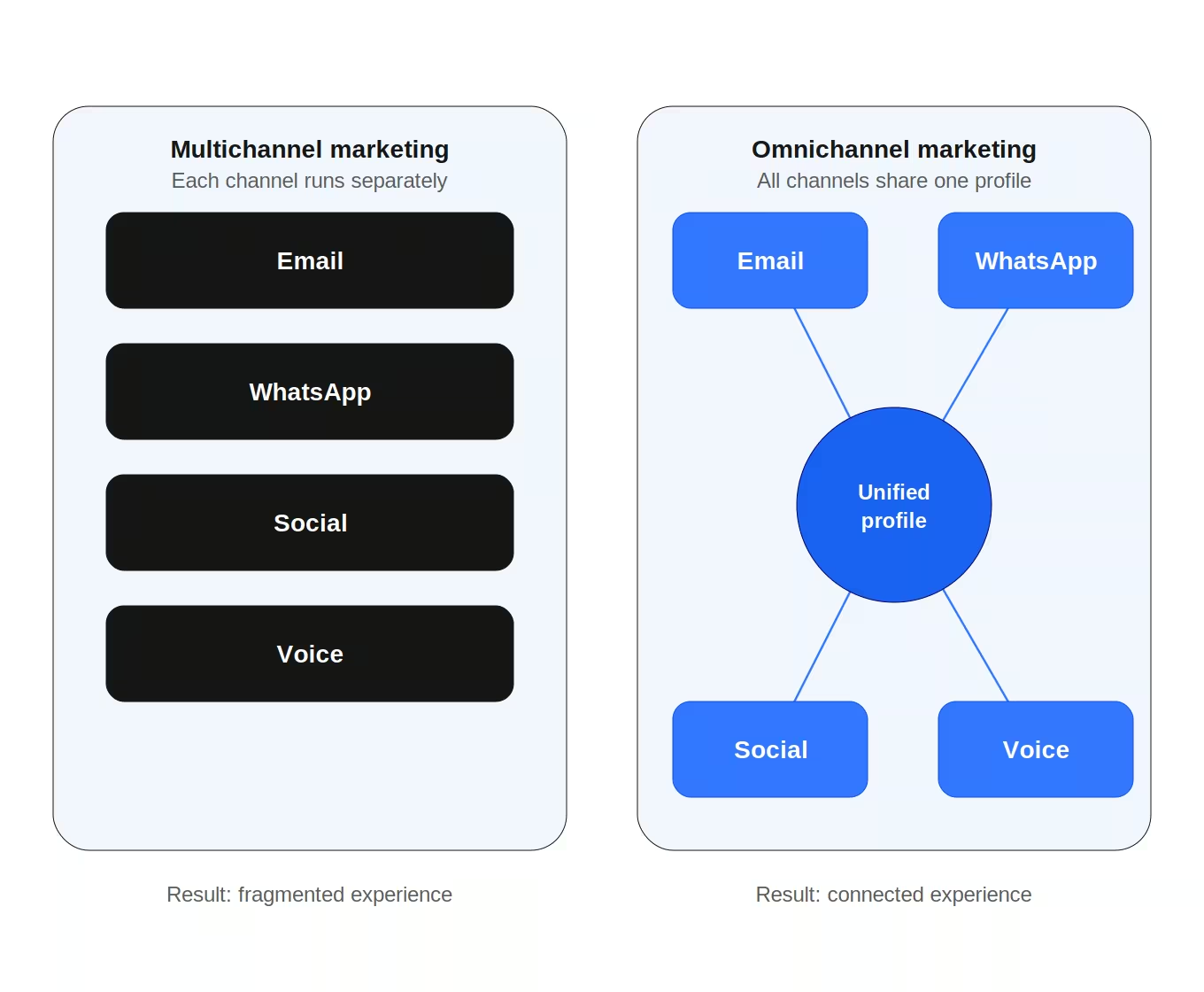
The simplest way to remember the difference:
- Multichannel is about presence.
- Omnichannel is about coherence.
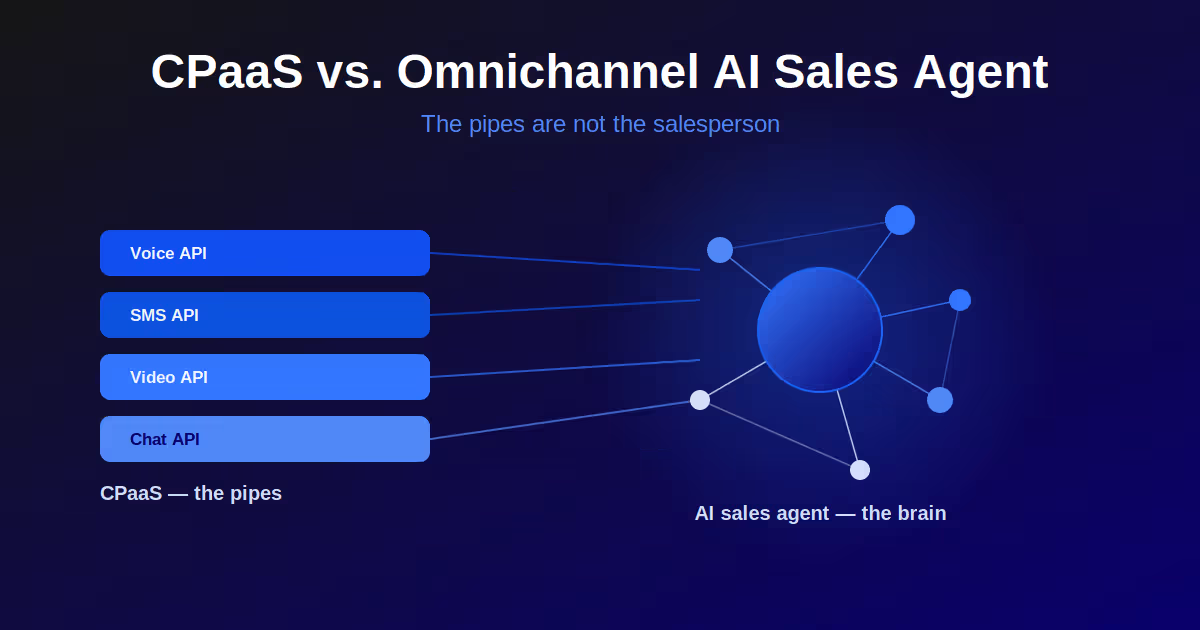
A multichannel brand might send a promo email and an entirely unrelated Instagram ad on the same day, with no idea the customer just saw both. An omnichannel brand makes sure that email, that ad, and any WhatsApp follow-up all reflect where that specific customer actually stands in their journey. On the support side, this same coherence is what separates a true omnichannel contact center from a multichannel one, we compare the top platforms making this possible in our omnichannel contact center software guide.
Why the Distinction Matters for B2C Brands
For B2C brands specifically, this distinction shows up directly in customer experience, and the stakes are higher than they look:
- Consumers move fluidly between apps, chat, and voice throughout a single day, often within a single purchase decision.
- They expect brands to keep up with that movement, not force them to restart the conversation every time they switch channels.
- A disjointed multichannel approach often leads to repeated messaging, mistimed offers, or customers repeating themselves to support.
Each of these small frictions quietly chips away at trust. None of them feel like a "big" problem at the moment, but together they're often the quiet reason a customer stops opening your emails or switches to a competitor without ever filing a complaint.
See How Top Brands Do It
Why Does Omnichannel Marketing Matter?
Omnichannel marketing matters because it directly affects retention, customer lifetime value, and how efficiently a brand can convert attention into revenue.
Impact on Customer Retention
When customers experience consistent, relevant communication across channels, they're less likely to feel "marketed at" and more likely to feel understood. This consistency reduces friction at the exact points where drop-off typically happens:
- Between first discovery and initial purchase
- Between purchase and second purchase (the hardest gap to close for most B2C brands)
- Between a support interaction and continued brand loyalty
Retention compounds. A customer who feels understood once is far more likely to give a brand a second and third chance, which is precisely what a connected, omnichannel experience is built to deliver.
Impact on Conversion and Revenue
Connected channels mean a brand can reach a customer at the moment intent is highest, instead of on a fixed campaign schedule. In practice, this looks like:
- A cart abandonment nudge sent on WhatsApp twenty minutes after browsing stops
- A follow-up email the next morning that references the exact product left in the cart, not a generic "come back!" message
- A voice reminder timed to when the customer has historically been most responsive
This kind of timing precision is only possible when channels share data, and it tends to lift conversion rates meaningfully compared to generic, unsynchronized blasts sent on a one-size-fits-all schedule. We saw this play out in a high-stakes setting in our breakdown of an AI-powered bank notification system, where a voice alert that goes unanswered automatically escalates to WhatsApp and email within seconds, the same orchestration logic B2C brands can apply to cart recovery and re-engagement.
Impact on Operational Efficiency
Beyond the customer-facing benefits, omnichannel systems reduce internal duplication and waste. Specifically, they help teams avoid:
- Maintaining separate customer views across marketing, support, and sales
- Running conflicting or duplicate campaigns targeting the same customer segment
- Wasting spend on channels that are working against each other instead of together
The result isn't just a better customer experience, it's a leaner, less chaotic operation behind the scenes.
Calculate Your Retention Upside
This blog is just the start.
Unlock the power of Callveriq’s AI with a live demo.
What Does a 2026 Strategy Look Like?
A real omnichannel strategy for a B2C brand in 2026 centers on a unified customer data layer, AI-driven orchestration, and channel-specific execution that still feels like one conversation.
1. Building a Unified Customer Profile
Everything starts with data. A workable omnichannel setup requires bringing together:
- Purchase history and browsing behavior
- Support conversations across every channel
- Loyalty activity and past campaign responses
- Preferences the customer has explicitly or implicitly shared
This unified profile is what allows any channel, email, WhatsApp, or a voice assistant, to respond with full context instead of starting from zero every time. Without it, "omnichannel" is just multichannel wearing a nicer name. This is closely tied to what we explored in optimizing CX with multimodal AI, where combining text, voice, and visual signals into one profile is what makes context-aware experiences possible in the first place.
2. Mapping the Real Customer Journey
Instead of planning campaigns channel by channel, 2026-ready brands map the actual path a customer takes:
- Discovery, usually social or search
- Research, the website, reviews, comparison content
- Clarification, a question answered via chat, WhatsApp, or voice
- Purchase, completed on whichever channel is most convenient at that moment
- Post-purchase, order updates, support, and re-engagement
Each stage gets a designated channel and message, but all of it is sequenced against one journey, not five disconnected ones running on separate clocks.
3. Orchestrating Timing and Frequency
A strong strategy also defines rules for when and how often a customer hears from a brand, across all channels combined, not per channel. Without this, it's easy to accidentally:
- Send an email, a push notification, and a WhatsApp message about the same offer within the same hour
- Overwhelm a customer right after a purchase when they actually need silence, not more offers
- Under-communicate at the exact moment a customer is deciding whether to convert
Getting this orchestration right is often less about adding more messages and more about being deliberate about which channel earns the right to speak, and when.
See a Sample Omnichannel Journey
How Does AI Power Omnichannel Execution?
AI powers omnichannel execution by automating personalization, enabling real-time responses, and coordinating messaging logic across WhatsApp, voice, and email simultaneously.
AI-Driven Personalization at Scale
AI models can now analyze a customer's full history and generate personalized message content, subject lines, WhatsApp replies, voice scripts, in real time, rather than relying on pre-written templates segmented by broad customer groups.
This matters because it removes the old trade-off between personalization and scale:
- Previously, true 1:1 personalization required either a huge team or accepting broad, generic segments.Now, AI can generate contextually relevant content for each individual customer without a marketer manually building hundreds of campaign variants.The words scale first, though, and the visuals usually stay identical for everyone on the list. An AI Ad Generator closes that half, so a Higgsfield user can send creative that matches the message each segment actually receives.
- Now, AI can generate contextually relevant content for each individual customer without a marketer manually building hundreds of campaign variants.
Even smaller marketing teams can deliver genuinely personalized experiences that used to be reserved for brands with far bigger budgets.
AI Across WhatsApp, Voice, and Email
Each channel benefits differently from AI, but the underlying thread is the same, continuity:
- On WhatsApp, AI assistants can answer product questions, recover abandoned carts, and send order updates conversationally, in a tone that feels like messaging a helpful person rather than a bot. We go deeper on this in WhatsApp marketing for B2C with omnichannel AI, covering how AI-powered campaigns are reshaping personalization and conversions on the channel.
- On voice, AI can handle order confirmations or answer FAQs without a rigid, frustrating IVR tree that forces customers to "press 1 for..."
- On email, AI can dynamically adjust send time, subject line, and content block based on what's most likely to resonate with that specific recipient, rather than blasting one version to an entire list.
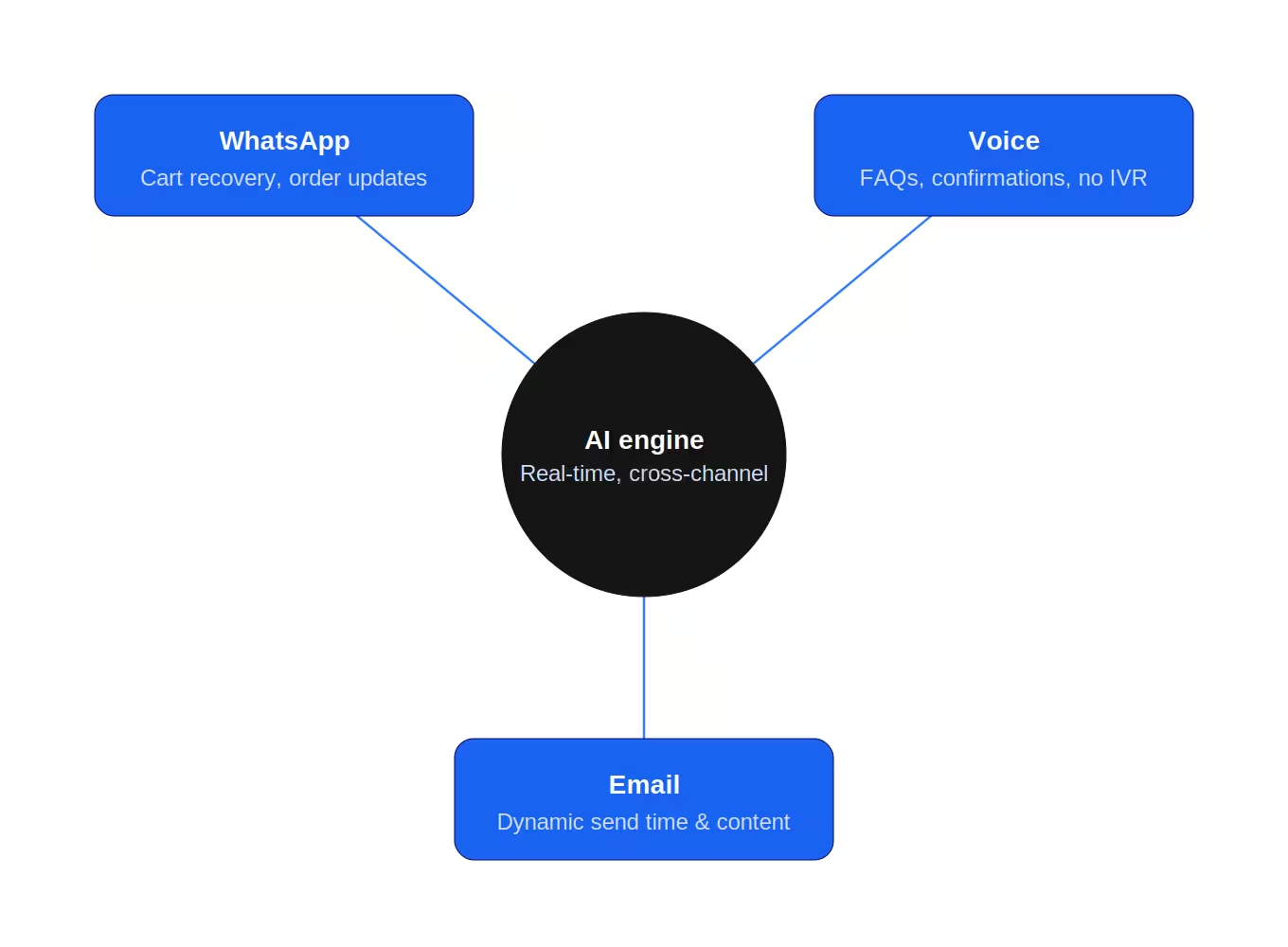
The result is that a customer can move between these three channels and experience one continuous, intelligent conversation rather than three disconnected systems that happen to share a logo.
Real-Time Trigger and Response Systems
Perhaps most importantly, AI enables real-time triggers that used to require manual configuration for every possible scenario. A few examples:
- A customer abandons a cart - AI instantly determines the best next channel and message
- A customer asks a support question - AI resolves it and updates the customer profile for every other channel
- A customer completes a purchase - AI sets off the appropriate post-purchase sequence without a marketer lifting a finger
This is what makes true real-time omnichannel execution possible at scale, not a bigger team, but smarter, connected systems doing the coordination work.
Explore AI-Powered Omnichannel Tools
How Do You Measure Success?
Measuring omnichannel success means looking at cross-channel metrics rather than isolated, per-channel performance numbers.
Metrics That Actually Reflect Omnichannel Performance
Instead of measuring email open rates or WhatsApp click rates in isolation, brands should track metrics that reflect the full journey, including:
- Cross-channel conversion rate, how many customers convert after touching more than one channel
- Time-to-conversion across touchpoints, how quickly a connected experience moves someone from interest to purchase
- Customer effort score, how easily someone moved from interest to purchase, regardless of which channels they used along the way
These numbers tell a far more honest story than any single channel's dashboard ever could on its own.
Common Measurement Pitfalls
A frequent mistake is attributing a conversion entirely to the last channel touched, usually email or a final ad click. This overstates that channel's value and understates the ones that built awareness or answered objections earlier in the journey.
To avoid this pitfall:
- Use multi-touch attribution models instead of last-click attribution
- Review the full customer path, not just the final step before purchase
- Regularly audit which channels are actually influencing decisions versus just closing them
An honest measurement approach is what separates brands that keep improving their omnichannel strategy from ones that quietly optimize for the wrong thing.
Get Your Omnichannel Audit
Bringing It All Together: The Path Forward
Omnichannel marketing isn't about adding more channels, it's about making the channels you already use work as one connected system. For B2C brands in 2026, that means:
- A unified customer profile that every channel can draw from
- A mapped journey instead of disconnected, channel-by-channel campaigns
- AI doing the heavy lifting of personalization, timing, and real-time response across WhatsApp, voice, and email
Brands that get this right won't just reach customers more often, they'll reach them better, at the right moment, with the right message, on whichever channel the customer happens to be on. In a landscape where attention is scattered and patience for disjointed experiences is thin, that consistency is quickly becoming the real competitive advantage.
Get started with Callveriq’s solution today
FAQs
1. What's the simplest way to explain omnichannel marketing?
It's marketing where every channel shares the same customer data, so the experience feels like one continuous conversation instead of separate campaigns.
2. Is omnichannel marketing only for large enterprise brands?
No. AI tools have made it accessible to smaller B2C brands by automating the personalization and coordination that used to require large teams.
3. What's the biggest difference between omnichannel and multichannel marketing?
Multichannel means being present on many channels; omnichannel means those channels are connected through shared data and consistent messaging.
4. Which channels matter most for omnichannel marketing in 2026?
WhatsApp, email, and voice are currently the highest-impact channels, especially when powered by AI for real-time, personalized responses.
5. How do I know if my omnichannel strategy is working?
Track cross-channel conversion rates and time-to-conversion rather than isolated per-channel metrics, and use multi-touch attribution to see the full picture.