

A customer clicks a Meta ad, asks a question on WhatsApp, ignores the follow-up, answers a sales call two days later, and finally purchases after receiving a reminder message.
To the customer, it's one buying journey. To most B2C businesses, it's four disconnected interactions spread across different tools.
The marketing team sees campaign performance. Sales tracks calls. Support records chat history. None of these systems reveal why one customer converted while another dropped off. The result is delayed follow-ups, poorly timed outreach, and missed revenue opportunities.
This is where revenue intelligence changes the equation. Instead of looking at isolated metrics, it connects conversations across channels to uncover the signals that actually influence buying decisions. Combined with AI, businesses can identify buying intent, understand customer objections, recommend the best outreach channel, and prioritize the prospects most likely to convert.
In this blog, we'll explore how omnichannel revenue intelligence helps B2C organizations turn everyday customer conversations into measurable sales growth.
Discover how Callveriq transforms conversations into revenue insights.
Why Traditional Sales Analytics No Longer Tell the Full Story
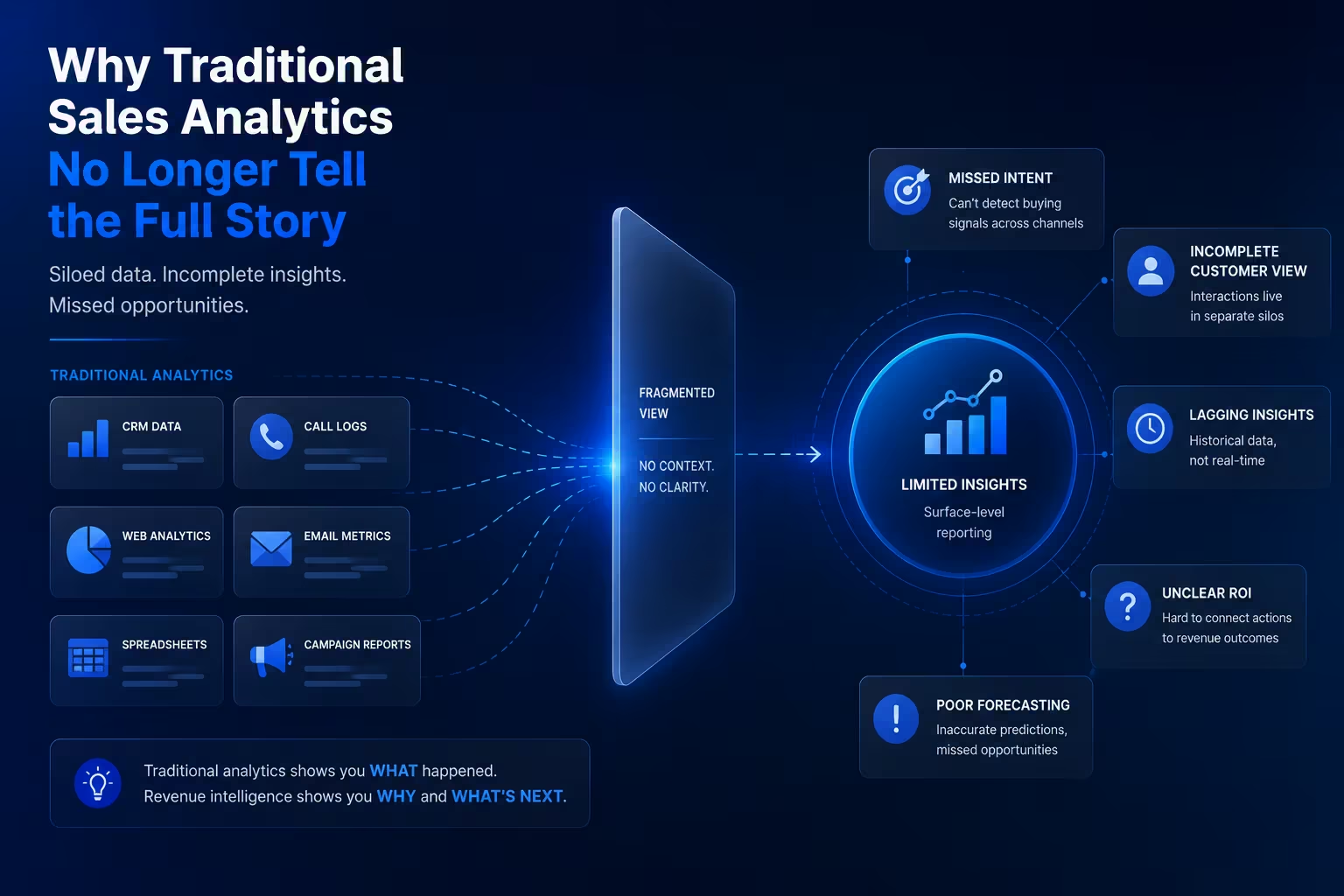
For years, sales dashboards have revolved around familiar metrics:
- Calls made
- Leads contacted
- Email open rates
- Conversion percentage
- Revenue closed
These numbers explain what happened, but rarely explain why.
Imagine two sales representatives with identical conversion rates.
One succeeds because customers consistently respond on WhatsApp after an initial call. The other closes deals only after three phone conversations.
Traditional reporting treats them as equally successful. Revenue intelligence uncovers the behavioral patterns behind those outcomes.
It answers questions like:
- Which customer objections appear most frequently?
- Which conversation topics correlate with higher purchases?
- Which communication channel drives faster conversions?
- What is the ideal follow-up delay?
- Which sales behaviors consistently increase revenue?
Instead of reporting activity, revenue intelligence identifies the conversations and actions that generate business results.
See how Callveriq uncovers the "why" behind every sale.
What Is Revenue Intelligence and How Is It Different From Sales Analytics?
Revenue intelligence is the practice of collecting, analyzing, and interpreting customer interactions across every touchpoint to improve revenue generation.
While sales analytics focuses on historical performance metrics, revenue intelligence connects customer conversations, behavioral signals, and AI-driven insights to guide future sales actions.
For B2C organizations, this distinction matters because purchasing decisions rarely happen within a single interaction.
Customers switch between:
- Voice calls
- Website chat
- SMS
- Mobile apps
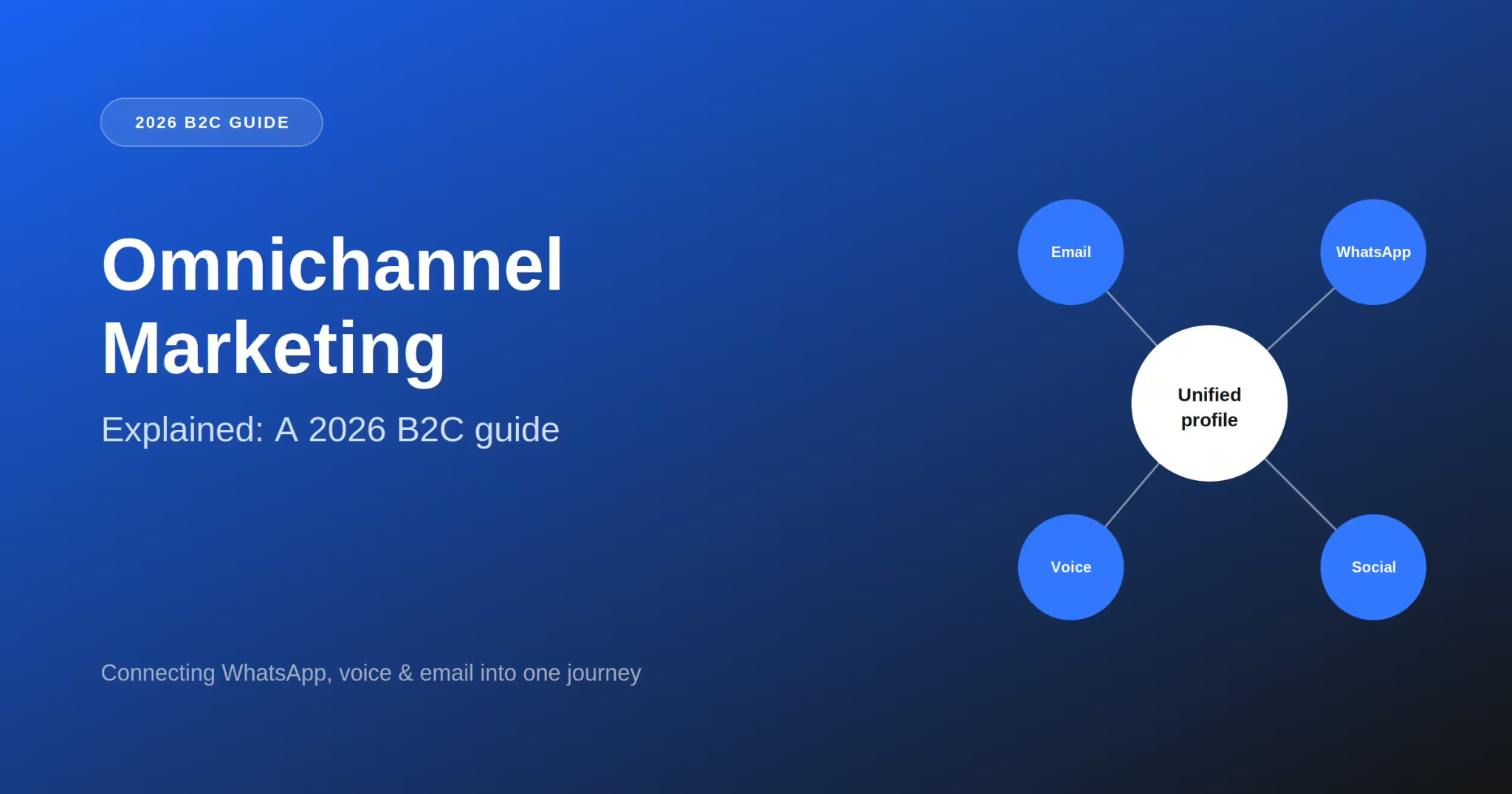
Revenue intelligence creates a unified understanding of these journeys instead of evaluating each channel independently.
This enables sales teams to make faster, more informed decisions.
Turn conversations into intelligence with Callveriq.
This blog is just the start.
Unlock the power of Callveriq’s AI with a live demo.

How Omnichannel AI Turns Customer Conversations Into Revenue Intelligence
Every customer conversation contains valuable information.
Customers mention budgets. They reveal buying timelines. They express hesitation. They compare competitors. They ask pricing questions.
Traditionally, these insights disappear once the interaction ends.
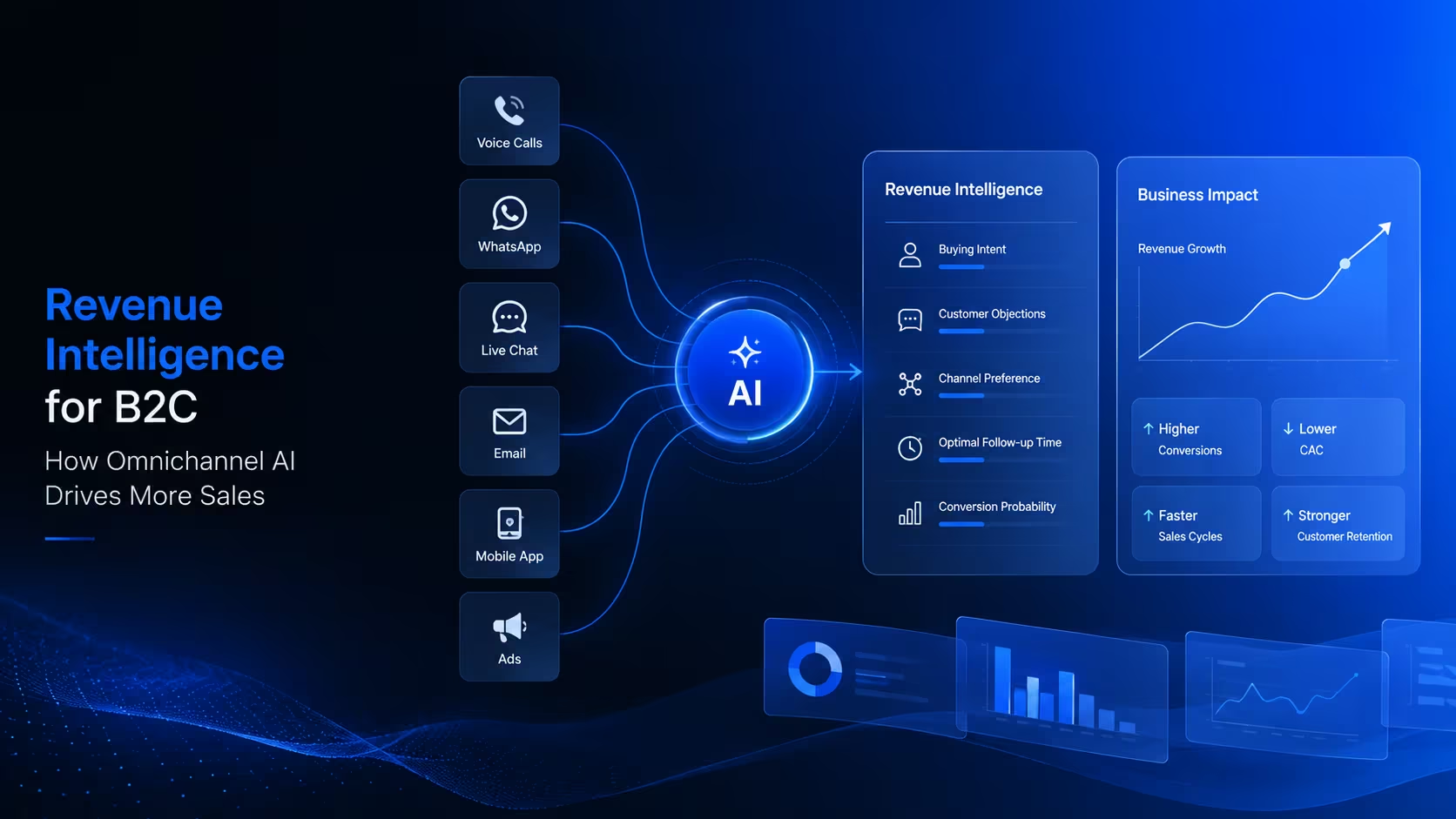
Omnichannel AI changes that by automatically analyzing conversations across every customer touchpoint.
Voice Calls
AI identifies:
- Purchase intent
- Competitor mentions
- Objections
- Buying urgency
- Customer sentiment
WhatsApp Conversations
AI tracks:
- Message engagement
- Response delays
- Product interests
- Frequently asked questions
- Drop-off points
Live Chat
AI understands:
- Repeated concerns
- Navigation issues
- Product confusion
- Escalation triggers
Instead of treating these channels separately, omnichannel revenue intelligence connects them into a single customer timeline.
Sales leaders no longer rely on assumptions. They see complete customer behavior before making the next outreach.
Unify every conversation with Callveriq.
How Revenue Intelligence Improves Follow-Up Timing and Channel Selection
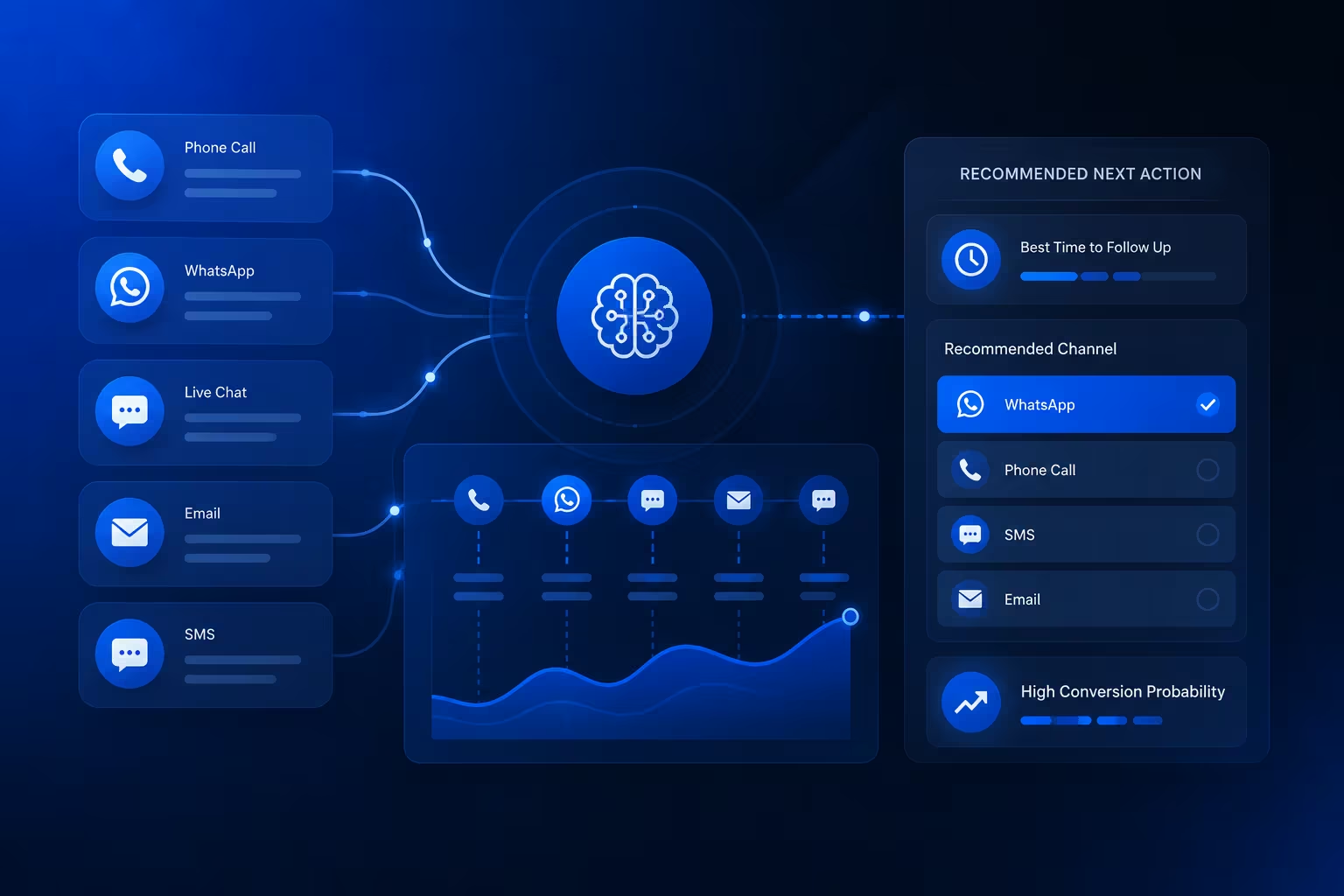
Timing often determines whether a sale happens.
Many businesses lose revenue simply because they contact customers:
- Too early
- Too late
- Through the wrong channel
Revenue intelligence continuously learns from successful customer journeys to recommend the next best action.
For example:
A customer ignores two calls but replies to every WhatsApp message. Instead of scheduling another phone call, AI recommends WhatsApp as the next touchpoint. Another customer consistently purchases within 24 hours after receiving a callback. Future follow-ups for similar prospects are automatically prioritized within that window.
These insights help teams answer practical questions like:
- When should we follow up?
- Which channel performs best for this customer?
- How many attempts are optimal?
- Which prospects should receive immediate attention?
This results in higher engagement, faster conversions, and lower acquisition costs.
Let Callveriq recommend the next best customer action automatically.
How B2C Sales Teams Use Omnichannel Revenue Intelligence Every Day
Revenue intelligence isn't just for leadership dashboards.
It influences day-to-day execution across the sales organization.
1. Prioritizing High-Intent Leads
AI identifies customers showing strong buying signals and moves them to the top of the sales queue.
2. Improving Sales Conversations
Managers discover which phrases, responses, and objection-handling techniques consistently drive higher conversions.
3. Personalizing Customer Outreach
Sales representatives understand previous interactions before contacting customers, eliminating repetitive conversations.
4. Optimizing Marketing Campaigns
Marketing teams identify which campaigns generate conversations that eventually convert into revenue.
5. Forecasting Revenue More Accurately
Instead of relying solely on CRM stages, AI incorporates customer engagement signals to predict conversion probability.
This makes forecasting more realistic and helps allocate sales resources more effectively.
Empower sales with Callveriq AI.
Why Omnichannel Revenue Intelligence Is Becoming Essential for B2C Growth
Customer journeys continue to become more fragmented.
A single buyer may interact with a brand through advertisements, websites, WhatsApp, voice calls, chatbots, and customer support before making a purchase.
Without connecting these interactions, businesses lose visibility into what actually drives revenue.
Omnichannel revenue intelligence provides that visibility.
Instead of isolated reports, organizations gain a complete understanding of customer behavior across every interaction. AI identifies intent, predicts outcomes, recommends the best engagement strategy, and continuously improves future customer journeys.
As competition increases and customer expectations evolve, businesses that rely only on traditional reporting will struggle to keep pace. Those that transform conversations into intelligence will build faster sales cycles, stronger customer relationships, and more predictable revenue growth.
See Callveriq's revenue intelligence in action.
What This Means For You
Revenue growth is no longer driven solely by increasing outreach volume. It depends on understanding the conversations that influence customer decisions. Every call, WhatsApp message, and chat interaction contains signals about intent, objections, preferences, and purchase readiness. Businesses that fail to connect these signals miss opportunities hidden in plain sight.
Revenue intelligence bridges this gap by turning fragmented customer interactions into actionable insights, while omnichannel revenue intelligence ensures those insights reflect the complete customer journey rather than isolated touchpoints. For B2C organizations looking to improve follow-up timing, personalize engagement, and make smarter sales decisions, AI-powered conversation analysis has become a competitive advantage rather than a nice-to-have. Platforms like Callveriq help organizations capture these insights automatically, enabling sales teams to focus less on guesswork and more on building meaningful customer relationships that drive measurable revenue growth.
FAQs
Q: Can revenue intelligence integrate with existing CRM systems?
Yes. Most revenue intelligence platforms integrate with popular CRMs to combine conversation data with customer records for a unified sales view.
Q: Is revenue intelligence suitable for small and mid-sized B2C businesses?
Yes. Businesses of all sizes can use revenue intelligence to improve sales efficiency, optimize follow-ups, and identify high-intent prospects.
Q: What metrics can revenue intelligence help improve?
It can improve lead conversion rates, sales velocity, follow-up effectiveness, customer engagement, and revenue forecasting accuracy.
Q: How quickly can businesses see results from revenue intelligence?
The timeline varies by deployment, but many businesses begin identifying actionable sales insights within weeks of implementation.