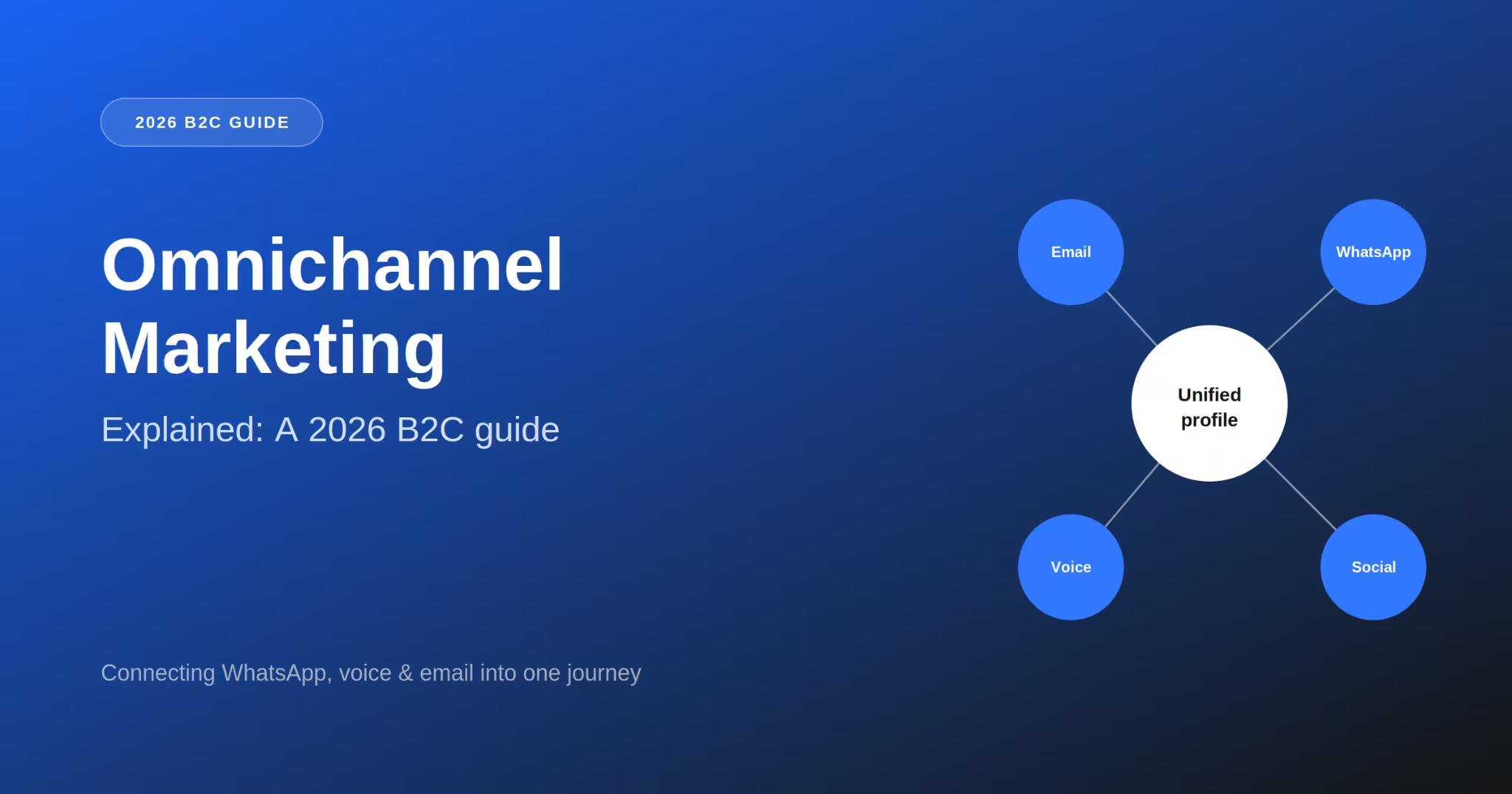


Every customer today moves between a website, an app, a WhatsApp thread, and a phone call before making a single decision, and each of those channels usually stores its own fragment of who that customer is. A customer data platform is what stitches those fragments back into one profile, and it's quietly become the fuel that omnichannel AI runs on. Without it, even the smartest AI agent is just guessing based on whatever channel it happens to be sitting in. With it, that same AI can recognise a returning customer instantly, recall what they asked last week, and respond with context instead of starting from zero. This blog looks at what a CDP actually does, how omnichannel AI uses that data to personalise interactions in real time, how it differs from a CRM, and whether B2C brands still need one as a separate layer in their stack.
Turn data into every perfect touchpoint
Why Does A CDP Matter?
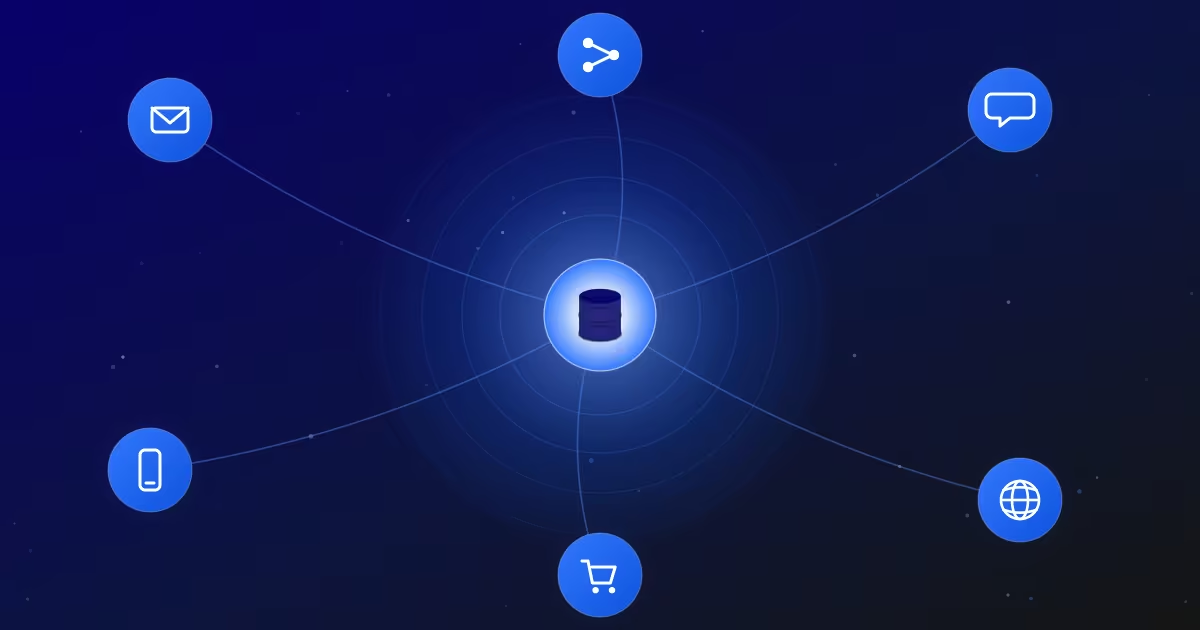
A customer data platform is a system that collects, unifies, and organises customer data from every source into a single, persistent profile for each customer. Unlike a data warehouse, which is built for storage and analysis, a CDP is built to make that unified profile immediately usable by other systems in real time, including AI agents, marketing tools, and customer service platforms.
How a CDP Pulls Data Together Across Channels
A CDP typically ingests and unifies data such as:
- Website and app behaviour, including pages visited and features used
- Purchase and transaction history across all sales channels
- Support tickets, chat logs, and call transcripts
- Social media interactions and campaign responses
- Location, device, and time-zone signals
Instead of leaving this data scattered across five or six different tools, the CDP merges it into one identity, so a customer looks the same whether they showed up on the app or on a support call.
Why This Layer Is What Makes AI Personalisation Possible
For omnichannel AI, this unified profile is the difference between a generic response and a personalised one. When an AI voice agent or chatbot pulls from a CDP, it isn't just seeing the current conversation; it's seeing the customer's full history across channels. This is the same principle behind Callveriq's approach to omnichannel customer engagement, where consistency across channels depends entirely on how well the underlying data is unified before the AI ever responds.
See your unified customer view live
How Does AI Use CDP Data?
Once customer data is unified, omnichannel AI uses it to make two decisions in real time: which channel to use, and what message to send. This isn't a one-time rule set, it updates continuously as new behaviour comes in.
Choosing the Right Channel for Each Customer
A CDP typically feeds signals like channel preference, past response rates, time-zone behaviour, and purchase stage. The AI weighs these signals to decide things like:
- A customer who abandoned a cart on mobile but responds faster to WhatsApp gets a follow-up there instead of an email
- A customer who's historically ignored SMS but always opens app notifications gets prioritised on the app
- A high-value customer nearing a renewal date gets a call instead of an automated message
Choosing the Right Message and Tone
This decisioning also extends to content and tone. A customer flagged as price-sensitive based on past interactions might receive a discount-led message, while a loyal repeat buyer gets a loyalty-focused one instead. This kind of real-time, data-driven routing is exactly what's explored in Callveriq's breakdown of omnichannel customer experience strategies for 2026, where unified data is treated as the foundation every personalisation layer sits on top of.
Personalise at scale
This blog is just the start.
Unlock the power of Callveriq’s AI with a live demo.

CDP vs CRM: Which Wins?
It's easy to confuse a CDP with a CRM since both deal with customer data, but they serve different jobs in an omnichannel stack.
What a CRM Is Actually Built to Do
A CRM is built around managing relationships and transactions, and it typically holds:
- Deals, opportunities, and sales pipeline stages
- Support tickets and account ownership
- Notes and updates entered manually by sales or support teams
The data inside a CRM is largely structured and entered by people, which makes it accurate for tracking ownership but limited for capturing broader behaviour.
What a CDP Is Actually Built to Do
A CDP, on the other hand, is built to passively collect behavioural and event-level data from every touchpoint automatically, then unify it into a customer-level profile that other systems can query without manual entry.
How the Two Work Together in an Omnichannel Stack
In practice, the two are complementary rather than competing:
- A CRM tells you who owns the relationship and what's been promised
- A CDP tells you how the customer actually behaves across channels in real time
- Omnichannel AI tools increasingly pull from both together
This is the same layered approach seen in how Callveriq's real-time agent assist pulls CRM insights mid-conversation, while relying on broader behavioural data for context that CRMs alone were never designed to capture.
Watch omnichannel AI in action
Do B2C Brands Need CDPs?
This is where most B2C teams get stuck: does the omnichannel AI platform itself replace the need for a standalone CDP? The honest answer depends on scale and channel complexity, not on a fixed rule.
When the Built-In Data Layer Is Enough
If a business operates across a handful of channels with moderate volume, many modern omnichannel AI platforms now include a built-in data layer that's good enough to unify profiles without a separate CDP. This works well when:
- Channel count is low, typically under four or five
- Data isn't spread across many legacy or third-party systems
- One AI vendor is expected to handle most customer interactions long-term
When a Standalone CDP Still Earns Its Place
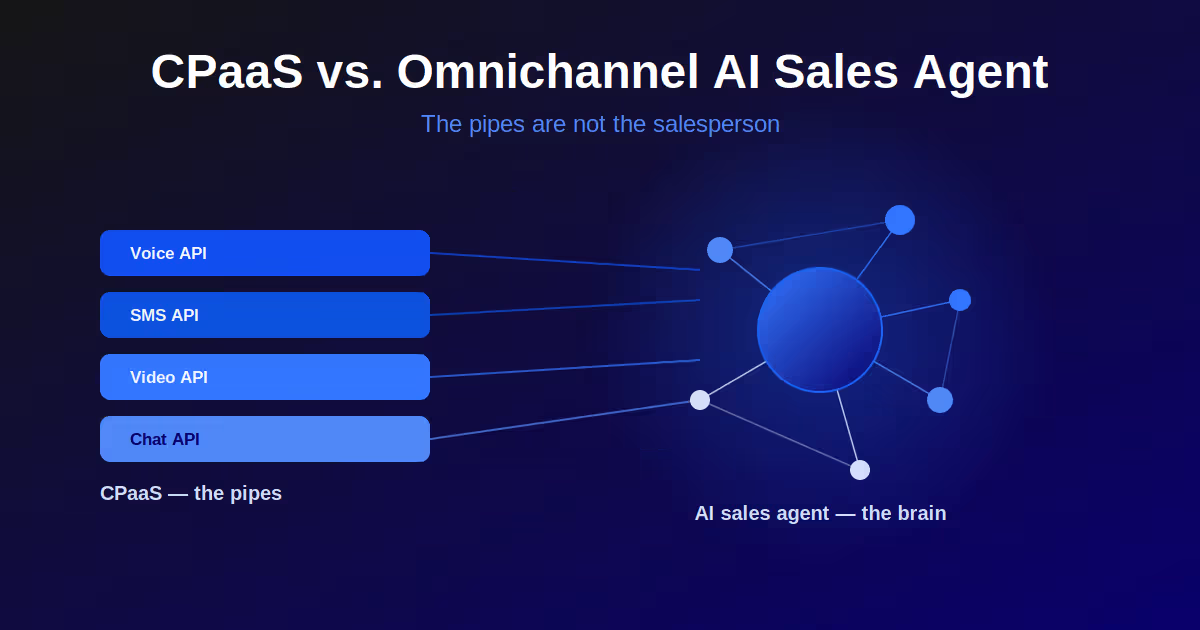
For businesses operating at higher volume, across many channels, with data spread across multiple vendors and legacy systems, a standalone CDP still matters. It acts as the neutral, vendor-agnostic layer that any AI tool, CRM, or analytics platform can plug into, rather than locking customer data inside one AI vendor's ecosystem. This is the same tension covered in Callveriq's roundup of leading customer intelligence platforms for 2026, where the platforms that scale best treat data unification as infrastructure, not a feature bolted onto one tool.
Unlock one-view customer data now
The Bottom Line
A customer data platform isn't just a backend nice-to-have; it's what allows omnichannel AI to move from reactive scripts to genuinely personalised decisions about channel, timing, and message. Whether that unification lives in a standalone CDP or inside the AI platform itself depends on how fragmented your data already is, but the goal stays the same: one customer, one profile, and an AI that actually knows the difference.
Get started with Callveriq’s solution today
FAQs
1. What is a customer data platform in simple terms?
It's a system that pulls customer data from every channel into one unified profile that other tools, including AI agents, can use.
2. Is a CDP the same as a CRM?
No. A CRM manages relationships and transactions; a CDP unifies behavioural data across channels automatically.
3. Can omnichannel AI work without a CDP?
Yes, if the AI platform has its own built-in data unification layer, though a standalone CDP helps at a higher scale.
4. Why does CDP data matter for channel selection?
It gives the AI signals like past response rates and preferences, so it picks the channel most likely to get a reply.
5. Do small B2C businesses need a standalone CDP?
Usually not; a built-in data layer within their omnichannel AI platform is often sufficient at a smaller scale.