

Most D2C brands spend heavily on customer acquisition but struggle to reconnect with shoppers once they drop off. Every abandoned cart, incomplete checkout, or silent visitor represents revenue that's already been paid for through marketing. The challenge is knowing when, where, and how to restart the conversation.
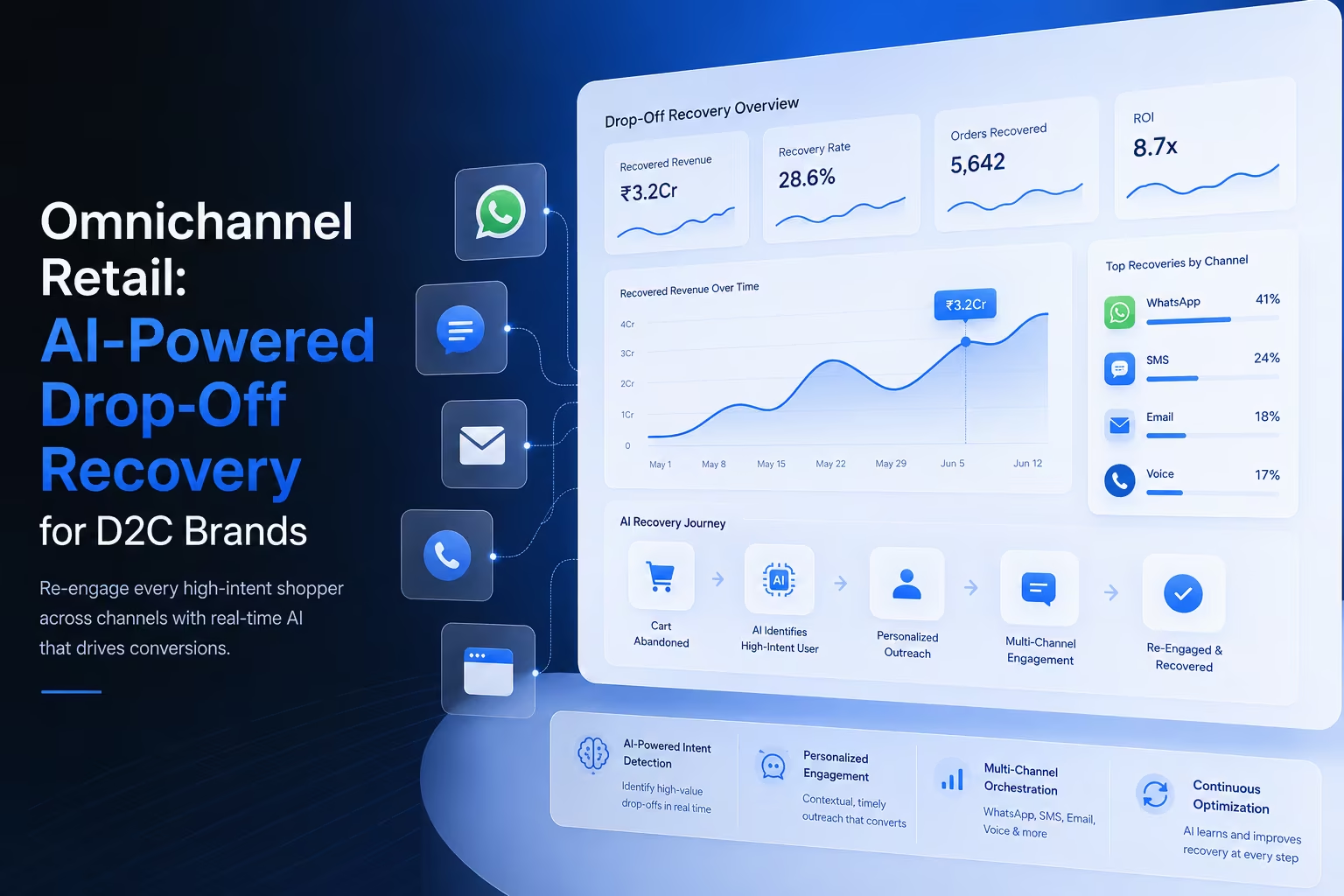
This is where omnichannel retail powered by AI changes the game. Instead of relying on disconnected campaigns, brands can orchestrate personalized conversations across WhatsApp, voice, push notifications, SMS, and in-app messaging based on each shopper's behavior. The result is timely engagement, higher conversions, and a smoother buying experience without requiring human intervention.
More than 51% of customer service journeys now begin on third-party platforms rather than a company's owned channels, making coordinated omnichannel engagement increasingly important.
Discover omnichannel AI for retail growth
Why Traditional Cart Recovery No Longer Works
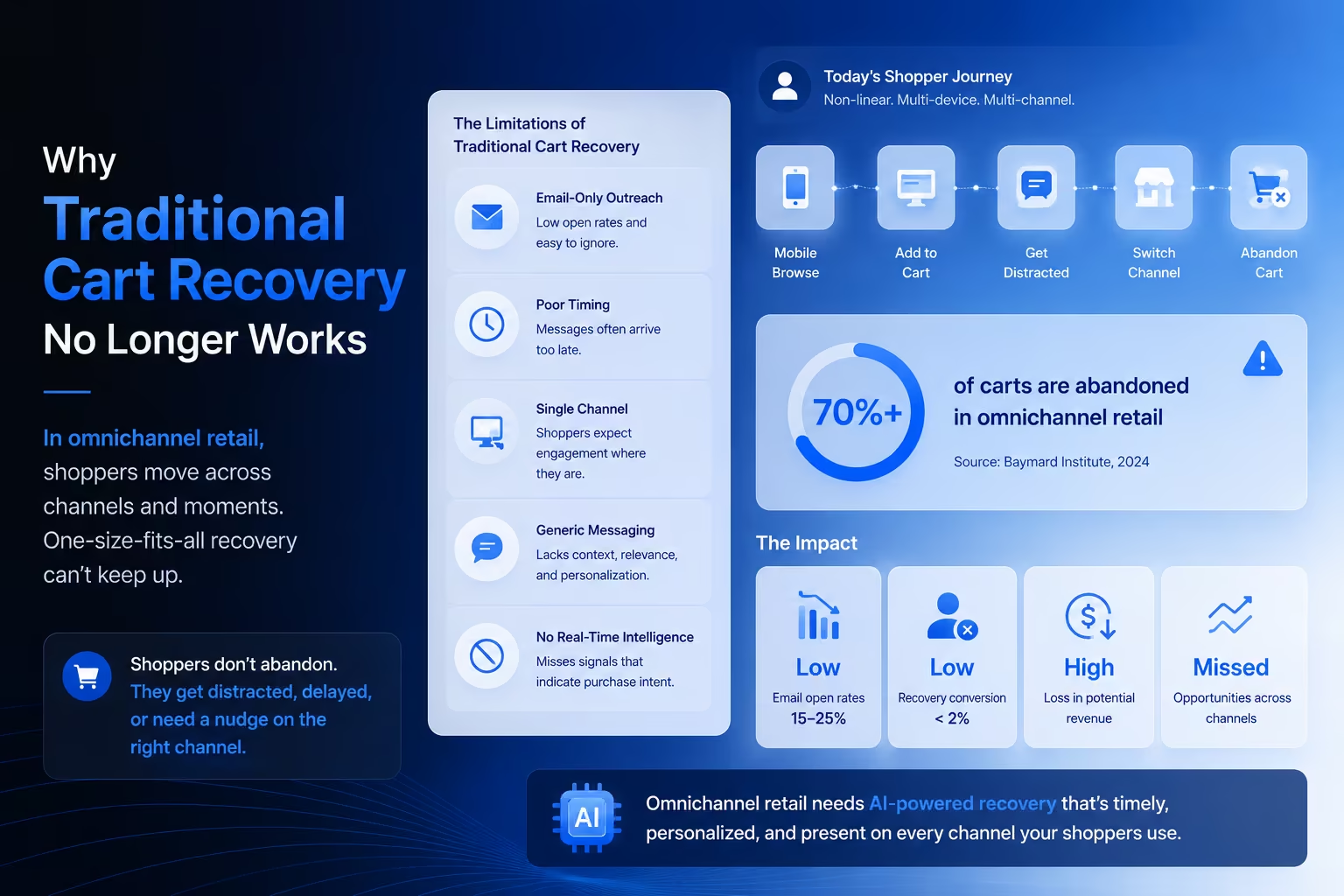
For years, brands have relied on the same recovery playbook:
- Send an abandoned cart email.
- Wait 24 hours.
- Offer a discount.
- Hope the customer returns.
Modern shoppers don't behave that way anymore.
Customers move between mobile apps, websites, marketplaces, social media, and messaging platforms within minutes. Their purchase decisions are influenced by timing, convenience, and personalization more than discounts.
Disconnected campaigns create several challenges:
- Every channel works independently.
- Customers receive duplicate or irrelevant messages.
- Recovery campaigns lack context.
- Sales and marketing teams cannot see the complete customer journey.
- Follow-ups often arrive too late.
A shopper who ignored an email may respond instantly on WhatsApp. Someone who closed the app might convert after a quick AI-powered voice reminder. Without connecting these touchpoints, brands miss valuable recovery opportunities.
An effective omnichannel retail strategy focuses on customer behavior instead of individual communication channels.
Gartner notes that organizations still struggle to orchestrate customer journeys across channels, and recommends dynamic omnichannel strategies that adapt messaging based on customer behavior instead of static campaigns.
Recover more carts with connected journey
What Is Omnichannel AI in Retail?
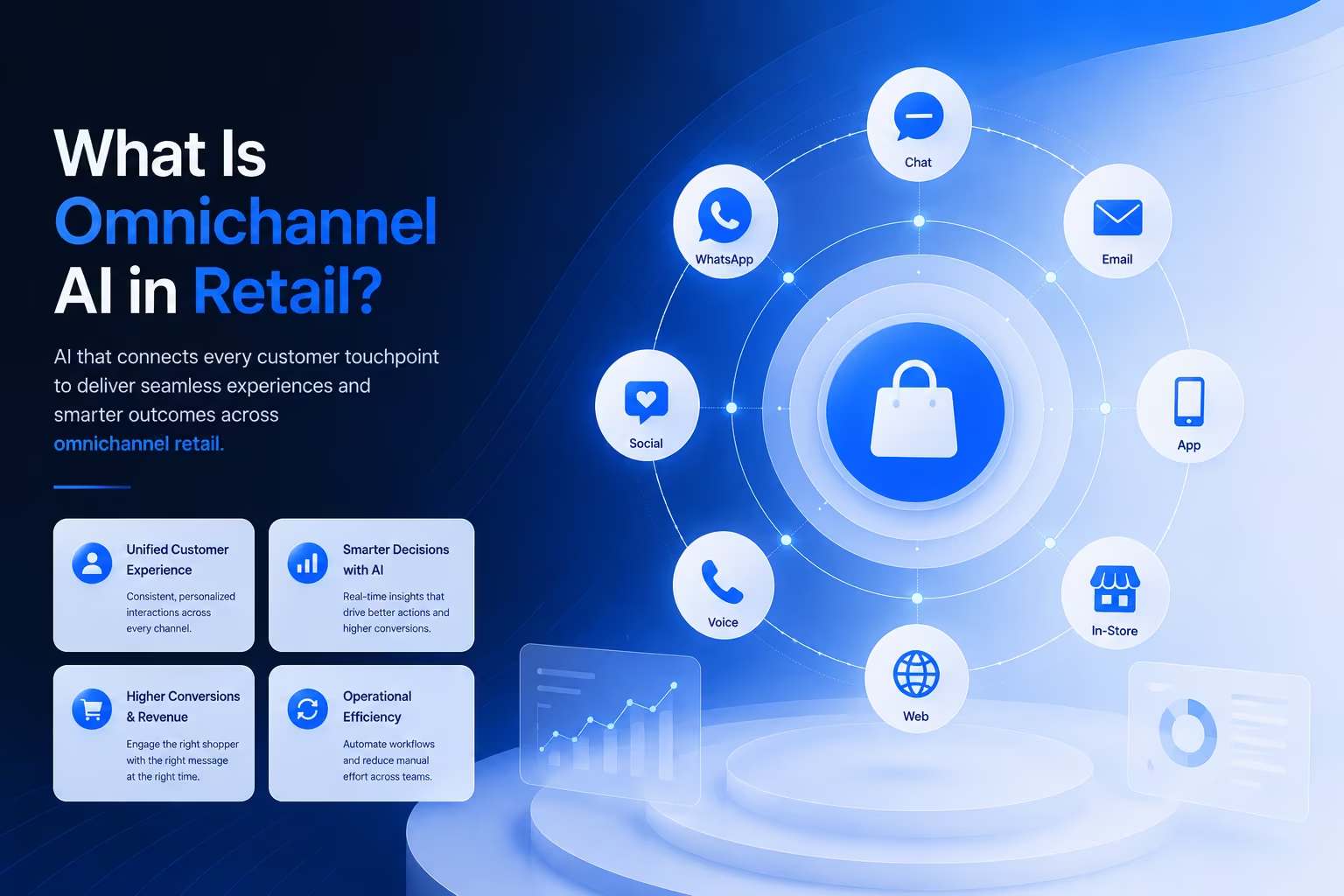
Omnichannel AI connects customer interactions across every touchpoint into a single, continuous conversation.
Instead of treating WhatsApp, voice, website, mobile app, CRM, and marketing automation as separate systems, AI continuously monitors shopper intent and automatically selects the best channel, timing, and message.
Imagine this journey:
A customer explores running shoes. They compare sizes. They leave without purchasing.
Rather than triggering the same reminder for everyone, AI evaluates multiple signals:
- Products viewed
- Time spent browsing
- Purchase history
- Loyalty status
- Previous campaign engagement
- Preferred communication channel
- Probability of conversion
It then launches the next-best action automatically.
That could be:
- A personalized WhatsApp recommendation
- An in-app reminder after the next login
- An AI voice call for high-value shoppers
- A push notification highlighting limited stock
- A loyalty reward for returning customers
This approach makes AI for retail far more intelligent than rule-based automation.
See omnichannel AI in action today with Callveriq
This blog is just the start.
Unlock the power of Callveriq’s AI with a live demo.

How Omnichannel AI Re-Engages Shoppers Who Didn't Buy
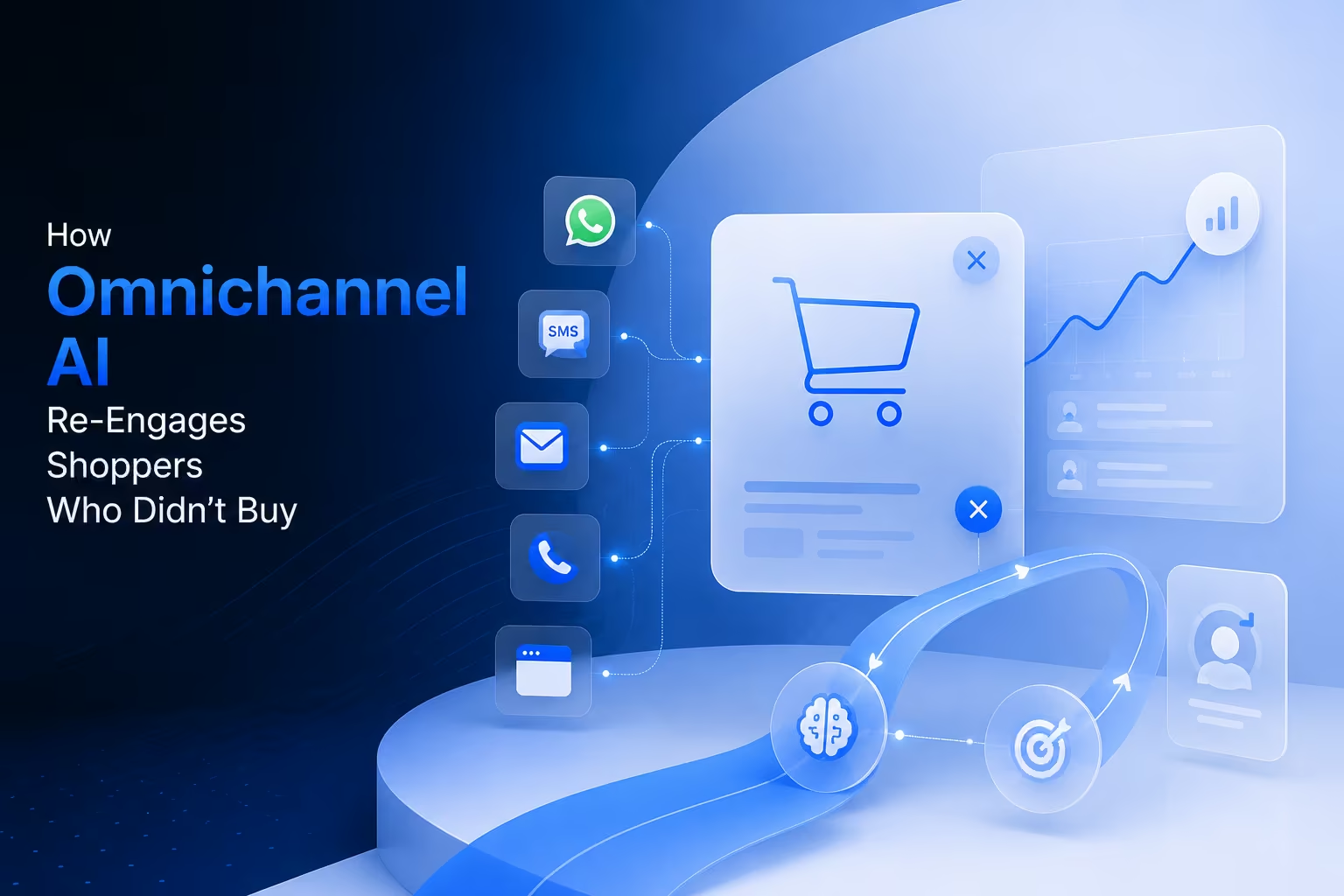
Every drop-off shopper leaves behind valuable intent signals.
Rather than sending everyone the same campaign, AI identifies why someone abandoned the purchase and responds accordingly.
1. Cart Abandonment
A shopper adds products worth ₹4,000 to their cart but exits before payment.
AI waits for the optimal engagement window before sending a personalized WhatsApp message with product images, delivery estimates, and checkout links.
If the shopper doesn't respond, the system escalates using another channel instead of repeating the same message.
2. Product Browsers
Some visitors never add products to the cart. Instead, they repeatedly compare multiple items.
AI recognizes this behavior and recommends similar products, customer reviews, or limited-time offers through the brand's app or messaging channels.
3. Returning Visitors
Customers who revisit products several times usually have high purchase intent.
Rather than offering discounts immediately, AI can create urgency by highlighting inventory levels or faster delivery options.
4. High-Value Customers
VIP shoppers deserve a different experience. Instead of automated marketing messages, AI can initiate a personalized voice conversation, answer questions, or offer concierge-style assistance.
Each journey becomes unique because every customer behaves differently.
This significantly improves the overall retail customer journey.
Personalize recovery based on shopper intent
Choosing the Right Channel Sequence for Recovery
One of the biggest mistakes brands make is assuming there's a universal recovery channel.
There isn't. The best sequence depends on customer behavior, purchase value, and urgency.
WhatsApp First
For most Indian D2C brands, WhatsApp delivers the fastest engagement because customers actively use it throughout the day.
It's ideal for:
- Cart reminders
- Product recommendations
- Payment links
- Order assistance
- Personalized offers
Push Notifications
Push works best when customers already have the brand's app installed and frequently engage with it.
It's useful for:
- Flash sales
- Price drops
- Wishlist updates
- New arrivals
AI Voice Calls
Voice becomes valuable when:
- Orders have high value.
- Customers require assistance.
- Payment repeatedly fails.
- Human-like conversations improve trust.
- Customers ignore digital messages.
Intelligent Escalation
Instead of blasting all channels simultaneously, AI follows a logical sequence.
For example:
Website abandonment → WhatsApp reminder → Push notification → AI voice call → Personalized offer.
This minimizes message fatigue while maximizing recovery.
Choose channels that match shopper behavior
How Indian D2C Brands Use Omnichannel AI to Increase Repeat Purchases
Recovery isn't the end of the journey. The biggest opportunity begins after the first purchase.
Leading Indian D2C brands use AI to build continuous engagement across the customer lifecycle.
After a successful purchase, AI automatically initiates relevant conversations:
- Delivery updates on WhatsApp
- Product usage guidance
- Refill reminders
- Cross-sell recommendations
- Loyalty rewards
- Feedback collection
- Repeat purchase campaigns
For example:
A skincare brand knows most customers reorder moisturizer every 45 days.
Instead of waiting for the customer to remember, AI starts engaging around Day 40 through WhatsApp and in-app messaging.
If there's no response, a personalized voice assistant follows up. C The result is higher retention without increasing marketing spend.
This is how modern brands reduce churn while building long-term customer relationships.
Automate repeat purchases before customers forget
Why AI Is Becoming the Foundation of Modern Omnichannel Retail
The future isn't about adding more communication channels. It's about making every interaction connected.
AI continuously learns from customer behavior, predicts intent, and coordinates conversations across multiple touchpoints without requiring manual campaign management.
Marketing teams no longer have to create separate journeys for email, WhatsApp, push, and voice.
Customer support gains complete conversation history. Sales teams engage only when AI identifies high purchase intent.
Most importantly, shoppers experience one continuous brand conversation instead of disconnected campaigns.
Platforms like Callveriq help retailers orchestrate AI-powered conversations across voice, WhatsApp, CRM systems, and digital channels while preserving customer context. This enables brands to recover lost shoppers, automate engagement, and deliver personalized experiences at scale without increasing operational complexity.
Gartner identifies AI-enabled CRM platforms as the next competitive frontier, emphasizing unified customer data and AI-driven customer engagement across sales and service.
Unify every channel with AI orchestration
What This Means For You
Every abandoned cart or incomplete checkout represents a customer who was interested enough to begin the buying journey. The difference between losing that customer and converting them often comes down to how quickly and intelligently a brand responds. Modern shoppers expect conversations that continue naturally across channels, not repetitive campaigns that ignore their intent. Omnichannel AI makes that possible by connecting every touchpoint into a single customer journey, choosing the right channel at the right moment, and personalizing engagement without relying on manual intervention. As D2C competition continues to intensify, brands that embrace AI-driven omnichannel retail will be better positioned to recover lost revenue, increase repeat purchases, and build stronger customer relationships through every stage of the buying experience.