

A retail sales leader spends weeks evaluating AI vendors. The demos are polished. The chatbot answers instantly. The voice AI books appointments. The dashboards promise deeper insights.
The leadership team is excited. Then procurement asks for expected ROI. Finance wants to know how long it will take to recover the investment. Operations asks who owns the rollout. Suddenly, the discussion shifts from AI capabilities to business outcomes.
This is where many AI initiatives slow down, not because the technology isn't ready, but because the omnichannel platform business case isn't. Today's buyers don't need another presentation about AI. They need confidence that the investment will increase conversions, reduce operational costs, improve customer engagement and generate measurable returns within a reasonable timeframe.
In this guide, you'll learn how to calculate ROI, identify the right metrics, and build an AI business case that earns executive buy-in before you purchase.
Build your AI business case with Callveriq.
Why Most AI Business Cases Fail Before They Reach Leadership
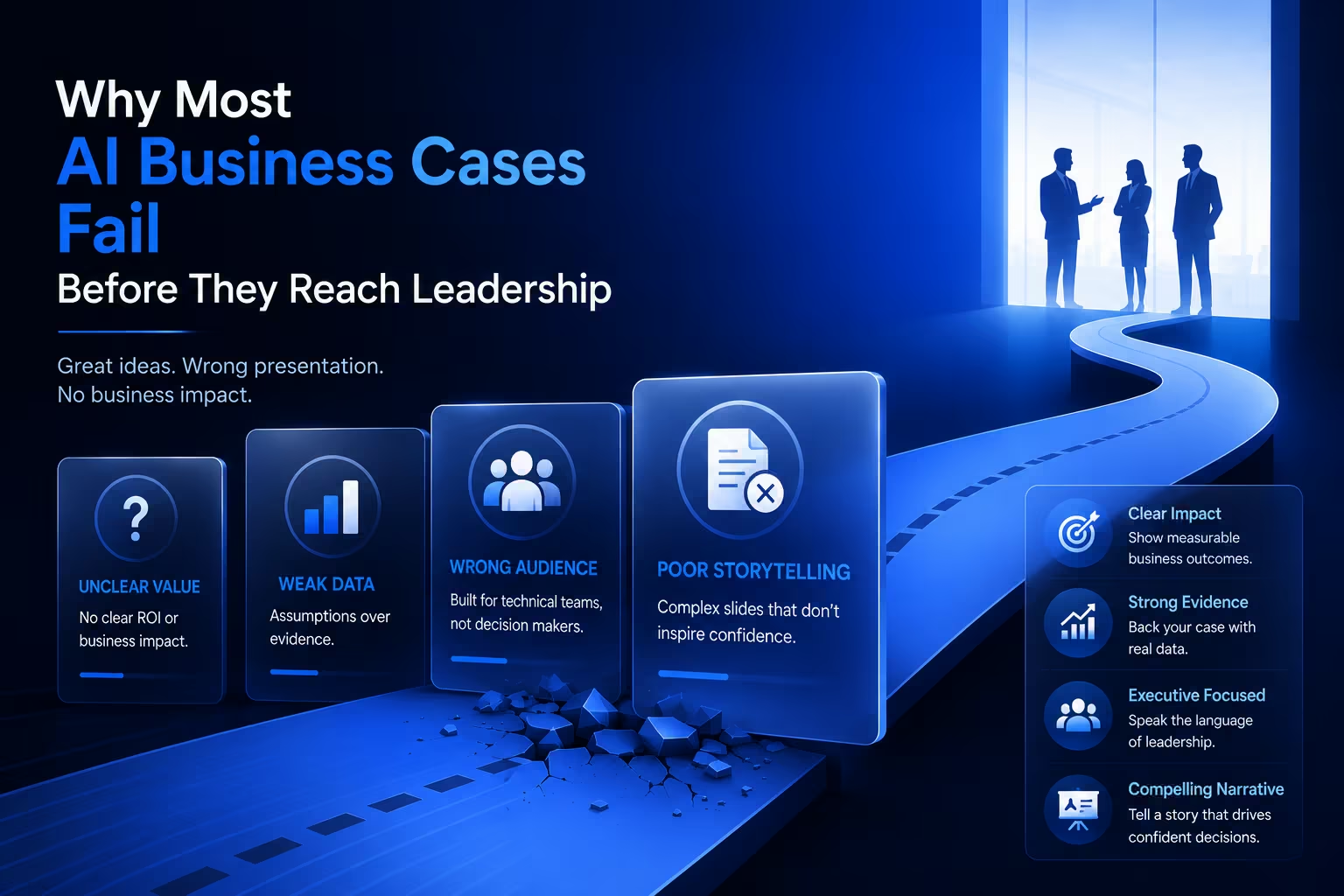
Many AI buying decisions don't fail because the technology lacks capability. They fail because the proposal never answers the questions executive stakeholders actually care about.
Technology teams often present feature comparisons. Finance teams evaluate investments. Operations teams think about implementation risks.
Sales leaders want to know whether the platform will help them close more business.
Those are four completely different conversations.
A proposal built around automation, chatbots, or AI models rarely convinces decision-makers unless it clearly answers three questions:
- What business problem are we solving?
- What financial outcome will improve?
- How soon will we recover the investment?
An effective AI business case translates technical capabilities into measurable business impact.
Instead of saying: "The platform supports WhatsApp, voice, SMS, and website chat."
Leadership wants to hear: "The platform can increase lead coverage by 40%, reduce missed opportunities, improve customer response time, and lower acquisition costs." Similarly, instead of highlighting AI features like intent detection or automated workflows, connect them to outcomes such as faster sales cycles, higher agent productivity, lower customer acquisition costs, and improved customer retention.
Another common mistake is assuming every stakeholder values the same KPI.
- The CFO focuses on ROI, payback period, and operating costs.
- The Head of Sales wants higher conversions and better lead utilization.
- Customer experience leaders prioritize response time, CSAT, and retention.
- Operations teams care about scalability and efficiency.
A winning business case speaks to all of these priorities. It demonstrates how an omnichannel communication platform contributes to strategic business goals rather than functioning as another software expense. When every stakeholder can clearly see the value in terms they already measure, internal approval becomes significantly easier.
The Four ROI Pillars Every Omnichannel Platform Should Improve
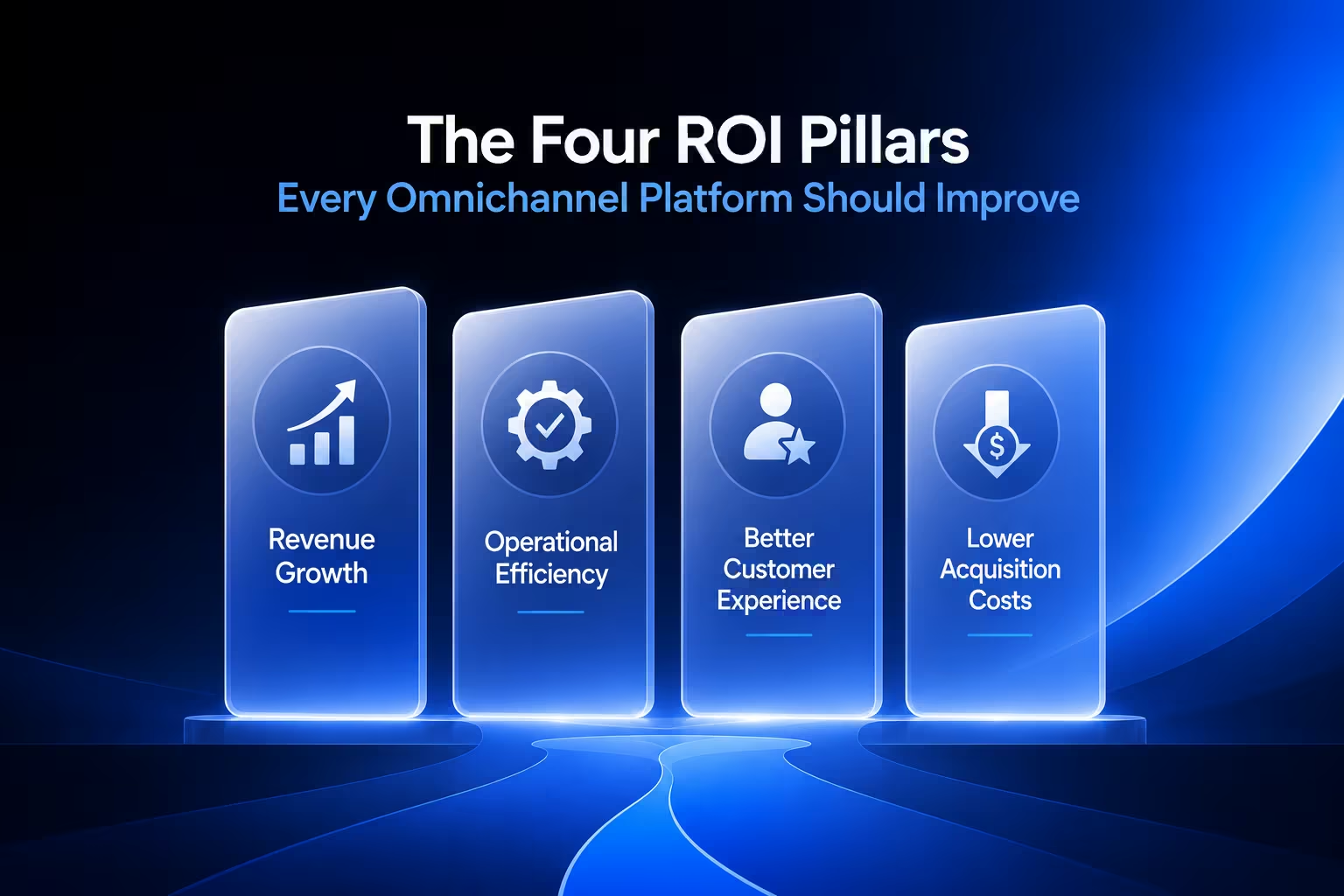
The ROI of an omnichannel platform isn't driven by a single metric. While many organizations initially focus on reducing costs, the strongest business cases demonstrate value across multiple areas of the business.
Before calculating ROI, define where value will come from.
Revenue Growth
An omnichannel AI solution should help sales teams:
- Capture more inbound leads
- Follow up instantly
- Reduce lead leakage
- Recover abandoned journeys
- Improve conversion rates
Even small improvements in conversion often produce significant revenue gains.
Operational Efficiency
AI should reduce repetitive work such as:
- Manual follow-ups
- Lead qualification
- Appointment scheduling
- Customer routing
- FAQs
This allows agents to spend more time closing opportunities rather than performing administrative work.
Better Customer Experience
An effective customer engagement platform creates seamless conversations across every customer touchpoint.
Benefits include:
- Faster responses
- Consistent communication
- Personalized engagement
- Reduced wait times
- Higher satisfaction
Better experiences directly influence retention and repeat purchases.
Lower Acquisition Costs
When customers receive timely responses across their preferred channels, businesses typically generate:
- Higher campaign efficiency
- Better ad ROI
- Lower cost per lead
- Improved marketing conversions
The strongest ROI usually comes from improvements across all four pillars, not just labor savings.
Maximize omnichannel ROI with Callveriq.
This blog is just the start.
Unlock the power of Callveriq’s AI with a live demo.

How To Calculate ROI Before Buying an Omnichannel AI Solution
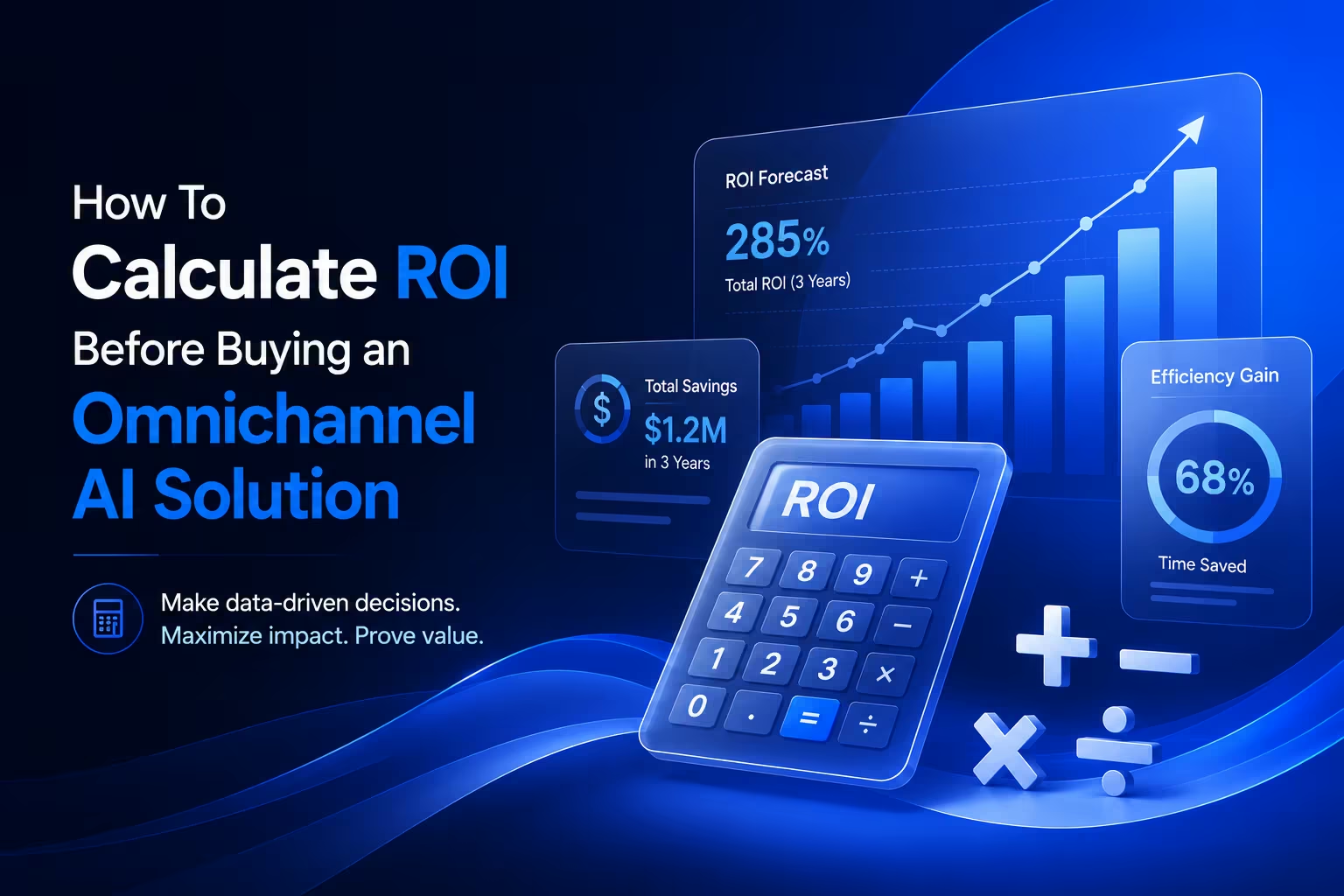
One of the biggest misconceptions is that ROI can only be measured after deployment. In reality, organizations can build reliable projections using existing operational data.
A simple ROI framework includes:
Step 1: Estimate Additional Revenue
Calculate:
Current monthly leads × expected conversion improvement × average order value
Example:
- 50,000 monthly leads
- 8% current conversion
- AI improves conversion by 10%
- ₹18,000 average order value
Even a modest conversion uplift can generate substantial incremental revenue.
Step 2: Estimate Cost Savings
Consider reductions in:
- Manual calling hours
- Agent workload
- Repeat follow-ups
- Customer support volume
- Operational overhead
These savings compound over time.
Step 3: Calculate Productivity Gains
Measure improvements like:
- More conversations per agent
- Faster lead response
- Higher appointment booking rates
- Shorter sales cycles
AI often creates value without increasing headcount.
Step 4: Compare Against Total Investment
Include:
- Platform subscription
- Implementation
- Integrations
- Training
- Ongoing support
Then calculate:
ROI = (Financial Benefits − Total Investment) ÷ Total Investment × 100
A structured ROI model helps executives evaluate investment decisions with greater confidence.
Calculate AI ROI efficiently with Callveriq.
What Metrics Should You Present to Your CFO?
Finance leaders rarely approve software because it is innovative. They approve investments because they improve measurable business performance.
When presenting an omnichannel communication platform, focus on metrics that directly impact profitability.
Revenue Metrics
- Conversion rate
- Revenue per lead
- Average order value
- Pipeline growth
- Sales velocity
Cost Metrics
- Cost per acquisition
- Cost per conversation
- Cost per sale
- Agent productivity
- Cost-to-serve
Customer Metrics
- Customer response time
- Customer retention
- Repeat purchase rate
- Customer lifetime value
- Customer satisfaction
Operational Metrics
- Lead response time
- Automation rate
- First-contact resolution
- Average handling time
- Agent utilization
Together, these metrics demonstrate both financial and operational improvements, making the business case far more compelling.
Track metrics that matter with Callveriq.
What Is the Typical Payback Period for an Omnichannel AI Investment?
One of the first questions leadership asks is "When will this investment pay for itself?"
The answer depends on deployment scale, sales volume, and operational maturity.
Organizations with:
- High inbound lead volumes
- Multiple customer channels
- Large sales teams
- Manual follow-up processes
typically see value much faster than businesses with low interaction volumes.
For many B2C sales organizations, the payback period often falls within 6 to 12 months, especially when AI improves conversion rates, reduces manual effort, and increases agent productivity. Businesses with higher customer interaction volumes may recover their investment even sooner by eliminating lead leakage and automating repetitive engagement.
Instead of positioning AI as a long-term innovation project, frame it as an investment with a defined timeline to measurable financial returns.
Accelerate AI payback with Callveriq.
Beyond ROI: The Strategic Benefits Leadership Shouldn't Ignore
The strongest omnichannel strategy extends beyond immediate financial returns. An integrated AI platform creates long-term competitive advantages by enabling businesses to:
- Deliver consistent customer experiences across channels
- Respond instantly at scale
- Collect richer customer insights
- Improve personalization
- Scale sales operations without proportional hiring
- Build stronger customer relationships
As customer expectations continue to evolve, these capabilities become strategic differentiators rather than optional enhancements. Organizations that invest early often gain operational agility that competitors struggle to replicate.
Scale omnichannel growth with Callveriq.
Why Callveriq Helps Teams Build a Stronger Business Case
Evaluating an AI platform shouldn't require assumptions or vague projections.
Callveriq enables organizations to quantify business outcomes through omnichannel automation across voice, WhatsApp, chat, and other customer touchpoints. Instead of focusing solely on automation, Callveriq helps businesses measure improvements in conversion rates, lead response times, customer engagement, operational efficiency, and agent productivity.
With implementation designed around measurable KPIs, leadership teams can evaluate expected impact before rollout and continue tracking ROI after deployment. That makes internal approvals easier because every investment is tied to outcomes executives already care about.
What This Means For Your Business
Buying an AI platform is no longer the difficult part. Justifying the investment is.
The organizations that successfully adopt AI aren't necessarily the ones choosing the most advanced technology. They're the ones that clearly connect technology to business outcomes. A well-structured omnichannel platform business case shows leadership exactly how AI will increase revenue, improve customer engagement, reduce operational costs, and accelerate growth, with realistic assumptions and measurable success metrics.
When every stakeholder can see how the investment supports both short-term financial goals and long-term competitive advantage, approval becomes a business decision rather than a technology gamble. That's the difference between an AI initiative that stalls in procurement and one that transforms how your B2C sales team operates.
Build a winning business case with Callveriq. Book your demo.
FAQs
1. How can I estimate omnichannel AI performance without running a pilot?
You can model expected outcomes using historical data such as lead volumes, response times, conversion rates, and agent productivity. Comparing these benchmarks with vendor case studies provides a realistic ROI estimate before deployment.
2. Which teams should be involved when evaluating an omnichannel platform?
Successful evaluations involve Sales, Customer Support, Operations, IT, Finance, and Procurement. Early cross-functional alignment helps identify implementation needs and speeds up internal approvals.
3. What implementation challenges should businesses plan for before adopting omnichannel AI?
Common challenges include CRM integration, channel configuration, workflow mapping, and user adoption. Choosing a platform with native integrations and guided onboarding significantly reduces deployment complexity.
4. How do I compare two omnichannel platforms beyond features?
Look beyond feature lists and evaluate scalability, AI accuracy, reporting capabilities, integration ecosystem, security, implementation timelines, and the vendor's ability to demonstrate measurable business outcomes.
5. How often should businesses review the ROI of an omnichannel AI platform?
Review performance monthly during the first six months and quarterly thereafter. Regular ROI assessments help optimize automation workflows, improve customer engagement, and maximize long-term value.