

A lending company launches a pre-approved loan campaign for 100,000 customers. The campaign looks promising, but the telecalling team can reach only a fraction of the list each day. By the time agents contact the remaining customers, the offer is no longer timely.
The company responds by hiring more callers. That creates another cycle of recruitment, training, quality monitoring, shift planning, and performance management. Call volumes increase, but the operating model remains dependent on how many employees are available.
This is the central limitation of traditional outbound operations. Telecalling software may make the desk more organized, but it does not remove the relationship between call capacity and human headcount.
BFSI customers now expect faster interactions as well. Salesforce reports that 65% of financial-services customers expect AI to accelerate financial transactions, up from 46% in 2023. This makes delayed outreach more than an operational problem. It can directly affect conversions and customer experience.
Transform telecalling software through Callveriq.
What Is Telecalling Software?
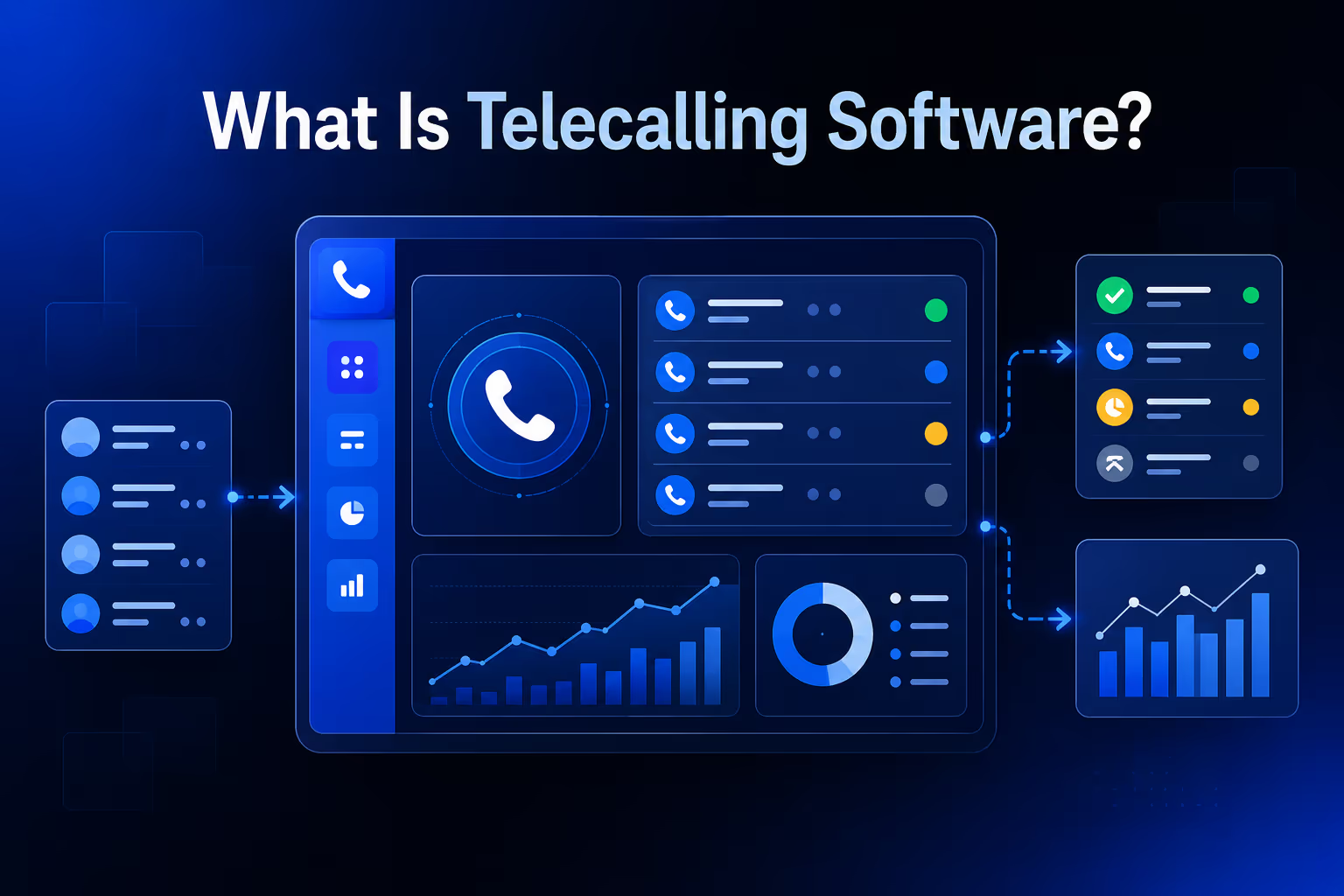
Telecalling software is a system used to plan, execute, and monitor outbound calling campaigns. It generally combines lead allocation, dialing, call tracking, recording, disposition management, and performance reporting.
BFSI teams use it across several workflows:
- Loan application follow-ups
- EMI and payment reminders
- Insurance renewals
- Credit-card activation
- KYC completion
- Lead qualification
- Cross-selling and upselling
- Overdue payment collection
Traditional systems may include click-to-call, preview dialing, progressive dialing, or predictive dialing. An automated telecalling software platform can reduce manual number selection and improve lead distribution. However, a human telecaller still speaks to the customer and enters the final outcome.
How BFSI Teams Use Telecalling Software
A campaign manager uploads a list and assigns customers based on language, product, region, or delinquency stage. The dialer connects calls to available agents, while supervisors monitor productivity and outcomes. This creates operational visibility, but results still depend on:
- Agent availability
- Script adherence
- Customer connectivity
- Accurate call dispositions
- Follow-up discipline
- Consistent communication quality
The technology improves the workflow around the conversation. It does not independently conduct the conversation.
Strengthen telecalling software using Callveriq.
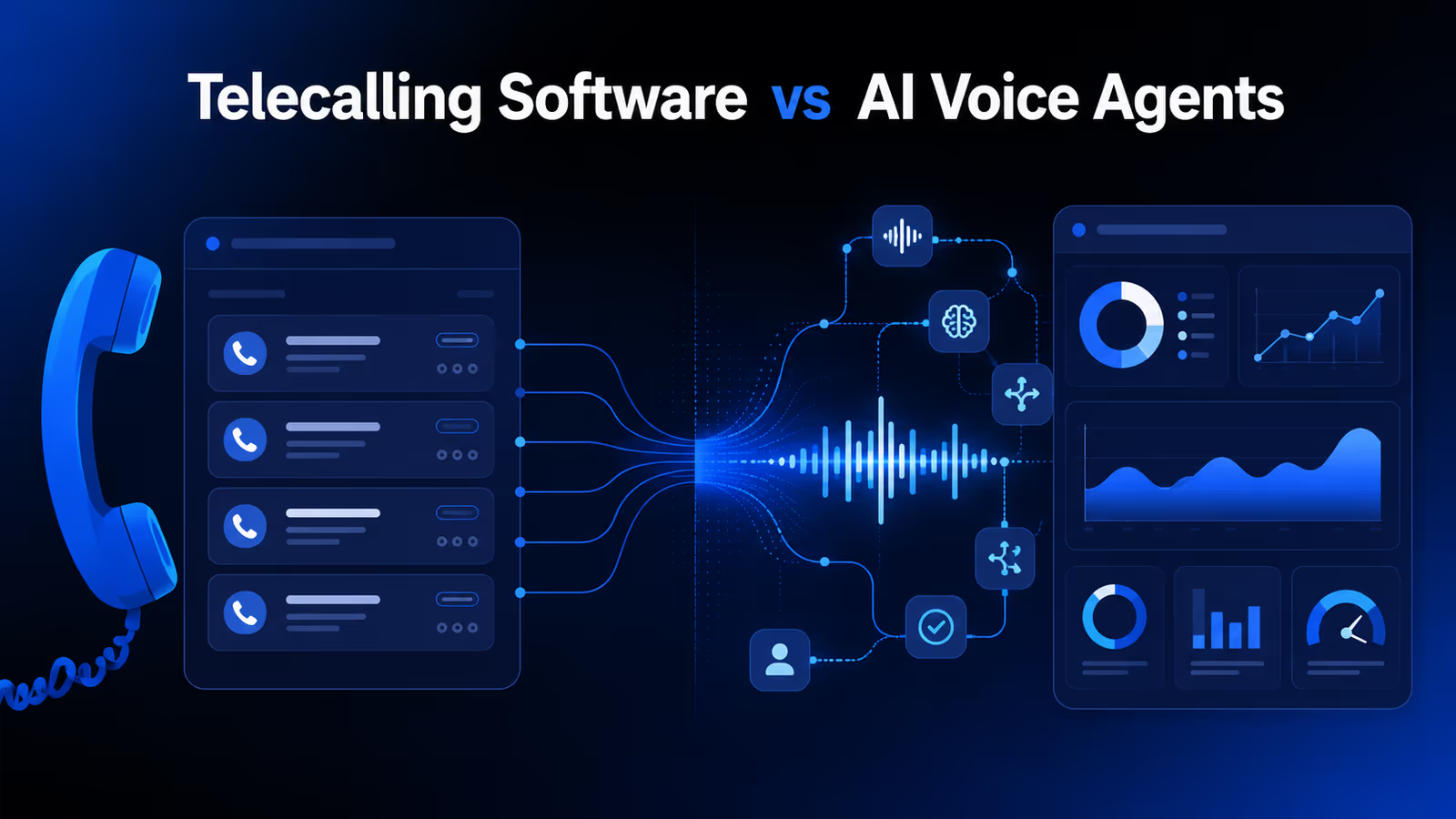
How AI-Powered Outbound Calling Compares With Manual Telecalling
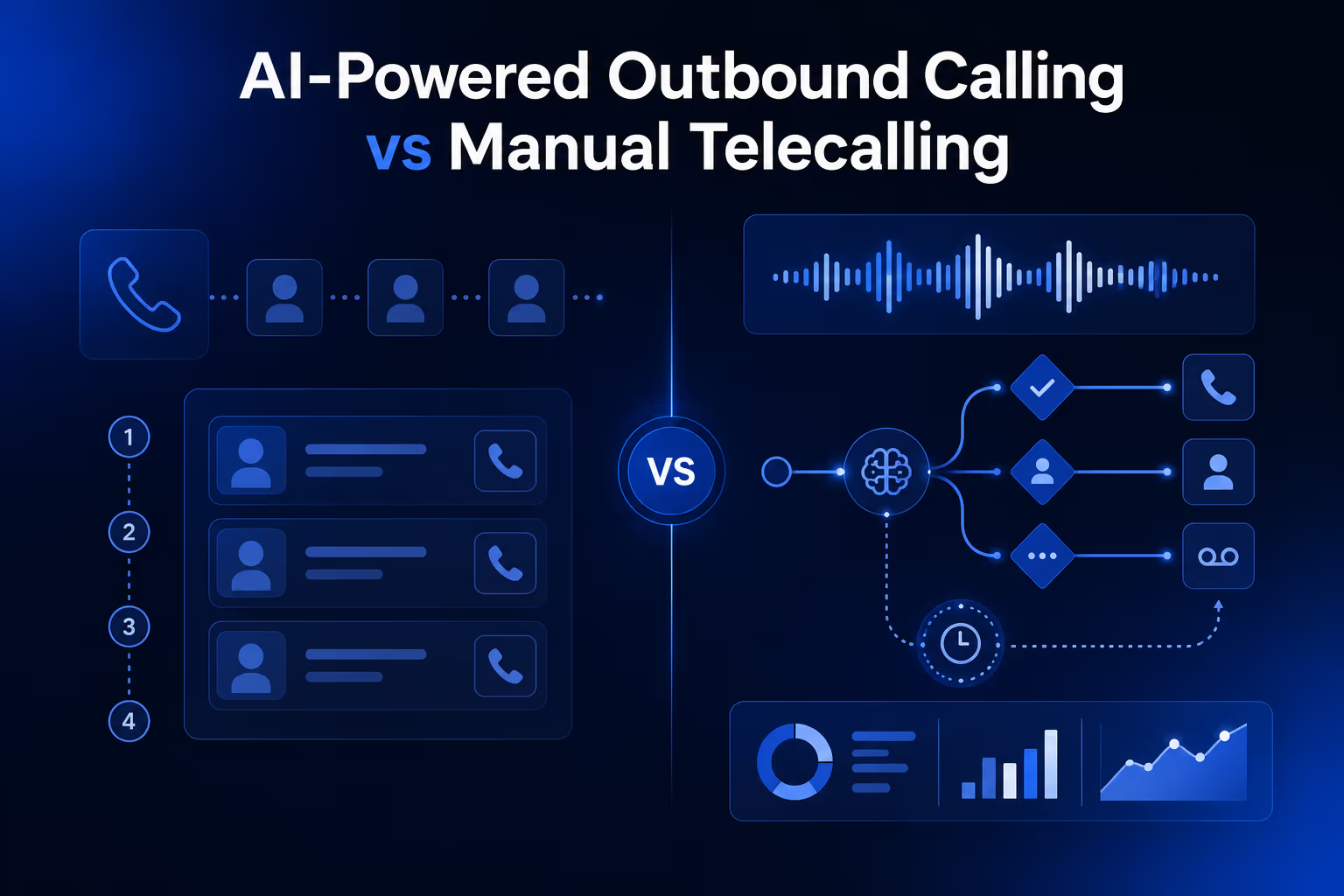
AI voice agents combine automated dialing with speech recognition, language understanding, voice generation, workflow logic, and system integrations. Instead of merely connecting a call, they can carry out the interaction.
An AI agent can introduce the purpose of the call, verify the customer, answer approved questions, record intent, schedule another call, send a WhatsApp message, and update the CRM. A human employee becomes necessary only when the conversation requires judgment, negotiation, empathy, or an exception.
The difference is therefore not simply manual dialing versus automatic dialing. It is assisted calling versus autonomous conversation management.
KPMG’s 2025 banking research recommends moving beyond basic chatbots toward context-aware AI agents capable of handling more nuanced interactions.
Advance telecalling software with Callveriq.
This blog is just the start.
Unlock the power of Callveriq’s AI with a live demo.

Where Telecalling Software Reaches Its Scaling Limits
Outbound telecalling software improves productivity, but Indian BFSI operations face several structural constraints.
1. Headcount Increases With Campaign Volume
More leads require more agents, longer shifts, or additional calling days. Seasonal campaigns, payment dates, insurance expiries, and regulatory deadlines can create sudden peaks that permanent teams cannot easily absorb.
2. Connectivity Consumes Agent Time
An agent may make several attempts before reaching a customer. Busy numbers, switched-off phones, unanswered calls, and inconvenient calling times reduce productive talk time.
AI can manage these attempts using controlled retry policies. Human employees can then receive customers who have answered, shown interest, or requested assistance.
3. Language and Training Create Friction
BFSI campaigns in India may need English, Hindi, Hinglish, and multiple regional languages. Building a large multilingual telecalling desk requires hiring, script training, call calibration, and continuous monitoring.
AI voice agents can be configured for approved languages and call flows, although language quality must still be tested with real customer utterances.
4. Call Quality Varies Between Agents
Two agents may explain the same loan offer differently. Another may skip a disclosure, enter an inaccurate disposition, or fail to record the preferred follow-up time.
This variation can reduce conversion visibility and create compliance concerns.
5. Channels Remain Disconnected
A customer may ignore a phone call but respond immediately on WhatsApp. Traditional telecalling often treats these interactions as separate campaigns. The caller may not know what the customer received or answered on another channel.
An AI-led workflow can coordinate calls, messages, reminders, and escalations around a single customer journey.
Expand telecalling software through Callveriq.
How Much Can AI Reduce Outbound Headcount?
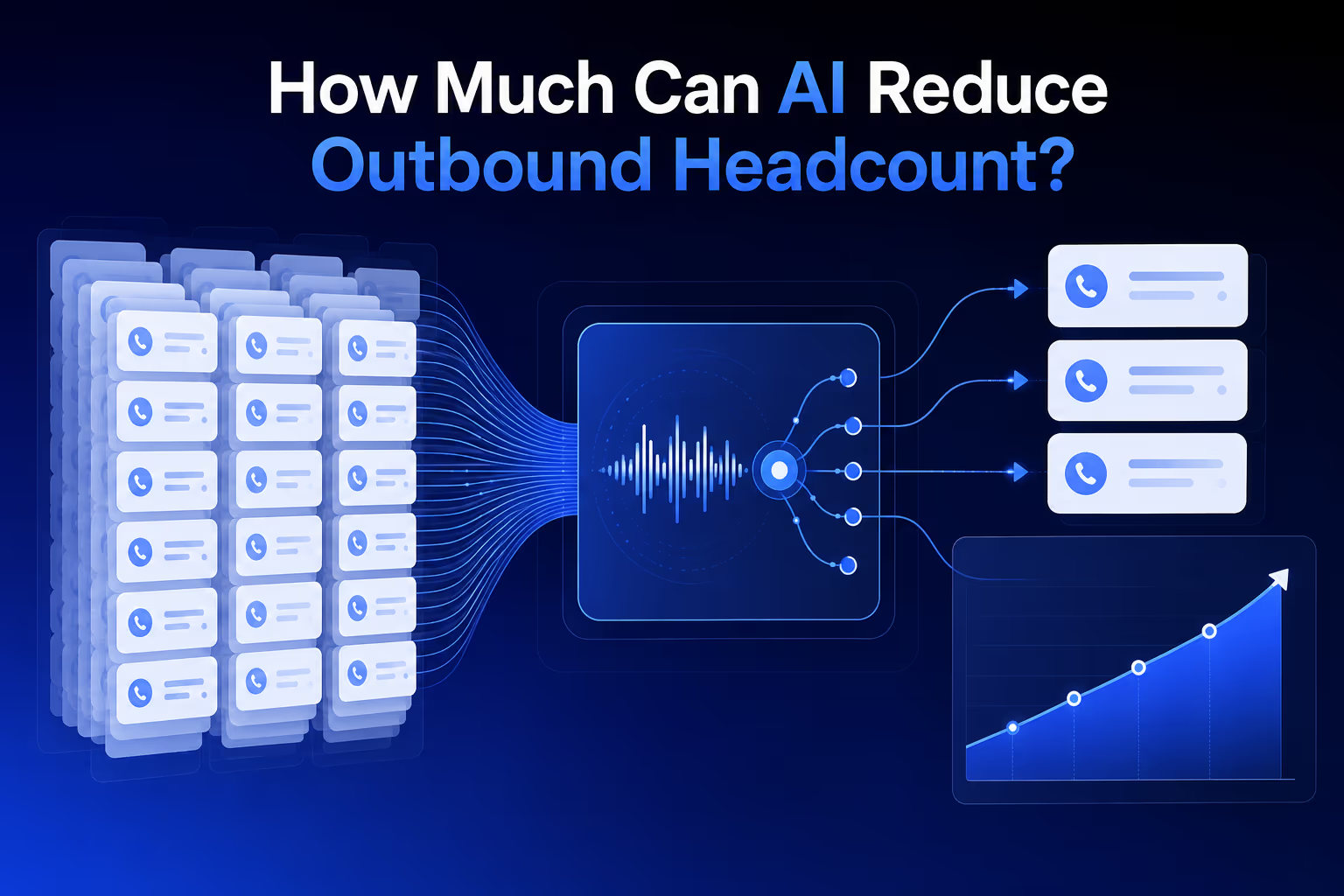
There is no credible universal percentage because the result depends on campaign type, average call duration, connectivity, escalation rate, compliance requirements, and the share of conversations AI can complete.
A more useful calculation is based on workload. Suppose a campaign currently requires 100 callers. If 60% of the workload consists of repetitive reminders, basic qualification, status confirmation, and retry attempts, AI could manage much of that layer. The existing employees could then concentrate on connected, interested, disputed, or high-value cases.
This does not automatically mean removing 60 people. It may allow the company to:
- Handle more leads with the same team
- Avoid hiring for a new campaign
- Reassign agents to higher-value conversations
- Extend calling capacity without adding shifts
- Reduce the number of agents needed for repetitive stages
Gartner found that only 20% of customer-service leaders had achieved AI-driven staffing reductions in 2025. The research suggests that AI is currently changing roles more frequently than eliminating them.
A practical business case should compare:
The objective should be capacity leverage, not an arbitrary headcount promise.
Optimize telecalling software with Callveriq.
Where Callveriq Fits Into the Outbound Model
Callveriq helps BFSI organizations move from dialer-led outreach to AI-managed customer conversations. Its AI voice agents can conduct calls, understand customer responses, capture dispositions, trigger follow-ups, and transfer selected conversations to human teams.
The broader workflow can include:
- Automated outbound voice calls
- Multilingual customer conversations
- Lead qualification
- Payment and renewal reminders
- WhatsApp follow-ups
- CRM updates
- Human handoffs
- Conversation monitoring and quality analysis
McKinsey’s 2026 banking review reports that leading banks using stronger customer-value and engagement systems are improving customer engagement by 20 to 30 percentage points. The takeaway is that isolated calling automation is insufficient. Decisioning, data, communication, and follow-up must work as one operating system.
Connect telecalling software to Callveriq.
Scale Conversations, Not Just Calling Seats
Telecalling software remains valuable for managing campaigns, agents, and call records. Its limitation is that every meaningful interaction still consumes human time.
AI voice agents change the economics by handling repetitive conversations, unsuccessful attempts, routine questions, and structured follow-ups at scale. Human teams remain essential, but their time can be directed toward customers who need negotiation, empathy, or expert assistance.
For BFSI teams, the strongest model is not fully manual or fully autonomous. It is a controlled hybrid system where AI creates reach and consistency while employees provide judgment. That is how outbound operations can grow without making headcount the only lever for growth.
Reimagine telecalling software with Callveriq.Book your Callveriq demo.
FAQs
1. Can AI telecalling software speak regional Indian languages?
Yes. AI systems can support multiple Indian languages, but each language and accent should be tested using actual customer conversations before deployment.
2. Does an AI voice agent require a separate dialer?
Usually, an AI voice agent works with an integrated telephony or dialer provider to initiate and receive calls.
3. Can AI calling systems update an existing CRM?
Yes. With the appropriate integration, outcomes, intent, call summaries, and follow-up details can be written into the CRM.
4. How should BFSI companies test AI outbound calling?
Begin with a controlled campaign, approved scripts, clear escalation rules, and measurable baselines for connectivity, cost, conversions, and compliance.
5. Can customers be transferred from AI to human agents?
Yes. Transfers can be triggered by customer intent, conversation complexity, risk indicators, or predefined business rules.