

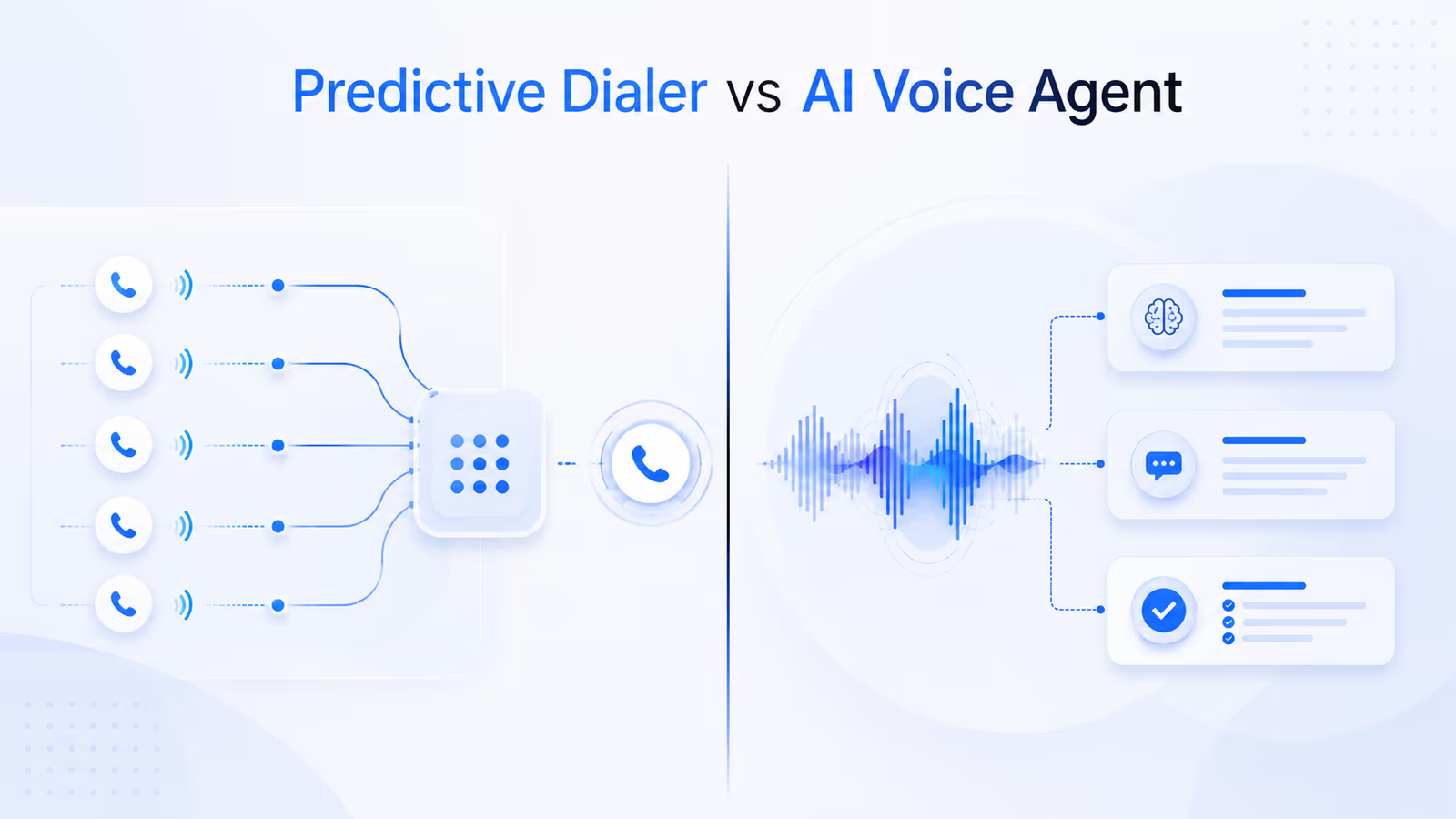
For BFSI outbound campaigns, neither technology can guarantee a particular connection rate. Connectivity depends heavily on data quality, caller reputation, timing, retry logic, telecom routing, and customer familiarity with the number. The real difference appears after someone answers. A predictive dialer optimizes dialing and agent utilization, while an AI voice agent can optimize the complete interaction. Lenders should therefore measure right-party contacts, meaningful conversations, promises to pay, completed actions, and cost per outcome not connect rate alone.
A collections manager begins Monday with thousands of overdue accounts. The team has enough agents to handle conversations, but a large share of their day disappears into unanswered calls, busy numbers, voicemail, and manual dispositioning.
A predictive dialer appears to solve this operational bottleneck. It calls multiple numbers, predicts agent availability, and connects answered calls to agents. More attempts can be completed without expanding the team. Yet the campaign dashboard may still reveal a familiar problem: attempts increased, but right-party contacts and repayment commitments did not rise proportionately.
The reason is simple. Dialing efficiency and conversation effectiveness are different problems. A dialer helps reach more numbers. It does not independently explain the outstanding amount, understand why a borrower missed a payment, negotiate an appropriate next step, or continue the interaction through another channel.
This distinction matters when BFSI leaders are comparing a predictive dialer vs AI voice agent. The decision should not be based solely on calls per hour. It should reflect what must happen after the borrower answers.
Salesforce’s 2025 research involving 9,500 financial-services consumers found that customers increasingly evaluate institutions through the quality and relevance of their digital experiences. At the same time, complete trust in AI remains limited, reinforcing the need for transparent automation and accessible human support.
What Is a Predictive Dialer and How Does It Work?
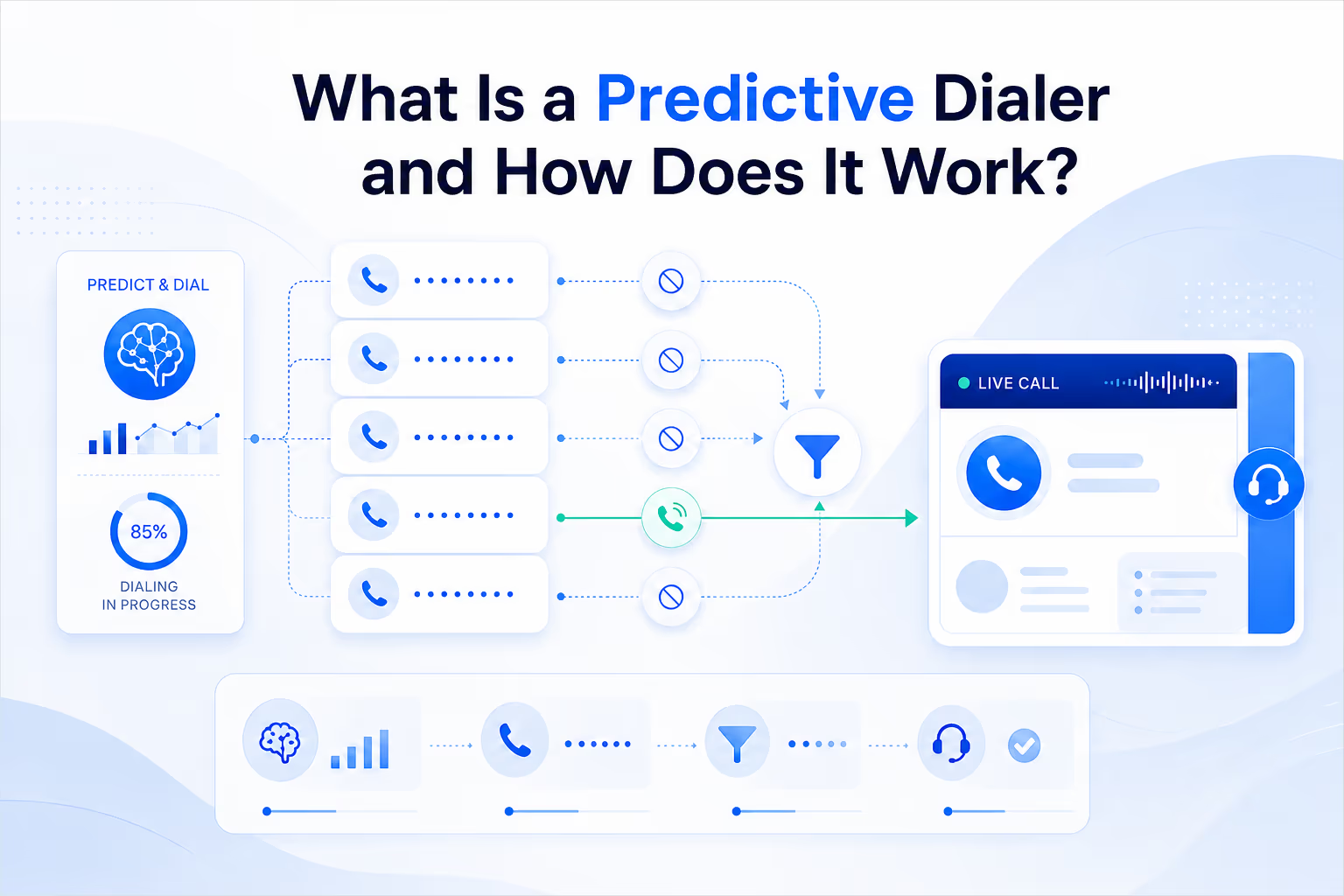
A predictive dialer is outbound calling software that automatically dials numbers from a campaign list before an agent becomes available. Its algorithm estimates when agents will complete their current calls and how many attempted calls are likely to be answered.
When a person answers, the system transfers the call to an available agent. Unanswered calls, busy numbers, disconnected lines, and other outcomes can be recorded automatically. A typical workflow looks like this:
- Customer or borrower records enter the campaign.
- The dialer calls several numbers simultaneously.
- Its algorithm filters unanswered or unsuccessful attempts.
- Answered calls are routed to available agents.
- Agents conduct the conversations.
- Call outcomes are recorded in the dialer or CRM.
- Records are queued for another attempt or follow-up.
Where Predictive Dialing Adds Value
A predictive dialer for BFSI can be effective when the institution already has a large agent team and wants to reduce idle time. It is particularly useful for standardized campaigns such as payment reminders, lead qualification, renewal calls, document follow-ups, and early-stage collections. It can help lenders:
- Increase calls attempted per agent
- Reduce manual dialing time
- Balance calls against agent availability
- Categorize basic telephony outcomes
- Prioritize records using campaign rules
- Monitor agent productivity
Where the Model Reaches Its Limit
A dialer automates the attempt, not the substantive conversation. Human agents are still required to explain, persuade, verify, negotiate, and update the customer record.
Aggressive dialing can also create operational problems. If more people answer than there are available agents, customers may experience silence, abandoned calls, or delayed connections. High attempt frequency can also affect customer experience and caller reputation. The lender therefore remains dependent on agent availability, training quality, adherence, and disposition accuracy, even after investing in dialing automation.
How Does a Predictive Dialer Compare to an AI Voice Agent for BFSI Outbound?
An AI voice agent is designed to conduct conversations rather than simply establish connections. It can greet customers, disclose the purpose of the interaction, understand responses, answer approved questions, collect information, handle routine objections, and trigger the next action.
For example, when a borrower says, “I can pay on Friday,” the AI voice agent can identify the commitment date, confirm the amount, update the account, and schedule a reminder. If the borrower disputes the outstanding amount, requests restructuring, or raises a sensitive concern, the call can be transferred or assigned to a human specialist.
A predictive dialer software purchase is primarily a workforce-efficiency decision. An AI voice agent is a conversation-automation and orchestration decision.
McKinsey’s 2026 Global Banking Annual Review reports that leading banks using customer value management engines are improving customer engagement by 20–30 percentage points. The broader lesson is that value comes from combining decisioning, customer data, engagement infrastructure, and operating processes not merely adding another calling tool.
This blog is just the start.
Unlock the power of Callveriq’s AI with a live demo.

What Connect Rates Are Realistic With a Predictive Dialer Versus AI Calling?
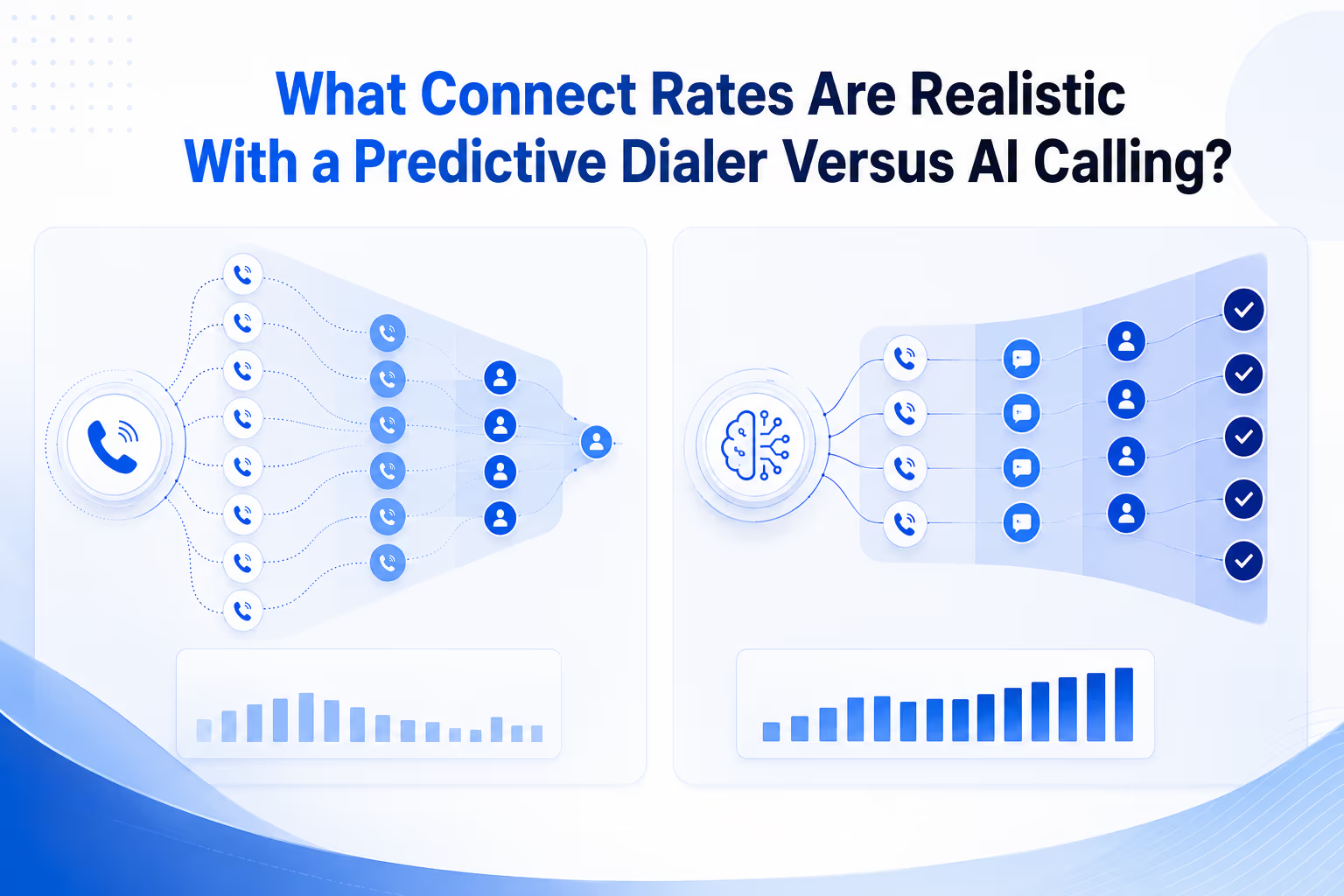
There is no universal benchmark that a lender should accept as a guaranteed connect rate. A predictive dialer and an AI calling system may even use the same telecom infrastructure, numbers, and campaign data. In that situation, their raw answer rates could be similar.
The more useful question is what each system achieves from those answered calls.
Separate the Outbound Funnel
BFSI teams should distinguish among the following metrics:
A platform reporting a 50% answer rate can still underperform if many calls reach the wrong person, end immediately, or fail to produce an action. Conversely, a campaign with a lower answer rate may generate better recovery economics if it creates more right-party conversations and keeps promises.
Factors That Influence Connect Rates
Realistic performance depends on:
- Accuracy and freshness of borrower data
- Caller ID recognition and number reputation
- Telecom routing and carrier performance
- Calling time and day
- Customer segment and delinquency stage
- Retry frequency and spacing
- Regional and language preferences
- Existing relationship with the lender
- Campaign purpose
- Spam identification or blocking
An AI voice agent does not automatically overcome poor data or telecom performance. Its advantage begins when it uses contextual timing, customer preferences, prior outcomes, and automated retries and when it can complete the conversation without waiting for an agent.
The right evaluation is a controlled pilot. Use the same customer segment, data-quality rules, calling windows, retry policy, and success definition. Then compare right-party contacts, conversations, actions completed, recovery value, complaints, and cost per outcome.
Which Is Better for BFSI Collections: A Predictive Dialer or an AI Voice Agent?
The answer depends on the collection stage, conversation complexity, and operating model.
A predictive dialer may be sufficient when a lender has trained agents, stable staffing, and a narrow need to increase agent talk time. It can also remain valuable for complex late-stage collections where negotiation, dispute resolution, or vulnerable-customer handling requires experienced human judgment.
An AI voice agent is usually more suitable for high-volume, repeatable interactions. These may include pre-due reminders, early-bucket collections, payment-link delivery, promise-to-pay confirmation, failed-payment follow-ups, and status checks.
The strongest model is often hybrid. AI handles repetitive conversations and identifies customer intent. Human agents focus on disputes, hardship, high-value accounts, escalations, and complex negotiations.
This aligns with Gartner’s 2025 finding that 95% of surveyed customer-service leaders planned to retain human agents. Gartner describes the direction as “digital first, but not digital only,” which is particularly relevant in regulated financial interactions.
Modernize predictive dialer collections with Callveriq.
How Callveriq Moves BFSI Campaigns Beyond Dialing Efficiency
Callveriq enables lenders to automate contextual outbound interactions instead of treating every answered call as another task for a human agent.
Its AI voice agents can be configured for reminders, collections, lead follow-ups, renewals, verification, and other BFSI workflows. The agent can interpret responses, classify intent, capture dispositions, trigger approved actions, and escalate calls based on campaign rules.
Callveriq can also extend the journey across channels. If a borrower asks for a payment link or prefers a written reminder, the interaction can continue through an approved messaging workflow rather than ending with the call. The objective is not to replace human judgment everywhere. It is to reserve human effort for conversations where judgment creates the most value. A useful Callveriq pilot should measure:
- Right-party contact rate
- Meaningful conversation rate
- Promise-to-pay and kept-promise rates
- Automated resolution rate
- Escalation accuracy
- Cost per successful outcome
- Complaint and opt-out rates
- Performance by language and customer segment
KPMG’s 2026 banking outlook notes that AI is moving from experimentation toward practical utility, while governance and risk management remain critical. That is the appropriate lens for BFSI automation: scale should be paired with monitoring, controls, auditability, and accountable human ownership.
Replace predictive dialer limits with Callveriq.
Optimize Conversations, Not Just Call Attempts
A predictive dialer remains useful for lenders that want to increase the productivity of an existing agent workforce. It reduces manual dialing and helps agents spend more time speaking with customers. However, it does not independently improve what happens during or after the conversation.
An AI voice agent addresses a broader operational problem. It can conduct routine conversations, capture intent, complete approved actions, schedule follow-ups, and escalate complex cases. For BFSI leaders choosing between the two, the right metric is not the highest number of calls or even the highest raw answer rate. It is the number of compliant, meaningful conversations that produce a measurable business outcome at a sustainable cost.
Callveriq helps lenders test this model without abandoning human expertise. By combining automated conversations with intelligent escalation, BFSI teams can improve campaign coverage while keeping agents focused on interactions that genuinely require them.
Transform your predictive dialer strategy. Book your Callveriq demo.
FAQs
1. Can an AI voice agent integrate with an existing predictive dialer?
Yes. Depending on the existing technology stack and available APIs, AI voice agents may complement current dialer, CRM, loan-management, and payment systems. The integration should prevent duplicate attempts and maintain a unified interaction history.
2. Does AI calling eliminate the need for collection agents?
No. AI is best suited to repetitive and predictable interactions. Human agents remain important for disputes, hardship cases, negotiations, complaints, and other sensitive conversations.
3. How long should a BFSI outbound pilot run?
The pilot should run long enough to cover representative customer segments, calling windows, retry cycles, and operational exceptions. Success criteria and baseline metrics should be documented before launch.
4. Can AI voice agents support regional Indian languages?
Yes, provided the chosen platform supports the required languages and is tested with relevant accents, code-switching patterns, financial terminology, and real campaign scenarios.
5. What should lenders test before deploying automated calls?
They should test consent and suppression rules, scripts, disclosures, identity checks, calling windows, escalation paths, data capture, integrations, security controls, audit trails, failure handling, and customer complaints.