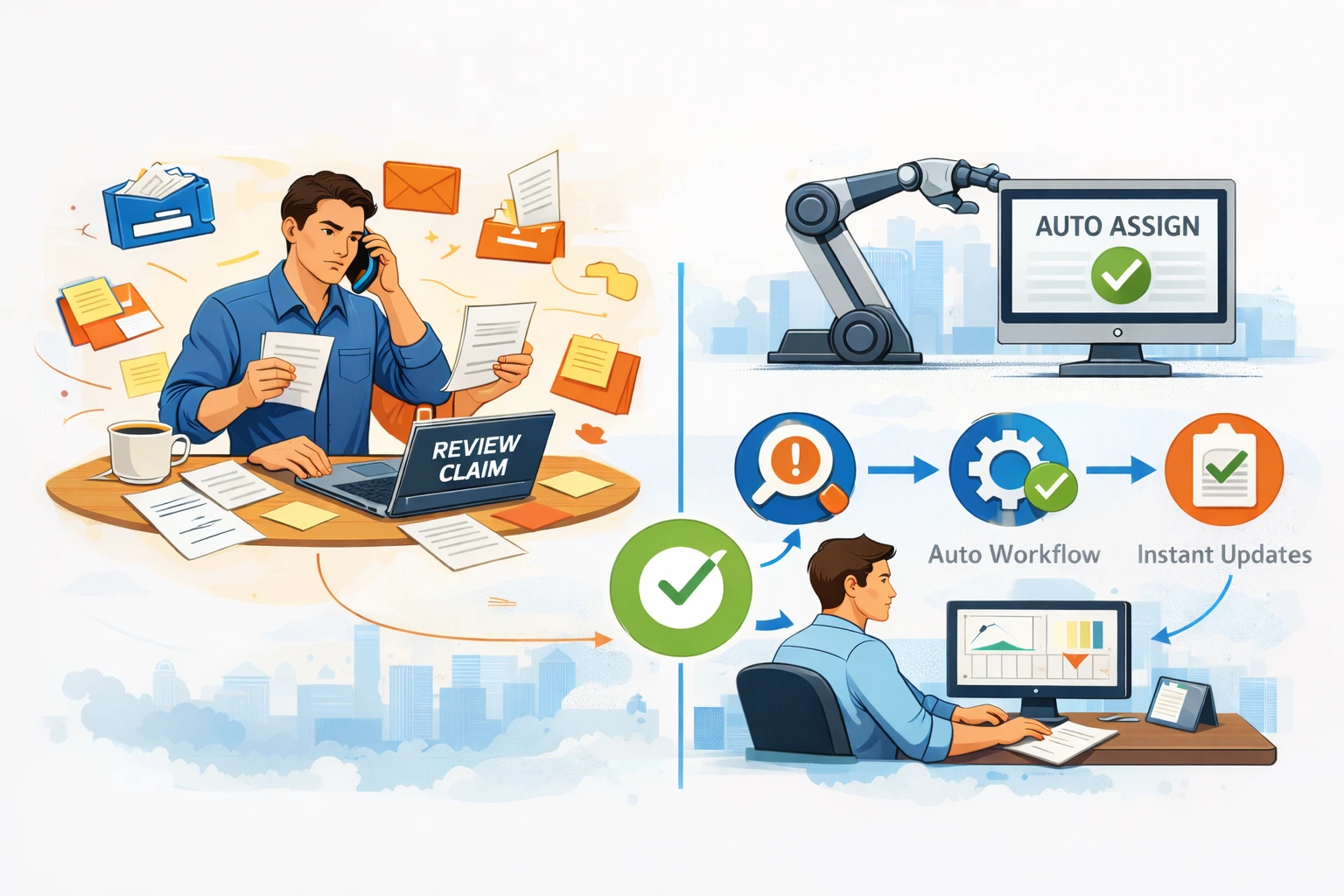


Imagine someone searching for health insurance after dinner. They compare two policies, enter their phone number, and leave the page because the benefits are difficult to understand. By the time an agent calls the next afternoon, they have already spoken to another insurer.
This is one of the problems insurtech is trying to solve.
Insurance has traditionally depended on agents, branches, brokers, call centers, paperwork, and increasingly, digital portals. But digitizing an existing process does not necessarily make the customer journey faster or easier.
Modern insurtech combines data, automation, artificial intelligence, digital distribution, and connected customer experiences to rethink how insurance is bought, serviced, renewed, and claimed.
The shift is especially relevant in India, where insurers must serve large, multilingual customer bases while balancing accessibility, personalization, compliance, and cost.
What Is Insurtech?
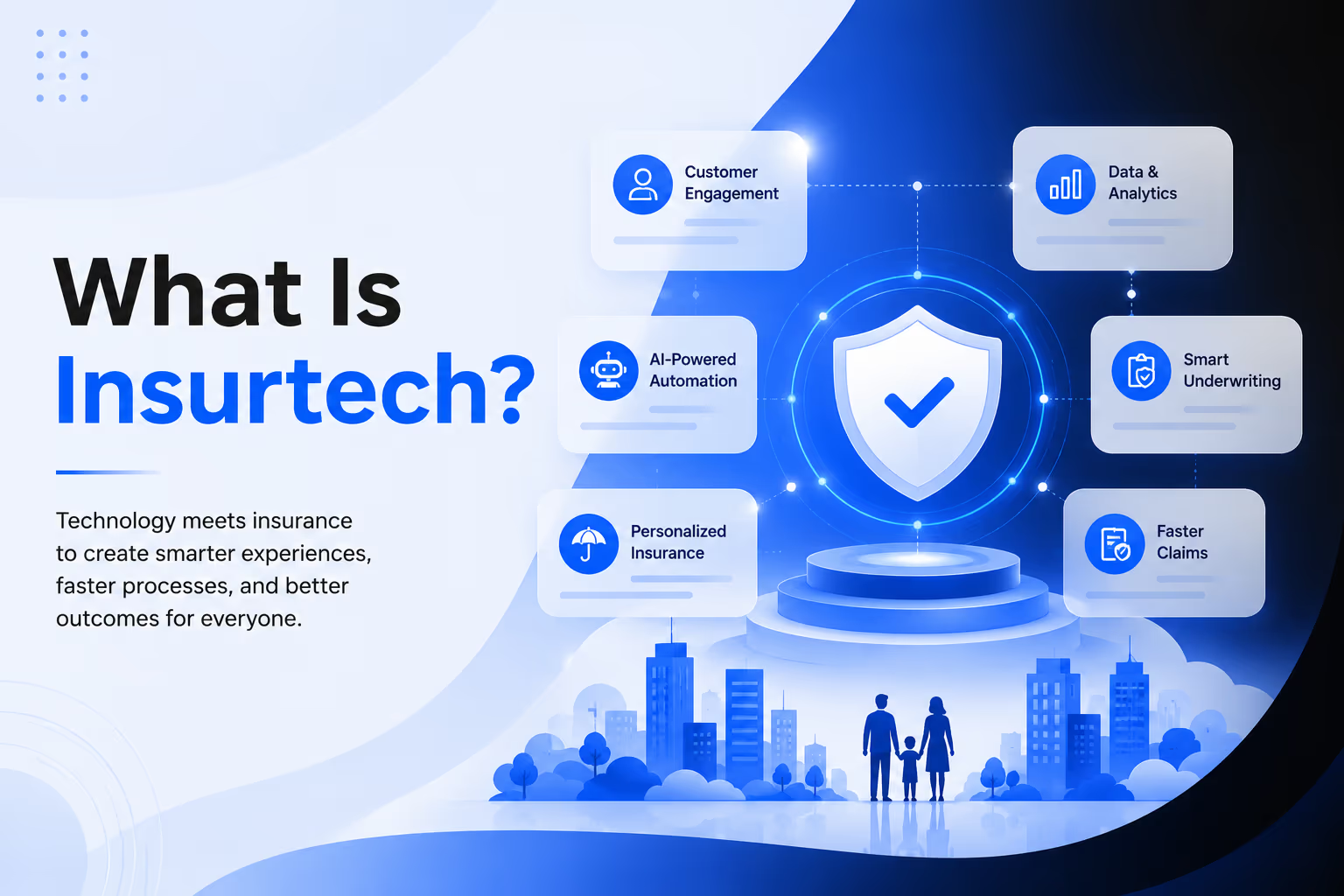
Insurtech, short for insurance technology, refers to the application of modern technology to improve how insurance products are created, distributed, purchased, serviced, and managed.
The term covers far more than insurance apps or online policy comparison. Insurtech India is increasingly associated with technologies such as artificial intelligence, machine learning, conversational AI, automation, advanced analytics, APIs, telematics, and digital payments.
These technologies can influence almost every stage of insurance:
This distinction matters because insurtech is not simply about putting an existing insurance workflow online. It is about using technology to redesign the workflow itself.
McKinsey's 2025 research on insurtech highlights how AI can help insurers address underinsured markets, improve risk prevention, and develop new approaches to insurance products and services.
Explore smarter insurance conversations with Callveriq.
How Is Insurtech Different From Traditional Insurtech?
Insurance companies have used technology for decades. Policy administration systems, CRM platforms, call-center software, underwriting databases, and claims-management systems are not new.
What has changed is what technology can actually do. Traditional insurtech largely helped employees record and process information. Modern insurtech solutions increasingly help businesses interpret information, make recommendations, initiate actions, and interact directly with customers.
Consider renewals.
A traditional system might identify policies expiring within 30 days and generate a list for agents. An AI-enabled system could identify the same customers, prioritize them, initiate personalized conversations, answer common questions, capture intent, schedule follow-ups, and route interested customers to an advisor.
The objective is not necessarily to remove the advisor. It is to remove repetitive work surrounding the advisor.
KPMG's 2025 Intelligent Insurance research found that 85% of surveyed insurance leaders believe companies embracing AI will develop a competitive advantage, while 66% expect moderate to very high ROI from AI.
See insurance automation possibilities with Callveriq.
This blog is just the start.
Unlock the power of Callveriq’s AI with a live demo.

Why Is Insurtech Growing in India?

India presents an unusual insurance distribution challenge: scale and complexity exist at the same time.
Customers differ by language, geography, income, insurance awareness, preferred communication channel, and comfort with digital transactions. At the same time, insurers must explain products that can be inherently difficult to understand. This makes distribution more than a reach problem. It is also a communication problem.
A prospective policyholder may discover insurance through an advertisement, research it online, request a callback, speak with an advisor, receive documents on WhatsApp, and complete the transaction digitally. Every disconnected step creates another opportunity for abandonment.
Customer expectations are also changing. People accustomed to instant payments, e-commerce tracking, and app-based services increasingly expect insurance interactions to provide similar convenience.
KPMG's India CX Report '25 for general insurance notes the growing importance of personalized offerings and embedded insurance. It also highlights automated reminders, one-click renewals, AI-powered support, and proactive notifications as mechanisms insurers can use to reduce customer effort.
The report also found that 48% of customers surveyed were likely to substitute their insurance provider, illustrating why experience matters beyond initial acquisition.
Discover connected insurance journeys with Callveriq.
How Is AI Reshaping Insurance Distribution in India?
Distribution has traditionally been highly dependent on people. Agents identify prospects, explain products, follow up, collect information, answer questions, remind customers, and eventually help them purchase or renew a policy.
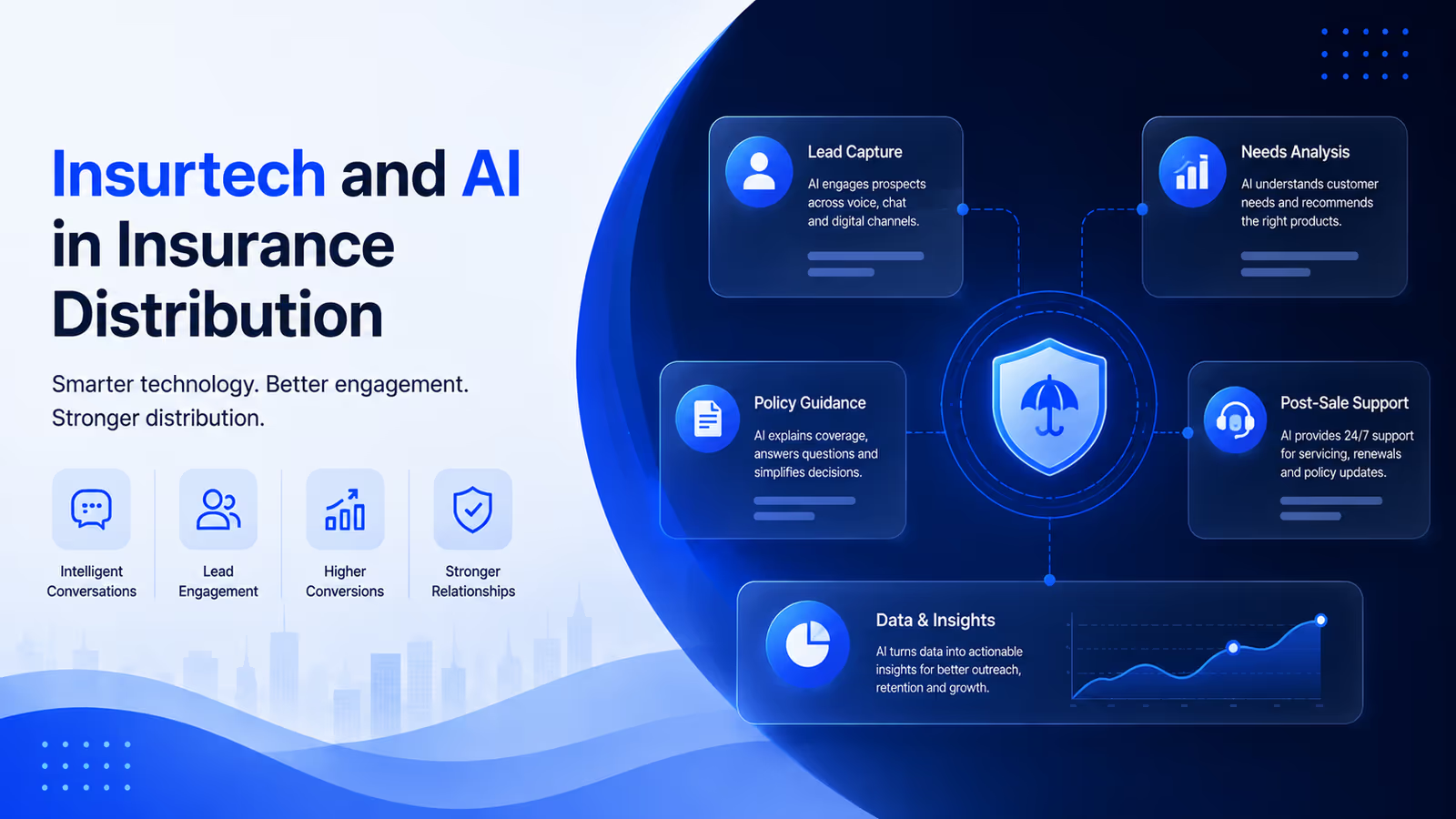
AI changes the economics of some of these activities because customer conversations no longer have to begin only when a human becomes available. An AI sales agent can potentially engage a new lead immediately, understand basic requirements, answer routine questions, capture intent, follow up with the prospect, and transfer the conversation when human expertise becomes necessary.
This creates a hybrid distribution model.
- AI Can Respond When Customer Intent Is Highest
Someone requesting an insurance quote at 10:30 p.m. may not want to wait until the next business day. Conversational AI can acknowledge the request immediately, collect relevant information, answer straightforward questions, and arrange the next step.
That speed matters because digital insurance customers can compare alternatives quickly.
- AI Can Make Follow-Ups More Consistent
Insurance sales rarely happen after one interaction. Customers may need time to compare premiums, understand exclusions, discuss the purchase with family, submit documents, or simply wait until payday.
That creates a large operational challenge: remembering who needs to be contacted, when, through which channel, and about what. AI-enabled workflows can make those follow-ups systematic rather than dependent entirely on manual task lists.
- AI Can Help Prioritize Human Attention
Not every lead needs the same level of assistance. One prospect may simply need a policy brochure. Another may have detailed questions about exclusions. A third may be ready to purchase immediately.
AI can help identify these differences and route conversations accordingly, allowing human agents to concentrate on interactions where advice, persuasion, empathy, or complex decision-making adds the most value.
McKinsey's July 2026 analysis argues that AI could reshape insurance economics across carriers, distributors, and technology providers. It identifies distribution as a particularly significant cost area and suggests AI could alter long-standing industry structures.
Explore AI-led insurance distribution with Callveriq.
What Insurtech Use Cases Matter Most for Customer Engagement and Sales?
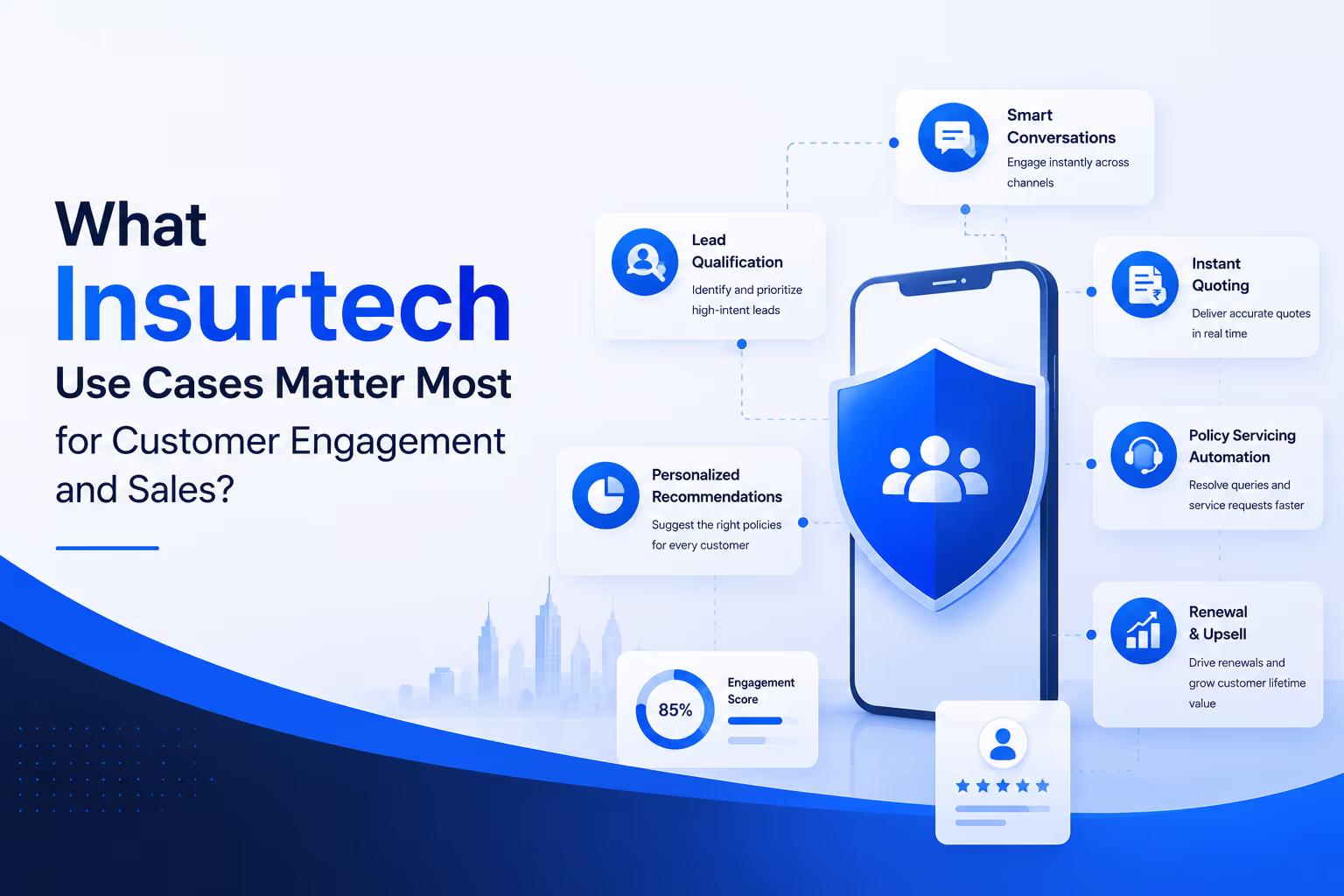
The most visible insurtech AI applications are often chatbots. But customer engagement extends much further. Insurance involves a series of conversations before and after a policy is purchased. Those conversations create multiple opportunities for automation.
1. Lead Qualification
AI can initiate conversations with new prospects and collect information such as product interest, preferred callback time, language, location, or purchase intent.
This allows sales teams to differentiate between early-stage researchers and customers who may be ready to speak with an advisor.
2. Policy Education
Insurance terminology can be difficult for first-time buyers. Conversational systems can help customers understand basic concepts, product features, premiums, coverage, and frequently asked questions before escalating detailed financial or policy-specific discussions to qualified professionals.
3. Quote and Application Follow-Ups
Customers frequently begin applications without completing them.
Instead of treating every incomplete application identically, insurtech companies can use behavioral and conversational signals to determine the appropriate next interaction.
4. Renewal Engagement
Renewals are well suited to proactive communication because insurers already know when a policy is approaching expiry.
AI can remind customers, explain next steps, answer routine questions, and escalate customers who need additional assistance.
5. Cross-Sell and Upsell Conversations
Customer data can help insurers identify potentially relevant products, but relevance matters.
The role of AI is not simply to send more messages. It can help determine whether a conversation is appropriate and personalize engagement based on the customer's existing relationship and context.
6. Customer Service
Policyholders frequently contact insurers for recurring requests such as policy information, payment status, document requirements, claim updates, or renewal dates.
AI can address simpler interactions while handing complex or sensitive conversations to people.
Salesforce's 2025 Connected Financial Services research, based on 9,500 financial-services consumers globally, found that fewer than half were fully satisfied with the experiences delivered by banks, insurers, and wealth-management providers. Salesforce points to AI agents as one opportunity for financial institutions to deliver faster and more personalized digital experiences.
Build better insurance engagement with Callveriq.
Which Areas of Insurance Are Being Transformed Fastest by Insurtech?
Insurtech's impact extends across the insurance value chain, but some areas are particularly suited to technological transformation.
- Distribution and Customer Engagement
Distribution is becoming more connected, conversational, and data-driven. This is where AI sales agents are particularly relevant because the problem is not only automating a transaction. Insurers need to maintain conversations across the buying journey.
- Underwriting
AI can process large quantities of structured and unstructured information, helping underwriting teams evaluate risk and reduce manual processing. The goal is not simply faster decisions. Better data usage can also support more granular risk assessment and personalization.
- Claims
Claims combine documentation, verification, communication, and decision-making, making them a natural target for automation. AI can help classify documents, summarize information, prioritize cases, detect anomalies, and keep customers informed while human specialists manage complex decisions.
- Customer Service
Customer service is moving from basic chatbots toward AI systems capable of completing increasingly sophisticated workflows.
Gartner predicts that agentic AI could autonomously resolve 80% of common customer-service issues by 2029, potentially reducing operational costs by 30%.
Explore intelligent insurance engagement with Callveriq.
How Are AI Sales Agents Different From Insurance Chatbots?
This distinction will become increasingly important as insurtech solutions evolve. Traditional chatbots generally wait for customers to initiate an interaction and respond according to predefined flows or knowledge bases. AI agents can potentially operate across a broader workflow.
For example, imagine a customer who requests a term-insurance quote but does not complete the application.
A chatbot may answer questions if that customer returns to the website. An AI sales agent could instead identify the incomplete journey, initiate an approved follow-up, understand why the customer stopped, answer common questions, schedule another interaction, update the relevant system, and involve a human advisor when required.
The difference is therefore moving from answering toward acting. This does not mean every insurance conversation should become autonomous. High-impact decisions, regulated advice, complaints, complex claims, and emotionally sensitive situations may continue to require human judgment. The emerging model is more likely to combine automation with human expertise.
Salesforce's latest State of Service: Financial Services Edition includes responses from 821 financial-services customer-service professionals, including 261 working in insurance, and examines how AI agents are affecting employee capacity and customer experiences.
Understand AI insurance conversations with Callveriq.
What Does the Future of Insurtech Look Like?
The next phase of insurtech is unlikely to be defined by one technology. Instead, insurance workflows will increasingly combine AI, automation, data, APIs, digital channels, and human expertise.
McKinsey's 2025 research on the future of AI in insurance argues that extracting significant value requires insurers to move beyond isolated AI experiments toward broader organizational transformation.
KPMG reaches a similar conclusion. Its research describes the emergence of generative and agentic AI as creating new possibilities across insurance while also highlighting legacy technology, data readiness, regulation, and trust as barriers to adoption.
For India, this evolution could be particularly consequential. Technology can help insurers communicate across languages, extend distribution beyond traditional physical networks, respond to prospects faster, simplify servicing, and make customer engagement more accessible at scale.
But the strongest insurtech companies will not necessarily be those that automate the most interactions. They will be those that understand which interactions should be automated, which require a human, and how the two should work together.
See connected AI journeys with Callveriq.
Insurtech Is Changing How Insurance Reaches Customers
Insurtech began with a relatively straightforward promise: use technology to make insurance simpler.
That promise is becoming much larger. AI is pushing insurtech beyond digitization toward systems that can understand customer intent, personalize interactions, coordinate follow-ups, assist employees, and increasingly take action across customer journeys. For Indian insurers, this creates an opportunity to rethink one of the industry's oldest challenges: how to reach, educate, and serve millions of customers efficiently without making insurance feel impersonal.
The future of insurance distribution is therefore unlikely to be purely digital or purely human. It will be a combination of technology that handles scale and people who provide judgment, expertise, trust, and empathy.
That is ultimately where the next phase of insurtech becomes most interesting.
Explore insurtech AI agents with Callveriq.
FAQs
1. Is insurtech only useful for large insurance companies?
No. Insurtech can support insurers, brokers, aggregators, and other insurance businesses of different sizes.
2. Can insurtech help reduce insurance operating costs?
Yes. Automation can reduce repetitive manual work across customer service, sales, claims, and policy management.
3. What technologies are commonly used in insurtech?
Insurtech commonly uses AI, machine learning, conversational AI, automation, APIs, cloud computing, and data analytics.
4. Does insurtech replace insurance agents?
Not necessarily. It can automate routine tasks while helping agents focus on complex conversations and customer decisions.
5. What are the biggest challenges in adopting insurtech?
Common challenges include legacy systems, data quality, regulatory compliance, integration complexity, and customer trust.