

Insurance Software Is a Stack, Not a Single Purchase
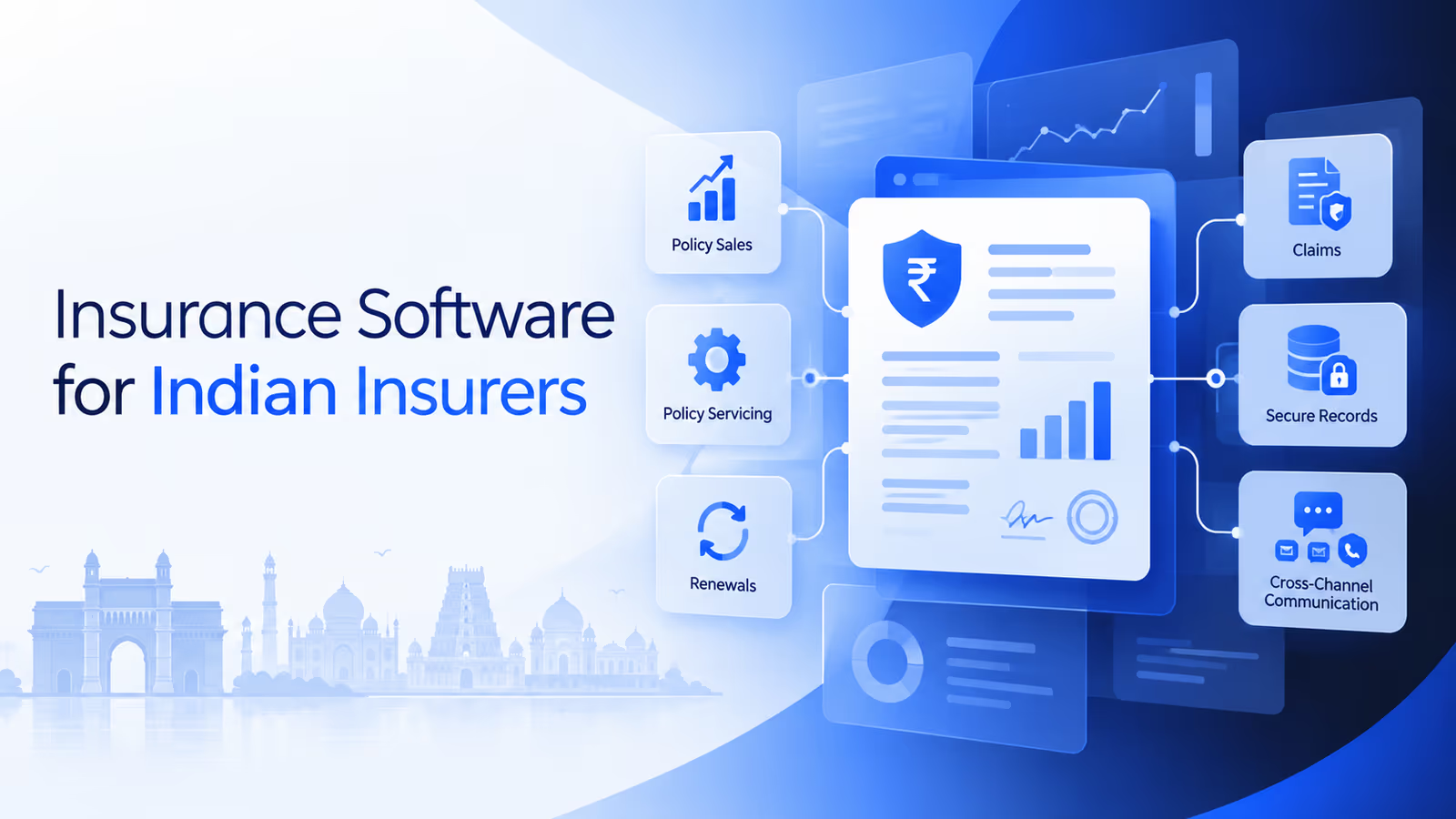
The phrase insurance software can refer to very different systems. A policy administration platform may issue endorsements and calculate premiums. A claims platform manages first notice of loss, reserves, documents, and settlements. A CRM records relationships. A communication layer handles calls, WhatsApp messages, emails, reminders, and escalation. All are useful, but they solve different parts of the operating model.
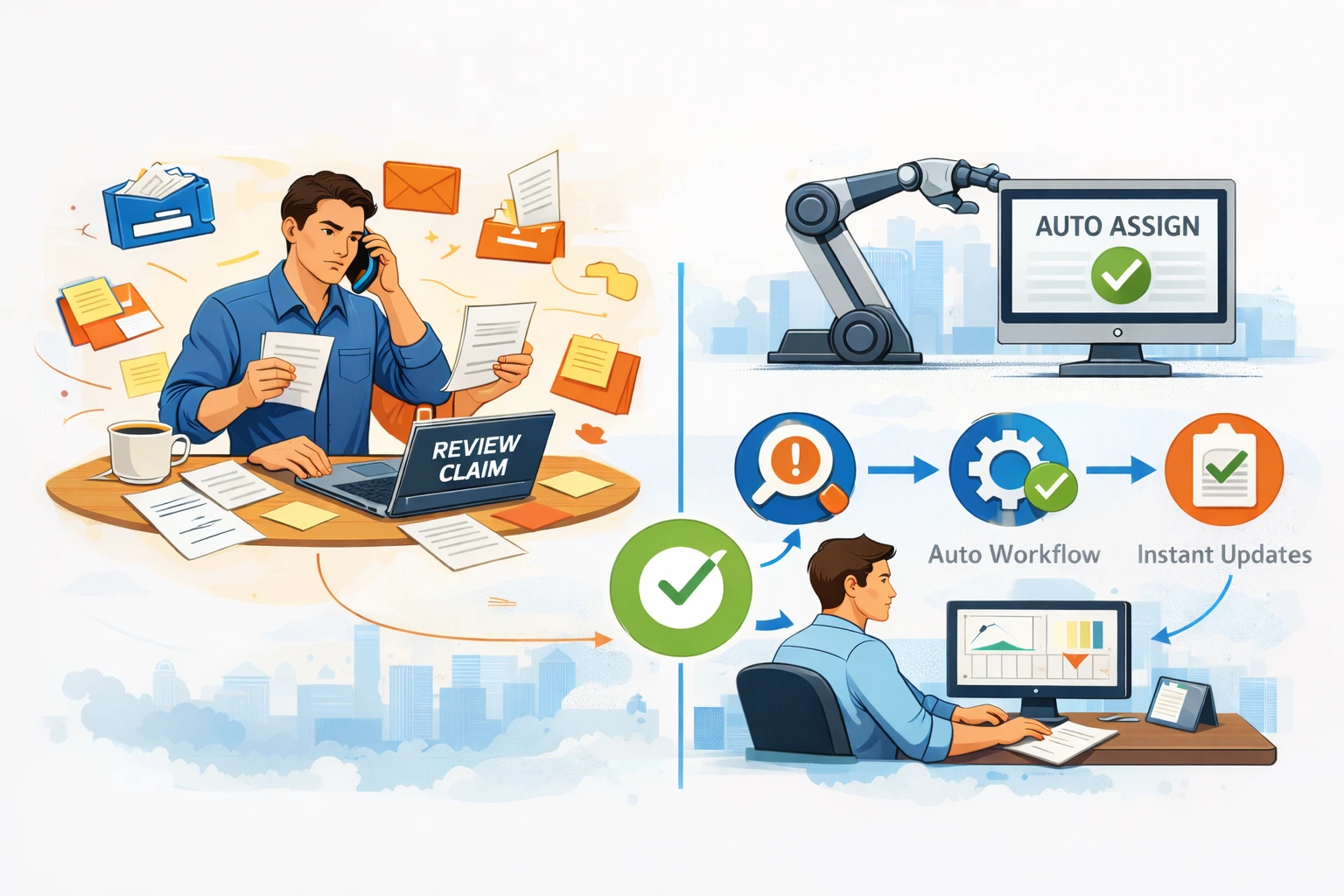
The buying mistake is to evaluate each category in isolation. A platform can perform its own function well while still creating a broken customer journey. For example, a lead may enter through an aggregator, move to an advisor, receive a quote by email, upload documents over WhatsApp, and call later for clarification. If those events do not share context, the insurer sees five activities while the customer experiences one frustrating conversation.
This matters as service becomes more closely tied to retention and revenue. Salesforce's 2025 State of Service reports that AI is expected to handle half of service cases by 2027, compared with 30% at the time of the study. The implication is not that every insurer should automate everything. It is that its architecture must support intelligent routing, context continuity, and safe transfer to employees.
Map your journeys with Callveriq.
What Are The Core Insurance Software Categories Indian Insurers Need
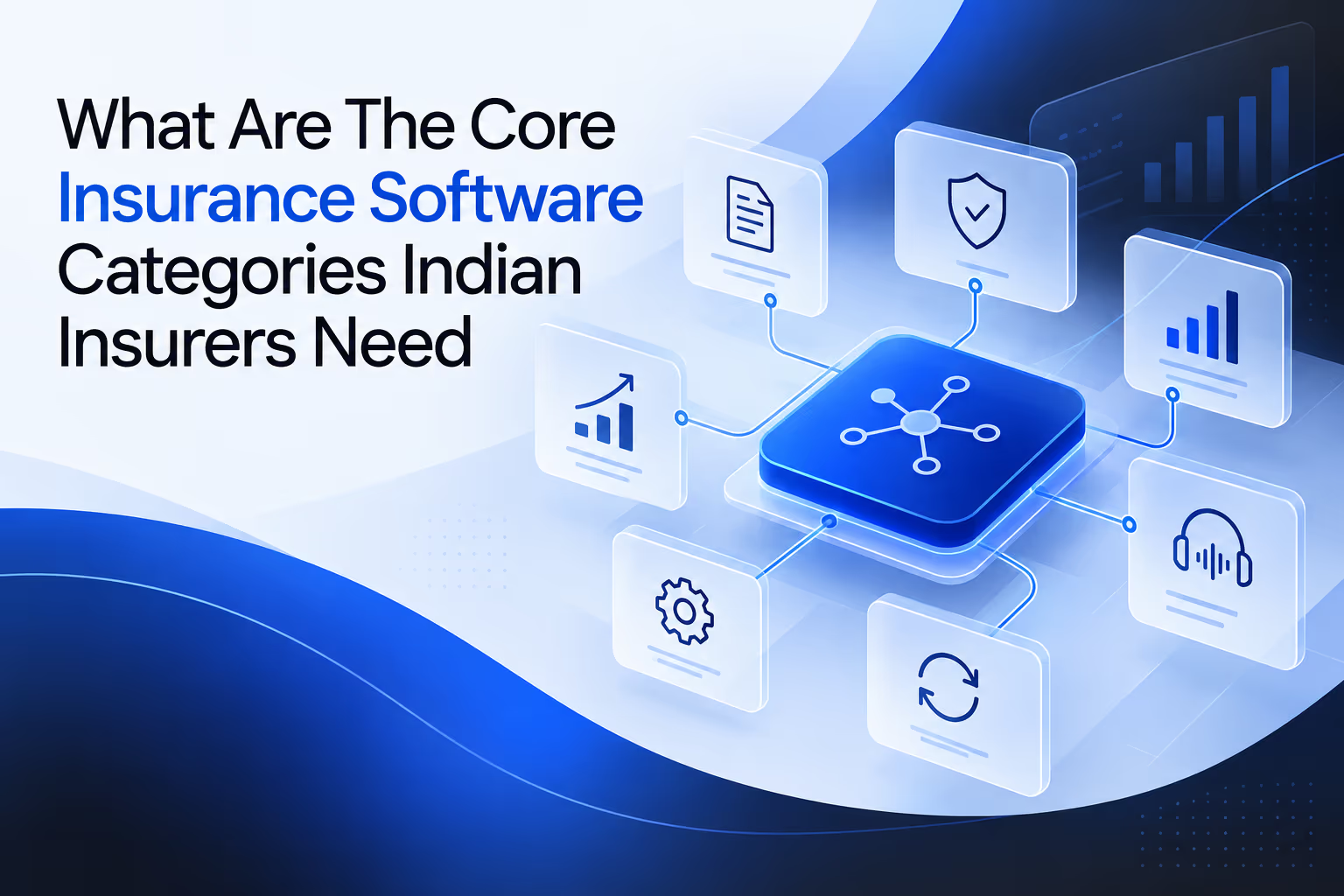
An effective insurance software platform should be judged by the operating responsibility it owns and the information it must exchange with adjacent systems.
Systems of record versus systems of engagement
Systems of record establish what is true: the active policy, premium due, nominee, claim status, or endorsement. Systems of engagement determine how a customer or intermediary acts on that truth. Insurers need both. A messaging tool should not invent policy status, while a core policy platform should not be expected to orchestrate every conversation.
Horizontal platforms versus insurance-specific products
Horizontal CRM, workflow, analytics, and communication tools can offer flexibility. Insurance-specific products provide domain objects and workflows out of the box. The right balance depends on product complexity, internal engineering capacity, distribution model, and the need to differentiate customer journeys.
Connect records and conversations together.
How to Evaluate Insurance Software for Policy Sales
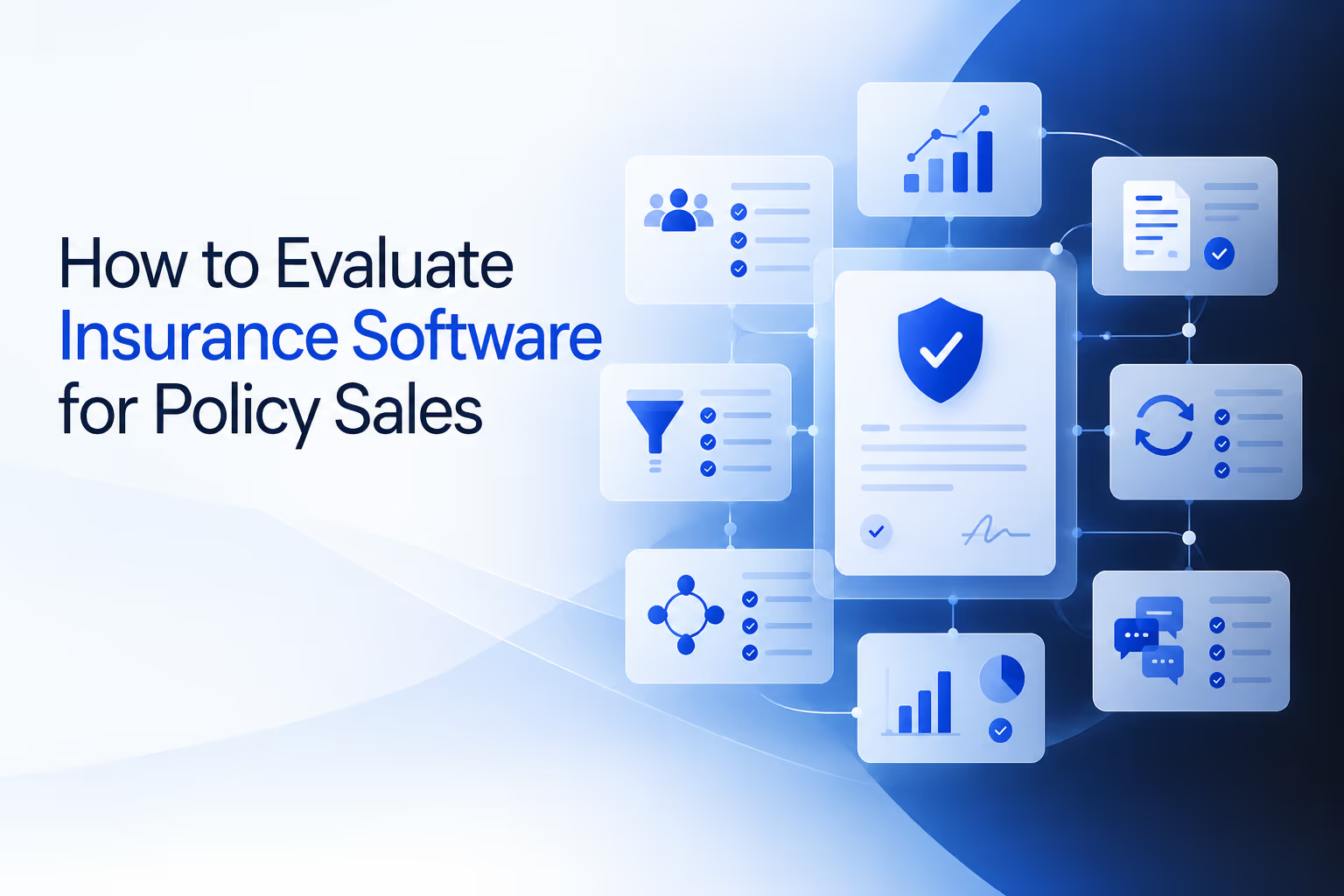
Commercial evaluation should begin with the sales motions the insurer must support: direct digital purchase, assisted sales, agents, brokers, bancassurance, embedded insurance, renewals, or a mix of these.
1. Lead capture and identity resolution
The system should capture source, campaign, consent, product interest, geography, language preference, and prior interactions. It should also reduce duplicate records across forms, calls, messaging channels, and partner uploads. Without identity resolution, teams may contact the same prospect repeatedly or fail to recognize an existing policyholder.
2.Quote and illustration workflows
An insurance software solution should make product eligibility, quote versions, disclosures, medical or inspection requirements, and approval steps visible. Buyers should test how the platform handles changed inputs, abandoned quotes, referred cases, and handoffs from digital journeys to advisors.
3. Follow-up orchestration
The system should trigger the next appropriate action based on status, not simply send a fixed sequence. A prospect awaiting documents needs a different conversation from one comparing premiums or asking about exclusions. Rules must also respect channel consent, contact windows, suppression lists, and escalation policies.
4. Sales measurement
Require visibility into conversion by source, product, partner, stage, advisor, and reason for loss. Activity volume alone is not a buying outcome. The architecture should connect conversations to quote creation, payment, issuance, and renewal so teams can identify where revenue actually leaks.
Evaluate Callveriq for sales orchestration.
This blog is just the start.
Unlock the power of Callveriq’s AI with a live demo.

How to Evaluate Insurance Software for Service and Claims
After issuance, customers rarely think in software categories. They ask whether a payment has been received, how to change a detail, why a claim needs another document, or when a renewal is due. Good insurance software in India should make those journeys intelligible across self-service and assisted channels.
1. Omnichannel context
Agents should see relevant conversation history and verified system data without searching multiple windows. When automation cannot resolve an issue, the transfer should include intent, authentication state, documents requested, and actions already attempted.
2. Service workflow controls
Look for configurable service requests, turnaround-time tracking, approval rules, document checklists, notifications, and exception queues. The platform should distinguish a reminder from a regulated communication and record what was sent, when, through which channel, and against which policy or claim.
3. Human oversight
Gartner's 2025 customer-service research found that 95% of surveyed service leaders planned to retain human agents to define AI's role. For insurers, the practical lesson is to design automation with confidence thresholds, escalation routes, reviewable transcripts, and clear ownership.
4. Customer experience evidence
KPMG's India CX Report'25 for financial services treats life insurance and general insurance as distinct customer journeys. Buyers should therefore avoid generic demonstrations. Ask vendors to run real scenarios for renewal, endorsement, lapse prevention, FNOL, claim status, and grievance escalation.
See Callveriq manage connected service.
Selection Criteria That Separate Platforms From Point Tools
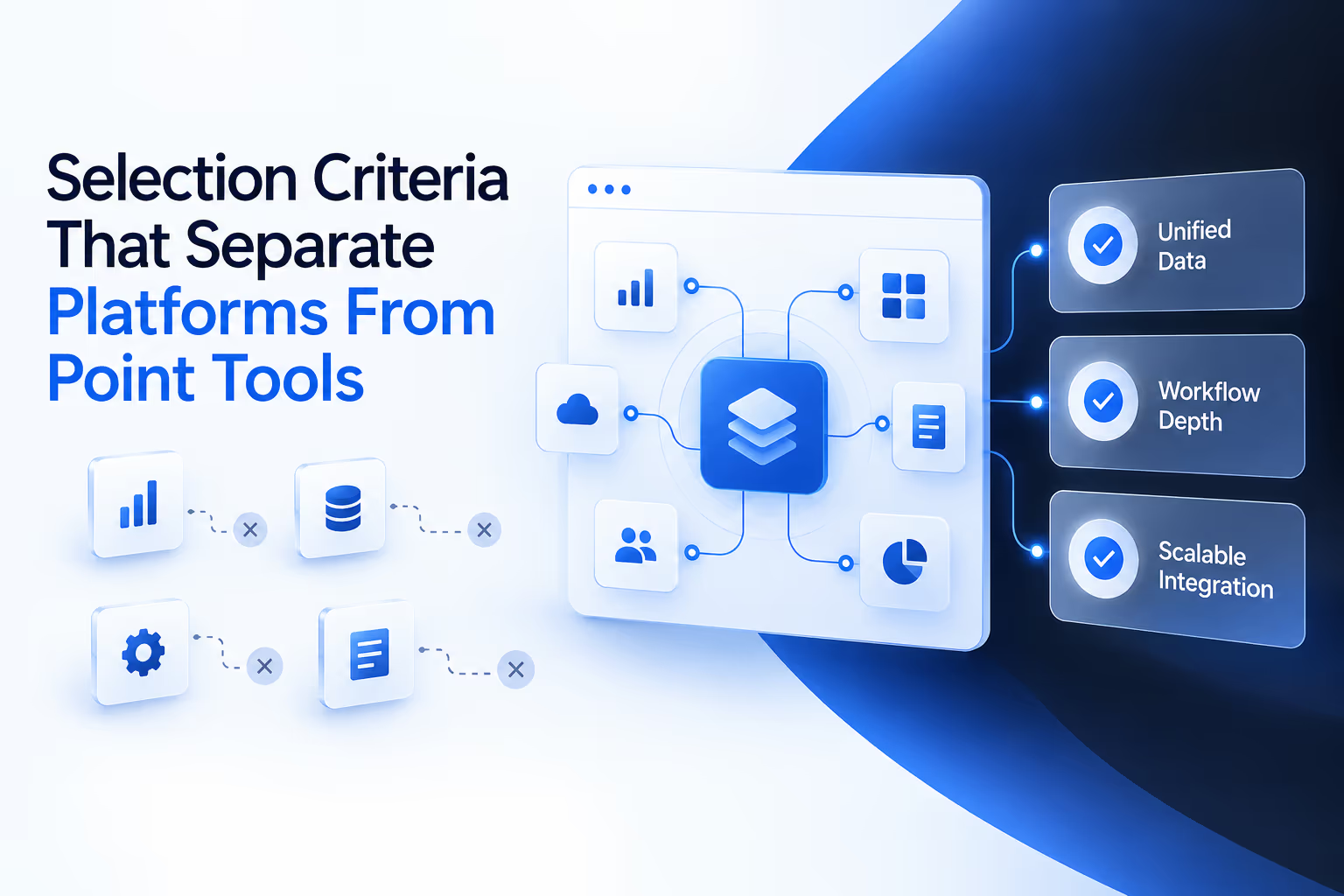
Security questionnaires and feature inventories are necessary, but they are insufficient. A proof of concept should test journey completion, data accuracy, recovery from failures, and employee usability. It should also define a baseline: quote-to-payment time, renewal completion, repeat contacts, turnaround time, abandonment, or another measurable business outcome.
McKinsey's Global Insurance Report 2025 analysis emphasizes profitable growth rather than growth without discipline. That principle applies to technology selection: an insurer should know which expense, leakage, delay, or customer outcome a platform will improve before scaling it.
Test measurable journeys through Callveriq.
Implementation Considerations Before Signing a Contract
A successful rollout requires more than integration estimates. First, map the target journey and define the source of truth for every important field. Second, establish which system is allowed to initiate communication, update status, or trigger escalation. Third, document consent, retention, access, and review requirements with compliance and security teams.
Start with a bounded journey where outcomes can be observed. Renewal reminders, incomplete proposal follow-up, document collection, or claim-status communication are often easier to measure than an enterprise-wide transformation. Run the workflow with representative products, languages, customer conditions, and exception paths.
Teams should also plan for operating ownership. Someone must review failed integrations, update scripts and knowledge, assess automation quality, manage channel templates, and investigate complaints. Software does not remove the need for governance; it makes governance visible and repeatable.
Plan your Callveriq pilot carefully.
Where Callveriq Fits in the Insurance Technology Stack
Callveriq should be evaluated as an omnichannel conversation and orchestration layer, not as a replacement for policy administration, underwriting, claims, or billing systems. It can use verified data and workflow events from those systems to support voice and digital follow-ups, understand intent, maintain interaction context, trigger next actions, and escalate cases to employees.
For policy sales, that may include qualification, quote follow-up, document reminders, payment nudges, and advisor handoffs. For service, it may include renewal communication, policy servicing requests, claim-status updates, and exception escalation. The value depends on integration quality, approved knowledge, defined controls, and measurable journey outcomes.
The commercial question is therefore not whether Callveriq has the longest feature list. It is whether it can close the conversation gap between existing systems of record and the customers, intermediaries, and employees acting on their data.
Build connected journeys with Callveriq.
Building an Insurance Stack Customers Can Actually Use
The strongest insurance architecture is not the one with the most products. It is the one in which every platform has a clear responsibility, data moves reliably, and customers do not have to repeat the same context across channels. Indian insurers should select core platforms for transactional truth, specialist systems for domain workflows, and an engagement layer for consistent conversations and action. A disciplined evaluation links each capability to a journey, control, owner, and business measure. That turns insurance software from a catalogue of tools into an operating system for dependable policy sales and service.
Discuss your insurance journey today. Book your Callveriq demo.
FAQs
1. Can insurance software support multiple legal entities?
Yes, if it provides configurable entity-level products, permissions, reporting, accounting treatment, and audit separation.
2. How should insurers assess vendor financial stability?
Review ownership, funding, profitability, customer concentration, insurance references, product roadmap, support capacity, and contractual continuity provisions.
3. What is the role of low-code configuration?
Low-code tools can speed workflow changes, but they still need version control, testing, approval, rollback, and access governance.
4. Should insurers buy a suite or best-of-breed tools?
Suites reduce some integration burden; best-of-breed products may offer deeper capabilities. The decision depends on differentiation needs and integration maturity.
5. How often should the software stack be reviewed?
Review performance quarterly and architecture at least annually, or whenever products, regulations, channels, or operating models materially change.