


Why Shopper Signals Rarely Become Timely Conversations
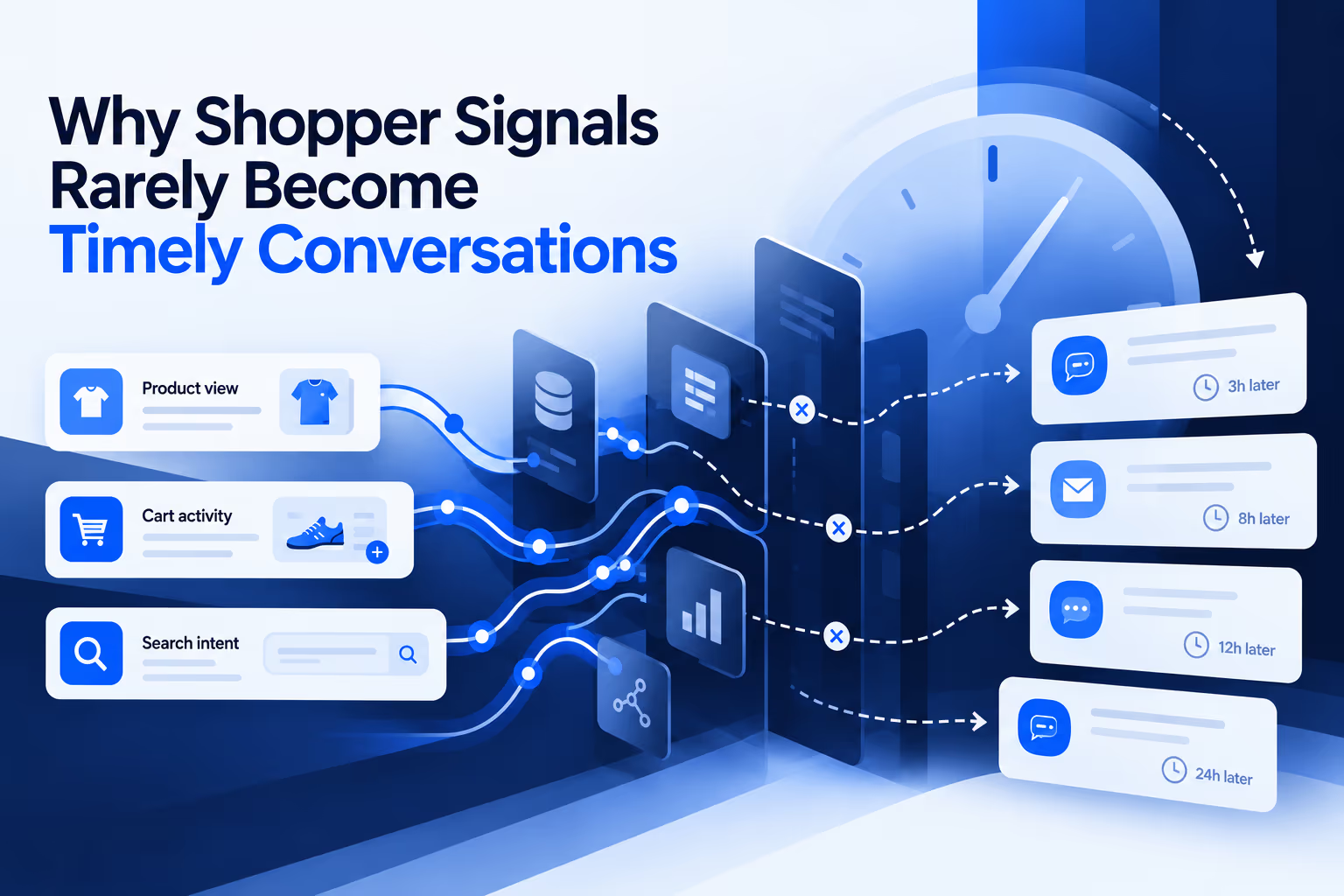
Indian ecommerce teams already collect intent. Product views, repeated searches, size-guide visits, coupon failures, cart changes, payment errors, delivery checks and returns questions all reveal what a shopper may need next. The problem is not a shortage of data. It is the delay between a signal and an appropriate response. When ecommerce personalization is limited to onsite recommendations, the retailer misses the moment when clarification or reassurance could change the outcome.
The same shopper may browse on mobile, ask a question on WhatsApp, call about delivery and later return through a marketplace. Without identity resolution and shared context, ecommerce personalization resets at every touchpoint. The brand then appears inattentive even when each system is technically working. A useful ecommerce personalization strategy treats the conversation as a continuous journey and the channel as a delivery choice, not a separate customer record.
The 2025 Salesforce Connected Shopper research describes AI-driven change in discovery and buying behaviour. McKinsey’s 2025 work on personalized marketing reiterates that customers expect relevant interactions and become frustrated when they do not receive them. For Indian retailers, KPMG’s 2025 CX research also highlights convenience and seamless discovery. Together, these findings make a practical point: ecommerce personalization must reduce effort at the decision moment, not merely increase content variation.
Identify the signals Callveriq can act on.
What Real-Time Ecommerce Personalization Actually Requires
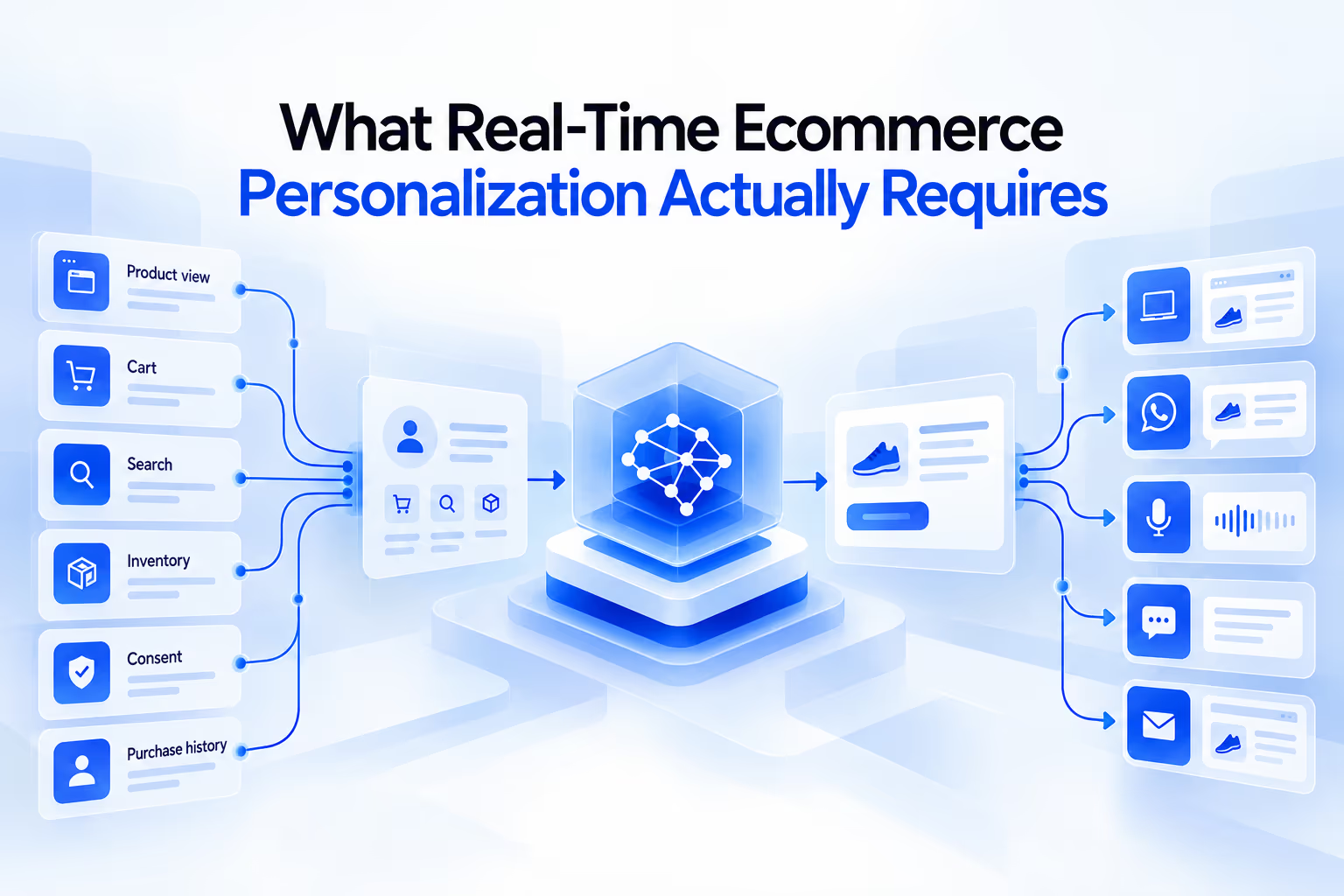
Real-time ecommerce personalization is a decision system, not a single widget. It needs four connected layers: signals, context, decisioning and conversation. Signals capture what happened. Context explains who the shopper is, what has already occurred and whether contact is permitted. Decisioning selects the next best action. Conversation delivers that action through the channel most likely to help.
A signal model that distinguishes intent from noise
Not every click deserves outreach. Effective ecommerce personalization uses signal strength, recency and sequence. A single product view may merit an onsite adjustment. Repeated views plus a size query and cart addition may justify a WhatsApp prompt. A payment failure may require immediate assistance. This hierarchy prevents AI-powered ecommerce personalization from becoming intrusive automation.
A consent and suppression layer
Ecommerce personalization should check opt-in status, quiet hours, frequency caps, active service cases and recent purchases before initiating contact. Suppression is as important as activation. It protects trust and prevents a customer from receiving an abandonment message after completing the order elsewhere.
Channel-aware orchestration
A good ecommerce personalization strategy assigns jobs to channels. The website handles in-session guidance. WhatsApp supports asynchronous questions and rich product context. Voice helps when urgency or complexity is high. SMS can deliver concise transactional prompts, while email supports follow-up. Ecommerce personalization software should preserve one conversation state across these transitions.
Design a governed real-time journey with Callveriq.
This blog is just the start.
Unlock the power of Callveriq’s AI with a live demo.

How Ecommerce Personalization Changes Across the Funnel
MOFU buyers should test whether a proposed platform can support the full customer lifecycle. Ecommerce personalization before purchase helps discovery and confidence.
During checkout, ecommerce personalization removes friction. After purchase, ecommerce personalization manages expectations, cross-sell timing and service continuity. Treating these as separate projects creates duplicated logic and inconsistent customer treatment.
- Discovery and consideration
Use ecommerce personalization examples that reflect genuine uncertainty: product compatibility, size, availability, location, delivery dates or financing. The objective is to answer the question that blocks progress. AI-powered ecommerce personalization should explain why a recommendation fits and let the shopper correct assumptions.
- Checkout and recovery
At checkout, ecommerce personalization should be fast and restrained. Detect the failure, ask the minimum question and route to the shortest recovery path. If a conversation moves from chat to voice, the agent or AI should inherit the cart, error type and previous steps. Repetition destroys the very advantage ecommerce personalization is meant to create.
- Post-purchase and retention
After purchase, ecommerce personalization should prioritize confidence over promotion. Delivery updates, installation guidance, replenishment reminders and service resolution build the data foundation for future relevance. A poorly timed cross-sell during an unresolved complaint is a clear sign that ecommerce personalization software is optimizing campaigns without understanding the relationship.
Connect every funnel stage through Callveriq.
How to Evaluate Ecommerce Personalization Software
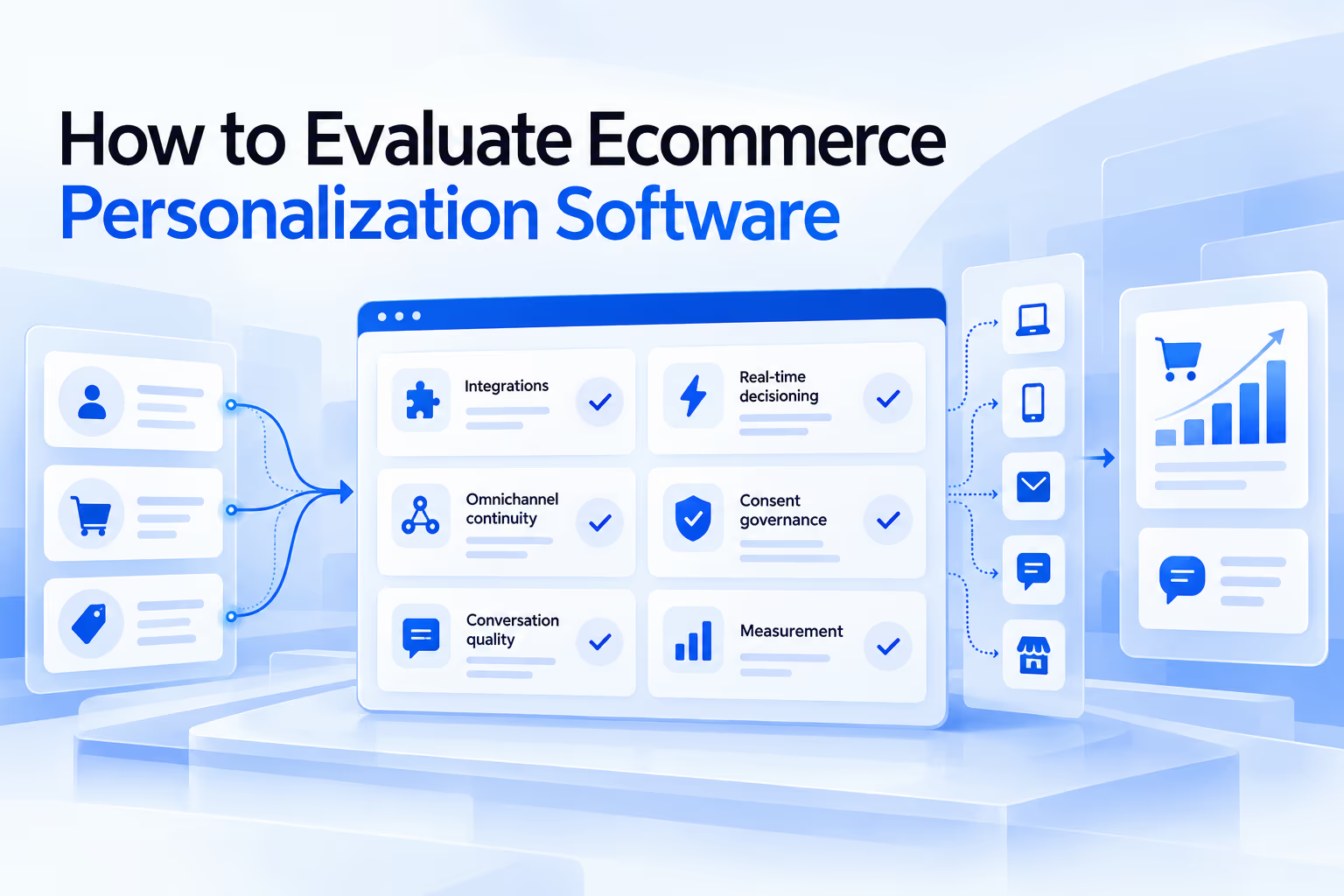
A product demo can make almost any ecommerce personalization software look intelligent. Evaluation should therefore use real events, real latency and real exceptions. Ask vendors to demonstrate identity matching, consent enforcement, inventory-aware responses, multilingual conversation, fallback behaviour, CRM writeback and human escalation.
The test should show how ecommerce personalization behaves when data is missing or contradictory.
McKinsey’s 2025 personalization analysis emphasizes the need to operationalize personalization across the enterprise rather than run isolated experiments. KPMG’s 2025 intelligent retail blueprint similarly connects AI, customer data and loyalty across store and ecommerce contexts. These findings support a buying principle: ecommerce personalization software should fit the operating model, not force every team into another disconnected dashboard.
Evaluate Callveriq against your live retail stack.
A Practical Ecommerce Personalization Pilot for India
Begin with one journey where intent is observable, value is measurable and intervention is acceptable. Cart recovery, payment-failure assistance, high-consideration product guidance or replenishment are stronger pilots than a broad “personalize everything” brief. Ecommerce personalization works best when the pilot has a named owner across commerce, CRM, service, data and compliance.
Define the event, eligibility rule, message purpose, channel order, fallback, escalation and success metric before configuration. Then compare the ecommerce personalization cohort with a credible holdout. Track conversion lift, recovered revenue, response rate, opt-out rate, time to resolution and gross margin after communication cost. Ecommerce personalization should improve commercial outcomes without increasing complaints or contact pressure.
Run the pilot long enough to capture weekday, weekend, promotion and normal-demand behaviour. Review failures as carefully as wins. Ecommerce personalization may fail because the trigger is late, the inventory feed is stale, the language is wrong or the offer is irrelevant. Each cause requires a different fix; adding more messages is rarely the answer.
Pilot one measurable journey with Callveriq.
Where Callveriq Fits in the Ecommerce Personalization Stack
Callveriq can act as the conversational execution layer between shopper signals and channel engagement. The commerce platform remains the system for catalog and transactions; the CRM or CDP remains the customer record; analytics continues to measure performance. Callveriq helps ecommerce personalization activate the next conversation across voice, WhatsApp, SMS, email and web, while carrying context and outcomes back into connected systems.
This fit matters when ecommerce personalization already identifies intent but teams cannot respond consistently or quickly. Callveriq can support inbound and outbound conversational journeys, multilingual interactions, intent detection, sentiment signals, human handoffs and structured CRM updates. The goal is not to replace every platform. It is to close the execution gap between knowing and engaging.
For economic buyers, the case rests on incremental revenue and lower cost per resolved journey. For engineers, it rests on APIs, event handling, data controls and observability. For project managers, ecommerce personalization needs clear scope, test cases and rollout gates. For department heads, it needs ownership, service levels and a shared definition of value.
Turn retail signals into conversations with Callveriq.
From Shopper Signals to Useful Conversations
The commercial promise of ecommerce personalization is not that every message becomes unique. It is that each meaningful shopper signal receives the most useful next action at the right time, on the right channel, with the right safeguards. As ecommerce personalization matures, teams should retire triggers that add noise and expand only the journeys that prove incremental value. Retailers that connect data, decisioning and conversation can reduce customer effort while learning which interventions actually influence revenue. Treat ecommerce personalization as an operating discipline with named owners, not a seasonal campaign. Callveriq gives teams a practical way to operationalize that final conversational step without discarding the commerce, CRM and analytics investments already in place. With that foundation, ecommerce personalization can improve continuously as customer behaviour, inventory and channel economics change.
Build timely shopper conversations with Callveriq.
Frequently Asked Questions
1. Can personalization work for anonymous shoppers?
Yes. Session behaviour can guide onsite experiences, but cross-channel outreach should wait for a lawful identifier and valid consent.
2. How often should personalization models be reviewed?
Review performance continuously and conduct a formal monthly check for drift, bias, stale rules and changing inventory or promotion conditions.
3. Who should own a personalization program?
A commercial owner should be accountable, with shared operating responsibility across ecommerce, CRM, service, data, engineering and compliance.
4. Can smaller retailers start without a CDP?
Yes. They can begin with a commerce platform, CRM and a limited event pipeline, provided identity, consent and measurement rules are explicit.
5. How should teams handle wrong recommendations?
Make correction easy, stop repeated assumptions, capture feedback and route high-impact failures for model or rule review.