

Education institutions are under growing pressure to engage prospective learners quickly and move them from initial interest to enrollment. A learner may sign up for a demo class but miss the session, receive course information but delay their decision, or show strong interest without completing payment. Each gap creates another opportunity for a potential enrollment to drop off.
Conversational AI in education helps institutions stay connected across these critical touchpoints. AI-powered voice and messaging agents can automate demo-class signups, send WhatsApp welcome messages, make attendance reminder calls, recommend relevant courses, follow up on pending payments, and identify high-intent learners for mentor handoffs.
Instead of treating every interaction as a separate task, institutions can use conversational AI to create a connected enrollment journey that keeps learners engaged while allowing counselors and mentors to focus on conversations that need human expertise.
Conversational AI in Education. Book Demo.
What Is Conversational AI in Education?
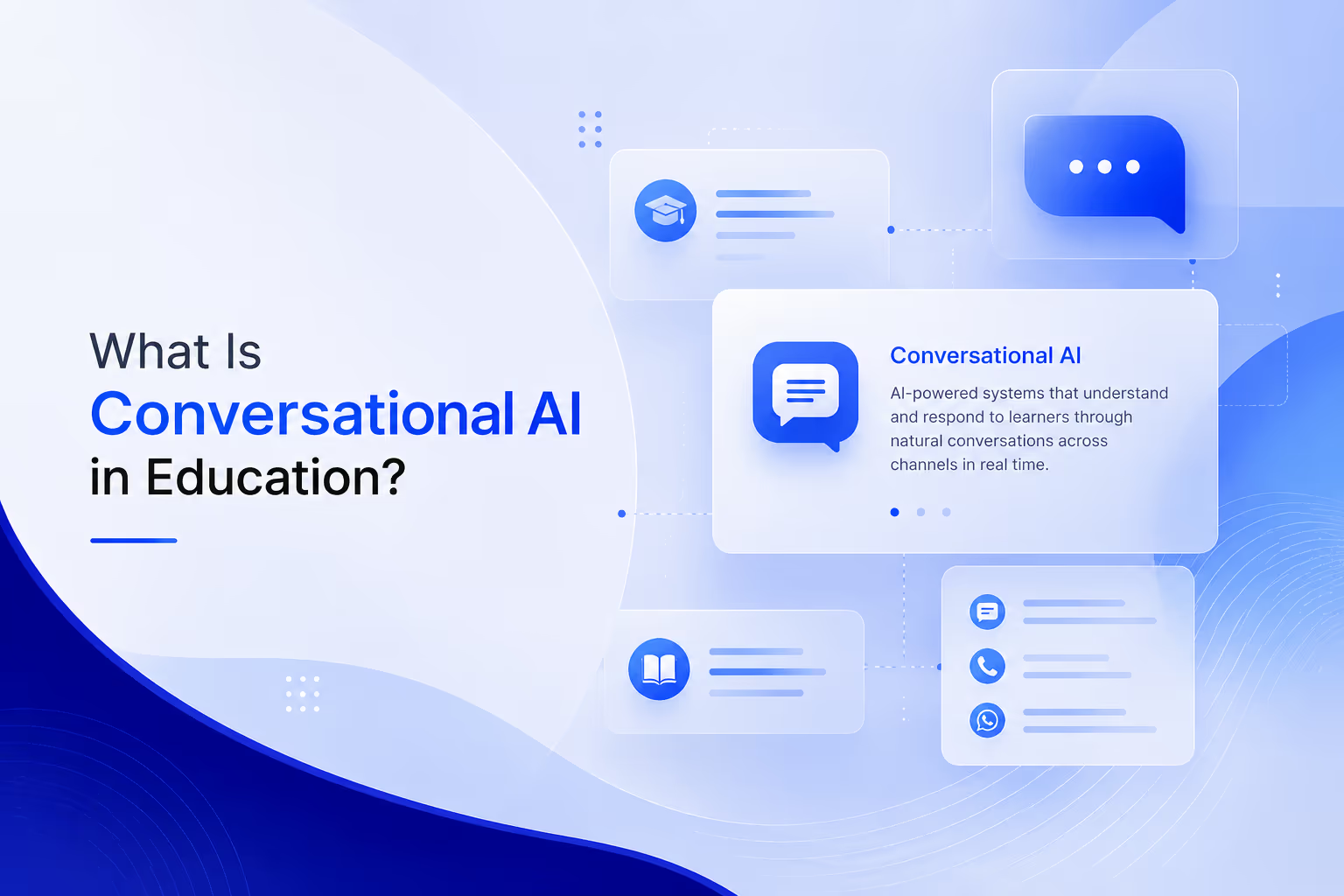
Conversational AI in education refers to AI-powered systems that interact with prospective and current learners through natural-language conversations across channels such as voice calls, WhatsApp, and chat. These systems can answer questions, collect information, automate follow-ups, understand learner intent, and route complex conversations to human teams.
For education businesses, one of the most valuable applications is enrollment. Conversational AI can support learners from demo-class registration through payment and mentor handoff.
Automate learner enrollment with conversational AI.
How Conversational AI is Revolutionizing Education in 2024
The impact of conversational AI in education has far-reaching implications. It’s no longer about replacing manual processes or answering queries; it’s fundamentally transforming how students, faculty, and administrators engage with technology.
Conversational AI in education tools profoundly elevate the educational experience by enabling personalized learning, automating administrative tasks, and providing around-the-clock support.
AI-driven Student Engagement and Support
AI's most significant educational contribution is its ability to enhance student engagement. Traditional classroom interactions are limited by time and the availability of instructors. AI-powered systems bridge this gap by providing students constant access to learning resources, personalized guidance, and real-time feedback.
Through chatbots and virtual assistants, AI can offer immediate responses to frequently asked questions, monitor student progress, and even suggest personalized learning resources based on performance and preferences.
This AI-driven student support helps students stay on track and empowers them to take control of their learning journey. Educational institutions can now deliver personalized experiences at scale, something that was previously only possible through one-on-one tutoring.
Improved Efficiency in Administrative Tasks
Educational institutions are burdened with administrative tasks that take up valuable time, from admissions to grading. Conversational AI helps to streamline these processes. For example, AI-powered university chatbots can assist with handling routine queries about programs, admissions, and deadlines, reducing the need for human intervention and improving response times.
Similarly, AI-driven systems can automatically grade assignments, freeing educators to focus on more strategic tasks like curriculum development and student support. With conversational AI for education, universities and schools can significantly reduce administrative workload, enhance operational efficiency, and provide better student services.
Now that we've explored the broader impact of conversational AI in education let’s examine the specific ways it's being utilized in educational settings.
This blog is just the start.
Unlock the power of Callveriq’s AI with a live demo.

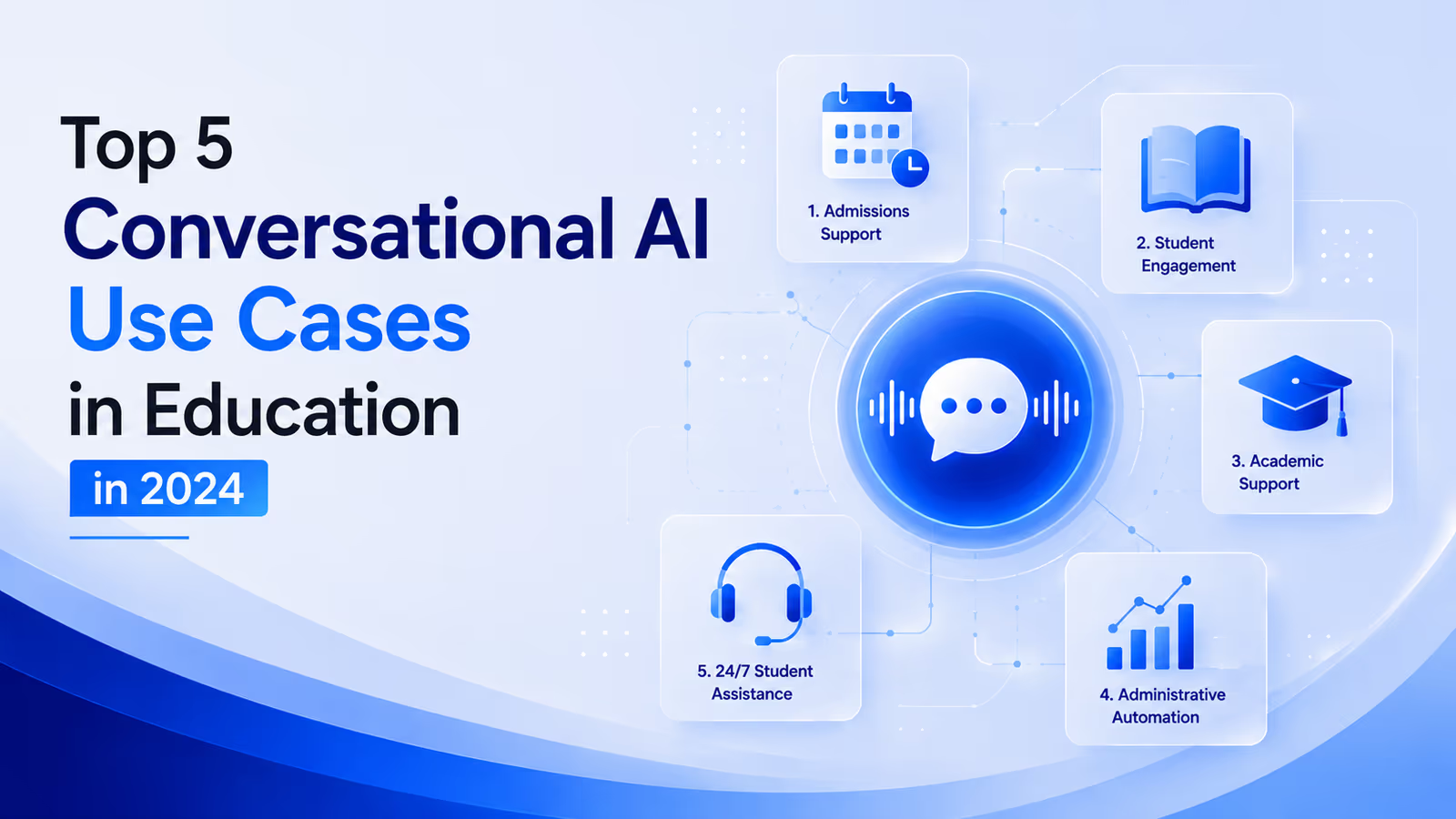
Top 5 Use Cases of Conversational AI in Education
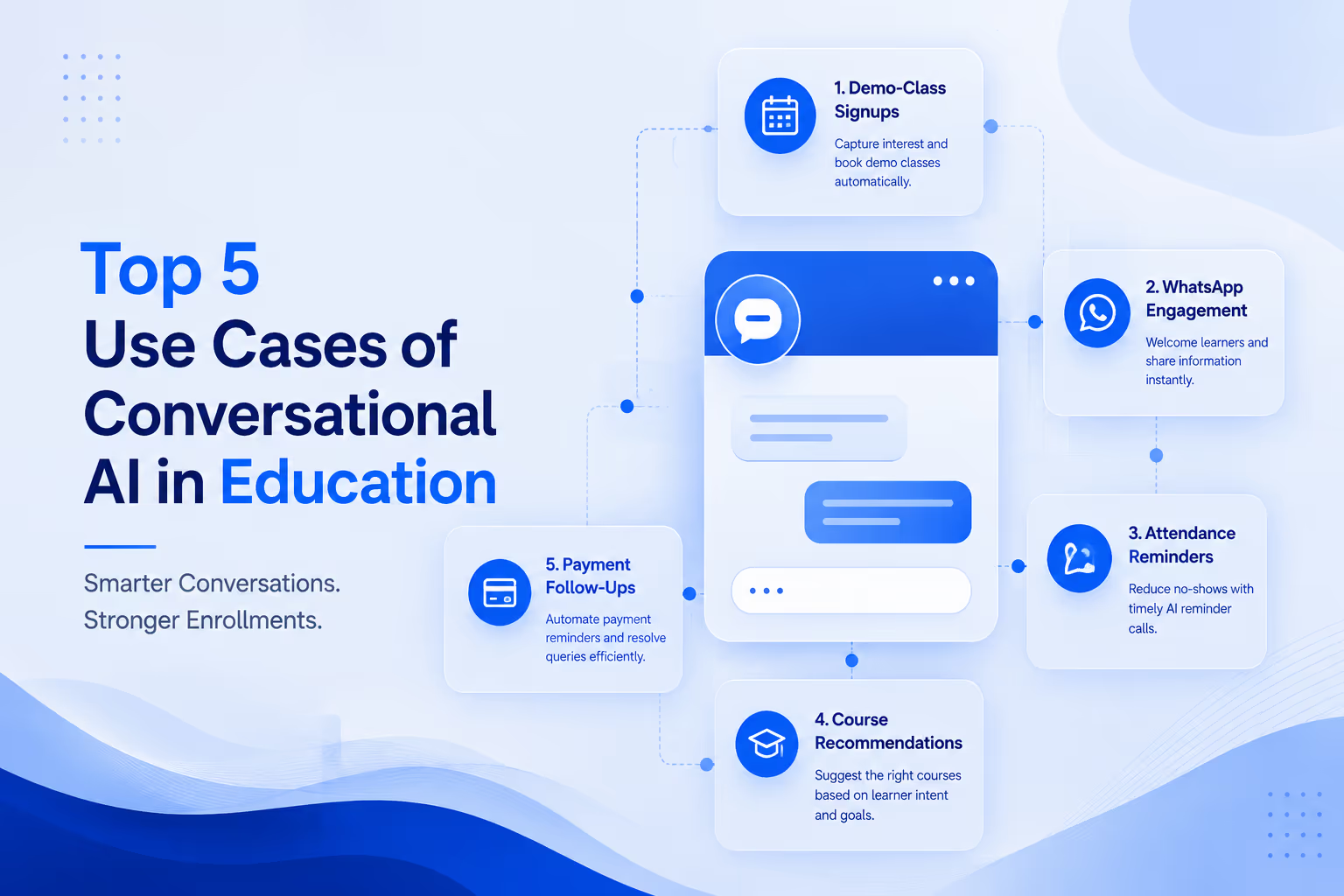
Education institutions today compete not only on the quality of their courses but also on how quickly and effectively they engage prospective learners. A student may discover a course, sign up for a demo class, attend a session, ask questions, and show strong interest, yet still drop off before completing enrollment.
Conversational AI in education can help institutions stay connected with learners throughout this journey. AI-powered voice and messaging agents can respond to inquiries, welcome new leads, remind students about upcoming sessions, recommend relevant courses, follow up on payments, and identify high-intent learners who need human assistance.
Instead of using AI for isolated administrative tasks, education businesses can use conversational AI to create a connected enrollment experience from the first interaction to the final mentor handoff.
Here are six practical use cases of conversational AI in education across the student enrollment journey.
How Conversational AI Supports the Student Enrollment Journey
The enrollment journey rarely happens in a single interaction. A prospective learner may need multiple touchpoints before deciding to enroll.
Conversational AI can automate these touchpoints while maintaining context across conversations. For example, after a learner signs up for a demo class, an AI agent can send a WhatsApp welcome message, make a reminder call before the session, understand the learner's interests, recommend a suitable course, and follow up if payment is incomplete.
The result is a more consistent learner experience while allowing counselors and mentors to focus on conversations that require human judgment.
1. Automate Demo-Class Signups and WhatsApp Engagement
The enrollment journey often begins when a prospective learner expresses interest in a course or signs up for a demo class. Responding quickly at this stage can help education institutions engage learners while their interest is still high.
Conversational AI in education can automate the initial interaction by confirming a learner's interest, collecting basic information, understanding their learning goals, and helping them select a suitable demo-class slot.
The AI agent can:
- Confirm the learner's interest
- Collect basic information
- Understand their preferred course or subject
- Ask about their learning goals
- Share available demo-class slots
- Confirm the selected session
- Capture relevant lead information
Once the learner registers, conversational AI in education can continue the interaction through a personalized WhatsApp welcome message. The message can confirm the demo class and provide the information the learner needs before the session.
A welcome interaction can include:
- Demo-class date and time
- Joining instructions
- Course information
- Instructor or mentor details
- Frequently asked questions
- Links to relevant resources
- Contact options for additional assistance
The AI can also respond when learners reply with questions. For example, if a learner asks, "Is this course suitable for beginners?" the AI can provide an appropriate response based on approved course information.
By connecting signup and post-registration engagement, conversational AI in education can keep learners engaged from their first interaction through their scheduled demo class.
2. Improve Demo Attendance With AI Reminder Calls
Signing up for a demo class does not guarantee that a learner will attend.
Learners can forget the scheduled time, become busy, or lose interest between registration and the session. Manual reminder calls can help, but calling every registered learner can consume significant counselor time.
This is where AI voice agents can add value. A conversational AI in education solution can automatically call learners before their scheduled demo class. The agent can remind them about the session, confirm whether they plan to attend, and handle simple follow-up questions.
For example: "Hi, you registered for the data science demo class scheduled for tomorrow at 6 PM. Will you be able to attend?"
If the learner confirms, the interaction can be recorded and the learner can receive the relevant joining details. If the learner cannot attend, the AI can help identify another suitable slot or trigger a follow-up. The conversation can also reveal learner intent.
A learner who says, "Yes, I've been waiting for this session because I want to enroll this month," is showing a very different level of intent from someone who says, "I'm just exploring." This information can help education teams prioritize their follow-ups.
This use of conversational AI in education helps institutions automate high-volume reminder calls without requiring counselors to contact every registered learner manually.
3. Recommend the Right Course Based on Learner Intent
Learners often know what outcome they want but may not know which course, program, or batch is right for them.
Instead of requiring counselors to handle every basic recommendation conversation, conversational AI in education can ask relevant questions and guide learners toward suitable options.
For example, an AI agent can ask:
- What do you want to learn?
- What is your current experience level?
- What are you hoping to achieve?
- How much time can you dedicate each week?
- Do you prefer weekday or weekend classes?
- Are you looking for a beginner or advanced program?
Based on the learner's responses, the AI can recommend a relevant course or provide information about available options. This makes course discovery more conversational and personalized.
More importantly, the interaction can generate useful intent signals for the counseling team. A learner who asks detailed questions about curriculum, fees, placement support, batch timings, or financing may be ready for a deeper conversation.
The AI can identify these signals and move the learner toward the appropriate next step. By combining learner responses with course information, conversational AI in education can make course discovery more relevant and personalized.
4. Follow Up With Learners on Pending Payments
Even after attending a demo class and selecting a course, some learners may not complete payment immediately. This creates another potential drop-off point in the enrollment funnel.
Counselors often have to manually identify learners with pending payments and follow up with each one. At scale, this can lead to inconsistent follow-ups and missed opportunities. Conversational AI can automate payment follow-ups while keeping the conversation relevant to the learner's previous interactions.
For example, an AI agent can contact a learner who attended the demo class but has not completed enrollment: "Hi, you recently attended the advanced analytics demo class. I wanted to check if you needed any help completing your enrollment."
The agent can answer straightforward questions about payment processes, available options, or next steps. It can also recognize when the learner has a concern that requires human intervention.
For example: Learner: "I'm interested, but the course fee is higher than I expected. Can someone explain the payment options?"
Instead of continuing with a scripted response, the AI can flag the conversation for a counselor or mentor. This allows institutions to automate routine payment follow-ups while preserving human support for more complex objections.
5. Hand High-Intent Learners to Mentors
The goal of conversational AI is not to eliminate human interaction. In education, mentors and counselors remain critical when learners need personalized guidance or are close to making an enrollment decision.
The role of AI is to identify those moments and make the handoff more efficient. A conversational AI agent can identify high-intent signals throughout the enrollment journey, such as:
- Asking detailed questions about a specific course
- Confirming demo attendance
- Asking about fees or payment options
- Requesting a counselor
- Discussing career or learning goals
- Showing interest in a particular batch
- Returning to the institution multiple times
- Indicating an intention to enroll
When these signals appear, the learner can be prioritized for a mentor or counselor. Instead of a counselor spending time contacting every lead, they can focus on learners who have already demonstrated meaningful intent.
The AI can also provide the mentor with conversation context so the learner does not have to repeat everything they have already discussed. This creates a better combination of AI-led scale and human-led personalization.
How Callveriq Supports the Education Enrollment Journey
Callveriq's AI Phone Calls can help education businesses automate learner conversations across different stages of the enrollment funnel. Instead of limiting AI to answering basic questions, institutions can use AI voice agents to engage learners proactively and move conversations toward the next action.
The journey can look like this:
Demo Signup → WhatsApp Welcome → Attendance Reminder → Course Recommendation → Payment Follow-Up → Mentor Handoff
At each stage, the AI agent can collect conversation data and identify learner intent.
For example, after a demo-class reminder call, the AI can capture whether the learner plans to attend. After a course-related conversation, it can identify which program the learner is interested in. During a payment follow-up, it can detect objections and determine whether a counselor needs to intervene.
This gives education teams greater visibility into learner conversations while reducing the amount of repetitive outreach handled manually. With Callveriq, institutions can use AI phone calls to engage learners at scale while keeping human mentors involved when the conversation requires deeper guidance.
Streamline Enrollment with Conversational AI
Why Conversational AI in Education Matters for Enrollment
Conversational AI in education is becoming increasingly valuable for institutions that want to improve the journey from initial learner interest to enrollment. Instead of using AI for isolated tasks, education businesses can connect multiple interactions across the enrollment funnel, from demo-class registration and WhatsApp engagement to attendance reminders, course recommendations, payment follow-ups, and mentor handoffs.
By automating repetitive conversations and identifying learner intent, conversational AI in education allows counselors and mentors to focus their time on learners who need personalized guidance. This creates a more responsive enrollment experience while helping education teams manage larger lead volumes without increasing manual outreach at the same rate.
For institutions looking to scale student acquisition and enrollment, conversational AI in education can provide the infrastructure needed to engage learners consistently across every critical touchpoint.
Transform education with AI phone calls.
FAQs
1: How is conversational AI in education different from chatbots?
Conversational AI in education can understand context, handle multi-turn conversations, and take actions, while basic chatbots typically follow predefined responses.
2: Can conversational AI in education integrate with existing systems?
Yes. Conversational AI in education can connect with CRM, LMS, student information, communication, and enrollment systems to automate workflows.
3: Is conversational AI in education suitable for schools?
Yes. Conversational AI in education can support schools with student communication, parent interactions, admissions, reminders, and administrative workflows.
4: What data does conversational AI in education use?
It can use approved student, course, enrollment, and interaction data to provide relevant responses while following the institution's data policies.
5: What are the main challenges of conversational AI in education?
Common challenges include data privacy, system integration, response accuracy, and ensuring smooth handoffs between AI agents and human staff.