

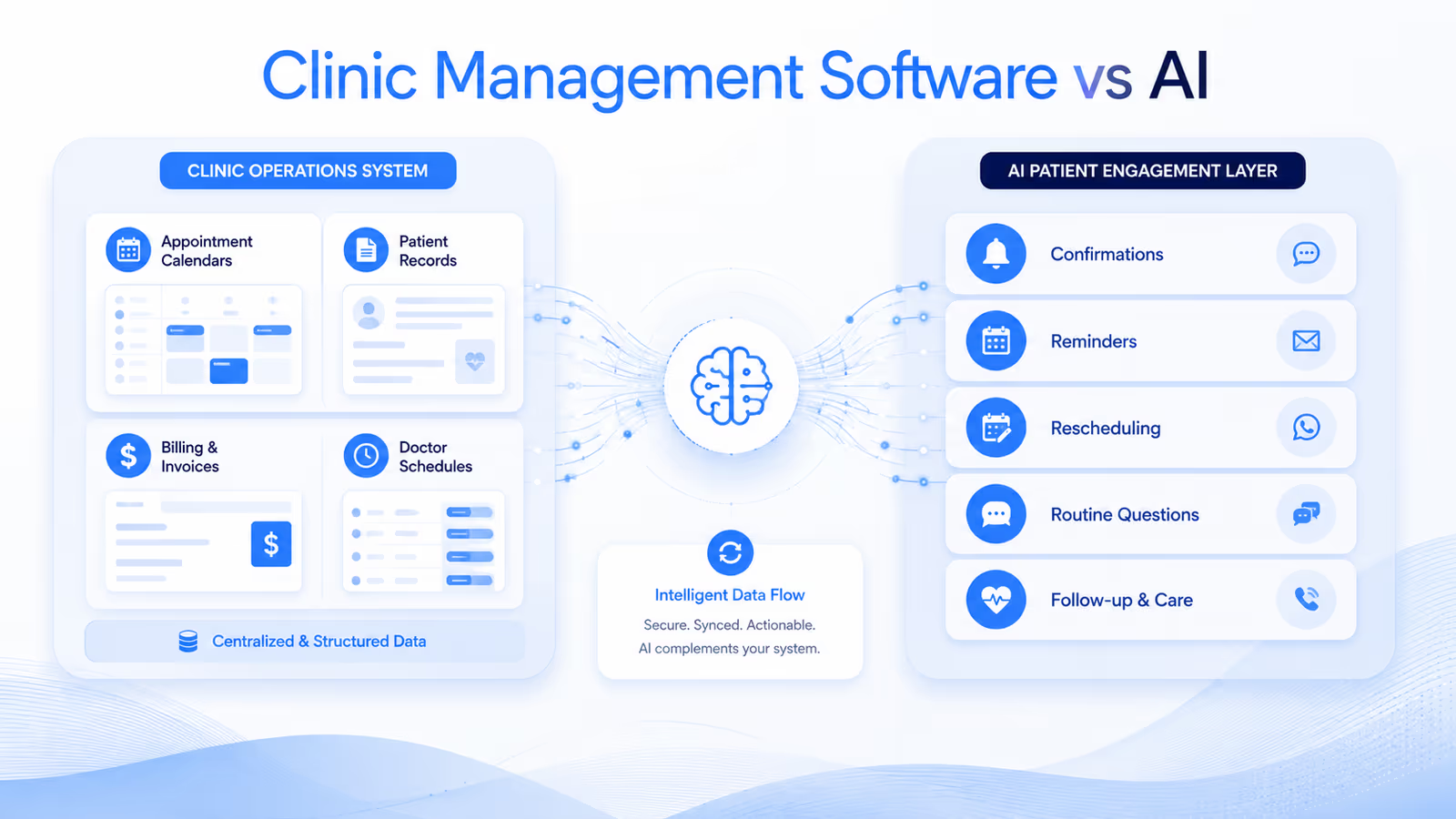
AI patient engagement fills this communication gap by proactively contacting patients through calls, WhatsApp, SMS, and other channels. It can answer routine questions, reschedule appointments, identify disengaged patients, and transfer complex cases to clinic staff. The two technologies therefore work best together: clinic management software maintains operational records, while AI converts those records into timely patient conversations.
At 9:00 a.m., a clinic’s appointment dashboard shows a nearly full day. By lunchtime, several patients have not arrived. One missed the reminder. Another wanted to reschedule but could not reach reception. A third postponed the visit because nobody answered a question about preparation.
The clinic’s clinic management software recorded every booking correctly. Operationally, the system worked. The communication journey around those bookings did not. This distinction is becoming important as patients expect convenient, responsive experiences outside the consultation room. Salesforce’s 2026 healthcare research found that patients are open to provider-backed AI, but 90% want human oversight. McKinsey similarly observes that healthcare providers are integrating generative AI with scheduling and engagement workflows to maintain contact beyond the visit.
The next step for clinics is therefore not replacing their operational software. It is connecting reliable patient records with a communication layer capable of acting on them.
Activate clinic management software conversations.
What Is Clinic Management Software?
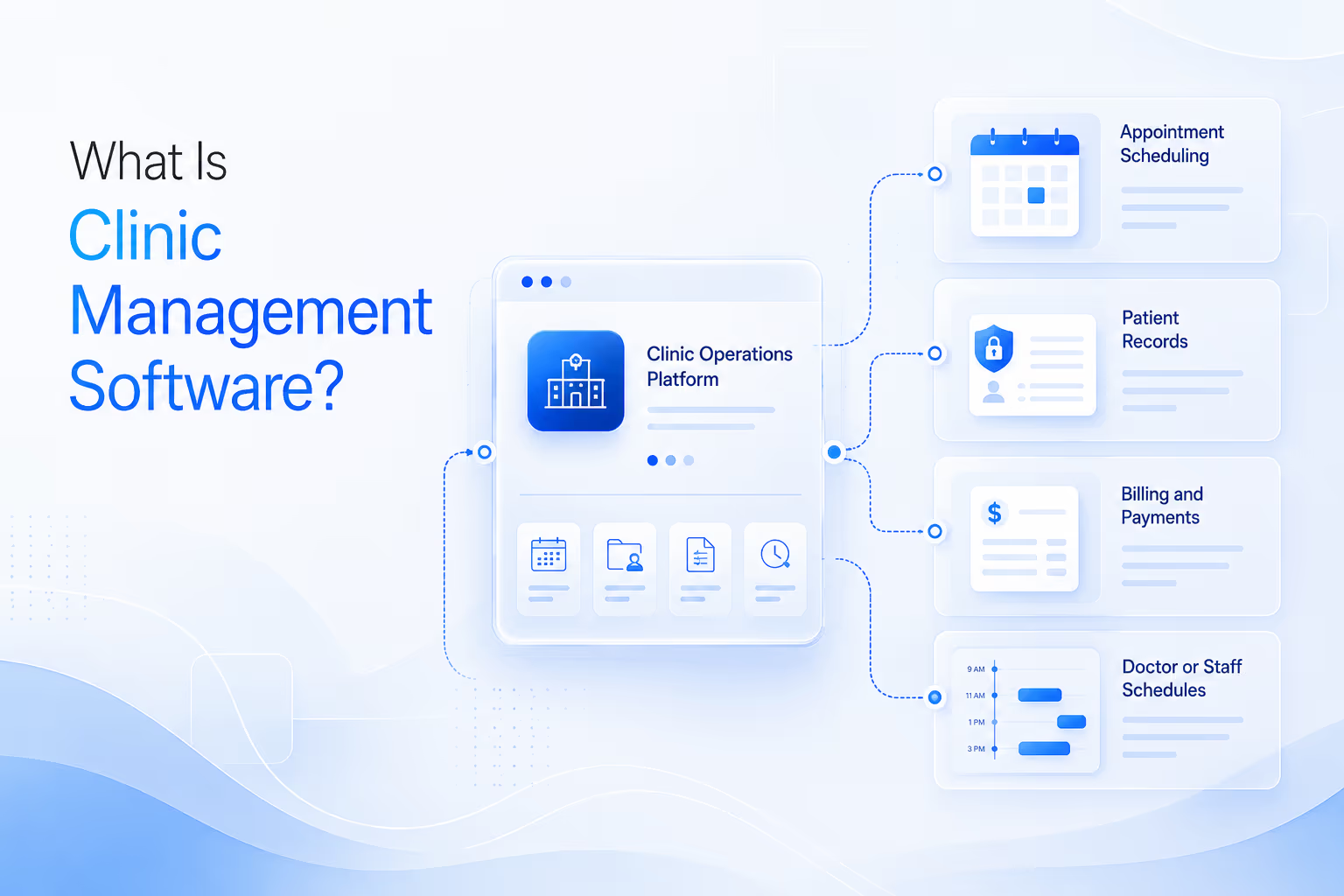
Clinic management software is a digital system that helps healthcare providers administer clinical and non-clinical operations from one interface. Depending on the platform, it may support a single clinic, a specialist practice, or a network of healthcare centres. A typical system manages the structured events occurring before, during, and after a consultation.
These capabilities make clinic management software for appointments valuable for maintaining an accurate operating system. Staff can see who booked, which doctor is available and whether payment was collected.
The system is generally designed to store and process information. It may send a preset reminder, but it does not necessarily understand why a patient ignored it or determine the next appropriate action.
Strengthen clinic management software outcomes.
Where Does Clinic Management Software Fall Short on Patient Follow-Up?
Most follow-up gaps occur after an event has been recorded but before the patient takes the required next step. For example, the software may show that a patient missed an appointment. A receptionist must still identify the record, call the patient, understand the reason, offer another time and update the booking. When hundreds of records require attention, follow-up becomes inconsistent.
One-Way Reminders Do Not Resolve Intent
A reminder tells a patient that an appointment exists. It does not complete the conversation. Patients may want to:
- Change the appointment time
- Confirm whether fasting is required
- Ask about consultation fees
- Check the clinic’s location
- Choose another doctor
- Cancel without calling reception
A static message cannot always capture or resolve these intentions. Consequently, the clinic knows a reminder was delivered but not whether the patient is still likely to attend.
Follow-Up Depends on Staff Availability
Reception teams manage walk-ins, calls, billing and doctor coordination simultaneously. They may prioritise immediate patients over unresponsive bookings or overdue follow-ups.
This creates a structural limitation for clinic management software for follow-ups: the software can create a task, but a person must still have the time to complete it.
Every Patient Receives the Same Sequence
Preset reminder workflows usually follow fixed timing and wording. They may not distinguish between a new patient, a high-risk follow-up, a routine consultation and someone who has already missed two appointments.
KPMG’s 2024–25 healthcare customer-experience analysis emphasizes that a single approach does not work equally well for every patient segment. Its findings recommend using segmentation to understand different cohorts and design more targeted experiences.
Advance clinic management software follow-ups.
This blog is just the start.
Unlock the power of Callveriq’s AI with a live demo.

How Does AI Complement Existing Clinic Management Software?
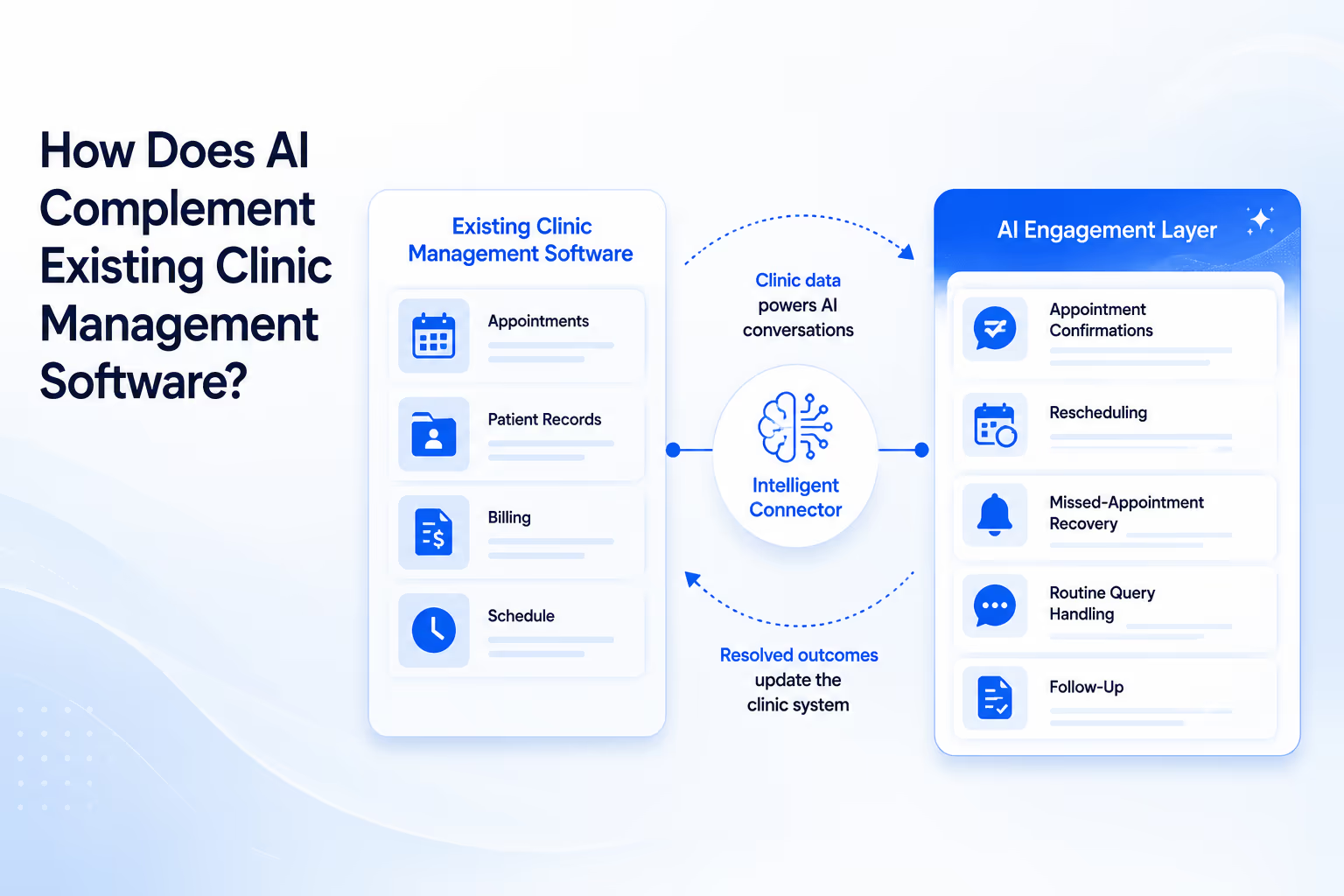
AI patient engagement adds an active communication layer to the clinic’s existing system. It uses appointment and patient data to initiate conversations, interpret responses and update the appropriate workflow.
The management platform remains the source of operational truth. AI determines what communication should happen next.
Before the Appointment: An AI agent can contact patients through voice or messaging to confirm attendance. If a patient requests another time, the agent can check permitted availability and help reschedule the visit.
It can also answer approved administrative questions about location, fees, documents or appointment preparation. Clinical questions should follow the clinic’s escalation and human-supervision policies.
After a Missed Appointment: Instead of leaving the record marked “no-show,” AI can initiate a recovery workflow. It can ask whether the patient wants to reschedule, identify a preferred time and update the clinic team.
This turns missed bookings into actionable conversations rather than abandoned database entries.
After the Consultation: The clinic may use AI to send medication reminders, collect experience feedback, confirm diagnostic tests or schedule the next consultation. Communication should follow patient consent, privacy policies and approved healthcare guidelines.
Salesforce’s 2026 Connected Health Consumer research indicates that patients place greater trust in AI associated with their healthcare provider than in general-purpose AI. That trust, however, depends on transparency and human oversight.
Across Communication Channels: Patients do not always reply on the channel through which they booked. Someone may book on a website, respond on WhatsApp and request a call.
An omnichannel AI layer can maintain the context of the interaction across supported channels. This is where clinic management software for patient engagement becomes more effective: the clinic retains its existing operational system while extending its ability to communicate.
Connect clinic management software proactively.
Clinic Management Software vs Patient Engagement Tools
The main difference lies in what each system is designed to accomplish.
A clinic does not generally need to choose one and discard the other. Replacing a mature operational system merely to improve follow-up can create unnecessary disruption.
The more practical model is integration:
- The management platform identifies an event.
- AI initiates the approved outreach.
- The patient responds through a preferred channel.
- AI completes routine actions or transfers the case.
- The outcome returns to the clinic’s system.
This structure preserves the clinic’s operational controls while reducing repetitive follow-up work.
Expand clinic management software engagement.
Where Callveriq Fits Into the Patient Journey
Callveriq can operate as the engagement layer surrounding a clinic’s existing management platform. It can help clinics conduct automated voice and omnichannel follow-ups without requiring staff to manually pursue every booking.
Potential workflows include:
- Appointment confirmation and rescheduling
- Missed-booking recovery
- Follow-up consultation reminders
- Diagnostic-test coordination
- Patient feedback collection
- Routine query handling
- Human handoff for complex conversations
- Conversation outcome updates in connected systems
Callveriq is not intended to replace doctors, medical judgement or the clinic’s core record system. Its role is to help the clinic act on operational data through timely, scalable conversations.
A sensible implementation begins with a narrow, measurable workflow—for example, recovering patients who do not confirm appointments. Clinics can then compare confirmation rates, no-shows, rescheduled bookings, staff workload and handoff quality before expanding the deployment.
Pair your clinic management software with Callveriq.
What Clinics Should Evaluate Before Adding AI
Healthcare communication requires greater controls than a general promotional workflow. Clinics should evaluate the AI layer across integration, safety and patient-experience criteria.
Gartner’s 2025 customer-service analysis recommends simplifying journeys through conversational experiences rather than creating fragmented channel workflows. In healthcare, simplicity must be balanced with traceability, privacy and human intervention.
AI should not improvise medical advice or make independent clinical decisions. A well-designed deployment clearly separates administrative automation from clinical responsibility.
What Does It For You
Clinic management software gives a clinic the operational foundation it needs, but recording a booking does not ensure that the patient will complete it. The gap appears when patients need clarification, miss reminders, change plans or require another prompt after the consultation.
AI patient engagement closes this gap by converting appointment and follow-up records into responsive conversations. When properly integrated, it can help clinics recover bookings, reduce repetitive calls and communicate consistently while preserving human oversight for sensitive situations.
The strongest approach is not software replacement. It is a connected model in which clinic management software controls operational data, AI handles routine engagement and clinic staff step in wherever empathy, judgement or clinical expertise is required.
Transform clinic management software engagement.
Frequently Asked Questions
1. Can AI patient engagement work with older clinic systems?
Yes. Integration may be possible through APIs, webhooks, file exchanges or middleware, depending on the clinic system’s capabilities.
2. Can small clinics benefit from automated patient follow-up?
Yes. Small clinics can begin with one high-volume workflow, such as appointment confirmation or missed-booking recovery.
3. Does AI eliminate the need for reception staff?
No. It reduces repetitive communication while staff manage exceptions, sensitive requests and in-clinic responsibilities.
4. Which patient-engagement metric should clinics track first?
Start with appointment confirmation, no-show, rescheduling and successful handoff rates.
5. How quickly can a clinic test AI engagement?
Timelines depend on integrations and approvals, but a narrow pilot is usually faster than a full operational transformation.