

It started with a simple goal.
A B2C sales team wanted to respond to every customer inquiry on WhatsApp instantly. They deployed a WhatsApp chatbot, automated FAQs, qualified leads, shared product catalogs, and even booked appointments. Initially, everything looked successful. Response times improved, agents handled fewer repetitive conversations, and customers received answers 24/7.
Then growth happened. Customers who ignored WhatsApp started calling. Others filled out website forms before continuing conversations over WhatsApp. Some clicked ads on Instagram, switched to voice calls, and expected the business to remember every interaction. Suddenly, the chatbot knew only one piece of the customer's journey.
The result? Customers repeated information, sales teams lost context, follow-ups became inconsistent, and promising leads quietly disappeared between channels.
This is where many B2C businesses realize an important truth: a WhatsApp chatbot is an excellent channel automation tool, but modern customer journeys rarely stay within one channel.
See how Callveriq unifies every customer.
Why WhatsApp Chatbots Have Become Essential for B2C Businesses
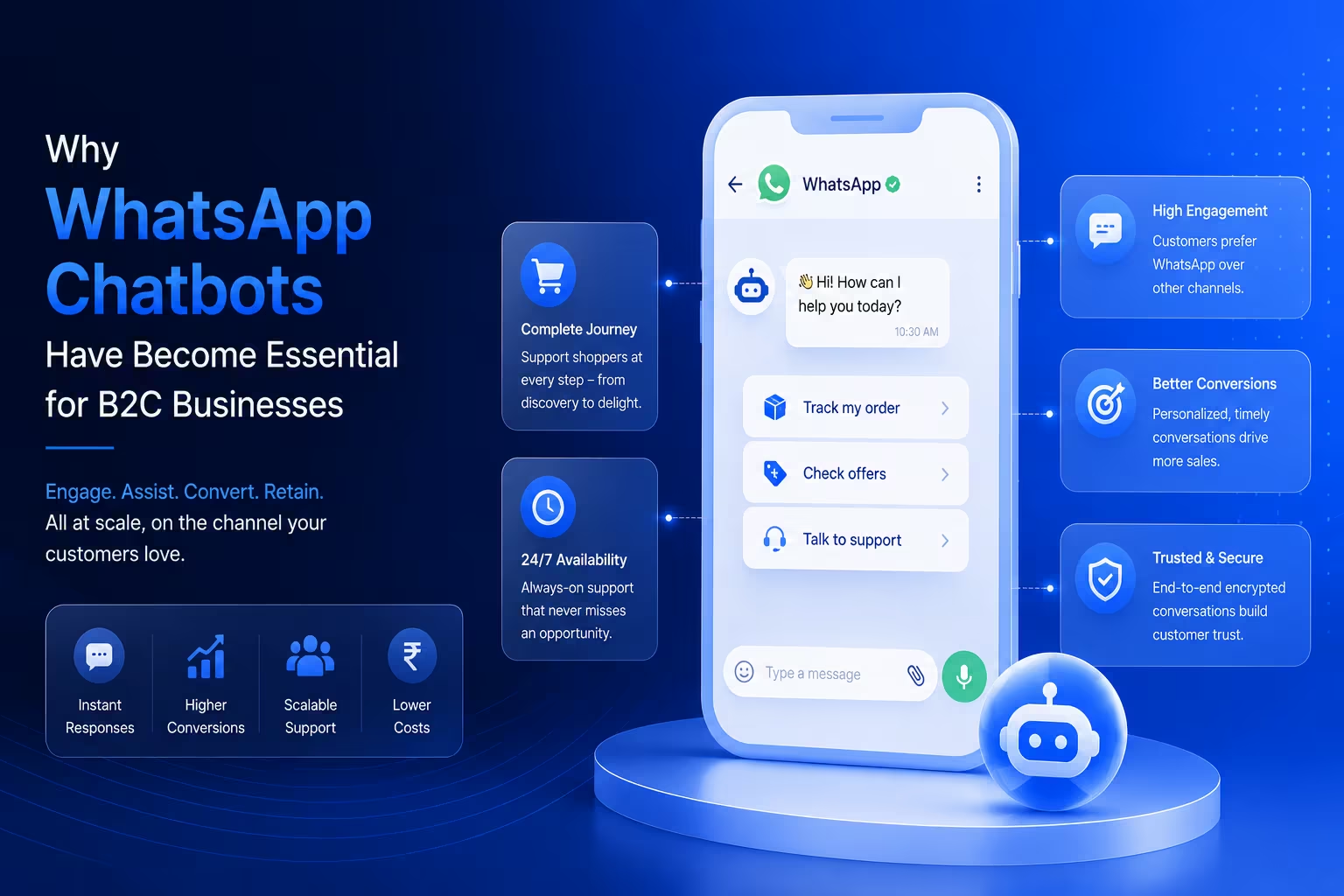
WhatsApp has become one of the primary communication channels for B2C brands. Customers expect businesses to respond instantly, answer common questions, recommend products, and remain available outside business hours.
A modern WhatsApp chatbot helps businesses automate these repetitive interactions without increasing headcount.
Typical capabilities include:
1. Instant Customer Responses
Customers receive immediate answers instead of waiting for an available agent.
2. FAQ Automation
Shipping updates, pricing, refund policies, appointment timings, and common queries can all be automated.
3. Lead Qualification
Chatbots collect customer information, identify buying intent, and filter high-quality prospects before routing them further.
4. Appointment Booking
Customers can schedule demos, consultations, property visits, or service appointments directly inside WhatsApp.
5. Product Recommendations
Rule-based flows help customers discover products based on preferences or predefined decision trees.
6. Basic Customer Support
Simple troubleshooting and order status updates reduce agent workload significantly.
For businesses that primarily interact on WhatsApp, these capabilities create measurable operational efficiency. But they only represent one part of the customer journey.
Explore AI-powered WhatsApp automation with Callveriq.
What a WhatsApp Chatbot Cannot Do Alone
The biggest misconception is that deploying a chatbot means automating customer engagement end to end.
In reality, most customer journeys are fragmented across multiple touchpoints.
A standalone chatbot typically lacks visibility beyond WhatsApp, creating several operational limitations.
1. It Cannot Understand Cross-Channel Conversations
A customer may:
- Click a Facebook ad
- Browse the website
- Chat on WhatsApp
- Call the sales team
- Return later through email
The chatbot only understands the WhatsApp conversation, not the entire buying journey.
2. It Creates Customer Context Gaps
Customers often need to repeat:
- Their requirements
- Previous conversations
- Purchase history
- Preferred communication channel
Every repeated question increases friction.
3. Follow-Ups Become Manual
If someone stops replying on WhatsApp, many chatbot platforms simply stop.
Sales teams must manually decide:
- Should we call?
- Send another WhatsApp message?
- Trigger email?
- Wait another day?
This slows response times and creates inconsistent customer experiences.
4. Personalization Remains Limited
Most WhatsApp automation relies on predefined workflows.
Without access to customer behavior across channels, recommendations often become generic instead of contextual.
5. Analytics Stay Channel-Specific
Businesses may know:
- WhatsApp response rate
- Open rate
- Chat completion rate
But they cannot easily answer:
- Which channel generated the sale?
- Which touchpoint caused drop-offs?
- How many conversations moved from voice to WhatsApp?
That visibility requires an omnichannel view.
Bridge channel gaps with Callveriq's omnichannel AI.
This blog is just the start.
Unlock the power of Callveriq’s AI with a live demo.

How a WhatsApp Chatbot Becomes Smarter Inside an Omnichannel AI Platform
The real transformation happens when WhatsApp is no longer treated as an isolated communication channel.
An omnichannel AI platform connects conversations across voice, website chat, mobile apps, email, SMS, and social messaging into one continuous customer journey.
Instead of responding to isolated messages, AI understands customer history before every interaction.
1. Every Conversation Shares Context
When customers move between channels, the AI remembers:
- Previous conversations
- Purchase intent
- Customer preferences
- Agent notes
- Recent interactions
Customers never need to start from scratch.
2. AI Selects the Right Channel Automatically
Rather than relying only on WhatsApp, AI decides whether the next engagement should happen through:
- Voice calls
- SMS
- In-app messaging
The goal shifts from channel automation to customer journey optimization.
3. Intelligent Follow-Ups Replace Static Flows
Instead of predefined reminders, AI evaluates:
- Customer intent
- Buying signals
- Engagement history
- Response behavior
Follow-ups become dynamic instead of rule-based.
4. Unified Customer Profiles Improve Personalization
Every interaction contributes to one customer profile.
This enables highly relevant conversations regardless of where customers return.
5. Teams Gain Complete Journey Analytics
Businesses can finally measure:
- Conversion by channel
- Journey completion rates
- Cross-channel drop-offs
- Revenue attribution
- Agent performance across channels
This level of visibility supports continuous optimization instead of isolated reporting.
For organizations scaling customer engagement, connecting WhatsApp with an omnichannel AI platform creates significantly more business value than automating a single channel.
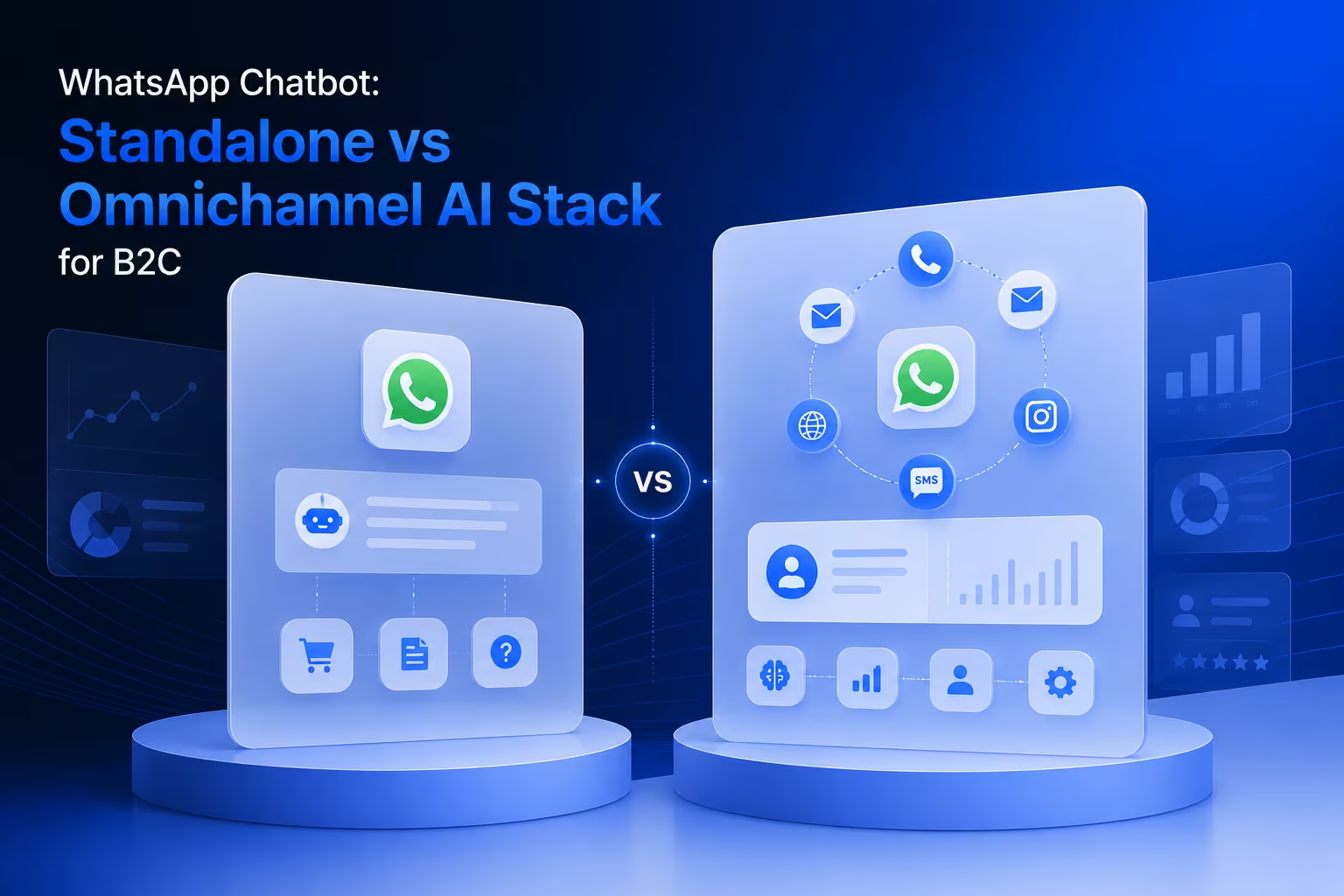
WhatsApp Chatbot vs Omnichannel AI Sales Agent
Many businesses use these terms interchangeably, but they solve different problems.
An AI sales agent doesn't replace a WhatsApp chatbot. Instead, it expands its capabilities by making every customer interaction part of a connected sales journey rather than an isolated conversation.
For growing B2C organizations, this distinction becomes increasingly important as customer acquisition channels continue to diversify.
Compare Callveriq's AI sales capabilities today.
When Should You Upgrade Beyond a Standalone WhatsApp Chatbot?
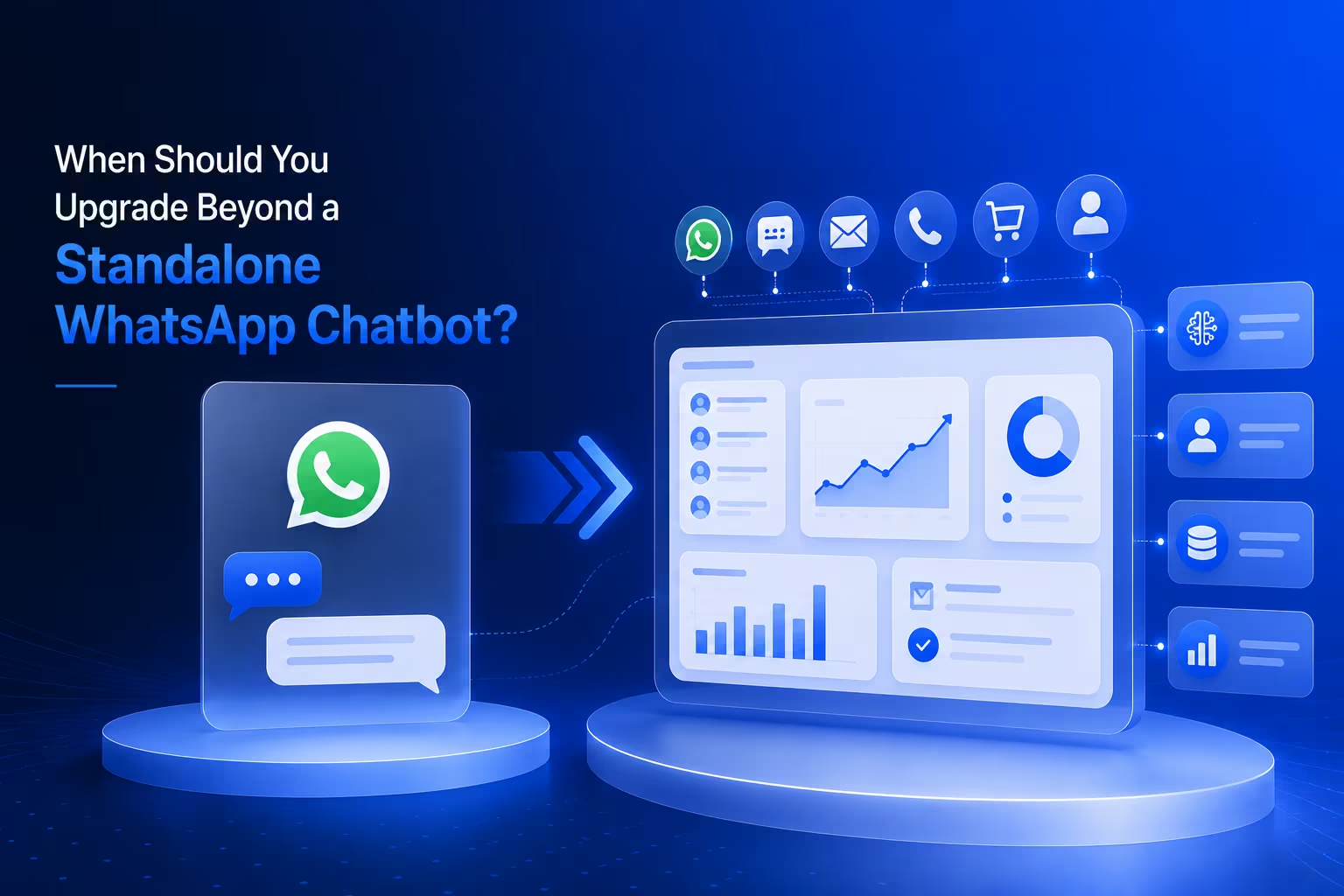
A standalone chatbot continues to deliver value when customer journeys remain simple.
However, businesses often outgrow channel-specific automation as they scale.
Common indicators include:
1. Customers Frequently Switch Channels
Prospects start conversations on WhatsApp but later call, email, or return through the website.
2. Sales Teams Lack Customer Visibility
Agents spend time collecting information customers have already shared elsewhere.
3. Follow-Ups Depend on Manual Work
Sales representatives decide who to contact, when, and through which channel instead of relying on AI orchestration.
4. Customer Experience Becomes Inconsistent
Each channel feels disconnected because systems cannot share customer context.
5. Leadership Wants Revenue Insights
Instead of measuring chatbot activity alone, leaders want visibility into which conversations actually generate revenue.
These are typically the moments when organizations begin evaluating an omnichannel customer engagement strategy rather than investing further in isolated chatbot capabilities.
Platforms like Callveriq enable businesses to unify voice, WhatsApp, web chat, and other digital channels into one AI-powered customer journey, allowing conversations to continue naturally regardless of where customers engage.
How Callveriq Extends the Value of a WhatsApp Chatbot
Callveriq helps businesses move beyond channel automation by connecting WhatsApp with an intelligent omnichannel AI ecosystem.
Instead of operating independently, WhatsApp conversations become part of a unified customer journey powered by AI.
With Callveriq, businesses can:
- Connect WhatsApp, voice, website, and other digital channels.
- Maintain customer context across every interaction.
- Automate lead qualification and personalized follow-ups.
- Enable AI-driven conversations instead of static chatbot flows.
- Measure complete customer journeys with unified analytics.
- Improve sales productivity without increasing operational complexity.
Rather than replacing your existing chatbot investment, Callveriq enhances it by enabling conversations that continue seamlessly across every customer touchpoint.
See Callveriq in action across every channel.
What This Means For WhatsApp Chatbot for B2C
A WhatsApp chatbot is an excellent starting point for automating customer conversations, reducing response times, and handling repetitive interactions at scale. For many B2C businesses, it delivers immediate operational benefits and improves customer accessibility. However, today's buyers rarely complete their journey within a single messaging app. They discover brands through ads, browse websites, switch to phone calls, revisit through email, and expect every interaction to feel connected.
As customer journeys become increasingly omnichannel, businesses need more than isolated automation. They need AI that understands context, coordinates conversations across channels, and guides prospects from first interaction to conversion without losing continuity. That is the difference between deploying a chatbot and building an intelligent customer engagement strategy. Organizations that make this shift are better positioned to deliver consistent experiences, improve sales efficiency, and create customer journeys that convert regardless of where the conversation begins.
Transform customer journeys with Callveriq's omnichannel AI.
FAQs
Q1. Can a WhatsApp chatbot integrate with my existing CRM?
Yes. Most modern WhatsApp chatbot platforms integrate with CRMs to sync customer data, conversation history, and lead status for better follow-ups.
Q2. Is a WhatsApp chatbot suitable for small and mid-sized B2C businesses?
Absolutely. It helps smaller teams automate repetitive conversations, improve response times, and scale customer engagement without hiring more agents.
Q3. How long does it typically take to deploy a WhatsApp chatbot?
Deployment can range from a few days to a few weeks, depending on the complexity of workflows, integrations, and customization requirements.
Q4. Can a WhatsApp chatbot support multiple languages?
Yes. Many AI-powered WhatsApp chatbots can understand and respond in multiple languages, making them ideal for businesses serving diverse customer bases.
Q5. How do businesses measure the success of a WhatsApp chatbot?
Key metrics include response time, conversation completion rate, lead qualification rate, customer satisfaction, and conversion rate to evaluate overall performance.