

Most B2C support teams don’t fail because they lack tools, they fail because they can’t connect experience to outcomes. A customer asks a simple question, gets routed across chat, email, and voice, repeats themselves twice, and still waits. On the surface, everything looks “omnichannel.” In reality, it’s fragmented automation stitched together without intelligence.
This is where most businesses begin to question their conversational AI ROI. They have chatbots live, IVRs automated, and WhatsApp flows running, but there's no clarity on whether these systems are actually improving the experience or just shifting the workload. Leaders often discover that volume is going down, but frustration is not.
To fix this, teams need to stop thinking in channels and start thinking in measurable outcomes. That means tracking the right signals, understanding what “good” looks like, and benchmarking performance against real customer impact, not vanity metrics.
Evaluate your conversational AI ROI with Callveriq CX stack.
What Conversational AI KPIs Actually Mean in a Revenue Context
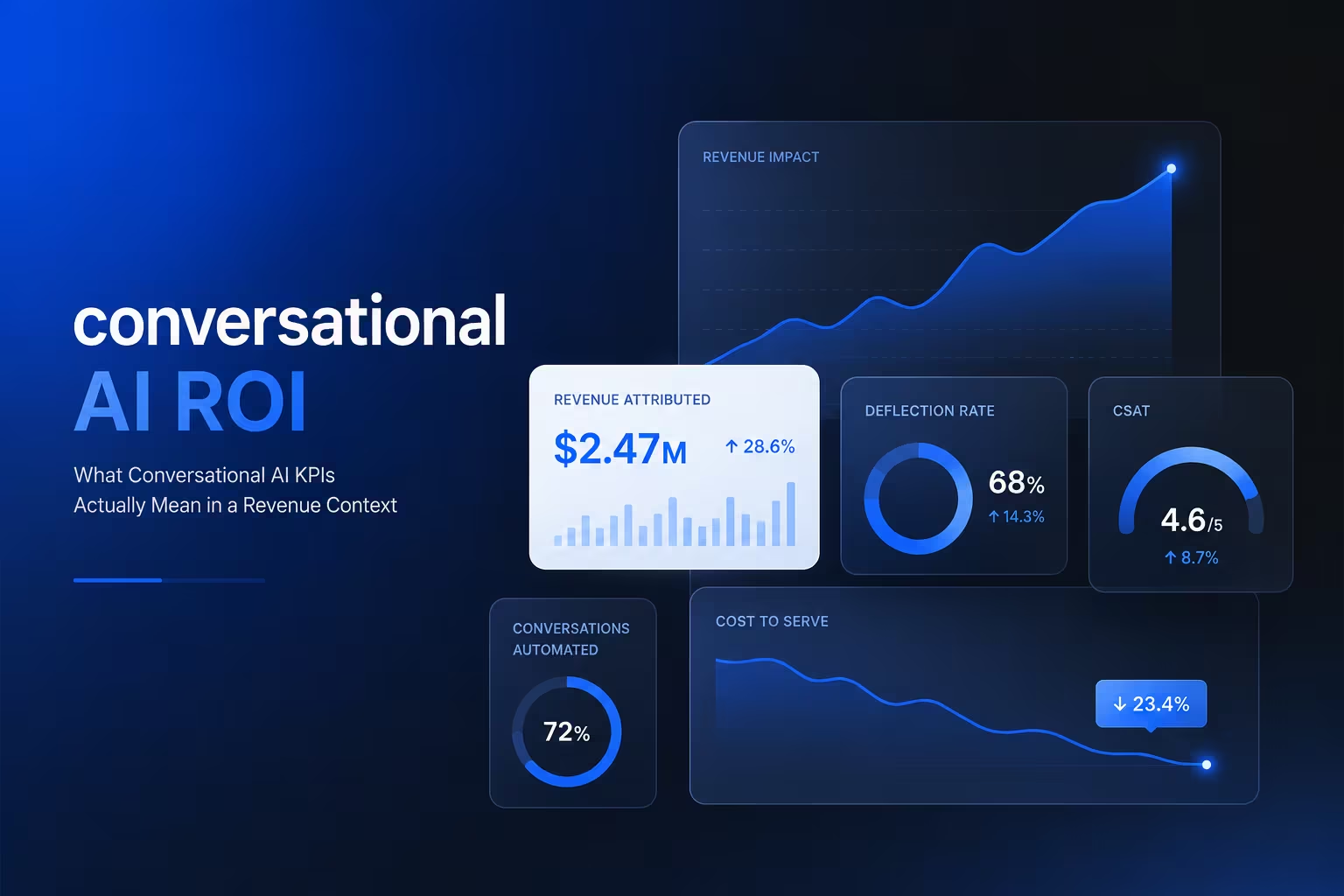
For high-performing B2C teams, conversational AI KPIs are not support metrics. They are business efficiency indicators tied directly to cost, retention, and conversion.
The strongest models connect every interaction to a measurable ROI layer:
The real insight: improving one layer without the others leads to broken optimization.
Build ROI-driven AI KPI dashboards with Callveriq.
CSAT and Experience Signals That Actually Predict Retention
CSAT is often treated as a soft metric, but in reality, it is one of the strongest predictors of churn in AI-led support journeys.
Modern chatbot CSAT metrics go beyond “thumbs up/down” and include:
- Post-resolution sentiment scoring
- Multi-turn frustration detection
- Channel switch drop-off signals
Research-backed insight: Salesforce’s State of Service Report (2025) highlights that customers who experience low-effort digital interactions are significantly more likely to repurchase and recommend brands.
Similarly, McKinsey’s CX research (2025) reinforces that experience quality is now a stronger loyalty driver than price in digitally mature markets.
Improve chatbot CSAT with AI conversation intelligence.
This blog is just the start.
Unlock the power of Callveriq’s AI with a live demo.

What Is a Good Deflection Rate for Conversational AI?
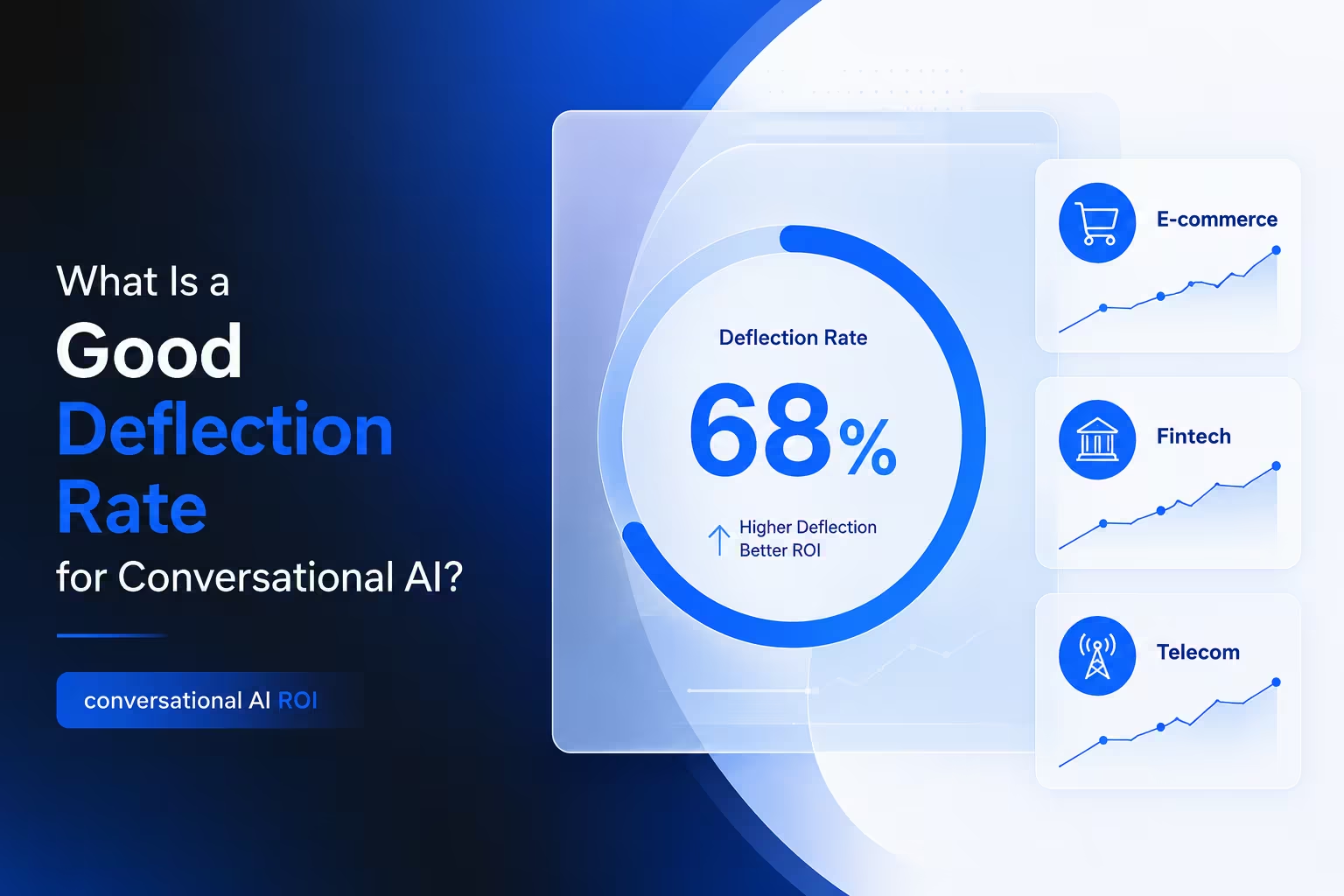
The deflection rate chatbot metric is often misunderstood. High deflection is not always good unless the resolution quality remains intact.
A healthy benchmark depends on industry maturity:
However, Gartner research on digital customer service automation (2026 outlook) highlights a critical insight: beyond 70–75%, deflection quality must be validated through CSAT and repeat contact rate.
High deflection + low CSAT = broken automation.
Maximize deflection without hurting CSAT with Callveriq
AHT Reduction: The Hidden Engine of Conversational AI ROI
Average Handle Time (AHT) is where conversational AI shows immediate operational value. But the real improvement comes from pre- and post-agent automation.
Key levers include:
- Auto-summarization of conversations
- Context passing between channels
- Smart routing based on intent
KPMG’s 2025 digital transformation insights show that organizations using AI-assisted resolution flows reduce operational handling time significantly while improving consistency.
The key mistake: optimizing AHT without improving resolution quality leads to faster failure, not better CX.
Reduce AHT and boost efficiency with Callveriq AI.
Benchmarking Conversational AI Performance Against Industry Leaders
Benchmarking is where most teams fail because they compare internal numbers instead of industry standards.
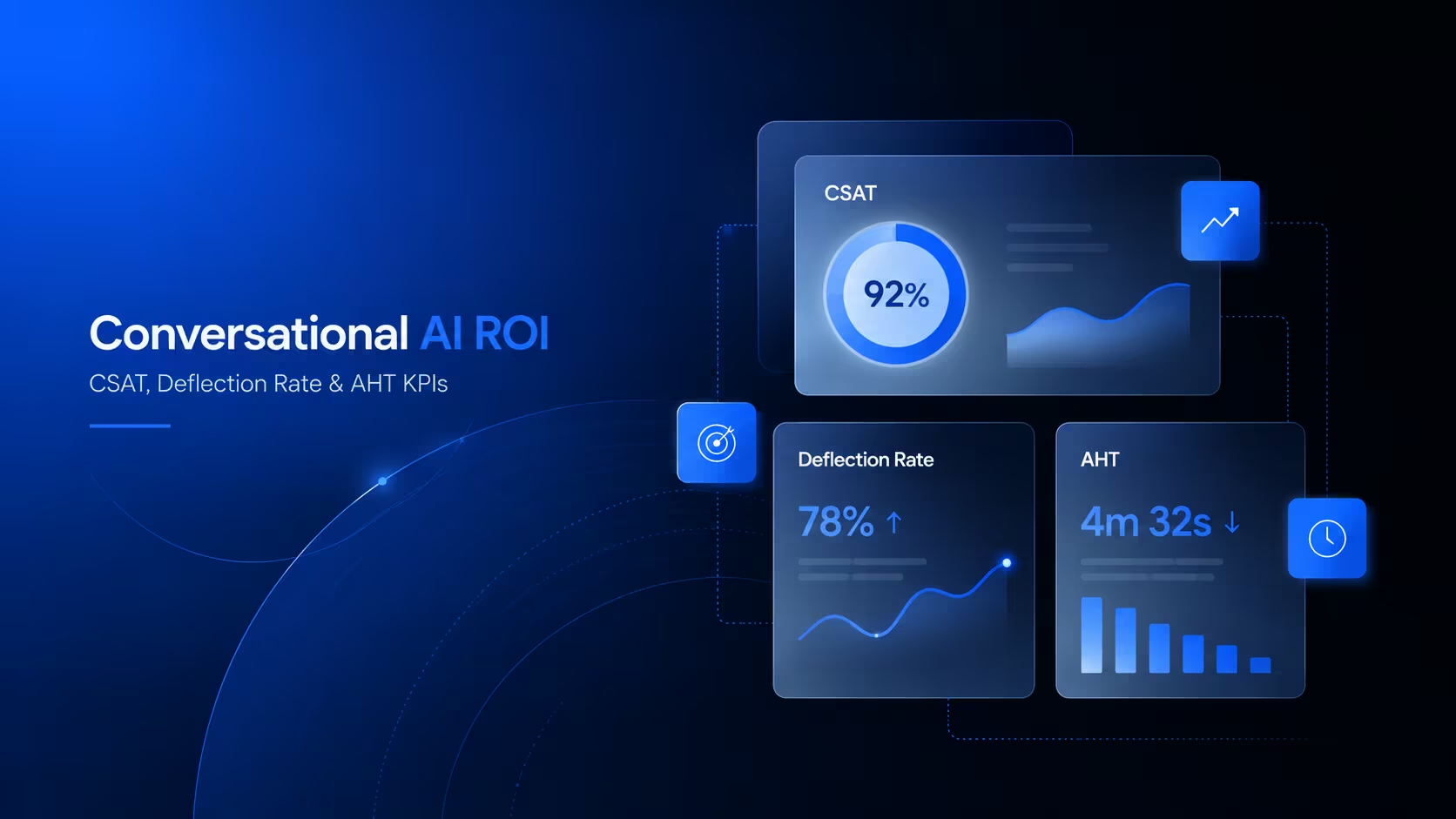
- CSAT below 80% signals weak CX, while top performers consistently reach 90%+ through better intent handling and journey design
- Deflection rate chatbot benchmarks sit around 50–60% on average, with leaders pushing 70%+ without sacrificing resolution quality
- AHT reduction typically ranges from 20–30%, while advanced conversational AI setups achieve 40%+ via automation of summaries, routing, and context handling
- FCR improves from 70–80% in average systems to 85%+ in high-performing environments by reducing friction and improving intent accuracy
Gartner and McKinsey both emphasize a shift in 2026: conversational systems are no longer support tools but operational intelligence layers.
Salesforce’s latest service intelligence findings further reinforce that AI-driven service leaders outperform laggards in both retention and cost efficiency.
Benchmark conversational AI KPIs with Callveriq.
Conversational AI ROI: What Actually Matters in Decision Making
At the decision stage, leaders don’t care about isolated metrics. They care about system-wide outcomes: cost reduction, experience uplift, and scalability without linear hiring.
A strong conversational AI system is one where:
- CSAT remains stable even as deflection increases
- AHT drops without impacting resolution quality
- Automation improves without increasing repeat contacts
This balance is what defines real conversational AI ROI in 2026.
The shift is clear: companies are no longer buying chatbots. They are investing in measurable CX intelligence systems that continuously optimize performance across every interaction layer. Platforms like Callveriq are increasingly positioned as execution layers for this transformation, not just tooling providers.
There is no “perfect KPI.” There is only the right balance between efficiency, experience, and automation that aligns with business outcomes.
What This Means for Conversational AI ROI and KPI Strategy in 2026
Conversational AI success is no longer defined by deployment or channel coverage, but by how intelligently it converts interactions into measurable business outcomes. The real competitive advantage in 2026 comes from aligning CSAT, deflection rate, and AHT into a unified performance system that continuously improves itself. Organizations that treat conversational AI ROI as a strategic operating model rather than a reporting metric will consistently outperform in both customer experience and cost efficiency, while others will remain stuck optimizing isolated KPIs without real business impact.
Book your demo to maximize conversational AI ROI
FAQs
1. How often should conversational AI performance be reviewed?
Most organizations review conversational AI performance monthly, while high-volume B2C businesses monitor key metrics weekly. Frequent reviews help identify issues before they impact customer experience.
2. Can conversational AI improve agent productivity as well as customer experience?
Yes. Conversational AI automates repetitive tasks, provides conversation context, and reduces manual effort, allowing agents to focus on complex customer issues more effectively.
3. Which industries see the highest ROI from conversational AI?
Industries with large customer interaction volumes, such as e-commerce, banking, telecom, and insurance, often see the fastest returns from conversational AI investments.
4. What role does conversation analytics play in AI performance?
Conversation analytics helps uncover customer intent, friction points, and automation gaps. These insights enable continuous optimization of AI workflows and support operations.
5. How long does it take to measure conversational AI ROI?
Most businesses begin seeing measurable results within a few months of deployment. The timeline depends on factors such as interaction volume, use cases, and implementation maturity.