

A prospect discovers your brand on Instagram, clicks your ad, but leaves without filling out a form. Hours later, they visit your website and start a chat, then abandon it mid-conversation for a phone call. The next morning, they message on WhatsApp asking for pricing, and nobody responds for three hours because the inquiry sits in a shared inbox. By afternoon, they call your sales team, who have no idea about the earlier conversations. The customer repeats everything and decides to evaluate another vendor instead.
This is how modern revenue leaks happen.
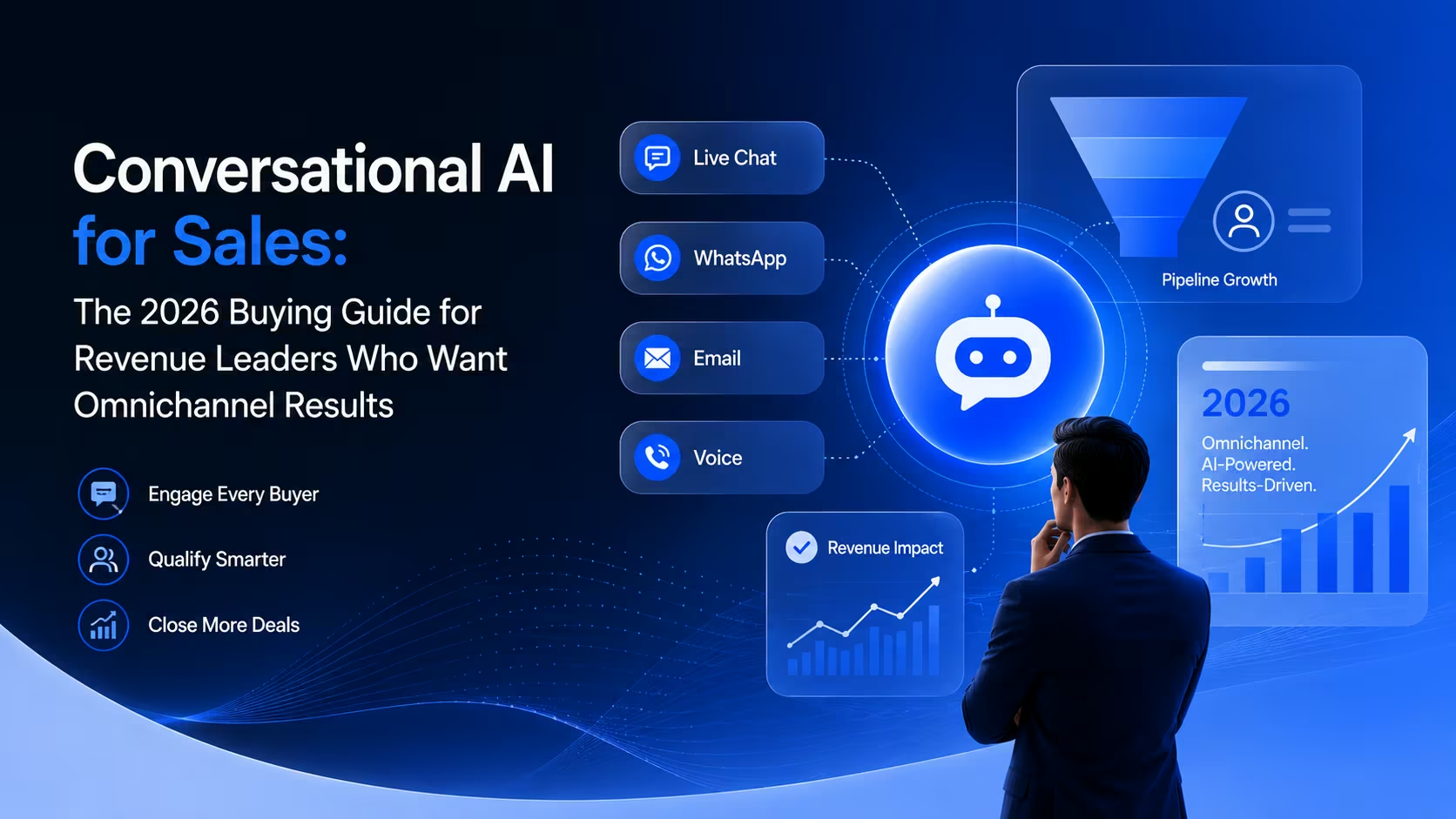
Today's buyers expect conversations to continue naturally across channels; they simply expect businesses to remember who they are and respond instantly. That expectation is driving rapid adoption of conversational AI for sales: platforms that enable intelligent, context-aware conversations moving buyers from discovery to purchase across every touchpoint.
For revenue leaders, the question is no longer whether conversational AI belongs in the sales stack; it's which platform can deliver measurable revenue outcomes without adding operational complexity.
Discover how Callveriq unifies sales conversations.
Why Conversational AI for Sales Has Become a Strategic Revenue Platform
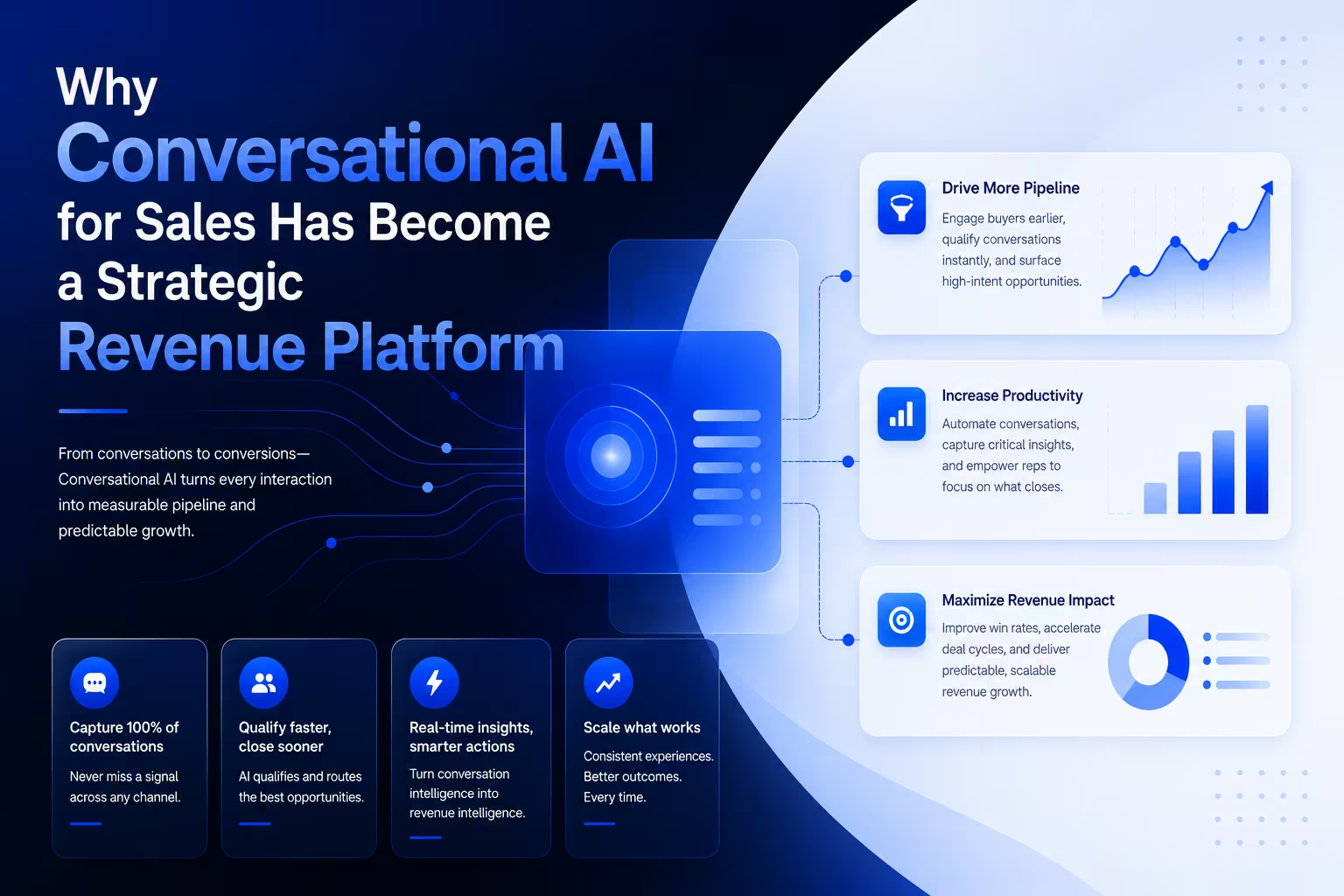
Traditional sales automation focused on repetitive tasks, email sequences, CRM updates, reminders, and lead routing. These improvements increased productivity but rarely improved customer conversations.
Modern buyers want immediate answers, personalized recommendations, and continuity regardless of whether they reach you through voice, WhatsApp, website chat, SMS, or social media. This shift has moved organizations toward AI sales conversations that combine natural language understanding, real-time decision making, CRM intelligence, and workflow automation into one connected experience.
According to McKinsey's 2025 State of AI survey, AI adoption continues to rise across business functions, but most organizations remain in the pilot stage, companies achieving the greatest value redesign workflows around AI rather than simply automating existing tasks. Gartner similarly predicts that by 2027, 95% of seller research workflows will begin with AI, co95% of seller research workflows mpared to less than 20% in 2024.
Revenue growth now depends on seamless buying experiences, which is why omnichannel sales AI is becoming a board-level investment, not just another sales tool.
See Callveriq turn interactions into revenue.
Conversational AI for Sales vs.Customer Service AI
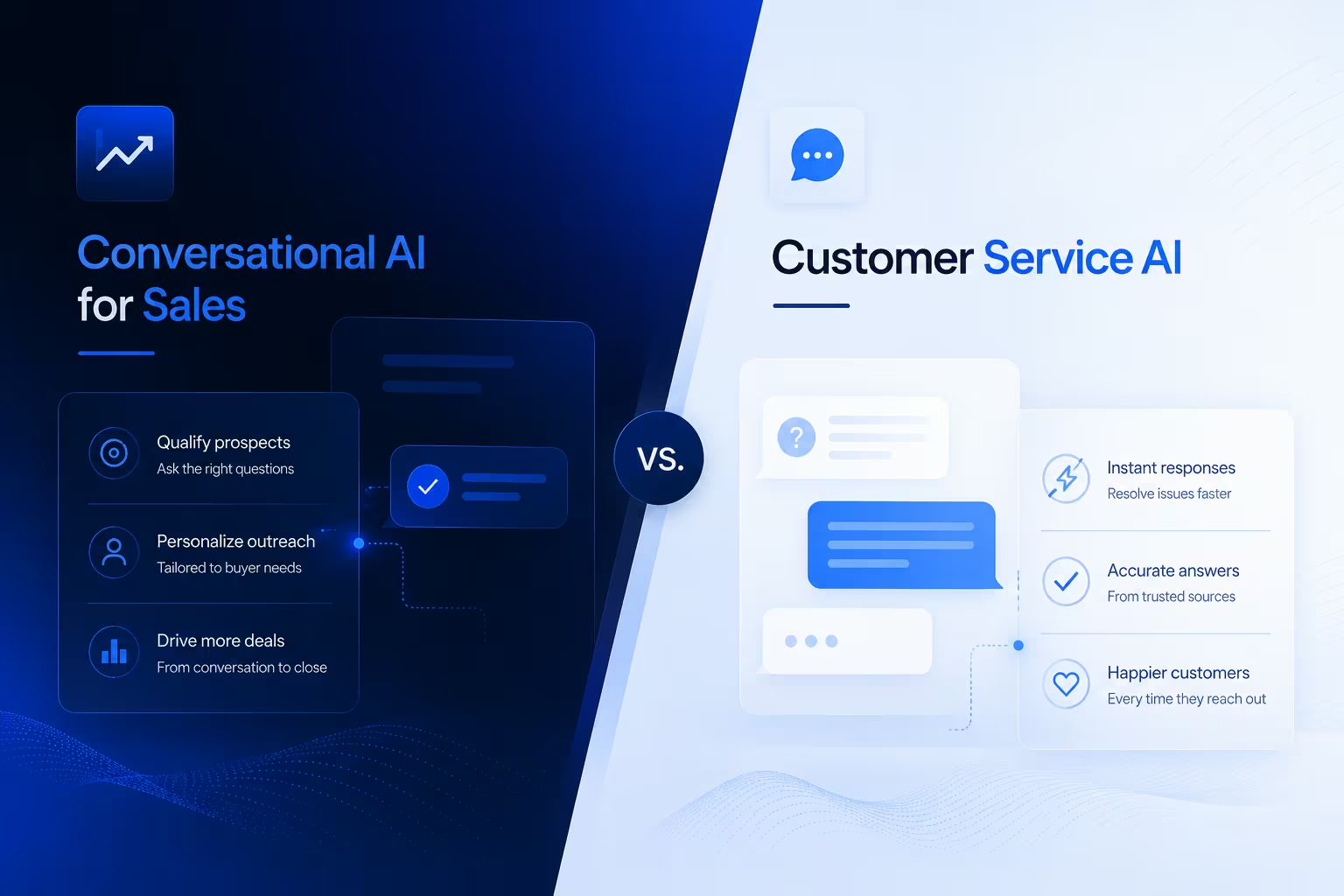
One common mistake buyers make is assuming that customer support AI and sales AI are interchangeable. While both use similar language models, they solve different business problems and are built for different stages of the customer journey.
- Business objective: Customer service AI improves support efficiency; sales AI increases conversions and revenue.
- Target audience: Support AI primarily serves existing customers; sales AI engages both prospects and existing customers throughout the buying journey.
- Success metrics: Support teams track resolution time and CSAT; sales teams track lead qualification, meeting bookings, conversions, and pipeline growth.
- Conversation style: Support conversations are reactive and problem-focused; sales conversations are proactive and designed to guide a decision.
- Data usage: Sales AI pulls context from your CRM, past interactions, and customer behavior to deliver relevant recommendations and maintain continuity across channels.
Many businesses end up buying a platform that's excellent at support but lacks the capabilities to qualify leads or drive revenue. If your goal is to accelerate sales, evaluate a solution purpose-built for sales conversations, not just support.
This blog is just the start.
Unlock the power of Callveriq’s AI with a live demo.

Why Omnichannel Conversations Are Replacing Channel-Specific Automation
Customers don't think about channels. Businesses still do, and that disconnect creates fragmented experiences that reduce conversion rates.
KPMG's 2025 AI Pulse Survey found that leaders are accelerating AI agent pilots while prioritizing workflow integration, governance, and measurable business outcomes, reinforcing that the future isn't deploying AI across channels independently, but deploying a single intelligent layer that understands the customer regardless of where the conversation begins.
See Callveriq deliver consistent AI across every channel.
How to Evaluate Conversational AI Platforms for Omnichannel Sales
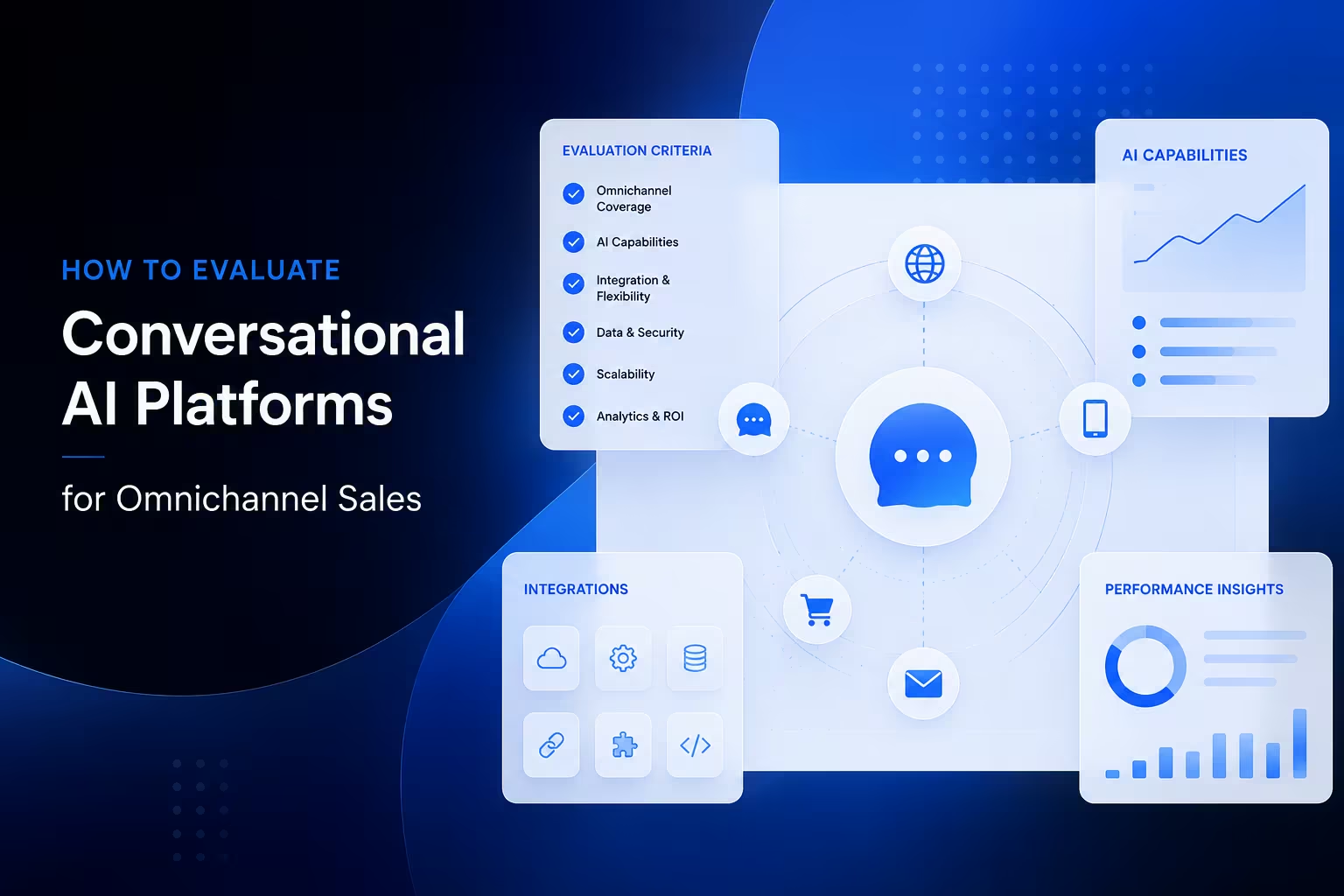
Most vendors claim to automate conversations, qualify leads, integrate with CRMs, and improve conversions; on paper, they look nearly identical. In practice, the difference lies in how well a platform fits your sales process. Evaluate across five areas:
1. Does it truly support omnichannel conversations?
It should maintain context across voice, chat, WhatsApp, SMS, email, and website chat, eliminating the need for customers to repeat themselves and giving agents a full history before they join. Ask: Can it continue the same conversation if a customer switches from chat to WhatsApp to a call? What channels are on the roadmap?
2. Can it understand sales conversations, not just queries?
Look for identifying purchase intent, qualifying leads against your criteria, handling objections, recommending products, and escalating with full context. Ask: How does it qualify leads, and can that logic be customized?
3. Does it integrate with your existing sales stack?
Without CRM, telephony, and marketing integrations, the AI operates with limited context. Verify integrations with your CRM (customer history, deal status), telephony (cross-channel continuity), marketing automation (behavior-triggered follow-ups), calendar (auto-scheduling), knowledge base (accurate responses), and analytics platforms.
4. How much work is required to deploy and maintain it?
Sales conversations evolve constantly, and pricing, campaigns, and objections shift over time. Ask: How long does implementation take? Can business teams update workflows without engineering? What ongoing support is included?
5. Can it automate complete workflows, not just conversations?
The AI should also act on outcomes, scheduling demos, sending follow-ups, updating CRM records, assigning leads, and creating tasks for human agents. This is where AI sales automation creates the most value: it keeps the sales process moving without manual intervention.
The best platform isn't the one with the longest feature list; it's the one that aligns with your sales process and helps your team close more with less effort.
See how Callveriq aligns with your sales goals.
Red Flags to Watch for During Vendor Evaluations
- Supports only one or two channels, or relies on rigid, rule-based flows instead of understanding intent
- CRM integrations are limited or require custom development, and workflows can't be updated without engineering
- Reporting focuses on chatbot metrics instead of business outcomes like qualified leads, meetings, and conversions
- Human handoffs happen without conversation history, or pricing scales unpredictably as volume grows
Choosing the right platform is a long-term investment. Looking past feature checklists and evaluating how well a solution supports your actual sales workflow will help you find one that scales with your business and consistently contributes to pipeline growth.
Compare Callveriq against your checklist.
What This Means For You
The businesses winning deals in 2026 aren't the ones with the most sales tools, they're the ones whose tools act like a single, informed conversation partner, no matter where a buyer shows up. Conversational AI closes the gap between how customers actually behave and how most sales stacks are still built: in silos, by channel, by team.
Choosing the right platform isn't about ticking off a feature list. It's about finding an AI layer that remembers context, acts on it, and gets smarter with every interaction, so your team spends less time chasing conversations and more time closing them. Start with the evaluation criteria in this guide, ask vendors the hard questions, and prioritize platforms built for revenue outcomes, not just automated replies.
Book a Callveriq demo and see omnichannel conversational AI in action.
FAQs
1. How is conversational AI different from a rule-based chatbot?
Rule-based chatbots follow scripted decision trees and break down when a conversation goes off-script. Conversational AI understands intent and adapts responses in real time, without needing every path pre-programmed.
2. Is conversational AI suitable for high-consideration or high-ticket sales, or only for simple transactions?
For high-ticket sales, it qualifies leads and nurtures prospects before handing off to a human rep for negotiation. For simpler purchases, it can often manage the entire journey end-to-end.
3. How long does it typically take to see measurable ROI after deploying conversational AI for sales?
Early indicators like faster response times and higher engagement show up within 4 to 6 weeks. Measurable pipeline or revenue impact usually takes 2 to 3 months.
4. Will conversational AI replace human sales reps?
No. It handles repetitive, high-volume interactions like inquiries and scheduling, freeing reps to focus on relationship-building and closing. The goal is augmentation, not replacement.
5. What happens if the AI can't answer a customer's question?
It recognizes when a conversation needs human judgment and escalates to a live rep with full conversation history attached. This means customers never have to repeat themselves.