

Outbound sales have never been easy.
Your sales team spends hours dialing numbers, following up on cold leads, leaving voicemails, and switching between CRM systems, spreadsheets, and messaging apps. By the end of the day, hundreds of conversations have happened, but only a handful move forward. Prospects are harder to reach, expectations are higher, and every missed follow-up means lost revenue.
Now imagine a different scenario.
A customer misses your call but immediately receives a personalized WhatsApp message. They reply later that evening, continue the conversation over SMS the next morning, and schedule a callback without ever repeating themselves. Your sales team joins only when the buyer is ready to talk.
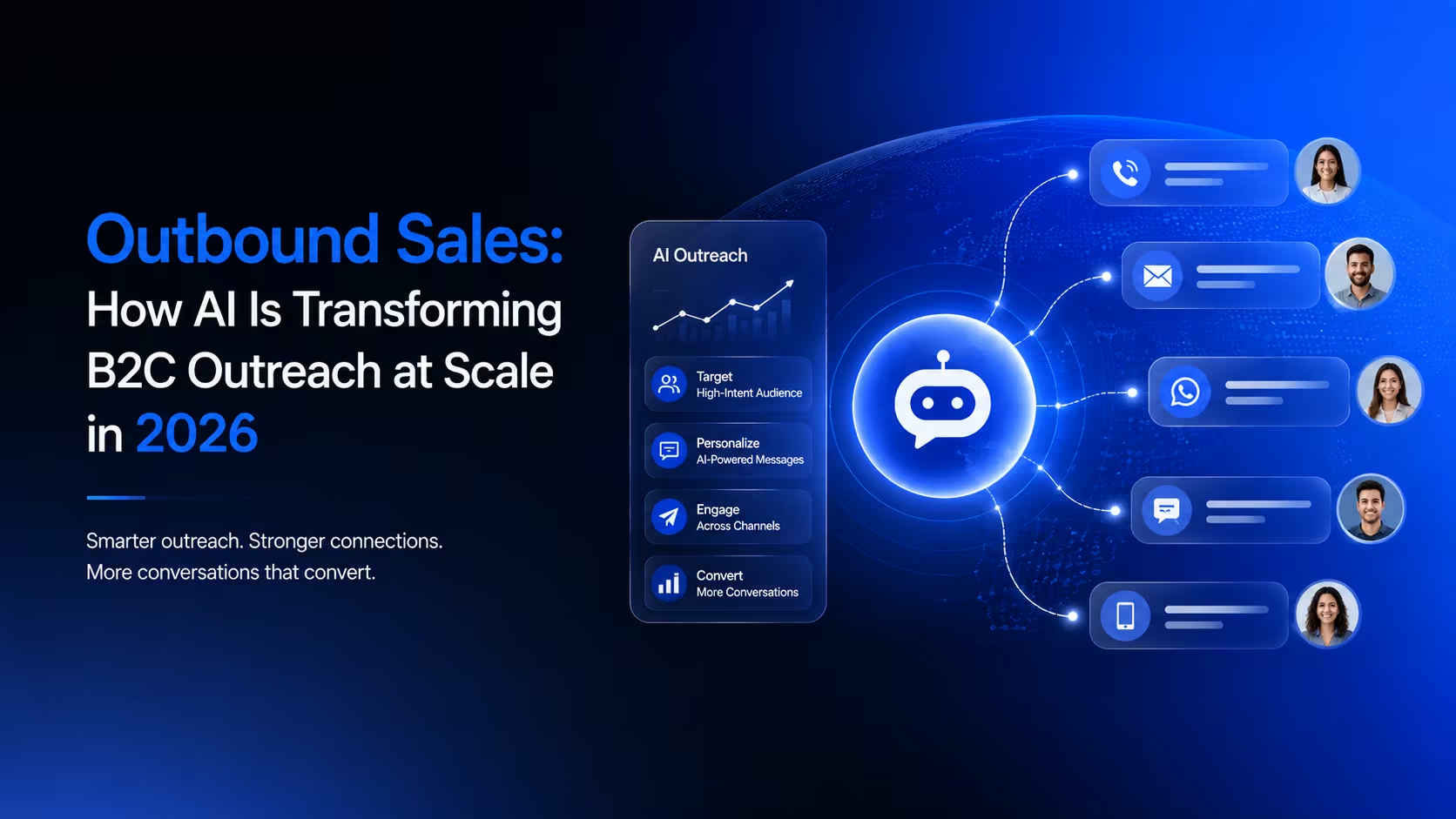
That is where outbound sales are headed. AI is no longer helping teams make more calls. It is helping them create smarter conversations across every customer touchpoint.
Organizations embracing AI are redesigning seller workflows instead of simply adding another tool. According to Gartner, sales organizations that provide AI-enabled next best actions are 2.6 times more likely to achieve commercial growth, highlighting how AI is becoming a competitive advantage rather than an experiment.
What Is Outbound Sales?
AI doesn't improve outbound sales by replacing sales representatives. It improves the entire sales process by automating repetitive tasks, identifying the best opportunities, and ensuring every customer interaction is timely and personalized.
From prioritizing high-intent leads to managing follow-ups across multiple channels, AI supports sales teams at every stage of the customer journey. The table below highlights where AI adds value throughout the modern outbound sales process and how it helps teams work more efficiently while delivering better customer experiences.
Common outbound channels include:
| Traditional Channel | Modern AI-Enabled Channel |
|---|---|
| Cold calls | AI phone calls |
| Email outreach | Personalized AI email sequences |
| SMS campaigns | Automated conversational SMS |
| Door-to-door sales | AI-driven digital outreach |
| Manual WhatsApp messages | AI-powered WhatsApp conversations |
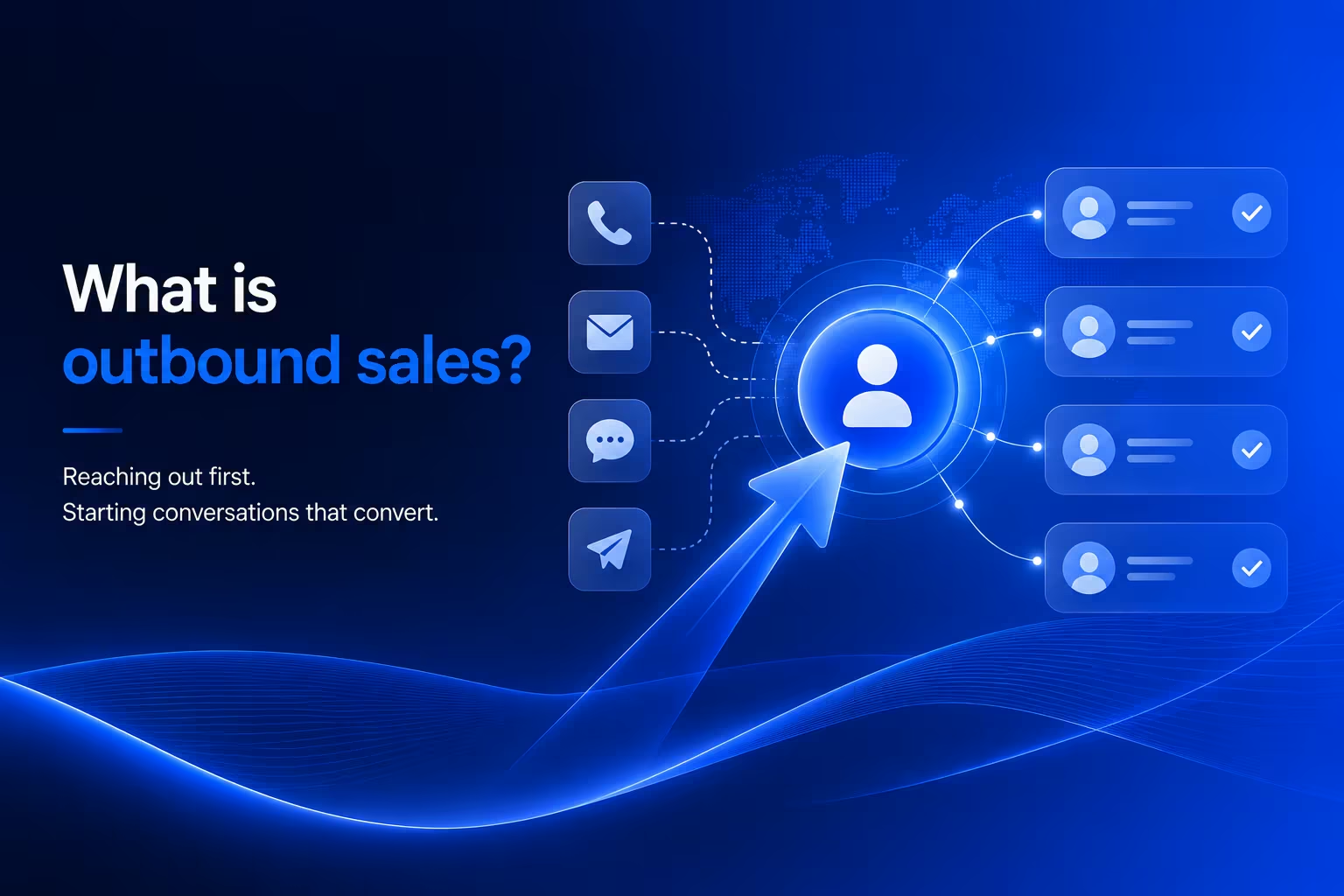
Unlike inbound sales, where customers express interest first, outbound sales require businesses to identify prospects, engage them, qualify intent, and guide them toward a purchase.
For B2C companies, outbound sales are especially valuable because it helps reach customers at scale for products like insurance, banking, healthcare, education, retail, telecom, and real estate.
See how Callveriq transforms outbound sales.
Why Traditional Outbound Sales Is Becoming Less Effective
The biggest challenge is no longer generating leads. It is reaching customers at the right moment through the right channel.
Modern buyers rarely answer unknown numbers. Many ignore promotional emails altogether. Others prefer messaging apps over phone calls.
This shift has exposed several weaknesses in manual outbound operations:
- Sales representatives spend more time dialing than selling.
- Follow-ups are inconsistent.
- Customer context gets lost between channels.
- Managers lack visibility into conversation quality.
- High-volume campaigns become expensive to scale.
Even experienced teams struggle because manual workflows simply cannot keep pace with modern customer expectations.
This is why businesses are investing in AI rather than increasing headcount.
Salesforce's State of Sales 2026 found that 90% of sales teams already use AI agents or expect to within two years, while nearly half of sales professionals say they lack enough bandwidth for cold outreach.
Make outbound outreach smarter with Callveriq.
This blog is just the start.
Unlock the power of Callveriq’s AI with a live demo.

How AI Has Changed Outbound Sales
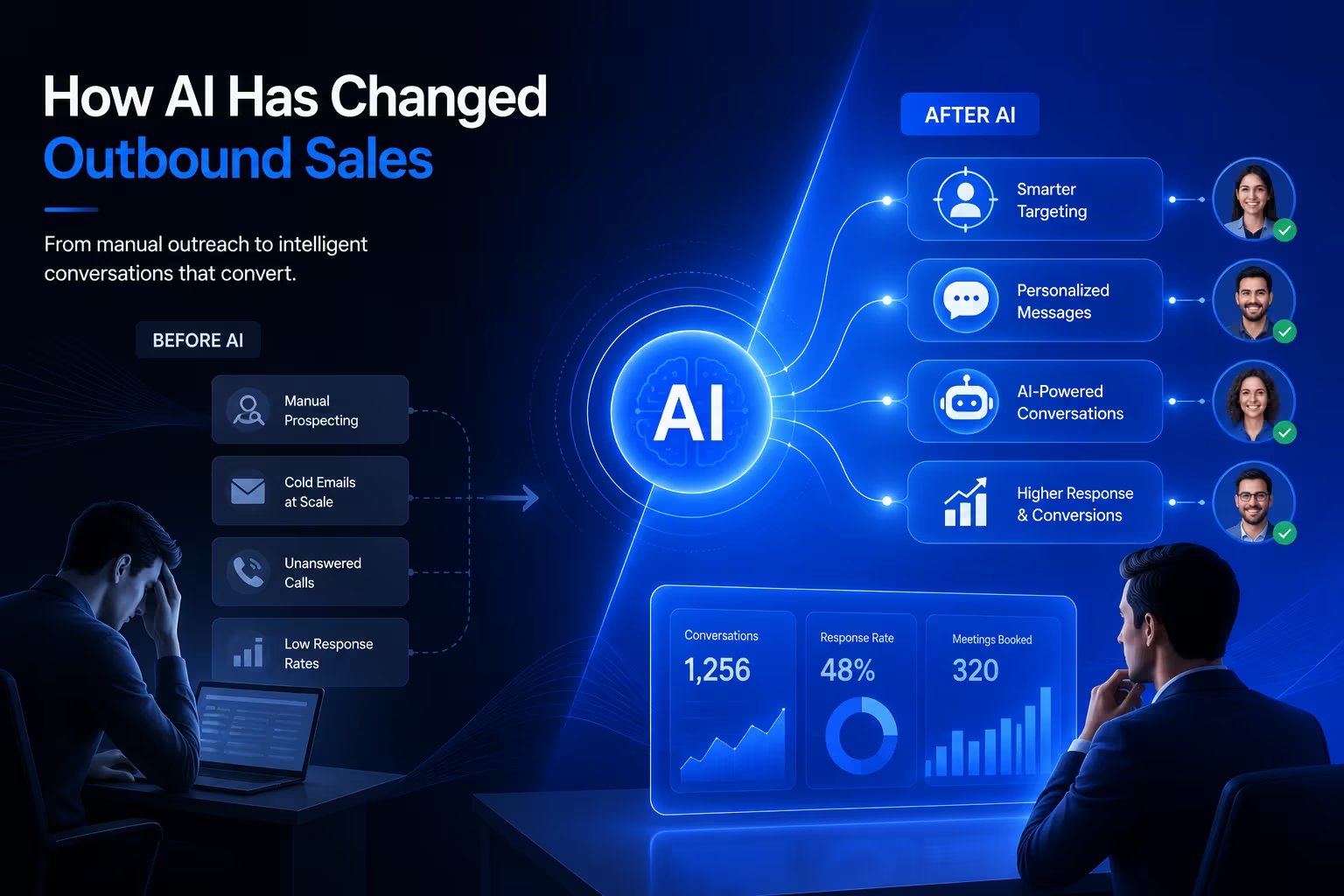
Traditional outbound sales relies heavily on manual effort, making it difficult to scale without increasing costs. Sales representatives typically work through static lead lists, follow generic scripts, and manually schedule follow-ups, often with limited visibility into what is actually driving conversions. AI-powered outbound sales changes this approach by making every interaction more data-driven and personalized. Instead of treating every prospect the same, AI continuously analyzes customer behavior and engagement signals to determine who should be contacted, when, and through which channel.
Key differences include:
- Smarter lead prioritization: AI identifies high-intent prospects instead of relying on manually curated lead lists.
- Personalized outreach: Conversations adapt based on customer behavior, purchase history, and previous interactions rather than following one-size-fits-all scripts.
- Omnichannel engagement: Outreach extends beyond phone calls to include channels like WhatsApp, SMS, email, and chat, ensuring conversations continue where customers are most responsive.
- Automated follow-ups: AI schedules and executes timely follow-ups, reducing the risk of losing prospects due to missed callbacks.
- Real-time insights and coaching: Every conversation is analyzed for buying signals, objections, and sentiment, helping managers coach teams proactively instead of reacting after opportunities are lost.
Rather than replacing sales representatives, AI removes repetitive administrative work and equips teams with the insights they need to focus on building relationships and closing more deals.
Rather than replacing human sales teams, AI removes repetitive work so representatives spend more time closing qualified opportunities.
Gartner predicts that by 2027, 95% of sellers' research workflows will begin with AI, compared to less than 20% in 2024.
Empower your sales team with Callveriq.
What Is Omnichannel Communication?
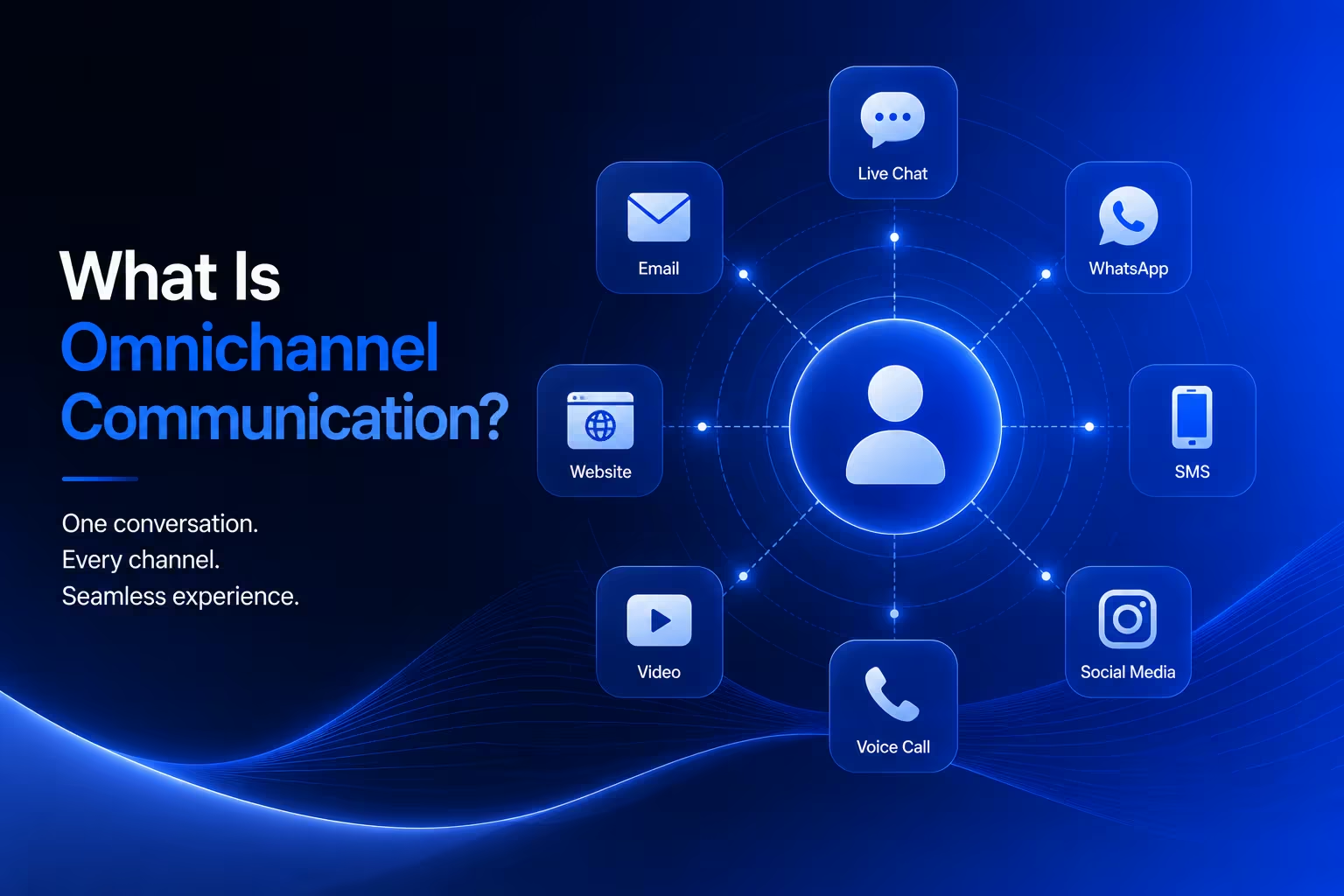
Many businesses still believe being present on multiple channels is enough.
It is not.
Omnichannel communication means every customer interaction stays connected, regardless of whether it happens over phone, WhatsApp, SMS, email, or chat.
For example:
A customer receives an outbound call ➙They don't answer ➙ AI immediately sends a personalized WhatsApp message ➙ The customer replies later that evening
The conversation continues the next day over voice without asking the customer to repeat their details.
That continuity creates a much smoother buying journey. Disconnected channels create friction. Connected conversations build trust.
What Is Omnichannel Customer Experience?
An omnichannel customer experience ensures customers receive consistent, personalized interactions across every communication channel.
Customers no longer think in terms of channels. They simply expect businesses to remember previous conversations.
An effective omnichannel experience includes:
- Unified customer history
- Consistent messaging
- Personalized recommendations
- Intelligent follow-ups
- Context shared across teams
According to McKinsey's 2026 Global B2B Pulse Survey, buyers now interact across an average of 10 different channels during purchasing journeys, making seamless experiences an expectation rather than a differentiator.
Although this research focuses on B2B, the same customer behavior is increasingly shaping high-volume B2C buying journeys.
Unify customer conversations with Callveriq.
How Omnichannel AI Improves Outbound Sales Connect Rates
One unanswered call should never end a sales opportunity. AI continuously adapts outreach based on customer behavior.
For example:
Missed Call→ WhatsApp Follow-up→ Message Opened→ Smart Follow-up→ AI Conversation→ Callback Scheduled→ Human Sales Takes Over
Instead of depending entirely on phone calls, AI keeps conversations moving until prospects are ready to engage.
This significantly improves:
- Contact rates
- Response rates
- Lead qualification
- Sales productivity
- Customer satisfaction
Where AI Fits Into the Modern Outbound Sales Process
AI supports almost every stage of outbound sales without removing the human element.
1. Lead Prioritization
Instead of asking sales teams to contact every prospect on a list, AI analyzes behavioral signals, CRM activity, previous interactions, and engagement history to identify high-intent leads. This helps representatives focus their time on prospects who are most likely to convert, improving both productivity and conversion rates.
2. Personalized Outreach
Modern buyers expect relevant conversations, not generic sales pitches. AI tailors messages based on a prospect's browsing behavior, past purchases, preferred communication channel, and previous conversations. As a result, every interaction feels more contextual and increases the likelihood of engagement.
3. AI Phone Calls
AI-powered virtual agents can handle repetitive but essential tasks such as lead qualification, appointment scheduling, payment reminders, and follow-up calls. They engage customers naturally, answer common questions, and seamlessly transfer complex or high-intent conversations to human sales representatives when needed.
4. Conversation Intelligence
Every customer interaction generates valuable insights. AI analyzes conversations in real time to detect sentiment, identify objections, track compliance, uncover buying signals, and measure agent performance. Sales managers can use these insights to coach teams, refine messaging, and improve future outreach strategies.
5. Automated Follow-Ups
Following up consistently is one of the biggest challenges in outbound sales. AI ensures no qualified lead is forgotten by automatically scheduling and sending follow-up calls, messages, or emails based on customer behavior and engagement. This keeps conversations moving forward without adding to a sales representative's workload.
Research from Salesforce also shows that high-performing sales teams are 1.7 times more likely than underperformers to use AI prospecting agents, demonstrating how AI is becoming a key differentiator in outbound performance.
Scale personalized outreach with Callveriq.
Is AI Replacing Sales Representatives?
Not at all. The most successful organizations are redesigning sales workflows so AI handles repetitive tasks while human representatives focus on relationship- building, negotiation, and closing.
Gartner's latest research found buyers remain significantly more likely to trust human representatives for understanding needs, building confidence, and moving purchasing decisions forward. AI performs best in research, recommendations, and repetitive execution, while people remain essential for empathy and complex decision-making.
The future of outbound sales is collaborative. AI creates capacity. Humans create relationships.
What This Means For Outbound Sales?
Outbound sales are evolving beyond cold calling and manual follow-ups. Customers expect businesses to reach them with relevant, personalized conversations across the channels they already use, and they expect those conversations to continue without friction. AI makes that possible by combining automation, conversation intelligence, and omnichannel orchestration into a single workflow.
The most effective outbound teams are no longer measuring success by the number of calls made. They are measuring how consistently they engage the right prospects, maintain context across every interaction, and help buyers move forward at their own pace. Businesses that embrace AI-powered outbound today will be better positioned to deliver faster responses, higher connect rates, and more meaningful customer experiences as expectations continue to rise.
Ready to transform outbound sales? Book your demo with Callveriq.
FAQs
1. How do you measure the success of an outbound sales campaign?
Success is typically measured using metrics like connect rate, response rate, conversion rate, cost per acquisition (CPA), and revenue generated. Tracking these KPIs helps identify what's working and where outreach strategies need improvement.
2. Which industries benefit the most from AI-powered outbound sales?
Industries such as banking, insurance, healthcare, real estate, education, telecom, and retail benefit significantly because they manage high volumes of customer outreach and follow-ups.
3. Can small businesses use AI for outbound sales?
Yes. Many AI-powered sales platforms offer scalable solutions that help small businesses automate outreach, qualify leads, and improve productivity without expanding their sales teams.
4. How does CRM integration improve outbound sales?
CRM integration gives sales teams access to real-time customer data, interaction history, and lead status, enabling more personalized conversations and better follow-up management.
5. What should businesses look for in an AI outbound sales platform?
Look for features like omnichannel communication, AI phone agents, CRM integration, conversation analytics, automated follow-ups, and actionable reporting to support scalable outbound sales.