

A customer discovers your brand through Instagram, asks a question on WhatsApp, follows up through email, and eventually calls support because they still haven't received a resolution.
Meanwhile, your support team is juggling disconnected tools, duplicate tickets, fragmented customer histories, and inconsistent responses across channels. Every additional channel improves reach but often creates operational complexity.
This is why businesses are increasingly investing in a multichannel AI messaging platform. The goal is no longer simply being present on multiple channels. The goal is creating intelligent, connected customer conversations that scale without increasing support costs.
As AI adoption accelerates, choosing the right platform has become a strategic buying decision rather than a technology purchase. The wrong platform creates silos. The right one becomes the foundation of customer engagement, automation, and operational efficiency.
Explore how Callveriq unifies AI conversations across channels
What Is a Multichannel AI Messaging Platform?
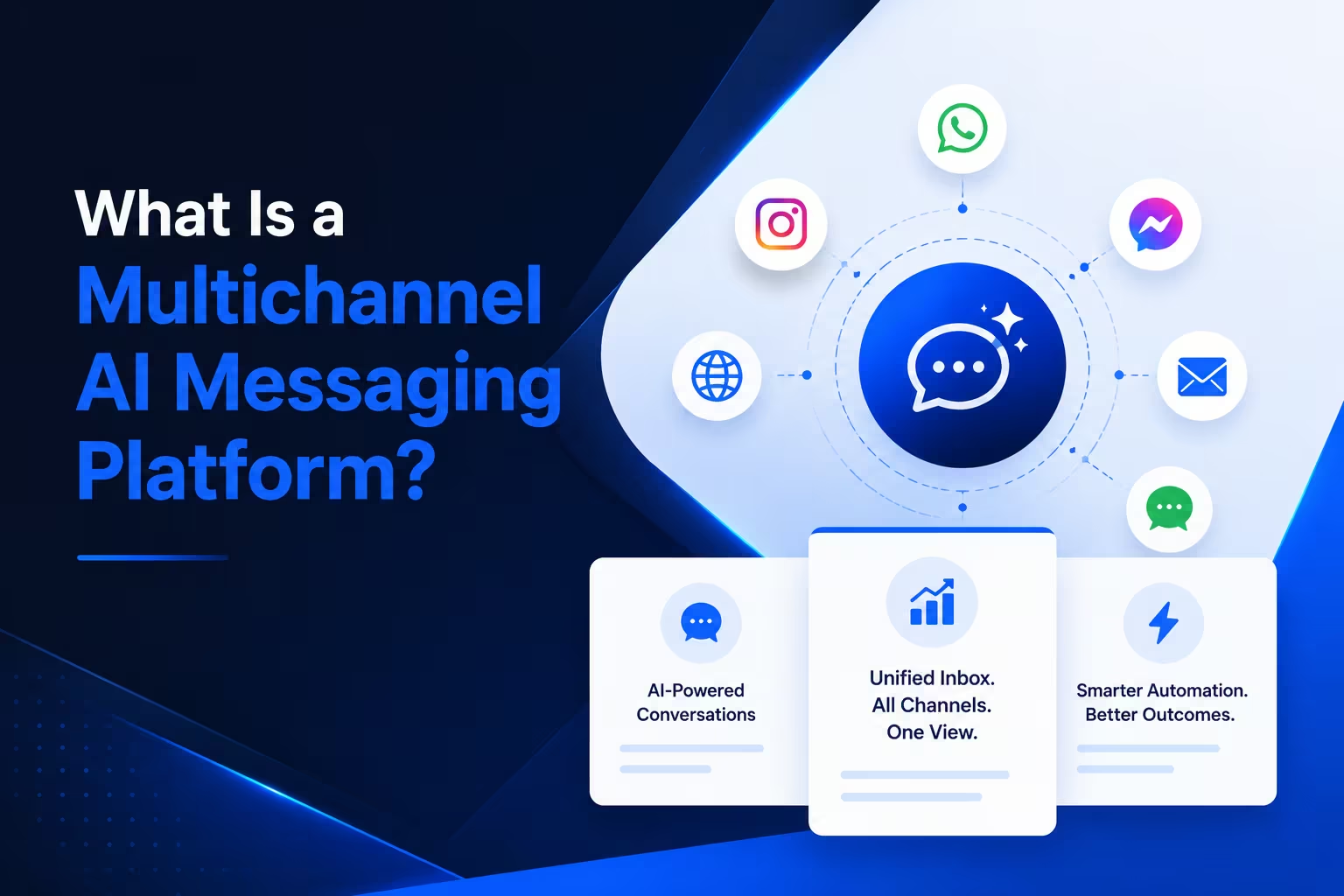
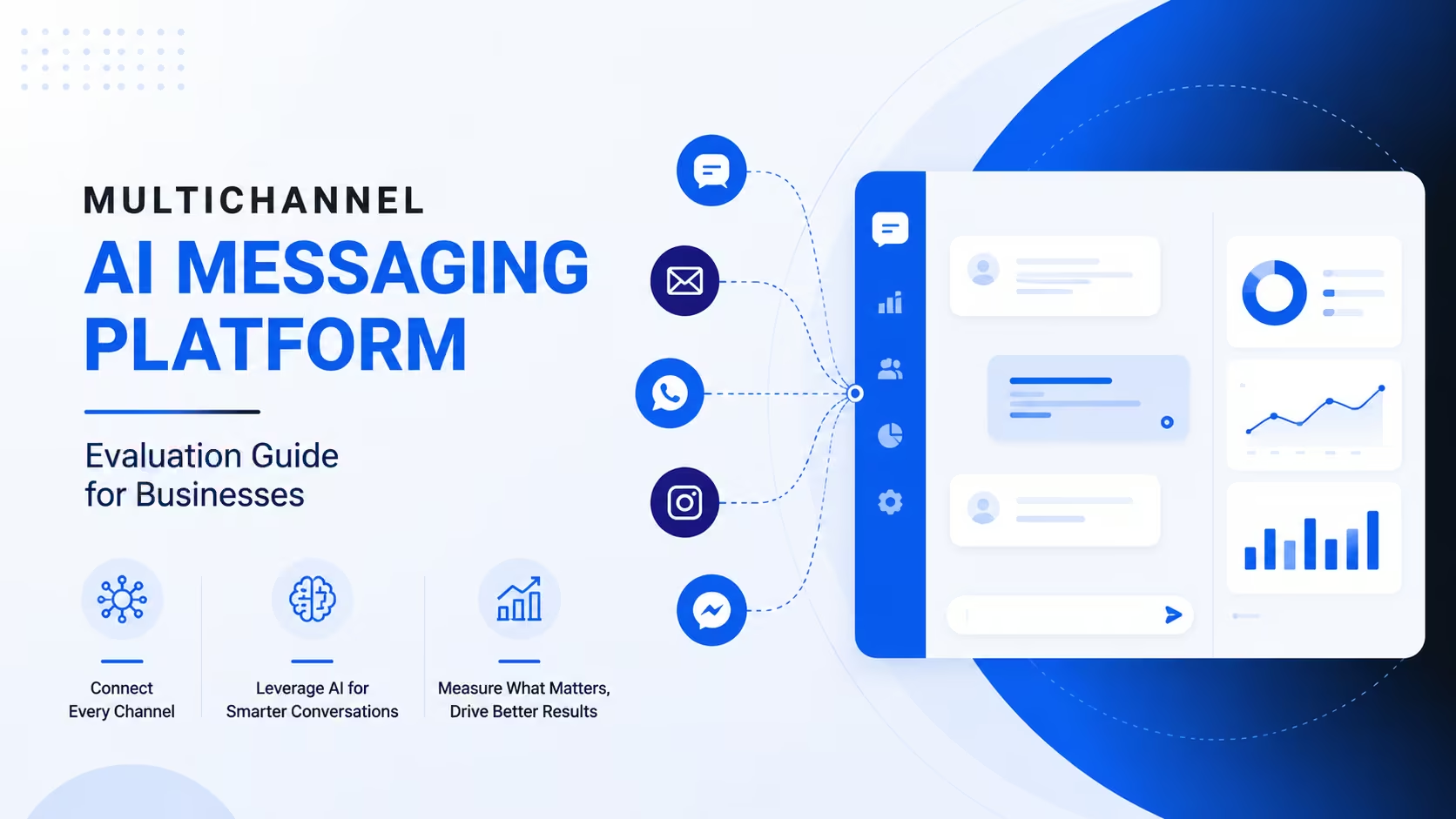
A multichannel AI messaging platform enables businesses to engage customers across multiple communication channels using a centralized AI-powered system.
Common supported channels include:
- Website chat
- SMS
- Facebook Messenger
- Voice
- Mobile applications
The platform allows businesses to automate conversations, route requests intelligently, and maintain service consistency across channels.
What Businesses Expect From Modern Platforms
Today's buyers expect more than simple chatbot functionality.
They need:
- Centralized conversation management
- AI-driven customer support
- Enterprise-grade analytics
- Workflow automation
- Channel orchestration
- CRM integration
This is where the market begins separating basic messaging tools from enterprise-ready solutions.
Learn how Callveriq automates enterprise messaging.
Multichannel vs Omnichannel: Understanding the Difference
One of the biggest buying mistakes is assuming multichannel and omnichannel mean the same thing.
| Capability | Multichannel Platform | Omnichannel Customer Communication Platform |
|---|---|---|
| Multiple Channels | Yes | Yes |
| Shared Customer Context | Limited | Complete |
| Cross-Channel Continuity | Partial | Full |
| Unified Customer Journey | No | Yes |
| Context Preservation | Channel Specific | Customer Specific |
| AI Orchestration | Basic | Advanced |
An omnichannel customer communication platform ensures conversations remain connected regardless of channel switching.
Example
Without omnichannel capabilities:
- Customer starts on WhatsApp
- Moves to email
- Repeats the issue
- Agent starts from scratch
With omnichannel capabilities:
- Conversation history follows the customer
- AI retains context
- Resolution happens faster
- Customer effort decreases
According to Salesforce's 2025 State of Service report, customers increasingly expect seamless experiences across digital touchpoints, making context continuity a competitive differentiator.
Explore Callveriq’s customer experience capabilities.
This blog is just the start.
Unlock the power of Callveriq’s AI with a live demo.

How to Choose a Multichannel AI Messaging Platform
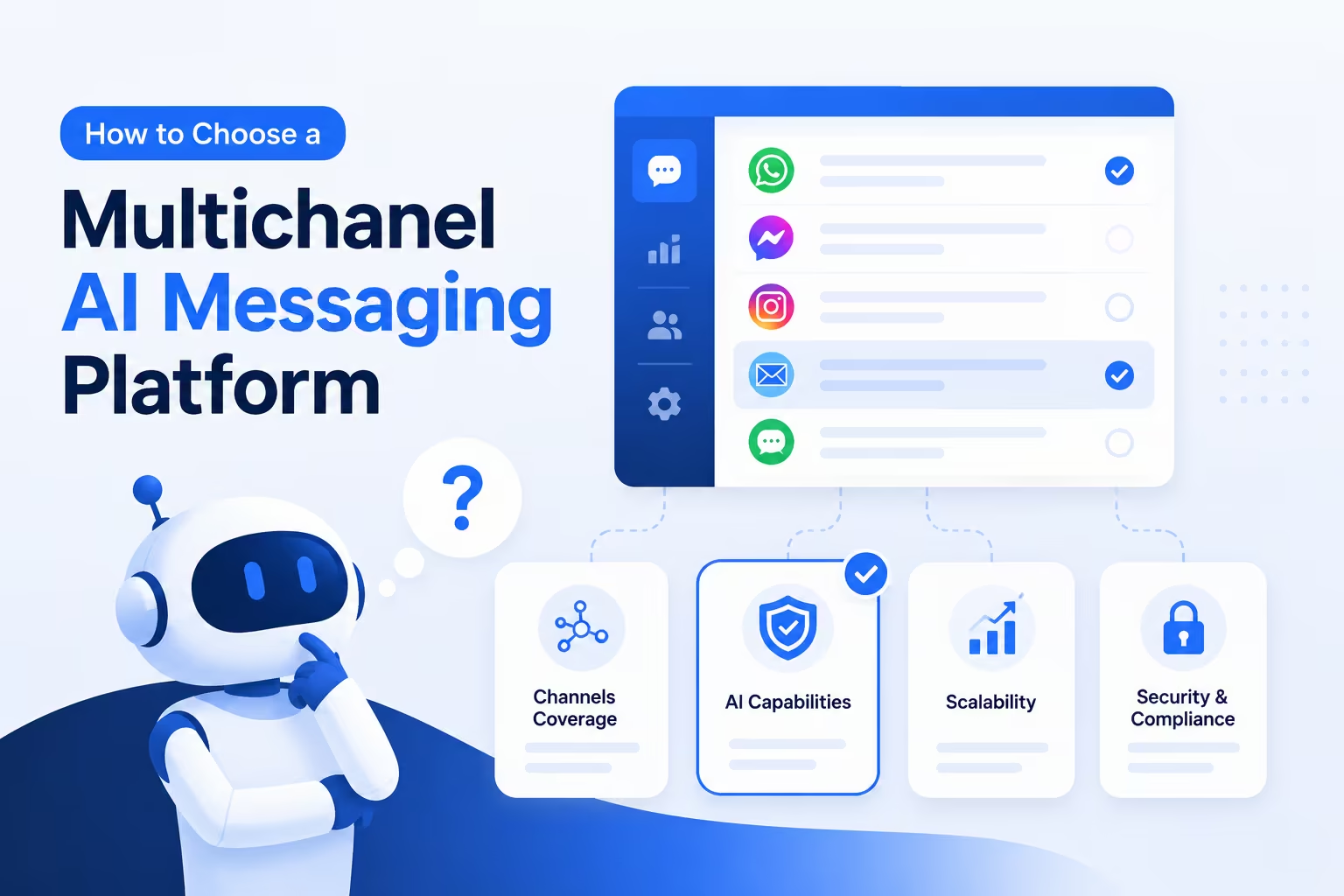
The market is crowded with vendors claiming AI capabilities.
The challenge is identifying which platforms deliver measurable business outcomes.
1. Evaluate Channel Coverage
Look beyond current requirements.
The platform should support:
- Voice
- SMS
- Social channels
- Future channels
Businesses often outgrow channel-limited platforms within a year.
2. Assess AI Capabilities
Many vendors still rely on rule-based automation.
Prioritize:
- Generative AI
- Intent detection
- Context awareness
- Conversation summarization
- Intelligent routing
3. Review Analytics Depth
Strong platforms provide visibility into:
- Resolution rates
- CSAT
- Escalation trends
- Customer sentiment
- Agent performance
Without analytics, optimization becomes guesswork.
4. Examine Integration Flexibility
Ensure seamless integration with:
- CRM systems
- Ticketing platforms
- Dialers
- Internal databases
5. Validate Enterprise Readiness
Key enterprise requirements include:
- Security compliance
- Role-based access
- Audit logs
- Scalability
- Reliability SLAs
Evaluate enterprise AI messaging with Callveriq
Features That Separate Market Leaders From Basic Messaging Platforms
As AI messaging platforms become more common, feature lists often look similar on the surface. However, the gap between basic messaging tools and enterprise-grade platforms becomes clear when evaluating their ability to automate workflows, unify customer context, generate actionable insights, and support agents at scale.
Not every platform marketed as AI-powered delivers enterprise value. The strongest vendors share several characteristics.
| Feature | Basic Platform | Advanced AI Platform |
|---|---|---|
| AI Automation | Limited | Extensive |
| Customer Context Memory | Partial | Unified |
| Conversation Analytics | Basic | Advanced |
| Agent Assist | No | Yes |
| Quality Monitoring | Limited | Comprehensive |
| Omnichannel Journey Management | Partial | Complete |
| Enterprise Reporting | Basic | Executive-Level |
Key Differentiators
1. Unified Customer Memory
This means the platform remembers every customer across all channels, like WhatsApp, email, chat, voice, etc. So instead of treating each interaction as separate, it builds a single continuous customer profile.
Why it matters:
- Customers don’t have to repeat themselves
- Agents see full context instantly
- More personalized and faster responses
2. AI-Powered Agent Assistance
This is like having an AI co-pilot for support agents during live conversations.
It suggests responses, next best actions, and solutions in real time.
Why it matters:
- Faster resolution times
- Less dependency on agent experience
- More consistent answer quality
3. Conversation Intelligence
This refers to the system analyzing every customer interaction to extract insights.
It looks at calls, chats, and messages to find patterns like:
- Common complaints
- Sentiment trends
- Agent performance gaps
- Customer intent signals
Why it matters:
- Helps improve product and support strategy
- Identifies recurring issues early
- Improves training and QA
4. Enterprise Messaging Automation
This is about automating end-to-end messaging operations, not just replies.
It includes:
- Routing conversations to the right teams
- Triggering workflows (refunds, escalations, follow-ups)
- Managing SLAs and priorities
- Handling large-scale messaging operations
Why it matters:
- Reduces manual workload
- Ensures no query is missed
- Makes support scalable at the enterprise level
These capabilities are becoming increasingly important as organizations seek to scale service without proportional headcount growth.
Transform customer engagement with Callveriq
What Are the Best Multichannel AI Messaging Platforms in 2026?
While dozens of vendors offer messaging and automation capabilities, the leading platforms differentiate themselves through their AI maturity, analytics depth, integration ecosystem, and ability to support enterprise-scale customer operations. The comparison below highlights where each platform typically fits best, and the strengths buyers should evaluate during the selection process.
Comparison Overview
| Platform | Best For | Key Strengths | Potential Considerations |
|---|---|---|---|
| Callveriq | Enterprise CX and contact center teams | AI-powered customer interactions, conversation intelligence, quality monitoring, agent assist, and omnichannel automation | Best suited for organizations looking to optimize customer conversations and support operations at scale |
| Intercom | SaaS and digital-first businesses | Conversational support, customer messaging, onboarding automation, and self-service experiences | Primarily focused on digital engagement and support workflows |
| Zendesk | Customer support teams | Ticket management, workflow automation, knowledge base management, and support operations | May require additional tools for advanced conversation intelligence and AI analytics |
| Freshworks | Mid-market businesses | Customer support automation, omnichannel ticketing, AI-powered assistance, and ease of deployment | Enterprise customization capabilities may vary based on requirements |
| Salesforce Service Cloud | Large enterprises with complex ecosystems | Deep CRM integration, customer data unification, workflow orchestration, and enterprise scalability | Implementation and administration can be more resource-intensive for some organizations |
Questions Buyers Should Ask Vendors
Before purchasing, ask:
- How is customer context maintained across channels?
- What AI models power automation?
- How is conversation quality measured?
- What reporting capabilities exist?
- How long does implementation take?
- What enterprise security standards are supported?
The answers often reveal more than feature lists.
According to McKinsey's 2025 State of AI research, organizations achieving the highest returns from AI focus heavily on operational integration rather than standalone AI deployments.
Compare Callveriq with leading AI platforms
Building a Business Case for Enterprise Messaging Automation
Platform selection increasingly requires executive approval, which means technology decisions must be tied directly to measurable business outcomes. Rather than evaluating features alone, decision-makers typically assess how a platform impacts efficiency, customer experience, and long-term growth.
Some of the most important evaluation areas include:
- Support Cost Reduction: By automating repetitive customer queries and reducing manual workload, businesses can lower operational expenses without compromising service quality.
- Automation Rate: A higher automation rate enables support teams to handle growing interaction volumes without proportionally increasing headcount, making operations more scalable.
- Customer Satisfaction: Faster responses, consistent service, and seamless customer journeys often lead to higher satisfaction levels, improved loyalty, and stronger retention.
- Resolution Speed: Intelligent routing, contextual conversations, and AI-assisted workflows help reduce resolution times, improving the overall customer experience.
- Agent Productivity: Automation removes administrative work and provides agents with real-time assistance, allowing them to focus on complex, high-value customer interactions.
- Revenue Opportunities: Advanced AI messaging platforms can identify upsell opportunities, support lead qualification, improve conversion rates, and contribute directly to revenue growth.
When combined, these outcomes help organizations move beyond viewing AI messaging as a support tool and position it as a strategic investment that improves both operational performance and business results. The strongest business cases focus not only on cost savings but also on how enterprise messaging automation can create better customer experiences while driving sustainable growth.
Gartner predicts that AI-led customer service operations will continue becoming a core differentiator for customer-centric organizations through 2026.
Similarly, KPMG's customer operations research highlights that intelligent automation initiatives increasingly deliver value when connected directly to customer experience outcomes rather than isolated efficiency projects.
Calculate AI messaging ROI with Callveriq.
Why Conversation Intelligence Matters More Than Messaging Alone
Many organizations focus heavily on messaging channels while overlooking conversation quality.
Sending messages is easy.
Understanding conversations at scale is difficult. The most effective platforms don't simply automate interactions. They continuously analyze customer behavior, identify friction points, uncover emerging trends, and optimize every engagement.
As AI becomes embedded across customer operations, competitive advantage will increasingly come from intelligence rather than communication volume. Businesses that can transform conversations into actionable insights will outperform those that simply add more channels.
Turn conversations into actionable intelligence with Callveriq
What This Means for AI Messaging Platforms
Choosing a multichannel AI messaging platform is no longer about checking channel availability boxes. It is about selecting an intelligent customer engagement foundation that can unify conversations, automate workflows, preserve context, and generate measurable business outcomes. The gap between average platforms and market leaders is widening as AI capabilities become more sophisticated and customer expectations continue to rise. Organizations that evaluate platforms based on automation depth, omnichannel continuity, analytics maturity, and enterprise readiness will be better positioned to improve customer experience while controlling operational costs. The right platform does more than manage messages. It becomes a strategic asset that drives efficiency, customer loyalty, and long-term growth.
Book your demo and improve customer conversations today.
FAQs
1. How long does it typically take to implement a multichannel AI messaging platform?
Implementation timelines vary based on integrations, channel complexity, and business requirements. Most organizations can deploy core capabilities within a few weeks, while enterprise-wide rollouts may take several months.
2. Can a multichannel AI messaging platform support outbound customer engagement?
Yes. Many platforms support proactive notifications, appointment reminders, marketing campaigns, payment alerts, and customer follow-ups across multiple channels while maintaining compliance and personalization.
3. How do AI messaging platforms handle multilingual customer conversations?
Modern platforms use AI-powered language detection and translation capabilities to support customers in multiple languages. This helps businesses deliver consistent service across diverse customer bases without expanding support teams.
4. What security features should businesses look for in an AI messaging platform?
Key features include data encryption, role-based access controls, audit logs, compliance certifications, and secure integrations. These capabilities help protect customer data and meet regulatory requirements.
5. Can AI messaging platforms improve customer retention and loyalty?
Yes. Faster responses, personalized interactions, seamless channel transitions, and proactive support create better customer experiences, which can increase satisfaction, retention, and long-term customer value.