

A borrower applies for a loan at 10:15 a.m. By noon, the lender has verified the application, assessed eligibility, recorded the approved amount, and generated a repayment schedule. The entire process appears seamless inside the loan management system.
But the borrower has stopped responding. They missed the verification call, did not understand a document request, and abandoned the application after receiving a generic reminder. The system accurately records the stalled application, but it cannot always restart the conversation.
This is the central challenge facing modern lenders: managing a loan and engaging the person behind it are related but different responsibilities. Understanding that distinction helps lenders identify what their core systems already handle and where additional engagement capabilities may be required.
What Is a Loan Management System?
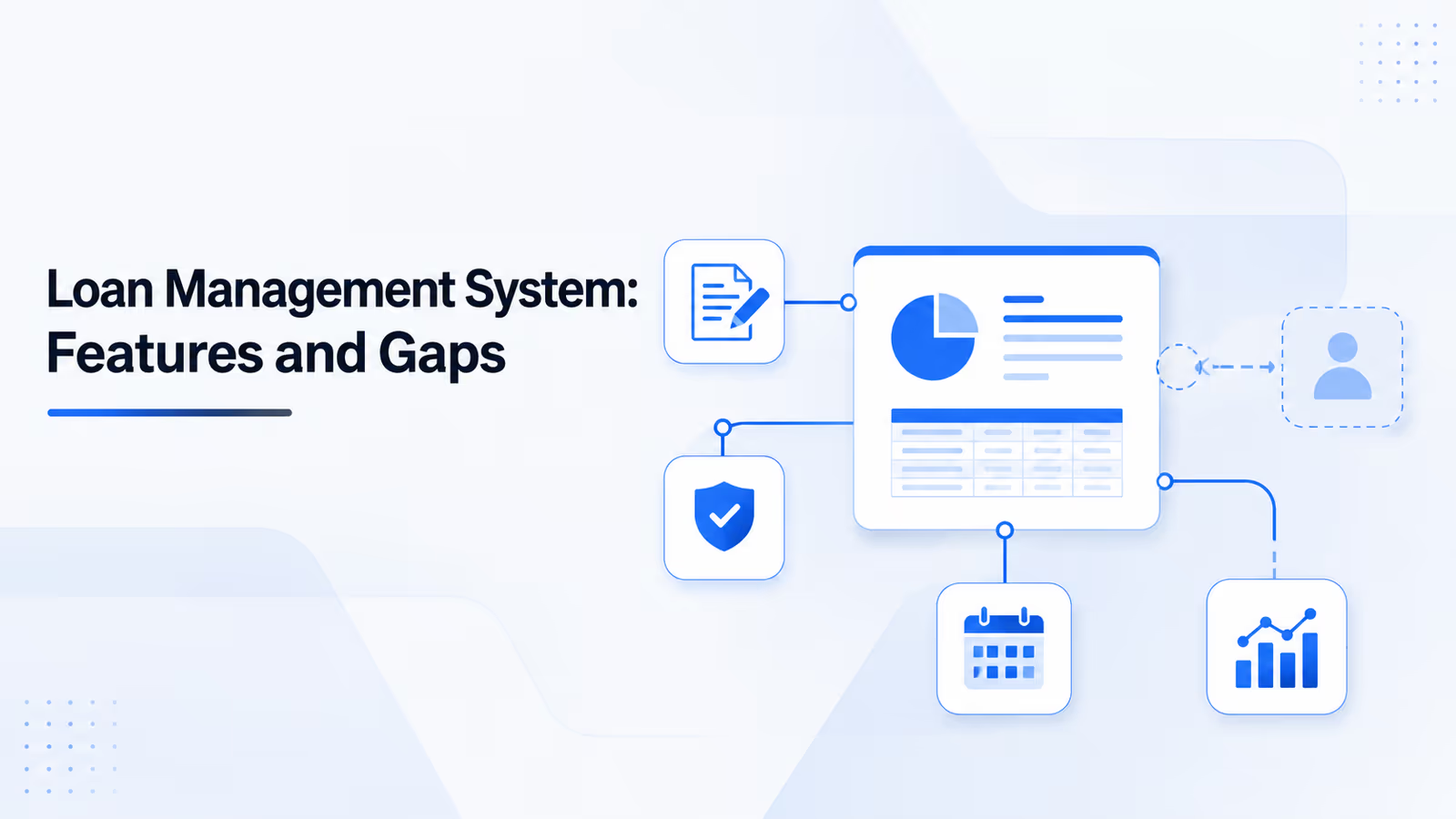
A loan management system, or LMS, is software that helps lenders administer loans from application and approval through repayment and closure. It replaces fragmented spreadsheets, manual calculations, and disconnected records with standardized digital workflows.
Banks, non-banking financial companies, fintech lenders, credit unions, and microfinance institutions may use an LMS to manage different products, including:
- Personal and consumer loans
- Home and vehicle loans
- Business and working-capital loans
- Education loans
- Buy-now-pay-later products
- Secured and unsecured credit
A modern loan management system software platform typically acts as the lender’s operational record. It stores loan information, applies lending rules, calculates financial obligations, and records changes throughout the account lifecycle.
However, an LMS is not necessarily responsible for every interaction surrounding the loan. Its primary job is to manage the lending process accurately, not continuously persuade, educate, or converse with borrowers.
Explore the loan management system with Callveriq.
What Does a Loan Management System Cover?
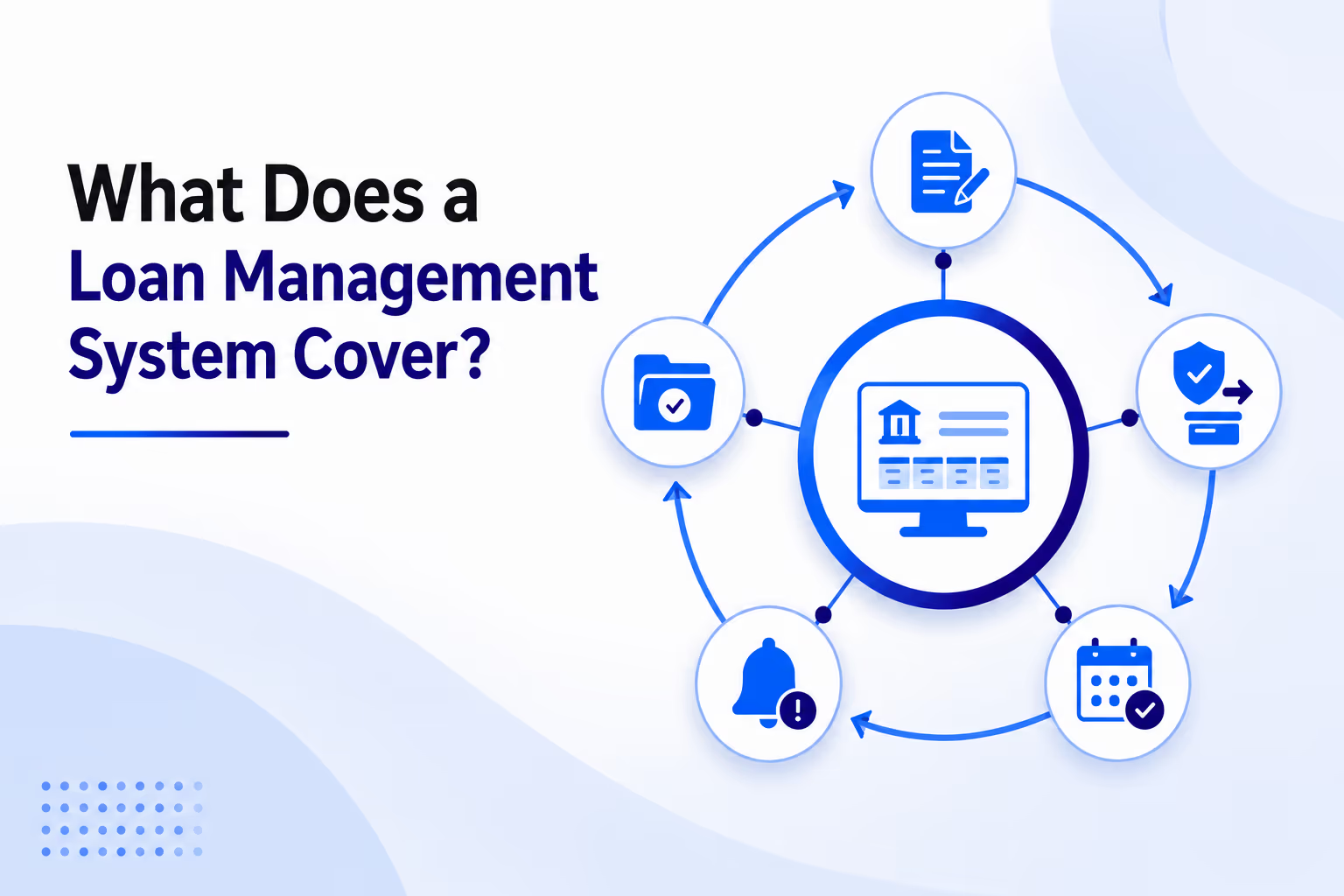
The exact scope depends on the lender, loan product, geography, and platform configuration. Most systems cover four broad stages of the lending lifecycle.
1. Loan Origination
The origination stage begins when a borrower submits an application. The system captures personal, financial, employment, and product information before moving the application through the lender’s review process.
Common functions include:
- Digital application capture
- Identity and document collection
- Eligibility-rule application
- Credit bureau integration
- Underwriting workflow management
- Approval or rejection recording
Some organizations use a separate loan origination system that integrates with the LMS after approval. Others operate on a unified platform covering origination and servicing.
2. Loan Disbursement
Once the application is approved, the system records the sanctioned amount, applicable interest rate, tenure, fees, and disbursement conditions. It may also generate loan agreements, create repayment schedules, verify pre-disbursement requirements, and send approved instructions to banking or payment systems.
3. Loan Servicing
Servicing begins after the loan is disbursed. This is where many important loan management system features become visible. The LMS can:
- Calculate interest and installments
- Maintain the loan balance
- Record payments and adjustments
- Apply fees and penalties
- Process prepayments or foreclosures
- Generate account statements
- Track overdue installments
- Update the loan’s status
4. Collections and Closure
When a repayment becomes overdue, the LMS can classify the account according to predefined delinquency stages. It may assign the account to a collection queue, calculate late charges, and record subsequent payments. After all obligations have been met, the system closes the account and supports the generation of relevant closure documents.
Connect loan workflows through Callveriq.
This blog is just the start.
Unlock the power of Callveriq’s AI with a live demo.

Why Is a Loan Management System Important?
Loan portfolios can contain thousands or millions of accounts, each with different terms, due dates, balances, payment histories, and regulatory requirements. Managing this complexity manually increases the risk of delays and inconsistent records.
The primary loan management system benefits include operational standardization, centralized data, faster processing, and improved visibility.
1. More Consistent Lending Operations
An LMS applies predefined workflows across applications and accounts. Teams are less dependent on individual employees remembering every calculation, approval step, or account update.
2. Accurate Repayment Tracking
Automated calculations reduce the risk of errors involving interest, installments, fees, overdue amounts, and outstanding balances. The lender can also create a clearer account history for operational and audit purposes.
3. Better Portfolio Visibility
Centralized records allow teams to examine portfolio health by product, geography, delinquency stage, borrower category, or other relevant dimensions.
4. Easier System Integration
An LMS can exchange information with payment gateways, credit bureaus, banking systems, document-management tools, analytics platforms, and customer-facing applications.
This data foundation is becoming especially important as lenders adopt AI. A 2026 and SAP report found that 89% of banks surveyed in KPMG’s 2025 Banking Survey identified data quality as a core focus. The report also connects unified data with real-time reporting and scalable AI adoption.
Strengthen loan management system with Callveriq.
Where Does Borrower Engagement Still Break Down?
A lender can implement an advanced LMS and still struggle with application abandonment, missed verification calls, late payments, and unanswered reminders. This happens because workflow execution and borrower engagement solve different problems.
The LMS may know that a document is missing. It may not determine why the borrower has not submitted it, explain the requirement in the borrower’s preferred language, answer an immediate question, or make another contact attempt at a suitable time. Borrower engagement commonly breaks down in the following situations.
1. Application Follow-Ups
Applicants may leave a digital journey because they are unsure which document to submit, do not understand a field, or become distracted. The LMS records an incomplete application, but follow-up may depend on a lending representative noticing the delay and contacting the applicant.
2. Verification Calls
Borrowers frequently miss calls from unknown numbers. If subsequent attempts are delayed or disconnected from the original application, an otherwise qualified borrower may lose interest.
3. Disbursement Communication
Approval does not always translate into disbursement. Borrowers may need clarification about fees, loan terms, mandates, or remaining documentation before accepting the offer.
4. Repayment Reminders
A scheduled SMS can communicate a due date, but it cannot always handle questions such as:
- Why is the payable amount different?
- Can the payment date be changed?
- How can a failed payment be retried?
- Where should a payment confirmation be shared?
5. Early-Stage Collections
An overdue account is not automatically a case of refusal to pay. The borrower may have forgotten the due date, faced a technical problem, or need a short explanation of available options.
Generic communication treats every borrower similarly. Effective engagement uses account context, payment status, previous responses, preferred language, and the reason for non-payment.
Salesforce’s 2025 Connected Financial Services research, based on 9,500 consumers, found that fewer than half were fully satisfied with the experiences provided by their financial institutions. It also reported that only 15% felt financial institutions effectively anticipated their needs.
Automate borrower follow-ups with Callveriq.
How Does an LMS Differ From a CRM for Lenders?
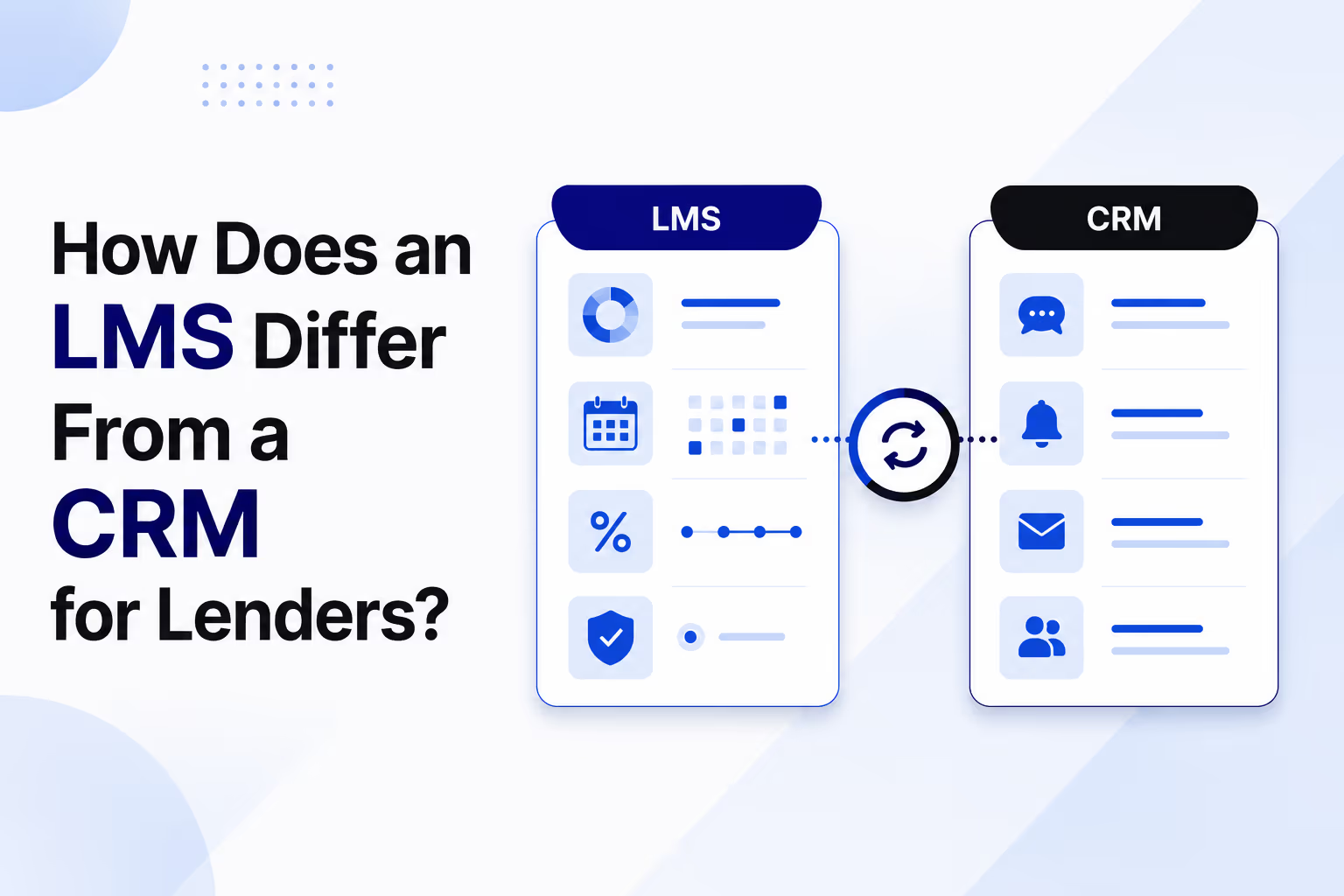
An LMS and a customer relationship management system may contain overlapping borrower information, but they are designed around different operational priorities. The LMS manages the loan as a financial account. A CRM manages the borrower or prospect as a relationship.
The distinction becomes clearer through an example. If a borrower misses an installment, the LMS calculates the overdue amount and changes the account’s delinquency status. The CRM may show previous conversations, assigned relationship managers, complaints, and follow-up tasks.
Neither system should automatically be considered a replacement for the other. They are most effective when integrated. The LMS provides accurate loan context, while the CRM helps teams coordinate the relationship around that context.
Even together, however, both platforms may depend on employees to conduct the actual conversation. This is where borrower engagement tools and AI agents introduce another functional layer.
Unify borrower context through Callveriq.
How Does AI Complement a Loan Management System?
An AI loan management system is often described as if AI replaces the lender’s existing infrastructure. In practice, AI creates more immediate value when it complements the LMS instead of attempting to become the lender’s financial system of record.
The LMS continues to govern balances, repayment schedules, account statuses, and lending workflows. AI uses approved information from that system to conduct, personalize, or support borrower interactions.
1. AI-Powered Application Assistance
AI can contact applicants whose applications remain incomplete, explain the next step, answer common questions, and identify whether human assistance is required.
The resulting disposition can then be written back to the appropriate system. This gives operations teams more context than a basic “application incomplete” status.
2. Automated Verification and Qualification
Voice AI can confirm applicant details, preferred contact times, continued interest, or basic eligibility information. It can also direct cases requiring judgment to a human employee.
The objective is not to automate credit decisions without oversight. It is to reduce the repetitive communication surrounding those decisions.
3. Personalized Repayment Communication
AI can use due dates, outstanding amounts, account status, and interaction history to deliver contextual reminders through voice, WhatsApp, SMS, or email.
If a borrower does not answer a call, the engagement workflow can continue through another permitted channel rather than ending after one attempt.
4. Conversational Collections
During early-stage collections, AI can explain the overdue amount, ask when the borrower expects to pay, record a promise-to-pay date, and schedule an appropriate follow-up.
Complex disputes, hardship situations, and sensitive cases should be transferred to trained employees according to the lender’s policies.
5. Human Handoffs With Context
Automation should not trap borrowers inside repetitive menus. When escalation becomes necessary, the employee should receive the loan context, conversation summary, detected intent, and previous actions.
This reduces the need for borrowers to repeat their situation and helps employees continue the interaction more efficiently.
McKinsey’s 2025 research on generative AI in credit identified customer engagement, credit assessment, credit decisioning, and portfolio monitoring as areas where the technology can create value. It also emphasizes that successful adoption requires redesigning workflows rather than adding isolated tools.
KPMG’s 2025 banking research similarly describes conversational, context-aware AI agents that can manage nuanced interactions and guide customers through complex banking processes.
Callveriq can operate as this engagement layer around the LMS. Its AI Phone Calls and omnichannel AI capabilities can support application follow-ups, repayment reminders, borrower qualification, early-stage collections, and contextual handoffs while the lender’s existing system remains the source of loan data.
Extend your loan management system using Callveriq.
What Should Lenders Consider Before Adding AI?
Adding AI to lending operations requires more than connecting a bot to borrower records. The consequences of inaccurate, poorly timed, or non-compliant communication can be significant.
1. Data Accuracy
AI should receive current information from authorized systems. A borrower must not be contacted about an amount that has already been paid or receive an offer that is no longer valid.
2. Defined Scope
Lenders should clearly specify what AI can explain, collect, update, recommend, or escalate. Credit decisions, hardship cases, disputes, and sensitive exceptions may require human review.
3. Consent and Communication Controls
Every workflow should comply with applicable consent, calling, messaging, privacy, and debt-collection requirements. Contact frequency and communication windows should also be controlled.
4. Auditability
Interactions should produce accessible records such as transcripts, summaries, outcomes, timestamps, and system updates. Teams must be able to understand what the AI communicated and why a case was escalated.
5. Human Intervention
AI should have clear escalation paths. Borrowers must be able to reach a person when their issue requires empathy, judgment, negotiation, or policy interpretation.
6. Measurable Outcomes
Success should be measured through operational and borrower outcomes, not only the number of automated conversations.
Relevant measures may include:
- Application completion rate
- Verification completion rate
- Contact and response rates
- Promise-to-pay completion
- Collection resolution rate
- Escalation accuracy
- Customer complaints
- Cost per resolved interaction
Gartner predicted in 2025 that agentic AI could autonomously resolve 80% of common customer-service issues by 2029. However, Gartner also warned that more than 40% of agentic AI projects could be cancelled by the end of 2027 because of escalating costs, unclear business value, or inadequate risk controls. Together, these findings show why lenders need defined use cases and measurable outcomes rather than AI adoption without a clear purpose.
Build governed AI journeys with Callveriq.
What Does it Mean For Your Loan Management System
A loan management system gives lenders the operational structure required to originate, service, monitor, and close loans accurately. It centralizes account information, standardizes workflows, automates calculations, and improves visibility across the portfolio. These capabilities make it foundational to modern lending operations.
But maintaining an accurate loan record is different from sustaining a productive borrower conversation. Application abandonment, unanswered verification calls, unclear documentation, missed payments, and broken follow-ups frequently occur outside the LMS’s core scope.
The opportunity is therefore not to replace the LMS. It is to connect it with CRM, communication, and AI capabilities that turn account events into timely borrower interactions. When these systems work together, lenders can preserve a reliable financial system of record while creating a more responsive, contextual, and accessible experience for borrowers.
Book your Callveriq demo today.
FAQs
1. Can a Loan Management System Support Multiple Loan Products?
Yes. A loan management system can manage personal, business, vehicle, mortgage, and other loan products.
2. Is a Loan Management System Suitable for Small Lenders?
Yes. Cloud-based platforms offer scalable features for smaller banks, NBFCs, fintechs, and credit unions.
3. How Secure Is a Loan Management System?
Security depends on encryption, access controls, audit logs, compliance measures, and the provider’s infrastructure.
4. Can a Loan Management System Integrate With Payment Gateways?
Yes. It can integrate with payment gateways to record transactions and update repayment statuses automatically.
5. How Long Does Loan Management System Implementation Take?
Implementation can take weeks or months, depending on integrations, customization, data migration, and portfolio size.