

Insurance customers expect timely communication, simple servicing, and quick answers throughout the policy lifecycle. Yet many insurers still depend on manual follow-ups for routine interactions such as renewal reminders, premium payments, document collection, quote follow-ups, and coverage questions.
This is where intelligent automation in insurance can create a more consistent policyholder experience. Instead of automating every insurance process at once, insurers can start with high-volume customer interactions where speed, consistency, and timely action directly affect engagement.
Intelligent automation in insurance combines AI-powered conversations, workflow automation, and customer data to handle repetitive interactions while allowing human teams to step in when a situation requires judgment.
For CX and Ops leaders, the opportunity is practical: use intelligent automation in insurance to keep policyholders engaged, make routine servicing easier, and ensure complex coverage questions reach the right human agent.
Key Takeaways
- Intelligent automation in insurance can automate repetitive policyholder interactions across the customer lifecycle.
- Renewal reminders can help insurers proactively engage customers before policies expire.
- Automated premium payment links can make payment completion simpler and faster.
- Policy-document capture can reduce manual follow-ups for collecting required information.
- Quote follow-up automation can keep prospects engaged after an insurance quote is generated.
- Add-on cover upsell workflows can create timely opportunities for relevant policy enhancements.
- Coverage questions should be escalated to human agents when they require interpretation, judgment, or specialized assistance.
- The strongest intelligent automation in insurance strategies combine automation with clear human escalation paths.
What Intelligent Automation in Insurance Means for CX & Ops Leaders
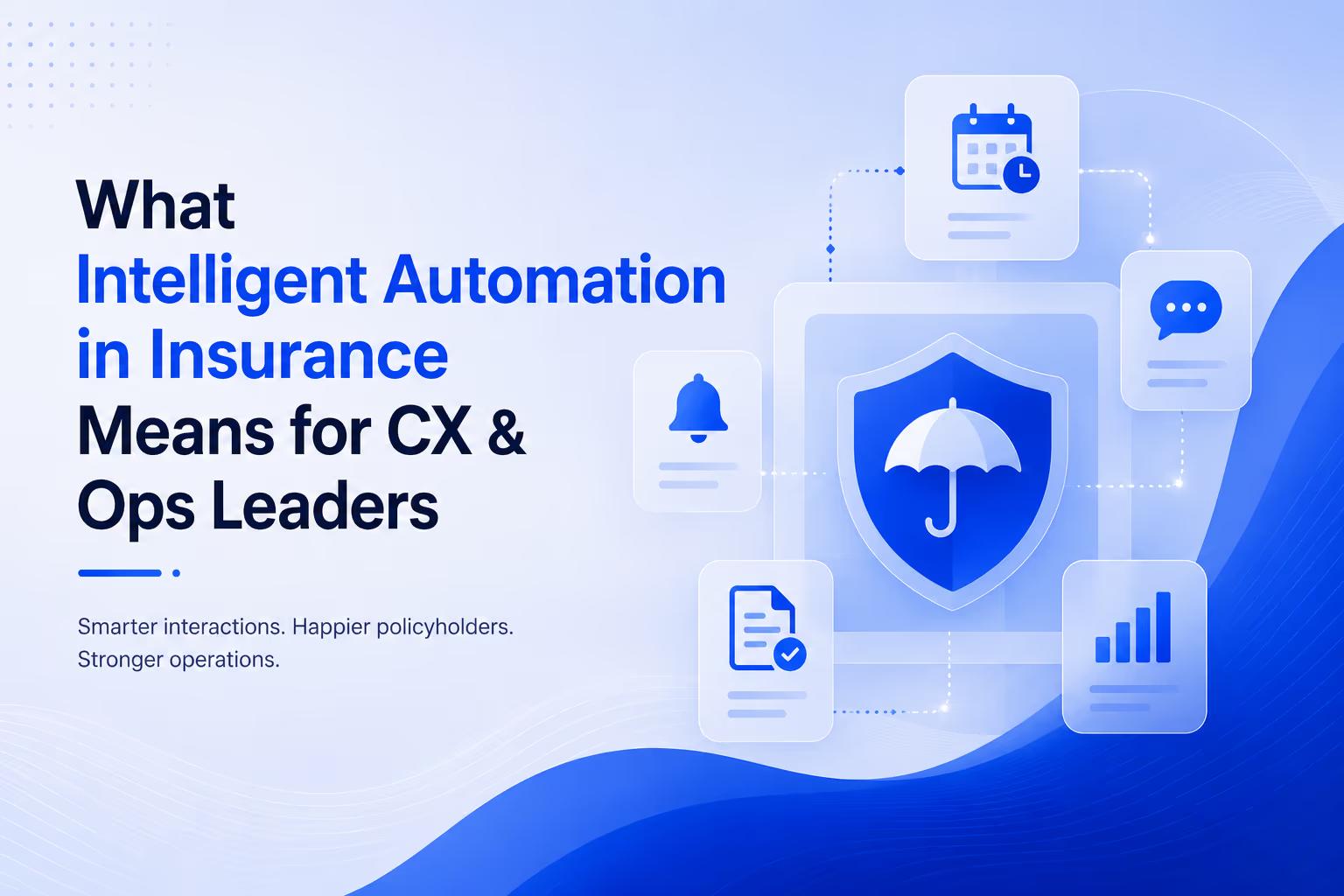
Intelligent automation in insurance is the use of AI and automated workflows to manage repetitive customer interactions while using contextual information to determine what action should happen next.
Traditional automation generally follows predefined rules. Intelligent automation in insurance can add conversational AI and contextual decision-making to those workflows, allowing insurers to manage customer interactions more naturally.
For example, a basic automation may send every policyholder the same renewal notification. An intelligent automation in insurance workflow can initiate a renewal conversation, identify whether the customer wants to continue, share the appropriate next step, and escalate the interaction when the customer asks a question that requires human assistance.
This makes intelligent automation in insurance particularly relevant to CX and Operations teams managing high volumes of repetitive interactions. The goal is not to remove human involvement from insurance servicing. Instead, intelligent automation in insurance can handle predictable interactions while agents focus on conversations where expertise and judgment matter.
This approach also supports broader insurance digital transformation. Rather than treating transformation as a complete replacement of existing processes, insurers can apply intelligent automation in insurance to specific customer journeys and expand from there.
Explore Smarter Insurance Automation With Callveriq
What Are The Core Use Cases of Intelligent Automation in Insurance
The value of intelligent automation in insurance becomes clearer when applied to specific policyholder journeys.
Instead of attempting to automate every insurance function, CX and Ops leaders can identify repetitive interactions that happen frequently, follow recognizable workflows, and require timely customer engagement.
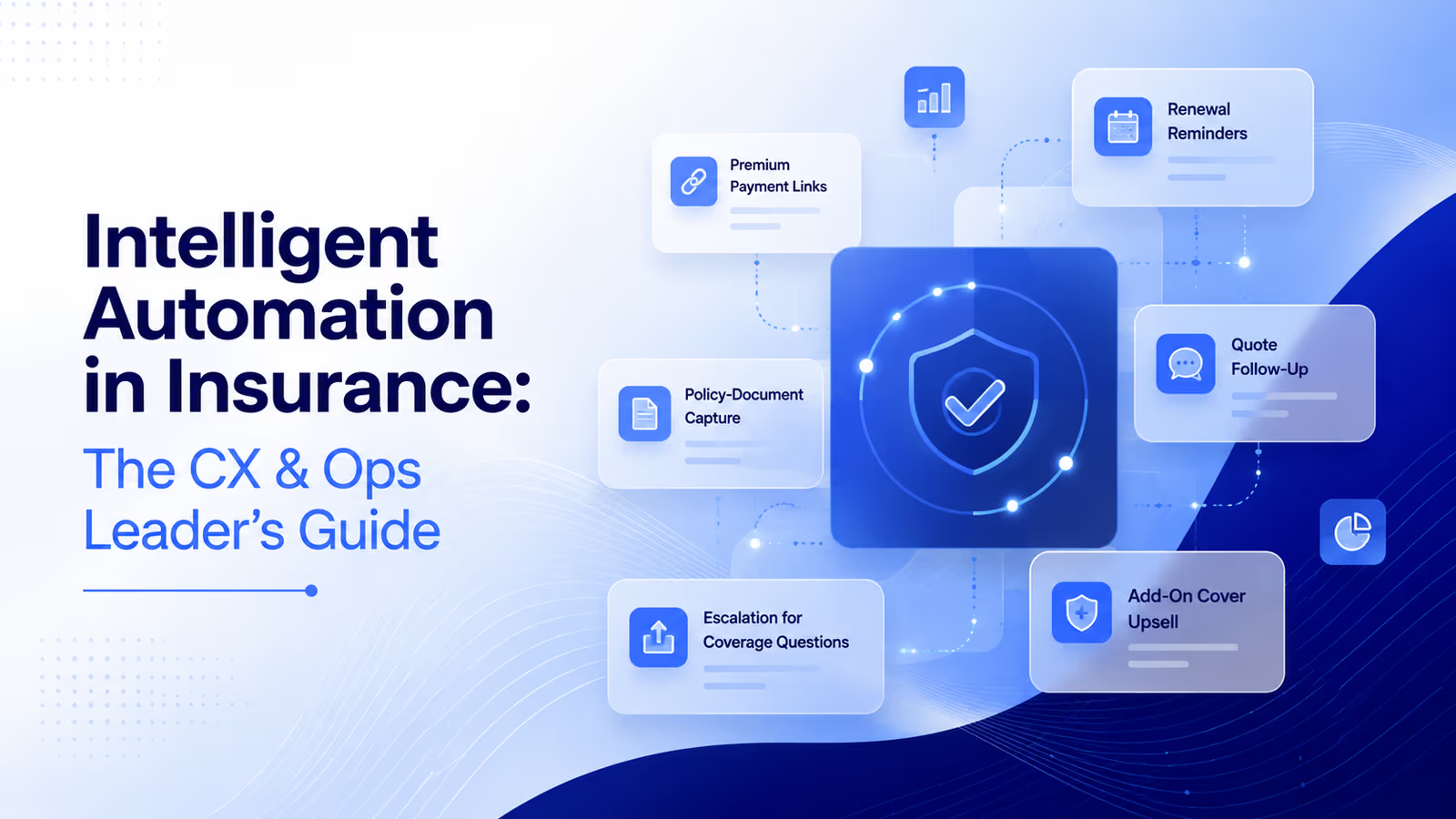
Six areas stand out: renewal reminders, premium payment links, policy-document capture, quote follow-up, add-on cover upsell, and coverage-question escalation.
1. Renewal Reminders
Policy renewals are highly time-sensitive. Customers need to know when their policies are approaching expiration and what they need to do next.
Intelligent automation in insurance can help insurers initiate renewal conversations before the policy expires. An AI-powered agent can contact the policyholder, remind them about the upcoming renewal, answer routine questions, and guide them toward the next step.
This can reduce the dependence on manual outbound follow-ups.
A renewal workflow powered by intelligent automation in insurance can include:
- Automated renewal reminders
- Conversational confirmation of renewal intent
- Follow-up when a customer does not respond
- Guidance on the renewal process
- Escalation when the customer raises a complex coverage question
The important part is timing. Intelligent automation in insurance allows insurers to maintain proactive communication instead of waiting for customers to initiate contact.
For CX teams, this creates a more consistent renewal experience. For Ops teams, it provides a structured way to manage repetitive renewal outreach at scale.
2. Premium Payment Links
A customer may be ready to renew a policy but still fail to complete payment because the next step is unclear or requires additional effort. Intelligent automation in insurance can simplify this part of the journey by communicating the payment requirement and sharing the appropriate premium payment link.
An automated conversation can remind the policyholder about the outstanding payment, provide the payment link, and follow up if the payment is not completed. The workflow can include:
- Payment reminders
- Premium payment links
- Follow-up messages
- Confirmation of the next step
- Escalation when the customer reports a payment-related issue
This is one of the most straightforward applications of intelligent automation in insurance because the customer journey is repetitive and time-sensitive.
Rather than relying entirely on agents to make individual payment follow-ups, intelligent automation in insurance can manage the initial interaction and reserve human assistance for exceptions.
3. Policy-Document Capture
Insurance servicing often depends on collecting the right policyholder documents. Missing or incomplete information can create additional follow-ups and delay the next step in the process.
Intelligent automation in insurance can help insurers communicate which documents are required and prompt customers to submit them. A conversational workflow can remind customers about missing documents, explain what needs to be submitted, and guide them through the document-capture process.
This makes intelligent automation in insurance useful for reducing repetitive document-related conversations. A document-capture workflow can support:
- Document reminders
- Identification of missing documents
- Customer prompts for submission
- Follow-up on incomplete submissions
- Escalation when customers need additional assistance
This application also connects intelligent automation in insurance with the broader idea of automation in insurance basics: start with repetitive operational tasks and make them easier to execute consistently.
For insurers working toward insurance digital transformation, policy-document capture is a practical starting point because the workflow can be clearly defined and measured.
4. Quote Follow-Up
Generating an insurance quote is only one part of the customer journey. Prospects may need additional reminders or assistance before deciding whether to proceed.
Intelligent automation in insurance can help insurers maintain timely follow-up after a quote is generated.
Instead of leaving every follow-up to sales or service teams, an AI-powered agent can contact prospects, check whether they are still interested, answer routine questions, and determine whether additional human assistance is required.
Quote follow-up automation can include:
- Follow-up after quote generation
- Reminders for prospects who have not responded
- Identification of buying intent
- Responses to routine questions
- Escalation to an agent when needed
For sales and CX teams, intelligent automation in insurance can make follow-up more systematic without requiring agents to manually contact every prospect.
The value of intelligent automation in insurance here comes from maintaining continuity. A prospect who has already shown interest should not have to restart the conversation every time they interact with the insurer.
5. Add-On Cover Upsell
Existing policyholders can also be relevant audiences for additional insurance covers. However, broad or poorly timed upselling can make customer interactions feel intrusive.
Intelligent automation in insurance can support more contextual add-on cover conversations by introducing relevant options during appropriate policyholder interactions.
For example, an automated conversation can identify an opportunity to discuss an additional cover, explain the basic option, and determine whether the customer wants more information.
An add-on workflow can include:
- Identifying eligible policyholders
- Introducing relevant add-on covers
- Explaining basic information
- Capturing customer interest
- Passing interested customers to the appropriate team
The purpose of intelligent automation in insurance is not simply to increase the number of upsell messages. It is to create a more structured and timely customer interaction.
When implemented carefully, intelligent automation in insurance can help insurers connect servicing conversations with relevant growth opportunities while keeping the customer experience at the center.
6. Escalation for Coverage Questions
Not every insurance interaction should be automated.
Coverage questions can require interpretation of policy terms, specific customer circumstances, or expert judgment. In these situations, intelligent automation in insurance should recognize its limits and route the conversation to a human agent.
This is an important principle for intelligent automation in insurance: automation should not mean forcing every customer interaction through an AI workflow.
A coverage-question escalation workflow can:
- Identify when a customer asks about coverage
- Recognize when the question requires human assistance
- Capture relevant conversation context
- Route the interaction to an appropriate agent
- Help the agent understand what the customer needs
This creates a hybrid model where intelligent automation in insurance handles predictable conversations and humans handle situations requiring expertise.
For CX leaders, this balance is essential. The best intelligent automation in insurance strategy is not the one that automates the most interactions. It is the one that automates the right interactions and escalates the right exceptions.
Discover Insurance Automation Use Cases With Callveriq
This blog is just the start.
Unlock the power of Callveriq’s AI with a live demo.

How Callveriq Powers Intelligent Automation in Insurance
Callveriq helps insurers apply intelligent automation in insurance to customer conversations through AI-powered virtual agents and conversation intelligence.
For policyholder-facing workflows, automated virtual AI agents can manage inbound and outbound conversations and support repetitive interactions such as policy renewals, FAQs, appointments, and quotes.
This makes the technology relevant to the six workflows covered in this guide.
1. Automating Renewal And Payment Conversations
Callveriq's virtual AI agents can support intelligent automation in insurance workflows for renewal reminders and customer follow-ups.
The same conversational workflow can be extended to premium payment reminders and payment-link communication, helping insurers maintain continuity from renewal notification to payment completion. The objective is simple: use intelligent automation in insurance to handle repetitive conversations while giving customers a clear path to the next action.
2. Supporting Quote Follow-Up And Add-On Conversations
Intelligent automation in insurance can also support outbound conversations after a quote has been generated or when a relevant add-on opportunity exists. AI-powered agents can initiate conversations, understand customer responses, and move interested customers toward the appropriate next step.
This creates a scalable layer for intelligent automation in insurance across both servicing and revenue-oriented interactions.
3. Escalating Complex Coverage Questions
Callveriq's approach to intelligent automation in insurance also includes human support for situations that require more complex assistance. Real-Time Agent Assist can provide live prompts, compliance cues, and objection-handling support during conversations, while supervisors can monitor calls and intervene when needed.
This creates an important connection between automation and human expertise. Rather than treating intelligent automation in insurance as a replacement for agents, insurers can use it to determine which conversations can be automated and which should be supported by humans.
How To Build A Practical Intelligent Automation In Insurance Strategy
Successful intelligent automation in insurance does not require insurers to automate every customer journey simultaneously. A better approach is to start with workflows that have:
- High interaction volume
- Repetitive conversation patterns
- Clear next actions
- Defined escalation requirements
- Measurable CX or operational outcomes
The six workflows in this article provide a practical starting point. Begin with renewal reminders and premium payment links. Once those workflows are stable, insurers can extend intelligent automation in insurance to policy-document capture and quote follow-up.
The next layer can include add-on cover conversations, followed by more sophisticated escalation and agent-assist workflows. This phased approach makes intelligent automation in insurance easier to test, monitor, and improve.
It also supports insurance digital transformation without requiring a disruptive overhaul of every existing process.
1. Keep Human Escalation At The Center
Human escalation should be designed into every intelligent automation in the insurance workflow where customers may ask questions that require specialized knowledge. Coverage questions are the clearest example. If an AI agent cannot confidently provide the appropriate answer, the conversation should move to a human.
This protects customer experience while allowing intelligent automation in insurance to continue handling high-volume, predictable interactions.
2. Measure The Right Outcomes
The effectiveness of intelligent automation in insurance should be evaluated through business and CX metrics rather than automation volume alone.
Useful metrics can include:
- Renewal engagement
- Payment completion
- Document submission rates
- Quote follow-up engagement
- Add-on cover interest
- Escalation rates
- Customer satisfaction
- Average handling time
- Agent workload
These metrics help CX and Ops leaders understand whether intelligent automation in insurance is improving the customer journey rather than simply reducing manual work.
Build Smarter Insurance Workflows With Callveriq
Why Intelligent Automation In Insurance Matters For CX
Insurance customers interact with insurers at moments that often require speed and clarity.
A missed renewal reminder can create unnecessary friction. A difficult payment process can delay completion. Missing documents can create repeated follow-ups. A quote without timely follow-up can lose momentum. An irrelevant upsell can frustrate customers. A complex coverage question handled poorly can damage trust.
Intelligent automation in insurance addresses these moments by creating structured, timely customer interactions. The strongest use of intelligent automation in insurance is therefore not automation for its own sake. It is using automation where it improves the experience and using human expertise where it matters more.
For CX and Ops leaders, this creates a practical path toward insurance digital transformation. Instead of starting with a massive transformation program, insurers can identify repetitive policyholder interactions, automate the predictable parts, create clear escalation paths, and continuously improve the workflows.
Strategic Takeaways For CX & Ops Leaders
Intelligent automation in insurance is most valuable when it solves specific customer and operational problems.
For insurers looking to get started, six workflows offer a focused opportunity:
- Renewal reminders: Keep policyholders engaged before policies expire.
- Premium payment links: Make the next payment step easier to complete.
- Policy-document capture: Reduce repetitive document-collection follow-ups.
- Quote follow-up: Maintain engagement after a quote is generated.
- Add-on cover upsell: Create relevant opportunities for additional coverage.
- Coverage-question escalation: Route complex questions to human experts.
Together, these workflows demonstrate how intelligent automation in insurance can connect customer engagement, servicing, and operational efficiency. The goal is not to automate every insurance interaction. The goal is to automate the right ones.
For insurers pursuing insurance digital transformation, that distinction matters. Intelligent automation in insurance works best when automation, customer experience, and human expertise operate together.
If your team is evaluating intelligent automation in insurance, Callveriq can help identify high-volume policyholder conversations that are suitable for AI-powered automation and define where human escalation should remain part of the workflow.
Automate high-volume insurance conversations with Callveriq
FAQs
1. What Is Automation In Insurance?
Automation in insurance uses technology to perform repetitive tasks and workflows with limited manual intervention. Common examples include customer reminders, payment communication, document collection, and follow-ups.
2. What Is Intelligent Automation In Insurance?
Intelligent automation in insurance combines automation with AI-powered conversational capabilities and contextual decision-making. It can manage repetitive interactions while identifying situations that require human assistance.
3. Which Insurance Processes Are Best Suited To Intelligent Automation?
High-volume, repetitive workflows with clear next steps are strong candidates. Renewal reminders, premium payment links, document capture, quote follow-up, and routine customer interactions are practical starting points.
4. Can Intelligent Automation In Insurance Handle Coverage Questions?
It can identify and route coverage questions, but questions requiring policy interpretation or specialized judgment should be escalated to an appropriate human agent.
5. How Does Intelligent Automation Support Insurance Digital Transformation?
Intelligent automation in insurance provides a practical way to modernize specific customer journeys without attempting to transform every insurance process simultaneously. Insurers can start with targeted workflows, measure outcomes, and expand automation gradually.