

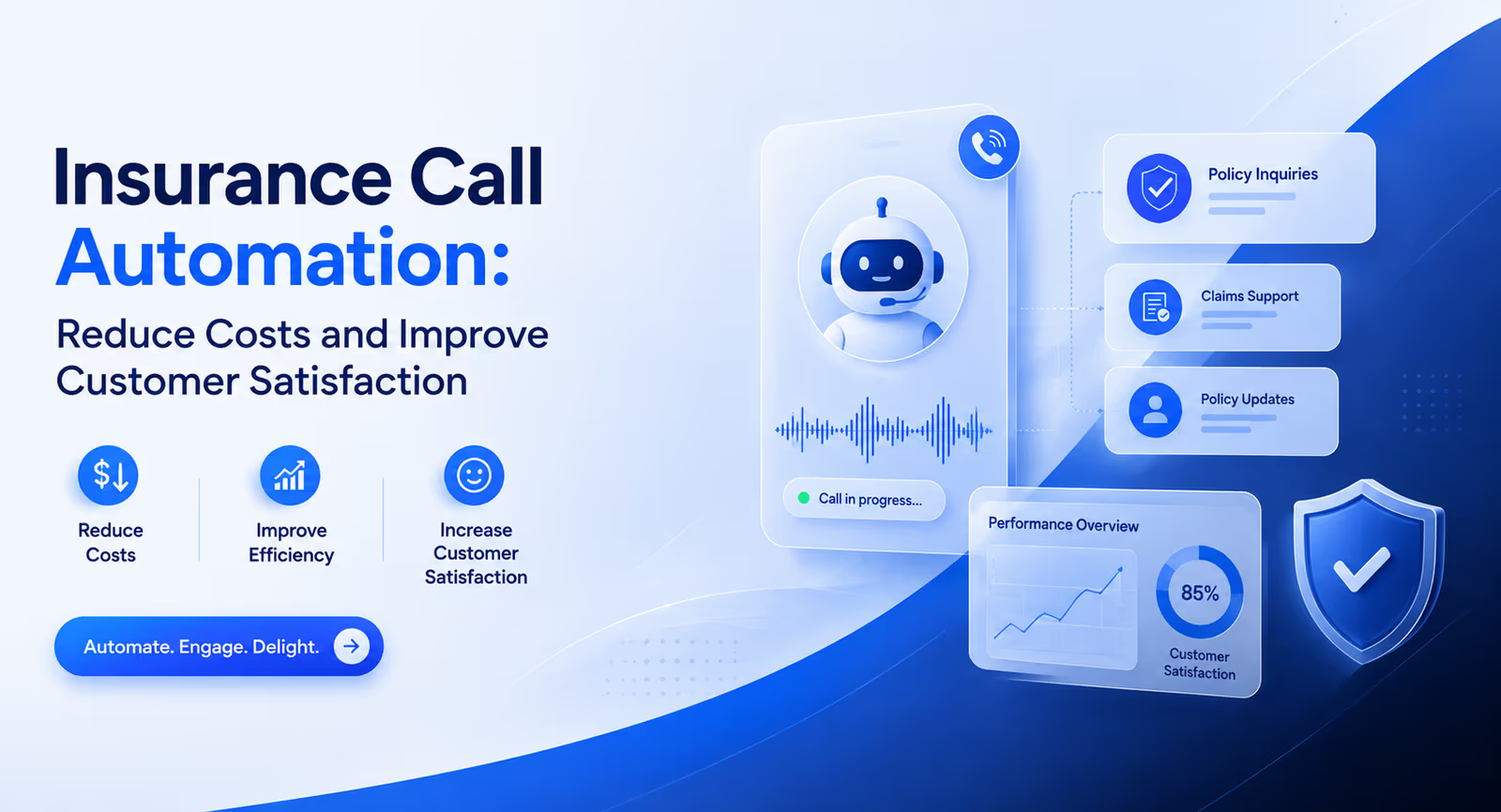
Insurance contact centers often respond to rising call volumes by adding more agents. But when long handle times, repeat calls, manual rework, and inconsistent follow-ups remain, headcount only increases the cost of the same inefficient process.
This is where insurance call automation becomes a stronger lever. Instead of scaling every interaction with another human agent, insurers can automate repetitive policy-service tasks, renewal reminders, customer follow-ups, and routine queries while giving human agents real-time support for complex conversations.
Modern insurance call automation can connect AI phone calls with WhatsApp reminders, payment links, policy information, and advisor escalation. A customer who misses a renewal call does not have to restart the journey. The workflow can continue on WhatsApp, prompt payment, or route the customer to an advisor when human assistance is needed.
The result is a more efficient insurance contact center: lower operational waste, fewer repeat contacts, faster resolutions, and a more consistent customer experience.
This article explains where insurance call automation reduces friction, how AI automation works across insurance service workflows, and how Callveriq helps insurers improve efficiency without continuously increasing headcount.
Insurance Call Automation vs. Headcount Increases
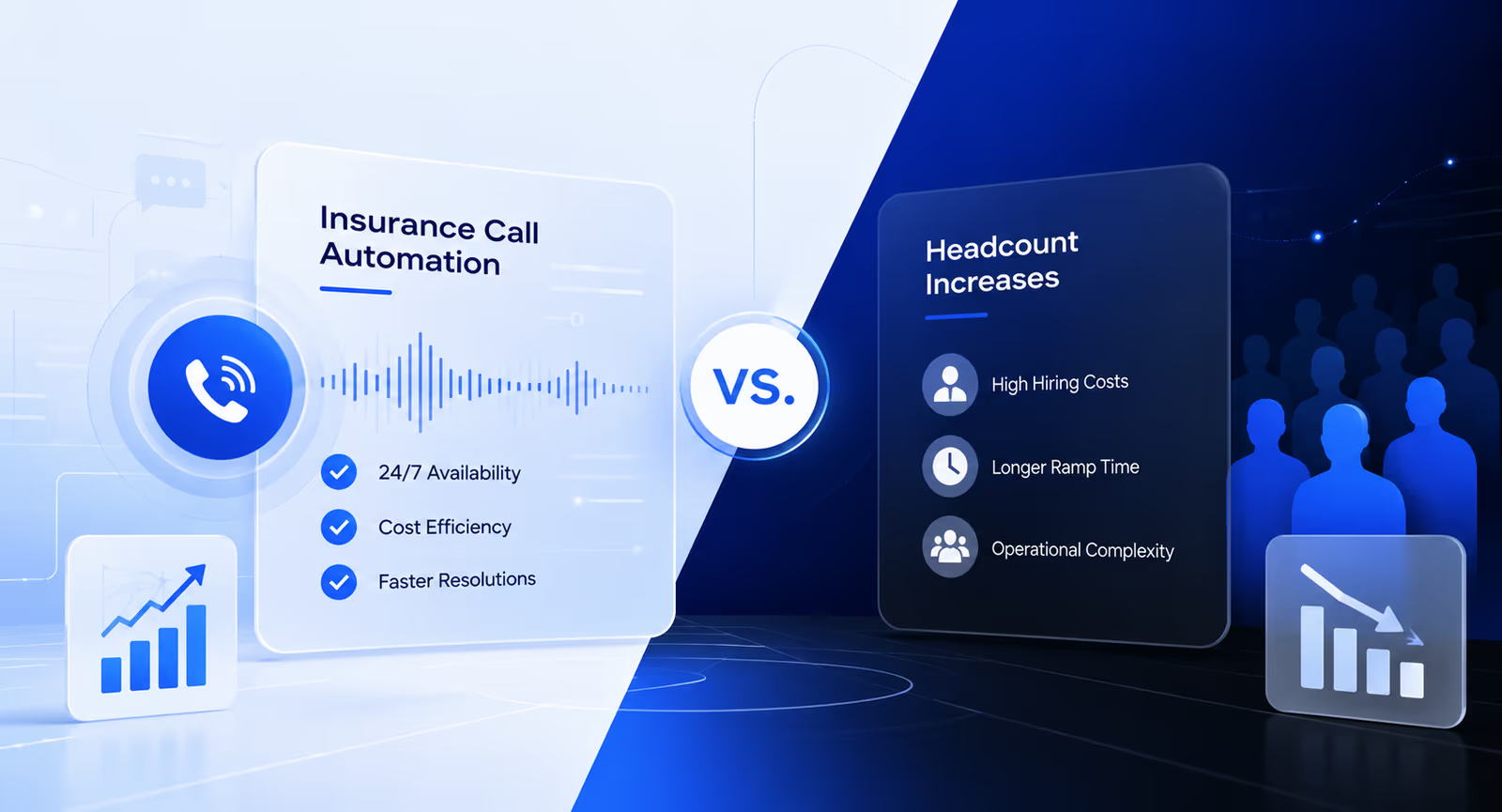
Rising call volumes often trigger a reflexive response: hire more agents. But this tactic rarely improves what matters. Metrics like average handle time (AHT), repeat calls, and manual rework continue to bloat operational costs.
In fact, the average AHT across industries is over six minutes, yet many of those minutes are spent on repetitive tasks or searching for information. Layering more people onto broken workflows only magnifies inefficiencies, not performance.
Leading insurers are starting to realize that true contact center cost reduction comes from removing friction, not adding staff. The sections below break down why simply scaling headcount is the wrong lever, and how automation offers a more targeted fix.
1. AI Insurance Sales Agent: Scaling Service, Not Headcount
Traditional insurance contact centers juggle complexity: customers call for quotes, policy info, renewals, claim status, billing, a steady stream of routine, repetitive queries.
An AI insurance sales agent powered by insurance call automation can handle high-volume, low-complexity interactions such as renewal follow-ups, policy queries, lead qualification, and routine customer requests: instant policy lookups, renewal reminders, basic queries about coverage, or billing status.
According to vendor benchmarks for insurance‑focused AI tools, using AI for routine tasks can cut overall operational work by up to 40%.
With AI agents covering repetitive demand, human agents get freed to focus on complex, higher‑value interactions, sales conversations, complex claims, edge‑case issues, where empathy, judgement, and upsell or cross‑sell skills matter.
That balance delivers two wins: capacity scales nearly infinitely (AI doesn’t fatigue or leave), and service quality remains consistent.
The result: growth in query volume doesn’t force headcount decisions every quarter. Instead, service capacity expands with minimal incremental cost, while output quality stays stable. That's a scaling service, not headcount creep.
2. Why more agents don’t fix AHT, repeat calls, or rework
Hiring more people often feels like the obvious fix when call volume rises. But if underlying workflows remain cumbersome, the same inefficiencies resurface, just distributed across more agents.
Long average handle time (AHT) persists because agents still need to juggle multiple systems, dig for data, or manually verify policy and claims information.
Repeat calls arise when initial interactions fail to fully resolve the customer’s issue or when information is incomplete. Rework creeps in when manual data entry, compliance checks, or follow-ups are missed or mishandled.
Studies of call‑center automation show why human‑only models struggle: even with more agents, process delays, human error, and inconsistent service quality undermine performance.
Also, manual quality assurance and coaching often rely on sampling calls, meaning many mistakes remain undetected. This is where insurance call automation changes the operating model. Instead of adding agents to absorb repetitive demand, insurers can automate the interactions, creating unnecessary workload.
In short, if the root bottlenecks- disjointed systems, complex processes, and manual tasks aren’t fixed, adding human resources simply spreads inefficiency wider. More heads, same problems.
3. Contact Center Cost Reduction Starts With Automation, Not Hiring
Insurance call automation supports contact center cost reduction by removing repetitive work before it reaches a human agent. Cost reduction in contact centers depends less on how many agents you have, and more on how efficiently each interaction is handled.
Automation targeting routine, repeatable tasks shrinks waste, reduces errors, and speeds up resolution cycles. Multiple industry reports show that AI-driven contact center automation can lower operating costs by as much as 30–40%.
Automation streamlines workflows: calls get routed intelligently; common questions are resolved instantly; data retrieval, logging, and compliance checks happen without manual intervention.
That reduces both AHT and repeat contacts. Efficiency gains compound over time: fewer escalations, more first-contact resolution, and less rework, all contributing to sustainable savings.
For insurers looking to reduce overhead and stabilize costs, investing in automation becomes a smarter lever than permanently increasing headcount.
Scale Service Without Adding Headcount
How Insurance Call Automation Exposes Contact Center Gaps
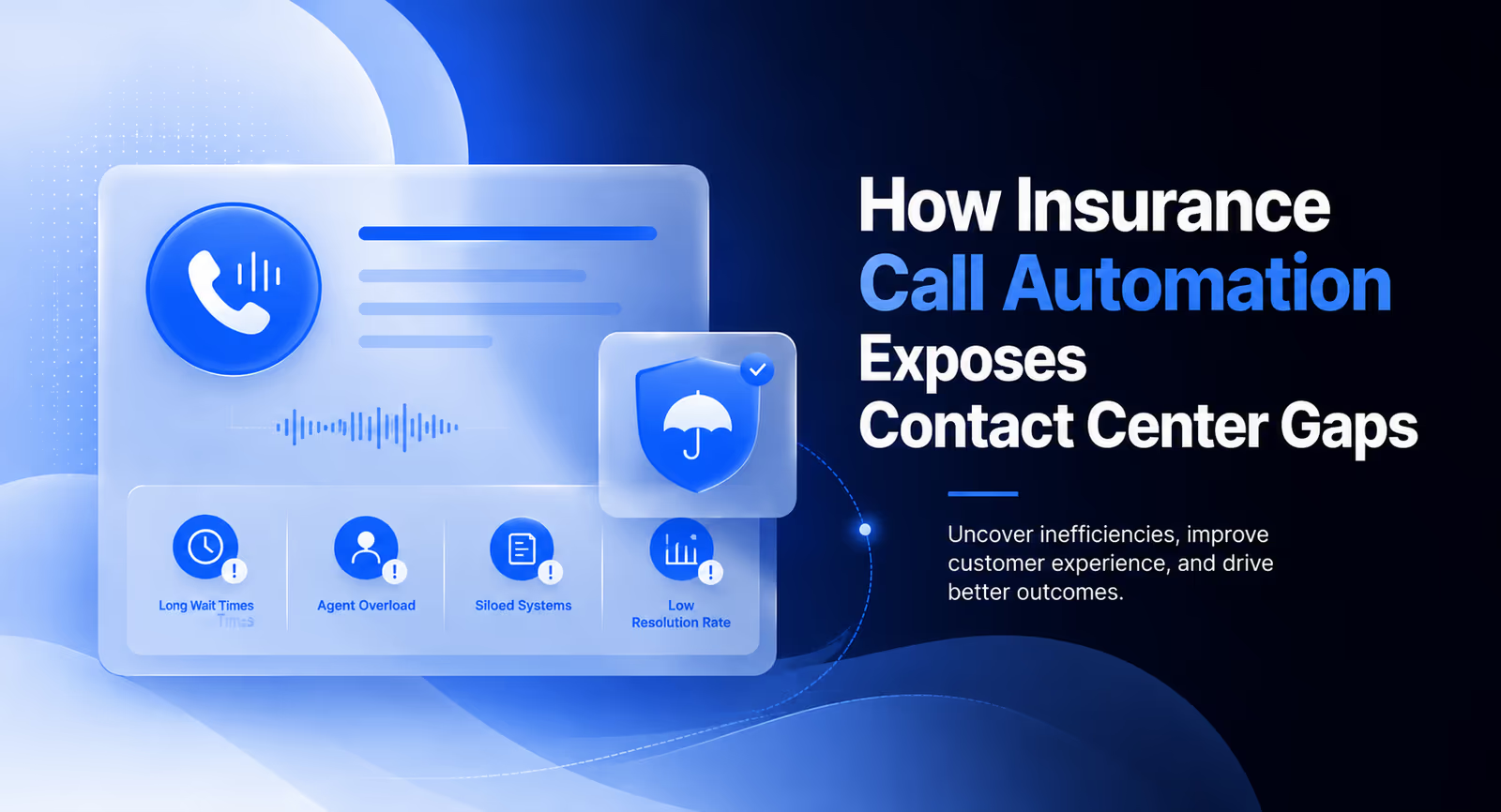
Contact volumes have grown, but costs rise faster. Many centers quietly suffer from long average handle times (AHT), frequent repeat calls, and mounting after‑call work.
According to recent industry data, AHT benchmarks for many service centers hover between 7 and 10 minutes per call, depending on complexity.
When calls take too long, or agents must chase missing info, costs accumulate, and agents burn out. These “hidden inefficiencies” often go unnoticed until budgets balloon or customer satisfaction drops. The upcoming sections dive into how these breakdowns manifest and why they matter.
1. Hidden Costs of Long Conversations and Unresolved Queries
Long customer calls or unresolved issues carry more cost than meets the eye. When agents spend excessive time navigating systems, verifying data, or waiting on hold, this inflates the overall cost per interaction.
The standard metric Average Handle Time (AHT) includes talk time, hold time, and after-call work, all of which add up in extended conversations.
But long calls don’t always equate to resolution. If a customer’s issue remains unresolved after such effort, they may call back or abandon the process entirely. According to industry benchmarks, many contact centers see 20–30% of follow-up calls tied to previously incomplete resolutions.
These hidden costs, time wasted, repeat calls, diminished first‑call resolution, and rising call volume erode both customer satisfaction and profitability. Every minute spent beyond what’s needed inflates cost and degrades service. Exposing and trimming those hidden inefficiencies must come before considering headcount increases.
With insurance call automation, routine policy questions, renewal reminders, and follow-ups can be handled without extending every interaction through a human agent.
2. AI Automation in Insurance Call Centers: Where Processes Lag
When processes depend heavily on manual tasks, data lookup, compliance checks, and CRM entries, inefficiencies accumulate silently. With each call, small delays in information retrieval or documentation stack up. Over hundreds or thousands of interactions, that overhead becomes significant.
Research from contact‑center analytics experts suggests that relying only on AHT misses deeper inefficiencies. A combination of metrics, including First Call Resolution (FCR), transfer rate, repeat contact rate, and after‑call work, paints a clearer picture of true operational health.
Further, when documentation, follow-ups, or checks happen manually, inconsistencies arise. That increases rework and introduces more chances of error or missed compliance, which further delays resolution and drives repeat contacts.
Without automation, manual workflows create process lags that hide under the surface of traditional benchmarks, leading to inefficiency and higher costs.
3. Rework and Inconsistency: The Silent Customer Experience Killers
Inconsistent responses, incomplete documentation, and follow-up errors hurt both experience and operations. When agents handle similar queries differently, or when system updates lag behind calls, the chance of rework spikes.
That often leads to multiple contacts for the same issue, lower resolution quality, and a drop in customer trust. Insurance call automation also reduces rework by standardizing repetitive workflows and ensuring that follow-ups happen consistently.
Studies show that poor handling of simple issues, such as inconsistent information or repeated transfers, leads to increased customer frustration, higher churn, and elevated operational overhead.
For businesses, rework is expensive: every reopened case or repeat call wastes agent time, inflates workload, and lowers per‑call profitability.
Inconsistent service and rework quietly erode both efficiency and satisfaction, making them critical problems to fix before scaling staff becomes the default answer.
Identify Gaps With Insurance Automation
This blog is just the start.
Unlock the power of Callveriq’s AI with a live demo.

Insurance Call Automation Fixes the Right Friction Points
Automation isn’t about replacing human agents; it’s about removing friction that slows every interaction. Smart tools tackle repetitive tasks like account look‑ups, routine FAQ responses, and post‑call documentation.
With automation handling the mundane, agents can focus on complex issues that require judgment. Data shows that contact center automation can reduce operating expenses by up to 30% while trimming call times and boosting resolution consistency.
The next subsections reveal precisely which pain points get fixed when automation is applied thoughtfully.
Fix Friction With Insurance Automation
Insurance Call Automation for Renewal and Policy Service
Insurance call automation becomes especially valuable when insurers connect customer outreach with the next action. Renewal and policy servicing are good examples because customers often need multiple reminders, payment assistance, or an advisor before completing the journey.
Insurance call automation becomes especially valuable when insurers connect customer outreach with the next action. A typical renewal and policy-service workflow can look like this:
This creates a connected service loop instead of isolated calls and messages. Insurance call automation can therefore help insurers move customers from reminder to conversation, payment, or advisor support without requiring an agent to manually manage every follow-up.
The key advantage is continuity. A missed call does not have to become a missed renewal, and a customer who starts on WhatsApp does not have to repeat their issue when they reach an advisor.
Automate Renewal Workflows With Callveriq
How Insurance Call Automation Streamlines Insurance Service
Insurance call automation can address the most common friction points across the insurance customer journey. From handling repetitive policy and renewal queries to guiding agents through complex conversations and reducing unnecessary follow-ups, automation helps insurers improve efficiency without compromising the human touch.
The following use cases show how insurers can apply insurance call automation to reduce workload, improve resolution speed, and deliver more consistent customer experiences.
1. AI insurance sales agent to automate repetitive service loops
Many insurance customers call for simple, repetitive tasks, checking policy status, renewal dates, coverage details, or billing updates. An AI insurance sales agent can handle these routine service loops instantly.
These agents pull data from backend systems, respond to common queries, and complete self‑service tasks without human intervention. In insurance-focused deployments, this approach has helped cut operational burden and reduce handling overhead.
By automating those high-volume, predictable interactions, human agents are freed up to handle complex or sensitive cases, claims disputes, custom policy questions, and upsell opportunities where judgement, empathy, or deeper product knowledge matters.
That shift improves both efficiency and service quality. AI isn’t replacing people; it's optimizing what needs automation and what needs a human touch.
In short: AI insurance sales agent capabilities let insurers scale service capacity without scaling headcount, reducing workload, speeding up responses, and improving consistency of outcomes.
2. Adaptive workflows and guided conversations for sharper outcomes
Not all customer calls follow a simple script. Insurance queries often branch: policy amendments, coverage clarifications, claim submissions, compliance checks.
With adaptive workflows and guided conversation tools, agents get real-time support tailored to each call’s context. The system prompts the next-best action, ensures data consistency, and surfaces relevant knowledge or regulatory guidelines without manual search.
This guided approach reduces cognitive load for agents and standardizes responses across the board. Instead of juggling multiple systems, training docs, and checklists, agents get a unified interface that walks them through each step.
As a result, resolution times drop, error rates decrease, and service quality becomes more predictable and consistent. For insurers, insurance call automation can turn these guided workflows into repeatable operating processes across calls, WhatsApp interactions, and advisor escalations.
Ultimately, adaptive workflows turn every call into a controlled process, improving customer outcomes, reducing rework, and making contact center operations more reliable over time.
3. Cutting down follow-ups with predictive support tech
Follow-up calls and repeat contacts often signal friction, unresolved issues, missing information, or inconsistent service. Predictive support tech in a call center uses AI to anticipate what customers might need next, prepare agents with contextual cues, and even pre-populate data or next steps before hanging up.
For insurance clients, that means smoother claim journeys, faster policy updates, fewer escalations, and higher first‑call resolution. AI-driven predictive workflows help track intent, monitor sentiment, and suggest proactive responses. That foresight reduces the chance of repeat calls, increases satisfaction, and cuts down on operational overhead.
Conclusion: predictive support doesn’t just close one call; it cuts the chance of another. When follow-ups drop, cost goes down, and customer trust goes up.
How Callveriq Uses Insurance Call Automation
Not all automation is equal; what really counts is tooling that delivers actionable improvements, not just theoretical promise. The right platform surfaces inefficiencies, guides agents live during calls, captures customer sentiment, and offers analytics for continuous improvement.
Studies and industry reports show that integrating AI-powered routing, guided workflows, and analytics can improve first-call resolution, reduce rework, and align cost and quality outcomes.
1. Real‑time Agent Assist for live support and efficiency gains
When an agent handles a customer call, every second counts. Real-Time Agent Assist (RTAA) uses AI to listen to live conversations, surface relevant information, policy details, customer history, compliance prompts, next‑best actions, and deliver them in real time.
As a result, agents don’t have to pause the call to dig through CRM records or manuals. This kind of in‑call guidance directly reduces delays, lowers average handle time, and cuts after‑call work. Agents stay engaged, focused on the customer, and respond swiftly with accurate information.
In high‑volume environments like insurance call centers, such support can boost both speed and service quality. Real‑time Agent Assist transforms agents into super‑responsive problem‑solvers, delivering faster resolutions and stronger compliance without hiring more staff.
2. Conversation Intelligence to surface coaching and process gaps
Beyond real‑time aid, tools that analyze entire conversations- what we can call Contact Center Conversation Intelligence- unlock deeper operational insight. These tools transcribe calls, detect sentiment, highlight recurring issues, and flag non‑compliant or inefficient patterns. This doesn’t just help QA teams; it reveals foundational flaws in processes or script design.
By reviewing aggregated data from hundreds or thousands of calls, decision‑makers can identify where agents struggle: confusing policy queries, frequent escalations, or repeated hand‑offs. With that visibility, training becomes targeted, workflows get refined, and scripts evolve, reducing repeat calls, improving first‑call resolution, and raising customer satisfaction.
Conversation Intelligence turns raw conversations into actionable feedback, revealing opportunities to train, optimize, and elevate service consistency across the contact center.
3. VOC + Sales Analytics to align feedback with frontline actions
Listening to what customers actually say, through Voice of Customer Software (VoC), and combining that with sales and interaction analytics gives insurers a full‑circle view of performance. VoC captures sentiment, pain points, and feedback themes; sales analytics tracks outcomes, compliance, conversion, and interaction quality. Together, they show how frontline behavior maps to business results.
For example, VoC may uncover repeated complaints about policy clarity or documentation delays; analytics may show these issues correlate with lower first-call resolution or higher drop-off.
That insight lets teams rework scripts, automate follow‑up tasks, or redesign workflows to directly address what customers care about. This alignment improves satisfaction, retention, and operational efficiency.
Conclusion: VoC plus analytics turns customer voice into concrete action, tying frontline performance to real business impact, cost control, satisfaction gains, and smarter growth.
Transform Insurance Calls With Callveriq
Insurance Call Automation: A Smarter Growth Model
Hiring more agents may offer short-term relief, but it doesn't solve the deeper issues driving cost and dissatisfaction in insurance contact centers.
Long handle times, repeat contacts, and rework persist when broken processes remain untouched. Automation, when applied to the right friction points, delivers measurable improvements in efficiency, agent focus, and customer experience without adding headcount.
Callveriq’s insurance call automation stack addresses these exact challenges. From real-time agent guidance to workflow optimization and feedback analytics, it helps insurers run leaner, faster operations. If the goal is cost control without compromising service, automation is where the shift begins.
FAQs
1. Can insurance call automation work with existing CRM systems?
Yes. Insurance call automation can integrate with CRM and policy systems to access customer information, update records, and trigger follow-up actions.
2. Is insurance call automation suitable for outbound calls?
Yes. It can automate outbound calls for renewals, lead qualification, payment reminders, surveys, and policy-service follow-ups.
3. Can customers request a human agent during an AI call?
Yes. Customers can be routed to an advisor when they request human assistance or when the conversation requires human judgment.
4. How does insurance call automation handle multiple languages?
AI voice agents can support multiple languages and switch languages based on customer preferences or conversation context.
5. Can insurers track AI call performance?
Yes. Insurers can monitor metrics such as call outcomes, resolution rates, customer sentiment, escalations, and conversion performance.