


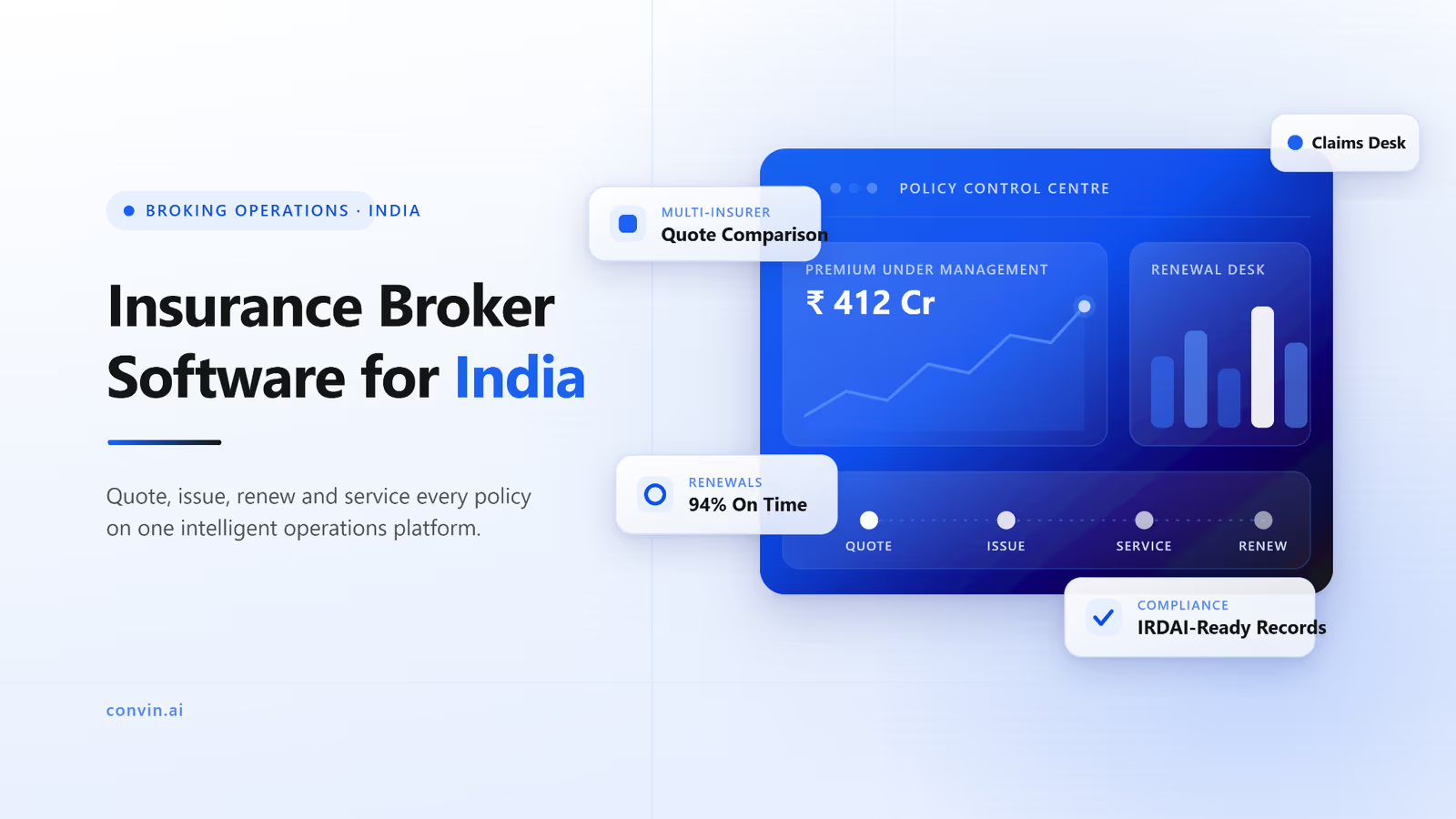
Why Brokers Outgrow Generic CRM and Spreadsheets
A generic CRM can track accounts and opportunities, but broking contains relationships and deadlines that ordinary pipelines do not model well. One client may have multiple insured entities, locations, policies, beneficiaries, assets, renewal dates, insurer relationships, and service requests. A single renewal may require exposure data, loss history, proposal forms, market submissions, clarifications, quote versions, negotiations, payment, and policy verification.
Spreadsheets can make this work visible to an individual. They rarely make it dependable across teams. Tasks become tied to personal calendars, client context sits in email or messaging apps, and management learns about a delayed renewal only after escalation. The commercial purpose of insurance broker software in India is to turn that fragmented work into an owned, measurable process.
See how Callveriq connects follow-ups.
Essential Capabilities in Insurance Broker Software
Essential insurance broker software requires a robust core set of capabilities to streamline client management, policy handling, and backend accounting
Client and relationship structure
The platform should model parent and subsidiary organizations, locations, decision-makers, finance contacts, employees or members, insurers, and other intermediaries. Ask whether a user can understand the entire relationship from one screen without flattening it into a single contact.
Quote comparison without information loss
Quote comparison must capture more than premium. It should accommodate deductibles, limits, exclusions, warranties, sub-limits, waiting periods, add-ons, validity dates, and clarifications. The software should preserve source documents and the reasoning behind recommendations rather than silently overwrite earlier versions.
Renewal intelligence
Renewal functionality should work backward from expiry. It should account for data collection, market strategy, submissions, insurer responses, client approval, payment, and policy issuance. Fixed 30-day reminders are inadequate when different products and accounts require different lead times.
Explore Callveriq for renewal journeys.
How To Manage Quotes Across Insurers and Client Teams
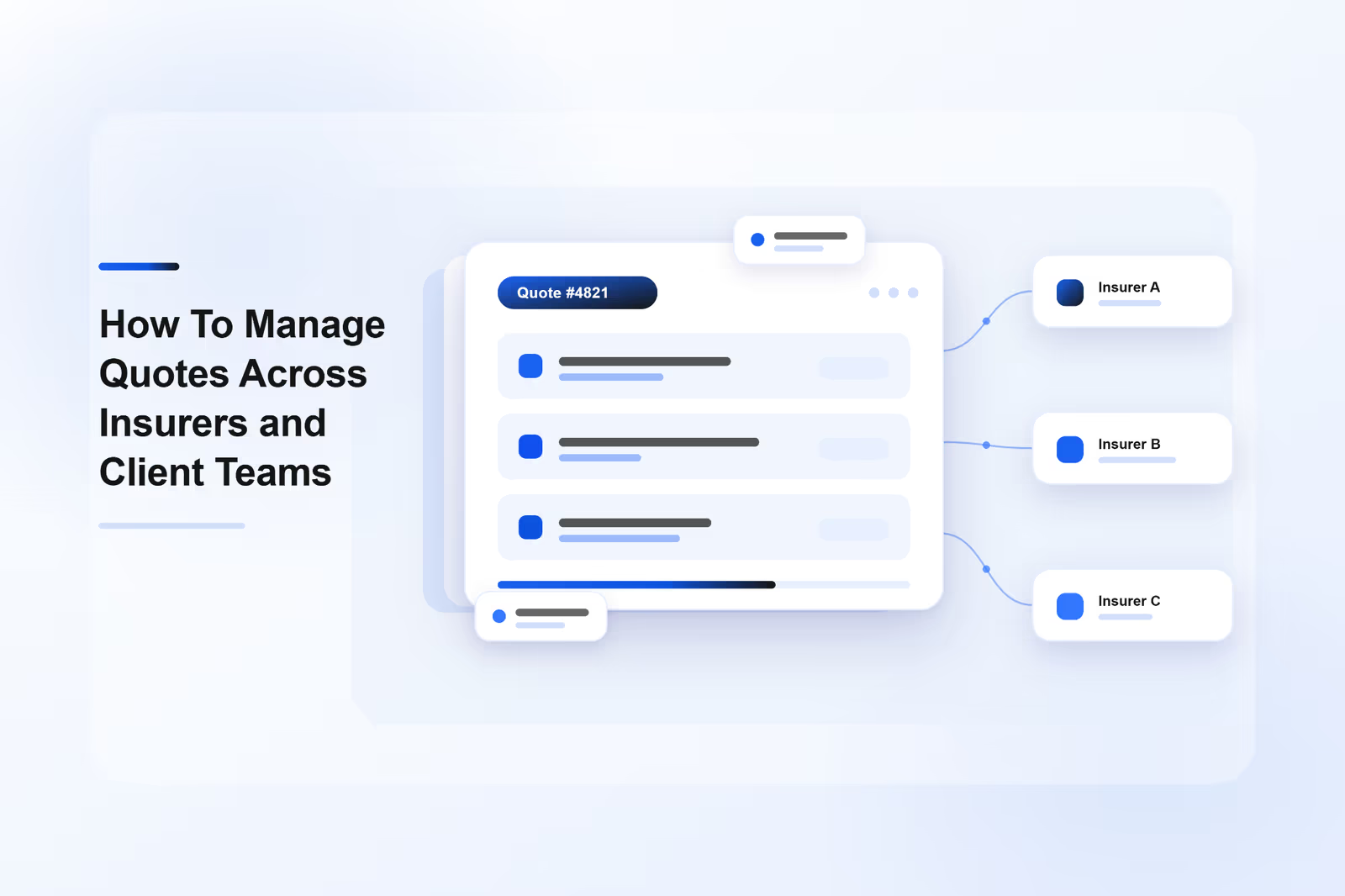
Captions: Insurance broker software quote management
Quote management is where many broker workflows become difficult to scale. A client may supply incomplete data in stages, insurers may respond in different formats, and terms can change during negotiation. Good insurance broker software solutions should create a traceable chain from client requirement to final placement.
Buyers should test whether the system can:
- Create structured information requests for each line of business.
- Track which markets received a submission and when.
- Record questions, pending documents, and response deadlines.
- Compare quote versions without losing prior terms.
- Generate client-ready comparisons with appropriate disclosures.
- Record recommendation, approval, payment, and final policy verification.
The demonstration should include a non-ideal case: a changed headcount, revised sum insured, delayed inspection, or insurer clarification arriving after a client meeting. Software that works only for the straight-through path will push real work back into email and spreadsheets.
Salesforce's latest State of Sales research notes that sales teams are using agents across activities including planning and quoting. For brokers, automation should support research, reminders, summaries, and administrative work while leaving advice, negotiation, suitability, and material decisions with authorized professionals.
Connect quote conversations through Callveriq.
This blog is just the start.
Unlock the power of Callveriq’s AI with a live demo.

Preventing Renewal Leakage and Last-Minute Escalations
Renewals are predictable, but renewal work is not automatically controlled. Leakage occurs when ownership is unclear, client data arrives late, follow-ups are inconsistent, or the team cannot distinguish a routine reminder from an account at risk.
1. Segment renewals by effort and risk
The platform should classify cases using account value, product complexity, claims experience, relationship health, data readiness, and expiry proximity. High-value or complex renewals may need earlier human intervention; routine cases may support automated data collection and reminders.
2. Use status-based follow-up
A renewal journey should react to what is actually pending. If the client has submitted data, the system should stop asking for it. If a quote is awaiting internal approval, client-facing reminders should pause. If the customer raises an objection, the case should route to the appropriate broker with context.
3. Escalate exceptions, not every task
Managers need queues for overdue submissions, unresponsive high-value clients, material coverage changes, payment risk, and policies nearing expiry without placement. A wall of routine notifications hides the cases that need judgment.
McKinsey's Global Insurance Report 2025 analysis frames the industry challenge around profitable growth. For brokers, protecting renewal revenue while managing service effort is a practical expression of that discipline.
Strengthen renewals using Callveriq journeys.
Cross-Channel Follow-Up Without Losing Context
Clients move between phone, email, WhatsApp, web forms, and meetings. Channel availability alone is not an omnichannel service. The test is whether the next interaction reflects what happened previously.
An effective insurance broker software platform should connect communication to the correct client, policy, quote, renewal, or service request. It should record consent and preferences, prevent conflicting messages, and make the next action visible. When a conversation transfers from automation to a broker, the employee should receive the reason, relevant history, pending action, and supporting record.
KPMG's India CX Report'25 for financial services highlights customer experience across financial-services categories, including life and general insurance. This reinforces why brokers should test journeys by product and lifecycle stage rather than assume one communication design fits every customer.
Gartner's 2025 service research also supports a hybrid model: 95% of surveyed service leaders planned to retain human agents to define AI's role. For broking, automation should create reach and consistency while qualified people handle advice, negotiation, sensitive complaints, and exceptions.
Unify client conversations with Callveriq.
A Commercial Evaluation Scorecard
Require vendors to demonstrate one new-business journey, one complex renewal, and one post-sale service request. Score each on completion time, manual steps, accuracy, employee effort, auditability, and customer experience. Reference calls should come from brokers with comparable products, scale, and operating models.
Assess Callveriq against real workflows.
Implementation, Integration, and Change Management
Implementation should begin with data and process design, not bulk migration. Decide which records must move, which can remain archived, how duplicates will be handled, and who owns data quality. Define authoritative sources for client identity, policy status, quote terms, documents, commission, and communication consent.
A phased rollout can start with one team or line of business. Establish baseline metrics before launch: quote turnaround, missing-document time, renewal retention, policies issued before expiry, follow-up attempts per completion, and service-request turnaround. Without a baseline, the business cannot distinguish adoption from impact.
Training should use role-based scenarios. Producers, placement specialists, account managers, service teams, finance, and managers need different views and controls. Create a process for configuration changes, integration incidents, new templates, access reviews, and employee feedback after launch.
Launch a controlled Callveriq pilot.
How Callveriq Complements Broker Management Software
Callveriq can complement the broker's system of record by managing approved conversations and next actions across voice and digital channels. It can support lead qualification, document reminders, quote follow-up, renewal outreach, payment nudges, service triage, conversation analysis, and human escalation when connected to reliable client and policy data.
It should not replace professional advice, quote records, policy administration, or commission accounting. The commercial value comes from closing operational gaps between recorded tasks and completed customer actions. Buyers should validate integration, consent controls, knowledge governance, escalation logic, and outcome reporting in a bounded pilot.
The strongest use case is one with a clear trigger, repetitive follow-up burden, defined human fallback, and measurable completion event. That makes it possible to judge whether Callveriq improves response, turnaround, retention, or employee capacity rather than merely increasing message volume.
See Callveriq support broker growth.
Choose Software Around the Work That Protects Revenue
The best broker platform is not the one with the most modules. It is the one that gives teams reliable control over the moments where revenue and trust are won or lost: complete submissions, accurate quote comparison, timely renewal action, clear client communication, and accountable service. Buyers should test real exceptions, not polished happy paths, and connect every proposed feature to an operating measure. When the broker management platform owns the record and an engagement layer such as Callveriq coordinates approved conversations, brokers can scale follow-up without sacrificing context or professional judgment.
Evaluate your broker journey now.
FAQs
1. Can broker software manage affinity or group programmes?
Yes, if it supports master policies, member records, eligibility rules, enrolment files, certificates, and programme-level reporting.
2. Does broker software replace an accounting system?
Usually not. It may track commissions and receivables, but finance integrations and reconciliation requirements should be evaluated separately.
3. How should brokers handle historical email migration?
Migrate only useful, legally appropriate history using defined retention rules, account mapping, access controls, and quality checks.
4. Can clients receive self-service access?
Many platforms offer portals, but brokers should verify permissions, available transactions, document security, and escalation paths.
5. What contract protections matter most?
Review data ownership, portability, service levels, security obligations, subcontractors, price changes, termination assistance, and business continuity.