

Customer expectations have changed faster than most contact centers.
Customers expect instant answers across voice, chat, WhatsApp, email, and mobile apps. They want personalized support, 24/7 availability, and seamless handoffs when issues become complex. Meanwhile, CX leaders are under pressure to reduce costs, improve service quality, and scale support without endlessly increasing headcount.
This is why enterprise conversational AI has moved from experimentation to boardroom discussions. According to Salesforce's 2025 State of Service Report, organizations expect AI to handle nearly 50% of customer service cases by 2027, up from 30% today. AI has also become one of the top priorities for service leaders worldwide.
However, buying the wrong platform can create new problems instead of solving existing ones. Many organizations discover too late that their chosen solution lacks enterprise security, governance, analytics, integrations, or scalability.
This guide helps CX leaders evaluate, compare, and select the right enterprise conversational AI platform while avoiding costly mistakes.
Build smarter customer experiences with Callveriq.
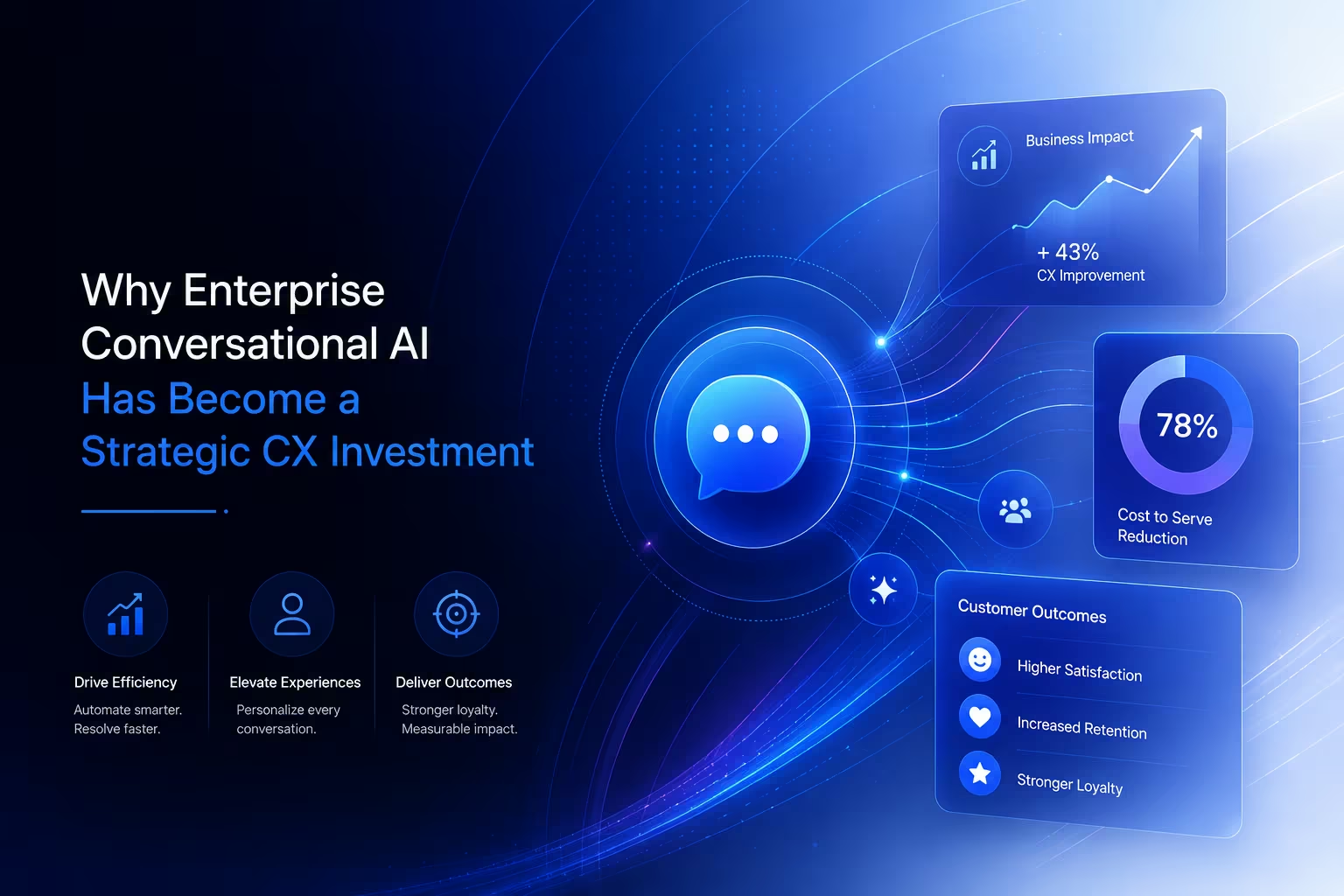
Why Enterprise Conversational AI Has Become a Strategic CX Investment
The conversation around AI is no longer about chatbots.
Modern enterprise conversational AI platforms can automate customer interactions, assist live agents, analyze conversations, surface customer insights, and improve service operations continuously.
Research from McKinsey shows that while AI adoption continues to accelerate, most enterprises are still struggling to scale AI initiatives into measurable business outcomes. Organizations that focus on enterprise-wide value creation consistently outperform those pursuing isolated AI projects.
Similarly, Salesforce research indicates that service leaders increasingly view AI as a tool for improving customer experience, reducing service costs, and increasing operational efficiency simultaneously.
What Enterprises Are Trying to Achieve
| Business Objective | Desired Outcome |
|---|---|
| Reduce support costs | Lower cost per interaction |
| Improve service quality | Higher CSAT and NPS |
| Scale support operations | Handle growing volumes without hiring proportionally |
| Improve agent productivity | Reduce repetitive tasks |
| Increase self service adoption | Higher containment rates |
| Deliver personalized experiences | Better customer loyalty |
Turn conversations into outcomes with Callveriq.
What Should a CX Leader Evaluate Before Buying Conversational AI?
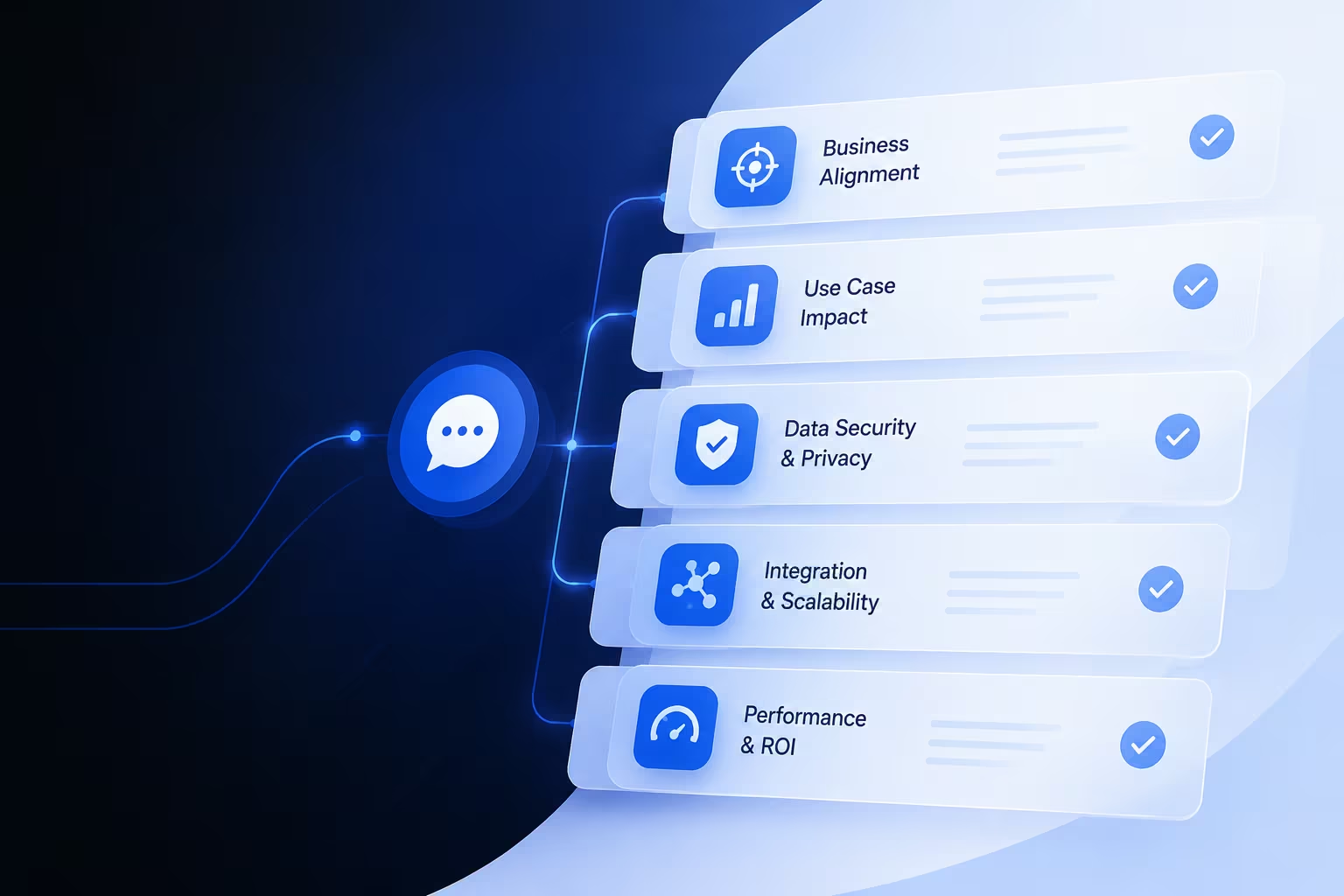
Many buying teams focus on features. The best buying teams focus on outcomes.
Before evaluating vendors, define the operational problem you are trying to solve.
Key Questions to Ask Internally
Customer Experience Questions
- What customer journeys need automation?
- Which channels generate the highest support volume?
- Where are customers experiencing friction?
- Which interactions require human empathy?
Operational Questions
- What is your current cost per contact?
- What is your average handle time?
- What is your first contact resolution rate?
- How much agent capacity is consumed by repetitive requests?
Technology Questions
- What systems must the AI platform integrate with?
- How complex is your existing tech stack?
- What security requirements exist?
- What compliance obligations apply?
| Evaluation Area | Why It Matters |
|---|---|
| Business impact | Determines ROI potential |
| Scalability | Supports enterprise growth |
| Security | Protects customer data |
| Integration capabilities | Connects existing systems |
| Analytics | Measures performance |
| Governance | Controls AI behavior |
| Omnichannel support | Delivers consistent experiences |
| Agent assistance | Improves employee productivity |
Evaluate AI through measurable outcomes.
This blog is just the start.
Unlock the power of Callveriq’s AI with a live demo.

Must Have Features in Enterprise Conversational AI
Not every conversational AI platform for enterprises is built for enterprise complexity. Many solutions perform well in controlled demonstrations but struggle in real world deployments.
The following capabilities should be considered mandatory.
1. Omnichannel Support
Customers move between channels constantly.
Your platform should support:
- Voice
- Website chat
- Mobile apps
- SMS
- Social messaging
The experience should remain consistent across all touchpoints.
2. Enterprise Grade Security
Security remains one of the biggest concerns among service leaders adopting AI. Salesforce research found that security concerns continue to delay or limit AI initiatives for many organizations.
Look for:
- Role based access controls
- Data encryption
- Audit logs
- SSO support
- Data residency controls
- Compliance certifications
3. Advanced Analytics
You cannot improve what you cannot measure.
Look for:
- Containment reporting
- Conversation analytics
- Intent analysis
- Customer sentiment tracking
- Resolution metrics
- Agent performance analytics
4. Human Handoff Capabilities
Research from PwC shows that customers still value human interaction during complex service situations. The most successful AI deployments combine automation with smooth escalation paths.
The platform should:
- Detect escalation needs
- Transfer conversation context
- Route intelligently
- Preserve conversation history
5. Agent Assist Capabilities
Modern AI-powered customer experience strategies extend beyond customer facing automation.
The platform should support agents through:
- Real time guidance
- Automated summaries
- Knowledge recommendations
- Compliance monitoring
- Next best action suggestions
6. Continuous Learning
Customer expectations evolve. Your AI should improve continuously through:
- Conversation feedback loops
- Intent optimization
- Workflow improvements
- Knowledge updates
Create seamless customer and agent experiences.
How Enterprise Conversational AI Differs From SMB Solutions
Many vendors market the same product to both SMBs and global enterprises. The reality is that enterprise requirements are fundamentally different.
Enterprise conversational AI differs significantly from SMB-focused solutions because enterprise environments operate at a much larger scale and require greater control. While SMB tools are often designed for simplicity and quick deployment, enterprise chatbot solutions must support millions of customer interactions, integrate with complex technology ecosystems, and comply with strict security and regulatory requirements. Enterprise organizations also need deeper analytics, advanced governance, and the flexibility to customize workflows across multiple teams, regions, and business units.
Key differences include:
- Support for high interaction volumes across global customer bases
- Advanced security, governance, and access controls
- Integration with CRM, contact center, ERP, and other enterprise systems
- Extensive workflow customization for complex business processes
- Deep analytics and operational reporting capabilities
- Industry specific compliance and regulatory support
- Multi region deployments with centralized administration
- Governance models designed for large, cross functional teams
As a result, platforms built for SMBs often struggle to meet the scalability, compliance, and operational requirements that large enterprises demand.
The Enterprise Conversational AI Vendor Shortlist Scorecard
Use this scorecard to bring structure and objectivity to vendor evaluation. It helps CX leaders focus on real enterprise requirements, not sales demos. Compare platforms on measurable outcomes, scalability, and integration depth. Eliminate bias and identify truly enterprise-ready conversational AI solutions.
When evaluating enterprise conversational AI vendors, buyers should go beyond feature demonstrations and request performance metrics from real customer deployments. These benchmarks provide a clearer picture of how effectively the platform delivers business outcomes and operational value.
Key metrics to request include:
- Containment rate to measure automation success
- CSAT improvement to assess customer experience impact
- Resolution rate to evaluate effectiveness
- Cost per contact reduction to understand ROI
- Average handle time (AHT) reduction to measure efficiency gains
- Escalation rate to gauge conversation quality
- Time to deployment to estimate implementation speed and complexity
These metrics help buyers compare vendors based on proven results rather than projected benefits.
What Does an Enterprise Conversational AI RFP Look Like?
A well structured RFP eliminates weak vendors early.
Section 1: Company Overview
Request:
- Company background
- Customer references
- Industry experience
- Enterprise deployment history
Section 2: Technical Capabilities
Request details on:
- Architecture
- Integrations
- APIs
- Security framework
- Scalability
Section 3: AI Capabilities
Request information about:
- Intent recognition
- Voice capabilities
- Multilingual support
- Agent assist functions
- Generative AI features
Section 4: Analytics and Reporting
Ask vendors to demonstrate:
- Conversation analytics
- Business dashboards
- Real time reporting
- Custom reporting
Section 5: Security and Compliance
Require documentation covering:
- SOC compliance
- GDPR readiness
- Data retention policies
- Access controls
Section 6: Deployment and Support
Request:
- Implementation timelines
- Change management approach
- Customer success resources
- SLA commitments
Common Mistakes CX Leaders Make During Vendor Selection
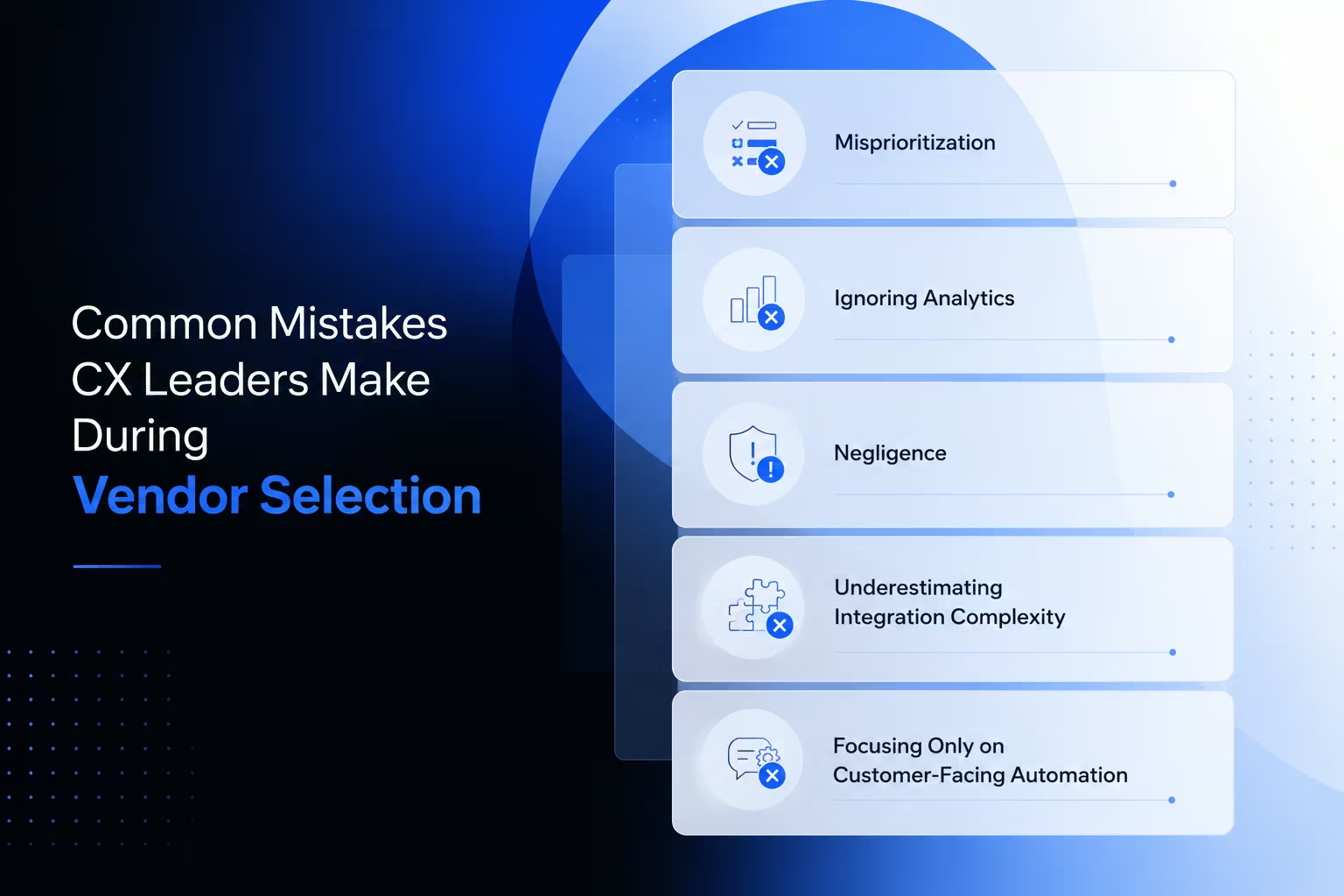
- Prioritizing Features Over Outcomes
The longest feature list rarely produces the best business results. Always map features to measurable CX and cost impact.
- Ignoring Analytics
Without visibility, optimization becomes impossible. Strong analytics are essential to track, improve, and scale performance.
- Underestimating Integration Complexity
Enterprise environments rarely operate in isolation. Integration depth often determines real-world success or failure.
- Focusing Only on Customer Facing Automation
Agent productivity improvements often generate equal or greater ROI. A balanced approach across customer and agent workflows is critical.
- Neglecting Governance
AI without governance creates risk at scale. Strong controls ensure consistency, compliance, and safe enterprise adoption.
Choose Callveriq for outcomes, not features.
The Future of AI-Powered Customer Experience
Enterprise conversational AI is no longer a future initiative. It is becoming a core part of how modern organizations deliver scalable, efficient, and personalized customer experiences. As AI adoption accelerates, the focus for CX leaders should shift from evaluating features to evaluating business outcomes.
The right platform should combine customer self-service, agent assistance, conversation intelligence, and workflow automation while meeting enterprise requirements for security, governance, and scalability. Organizations that invest in the right solution today will be better positioned to improve customer satisfaction, reduce operational costs, and create a stronger competitive advantage through AI-powered customer experience.
Book your demo with Callveriq to drive measurable CX and business outcomes.
FAQs
1. How long does it typically take to deploy enterprise conversational AI?
Deployment timelines vary based on integrations and complexity. Most enterprise implementations take anywhere from a few weeks to several months.
2. Can enterprise conversational AI support multiple languages?
Yes. Most modern platforms support multiple languages and regional variations, helping global organizations deliver consistent customer experiences.
3. How is ROI measured for conversational AI deployments?
Organizations typically measure ROI through reduced support costs, improved containment rates, higher agent productivity, and better customer satisfaction.
4. Does conversational AI replace human agents?
No. It automates routine interactions while allowing agents to focus on complex, high-value customer conversations.
5. Which industries benefit most from enterprise conversational AI?
Industries with high customer interaction volumes, such as banking, insurance, healthcare, telecom, retail, and e-commerce, often see the greatest impact.