

What Education Marketing Actually Covers
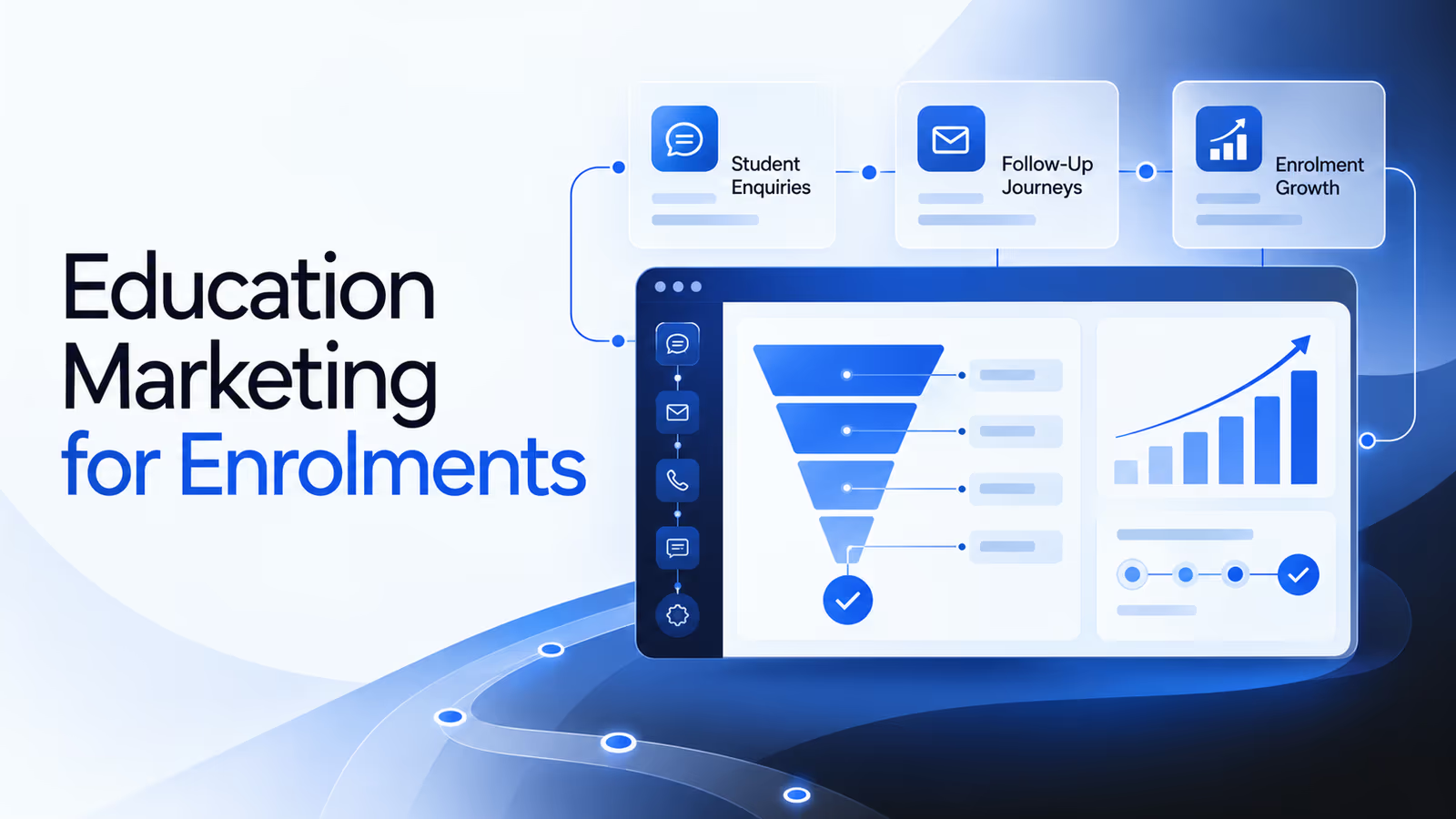
Education marketing is more than advertising admissions. It includes the research, content, events, communications, counselling, and experience that help a learner decide whether an institution and programme fit their goals.
The journey begins before a form submission. Prospects may compare eligibility, curriculum, faculty, fees, placements, location, learning format, scholarships, and application timelines. After an enquiry, their questions become more personal: Will my academic background qualify? Can I afford the programme? What documents are required? What outcomes are realistic? How will my family evaluate the decision?
Effective education marketing in India respects this progression. It does not treat every form fill as ready for a sales call. It makes reliable information easy to find, identifies intent, and offers help without creating unnecessary pressure.
Design helpful journeys with Callveriq.
Why Enquiries Fail to Become Enrolments
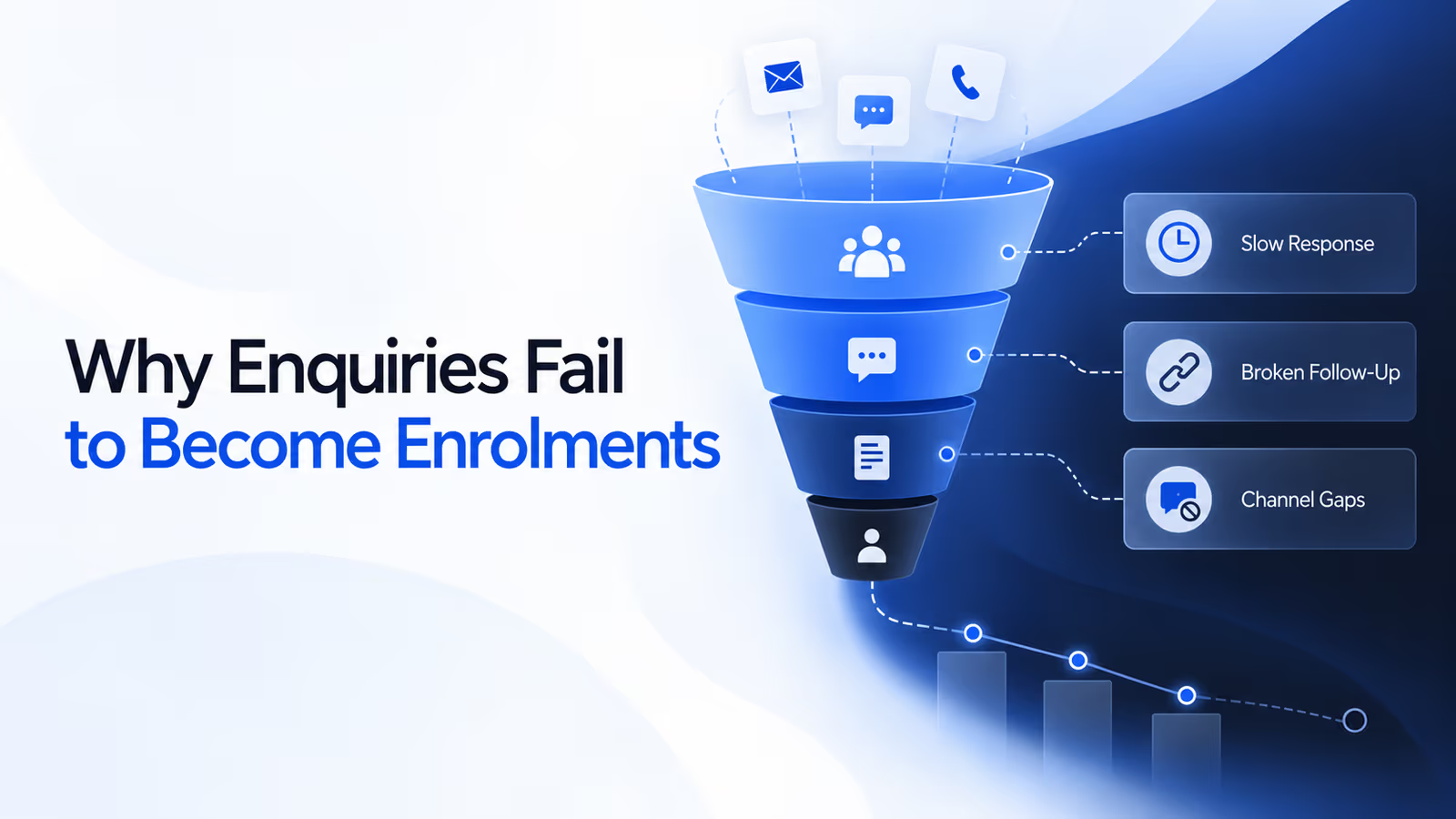
Institutions often attribute weak conversion to lead quality, but the journey can lose viable prospects in several ways.
Slow or generic responses
A quick response is valuable only if it addresses the enquiry. A prospect asking about lateral entry should not receive the same message as someone downloading a general brochure. Generic follow-up signals that the institution has not listened.
Fragmented channel history
A learner may explain their needs on a call and then repeat everything on WhatsApp. A parent may receive an email that contradicts what a counsellor said. When channel histories are disconnected, the institution appears disorganized even when individual teams are working hard.
Content gaps near the decision
Programme pages often describe features but omit evidence and decision details. Prospects need structured answers about eligibility, total cost, application steps, curriculum, outcomes, support, and deadlines. Missing information increases repetitive enquiries and delays decisions.
Poor ownership and follow-up
If no one owns the next step, enquiries age silently. Conversely, excessive calls and messages can reduce trust. Good follow-up is based on stage, consent, interest, and unresolved questions.
No path for parents or other influencers
Many education decisions involve family members. Institutions need respectful ways to share verified information and invite relevant stakeholders without exposing private prospect data.
Find journey gaps using Callveriq.
How the Enquiry-to-Enrolment Journey Works
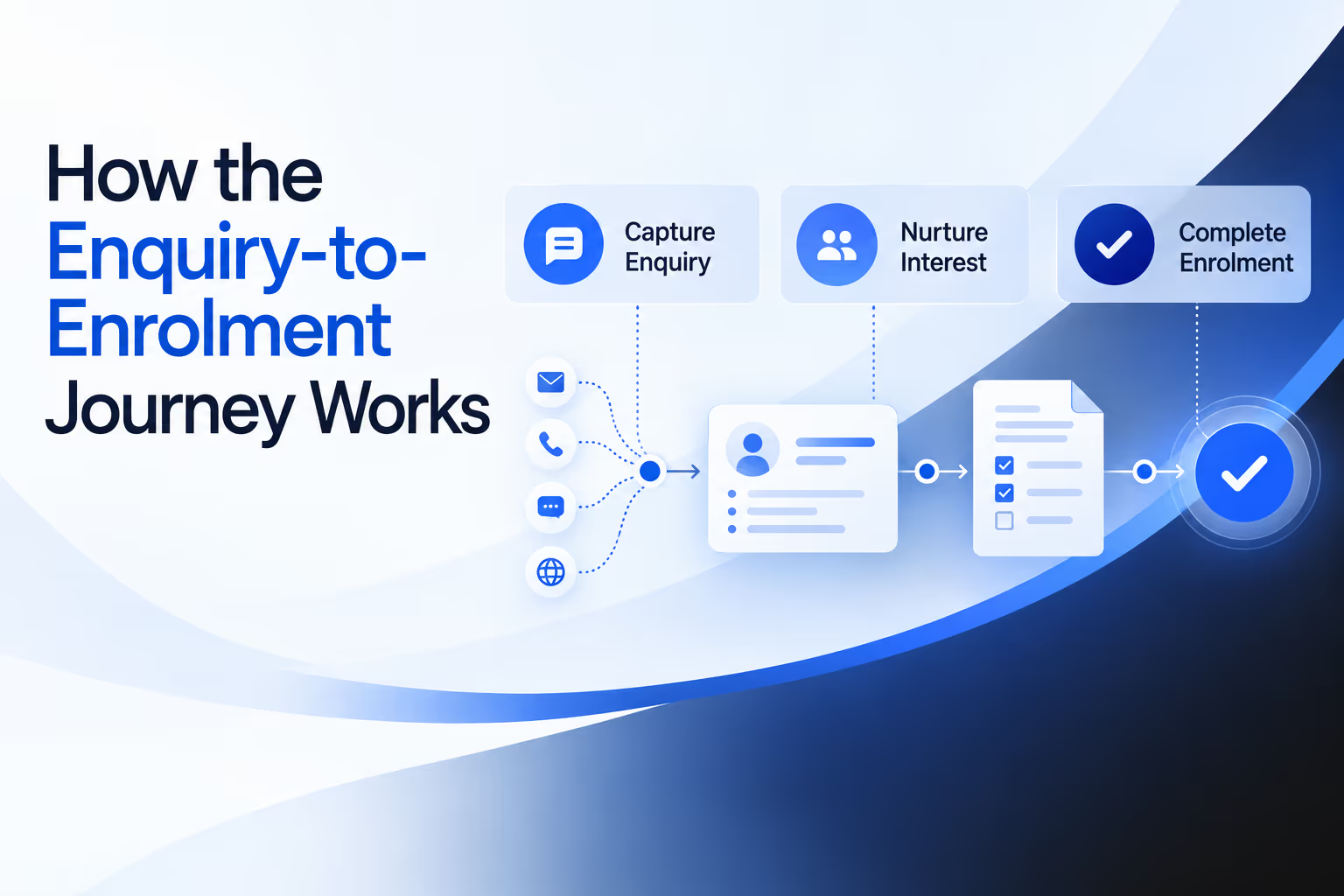
The stages are not perfectly linear. A prospect may return to comparison after beginning an application. A parent may introduce a new question after an offer. Strong education marketing strategies recognize these loops and preserve context when the learner moves between content, events, chat, calls, and counselling.
Gartner's 2025 CMO Spend Survey found that digital channels accounted for 61.1% of total marketing spend among surveyed leaders. Institutions should not interpret this as a reason to add more channels. The priority is to make existing digital journeys measurable and coherent.
Connect every stage through Callveriq.
This blog is just the start.
Unlock the power of Callveriq’s AI with a live demo.

Building Content That Answers Early-Stage Questions
Informational content should reduce uncertainty before it asks for contact details. Useful formats include programme explainers, eligibility guides, curriculum breakdowns, career-path articles, fee and scholarship pages, application checklists, campus or platform walkthroughs, webinars, and student-support guides.
Organize content by question, not department
Prospects do not think in institutional org charts. They ask questions such as “Can I apply with my background?” or “What is the difference between these programmes?” Content architecture should group related answers and link them to the next reasonable action.
Make evidence easy to evaluate
Claims about outcomes should define the cohort, period, methodology, and source. Programme details should show the latest applicable academic cycle and update date. Clear caveats build more trust than unsupported superlatives.
Support discovery in search and AI answers
Pages should answer specific questions in concise language, then provide deeper explanation, tables, definitions, and primary sources. Consistent programme names, dates, fees, and eligibility information help both people and retrieval systems identify reliable answers.
KPMG's India's Digital Dividend report emphasizes digital transformation, accessibility, collaboration, and talent development. For institutions, accessible digital information is therefore not merely a campaign asset; it is part of how learners participate in opportunity.
Create clearer journeys with Callveriq.
Coordinating Search, Social, Events, Email, WhatsApp, and Calls
Each channel has a different job. Search captures active questions. Social content can build familiarity and demonstrate student life or expertise. Webinars and open houses allow deeper exploration. Email works well for structured information. WhatsApp can support timely, permission-based updates. Calls are valuable when a learner needs clarification, reassurance, or complex guidance.
An education marketing software stack should avoid sending the same message everywhere. Instead, it should use channel preference, consent, stage, prior engagement, and pending action to determine what happens next.
A simple orchestration model
- Capture the enquiry source and stated interest.
- Send the requested resource immediately.
- Ask one useful qualifying question rather than a long interrogation.
- Route complex or high-intent questions to a counsellor.
- Trigger reminders only for incomplete, time-sensitive actions.
- Stop or change sequences when the learner responds.
- Record outcomes and reasons for disengagement.
Salesforce's 2025 State of Service projects that AI will handle half of service cases by 2027. In education, automation can answer approved routine questions and coordinate follow-up, but sensitive, ambiguous, or consequential discussions should move to trained people.
Coordinate respectful outreach through Callveriq.
The Role of Counsellors and Thoughtful Automation
Counsellors create value through diagnosis and judgment. They interpret a learner's goals, explain trade-offs, surface missing information, and help families understand the process. Automation should reduce administrative work so counsellors can spend more time on those conversations.
Useful automation may include acknowledging enquiries, scheduling callbacks, sharing programme information, reminding applicants about incomplete documents, confirming events, or answering verified frequently asked questions. It should not fabricate eligibility, guarantee admission or employment outcomes, pressure vulnerable learners, or conceal that a conversation is automated.
Gartner's 2025 customer-service study found that 95% of surveyed leaders intended to retain human agents to define AI's role. This “digital first, but not digital only” principle fits education particularly well. Institutions need clear escalation rules, approved knowledge, transcript review, privacy controls, human oversight, and employee accountability.
Support counsellors using Callveriq responsibly.
Measuring Education Marketing Beyond Lead Volume
Lead count alone rewards cheap acquisition, not successful learner fit. Institutions need a connected measurement model.
Cohort reporting matters because application cycles differ by programme and intake. Attribution should also acknowledge that several touchpoints may contribute to one enrolment. A last-click report can overvalue the final form or call while ignoring the content and events that built confidence.
Measurement should include reasons, not only rates. Categorizing unresolved questions, disqualification, affordability concerns, timing, competitor choice, and non-response gives content and admissions teams a shared improvement agenda.
Measure complete journeys with Callveriq.
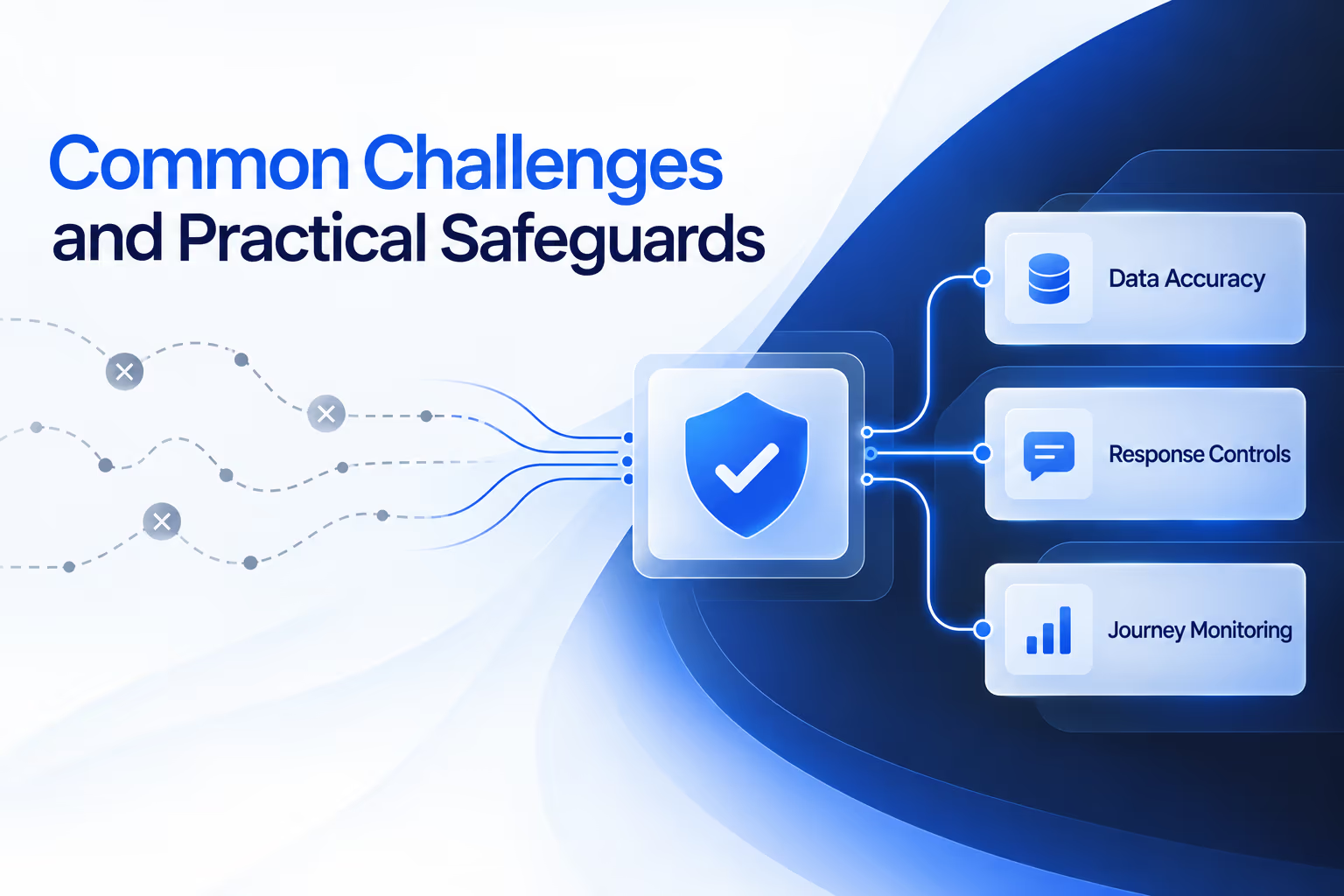
Common Challenges and Practical Safeguards
1. Inconsistent information
Create an approved knowledge source with named owners, effective dates, and review cycles. Channel scripts and automated answers should draw from the same verified material.
2. Over-communication
Set frequency limits, quiet hours, consent controls, suppression rules, and channel preferences. Stop sequences when a learner responds or opts out.
3. Privacy and access
Collect only necessary data, explain its use, restrict employee access, define retention, and review vendors. Information about grades, finances, identity, or family circumstances deserves particular care.
4. Bias in prioritization
Lead scoring can reproduce historical patterns. Institutions should review which signals are used, test outcomes across groups, and prevent scores from denying access to basic information or support.
Automation without ownership
Every automated follow-up journey needs an operational owner, escalation path, failure queue, and quality-review process. A campaign is not complete when messages are sent; it is complete when the learner receives an appropriate next step.
Build safer journeys with Callveriq.
Where Callveriq Can Support the Student Journey
Callveriq can support institutions as an omnichannel engagement layer connected to approved knowledge and existing admissions systems. Potential uses include enquiry qualification, callback scheduling, event reminders, application assistance, document follow-up, frequently asked questions, and escalation to counsellors with conversation context.
Its role should remain bounded. The student information system or admissions platform should remain the source of truth for application status and official decisions. Employees should handle exceptions, suitability conversations, complaints, and sensitive questions. Institutions should pilot one journey, define success and safety measures, review outputs, and improve the process before expanding.
Used carefully, this approach can make follow-up more consistent while preserving the human guidance that education decisions require.
Explore responsible engagement with Callveriq.
Turning More Enquiries Into Better-Fit Enrolments
Strong education marketing does not push every enquiry toward admission. It helps prospective students understand their choices, complete the right next step, and reach a person when judgment is needed. Indian institutions can improve enrolment journeys by publishing reliable answers, coordinating channels, responding to actual intent, and measuring progression rather than raw activity. Technology can make that work faster and more consistent, but trust still depends on transparency, relevance, restraint, and human accountability. When those principles guide the journey, better conversion becomes the result of better information and support rather than greater pressure.
Improve student journeys with Callveriq.
FAQs
How should institutions market programmes with small cohorts?
Use narrow audience definitions, expert-led content, alumni relevance, direct counselling access, and programme-specific outcome measures.
Can education marketing support alumni engagement?
Yes. Alumni journeys can include continuing education, events, referrals, mentoring, giving, and updated consent-based communications.
How should institutions handle education agents?
Define approved claims, data-sharing rules, attribution, training, monitoring, complaint handling, and consequences for non-compliant practices.
What role do language preferences play?
Language choice can improve comprehension and comfort, but institutions must maintain equivalent accuracy, disclosures, and escalation across languages.
How frequently should programme content be audited?
Audit before every intake and whenever fees, curriculum, eligibility, deadlines, faculty, delivery mode, or outcome evidence changes.