

A prospective borrower finds an NBFC online and begins a loan application. The eligibility form is completed, but one income document is missing. An automated email is sent. It remains unopened.
The borrower later messages the NBFC on WhatsApp but receives a generic response. The next day, a representative calls without knowing about the earlier conversation. By then, the borrower has applied elsewhere. The application did not fail because the borrower was ineligible. It failed because communication across the journey was delayed, disconnected, and difficult to continue.
This is the gap a digital lending platform is expected to address. It can organize applications and automate workflows, but the borrower experience depends on how effectively it connects systems with timely, contextual communication.
KPMG’s India CX Report 2025 for NBFCs found that 38% of consumers consider application and approval the most impactful stage of their NBFC journey. Relevant information across channels, seamless KYC, and an efficient application experience are therefore not secondary considerations. They directly influence whether borrowers continue.
Explore Callveriq’s digital lending platform.
What Is a Digital Lending Platform?
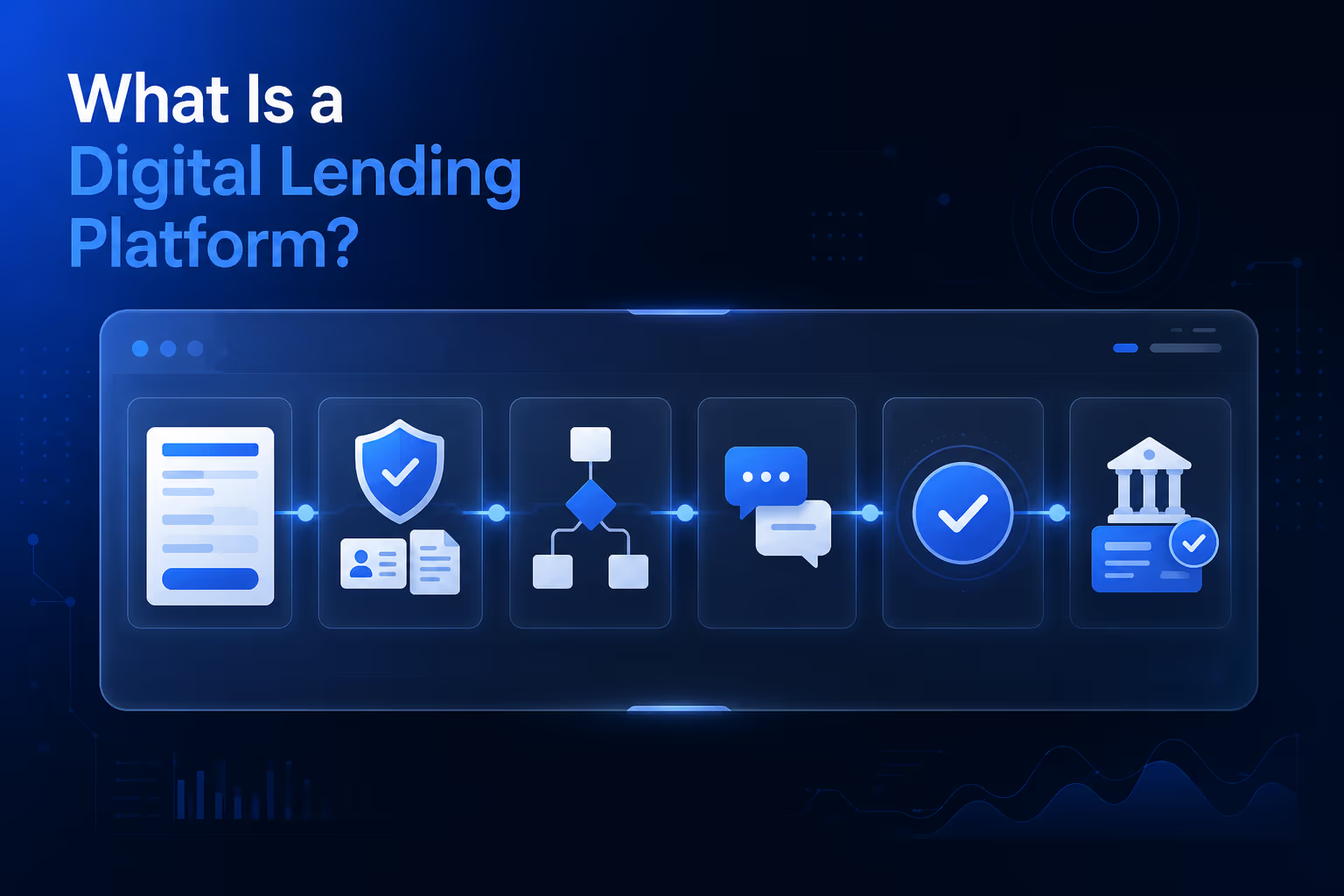
A digital lending platform is a technology system that digitizes and coordinates the lending lifecycle. It can support borrower acquisition, application processing, identity verification, underwriting, approval, documentation, disbursal, and servicing.
Instead of moving information manually between forms, spreadsheets, inboxes, and internal systems, the platform creates a connected workflow. Each completed action can trigger the next appropriate step.
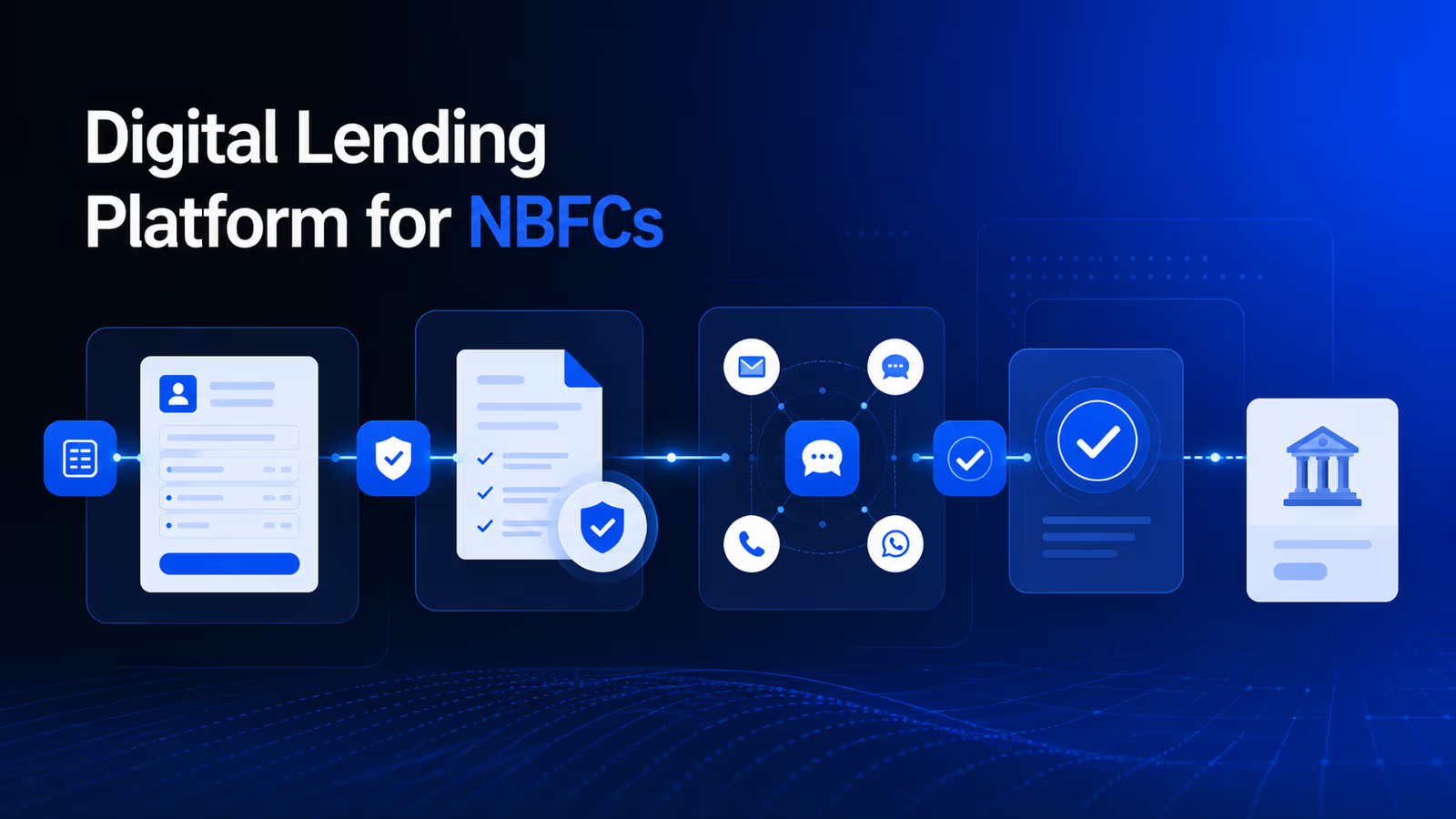
For example, when a borrower submits an application, the platform may:
- Create a borrower profile and record the application.
- Initiate identity and document verification.
- Send confirmation through SMS, email, or WhatsApp.
- Route the case to the appropriate underwriting workflow.
- Update the borrower when the application status changes.
- Trigger the disbursal process after approval and documentation.
A digital lending platform for NBFCs may also integrate with credit bureaus, bank-statement analysis systems, eKYC services, e-signature tools, payment systems, CRM platforms, loan management systems, dialers, and communication channels.
The result is not simply a digital application form. It is an operating layer connecting the borrower-facing journey with the NBFC’s internal lending processes.
Simplify journeys with digital lending platform.
How Does a Digital Lending Platform Work?
The exact workflow differs by loan product, borrower segment, and regulatory requirements. However, most platforms support five broad stages.
At each stage, the platform uses rules, integrations, and status changes to determine what should happen next. A completed KYC check may trigger underwriting. A missing document may trigger a reminder. An approved application may trigger agreement generation.
A digital lending platform automation workflow is strongest when it connects operational progress with borrower communication. Otherwise, the internal process may move digitally while the borrower remains uncertain about what is happening.
Salesforce’s 2025 Financial Services research found that 65% of customers expect AI to accelerate financial transactions, up from 46% in 2023. Faster internal processing must therefore be matched by faster, clearer customer interactions.
Digitize lending with a digital lending platform.
This blog is just the start.
Unlock the power of Callveriq’s AI with a live demo.

How Do NBFCs Automate Borrower Communication?
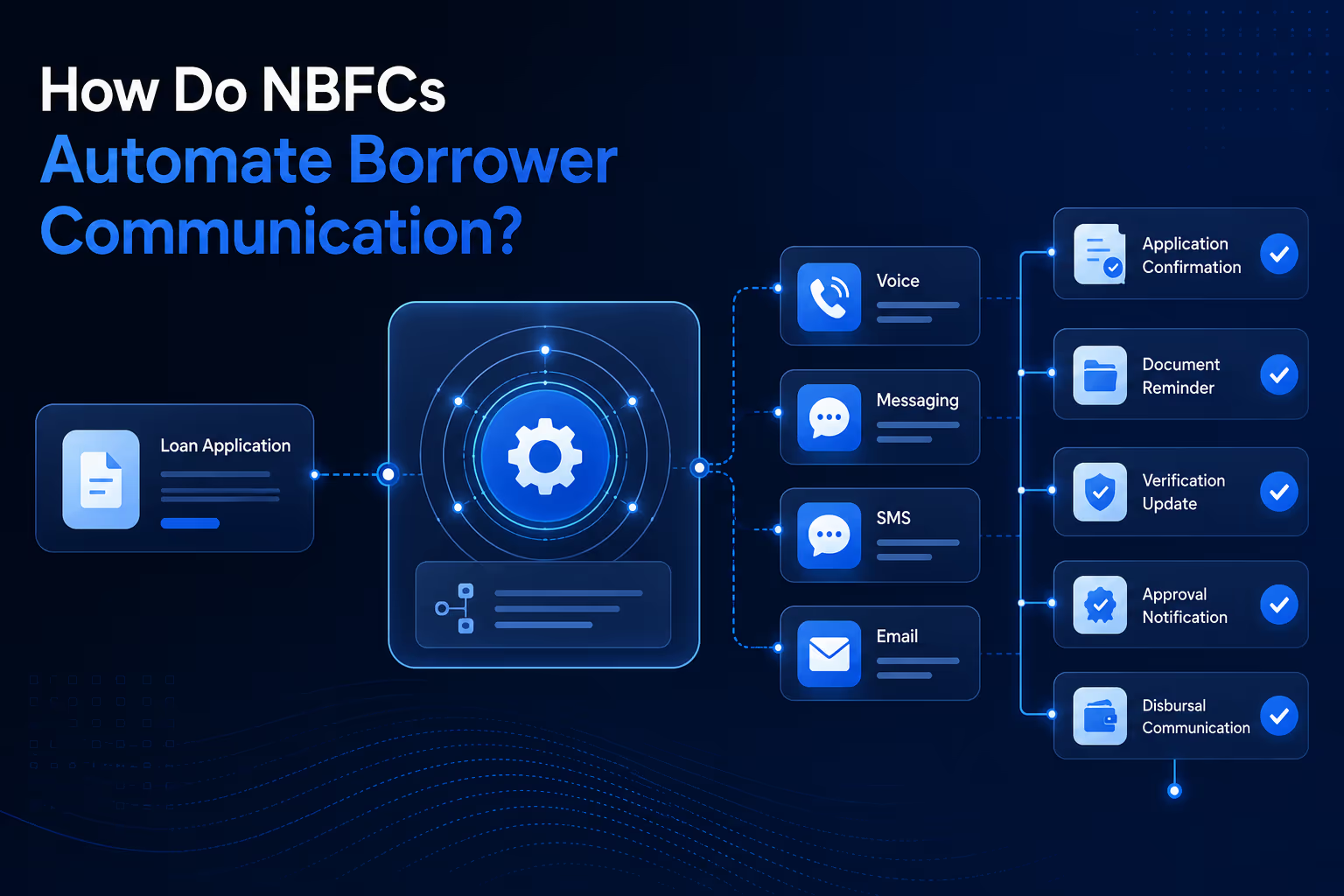
Borrower communication involves more than sending a standard confirmation message. Each application can generate several events requiring a different response, channel, timing, and escalation path. A digital lending platform for borrower communication uses application data and workflow events to trigger relevant outreach.
1. Application Confirmation
The borrower receives immediate confirmation that the application has been recorded. The message can include an application number, expected timeline, document checklist, and next action.
2. Document Collection
When documents are missing, expired, unreadable, or inconsistent, the platform can send a specific request instead of a generic reminder. Follow-ups can continue across channels until the required action is completed.
3. Verification Updates
Borrowers can be informed when KYC or other verification steps are pending. If self-service verification fails, the case can be routed to an employee instead of repeatedly sending the same link.
4. Approval Communication
Once a decision is available, the platform can notify the borrower and explain the next step. Approved applicants may need help understanding the offer, repayment terms, or agreement process.
5. Disbursal Communication
A digital lending platform for loan disbursal can confirm when formalities are completed, when funds are initiated, and where the borrower can access repayment details.
6. Exception Handling
Not every application follows the ideal path. A borrower may abandon the form, upload the wrong document, request a callback, change language, or raise a concern about loan terms. Automation must identify these exceptions and change the follow-up accordingly.
The objective is not to increase the number of messages. It is to make every interaction relevant to the borrower’s current stage.
Automate communication through digital lending platform.
Digital Lending Platform vs Loan Management System
A digital lending platform and a loan management system are related, but they are not interchangeable.
The digital lending platform primarily helps acquire, evaluate, and convert borrowers. The loan management system generally becomes central once the loan is active.
In practice, an NBFC may connect both systems. The digital lending platform passes the approved loan and borrower information to the loan management system. The latter then manages repayment schedules, balances, penalties, restructuring, closures, and servicing.
The distinction matters because implementing a loan management system does not automatically solve application-stage communication gaps. Similarly, a digital origination journey does not replace the controls required to manage a loan after disbursal.
Understand your digital lending platform better.
Where Rule-Based Automation Falls Short
Traditional workflow automation works well when borrower behaviour is predictable. If an application reaches a predefined status, the system sends a predefined message.
Real borrowers do not always behave predictably. One borrower may ask whether a bank statement is mandatory. Another may say they will upload it after work. A third may switch from English to Hindi. Someone else may request a call tomorrow morning. Rule-based systems can record these responses, but they may struggle to interpret intent and decide what should happen next.
Common gaps include:
- Sending repeated reminders after the borrower has already explained the delay.
- Calling borrowers at unsuitable times despite a preferred callback request.
- Treating every abandoned application as equally interested.
- Losing context when the borrower switches from WhatsApp to a phone call.
- Escalating routine questions while overlooking complex objections.
- Continuing follow-ups after the borrower declines the offer.
These gaps make communication feel automated in the least helpful sense. The NBFC may have a digital workflow, but the borrower still experiences repetition and fragmentation.
Gartner predicts that agentic AI could autonomously resolve 80% of common customer service issues by 2029. This does not mean removing people from lending journeys. It shows how automation is moving from static responses toward systems capable of interpreting requests and taking controlled actions.
Strengthen follow-ups with digital lending platform.
How Does AI Improve the Borrower Journey?
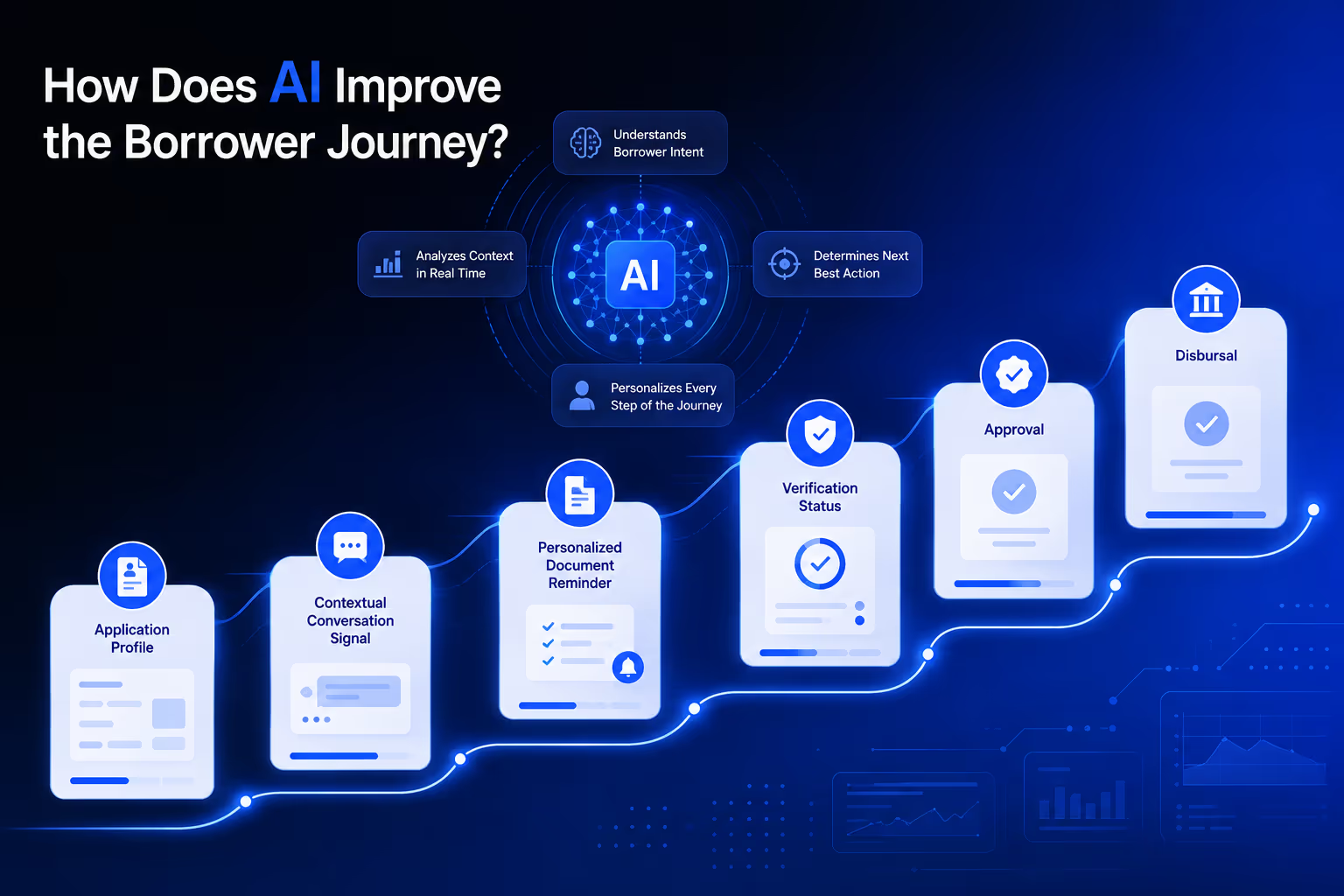
AI adds a decision and conversation layer to digital lending platform automation. It can interpret borrower responses, use application context, and determine the most suitable next action within defined controls.
Immediate, Contextual Responses
An AI agent can answer common questions about eligibility, required documents, application status, processing timelines, and next steps. Responses can reflect the borrower’s actual application stage rather than relying on a generic FAQ.
Personalized Follow-Ups
Instead of sending the same reminder to every applicant, AI can adapt communication based on pending actions, previous conversations, channel engagement, preferred time, and stated intent.
Voice and Messaging Coordination
A borrower who does not answer a call can receive a WhatsApp follow-up containing the relevant next action. If they respond on WhatsApp, the context can be made available during a later phone conversation.
Multilingual Communication
AI voice and messaging systems can communicate in the borrower’s preferred language. This can be particularly useful for NBFCs serving diverse markets where borrowers may understand loan terms better in a regional language.
Intent-Based Prioritization
Borrowers who ask detailed questions, request a callback, or begin document submission may require different follow-ups from those who have stopped engaging. AI can help classify these signals so teams focus on cases requiring human attention.
Controlled Human Handoffs
AI should not independently handle every situation. Complaints, policy exceptions, vulnerable customers, disputed terms, or sensitive decisions may require trained employees. A good system transfers the case with its context so the borrower does not repeat the entire conversation.
McKinsey’s 2025 research on AI in the credit business explains that financial institutions are adopting generative AI across credit workflows but remain on a longer journey toward scaled value. The implication for NBFCs is clear: isolated AI tools are less useful than AI embedded within end-to-end lending processes.
What Responsible Automation Should Include
Lending communication affects financial decisions and involves sensitive personal data. Automation therefore needs governance, not just speed. NBFCs should define which information an AI system may access, what it may communicate, which actions require human approval, and when a conversation must be escalated.
Important controls include consent management, data minimization, access restrictions, audit trails, approved messaging, communication-frequency limits, language accuracy, and human review.
KPMG’s analysis of the RBI’s 2025 FREE-AI Framework highlights principles including trust, fairness, accountability, and sustainability for AI adoption in financial services. Transparency is equally important. Borrowers should know when they are interacting with AI and should have a clear path to human assistance. Automation should help them understand and complete the process, not pressure them into taking a loan.
Build trust through digital lending platform.
What NBFCs Should Measure
The performance of a digital lending platform should not be judged only by how many messages or calls it generates. NBFCs should measure whether communication helps eligible borrowers progress with less effort.
Useful measures include application completion, document-submission time, response rate, approval turnaround time, stage-wise abandonment, successful human handoffs, disbursal conversion, communication opt-outs, and borrower complaints.
Teams should also examine where applications stall. A high number of document reminders may indicate that instructions are unclear. Repeated status questions may indicate inadequate proactive updates. High application volume with low disbursal may point to poor lead quality, confusing eligibility criteria, or delays in underwriting.
The purpose of measurement is not simply to prove that automation works. It is to locate friction and continually improve the journey.
What It Means For Your Business
A digital lending platform gives NBFCs the infrastructure required to move applications from initiation to disbursal with greater speed and consistency. Its real value, however, depends on whether borrowers can understand the process, complete pending actions, receive relevant updates, and reach a person when needed.
Workflow automation can keep applications moving, while AI can make communication more contextual across voice, WhatsApp, SMS, and other channels. The strongest model combines connected systems, responsible AI, clear operational rules, and well-timed human support. For borrowers, that creates a simpler journey. For NBFCs, it reduces the number of eligible applications lost to silence, repetition, and avoidable delays.
Transform lending with digital lending platform.
FAQs
1. How long does implementing a digital lending platform take?
Implementation may take several weeks or months, depending on the lending products, existing systems, integrations, and compliance requirements.
2. Can a digital lending platform support multiple loan products?
Yes. Configurable platforms can support different eligibility rules, documents, workflows, approval structures, and communication journeys for each product.
3. How secure is borrower data on a digital lending platform?
Security depends on encryption, role-based access, authentication, audit logs, data-retention controls, vendor practices, and regulatory compliance.
4. Can smaller NBFCs use a digital lending platform?
Yes. Smaller NBFCs can begin with selected workflows, such as application capture and follow-ups, before expanding to deeper integrations.
5. What integrations should NBFCs prioritize first?
Common priorities include the CRM, eKYC provider, credit bureau, underwriting engine, loan management system, dialer, messaging channels, and payment infrastructure.