

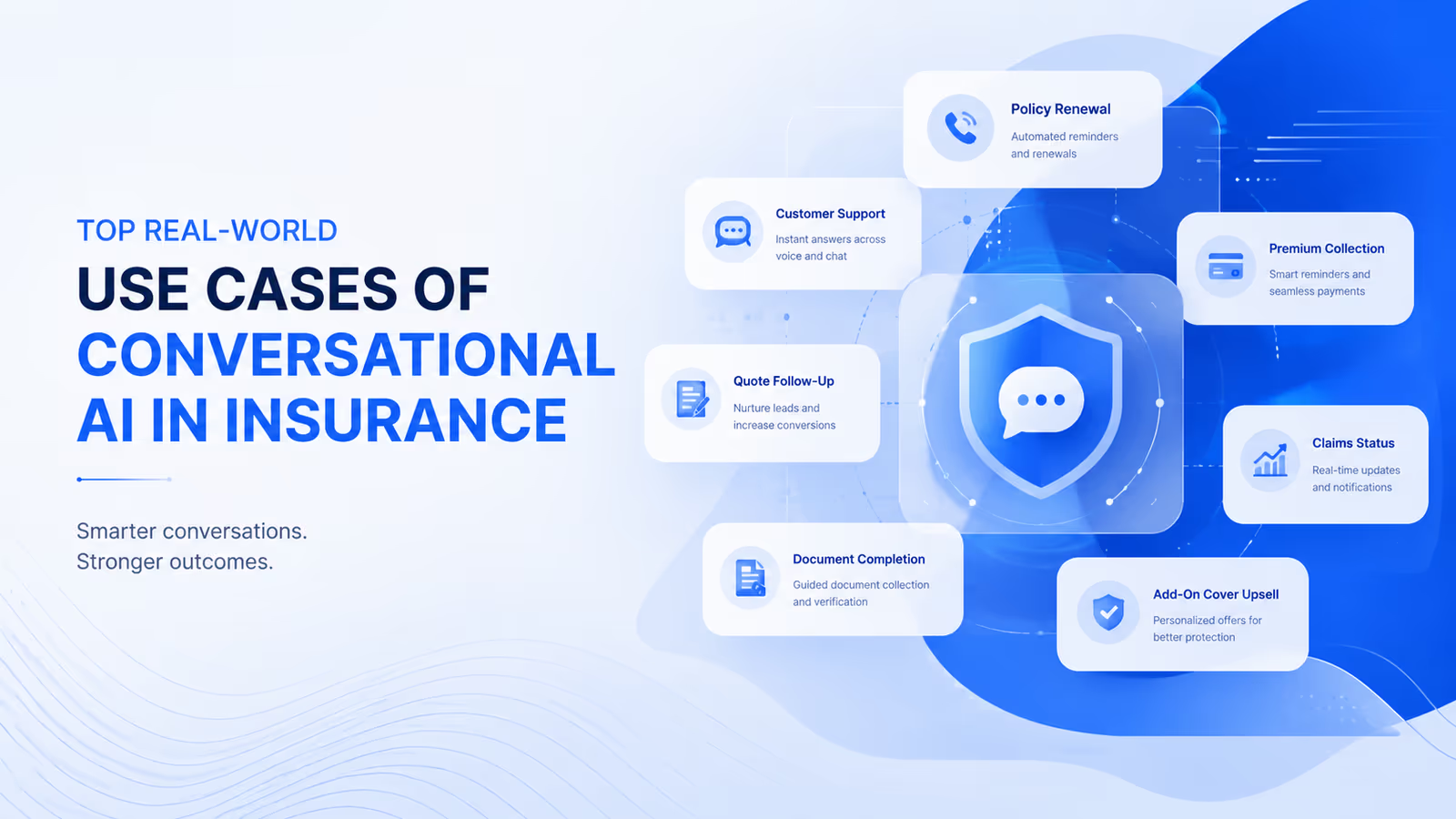
Conversational AI in Insurance is transforming how insurers communicate with policyholders, follow up with prospects, manage claims, collect premiums, and support agents. Instead of relying entirely on contact center teams for repetitive interactions, insurers can use AI-powered voice and chat agents to automate routine conversations while keeping human agents focused on complex cases.
From policy renewal and premium collection to quote follow-ups, claims-status communication, document completion, and add-on cover recommendations, Conversational AI in Insurance helps insurers create faster and more consistent customer journeys.
Key Takeaways
- Conversational AI can automate repetitive insurance conversations across voice and chat.
- Insurance voicebots can handle renewals, premium reminders, quote follow-ups, and claims-status updates.
- Conversational AI for claims processing can guide customers through documentation and status checks.
- AI for insurance agents can provide real-time assistance during customer conversations.
- Automated quality assurance helps insurers monitor compliance and customer experience across interactions.
- Multilingual AI solutions in insurance can make customer support more accessible.
- Callveriq combines voice automation, real-time agent assistance, and automated conversation intelligence for insurance contact centers.
Let’s explore the most impactful Conversational AI in Insurance use cases across the insurance customer journey.
Scale your call center with Callveriq.
Introduction to Conversational AI in Insurance
Insurance involves hundreds of customer interactions throughout the policy lifecycle. A customer may request a quote, submit documents, purchase a policy, make premium payments, ask about coverage, renew a policy, file a claim, or request an update on an existing claim.
Traditionally, many of these interactions require agents to manually answer calls, send reminders, verify information, and update systems. As policyholder expectations for fast and convenient service increase, insurers need a more scalable approach.
Conversational AI in Insurance enables AI-powered systems to understand customer questions and respond through natural conversations over voice or chat. These systems can retrieve information, follow predefined workflows, trigger actions, and escalate complex requests to human agents.
For an AI insurance company, this creates opportunities to automate customer support while improving agent productivity. The most valuable applications are not simply generic chatbots. They are connected to specific insurance journeys such as:
- Policy renewal reminders
- Premium payment collection
- Quote follow-up
- Claims-status communication
- Document collection and completion
- Add-on cover recommendations
- Policy and coverage queries
- Lead qualification
- Customer notifications
- Agent assistance and quality assurance
This makes Conversational AI in Insurance an operational technology rather than just another customer service channel.
Supercharge agent decisions with Callveriq.
How Does Conversational AI in Insurance Scale Customer Support?
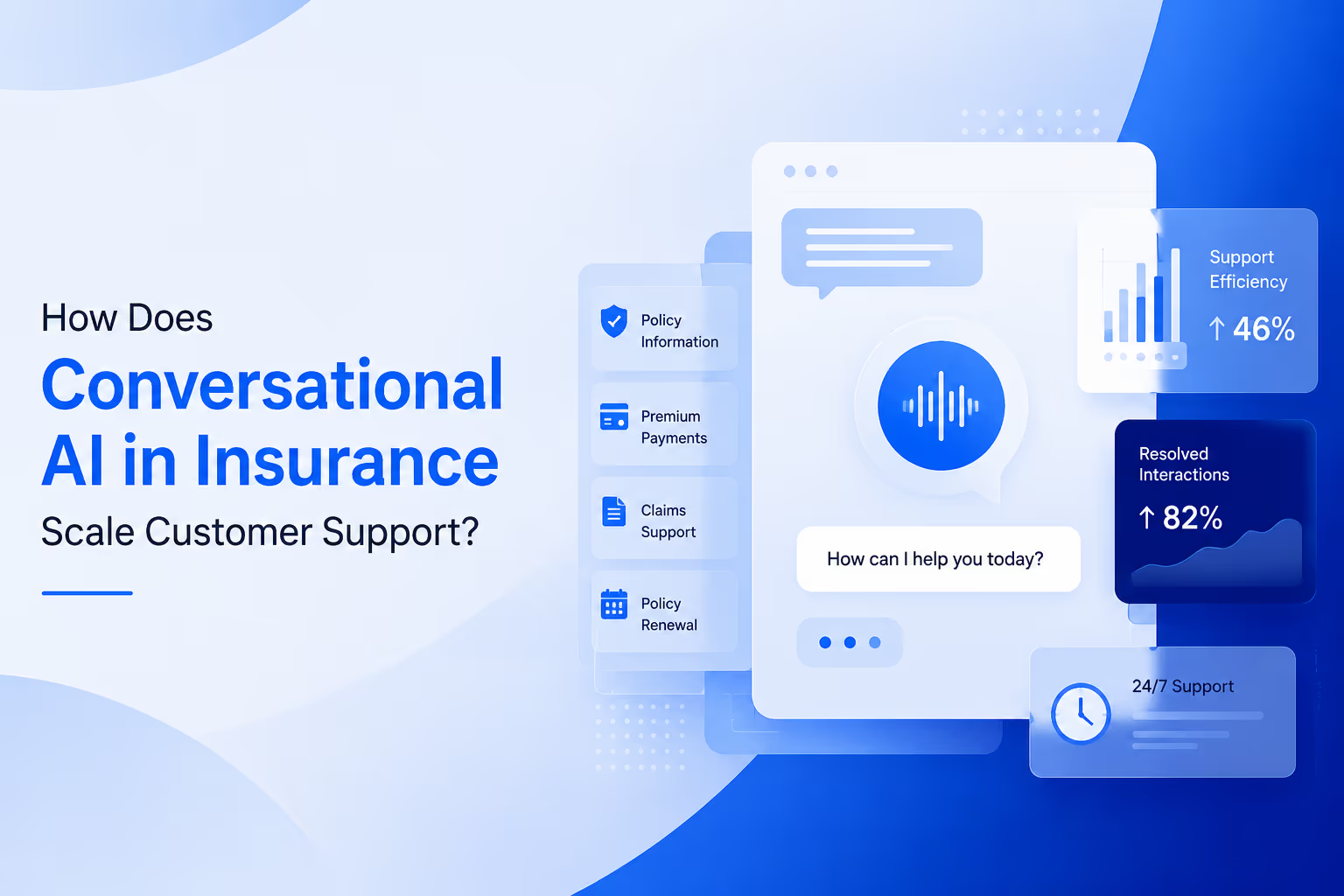
Insurance customer support involves a large volume of repetitive questions. Policyholders frequently contact insurers to check coverage, ask about premiums, understand renewal dates, request claim updates, or clarify documentation requirements.
Conversational AI customer support insurance solutions can automate these conversations and provide customers with immediate responses. Conversational AI can handle routine questions about:
- Policy coverage
- Premium amounts
- Renewal dates
- Payment status
- Policy documents
- Claim requirements
- Add-on covers
- Eligibility and benefits
- Next steps in an insurance process
Instead of waiting for an agent, customers can interact with an AI voicebot or chatbot and receive information immediately. For insurers, this reduces repetitive contact center workload and allows human agents to spend more time on complex or sensitive conversations.
Providing Personalized Insurance Assistance
Modern AI solutions in insurance can use customer and policy information to make conversations more relevant.
For example, when a customer contacts an insurer about an expiring policy, the AI agent can identify the policy, confirm the renewal date, explain available options, and guide the customer toward renewal. Similarly, an AI agent can identify customers who may be eligible for additional coverage and initiate an appropriate conversation. This makes Conversational AI in Insurance useful not only for customer support but also for retention and revenue generation.
This blog is just the start.
Unlock the power of Callveriq’s AI with a live demo.

10 Use Cases of Conversational AI in Insurance
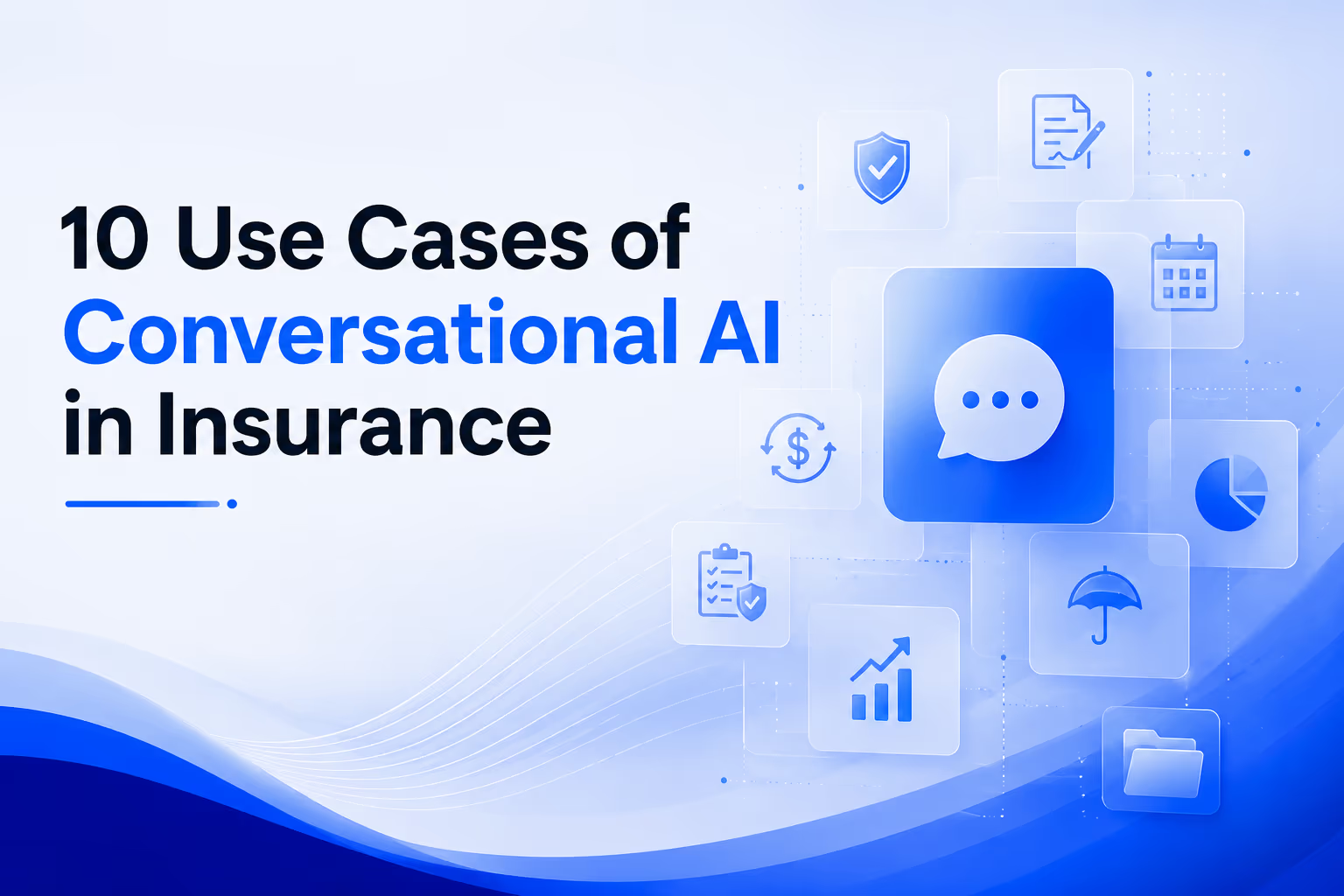
The most valuable Conversational AI in Insurance applications are connected to specific customer journeys. Rather than simply answering questions, AI can initiate conversations, collect information, trigger workflows, and hand off customers when human intervention is required.
1. Automated Policy Renewal Conversations
Policy renewal is one of the clearest applications of Conversational AI in Insurance. Insurers need to contact policyholders before policies expire, but manual renewal calls can consume significant agent capacity. An AI voicebot can automatically contact customers, explain the renewal requirement, answer common questions, and guide them toward the next step.
A renewal conversation can include:
- Policy expiration reminders
- Premium information
- Coverage confirmation
- Renewal eligibility
- Payment instructions
- Renewal objections
- Escalation to an agent
For example, an AI insurance voicebot can call a policyholder several days before expiration and ask whether they want to continue their coverage. If the customer agrees, the system can guide them through the renewal process or transfer them to an agent.
This makes Voicebots in insurance industry operations particularly valuable for high-volume outbound campaigns.
2. Premium Payment Reminders and Collection
Missed premium payments can lead to policy lapses, additional follow-ups, and revenue leakage. Conversational AI in Insurance can automate payment reminders through outbound voice calls and messaging channels. Instead of sending a generic notification, an AI agent can have a two-way conversation with the policyholder.
For example, the AI can:
- Notify the customer about an upcoming or overdue premium.
- Confirm whether they intend to make the payment.
- Explain available payment options.
- Address common questions.
- Record the customer's response.
- Escalate payment-related issues when necessary.
This makes Conversational AI customer support insurance workflows more proactive and reduces the manual effort required for premium collection. AI-powered payment conversations can also be personalized using policy information, payment history, and customer preferences.
3. Quote Follow-Up and Lead Qualification
Generating an insurance quote does not guarantee a sale. Many prospects request quotes but do not immediately purchase a policy.
This creates a major opportunity for AI for insurance agents and AI-powered outbound conversations. A conversational AI agent can follow up with prospects after they receive a quote, understand their intent, answer basic questions, and identify purchase readiness.
For example: “Are you still considering the policy you requested a quote for?” Based on the response, the AI can classify the prospect as:
- Ready to purchase
- Needs more information
- Comparing policies
- Not interested
- Wants an agent callback
High-intent prospects can then be routed to sales agents. This helps insurers improve response speed while allowing human teams to focus on qualified opportunities.
4. Claims-Status Communication
Customers often contact insurers simply to ask, “What is the status of my claim?”
These calls can be repetitive for contact center teams, especially when claims require multiple processing stages. Conversational AI for claims processing can automate claim-status communication by connecting the conversational layer with relevant claims information.
An AI agent can:
- Verify the customer's identity.
- Locate the relevant claim.
- Explain its current status.
- Tell the customer whether documents are pending.
- Provide the next expected step.
- Escalate exceptions to a human agent.
This gives policyholders faster access to information without requiring an agent for every status inquiry. For insurers, Conversational AI in Insurance reduces repetitive claim-related calls while improving transparency throughout the claims journey.
5. Automated Document Collection and Completion
Missing or incomplete documents can delay underwriting, policy issuance, and claims processing.
AI solutions in insurance can proactively contact customers when documents are required and guide them through the submission process.
For example, an AI voicebot can tell a claimant which documents are missing and explain how to submit them. A conversational chatbot can then provide a secure path for uploading the required files.
This use case is particularly valuable for:
- Claims documentation
- KYC completion
- Policy issuance
- Underwriting
- Address or identity verification
- Reimbursement documentation
Instead of making customers repeatedly contact support teams, Conversational AI in Insurance can proactively move the workflow forward.
6. Add-On Cover and Cross-Sell Conversations
Insurance customers may qualify for additional coverage based on their existing policies, life stage, vehicle, health needs, or other factors. Conversational AI can initiate personalized conversations around relevant add-on covers without requiring agents to manually contact every eligible customer.
For example, an AI insurance agent can explain an available add-on, answer basic questions, and determine whether the customer wants to speak with a human advisor. This creates a scalable approach to cross-selling while keeping conversations contextual. AI for insurance agents can also provide agents with recommended offers during live calls, helping them identify relevant upsell opportunities.
7. Policy and Coverage Self-Service
Policyholders frequently need quick answers about their existing coverage. Conversational AI can provide self-service support for questions such as:
- “When does my policy expire?”
- “What does my policy cover?”
- “How much is my premium?”
- “What documents do I need?”
- “Can I update my contact information?”
- “How do I add a beneficiary?”
- “What is excluded from my coverage?”
Connected AI solutions in insurance can retrieve relevant policy information and deliver answers through natural conversations. This reduces dependence on agents for simple requests and gives customers greater control over their policies.
8. Multilingual Insurance Support
Insurance companies often serve customers who communicate in different languages. Language barriers can make complex insurance terminology even harder to understand. Voicebots in insurance industry workflows can help insurers provide multilingual customer support without creating separate manual teams for every language.
A multilingual conversational AI agent can help with:
- Policy inquiries
- Renewal reminders
- Premium collection
- Claim-status updates
- Quote follow-ups
- Document requirements
For insurers operating across geographically diverse markets, multilingual Conversational AI in Insurance can improve accessibility while maintaining consistent workflows.
9. Proactive Policyholder Notifications
Insurance communication should not always begin when a customer calls. Conversational AI can proactively notify policyholders about important events such as:
- Upcoming policy renewals
- Premium due dates
- Missed payments
- Claim-status changes
- Missing documents
- Policy changes
- New coverage options
- Required verification
The advantage is that the interaction can be two-way. Instead of simply receiving a notification, the customer can respond, ask a question, confirm an action, or request an agent. This turns Conversational AI customer support insurance from a reactive function into a proactive engagement channel.
10. Agent Assistance and Automated Quality Assurance
Not every insurance conversation should be automated. Complex claims, sensitive customer issues, disputes, and high-value sales conversations often require human agents. This is where AI for insurance agents becomes valuable.
Callveriq’s real-time agent assist can listen to conversations and provide contextual support while an agent is speaking with a policyholder.
It can help agents with:
- Relevant policy information
- Suggested responses
- Compliance reminders
- Customer context
- Next-best actions
- Escalation signals
This allows insurers to combine human expertise with AI-powered intelligence.
Callveriq also uses conversational intelligence for automated quality assurance. Instead of manually reviewing a small sample of calls, insurers can analyze conversations at scale to identify compliance gaps, customer experience issues, and coaching opportunities. Together, agent assist and automated QA extend the impact of Conversational AI in Insurance beyond customer-facing automation.
Automate insurance journeys with Callveriq.
Callveriq for Conversational AI in Insurance
Insurance contact centers need more than a voicebot that answers calls. They need an intelligent system that can automate customer journeys, assist human agents, and provide visibility into every conversation.
Callveriq brings these capabilities together for insurance teams.
AI Voicebots for Insurance Workflows
Callveriq’s AI voicebots can automate high-volume insurance conversations across inbound and outbound workflows. Common applications include:
- Policy renewal
- Premium payment reminders
- Quote follow-up
- Lead qualification
- Claim-status communication
- Document collection
- Customer notifications
- Add-on cover conversations
These Voicebots in insurance industry workflows can handle repetitive interactions while escalating complex conversations to human agents.
Real-Time Agent Assist
Callveriq’s real-time agent assist supports agents while conversations are happening. The system can surface relevant information, contextual suggestions, and compliance prompts without requiring agents to search through multiple systems during a call.
This is particularly useful for insurance conversations where agents need to navigate detailed policies, regulatory requirements, and customer-specific information.
With AI for insurance agents, insurers can improve consistency while helping agents resolve customer queries more efficiently.
Automated Quality Assurance
Insurance companies need consistent monitoring of customer conversations for compliance, service quality, and process adherence.
Callveriq’s automated quality assurance analyzes customer conversations at scale and identifies important patterns across calls. Teams can use conversation intelligence to identify:
- Compliance violations
- Process deviations
- Customer objections
- Agent performance gaps
- Recurring customer complaints
- Coaching opportunities
This allows insurance leaders to move from sample-based manual monitoring toward broader conversation coverage.
Connecting AI to the Insurance Customer Journey
The strongest AI solutions in insurance are connected to business systems rather than operating as isolated conversational interfaces.
By connecting conversational workflows with relevant customer and operational data, insurers can create experiences where AI can understand context and take appropriate action. That is what makes Conversational AI in Insurance valuable across the entire customer lifecycle, from the first quote to renewal and claims support.
Power smarter insurance operations with Callveriq.
How Conversational AI Improves Insurance Operations
The value of Conversational AI in Insurance extends beyond reducing call volumes.
1. Faster Customer Responses
AI agents can respond immediately to routine requests, reducing customer wait times and unnecessary transfers.
2. Lower Contact Center Workload
Automating repetitive conversations allows human agents to focus on complex cases, high-value customers, and situations that require empathy or judgment.
3. More Consistent Customer Experiences
AI follows defined workflows consistently, helping insurers standardize customer communication across large volumes of interactions.
4. Better Agent Productivity
AI for insurance agents provides relevant information and recommendations during live conversations, reducing the need to search through multiple systems.
5. Greater Conversation Visibility
Automated conversation analysis allows insurers to identify trends and issues across customer interactions rather than relying only on manually reviewed calls.
6. Scalable Customer Engagement
Whether an insurer needs to contact hundreds or thousands of policyholders about renewals, payments, or documents, Conversational AI in Insurance provides a scalable communication layer.
The Future of Conversational AI in Insurance
The next stage of insurance automation will move beyond standalone chatbots and voicebots toward AI-powered customer journeys.
A policyholder will not simply ask an AI agent a question. The AI will understand the customer's context, identify the relevant workflow, retrieve information, take the appropriate action, and escalate the interaction when human expertise is needed.
This is particularly important for journeys such as policy renewal, premium collection, quote follow-up, claims-status communication, document completion, and add-on cover recommendations. At the same time, AI for insurance agents will continue to augment human teams by providing real-time information, recommendations, and compliance support.
For insurers, the opportunity is not to replace every human interaction. It is to determine which conversations should be automated, which should be augmented, and which should remain human-led. Conversational AI in Insurance provides the technology layer to make that distinction at scale.
Insurance companies that combine AI voicebots, conversational AI customer support, agent assistance, and automated quality assurance can build faster, more scalable, and more consistent customer experiences.
Build the future with Callveriq. Book your demo today.
FAQs
1. How long does it take to deploy conversational AI across insurance operations?
Deployment depends on the workflow, integrations, data requirements, and level of customization. A focused use case such as renewal reminders or claims-status calls can typically be launched faster than a multi-workflow implementation.
2. What data privacy regulations affect conversational AI insurance deployments?
Insurers need to consider applicable privacy, security, consent, data retention, and data residency requirements. The exact requirements depend on the countries and types of customer data being processed.
3. Which legacy insurance systems integrate best with conversational AI platforms?
Conversational AI can integrate with policy administration systems, CRM platforms, claims systems, billing platforms, and other insurance systems when suitable APIs, webhooks, or middleware are available.
4. How do insurers measure ROI from conversational AI investments?
Common metrics include automation rate, cost per interaction, average handle time, customer satisfaction, first-contact resolution, lead conversion, renewal rates, collection rates, and agent productivity.
5. What technical expertise is required to manage conversational AI in insurance?
Implementation typically requires integration, AI configuration, conversation design, analytics, security, and compliance expertise. Modern platforms can reduce the amount of specialized technical work required from internal insurance teams.