

Most customer service leaders are not struggling due to a lack of technology in conversational AI for customer service. They are struggling because support costs continue to rise while customer expectations increase at an even faster pace. Contact volumes grow every quarter, agents spend significant time resolving repetitive queries, and quality teams can only review a fraction of interactions. At the same time, leadership is under pressure to improve CSAT without increasing headcount.
The buying conversation around conversational AI for customer service has shifted significantly. What was once an experimental discussion is now focused on measurable business outcomes. Buyers are no longer evaluating AI on capability alone, but on how quickly it can deliver ROI across cost reduction, operational efficiency, and customer experience improvement.
This shift has made conversational AI benchmarks and customer service AI ROI metrics central to every enterprise evaluation.
Explore real conversational AI outcomes with Callveriq.
Why ROI Has Become the Primary Buying Metric for Conversational AI
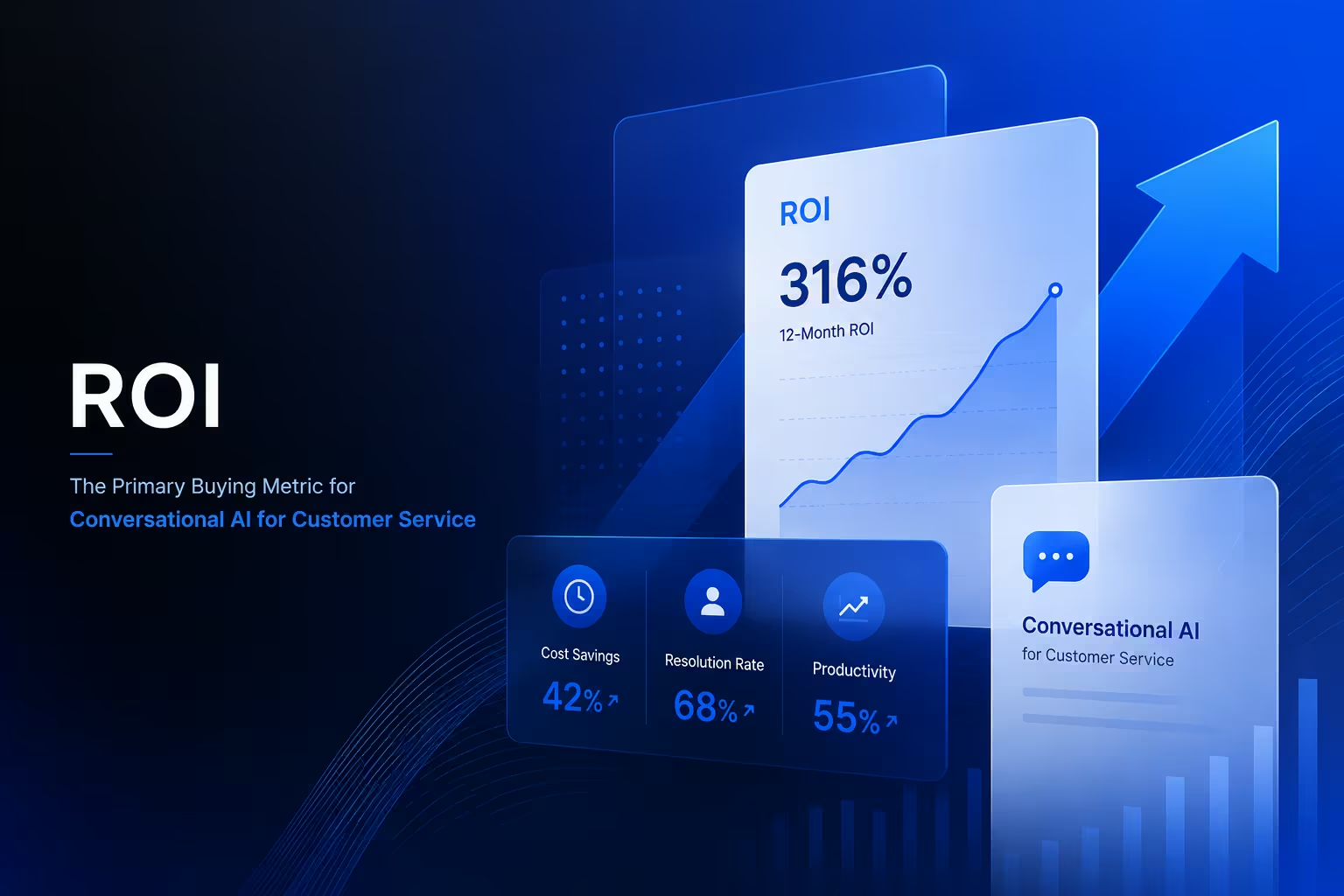
Three years ago, most AI projects were justified as innovation initiatives. Today, customer service leaders are expected to demonstrate measurable business outcomes.
The buying conversation has shifted from:
"Can AI automate customer service?" to "How quickly can AI improve operational performance?"
Modern conversational AI deployments typically impact four core business outcomes:
| Business Objective | Expected Impact Area |
|---|---|
| Reduce service costs | Lower cost per contact |
| Improve customer experience | Higher CSAT and NPS |
| Increase agent productivity | Faster resolution times |
| Improve operational efficiency | Higher containment and automation rates |
Research from McKinsey estimates that generative AI can create productivity improvements equivalent to 30%–45% of customer care function costs when deployed effectively across service operations.
The key takeaway is simple:
ROI is no longer generated from automation alone. The highest-performing deployments improve both customer outcomes and operational efficiency simultaneously.
Track the metrics that prove customer service ROI with Callveriq
What ROI Conversational AI Actually Delivers?
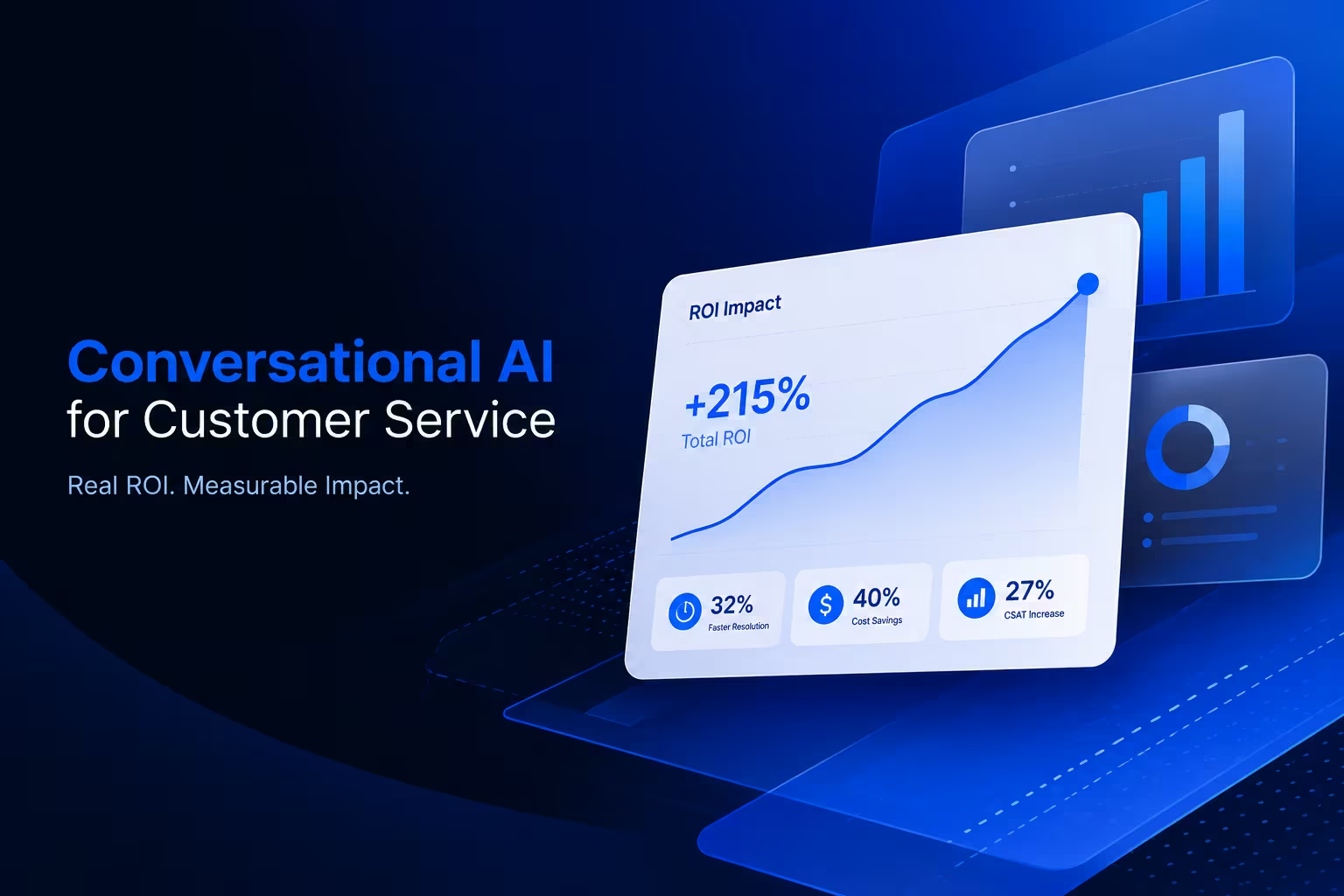
Most enterprises evaluating conversational AI for customer service are not asking whether it works. They are asking what level of measurable business impact they should realistically expect across cost, efficiency, and customer experience.
Across large-scale deployments, ROI typically shows up in four consistent areas:
- Lower cost per contact through automation of repetitive queries
- Higher agent productivity by reducing manual workload
- Improved customer experience through faster and more consistent resolutions
- Better operational efficiency through higher containment and resolution rates
Independent industry research, including McKinsey analysis of customer care transformation, shows that advanced AI deployments can unlock productivity improvements equivalent to 30–45% of customer care function costs when implemented at scale.
However, ROI does not come from automation alone. The strongest-performing deployments combine automation with workflow redesign, ensuring AI improves both front-line resolution and back-end operational efficiency.
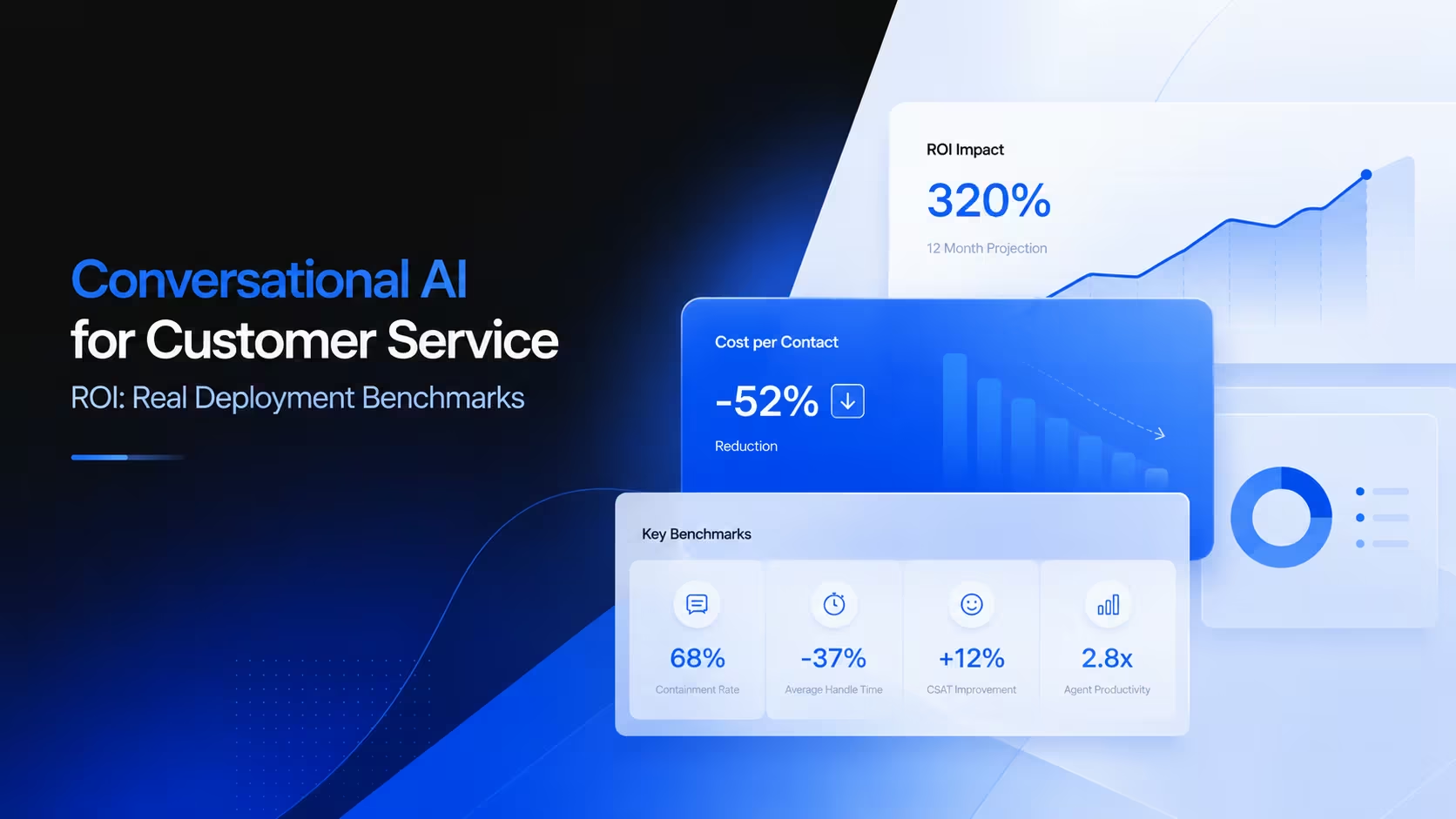
As a result, enterprise ROI is not a single metric. It is a combined outcome across cost reduction, productivity gains, and customer experience improvement, measured over a 6–12 month operating window.
Customer Service AI ROI Formula
When evaluating customer service AI ROI, organizations should look beyond simple automation metrics and assess the broader business impact. The most successful conversational AI deployments generate value across multiple areas of the customer service function. Labor savings come from reducing the need to scale support teams alongside rising contact volumes. Productivity gains enable agents to handle more customer interactions without compromising quality. Improved customer experiences can reduce churn, creating a measurable retention impact over time. AI also contributes to quality improvements by minimizing escalations, reducing rework, and ensuring more consistent service delivery. Additionally, faster issue resolution helps protect revenue by preventing customer dissatisfaction and improving overall brand loyalty.
Key areas to measure include:
- Reduced staffing and operational costs
- Increased agent productivity and efficiency
- Lower customer churn and higher retention rates
- Fewer escalations, transfers, and repeat contacts
- Faster issue resolution and improved customer satisfaction
- Greater revenue protection through better service experiences
A practical ROI calculation often looks like:
ROI= ((Annual AI Benefits - Annual AI Costs) / Annual AI Costs) * 100
The strongest business cases combine operational savings with customer experience improvements.
Prove customer service ROI with the right benchmarks.
This blog is just the start.
Unlock the power of Callveriq’s AI with a live demo.

Realistic CSAT Improvements From Conversational AI
Customer satisfaction remains one of the most closely watched AI customer service metrics. Executives often worry that automation will damage customer experience. The opposite is increasingly true.
When conversational AI is deployed correctly, customers benefit from:
- Instant responses
- 24/7 availability
- Consistent service quality
- Faster issue resolution
- Reduced wait times
Typical CSAT Benchmarks
| Deployment Stage | Expected CSAT Improvement |
|---|---|
| Early Deployment | 2–5% |
| Mature Deployment | 5–10% |
| Optimized Deployment | 10–15% |
Recent field research involving AI-assisted customer support operations found improvements in customer ratings and reductions in dissatisfaction rates when AI was used to support service agents.
However, there is an important caveat. Organizations that deploy AI without proper workflow design often fail to improve customer satisfaction despite automation gains.
The highest-performing teams focus on:
Customer Service Lifecycle With AI
Customer Query
↓
Intent Detection
↓
Knowledge Retrieval
↓
AI Resolution
↓
Confidence Validation
↓
Human Escalation (if needed)
↓
Resolution
↓
Feedback Collection
↓
Continuous Learning
This hybrid approach protects customer experience while maximizing automation.
Turn conversations into CSAT gains with Callveriq.
Conversational AI ROI by Industry
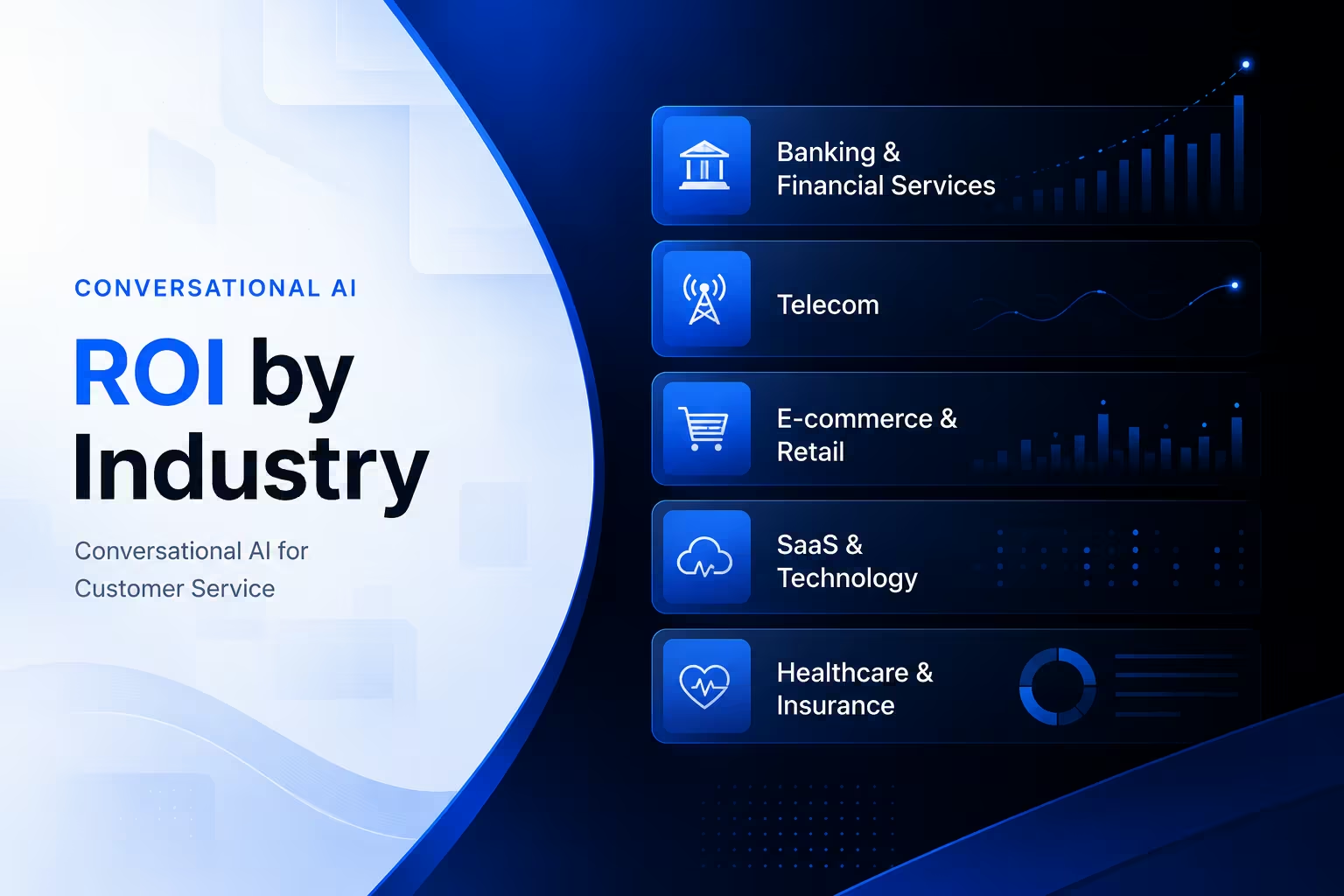
Conversational AI for customer service delivers different ROI profiles depending on industry structure, contact volume, and query complexity. While overall benchmarks remain consistent, the drivers of value vary significantly across sectors.
Understanding these differences helps enterprises set more realistic expectations and identify the fastest ROI opportunities within their own operating model.
How Much Does Conversational AI Reduce Cost Per Contact?
Cost-per-contact is often the fastest path to measurable ROI. Most contact centers spend between 60% and 80% of their operating budget on labor.
Even modest automation can create substantial savings.
Cost Per Contact Reduction Benchmarks
| Service Model | Typical Reduction |
|---|---|
| AI Self-Service | 40–80% |
| AI Agent Assist | 15–30% |
| AI + Human Hybrid | 20–50% |
McKinsey estimates that generative AI could unlock productivity gains equivalent to 30%–45% of current customer care function costs through improved self-service, agent assistance, and workflow automation.
Cost reduction occurs through several mechanisms:
The reduction in cost per contact comes from several operational improvements that conversational AI introduces across the customer service workflow. Instead of relying solely on agents to handle every inquiry, AI automates repetitive interactions, streamlines customer routing, and helps resolve issues faster. As a result, support teams can manage higher volumes without proportionally increasing headcount, leading to significant efficiency gains and lower service costs.
Key cost-saving drivers include:
- Automated resolutions that reduce the number of interactions requiring human agents.
- Faster handling times that improve agent productivity and increase contacts handled per hour.
- Better routing that directs customers to the right resource immediately, reducing transfers.
- Lower escalation rates that minimize the need for supervisor involvement.
- Reduced rework and repeat contacts through more accurate and consistent resolutions.
Organizations often discover that reducing cost-per-contact becomes easier once they identify high-volume, repetitive customer journeys suitable for automation.
Examples include:
- Order status requests
- Payment inquiries
- Password resets
- Appointment scheduling
- Basic troubleshooting
These interactions frequently account for a significant percentage of inbound contact volume.
Scale business support efficiently with Callveriq.
How Long Does It Take to See ROI From Conversational AI?
One of the biggest concerns during procurement is time-to-value.
The reality is that conversational AI ROI does not require years. Most deployments follow a predictable timeline.
One of the biggest concerns during AI vendor evaluation is how quickly the investment will start delivering measurable returns. While timelines vary based on deployment scope and operational complexity, most conversational AI implementations follow a predictable path. Organizations typically begin by identifying high-volume customer journeys that are suitable for automation, then launch initial use cases, optimize performance, and gradually expand coverage across additional support workflows. As automation rates, containment rates, and agent productivity improve, the financial impact becomes increasingly visible.
A typical conversational AI ROI journey looks like this:
- Discovery (Weeks 1–4): Identify customer journeys, support bottlenecks, and automation opportunities.
- Deployment (Months 1–2): Launch initial conversational AI workflows and begin handling live customer interactions.
- Optimization (Months 2–4): Improve containment rates, refine AI performance, and reduce escalation volumes.
- Expansion (Months 4–6): Extend AI capabilities to additional customer service use cases and channels.
- ROI Realization (Months 6–12): Achieve measurable business outcomes through lower support costs, improved customer satisfaction, and increased operational efficiency.
What High Performers Do Differently
Organizations that achieve faster ROI usually:
- Start with repetitive, high-volume interactions.
- Deploy AI alongside human agents.
- Measure performance continuously.
- Optimize workflows using conversation intelligence.
- Expand based on proven outcomes.
The biggest implementation mistake is attempting to automate every interaction immediately. Successful teams focus on high-confidence use cases first and expand incrementally.
Realize customer service ROI faster with Callveriq.
Conversational AI Benchmarks That Matter During Vendor Evaluation
Many AI vendors highlight chatbot accuracy. Buyers should focus on business metrics instead.
In vendor evaluations, the real difference between platforms becomes visible only when performance is measured against business outcomes rather than model-level accuracy. Metrics like containment rate, cost per contact, and time to ROI directly reflect how well the AI improves operational efficiency and customer experience at scale, making them far more reliable indicators of long-term value.
Conversational AI Benchmarks Buyers Should Request
| Benchmark | Why It Matters |
|---|---|
| Containment Rate | Measures automation success |
| Cost Per Contact | Direct ROI indicator |
| CSAT Improvement | Customer impact |
| First Contact Resolution | Operational effectiveness |
| Average Handle Time | Agent productivity |
| Escalation Rate | AI effectiveness |
| Resolution Rate | Business outcome measurement |
| Time To ROI | Investment justification |
These benchmarks provide a much clearer view of expected business impact than generic AI performance statistics.
The Real Impact on Customer Service ROI
Conversational AI is no longer a future-facing experiment; it is now a measurable performance lever for customer service teams. The strongest deployments are already showing clear gains in cost efficiency, faster resolution, and improved customer satisfaction, all tied directly to operational metrics executives care about.
What is changing now is the maturity of deployments. Organizations are moving away from isolated chatbot pilots and toward integrated AI systems that sit across voice, chat, and digital channels. This shift allows customer service teams to connect intent detection, knowledge retrieval, and resolution workflows in real time, making performance improvements more consistent and easier to scale across the entire support operation.
For leaders evaluating investment today, the differentiator is not whether AI works, but how quickly it can be deployed to deliver consistent, scalable business outcomes across the service lifecycle.
Book your demo to transform customer service with Callveriq.
FAQs
1. What industries benefit most from conversational AI in customer service?
Industries with high-volume, repetitive customer interactions such as banking, telecom, e-commerce, and SaaS see the fastest gains. These environments allow AI to automate a large share of inbound queries effectively.
2. Does conversational AI require replacing existing CRM or contact center systems?
No, most deployments integrate with existing systems like CRM and CCaaS platforms. AI layers on top to enhance automation, routing, and agent assistance without full system replacement.
3. How does conversational AI handle multilingual customer support?
Modern AI systems use real-time language detection and translation models to support multilingual conversations. This allows enterprises to scale global support without hiring separate language-specific teams.
4. What level of data is required to train conversational AI effectively?
Most enterprise-grade systems rely on historical chat, email, and call transcripts for training. Even limited datasets can be augmented using pre-trained models and domain-specific fine-tuning.
5. How is conversational AI different from traditional chatbots?
Traditional chatbots follow rigid rule-based flows, while conversational AI understands intent and context dynamically. This enables more natural, flexible, and resolution-oriented customer interactions.