

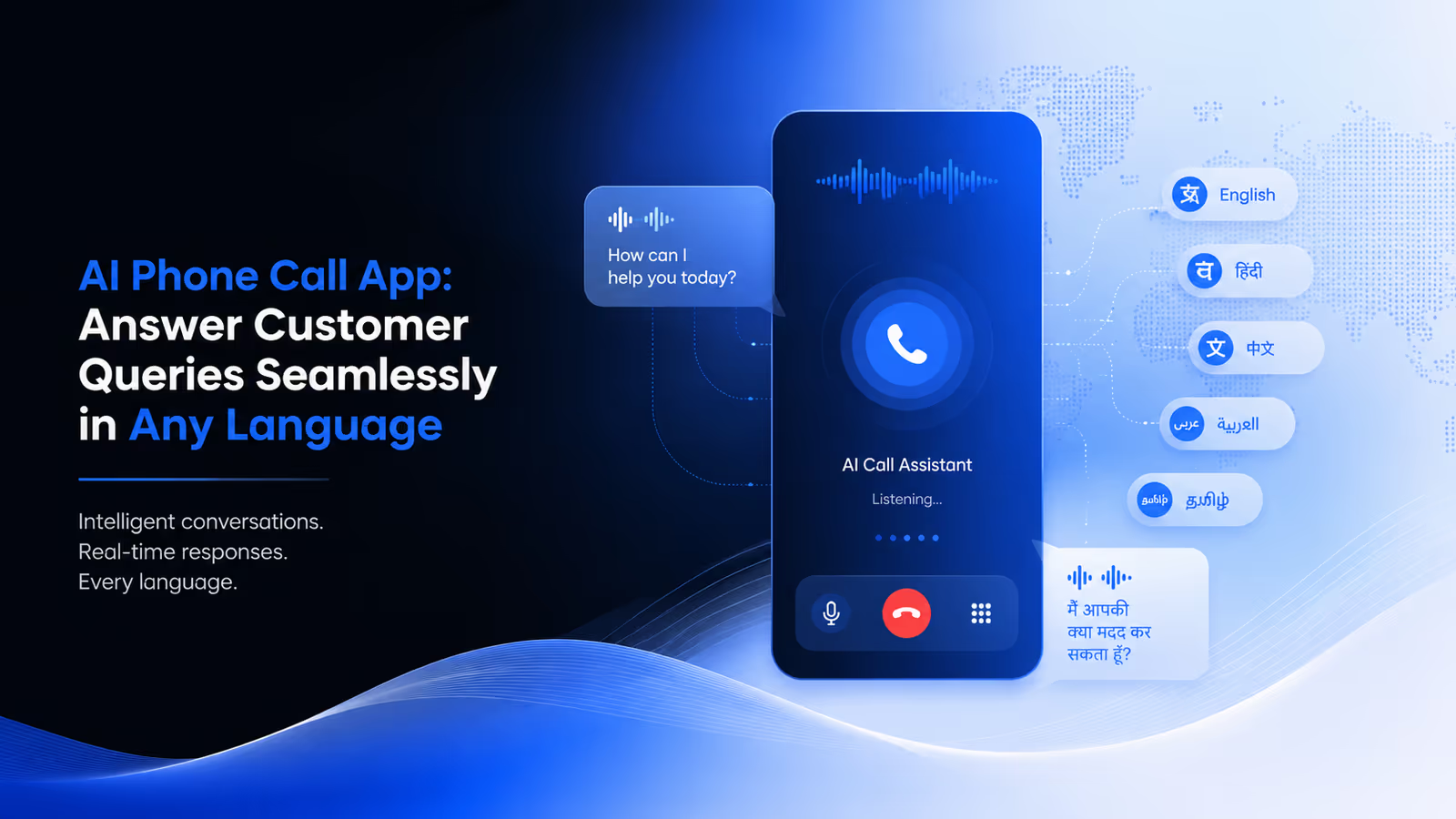
Call centers often struggle to provide customers with quick, efficient, and multilingual support. Language barriers, high call volumes, and inconsistent service can leave customers dissatisfied and call centers overwhelmed. To solve these issues, businesses are turning to AI phone call assistants, an innovative solution transforming customer service.
An AI phone call assistant is a technology that automates customer calls using artificial intelligence. It handles queries, resolves issues, and escalates complex cases when needed. With features like natural language processing and voice recognition, these assistants deliver 24/7 support in multiple languages, ensuring seamless and human-like conversations.
This blog will explore how AI phone call assistants can enhance customer service, save costs, and transform call center operations. Let’s dive in!
Boost CSAT with an AI phone call assistant.
What is an AI Phone Call Assistant?
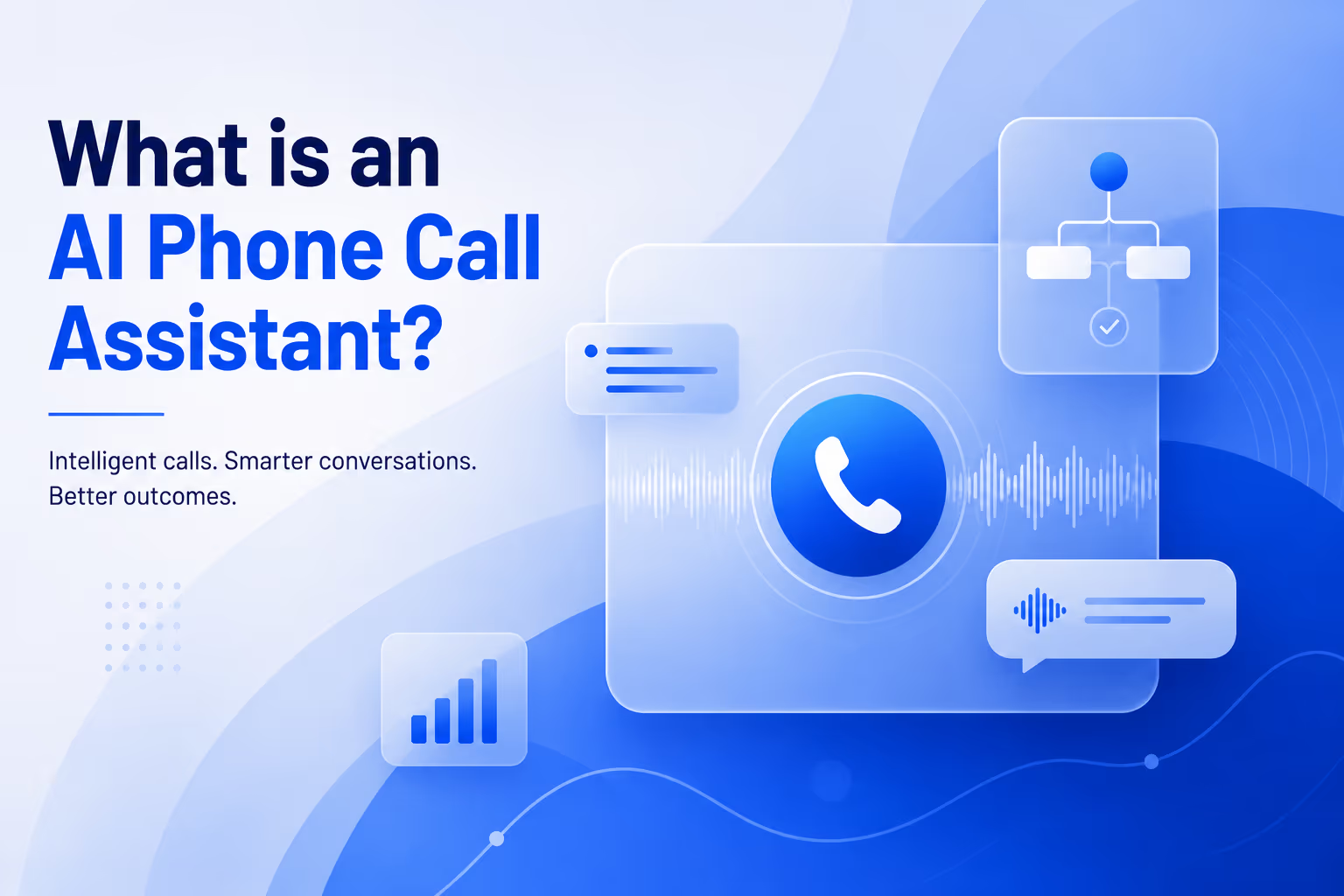
An AI phone call assistant is a virtual tool powered by artificial intelligence that automates customer calls. These assistants utilize technologies like natural language processing (NLP) and machine learning to handle customer interactions efficiently.
For instance, AI phone call assistants can resolve repetitive issues, route complex queries to human agents, and ensure personalized conversations. By integrating seamlessly with CRM and telephony systems, they streamline operations and improve overall efficiency in call centers.
- AI voice assistants understand customer intent using advanced voice recognition and context-aware processing.
- These systems ensure that every interaction aligns with customer expectations and delivers quick resolutions.
AI call assistants are reshaping the customer experience through intuitive, fast, and effective communication capabilities. Let’s understand how these tools function in detail.
How Do AI Phone Call Assistants Work?
AI phone calls rely on three primary technologies: voice recognition, language processing, and data integration. These technologies allow AI assistants to interact naturally, making them indispensable for modern customer service.
- Voice Recognition: Converts spoken words into actionable commands, allowing assistants to handle calls efficiently.
- Language Processing: Analyzes context and intent to provide accurate responses tailored to the customer’s needs.
- Integration: Connects to customer data via CRMs, enabling personalized and meaningful conversations.
- Automated WhatsApp Follow-ups: Customer conversations rarely end with the phone call. After every interaction, an AI phone call assistant can automatically send personalized WhatsApp messages containing payment links, product brochures, appointment confirmations, application reminders, or next-step instructions. This creates a true omnichannel experience while improving customer engagement and conversion rates.
- CRM Synchronization: An enterprise AI phone call assistant should automatically update customer records after every conversation. Instead of requiring agents to manually enter call notes, AI captures customer intent, lead status, appointment details, and disposition codes before syncing them with CRMs like Salesforce, HubSpot, Zoho CRM, or Freshworks.
This eliminates manual work while ensuring every customer interaction becomes immediately actionable.
Modern customers switch between phone calls, WhatsApp, SMS, and email during a single buying journey. An AI phone call assistant that works across these channels creates a connected customer experience instead of isolated conversations, ensuring every interaction builds on previous context.
Modern AI phone call assistants do much more than answer calls. They qualify leads based on predefined business rules, update CRM records automatically after every interaction, and trigger WhatsApp follow-ups for customers who need additional information or reminders. When a conversation becomes too complex, the AI transfers the call to the right human agent along with the complete conversation context, ensuring customers never have to repeat themselves.
Callveriq’s AI phone calls integrate these technologies to redefine efficiency. For example, Callveriq ensures latency under one second and 90% automation of routine tasks, reducing response times drastically. AI call assistants deliver faster resolutions and higher satisfaction rates with such features.
How Does an AI Phone Call Assistant Compare to a Traditional IVR?
Many businesses still rely on interactive voice response (IVR) systems to manage customer calls. While IVRs route callers through predefined menus, an AI phone call assistant understands natural speech, adapts to customer intent, and resolves queries through human-like conversations. This enables faster resolutions, personalized support, and a significantly better customer experience.
Why it matters: An AI phone call assistant doesn't just replace menu-driven IVRs. It automates repetitive conversations, qualifies leads, updates customer records, and seamlessly hands off complex cases to human agents, helping businesses improve customer satisfaction while reducing operational costs.
Try Callveriq's AI phone call assistant.
This blog is just the start.
Unlock the power of Callveriq’s AI with a live demo.

What Are the Key Features of an AI Phone Call Assistant?
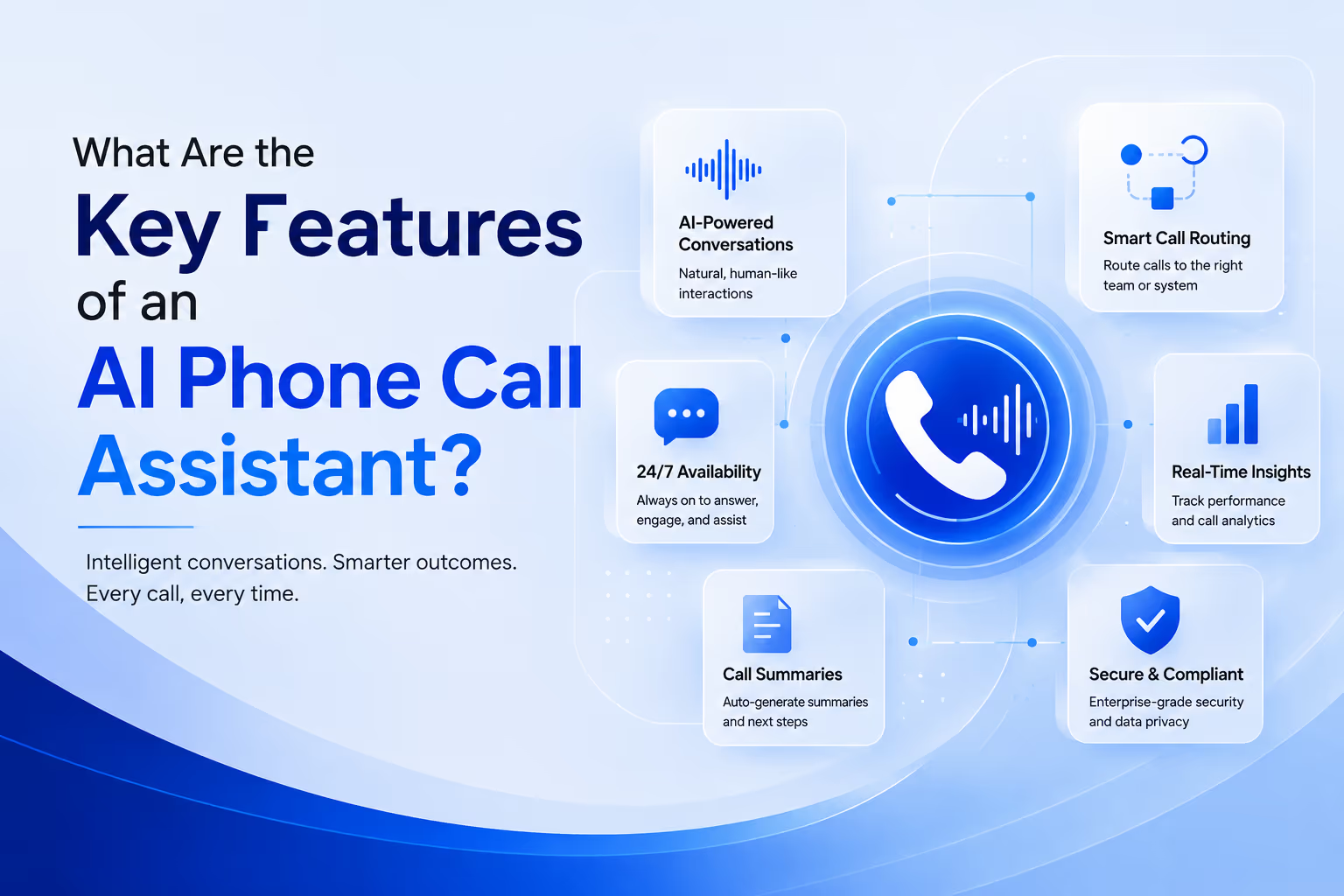
AI phone call assistants have advanced features that surpass traditional call-handling methods. These features empower businesses to improve operations and enhance customer satisfaction.
1. Multilingual Support
AI voice assistants have natural language processing capabilities to communicate fluently in multiple languages.
- They detect and adapt to customer-preferred languages using real-time language recognition models.
- Businesses using multilingual AI assistants report 20% higher customer retention and global reach.
Callveriq's AI phone call assistant detects a customer's preferred language in real time and seamlessly switches between Hindi, English, Hinglish, and other supported languages without interrupting the conversation. This allows businesses to serve multilingual customer bases using a single AI agent while maintaining consistent service quality across regions.
2. 24/7 Availability
AI phone call apps are designed to provide uninterrupted customer support across all time zones.
- They operate round-the-clock, ensuring no missed calls, even during peak hours or holidays.
- Research indicates a 30% drop in customer churn for businesses leveraging AI's 24/7 availability.
Callveriq’s AI phone calls handle thousands of daily interactions with scalable systems, ensuring zero downtime.
3. Personalization and Empathy
AI call assistants deliver a human-like experience by customizing interactions based on customer data and behavior.
- They adjust tone, pace, and messaging by analyzing previous conversations and preferences.
- AI apps handle interruptions like clarifications or follow-ups without disrupting the conversation flow.
Callveriq leverages AI-driven insights to deliver conversation empathy, increasing customer satisfaction and loyalty.
4. Automated Lead Qualification
AI phone call assistants help in inbound and outbound lead qualification using customizable business rules. Instead of simply answering customer questions, the assistant can ask qualifying questions, identify buying intent, verify eligibility, and score leads before routing high-intent prospects to sales representatives.
Businesses using Callveriq report up to 60% more sales-qualified leads through automated qualification.
5. Cost Savings
AI phone call assistants significantly help businesses reduce operational expenses by automating repetitive tasks.
- By managing up to 90% of routine queries, these assistants minimize reliance on human agents.
- Businesses report a 60% reduction in staffing costs by leveraging AI phone call apps.
6. Increased Customer Satisfaction
Quick responses and accurate resolutions lead to better customer experiences and loyalty.
- AI voice assistants resolve queries faster than human agents, reducing customer wait times.
- Consistency in service delivery helps businesses achieve a 27% increase in CSAT scores.
7. Improved Agent Productivity
AI call assistants handle repetitive calls, allowing human agents to focus on high-value, complex cases.
- This boosts agent morale and enables quicker resolutions for challenging customer issues.
- Callveriq’s AI phone call app has been reported to increase sales-qualified leads by up to 60%.
8. Context-Aware Conversations
An AI phone call assistant becomes significantly more valuable when it remembers previous interactions. By syncing with CRM systems, it can greet returning customers by name, reference earlier conversations, and continue discussions without asking repetitive questions.
When customers require human assistance, the AI transfers the entire conversation history, customer intent, and collected information to the live agent. This context-aware escalation reduces handling time while creating a seamless customer experience.
Leveraging these benefits requires strategic implementation. Let’s explore the best practices for integrating AI phone call apps into your call center.
How Do You Successfully Implement an AI Phone Call App?
Adopting AI phone call assistants requires careful planning and execution to ensure seamless integration and maximum benefits.
1. Choose the Right Solution
Invest in an AI phone call app that aligns with your business goals.
- Look for features like multilingual support, seamless CRM integration, and customization options.
- Evaluate providers based on proven success metrics and customer reviews.
Beyond core features, evaluate whether the AI phone call app meets your enterprise requirements. Look for secure deployments, compliance with industry standards, seamless integrations with your existing CRM and telephony stack, real-time analytics, and a fast implementation timeline. Choosing a solution that fits into your existing workflows minimizes deployment effort and accelerates time to value.
2. Train for Success
Even the best AI assistant requires fine-tuning to match business needs.
- Use programmable dialog flows to create customized interactions.
- Regular training and updates ensure the assistant stays effective as customer preferences evolve.
3. Monitor and Refine
Continuous improvement is key to optimizing performance.
- Monitor call data and customer feedback to identify areas of improvement.
- Use analytics to adapt workflows and boost efficiency over time.
Callveriq’s AI phone call assistant stands out for its unparalleled capabilities among available solutions. Let’s explore why.
Why Callveriq’s AI Phone Call Assistant Stands Out
Callveriq’s AI Voice Assistant is a robust solution tailored to meet the demands of modern call centers.
1. Multilingual AI Agent: Callveriq’s assistant provides real-time multilingual support.
- It handles complex conversations in Hindi, English, and Hinglish seamlessly.
- Its ability to understand accents and regional nuances ensures customer comfort.
2. Scalability and Efficiency: Callveriq’s platform can handle thousands of simultaneous calls.
- With latency under one second, it ensures high-speed interactions at scale.
- Businesses using Callveriq report a 10x increase in conversions and a 60% rise in sales-qualified leads.
3. Comprehensive Integration: Callveriq integrates effortlessly with existing systems.
- This reduces setup time and ensures a smooth transition without disruptions.
- Data insights from Callveriq empower call centers to make informed decisions.
As AI evolves, the future of call centers will be defined by advancements in voice technology.Callveriq helps enterprises automate up to 90% of routine customer calls, achieve 27% higher CSAT, generate 60% more sales-qualified leads, reduce manpower costs by 60%, and deliver conversations with less than one second latency. Its AI phone call assistant supports multilingual conversations, CRM integrations, automated follow-ups, and intelligent human handoffs from a single platform.
Together, these capabilities enable enterprises to automate high-volume customer interactions while improving response speed, customer satisfaction, and sales efficiency.
Personalize conversations with Callveriq’s multilingual AI.
The Future of Voice Assistants in Call Centers
The potential of AI voice assistants is immense, with continuous improvements shaping the industry.
- Emotion Recognition: AI assistants are trained to detect emotions, enabling empathetic responses.
- Voice Biometrics: This technology will improve security and personalization by identifying customers through their voice.
- Predictive Insights: AI will predict customer needs, delivering proactive solutions before issues arise.
Call centers that adopt these innovations will gain a competitive edge, ensuring long-term success in an ever-evolving landscape.
Embrace the AI Revolution in Call Centers
AI phone call assistants transform customer service by offering scalable, efficient, personalized solutions. Their ability to deliver multilingual support, reduce costs, and improve satisfaction makes them indispensable for call centers. Callveriq’s AI Voice Assistant leads this revolution, offering cutting-edge features and proven results. If you’re ready to elevate your call center operations, explore Callveriq’s capabilities.
Automate lead qualification with an AI phone call assistant.
FAQs
1. Can an AI phone call assistant schedule appointments?
Yes. It can book, reschedule, or cancel appointments and send confirmation messages automatically.
2. Does an AI phone call assistant work after business hours?
Yes. It provides 24/7 support, ensuring customers receive assistance anytime.
3. Can an AI phone call assistant reduce call wait times?
Yes. It handles multiple calls simultaneously, reducing queues and improving response times.
4. Is an AI phone call assistant suitable for small businesses?
Yes. It helps businesses automate customer calls, improve service quality, and scale without hiring additional agents.
5. Can an AI phone call assistant support outbound calls?
Yes. It can automate outbound calls for lead qualification, reminders, follow-ups, surveys, and customer outreach.