

A learner sees an advertisement for a certification course and submits an inquiry at 9:30 p.m. The admission team is offline, so the lead enters the system and waits. The next morning, a counsellor calls while the learner is in class. The call is missed. A generic email follows, but it does not answer the learner’s questions about eligibility, fees, placement support, or weekend batches.
Two days later, another counsellor calls without seeing the earlier activity. The learner has already spoken to a competing institute. The lead was captured correctly. It was assigned correctly. It even appeared in the admissions dashboard. What failed was the sequence between inquiry and meaningful conversation.
This is a common limitation of admission management software. It can organize admissions activity, but enrollment depends on how quickly and intelligently the institution engages each prospective learner.
Salesforce’s 2025 Connected Education Report presents a higher-education environment in which students increasingly expect connected, personalized support. For EdTech and coaching businesses, those expectations begin before an application is submitted.
Explore Callveriq’s admission management software.
What Does Admission Management Software Do?
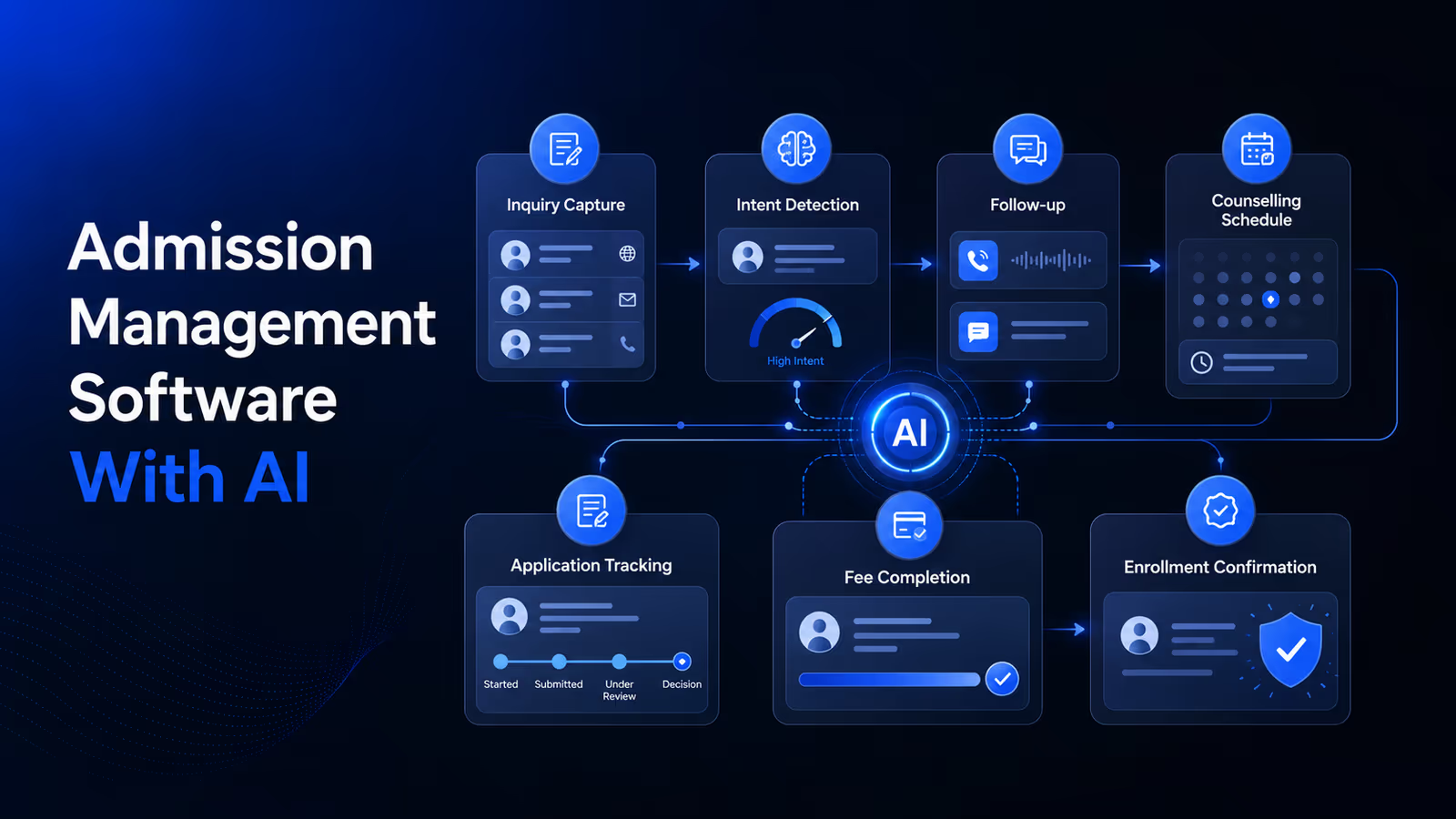
Admission management software centralizes the operational tasks involved in converting inquiries into enrolled students. It replaces disconnected spreadsheets, inboxes, forms, and manual trackers with a shared admissions workflow.
The software typically captures leads from websites, landing pages, education marketplaces, social media campaigns, webinars, events, and offline sources. It then creates a student profile, records interactions, assigns ownership, and tracks progress through the admissions funnel.
Core functions commonly include:
- Inquiry and lead capture.
- Counsellor assignment.
- Application tracking.
- Document collection.
- Interview or counselling scheduling.
- Fee and payment tracking.
- Communication history.
- Enrollment reporting.
Admission management software for colleges may focus heavily on applications, eligibility verification, document processing, merit lists, and formal enrollment. Admission management software for EdTech and coaching businesses often handles a higher volume of inquiries and a faster, sales-oriented conversion cycle.
Gartner’s 2025 Market Guide for Higher Education Recruitment and Admissions Platforms describes these platforms as systems that manage the prospective-student journey from initial contact through enrollment. This framing is important: admissions software should support a journey, not merely maintain a database.
Choose Callveriq’s admission management software.
How Does the Admissions Workflow Operate?
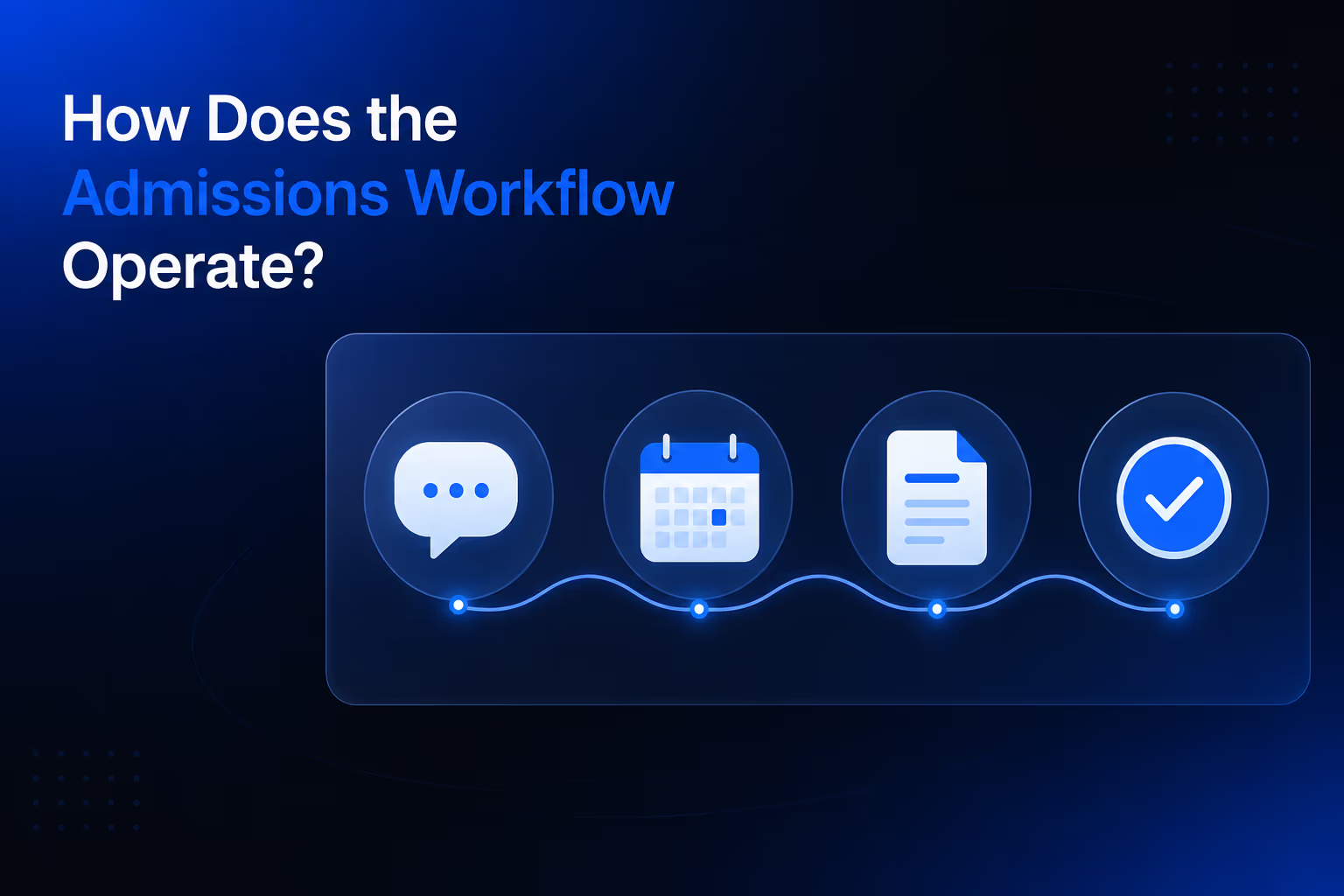
Most admission workflows move through a series of identifiable stages.
This structured process gives admissions leaders visibility into lead volume, counsellor workloads, application progress, and conversion rates. It also prevents inquiries from being lost in personal spreadsheets or individual inboxes.
However, movement between stages often depends on human action. A counsellor must call, answer a message, reschedule an interaction, interpret a concern, or remind the learner to pay. When inquiry volumes rise, these actions become inconsistent.
Admission management software accelerates enrollment.
This blog is just the start.
Unlock the power of Callveriq’s AI with a live demo.

Where Does Admission Management Software Fall Short?
Admission management software is effective at recording events. It may be less effective at conducting the conversations required to move learners forward.
A system can show that a lead has not answered three calls. It may not know why the calls were missed, whether another channel would work better, or when the learner prefers to speak.
Common gaps include delayed first responses, generic nurturing messages, missed callback preferences, disconnected communication channels, inconsistent counselling quality, and limited follow-up outside working hours.
1. Capturing a Lead Is Not Engaging It
A lead may enter the system within seconds, but the first meaningful conversation could happen hours later. During high-intent moments, that delay gives prospective learners time to explore alternatives.
2. Scheduled Automation Lacks Context
A workflow might send a fee reminder three days after counselling. It may continue even if the learner has requested financial assistance, asked for more time, or already completed payment through another channel.
3. Communication History Remains Fragmented
The software may record calls and messages without converting them into usable context. Counsellors then review scattered notes or ask learners to repeat information.
4. Lead Scores Can Become Static
Traditional scoring often relies on form fields, campaign sources, or manual labels. It may overlook conversational signals such as detailed course questions, urgency, objections, or willingness to attend a counselling session.
Admission management software automation can ensure that a follow-up task is created. It does not always ensure that the right conversation happens.
Discover intelligent admission management software.
How Does AI Close the Enrollment Gap?
The enrollment gap is the distance between captured demand and completed admission. AI can help close this gap by turning admissions tracking into active, contextual engagement.
Responding Immediately
AI agents can engage learners soon after an inquiry, including outside normal office hours. They can acknowledge interest, answer basic questions, and collect information needed for counselling.
Salesforce reported in its 2025 education AI research that more than seven in ten surveyed college students and administrators wanted AI agents to help close support gaps. The finding reflects growing openness to AI assistance when it improves accessibility and response times.
Qualifying Interest Conversationally
Instead of depending only on a long form, AI can ask questions about academic background, preferred course, career objective, location, budget, schedule, and intended start date. The answers can update the admission record and determine the next action.
Personalizing Follow-Ups
A learner comparing two programs should receive different information from someone waiting for a scholarship decision. AI can adapt follow-ups using the learner’s stage, interests, concerns, and previous responses.
Coordinating Voice and WhatsApp
If a learner misses an AI phone call, the system can continue the conversation through WhatsApp. A learner who responds can receive relevant information or choose a callback time. The next voice interaction can begin with that context.
Recognizing Intent and Objections
AI can identify signals such as high intent, fee sensitivity, parental involvement, uncertainty about outcomes, scheduling constraints, or readiness to enroll. These signals allow admissions teams to prioritize follow-ups appropriately.
Transferring to a Counsellor
AI should support counsellors rather than block access to them. Complex questions, emotional concerns, negotiation requests, policy exceptions, and high-intent leads should be routed to a human with a concise interaction summary.
McKinsey’s State of AI 2025 found that organizations are widely using AI but remain early in scaling agents and capturing enterprise-level value. For admissions teams, the lesson is that an isolated chatbot is unlikely to close the enrollment gap. AI must be integrated into the actual follow-up workflow.
Upgrade your admission management software.
What Features Should EdTech Teams Look For?
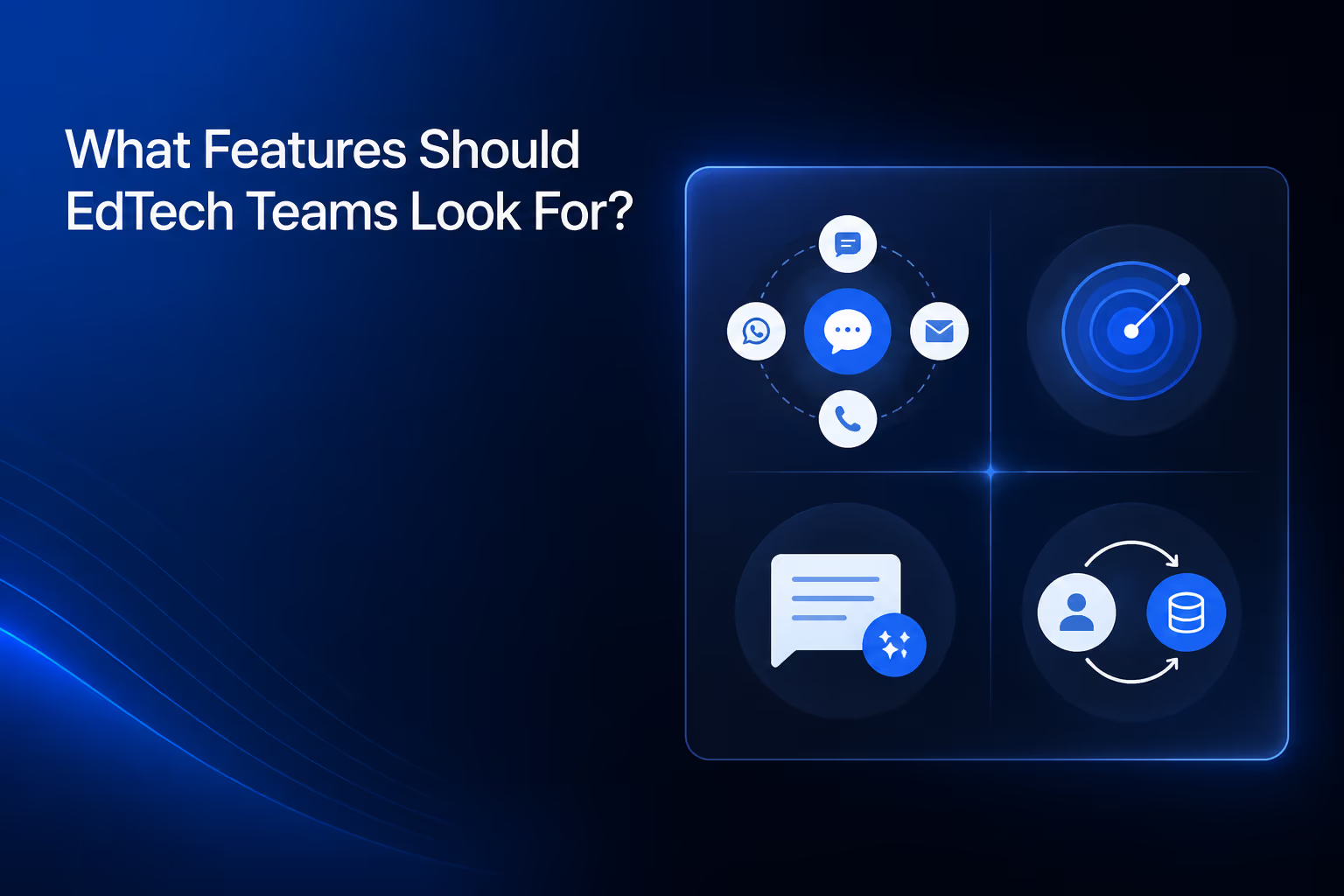
Admissions tracking is essential, but EdTech and coaching teams should evaluate whether a system supports the full engagement journey.
Admission management software with AI should also allow teams to define clear operational boundaries. The AI system must know what it may answer, which claims it may make, when it must escalate, and when follow-ups must stop.
KPMG’s 2025 report on generative AI and the future of education discusses uses including personalized learning experiences and tailored recruitment materials. These capabilities are valuable, but they must be supported by responsible data use and human oversight.
Scale through admission management software.
Why More Follow-Ups Do Not Guarantee Enrollment
When conversion declines, the immediate response is often to increase call attempts and messages. That approach can create activity without improving the learner experience.
A prospective learner may ignore repeated calls because they are at work. Another may be waiting for a parent’s decision. Someone else may have a specific question about placement support that generic messages do not answer.
Effective follow-up depends on relevance, timing, channel, and continuity. A useful sequence may begin with an immediate acknowledgement, followed by a short qualification conversation. If the learner is unavailable, the system can ask for a preferred callback time. If they request a brochure, it can be shared while the conversation remains open. If they raise a fee objection, the next interaction should address financing or scholarship options rather than repeat the course description.
McKinsey’s 2025 research on next-best experiences emphasizes using data and AI to determine what a customer needs at a specific moment and sequence touchpoints accordingly. Applied to admissions, this means selecting the next useful action instead of simply scheduling the next reminder.
Rethink your admission management software.
How Should Admissions Teams Measure Success?
A dashboard showing the total number of inquiries does not reveal whether the admissions process is effective. Teams need stage-level measures connecting communication with enrollment outcomes.
Important metrics include first-response time, contact rate, meaningful-conversation rate, counselling bookings, application starts, application completion, payment conversion, stage-wise drop-off, and enrollment rate.
Admissions teams should also track the reasons learners do not progress. Examples include course mismatch, fee concerns, unavailable batches, eligibility issues, delayed responses, unclear outcomes, or inability to reach a counsellor.
Conversation analysis can reveal patterns that structured fields miss. If many learners ask the same question, the course page may need clearer information. If payment-ready learners repeatedly wait for callbacks, the routing process may need improvement. If a particular channel produces responses but not enrollments, the messaging may be failing to resolve objections. Admission management software for enrollment should therefore help teams improve decisions, not merely produce activity reports.
Keeping AI-Led Admissions Responsible
Prospective students may share academic records, financial information, career concerns, phone numbers, and family details during admission conversations. Institutions must establish clear policies for collecting, storing, and using this information.
Learners should know when they are interacting with an AI system. They should also have a straightforward way to reach a counsellor. AI-generated responses must be grounded in approved information about fees, eligibility, course outcomes, schedules, refunds, scholarships, and placement support. The system should not invent guarantees or present uncertain information as fact.
KPMG’s 2025 global study on trust and AI highlights both the widespread use of AI and continuing concerns about trust, literacy, and responsible deployment. For education businesses, trust is especially important because learners may make significant financial and career decisions based on admission conversations.
Responsible automation requires consent, transparency, access controls, audit trails, approved knowledge, communication limits, and human accountability.
What It Means For Your Business
Admission management software gives EdTech companies and coaching businesses a structured way to capture inquiries, organize applications, assign counsellors, and monitor enrollment. Yet the most important part of the journey happens between those recorded stages, through questions, missed calls, fee concerns, comparisons, reminders, and decisions involving learners and their families.
AI can help bridge that space by responding immediately, preserving context across channels, adapting follow-ups, and identifying when a counsellor should take over. The objective is not to automate every admissions conversation. It is to ensure that learners receive timely, accurate, and relevant assistance while human teams focus on interactions where judgment and reassurance matter most.
Admission management software drives enrollments.
FAQs
1. How long does admission management software take to implement?
Implementation can range from a few weeks to several months, depending on data migration, integrations, workflow complexity, and team size.
2. Can admission management software manage multiple courses and centres?
Yes. Configurable platforms can maintain separate courses, eligibility conditions, fee structures, locations, counsellor teams, and enrollment workflows.
3. Can parents be included in the admission journey?
Yes. With appropriate consent, systems can schedule joint counselling, share approved information, and record parent-related follow-ups.
4. How does admission management software protect student data?
Protection typically includes encryption, access permissions, authentication, audit logs, retention policies, consent management, and secure integrations.
5. Can the software track offline admission sources?
Yes. Walk-ins, education fairs, referrals, campus events, and partner leads can be recorded using dedicated source fields or integrated forms.